REVIEW · KATHMANDU
9 Days short and Easy Ghorepani Poonhill Trekking in Nepal
Book on Viator →Operated by Welcome Nepal Treks P.ltd · Bookable on Viator
Stairs, dawn, and big mountains—fast. This short Ghorepani Poon Hill trek puts you on the classic Annapurna sunrise circuit in just nine days, with tea-house nights and Gurung village culture along the way. You get mountain views plus the day-to-day rhythm of river valleys, forests, and hillside settlements without committing to a longer trek.
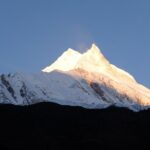
I especially like how organized it feels from the moment you land: airport pickup, Kathmandu hotel nights, a smooth bus ride to Pokhara, and then guided hiking with accommodations handled end to end. I also love the payoff built into the schedule: an early hike to Poon Hill for sunrise panoramas over Manaslu, Annapurna, and Dhaulagiri.
The main consideration: even though it’s sold as short and easy, you still do a tough day with steep ascents and stone steps (especially around the route to Ghorepani). It’s manageable, but you should expect real climbing time, not a stroll.
In This Review
- Key highlights worth planning for
- Ghorepani and Poon Hill: the best reason to do this trek now
- Route walkthrough: Kathmandu to Pokhara to the trekking start
- The workhorse day: Tikhedhunga to Ghorepani and the step test
- Poon Hill sunrise: the early morning payoff that drives the schedule
- Ghandruk and the Gurung village experience
- Downhill to Birethanti and the Pokhara reset
- Staying strong: difficulty, altitude, and pacing reality
- Value for $800: what you’re really paying for
- Guides, support, and why the human part matters
- What tea-house life is like here (and how to handle it)
- Should you book this Ghorepani Poon Hill trek?
- FAQ
- How long is the Ghorepani Poon Hill trekking trip?
- Where does the trek start?
- What is the highest point on this itinerary?
- Are airport transfers included?
- How do you get from Kathmandu to Pokhara and back?
- Are trekking meals included?
- Do I need permits for the trek?
- Are vegetarian meals available?
- What accommodation is included?
- What is included in the emergency helicopter arrangement?
- Cancellation and flexibility
Key highlights worth planning for
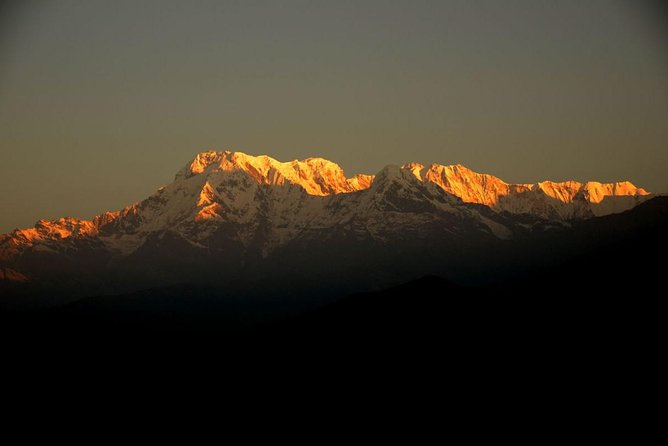
- Poon Hill sunrise without wasting days: an early hike to a famous viewpoint, then back for breakfast and onward trekking.
- Stone-step climbing on Day 4: short trek length, but you earn your views with a strenuous ascent.
- Tea houses and included trail meals: breakfast, lunch, and dinner are taken care of while you’re on the route.
- Small-group feel (max 15): you’ll be trekking with a limited group and a guide who keeps the pace moving.
- Permits handled in advance: ACAP permits and TIMS fees are included so you don’t have to chase paperwork.
- Farewell dinner with cultural dance: a built-in evening to round out the Nepal side of the trip.
Ghorepani and Poon Hill: the best reason to do this trek now
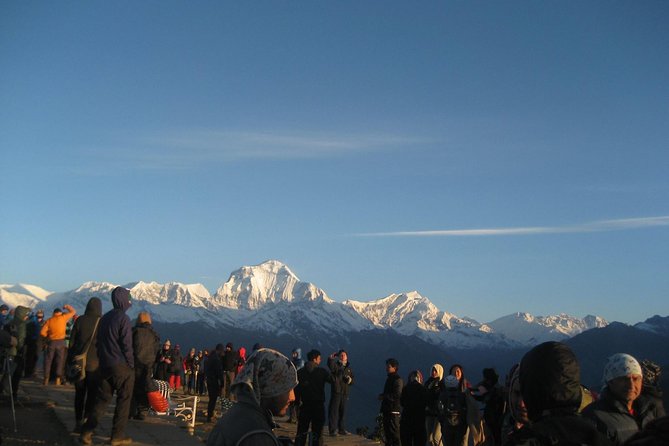
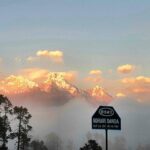
If you want the Annapurna-region magic but you’re short on time, this trek has a smart pitch: the route is compact, and the view moment is built in. The big star is Poon Hill, where sunrise creates that famous effect of light washing across the mountain tips. In plain terms, you’re not just hiking for exercise. You’re hiking for a payoff you can plan around.
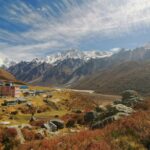
What makes this itinerary work is the mix of scenery and culture across a small number of days. You walk beside the Modi River early on, then you gain altitude through forests and villages, and you end with time in larger hubs like Pokhara and Kathmandu. It’s not just a line on a map. It’s a progression: valley → forested climb → high viewpoint → village descent → city reset.
One more plus I appreciate: the trip is set up to be logistically painless. You’re picked up at the airport, transported between key points, and placed in hotels and tea houses each night. You still do the hiking yourself, but you’re not also handling transport schedules, permits, meal planning, and lodging hunting.
You can also read our reviews of more tours and experiences in Kathmandu.
Route walkthrough: Kathmandu to Pokhara to the trekking start
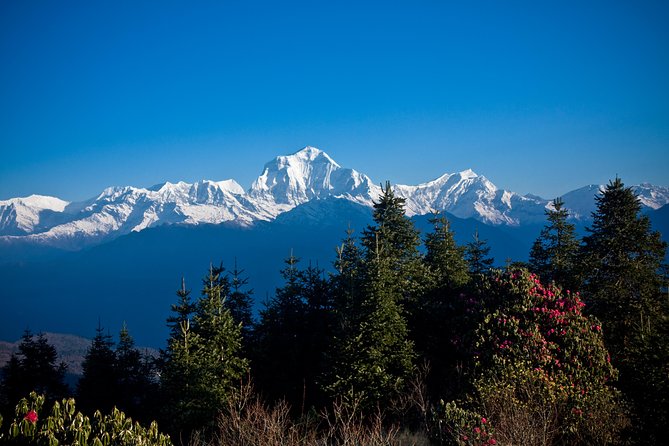
You start in Kathmandu at about 1,345 meters, then the plan immediately helps you shift into travel mode. A team member meets you after arrival and takes you to a hotel for the first overnight. That matters, because the next day is all travel: Kathmandu to Pokhara by tourist bus.
On day two, expect about a 6-hour drive with stops for breakfast and lunch. The bus route is designed for comfort and timing, not speed, and you’ll have a chunk of free time on arrival. Pokhara’s Lakeside area is right there, so you can do an easy wander instead of rushing into another early start.
On day three, you move from Pokhara toward the trek’s first real walking day. A drive brings you to Nayapul, the trekking starting point, and then you begin hiking toward Tikhedhunga (around 1,577 meters). The early part follows the Modi River, and you’ll pass through Birethanti before the trail turns more uphill. You end the day in tea-house style lodging, which keeps the trek feeling grounded and local rather than turning it into a series of day trips.
The workhorse day: Tikhedhunga to Ghorepani and the step test
Day four is the day you feel in your legs the next morning. It’s also the day that builds the view ladder. After breakfast in Tikhedhunga (a tea-house start), you tackle a steep ascent toward Ulleri, and yes, it’s a lot of stone steps.
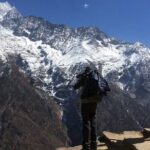
You also move through rhododendron and oak forests, so the climb isn’t just effort. You get shade, changes in vegetation, and intermittent mountain glimpses. Along the way, the route description highlights mountain sightings such as Annapurna South (7,219m) and Hiunchuli (6,441m). Even if visibility changes day to day, that’s the kind of terrain where you understand why this region is famous.
Lunch is planned at Banthanti, with a chance to see Mount Fishtail (Machhapuchhre, 6,993m). Then you continue upward until you reach Ghorepani at about 2,850 meters, where another tea-house overnight awaits.
If you’re wondering what “short and easy” really means here, this is it. The trek is short, but the altitude gain and step climbing are concentrated into fewer days. If you show up reasonably fit and pace yourself, it’s very doable. If you’re expecting a flat hike, you’ll get surprised.
Poon Hill sunrise: the early morning payoff that drives the schedule
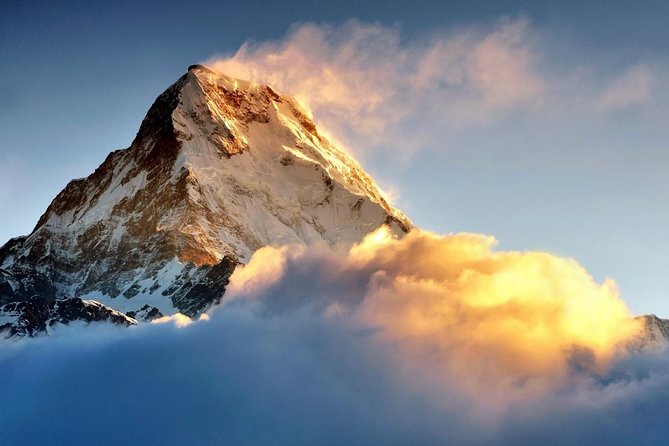
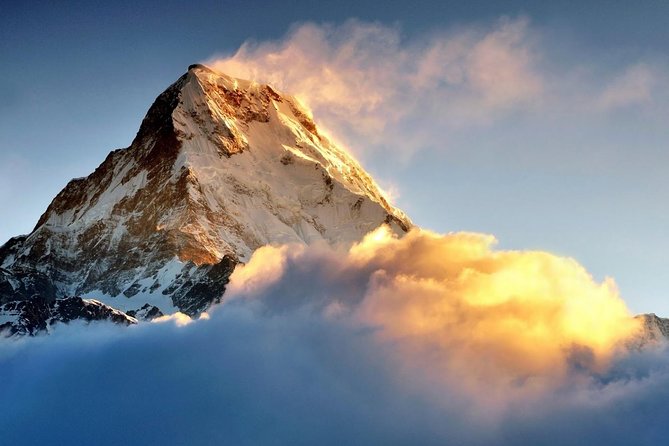
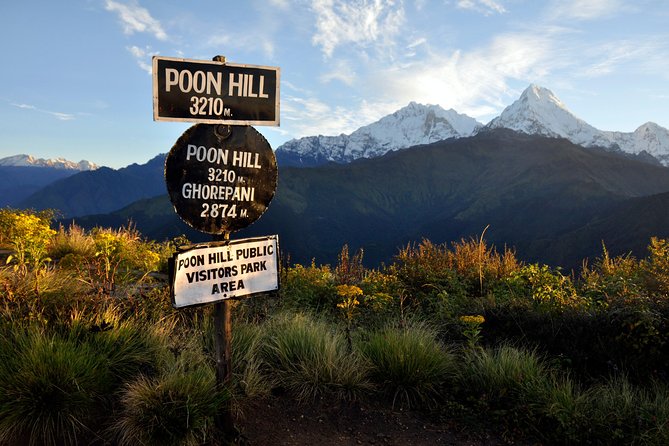
Day five begins with the signature move: an early hike to Poon Hill. The trek to the viewpoint is described as about an hour, and you head out early enough to chase sunrise conditions. This is the moment most people picture when they think of Poon Hill.
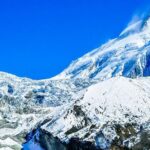
From Poon Hill, you’re looking for panoramic views over Manaslu, Annapurna, and Dhaulagiri. Sunrise matters here because light changes how the snowlines and peaks separate, and it’s the reason photographers and hikers plan their mornings around this exact point.
After you enjoy the viewpoint, you return to Ghorepani for breakfast, then shift into a longer walking segment to Tadapani (around 2,540 meters). The day is described as about 6–7 hours, and it’s a transition from viewpoint mode to trail mode—still scenic, but with less focus on that single dawn moment.
This pacing is a smart way to protect your energy. You get your main view early, then you still have trekking time to keep the route feeling like a real journey, not just a morning excursion.
Ghandruk and the Gurung village experience
Day six is a breather compared to the step-heavy day four. The trek from Ghorepani to Ghandruk (about 1,940 meters) is described as roughly three hours, and it’s mostly downhill through forested paths with occasional mountain views.
When the trail drops like this, you notice how quickly the vibe changes. You go from high, cooler air around the viewpoint zone into a warmer village setting. Ghandruk is one of the bigger Gurung villages, and the itinerary includes a village tour in the evening. That’s a useful add-on because it connects the scenery to people—where you see how daily life fits into this steep terrain.
Over lunch in Ghandruk, you’re again in the zone for mountain views like Annapurna South, Hiunchuli, and Fishtail. Even with a short day, you’re still getting the mountain framing that makes this trek feel worth the effort.
For me, the best part of this day is that it lets you walk less aggressively while still ending in a place with character. You’re not just passing through. You spend time and absorb village life.
Downhill to Birethanti and the Pokhara reset
Day seven turns the corner from trekking to transport. The hike is described as easy and mostly descending from Ghandruk through paths to Kimchi and then onward via Seulibazzar to Birethanti (about 1,025 meters). Then you drive back to Pokhara.
That sequence matters because it reduces the chance of exhaustion piling up. After a high-point trek and a village visit, the downhill keeps you moving without demanding another big climb. It also sets you up for a relaxed final stretch in Pokhara.
In Pokhara, the trip has you back in hotel mode. Day eight then brings you back to Kathmandu by drive after breakfast. Once you arrive, you stay in the Thamel area and get the evening for downtime and easy wandering. Thamel is where you can reset your gear, grab something simple to eat that isn’t included in the package, and think about how your legs feel.
Staying strong: difficulty, altitude, and pacing reality
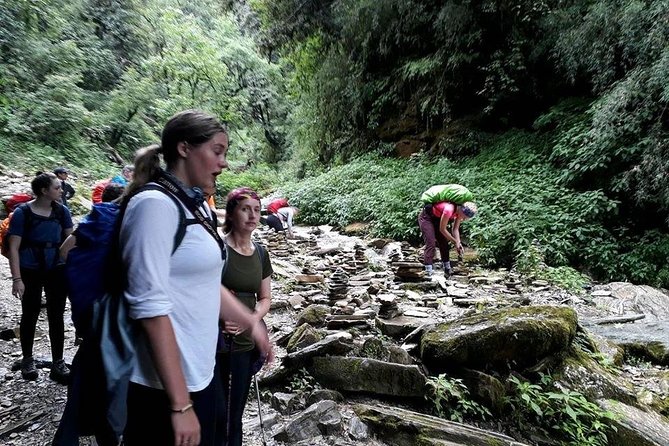
This trek is labeled short and easy, but the route itself tells a more honest story: it includes a steep ascent day, early mornings, and real elevation gain. The highest named trekking point in the itinerary is Ghorepani at 2,850 meters.
That means you should plan to pace like an adult, not like you’re trying to set a record. On day four, you’ll climb a lot of stairs. On day five, you’ll start very early for Poon Hill. If you treat both as marathon moments, you’ll be tired. If you treat them as normal uphill hiking and sip water consistently, you’ll be fine.
A good sign of how this trip is set up: you’re not traveling alone. You’ll hike with an experienced guide and porters, with a porter allocation of 1 porter for 2 people. That doesn’t mean you carry nothing, but it does help keep the hike manageable—especially when you’re dealing with temperature changes and early starts.
Value for $800: what you’re really paying for
At $800 per person, this trek isn’t the cheapest way to do Poon Hill. But when you break down what’s included, it starts to look like you’re paying for a lot of friction removal.
Here’s what’s covered:
- Airport pickup and drop in Kathmandu
- Kathmandu hotels: two nights in deluxe accommodation (arrival and post-trek)
- Pokhara hotels: two nights in standard accommodation
- Trekking meals: breakfast, lunch, and dinner during the trek
- Ground transportation: Kathmandu ↔ Pokhara by tourist bus, plus car transfers to and from the trek start/end
- Tea-house lodging every night during the trek
- Guide and porter support (including food, salary, accommodation, transportation, insurance for them)
- ACAP permits and TIMS card fees
- First aid medical kit
- Duffle bag & sleeping bag if necessary
- Farewell dinner with Nepali restaurant and cultural dance show
- Emergency helicopter service arrangement (the itinerary notes this would be paid through your travel insurance)
What’s not included is also clear and important:
- Nepal entry visa fee and the needed two passport photos
- Your travel insurance
- Food and drinks in Kathmandu and Pokhara (the package covers trekking meals only)
- Alcohol and non-alcohol drinks
- Tipping (not mandatory, though it’s expected by guides and porters)
So the value question becomes simple: if you want someone else to handle permits, timing, and lodging logistics, this price is easier to justify. If you’d rather self-arrange every part, you could possibly do it cheaper. But you’d be trading that money for time and headaches.
Guides, support, and why the human part matters
One theme that comes through clearly is the importance of a guide who keeps things steady. On this route, guidance isn’t only about directions. It’s about pacing, confidence on steep sections, and knowing when to push for viewpoint timing.
In the past, guides like Hari (and Hari Khadka as referenced in their team communications) have been highlighted for being helpful, supportive, and encouraging. That matches what you’d want on a trek where day four is physically demanding and day five starts before most people are thinking clearly.
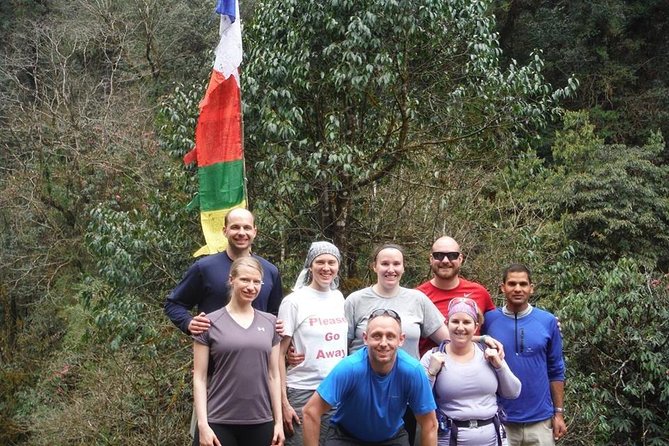
Also, your group size stays capped at 15 travelers, which is a sweet spot. Large enough for a social vibe, small enough that your guide can still manage timing and check-ins without feeling like a tour bus herd.
What tea-house life is like here (and how to handle it)
You’ll sleep in tea houses/ lodges during the trek. The itinerary doesn’t promise luxury, but it does promise a consistent setup: your overnight stays are handled, and your meals during the trek are included. That’s the practical piece—after a walking day, you don’t want to spend mental energy negotiating food.
The packing advice you should take from this itinerary is simple: keep your load light, and plan for layers. At higher elevations like Ghorepani, temperatures can feel colder, especially with early morning starts. If the operator provides a sleeping bag if necessary, ask if that’s included for your situation, so you don’t end up buying gear you won’t use.
And for comfort, treat tea-house dining as part of the experience. It’s where you hear trail updates from other hikers and learn what kind of visibility people had at sunrise or earlier in the day.
Should you book this Ghorepani Poon Hill trek?
Book this trek if:
- you want the Poon Hill sunrise payoff but in a short 9-day plan
- you prefer guided logistics with permits and meals handled
- you like a mix of trekking and village culture, ending with time in Pokhara and Kathmandu
- you’re okay with a tough stair day, as long as it’s still short and supported by a guide
Skip it or rethink if:
- you’re truly looking for an all-flat walk, because the Day 4 climb to the Ghorepani area is steep and step-heavy
- you want drinks included or you plan to eat most meals in the cities on your own budget (those are not included)
If your goal is the classic Annapurna views without extending your vacation for weeks, this is a sensible way to do it.
FAQ
How long is the Ghorepani Poon Hill trekking trip?
The trip is 9 days approximately, including arrival in Kathmandu, trekking days, and return to Kathmandu for the final flight.
Where does the trek start?
The trek starts from Nayapul, after a drive from Pokhara.
What is the highest point on this itinerary?
The itinerary lists Ghorepani at about 2,850 meters.
Are airport transfers included?
Yes. There is pickup and drop by private car/van/bus from Tribhuvan Airport in Kathmandu.
How do you get from Kathmandu to Pokhara and back?
Kathmandu to Pokhara is by tourist bus (about 6 hours with stops for breakfast and lunch). Pokhara to Kathmandu is also by tourist bus by drive, after breakfast on the return day.
Are trekking meals included?
Yes. Breakfast, lunch, and dinner are included during the trekking days.
Do I need permits for the trek?
Yes, and the package includes the ACAP permits (Annapurna Conversation Area Project) and TIMS card fees.
Are vegetarian meals available?
Yes. Vegetarian options are available if you advise at the time of booking.
What accommodation is included?
The package includes two nights deluxe accommodation in Kathmandu and two night standard accommodation in Pokhara. During the trek, you stay in lodges/tea houses.
What is included in the emergency helicopter arrangement?
The itinerary includes an arrangement for emergency helicopter service. The details note that it would be paid by your travel insurance company, and your travel insurance itself is not included.
Cancellation and flexibility
Free cancellation is offered up to 24 hours in advance for a full refund.