REVIEW · KATHMANDU
15-Day Private Annapurna Circuit Trek from Kathmandu
Book on Viator →Operated by Himalaya Guide Nepal · Bookable on Viator
Thorong La is the big moment here. This private Annapurna Circuit trek from Kathmandu pairs classic village-to-village walking with permits and guide support. The trade-off: you’ll sleep in simple lodges and the days can feel long once you’re higher up.
What makes this one feel different is the human touch. The trip is run by a family team, and they aim to keep things homely, with Nepali language taught during the trek. You also get practical extras like airport pick-up/drop, a bus connection early in the route, and a mobile ticket plan to keep check-ins smoother.
By the end, you’re not just collecting altitude. You reach the sunrise hike at Poon Hill above Pokhara, then roll back to Kathmandu with a farewell dinner. Do you need a solid fitness base first? Yes—but the structure here helps you pace the hard parts.
In This Review
- Key things that make this trek worth a look
- Entering the Annapurna Circuit at a human pace
- Kathmandu start: pickup, permits, and getting out of town smoothly
- Days 1–4: Lamjung to Chame through suspension bridges and village stairs
- Days 5–6: Forest-to-river drama toward Manang and the Pisang choice
- Day 7: The Manang acclimatization day that earns its keep
- Day 8: Leaving the main valley and walking into higher, quieter terrain
- Days 9–10: Last camps and the Thorong La approach
- Day 11: Muktinath to Tatopani or Pokhara options, with Jomsom in the mix
- Day 12: Shikha and Kaligandaki crossings, plus hot springs recovery
- Day 13: Ghorepani through Magar villages, rhododendron, and pine
- Day 14: Poon Hill sunrise above Pokhara, with big named peaks
- Day 15: Back to Kathmandu with a farewell dinner
- Price and value: what $995 really buys you
- Guides, family-run care, and the Nepali language touch
- Who should book this private Annapurna Circuit, and who should reconsider
- Should you book this Annapurna Circuit trek?
- FAQ
- How much does the 15-Day Private Annapurna Circuit Trek cost?
- How long is the trek?
- What’s included in the trip?
- What is not included?
- Is a porter included?
- What meeting point and start time are listed?
- What kind of fitness level do I need?
- Can I cancel for a full refund?
Key things that make this trek worth a look
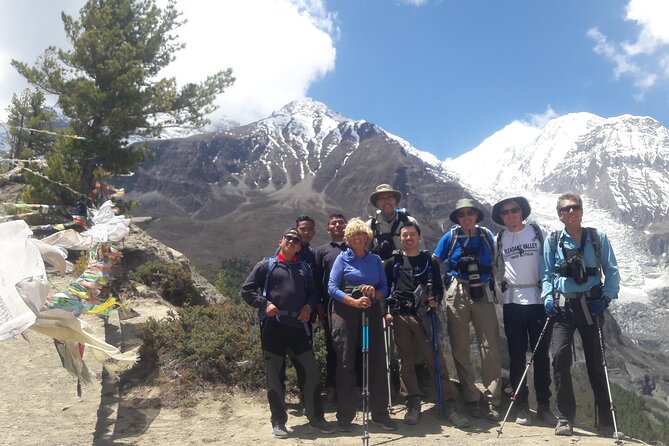
- Private group travel so your schedule and pace feel yours, not a crowd’s
- ACAP permit and TIMS card handled so you’re not scrambling for paperwork
- Acclimatization built in at Manang before the Thorong La push
- Lodge meals included for 15 days (breakfast, lunch, dinner) in the package
- Poon Hill sunrise finale with morning views over Dhaulagiri and Annapurna-area peaks
- Family-run guidance style, plus Nepali language lessons along the way
Entering the Annapurna Circuit at a human pace
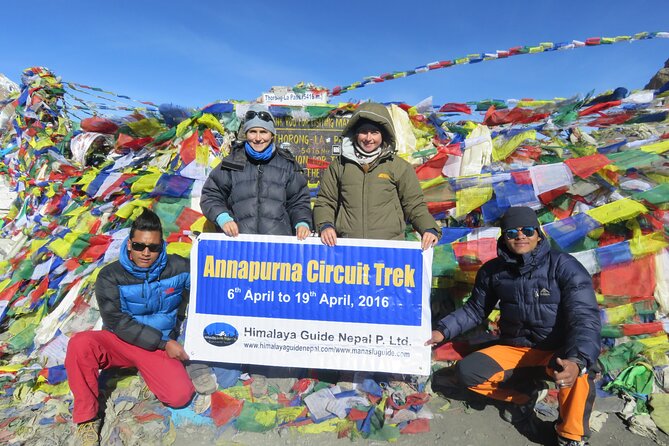
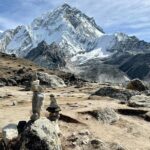
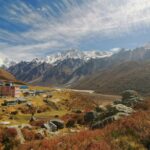
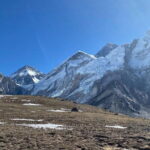
The Annapurna Circuit is famous for altitude drama, but what you remember most is the everyday rhythm. This route uses mountain villages, river valleys, suspension bridges, and forest paths to move you step-by-step toward Thorong La.
On this plan, the hiking feels like chapters. You start in the Marshyangdi River corridor, build up through Manang’s region, then shift toward the Kali Gandaki area before finishing with the Poon Hill morning in Pokhara. If you like your trekking with variety—stone villages, pine forest, and then big panorama payoffs—this fits.
Just note what that rhythm demands: steady walking days, plus an early start when you’re crossing the pass. The included meals help, but you’re still the one doing the steps.
You can also read our reviews of more tours and experiences in Kathmandu.
Kathmandu start: pickup, permits, and getting out of town smoothly
You begin at Tribhuvan Airport in Kathmandu, with a start time listed at 10:15 am. The package includes international airport pick-up and drop between the airport and your hotel, and it also includes key legal documents for trekking: ACAP permit and TIMS card.
That matters because permits are not the fun part of trekking planning. Having them handled lets you focus on packing, hydration, and learning how you’ll manage altitude. It also reduces the chance of last-minute paperwork headaches on arrival day.
You’ll also find that transportation is staged to keep you from zigzagging through Nepal on your own. The plan includes a bus ride early toward Besisahar/Bulbule, later land transport toward Pokhara, and a tourist bus return from Pokhara to Kathmandu.
Days 1–4: Lamjung to Chame through suspension bridges and village stairs
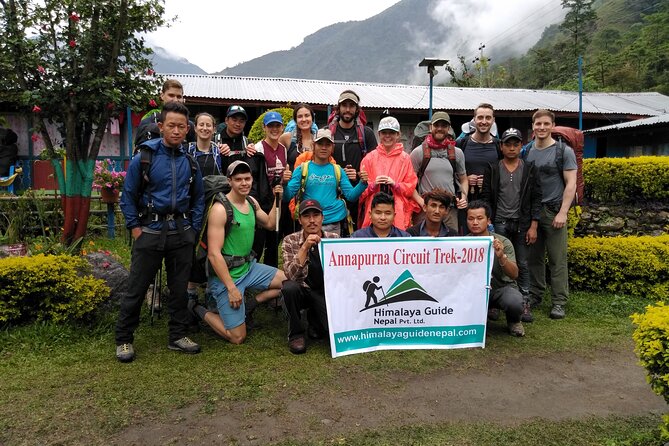
Your first trekking days move along and beside the Marshyangdi River system. Day 1 begins with a ride from Kathmandu toward the Besisahar/Bulbule area, then you trek in the Lamjung region, set up with a local bus depending on timing.
Day 2 is about rhythm and village travel. You’ll walk through villages and roads, then head toward the east bank of the Marshyangdi River, reaching Ngadi and lunch around the Brahmin settlement of Bahun danda (about 1270 meters). Expect a route that mixes uphill effort with real local scenery rather than empty trail.
Day 3 takes you across a suspension bridge to the west bank, then pushes a steep uphill. You pass Syange and cross a cliff-face section before reaching Chamje. The suspension-bridge moment is one of those small things that makes the day feel special because it breaks up the climb with a clear change in direction.
Day 4 is your Chame setup day. You cross another Marshyangdi suspension bridge to Karte, then pass places like Dharapani and Bagarchhap (around 1960 m), aiming for Danque (around 2300 m). It’s marked by a stone entrance chorten and typical stonework that feels very much like the middle of village Nepal rather than a tourist backdrop.
Practical note: these days are not just about distance. They help your legs adjust to the pack weight, uneven footing, and constant walking on stone and dirt.
Days 5–6: Forest-to-river drama toward Manang and the Pisang choice
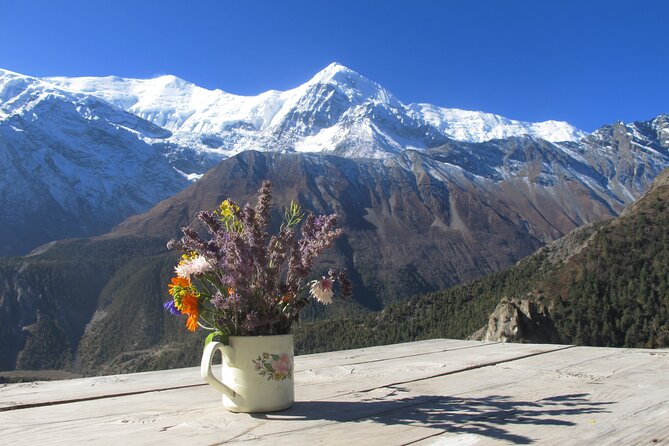
Day 5 leans into classic Annapurna variety. The trail runs through dense forest and a narrow valley, then you cross to the south bank of the river system at about 3038 meters. You’re heading toward a dramatic curved rock face that rises roughly 1500 meters from the river—one of those awe moments that hits even if you’ve seen mountains before.
Day 6 is about route options around Manang and Pisang. If you spent the night in lower Pisang, you can choose between two ways: one follows the Marshyangdi valley, and another involves crossing the khola. The trails meet up again at Mungji, then you continue into Manang-area terrain.
That flexibility is helpful because it lets the guide adjust based on weather, your group’s energy, and trail conditions. It also means you’re not locked into one single corridor if conditions shift.
These days can feel cooler and tougher as elevation builds. It’s also when you’ll want to pay attention to hydration and how your body reacts to exertion.
Day 7: The Manang acclimatization day that earns its keep
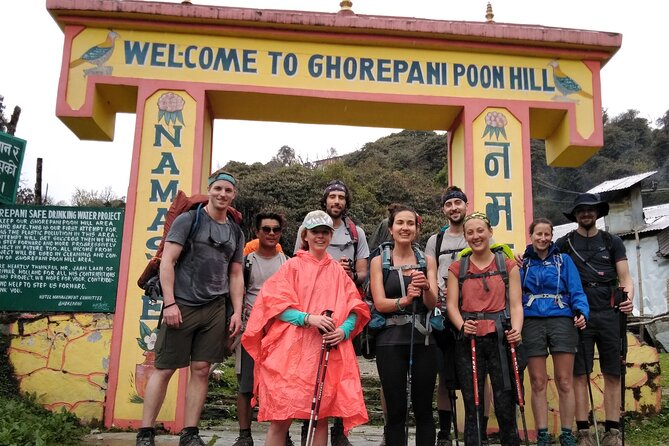
This is the day I’d protect if you care about finishing the trek feeling strong. The plan explicitly includes an acclimatization day in Manang before moving toward Thorong La (5416 m).
There’s also an optional explore mentioned: going to a lama/monk area where there’s a suggested donation of 100 rupees. If you’re curious about local religious routines, it’s a small chance to see the spiritual side of mountain life beyond the trekking trail.
Why is this stop so important? Thorong La doesn’t care about your itinerary. Acclimatizing here helps your body adjust before you push higher, and it gives you a buffer against the typical altitude “surprises” people worry about.
Even if you feel good the first week, this day gives you a chance to rest without losing momentum.
Day 8: Leaving the main valley and walking into higher, quieter terrain
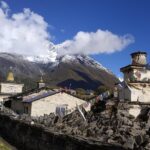
Day 8 moves uphill from Manang toward Tanki village, then you pass through areas like Ghungsang and shift along the Jar Sang Khola valley. The day description focuses on pastures and open space as the route continues northward.
This is the stretch where the scenery changes from “valley villages you can point at” to a more remote feel. You’ll notice less flat walking and more steady climb, with the kind of terrain that asks for good pacing.
If you like trekking where the air feels thinner but the trail still feels manageable, this is where it clicks. Take it easy on your first hours and save energy for the following pass days.
Days 9–10: Last camps and the Thorong La approach
Day 9 sets you up for the last big crossing push. You reach the last camp before Thorong La, walking along yak grazing ground, then descending toward Jarsang Khola. You cross a Jarsang Khola section and head up to a Durali tea shop for a break.
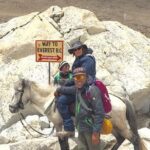
Day 10 is built for an early start because it’s a long day toward the Thorong La crossing. The plan describes Phedi as meaning Food of the Hill, which is a nice reminder that these camp names are practical, not poetic—they’re about where people eat, wait, and prepare.
This is where you’ll feel the pass day in your muscles. Even if you’re a strong hiker, high altitude changes your pace. Your guide’s role becomes crucial here: managing tempo, checking how you’re breathing, and helping you stay steady when the trail gets harder.
Tip from how the trek is structured: don’t treat this like a speed hike. The day is long, and finishing well matters more than moving fast.
Day 11: Muktinath to Tatopani or Pokhara options, with Jomsom in the mix
Day 11 is the flexible transition day after the pass area. The route description notes three optional routes from Muktinath, including options that connect onward to Tatopani or to Pokhara with a short flight from Jomsom. If you choose the short-route flight approach, the walking portion through Marpha, Ghasa, and Tatopa is described as taking about three days.
So what does that mean for you? You’re not locked into one single post-pass storyline. Your guide and transportation plan help match the route to your time and energy—while still keeping you on track to reach Pokhara.
One caution: because the plan includes multiple route options, you’ll want to confirm what variant your group is using before you set expectations for day-to-day pacing. Your best move is to ask your guide how that choice affects hiking time and travel comfort.
Day 12: Shikha and Kaligandaki crossings, plus hot springs recovery
Day 12 begins with recovery energy: after a wonderful day at hot springs, you trek down. Then you cross a suspension bridge over the Kaligandaki River and follow the path by Burung Khola before reaching a junction area.
Hot springs are not just a pleasant break here. They’re a practical tool for tired legs after the high pass. That makes the Shikha day feel like a shift from grind to reset.
Also, the Kaligandaki suspension bridge moment gives you another change in terrain and a new set of river views. If you like those “different valley, new geometry” feelings, this day delivers.
Day 13: Ghorepani through Magar villages, rhododendron, and pine
Day 13 is described as quite hard, and the route focuses on real local walking. You pass Magar villages like Phalate and Chitre, walk through terraced fields, then move into dense rhododendron and pine forest before reaching Ghorepani.
This is the day that feels less about altitude and more about steady hiking comfort: good footing in forest cover, but still real uphill effort. Rhododendron season can make the area feel extra alive, though your actual bloom level will depend on timing.
If you’re coming from Thorong La, you may still feel altitude fatigue. Use this day to keep a gentle pace, snack often, and protect your energy for the sunrise day ahead.
Day 14: Poon Hill sunrise above Pokhara, with big named peaks
Day 14 is the payoff morning. You hike early to Poon Hill (3210 meters) for sunrise, with the climb described as about 40–50 minutes. The views include Dhaulagiri, Tukuche Peak, Nilgiri, Annapurna South, Himchuli, and the mountains between them.
This is also when your trek turns into a memory you can frame with names. Knowing what you’re looking at makes sunrise feel less random and more satisfying.
After the sunrise moment, you return down and continue to Pokhara Lakeside. That’s where the trekking day ends and the comfort part begins—restaurants, lakeside wandering, and proper decompression.
Day 15: Back to Kathmandu with a farewell dinner
Your final day covers the transfer from Pokhara to Kathmandu. The plan notes you can choose different services, including a tourist bus, and it ends with a farewell dinner.
This is a nice final touch because it turns the ending into something social rather than a logistics drop-off. After two weeks of trekking and trail routine, the dinner helps you close the loop with the people who paced your days with you.
Price and value: what $995 really buys you
At $995 per person for about 15 days, this trek sits in the “you’re paying for organization” category. And for good reason. The package includes:
- Airport pickup/drop (international arrival to hotel to airport)
- A bus connection early in the circuit (to Bulbule area)
- Public transportation segments after the trek (including Muktinath to Tatopani)
- Car transport from Nayapul to Pokhara
- Deluxe tourist bus from Pokhara back to Kathmandu
- Lodge accommodation on the trek
- An experienced guide, with salary, equipment, insurance, and transportation/lodging handled
- Legal trekking documents (ACAP permit and TIMS card)
- Breakfast, lunch, and dinner for 15 days
- A token of love and a farewell lunch/dinner
What’s not included matters too: extra nights in Kathmandu and Pokhara, travel insurance, a porter unless you request one, and pay-for-yourself items like drinks, laundry, phone charges, and costs tied to showers or boiled water.
So is it good value? If you want fewer moving parts and more reliable day-to-day logistics, yes. If you already love planning transport and paperwork yourself, you might see it as paying for convenience. For most people, paying for a real guide plus the permits is where the money starts making sense.
Guides, family-run care, and the Nepali language touch
One of the most praised aspects in the feedback you provided is the human management style: friendly, responsible, safety-first guidance. Names that show up include Pratap (including a shoutout for guiding up to Tilicho Lake and Thorong La Pass), Dinesh and Binoot/Binute, Salman, and Bashu/Bashudev.
Even if your guide isn’t one of those people, the recurring theme is consistent: cheerful pacing, clear communication, and a caring approach on tough sections. That’s exactly what you want when altitude is involved.
There’s also a distinct cultural angle: the company says it teaches Nepali language during the trip. That isn’t just “nice to know.” Even a small amount of language helps you greet people in teahouses, ask for things clearly, and feel less like a silent visitor moving through someone else’s home.
Who should book this private Annapurna Circuit, and who should reconsider
This trek is built for moderate physical fitness, and it’s private, meaning only your group participates. If you’re comfortable with long walking days, can handle basic lodge conditions, and are okay with an altitude challenge that includes Thorong La, this is a strong match.
You might want to reconsider if you’re looking for a luxury trekking experience. The lodging is described as normal, and you’ll be relying on included meals in teahouse-style settings. Also, if you hate early mornings, be aware that sunrise and pass-day starts are part of the plan.
If you’re traveling as a couple or small group and want control without giving up organization, the private setup is a plus. It’s the kind of itinerary where a good guide makes a meaningful difference, not just “someone to point out ruins.”
Should you book this Annapurna Circuit trek?
I’d book it if you want the Annapurna Circuit with fewer logistics headaches and more support. The combination of permits handled, guide care, and meals included is a big deal when you’re doing a remote high-altitude route.
I’d think twice if you want a fully independent trek or if lodge basics will annoy you. And if your schedule is tight, you should ask how the post-pass options connect you to Tatopani and Pokhara so you can match the plan to your energy.
If you want a classic circuit with a steady structure—and a guide who keeps things safe while still making the days enjoyable—this one looks like a smart way to go.
FAQ
How much does the 15-Day Private Annapurna Circuit Trek cost?
The price is listed as $995.00 per person.
How long is the trek?
It’s listed as 15 days (approx.).
What’s included in the trip?
The package includes airport pickup and drop (airport to hotel to airport), bus ticket to Bulbule, public transportation (Muktinath to Tatopani), car from Nayapul to Pokhara, a deluxe tourist bus from Pokhara to Kathmandu, lodge accommodation during the trek, an experienced guide (with guide support items included), legal documents (ACAP permit and TIMS card), taxes, a token of love, and breakfast, lunch, and dinner for 15 days.
What is not included?
Not included: extra nights and food in Kathmandu and Pokhara, travel insurance, porter (available per request), hot and cold drinks (like Coke, mineral water, beer), and personal expenses such as laundry, bar bill, telephone, battery charging, shower, and boiled water.
Is a porter included?
A porter is not automatically included, but you can request one and the company can organize it.
What meeting point and start time are listed?
The start meeting point is Tribhuvan Airport in Kathmandu, Nepal, with a start time of 10:15 am.
What kind of fitness level do I need?
The info says travelers should have a moderate physical fitness level.
Can I cancel for a full refund?
Yes—free cancellation is listed. You can cancel up to 24 hours in advance for a full refund, based on the experience’s local time.