REVIEW · SIDEMEN VILLAGE
Sidemen Trekking: A Walk from Different Perspective
Book on GetYourGuide →Operated by SIDEMEN TREKKING · Bookable on GetYourGuide
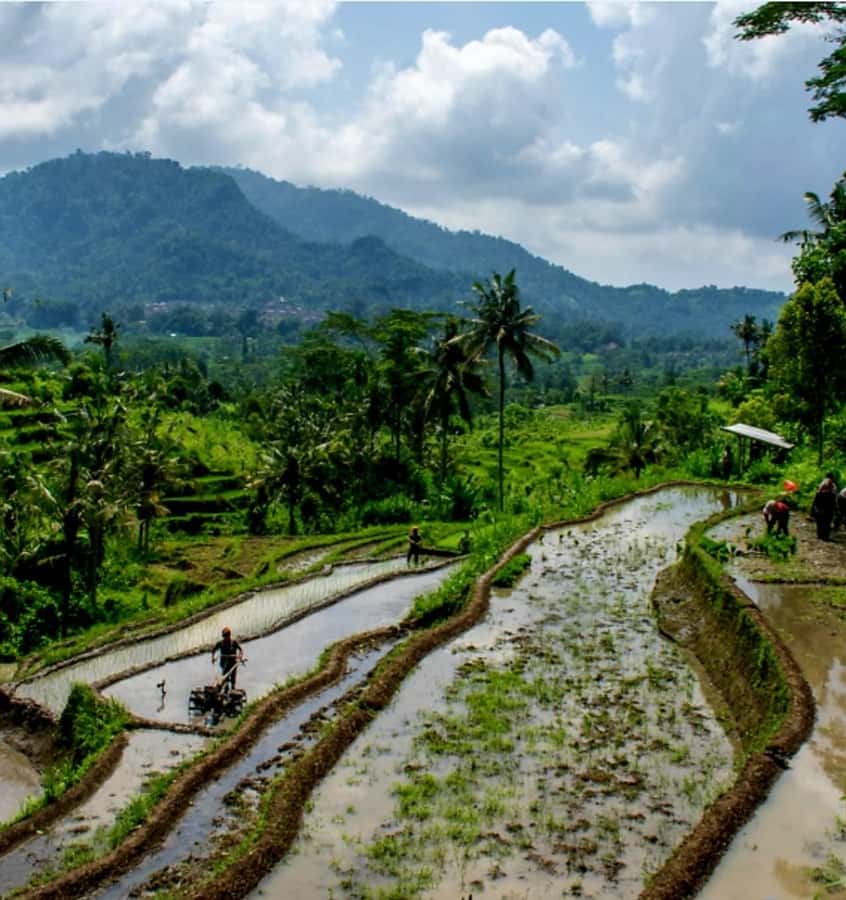
Rice terraces have a new angle in Sidemen. You’ll walk from the village into the rice fields with Subak irrigation stories and big Mount Agung sightlines, all in a small group. It’s the kind of trek where the scenery and the everyday work behind it feel tied together, not staged.
My favorite part is how your guide connects what you see—rice terraces, temples, planting and harvesting—with how locals live. You also get multiple viewpoints that make it easy to take photos without feeling rushed. The only real drawback: you’re walking on narrow rice paths and uneven ground, so you’ll want proper footwear and a little balance for the ups and downs.
With an English-speaking guide and limited group size (up to 10 people), this is a calm, people-first trek that doesn’t feel like a factory tour. If you’re arriving in Sidemen and want something authentic but not long or punishing, this is a strong option.
In This Review
- Quick reasons this trek is worth your time
- Entering Pasar Sidemen and UPA BOGA: the day starts like a local
- The route in real life: 2 hours of ups, downs, and short photo breaks
- Following the Subak irrigation system: the story behind the terraces
- The hanging wooden bridge and the Jembatan Kuning photo stop
- Dukuh village: temples, daily work, and why the walk feels real
- Babakan Dukuh rice terraces: your best viewpoints for photos and perspective
- Ending at Warung Ume Anyar in Ogang village
- Guides make or break it: Darya, Gede, and Adi’s impact on the experience
- Price and value: $14 for a small-group education in walking form
- What to bring (and what to avoid) so the walk stays comfortable
- Who should book this trek, and who might feel annoyed
- Should you book Sidemen Trekking?
- FAQ
- How long is the Sidemen trekking tour?
- Where do I meet the guide?
- What’s included in the price?
- What should I wear or bring?
- Is it a small group tour?
- What if I want to visit the traditional market?
Quick reasons this trek is worth your time
- Market start at Pasar Sidemen near UPA BOGA, so you ease into local life right away
- Subak irrigation lessons (including Ogang area) as you follow the water route
- Jembatan Kuning Tukad Yeh Unda photo stop and a wooden crossing that’s built for motorbikes and people
- Dukuh village + Babakan Dukuh rice terraces for classic rice-field viewpoints and village details
- Guides like Darya, Gede, and Adi often bring clear English, practical farming context, and lots of Q&A
Entering Pasar Sidemen and UPA BOGA: the day starts like a local
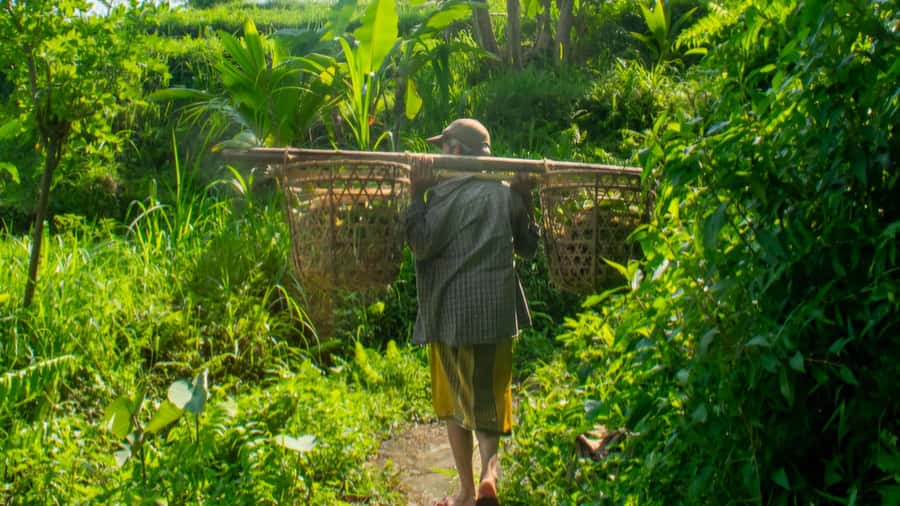
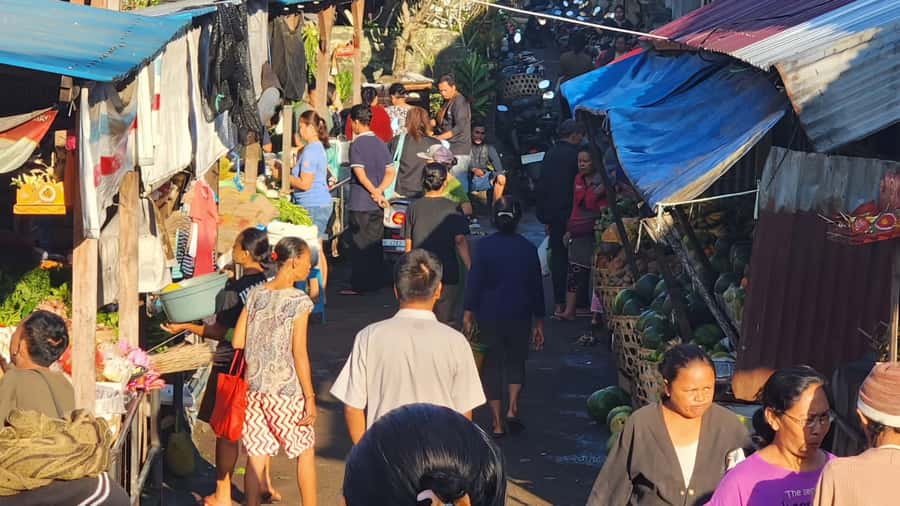
Most tours like this start on a trail. This one starts in the middle of the village pace. You meet your guide at the main street near a shop sign for UPA BOGA, specifically at Toko Upa Boga Pertenunan, then you head to Pasar Sidemen, the traditional market.
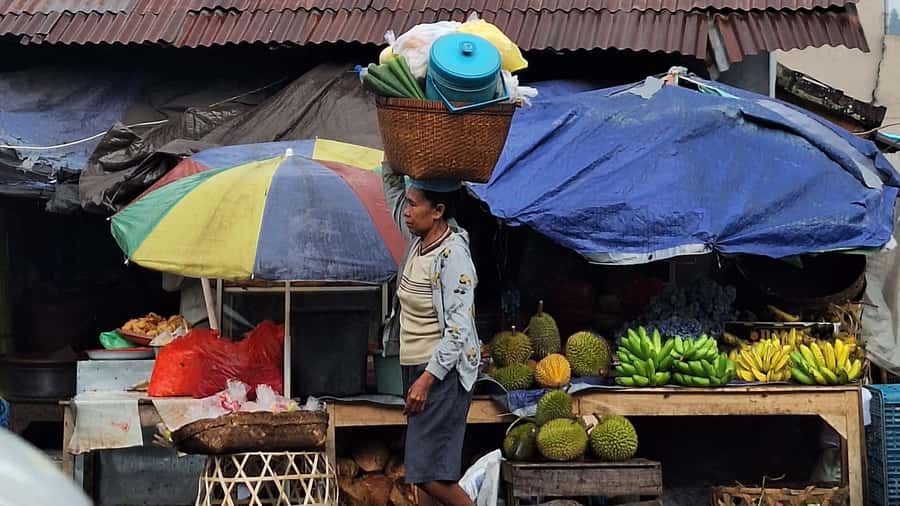
If your timing lines up, the market visit is a quick snapshot of daily rhythms, including food stalls. The market is typically open around 5 AM to 10 AM, so if you book a later start, you might not catch the full market scene.
Either way, this opening matters because it frames the trek. You’re not just hiking scenery; you’re walking through the working geography of Sidemen. In a place like this, rice terraces aren’t background. They’re part of how people eat, earn, and plan a year.
You can also read our reviews of more tours and experiences in Sidemen Village.
The route in real life: 2 hours of ups, downs, and short photo breaks
Plan for a 2-hour walk, with a pace that includes stops for photos and guidance. The route mixes village streets with rice paddies, so you’ll feel a little push in the walking—up and down stretches through the lanes—then a second slow rhythm as you approach the terrace viewpoints.
Some parts feel like a traditional farm path: narrow edges, uneven footing, and small steps when you move between viewpoints. The good news is that it’s not a long expedition. The bad news is that comfort depends heavily on your shoes.
Do yourself a favor: wear comfortable footwear with grip. Sandals or flip-flops aren’t allowed. And if you know you’re not great with balance on narrow paths, treat this as a “walk carefully, not race it” experience.
Following the Subak irrigation system: the story behind the terraces
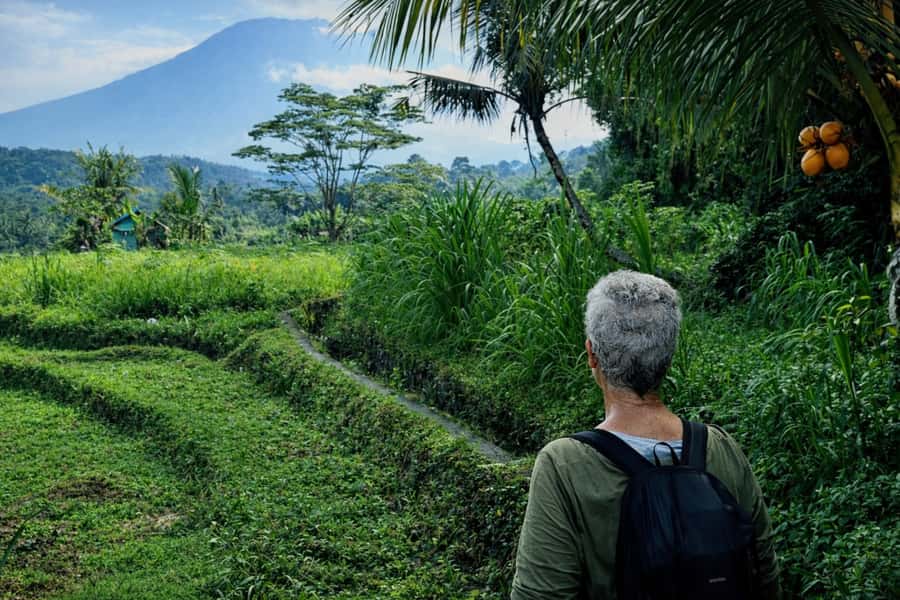
One of the most practical (and frankly, most interesting) reasons to do this trek is the irrigation lesson. Your guide explains the Subak system as you move along the water’s path—where it comes from, how it’s routed, and how it shapes what gets grown and when.
This is the kind of information that turns a pretty view into something you can actually understand. When you look at terraces after hearing how the water system works, the shape of the fields stops being just scenery and becomes a piece of local engineering.
You also pass by the Subak of Ogang, which gives the trek a sense of place. Sidemen isn’t only about terraces; it’s about the living system that keeps them productive. And because you walk near the irrigation routes, you’re not stuck listening while everyone stares in one direction—you get the chance to connect explanation with real details you can see.
The hanging wooden bridge and the Jembatan Kuning photo stop
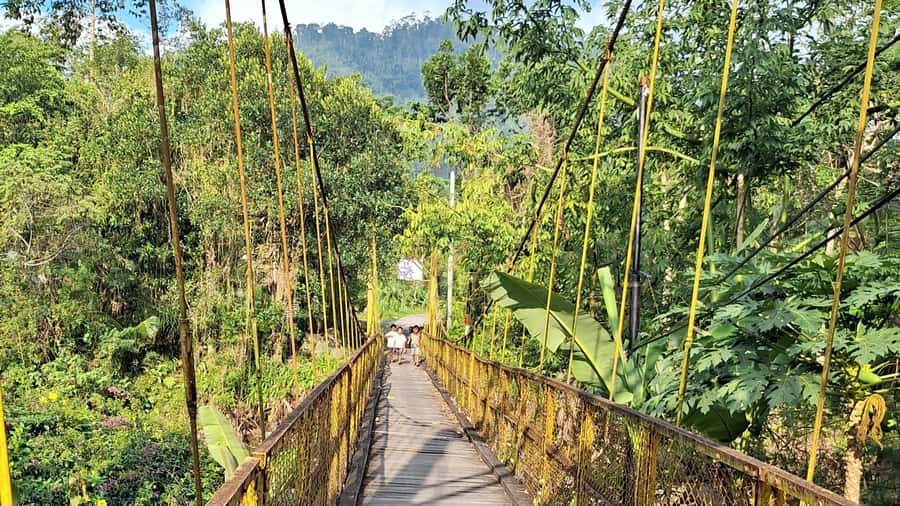
At some point on the way, you’ll reach Jembatan Kuning Tukad Yeh Unda. This is one of those moments where a simple stop beats a lot of marketing. The bridge is wooden and described as being fit for motorbikes and humans, which hints at how genuinely useful it is in daily life, not just for tourists.
You’ll have time for a photo and a quick pause while the guide points out what you’re seeing. In a trek like this, short stops matter. They help you regroup, take photos without rushing, and keep the walk from turning into a continuous shuffle.
If it’s a clear day, this kind of stop is also where Mount Agung views often feel strongest. If it’s cloudy, you’ll still get plenty of rice-field drama up close, but the mountain is always more hit-or-miss.
Dukuh village: temples, daily work, and why the walk feels real
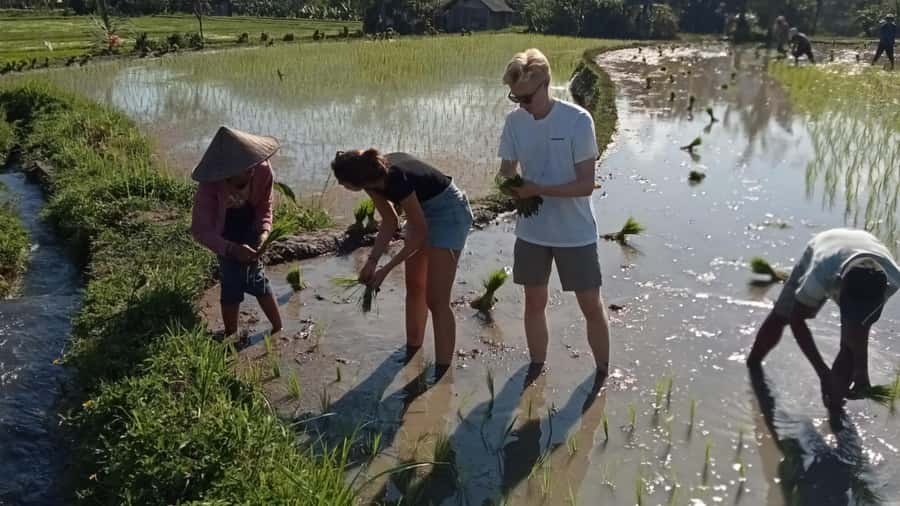
Mid-trek you pass through Dukuh village, where you’ll see everyday village life up close. You’ll also get a temple stop tied to local prayer—an important reminder that this landscape is a living cultural space, not just a farming backdrop.
Then comes the part that many people come for: watching farm routines. The route gives you chances to see how people work the fields—activities that can include plowing, cultivating, planting, and harvesting depending on the season.
Even if you can’t identify every step, you’ll understand the pattern: the terraces are made for ongoing work, and the water system supports it. You’ll come away with a clearer sense of how people spend their time here—and how that time is shaped by irrigation and the rhythm of planting and harvest.
Babakan Dukuh rice terraces: your best viewpoints for photos and perspective
The trek’s payoff often lands at the Babakan Dukuh Rice Terrace stop. This is a photo stop with time to walk, look around, and take in the terrace layout from a few angles.
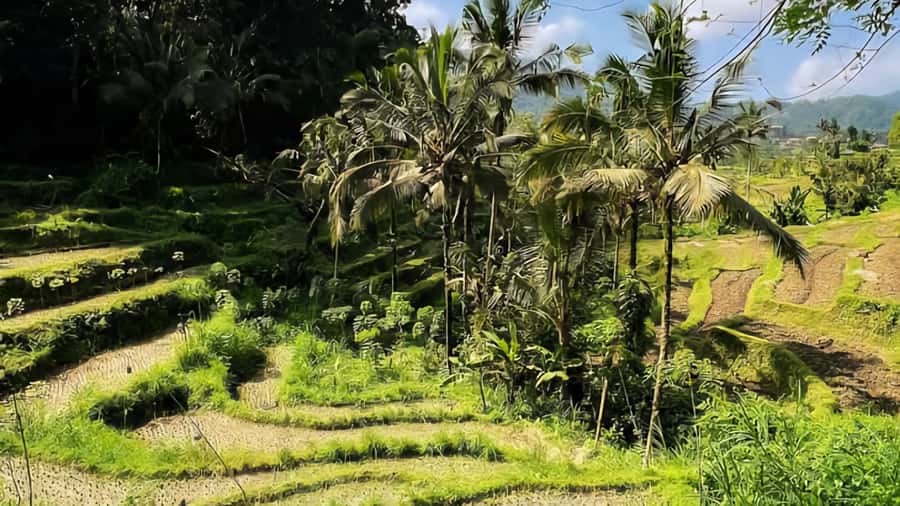
What makes this section especially good is perspective. From some viewpoints, you see terraces like layered steps. From others, you get a closer sense of how irrigation and field edges work together. It’s the kind of area where your photos look better because you’re not standing in one spot the entire time—you’re moving along the way.
If you’re hoping for classic Sidemen “rice terraces stretching out” photos with Mount Agung in the distance, this is where your best chances often are. And even when the mountain is shy, the terraces themselves are still the main show.
Ending at Warung Ume Anyar in Ogang village
The tour finishes back toward Warung Ume Anyar in Ogang village. This is a smart ending. You can take a break after the walk while the day still feels like it’s unfolding, not over in a blink.
One practical detail: the activity typically ends back at the start meeting point after a return walk is possible. You can also follow the main road back—about 3 km, roughly 30 to 40 minutes on foot. If that sounds long, arrange a ride.
Transport note matters here because Sidemen can be a patchwork for ride apps. Grab and Gojek bike aren’t available in the Sidemen area, but a Grab/GoJek car is recommended. If you have your own driver, you can arrange pickup from the finish point about 2 hours after the start time.
Guides make or break it: Darya, Gede, and Adi’s impact on the experience
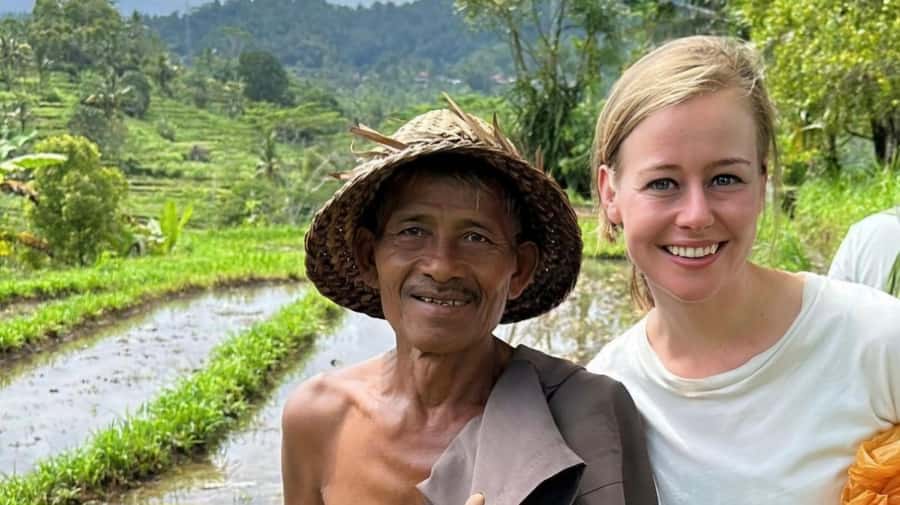
Most people think they’re booking rice fields. You’re also booking your guide’s ability to translate place into meaning.
From the experiences shared, guides such as Darya, Gede, and Adi often stand out for two things: clear English and the ability to answer questions beyond farming. You may get explanations that touch on culture and even the real-world context around agriculture and community life.
A couple of optional-feeling extras show up in some walks, too. Some guides have been known to share small tastes like fresh papaya offered by a local farmer, and in a few cases guests may be invited for something like coffee at a guide’s home. These aren’t something you should expect every time, but they reflect why the trek feels human: your guide is connected to the area, not just the route.
Price and value: $14 for a small-group education in walking form
At $14 per person, this trek is priced like a budget activity, but it delivers more like a guided cultural walk. For that price, you’re getting:
- a live English guide
- bottled water
- a small group capped at 10 people
- a route that repeatedly connects scenery to how the place works
What makes value unusually strong is that the trek doesn’t rely only on views. The Subak irrigation explanation and the village and temple stops give you context that most cheap scenic walks skip. And because you’re moving through rice fields and village lanes, you’re not stuck with a single angle view.
Also, free cancellation up to 24 hours before and the option to reserve and pay later can make it easier to fit into a fluid Sidemen schedule.
What to bring (and what to avoid) so the walk stays comfortable
This trek is simple, but it’s still outdoors walking on paths that can be narrow and hot. Bring:
- comfortable shoes with grip
- sunglasses
- a hat
- sunscreen
- hiking shoes if you have them
And don’t bring:
- sandals or flip-flops (not allowed)
One more practical note from real-world conditions: high grass and insects are part of the walk. If you’re sensitive to bites, consider wearing long pants and being ready for the fact that this is farm country, not a paved park. A couple of people have mentioned ants biting in the grass, so plan accordingly.
Who should book this trek, and who might feel annoyed
You’ll likely love this if you:
- want Sidemen that’s not just looking, but understanding
- like guided walks where you can ask questions and get straight answers
- enjoy rice terraces, village life, and the irrigation system behind them
- prefer a short 2-hour experience over a full-day outing
You might want to reconsider if:
- you have trouble with uneven footing or narrow paths
- you’re traveling with very young kids (it’s not suitable for children under 5)
- you hate insects and aren’t willing to protect yourself with long pants and basic bug awareness
Should you book Sidemen Trekking?
I think you should book this if you want a high-value, small-group trek that teaches you what you’re looking at—especially the Subak irrigation system—and gives you multiple chances to photograph rice terraces and village life. The $14 price feels fair because you’re not only paying for a walk; you’re paying for interpretation from guides like Darya, Gede, and Adi, who tend to make the route feel understandable and personal.
If you’re deciding between checking rice views from a viewpoint and doing a guided path walk, choose the trek. You’ll get more angles, more context, and a better sense of how the fields fit into daily life.
FAQ
How long is the Sidemen trekking tour?
The duration is about 2 hours. Starting times vary, so you’ll need to check availability for the specific slot you want.
Where do I meet the guide?
You meet at Pasar Sidemen (Sidemen Traditional Market) on the main street near the shop sign UPA BOGA (Toko Upa Boga Pertenunan). When you arrive, the guide comes over to you.
What’s included in the price?
The tour includes a live guide and bottled water.
What should I wear or bring?
Wear comfortable shoes (hiking shoes are a good idea). Bring sunglasses, a hat, and sunscreen. Sandals or flip-flops are not allowed.
Is it a small group tour?
Yes. It’s limited to a small group size of up to 10 participants.
What if I want to visit the traditional market?
The traditional market is open around 5 AM to 10 AM. If your start time is later than that, you might miss the market portion, so morning starts are better for a fuller market look.