REVIEW · STROMBOLI
Stromboli: Sunset Trekking Tour
Book on GetYourGuide →Operated by Travelovers · Bookable on GetYourGuide
Volcanoes are loud, but Stromboli is on another level. This sunset trek takes you up a working volcano for breathtaking views and the rare chance to hear volcanic explosions while you hike.
I particularly like the combination of serious sights and hands-on guidance. You get a local guide who points out what you’re seeing, including Sciara del Fuoco and the Aeolian Islands’ geology, while also keeping things moving at a hiking pace.
The one thing to keep in mind is that timing and group dynamics can vary. If your start runs late or the group is large, the pace and daylight window can feel rushed on the way to the sunset viewpoint.
In This Review
- Key things to know before you go
- Meeting Stromboli’s trailhead and getting your safety kit
- Safety briefing before you walk a live volcano
- Sentiero Paesistico: vegetation, early craters, and steady walking
- Belvedere Point and Sciara del Fuoco: where you read the volcano
- Sunset viewpoint: hearing explosions every 10–15 minutes
- After sunset: the return walk and why headlamps matter
- What’s included at around $35, and what to pack
- Price and group reality: making sure the pace fits you
- Who this Stromboli sunset trek suits (and who should skip it)
- Should you book the Stromboli Sunset Trek?
- FAQ
- How long is the Stromboli sunset trekking tour?
- Where do I meet for the tour?
- What’s included in the price?
- What languages are the guides available in?
- Do I need hiking boots?
- What should I bring with me?
- Who might the tour not be suitable for?
- Will the tour run in bad weather or high volcanic activity?
- Is there a pay-later option and free cancellation?
Key things to know before you go
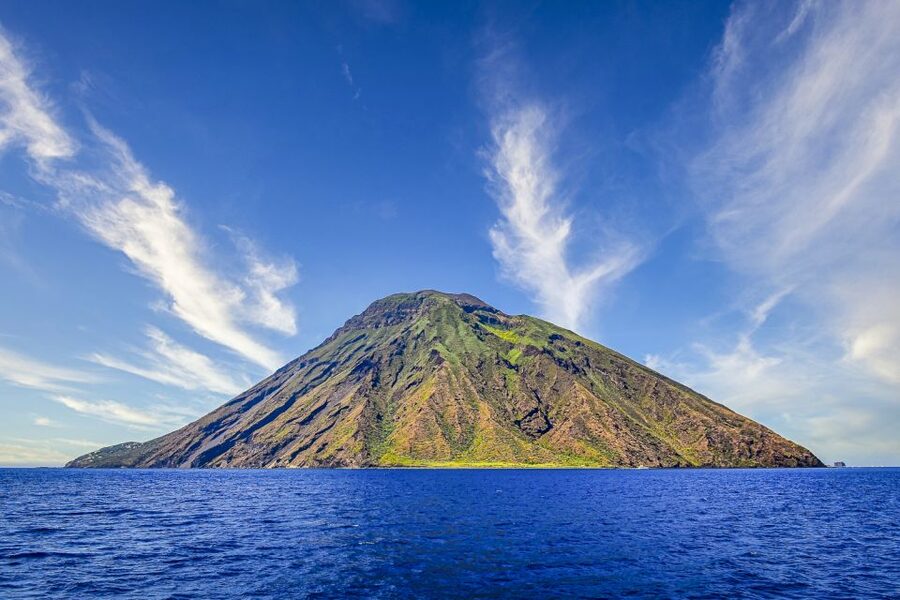
- You’re watching from about 400 meters with volcanic activity that can crackle on a roughly 10–15 minute rhythm.
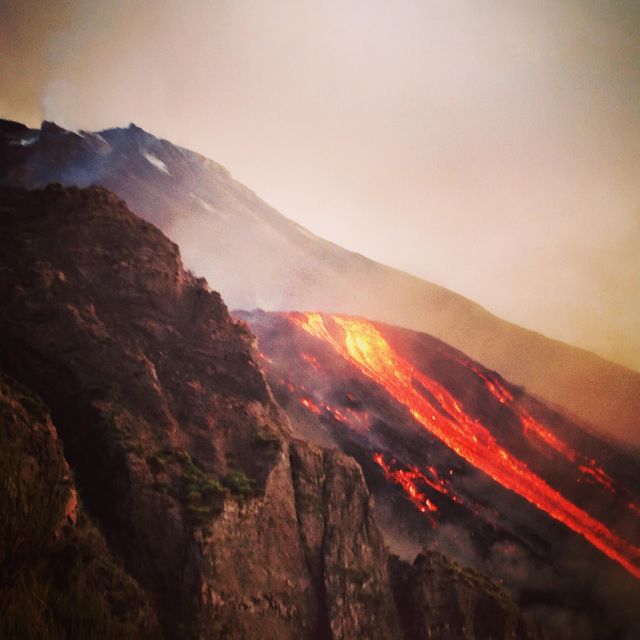
- Sciara del Fuoco is the star view: a dramatic depression/talus slope that shows you where the volcano sends material.
- You’ll hike in the dark at least a bit, so the included headlamp is not optional in practice.
- Safety gear is part of the tour: helmet and hiking map come with your guide.
- The guide’s commentary matters: you’ll get talk on flora, fauna, island life, and settlement history as you walk.
Meeting Stromboli’s trailhead and getting your safety kit
Your tour starts at Stromboli Adventures (Agenzia Escursioni & Tour Operator). Plan to arrive early because you’ll need to exchange your voucher at the ticket counter before you head out. The tour timing is built around the idea that you’ll reach the sunset area with enough light to enjoy it, so being on time isn’t just polite—it helps the day work.
Before you start climbing, you’ll be set up with the basics that make this trek safer and easier to manage in volcanic terrain. You’ll get a protective helmet, a hiking map, and a headlamp for the return. That kit changes the feel of the hike: it’s not “survive by yourself,” it’s “you’re guided, but you still need to be prepared.”
Also, note what isn’t provided. The tour doesn’t include hiking boots or snacks. If you show up in soft, slippery footwear, you’ll feel it on uneven ground—especially once the route starts climbing and later shifts toward lower light. Bring water and a jacket, and don’t count on buying what you need last-minute.
You can also read our reviews of more tours and experiences in Stromboli.
Safety briefing before you walk a live volcano
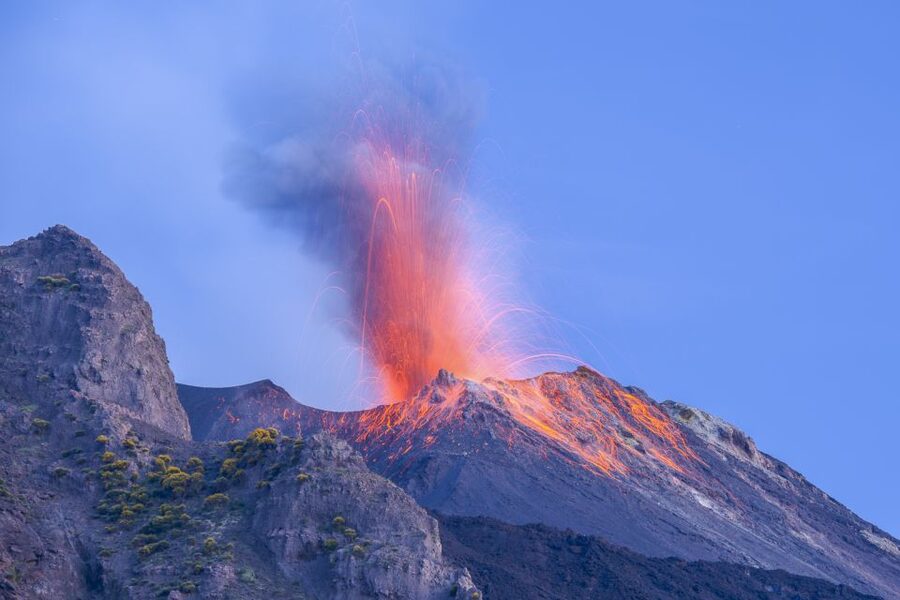
You start with a 15-minute safety briefing. That short chunk of time is worth taking seriously. You’re walking on a live volcano, so you’ll want to understand the rules of where to stand, how to move, and how the guide expects you to respond if conditions change.
The trek is described as low difficulty, but “low difficulty” doesn’t mean “easy.” You still need to be in good health and used to hiking. The tour also isn’t a fit if you have heart or respiratory issues, if you’re afraid of heights, or if your body isn’t comfortable with exposed viewpoints.
One more practical note: the tour can be canceled if volcanic activity is too high or if weather is poor. On Stromboli, the mountain is the boss. So keep your expectations flexible and treat the day as weather-dependent, not guaranteed.
Sentiero Paesistico: vegetation, early craters, and steady walking
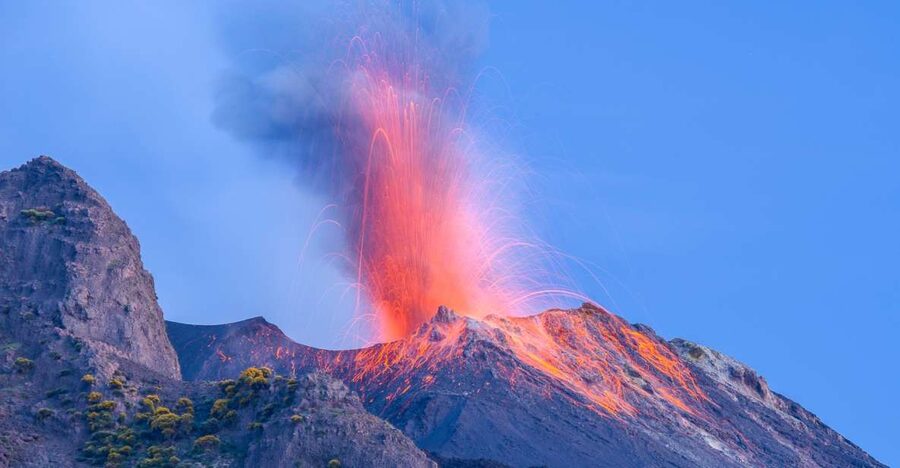
The climb begins through lush vegetation on the Sentiero Paesistico. The trek on the natural path is about 250 meters long at the start, and it’s a great setup because it lets you adjust to the slope gradually rather than going straight into steep climbing.
As you move along, you’ll start to see craters. That early crater spotting is more than cool scenery—it helps you understand what you’re looking at before you reach the bigger viewpoints. Your guide explains what’s happening geologically, and they also point out local flora and fauna along the way. You’ll get a sense of how life works on the Aeolian Islands, including how people live with (and around) the volcano.
What I like about this portion is the tempo. You’re not just marching to a single photo spot—you’re learning the terrain as you go. The guide also weaves in the human side: how settlements formed, how daily life evolved, and how the volcano shaped local thinking about land and risk.
Belvedere Point and Sciara del Fuoco: where you read the volcano
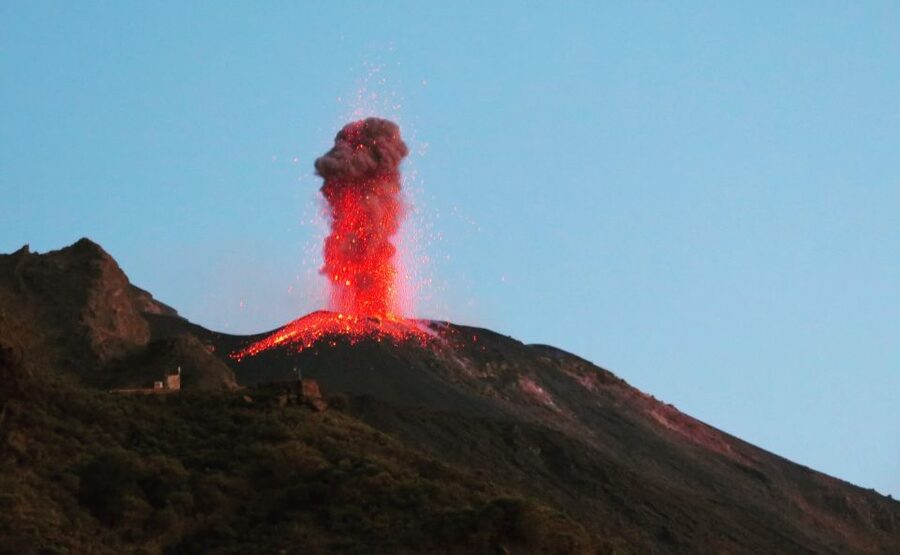
After roughly 20 minutes of walking, you’ll reach a key viewpoint area: Belvedere Point. This is where you get the famous view of Sciara del Fuoco, often described as a talus scree/depression. In plain terms: it’s the visible pathway where the volcano’s material and gravity-driven flow have shaped a recognizable “funnel” down the slope.
This is also the moment when the trek becomes more than scenery. You’re learning to interpret the volcano. When the guide talks about the Aeolian Islands’ geological history, Sciara del Fuoco turns into the visual anchor for those explanations. Instead of abstract talk, you can look and connect it to what you’re standing above.
The group also tends to pause here to take it in. If you’re taking photos, this is a good point to slow down, get your bearings fast, and decide what you want to capture—because the best activity moments are often tied to the sunset viewing window after you’ve moved on.
Sunset viewpoint: hearing explosions every 10–15 minutes
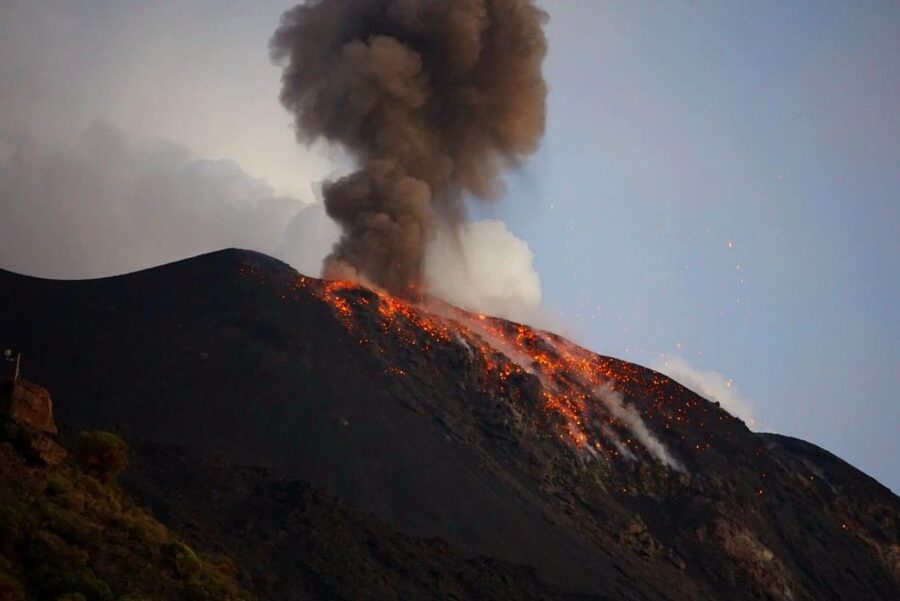
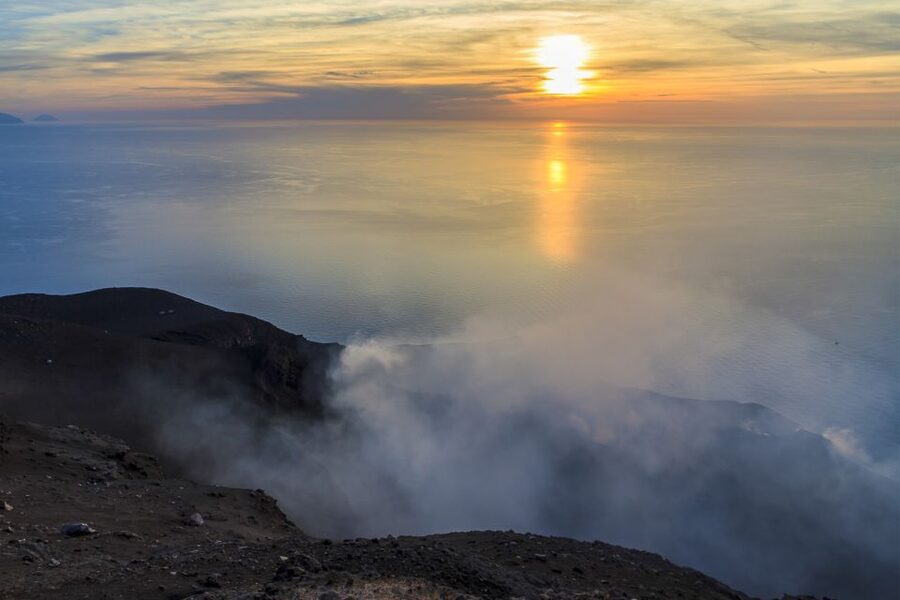
This is the heart of the tour: the observation point where you aim to catch sunset. Expect a total of about one hour for the break and sunset viewing portion. That’s not just time to eat something (snacks aren’t included)—it’s time to watch the sky change and the volcano keep working.
From the viewpoint, you’ll be able to admire volcanic explosions from about 400 meters altitude. The tour description notes eruptions approximately every 10–15 minutes. When that lines up with sunset, it feels like the mountain is putting on a live show, and the timing can create a very surreal rhythm: flash, boom, pause, repeat.
Here’s what makes this experience special for your brain. You’re not only looking at a distant event—you’re also listening. The explosions have sound, and you feel the air shift in a way photos never fully capture. The guide’s commentary helps you understand what you’re seeing, so it doesn’t stay as just spectacle.
If you’re sensitive to heights or exposed edges, focus on controlled movement and stick close to where the group is directed. The sunset moment is the payoff, but safety still matters more than the perfect shot.
After sunset: the return walk and why headlamps matter
Once the viewing portion is done, the tour continues with more guided walking. The final walking stretch is about 1.5 hours, and that timing often means the return could fall into dim light. That’s exactly why the headlamp is included.
This part of the experience can vary depending on how smoothly the earlier steps went. One review-style lesson worth taking seriously: if the departure time slips (even by about half an hour), you can run out of daylight before you cover the intended trail comfortably. The fix is simple—arrive early and be ready to move when the group does.
On the descent/return, keep your focus on your footing rather than only the view behind you. Volcanic terrain is uneven by nature, and your attention needs to stay on where your next step goes. You’ll also be tired by this point, so don’t rush out of your lane.
What’s included at around $35, and what to pack
This trek costs $35 per person, and the value comes from what’s bundled rather than from discounts. You get:
- a guide for the hike and explanations
- a hiking map
- a headlamp
- a protective helmet
- a free 30-minute tour at the Stromboli Visitor Center
That visitor center add-on matters because it gives context. After walking and watching the volcano up close, you’ll likely get a clearer understanding of what you just experienced. It turns “wow, a live volcano” into something you can actually talk through.
For what you provide, don’t overcomplicate it:
- hiking shoes (sports shoes aren’t allowed)
- water
- a jacket
If you’ve only got basic sneakers, you may want to rent or borrow proper hiking footwear before you go. The rule about sports shoes isn’t there for fun.
Also, plan for a hike that’s “low difficulty” but still demanding. You’ll do enough climbing to feel it, and you should be comfortable reaching the summit area and walking back at a hiking pace.
Price and group reality: making sure the pace fits you
At $35, this is one of the more affordable ways to do a live-volcano hike in the Aeolian Islands world—mainly because equipment and guiding are included. Still, the group experience can be the difference between a relaxing hike and an exhausting one.
On some departures, groups can feel larger than you’d want for quiet viewing and frequent explanations. In those cases, guides may move faster to keep everyone on track, and you may get fewer slow “wait and learn” moments. The tour is designed around reaching sunset, so there’s a schedule pressure that can show up if conditions change.
My advice: if you’re hoping for a slower, more conversational experience, be ready to tell your guide early that you’d like time for photos and questions. And if you know you’re sensitive to pace, keep your expectations practical. Bring comfortable layers, take short pauses when offered, and don’t try to outpace the group just to catch the view first.
Who this Stromboli sunset trek suits (and who should skip it)
This tour fits best if you want a live-volcano experience that mixes walking with real interpretation. You’ll enjoy it if you like:
- outdoor hikes with a clear objective
- geological viewpoints and guide explanations
- watching volcanic activity from a safer distance
- the sound of eruptions, not just photos
It’s not suitable if you have:
- children under 5 (they may struggle)
- heart problems
- respiratory issues
- fear of heights
- any condition that makes sustained walking or viewpoint exposure a bad idea
One more thought: even if you’re physically okay, this hike still requires determination. Low difficulty doesn’t mean it’s effortless. If you’re the type who freezes at steep edges or hates uneven footing, you might find this stressful rather than fun.
Should you book the Stromboli Sunset Trek?
I’d book it if your priority is a truly atmospheric sunset on a working volcano—especially if you want to hear eruptions and understand what you’re seeing from Sciara del Fuoco. The included helmet, headlamp, map, and the visitor center stop make the price feel fair, not skimpy.
I’d reconsider if your travel style is slow and flexible and you don’t enjoy being on a schedule. Volcanic tours can’t promise perfect timing, and sunset depends on when you reach the observation point. If you want this experience, your best move is to show up early, wear the right footwear, and go in ready to walk and watch without rushing.
If you match the conditions—good health, comfortable with hiking, not afraid of heights—this is the kind of Sicily add-on that feels worth the effort, because it’s not a museum-style volcano. It’s the real deal, with sound you’ll remember.
FAQ
How long is the Stromboli sunset trekking tour?
The tour lasts about 5 hours.
Where do I meet for the tour?
You meet at Stromboli Adventures (Agenzia Escursioni & Tour Operator). You’ll need to exchange your voucher at the ticket counter, and you should arrive about 30 minutes before the activity starts.
What’s included in the price?
The guide, a hiking map, a headlamp, a protective helmet, and a free 30-minute tour at the Stromboli Visitor Center are included.
What languages are the guides available in?
The live tour guide is available in English, French, Italian, and Spanish.
Do I need hiking boots?
Yes. Hiking shoes are required, and sports shoes are not allowed. The tour doesn’t provide boots.
What should I bring with me?
Bring hiking shoes, water, and a jacket.
Who might the tour not be suitable for?
It’s not suitable for children under 5 and may not be suitable for people with heart problems, respiratory issues, or anyone afraid of heights.
Will the tour run in bad weather or high volcanic activity?
No. If volcanic activity is too high or if weather conditions are poor, the tour will not take place.
Is there a pay-later option and free cancellation?
You can reserve now and pay later, and you can cancel up to 24 hours in advance for a full refund.