REVIEW · ISLAMABAD
K2 And Gondogoro La Trek
Book on Viator →Operated by Trango Adventure · Bookable on Viator
K2 doesn’t show up easily, and that’s the point. This private trek mixes big expedition energy with real support, starting and ending in Islamabad and walking you across the famous Baltoro Glacier toward Gondogoro La.
What I really like is the way the trip is built around people, not just mileage. You get a guide and crew with you the whole time, plus a route that uses the right kind of acclimatization (including an extra night at Urdukas) instead of hoping your body figures it out.
One thing to consider is the commitment. The price is high, the trekking is tough, and success depends on weather—especially for the early, crampon-and-rope style day at Gondogoro La.
In This Review
- Key things that make this trek worth your time
- K2 Base Camp and Gondogoro La: why this combo works
- Islamabad to Skardu: the altitude story starts before you trek
- The first trek days: rivers, forts, and the shift into Baltoro terrain
- Paiju to Urdukas: learning the Baltoro rhythm
- The Urdukas rest day: why this trip isn’t just endurance theatre
- Concordia and Broad Peak Base Camp: setting yourself up for K2
- Upper Baltoro to Gondogoro La: the pass is the day you plan around
- Descent toward Hushe, plus the calm after the hard parts
- The drive back to Islamabad and the last big-view stop
- Price, value, and what’s actually included at $4,818.35
- Guides, crew, and safety culture in the real world
- Should you book K2 and Gondogoro La with Trango Adventure?
- FAQ
- What is the meeting point and start time?
- Where does the trek start and end?
- How long is the K2 and Gondogoro La trek?
- What’s included in the price?
- Are meals included, and on which days?
- Is travel insurance included?
- Does the trip require good weather?
Key things that make this trek worth your time
- Private transfers end-to-end: you move between Islamabad, Skardu, and the trail by dedicated transportation.
- A real acclimatization plan: a rest night at Urdukas is used on purpose, not as filler.
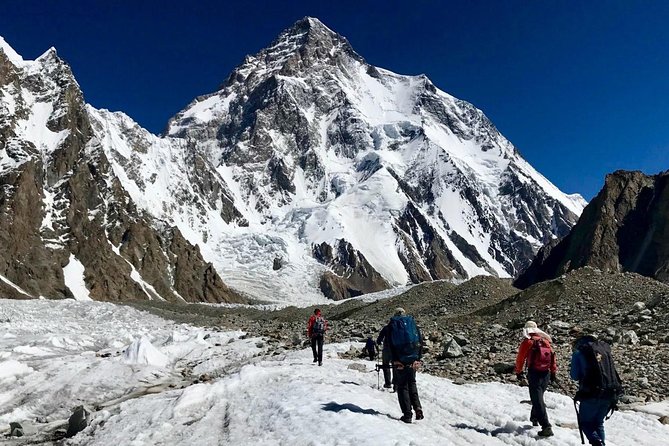
- Baltoro Glacier feels like an expedition: multiple days walking glacier terrain, not a casual hike.
- Concordia and Broad Peak Base Camp get smart placement: you camp in the area that helps you see K2.
- Weather delays get built in: buffer days are included in the Gondogoro La window.
- Skardu warm-up isn’t just a stopover: forts, bazaars, and local sights soften the jump into the mountains.
K2 Base Camp and Gondogoro La: why this combo works
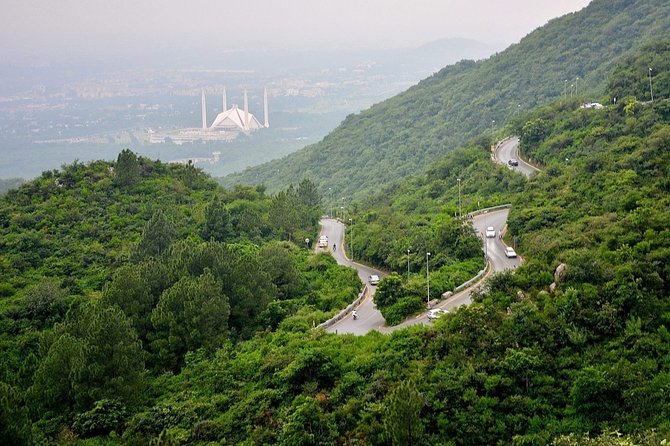
This is not just a K2 dream list item. The real magic is the way the route strings together the Baltoro Glacier’s big-name scenery with the Gondogoro La pass crossing, which is the trek’s hardest turning point.
You get that rare mix of “mountain spectacle every day” and “logistics that keep you moving.” Your guide is with you throughout, and the crew is there to keep the camp rhythm steady—food, tents, and timing—so you’re not spending energy on guesswork when you’d rather save it for the climb. It’s also a private trek, so the pace is set for your group rather than shoehorned into someone else’s schedule.
And yes, K2 can stay hidden until the right moment. That’s part of the appeal. When you do catch it—framed by the surrounding giants—it feels earned, not staged.
You can also read our reviews of more tours and experiences in Islamabad.
Islamabad to Skardu: the altitude story starts before you trek
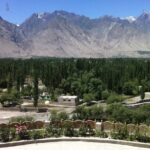
Your journey begins in Islamabad, with pickup offered and time to recover from your flights. If you land in the morning, you’ll meet your guide, transfer to a hotel, and then have briefing time later—plus optional sightseeing depending on how schedules line up.
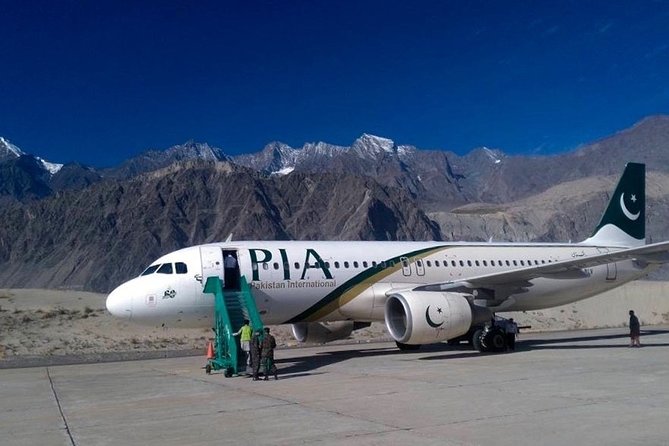
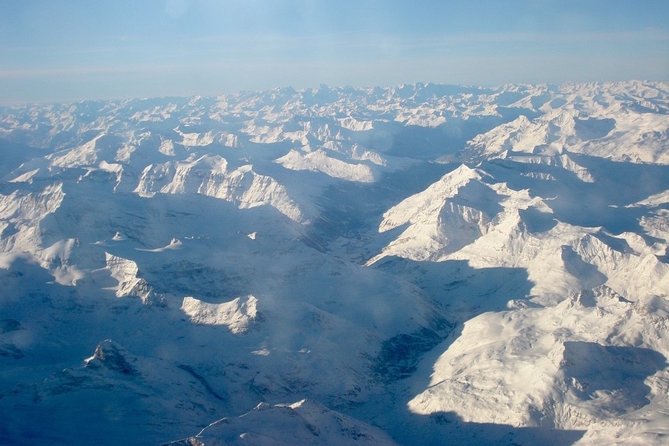
A big value here is that you don’t just teleport to the mountains. You fly from Islamabad to Skardu (about 45 minutes), weather permitting, and the flight itself can be a first taste of what’s waiting: Himalaya and Karakoram views, and sometimes even Nanga Parbat if the sky cooperates. If you’re lucky, you might spot K2 and the Gondogoro La area from above—but even without that, the approach helps you mentally switch gears.
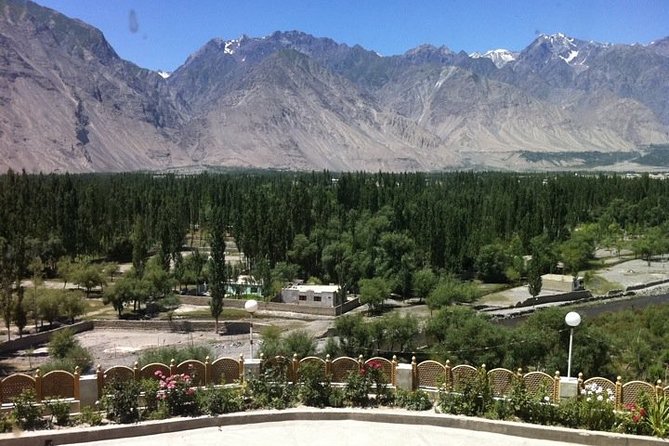
Skardu then gives you a breather with real place-feeling. You’ll explore the bazaar, historical forts, scenic lakes, and ancient rock inscriptions, including an 8th-century Manthal Lord Buddha Rock tied to earlier Buddhist pilgrimage influence in the region. It’s a nice contrast to glacier walking, and it helps you land in the trip before the mountains swallow the calendar.
The first trek days: rivers, forts, and the shift into Baltoro terrain
From Skardu, you start with Upper Kachura Lake area and the viewpoints above town. There’s a morning walk up toward Kharpocho Fort, which overlooks the Indus River and is a great photo spot at sunrise or sunset. You also visit an organic village, then you get free time to explore more—like a possible jeep trip to Satpara Lake—or just take in the local bazaar energy.
Then comes the move along the Indus. You drive through Shigar Valley toward Askoli, and this is where the trip starts feeling “alive” in a different way. One night is under the stars in Askoli, high above the Braldu River, with a single-street village feel and irrigated fields for corn, potatoes, and apricot groves.
On day four, you’re not just traveling—you’re building a base. The next camps introduce you to the reality of glacier-country trekking: early starts, creek crossings, and terrain that can force you to adjust on the fly. You’re headed toward Paiju, and along the way you may need to negotiate streams and possibly ford them depending on glacier melt.
Paiju is also a key psychological stop. It’s described as a green oasis under Paiju Peak, and from camp you get some of your first big Baltoro Glacier views, including the Trango and Cathedral groups. It’s the first moment the route’s “scale story” really clicks.
Paiju to Urdukas: learning the Baltoro rhythm
The middle trek days are where the Baltoro Glacier stops being a line on a map and becomes your main ground. From Paiju, you walk to the glacier snout, view melt water pouring out of the ice, then climb onto the glacier itself. Here the ice is rubble- and rock-covered, so the trail can be tough even while it’s still “followable.” The effect is odd in a good way: you’re walking on moving geology, not just a mountain path.
Next comes a short day that works hard anyway. You climb via undulating moraine, gain height, and continue east beside the Baltoro Glacier. Passing landmarks like the ship-like prow of Great Trango and the isolated pillar known as Nameless Tower gives you mental anchors—important on days when everything is gray, rugged, and far from familiar.
Then you reach Urdukas, and the payoff is big. The Trango Towers and Cathedral Peak sit opposite you with sensational visibility, and your camp setting makes it feel like you’re watching an entire theater from the best seat in the house.
You also get a crucial acclimatization move here. Urdukas is where the trek adds a rest day that actually supports altitude planning rather than breaking the rhythm at random. The area is described as the last campsite on grassy slopes off the main glacier, with washing and cleaning facilities—small comfort, but in this altitude range, it matters.
The Urdukas rest day: why this trip isn’t just endurance theatre
This is the kind of rest day that makes logistical sense. Instead of a total “do nothing and hope” pause, the approach is described around climbing higher while sleeping lower. It’s one of those simple altitude rules that works because it’s boringly effective.
The walk behind camp through grassy slopes full of alpine flowers is also a reminder that this trek isn’t only about hard effort. It’s about getting your breath back, letting your body adjust, and keeping your mindset sharp for what’s coming.
From a practical point of view, this rest day can help you avoid the common trap: you feel behind, so you push harder later, and then you pay for it. By placing the pause at Urdukas, the route reduces that risk when you’re moving deeper into the glacier system.
After that, you head back out onto higher terrain. You follow moraine edge eastwards, climb onto the broad back of the glacier, and pass areas like Yermanandu Glacier on the way. Views open up across peaks feeding the Baltoro—Muztagh, Masherbrum, Gasherbrum IV, and the Concordia junction. This is when you really start to understand why people call this stretch of Karakoram “wild” in the best sense.
Concordia and Broad Peak Base Camp: setting yourself up for K2
Reaching Concordia is a key point on this trip. You’re described as traveling through spectacular mountain scenery with the Baltoro’s big terrain. You pass Mustagh Tower along the way, and Gasherbrum IV becomes a visual beacon. As the route progresses, Broad Peak comes into view above the ridge connecting Marble Peak and Crystal Peak.
Concordia is where the trek’s geometry changes. You’re now in the zone where K2 is either hidden or suddenly showy, depending on weather and timing.
Then you get the smart adjustment: instead of assuming you must camp at Concordia every night before K2 Base Camp, you camp at the base camp of Broad Peak. The reason is practical—this gives you a better, more satisfying view of K2 without adding extra travel stress.
On day twelve, you do the early start up to K2 Base Camp. The highlight is not just arriving. You stop to admire K2 in one direction and, on the return, look back toward Concordia framed by Mitre Peak and Chogolisa bulk. Then you descend via the route that takes you back to Concordia and away from the glacier main line.
If your goal is K2 Base Camp without wasting your energy, this is the kind of planning that can make the difference between “I saw it” and “I remember it clearly.”
Upper Baltoro to Gondogoro La: the pass is the day you plan around
After K2 Base Camp, the trek leaves the main trail and heads along the Upper Baltoro toward the Vigne Glacier. The route is described as more far less travelled, with scrambling over moraine ridges to reach a flatter section with fewer crevasses. Then you push onward toward the confluence near the base of the Gondogoro La.
This sets you up for the pass crossing day. The Gondogoro La crossing is a big operational moment: you have an early start around 2am to minimize rockfall risk on the descent down the Hushe side. That means you’re up in darkness with head torches and a roped approach on glacier terrain.
The day is tough, but the description is clear about why: the views from the top are the reward, with all four 8000’ers visible in one direction and the descent toward Hushe Valley, plus the mention of Leila Peak in the mix.
Then comes the weather buffer. There’s a plan for delays and an extra chance to cross the pass if conditions don’t cooperate when scheduled. This matters because this trek explicitly requires good weather, and Gondogoro La is exactly the kind of place where “almost” doesn’t count.
Descent toward Hushe, plus the calm after the hard parts
Once you’re through the pass, the trek shifts from high-drama terrain to a different kind of beauty.
You walk onto glacier terrain again, pick your way across moraine and ice, and reach the Dalsangpa camping area, described as a field of flowers. You also get a spectacular view of Masherbrum and glacier cascading down from Masherbrum Pass.
Then comes the gradual drop in altitude and the return to trees. After the earlier cold and bare zones, Shaicho is described as a small village where you start seeing a more benign environment with bigger trees than you.
You camp at Saitcho (about 3350m) on a sandy area, and then the final walking day is described as an easy walk to Hushe village. This is where the expedition feeling starts to fade in a good way. Hushe is described as a larger village with alleys, traditional rounded river-stone houses with animals downstairs, and a mix of modern buildings like a shop, school, and hotel.
And then the vehicles are there. You drive back through the Khapulu Valley into Skardu via smoother roads following the Indus River, check into a hotel, and get some breathing room.
The drive back to Islamabad and the last big-view stop
Not everyone thinks about the return drive, but it’s part of the whole experience. You head back from Skardu to Islamabad by long road travel, with an option to stop overnight in Chillas.
On the way, there’s also a last big nature moment: Upper Kachura Lake. The plan includes driving toward the KKH, then continuing on to Islamabad. This is a nice way to end the trek without feeling like the mountains instantly vanished the moment you reached a village.
By the time you transfer to the airport on the final day, you’ll feel it. K2 Base Camp and Gondogoro La are not quick checkboxes. They’re the kind of effort that stays with you in your sleep, even after you swap glacier air for city air.
Price, value, and what’s actually included at $4,818.35
At $4,818.35 per person for about 20 days, this trek is priced like a serious expedition. The cost is not just for walking days.
You’re getting private transportation to and from the trek, a guide with you the whole time, and included meals: breakfast on 18 days, lunch on 17 days, and dinner on 18 days. Accommodation is a mix of camping during the trek and hotels on the longer travel days. There’s also pickup offered and mobile ticket support listed.
The value question is simple: will you use the support and included basics so your main energy goes toward trekking. If you’re traveling independently, arranging logistics, staffing, and a safe pass plan would cost time and money fast. This package is built for people who want to focus on the mountains, not the spreadsheets.
One clear consideration: travel insurance is not included. And because this is a high-altitude, weather-dependent itinerary, you should treat insurance as part of the plan, not an afterthought.
Guides, crew, and safety culture in the real world
This trek leans hard on teamwork. Your guide and crew are described as being there to keep things safe and smooth. The itinerary’s structure reflects that: early starts on key days, planned buffers for weather, and acclimatization timing like the rest day at Urdukas.
You’ll feel that crew support in the day-to-day rhythm too: camp setup, meal timing, and the logistics that keep the group moving when the terrain is unforgiving.
If you like routes where people do the hard organizing for you, this will feel comfortable. If you want maximum freedom to change plans on a whim, this is less your style. Glacier travel and Gondogoro La crossing don’t really care about your personal schedule.
Should you book K2 and Gondogoro La with Trango Adventure?
Book it if you want a private, guided K2 Base Camp trek that also treats Gondogoro La as a serious pass crossing with early timing, roped glacier travel days, and built-in weather contingencies. I also think it fits well if you value acclimatization structure and want a route that places you for good K2 views, including camping decisions around Concordia and Broad Peak Base Camp.
Skip it if you’re hoping for a relaxed hike. The plan includes difficult glacier terrain, an early 2am pass-style day, and long travel days. Also, the trip requires good weather, and the itinerary can be sensitive to conditions.
If you’re the kind of traveler who loves mountain effort and wants strong support while you’re doing it, this is one of those trips that rewards the planning you put into it.
FAQ
What is the meeting point and start time?
The meeting point is listed with a start time of 10:30 pm. You’ll want to confirm your pickup plan with the operator when you book.
Where does the trek start and end?
The trek starts and ends in Islamabad.
How long is the K2 and Gondogoro La trek?
The duration is listed as approximately 20 days (about 20 days) for the 21-day private trek.
What’s included in the price?
Private transportation is included, along with meals: breakfast is included for 18 days, lunch for 17 days, and dinner for 18 days. Accommodation is a mix of camping and hotels. Pickup is offered, and you also get mobile ticket support.
Are meals included, and on which days?
Yes. Breakfast is included for 18 days, lunch for 17 days, and dinner for 18 days. The exact meals match the itinerary days.
Is travel insurance included?
No. Travel insurance is listed as not included, so you’ll need to arrange it before you travel.
Does the trip require good weather?
Yes. The experience requires good weather, and if it’s canceled due to poor weather you’ll be offered a different date or a full refund.