REVIEW · ISLAMABAD
K2 Base Camp & GONDOGORO LA TREK
Book on Viator →Operated by Visit in Pakistan Treks, Tours and Expeditions · Bookable on Viator
K2 pulls people in. This trek gets you to the base of K2 and over Gondogoro La, with big mountain drama every few hours. You start in Islamabad with an easy landing, then build altitude step by step through the Karakoram.
I especially love the mix of long glacial days and calmer acclimatization time. And I like how the trip keeps the group small (up to 16), so your guide can actually keep track of everyone’s pace and energy.
One thing to think hard about is altitude and remoteness. You’re not just sightseeing at 5,000m plus, and weather can turn the trek serious fast, so moderate fitness plus solid acclimatization discipline matters.
In This Review
- Key Things That Make This Trek Worth It
- Islamabad Start: Museum Time and an Easy First Night
- The Karakoram Highway Drive: Babusar Top and Chilas Setup
- Skardu and Askole: Supplies, Briefing, and That Last Village Feeling
- Into the Baltoro: Braldu Valley, Baltoro Glacier Edges, and Trango Views
- Concordia to K2 Base Camp: The “Throne Room” Day and What It Really Means
- Gondogoro La and the 5,585m Pass Crossing: High Drama With a Plan
- Laila Peak Base Camp Area to Hushe Valley: The Green Reset After the Ice
- Return Drives and the Whole-Trip Perspective From Skardu to Islamabad
- Is $2,600 Good Value for 18 Days in the Karakoram?
- Who This Trek Suits Best (and Who Should Rethink It)
- Should You Book This K2 Base Camp and Gondogoro La Trek?
- FAQ
- How long is the K2 Base Camp & Gondogoro La Trek?
- What does the tour cost?
- How many people are in the group?
- Are pickups and mobile tickets included?
- What language will the guides speak?
- What transportation is included during the trek?
- Are meals included?
- What is not included in the price?
Key Things That Make This Trek Worth It
- Up-close K2 access from Concordia: you reach the 360-degree viewpoint around Concordia before heading to base camp.
- Gondogoro Pass at 5,585m: the high point is real, with wide peak views including K2, Broad Peak, and multiple Gasherbrums.
- Small-group pace (max 16): it’s easier to manage slower hikers and guide everyone safely through daily altitude gains.
- Expert, multilingual guiding: live English and Spanish speaking guides help you understand what you’re doing each day.
- Meals built into trekking days: trekking days include three meals, so you’re not hunting for food in remote camps.
- The signature Baltoro route: Baltoro Glacier scenery and the Trango Towers/Cathedrals give you those “only here” moments.
Islamabad Start: Museum Time and an Easy First Night
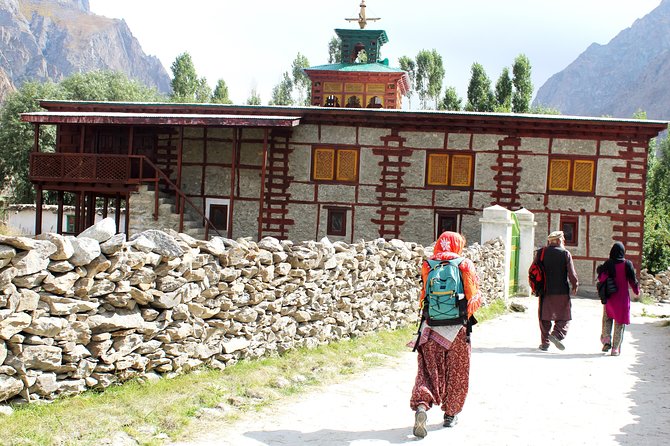
Your experience begins in Islamabad, after pickup and help with a smooth transfer from Islamabad International Airport to your hotel. Day one is deliberately light. You’re in a real capital city first, not strapped into a vehicle for hours immediately after landing.
The stop at the Pakistan Monument Museum gives you a quick grounding in local culture. It’s short, and it sets context before you head into the Karakoram where the geography feels almost alien. I like having at least one low-effort activity before the physical days start.
If you arrive early, you also get a flexible evening. That matters because Islamabad is where you can take a walk, grab a coffee, and let your body reset from travel.
What to watch for: if you’re the type who hates being idle, you’ll need to slow down on this day anyway. Sleep and hydration come first, because the mountains will ask for your energy later.
You can also read our reviews of more tours and experiences in Islamabad.
The Karakoram Highway Drive: Babusar Top and Chilas Setup
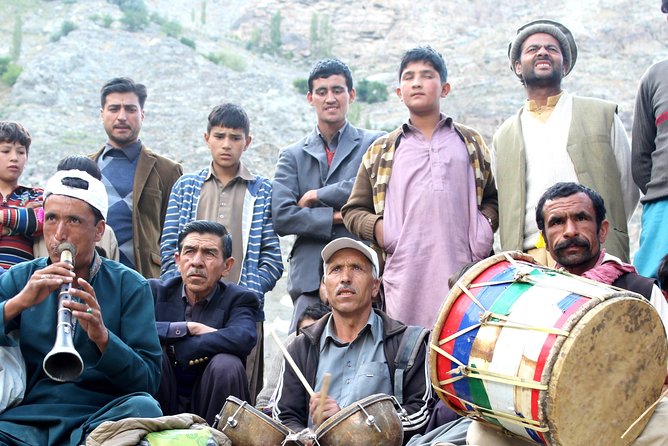
After breakfast, you roll out along the Karakoram Highway, one of those road journeys that feels like a mountain road show. The trip moves toward Chilas through dramatic high-altitude terrain, with a highlight stop at Babusar Top (4,173m). This is more than a photo stop. High passes like this help you understand what your body will face later: cooler air, thinner breathing, and that slow feeling in your legs.
Then you land in Chilas, which is known as a hub for expeditions to K2 and beyond. It’s also a cultural stop. You can see ancient rock carvings and petroglyphs from the Gandhara period around the area, which adds a human layer to the big scenery.
From here, the route keeps feeding you peak views. One day includes the Nanga Parbat Viewpoint at 8,126m, where you can stare at the “Killer Mountain” and realize how serious the Himalaya/Karakoram scale really is.
Practical consideration: you’re doing long drives on this portion. If you’re prone to motion sickness, bring what you use at home. Also, don’t judge the trip too quickly based on day two. The real mountain rhythm starts once the trekking begins.
Skardu and Askole: Supplies, Briefing, and That Last Village Feeling
Skardu is your gateway town, and arriving there by midday helps you get organized without rushing. You’ll have a pre-trek briefing where the guide reviews the itinerary, safety points, and essential details. This is where you want to ask the questions you tend to forget later—pace, layering, how you’ll handle cold nights, and what “good acclimatization behavior” looks like on this route.
Skardu also gives you time to adjust mentally. In the afternoon, you can explore Skardu Bazaar for handicrafts and gear, and if timing allows, you may have options like Sheosar Lake or Deosai National Park. Even if you skip those side trips, the value is the same: a buffer day to get your gear sorted and your expectations set.
Then comes the jeep ride from Skardu to Askole, the last village before the trek to K2 Base Camp starts. Askole sits at 3,050m, and the road feels rougher and more remote as you go. When you reach Askole, you check in, relax, and acclimatize before the hiking begins.
What you’ll feel here: the shift from “tour” to “adventure.” Once you’re in Askole, there’s less noise and more focus. You’ll notice how quickly your mind starts planning the next day’s climb.
Into the Baltoro: Braldu Valley, Baltoro Glacier Edges, and Trango Views
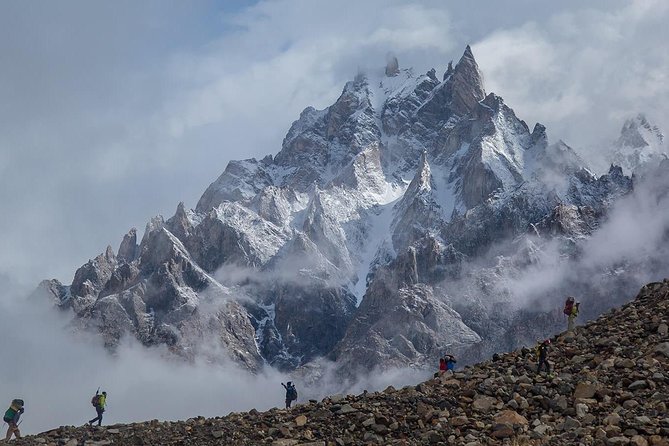
This trek really earns its reputation once you start walking from Askole toward Jhola Camp (3,200m). The route takes you along the Braldu Valley. You’ll walk for hours through rocky trails, grassy meadows, and river-side sections, passing scattered villages and gaining altitude at a steady rate. It’s a good first trekking day because it’s challenging without being a brutal assault.
Next you head from Jhola to Paju/Paiyu Camp (3,450m). Expect a 5–6 hour hike. By then, altitude becomes more noticeable, and you’ll start feeling that you can’t power through like a normal hike.
Then the route includes a rest day at Paju (3,450m). This isn’t wasted time. A rest day here helps you adapt before you commit to the glacier route. You can take short walks around camp, hydrate, and let your body settle.
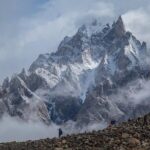
After that, you step into the heart of the show: Baltoro Glacier scenery. The trek from Paju to Khoburtse (3,800m) is designed to put you alongside major glacial features. You follow the lateral moraine of the Baltoro Glacier, and you start seeing the Trango Towers rise dramatically above the ice. This is one of those stretches that can make you stop walking just to look up.
Then you move from Khoburtse to Urdukas (4,050m), with the trail running through rocky moraine, glacial streams, and meadows. Urdukas stands out for dawn and sunset views of the Trango Cathedrals—sharp granite spires that catch light in a way you don’t get back home.
From Urdukas to Goro II (4,300m) and then to Concordia (4,600m), you keep traveling deeper across the Baltoro system. These are 5–6 hour days through a mix of glacier edge terrain and moraine. It’s dramatic and remote, and you’ll start thinking about this place as its own world.
Balanced note: the Baltoro section is physically demanding, and it’s also mentally intense. You’ll want to keep your pace calm. The best days come from steady breathing, not speed.
Concordia to K2 Base Camp: The “Throne Room” Day and What It Really Means
If you care about big mountain views, the day you arrive at Concordia (4,600m) is a payoff moment. Concordia is often described as a throne-room setting, and the practical reason is simple: you get a wide, high viewpoint where multiple giants show themselves clearly. From here, you can see K2 (8,611m), Broad Peak (8,047m), and nearby Gasherbrum peaks.
Then you go from Concordia to K2 Base Camp at about 5,135–5,050m (the itinerary lists K2 base camp around 5,050m). The hike takes around 5–6 hours and follows the Godwin-Austen Glacier. This is where the mountain stops being a name and becomes a physical presence, especially with K2’s massive ice face dominating the approach.
At base camp, you’re not climbing the peak. You’re at the place where mountaineers prepare. That context matters: it makes the moment feel grounded rather than theatrical. After spending time there, you return to Concordia for the night.
What to consider: this is the kind of day where cold can creep in even when the sun is up. If you tend to run cold, pack extra warmth and wear layers you can adjust on the walk.
Gondogoro La and the 5,585m Pass Crossing: High Drama With a Plan
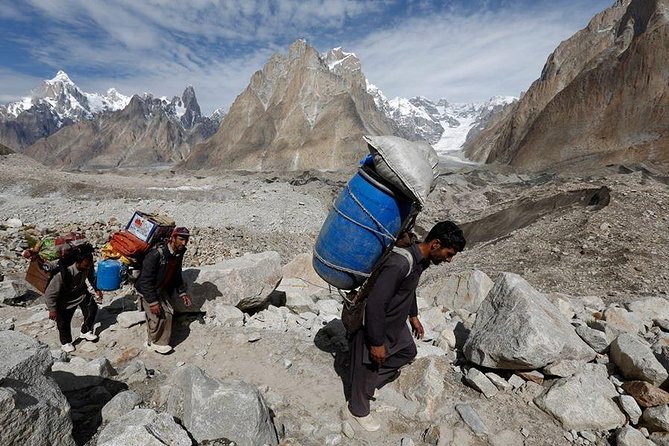
After K2 Base Camp and the return to Concordia, you shift focus to the second big challenge: Gondogoro La and the Gondogoro Pass (5,585m).
You spend the next stage moving toward the pass. You head from the lower camp area up to Gondogoro La High Camp, with the approach taking about 5–6 hours and involving rocky terrain, moraines, and glacial meadows. The high camp night is for acclimatization and preparation. You’ll rest, eat, and try to sleep with the reality that the next day involves real altitude gain.
The pass crossing is the highlight day. You start early from Gondogoro La High Camp to reach the summit of the Gondogoro Pass at 5,585m, where you get panoramic views of K2, Broad Peak, Gasherbrum I, II, and IV, and Masherbrum.
Then you descend to Khespang, taking around 4–5 hours. The itinerary notes it as mostly downhill, through rocky and alpine terrain. That descent matters because it’s your transition back from maximum altitude into something more workable.
Practical reality check: the pass day is the one you respect the most. Early starts, slow steps, and staying mentally calm are key. If you’ve ever rushed on a hike, this is not the day for it.
Laila Peak Base Camp Area to Hushe Valley: The Green Reset After the Ice
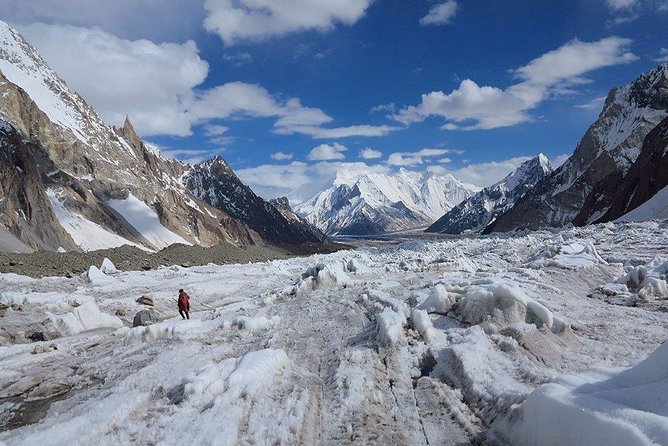
After the pass, your route shifts into a different mood. You trek from Khespang to Saicho (~3,200m) on a longer descent (about 6–7 hours). Along the way, you head toward the Laila Peak Base Camp area, which sits at the foot of Laila Peak (6,096m). Even if you don’t climb the peak, seeing it from below gives you a clear sense of the ridge line and sharp geometry that makes this area special.
Then you go from Saicho to Hushe (about 4–5 hours). This is where the change of scenery feels earned. The itinerary describes Hushe Valley as green and calm compared to the glacier days, with fields, alpine meadows, and small villages. You can also enjoy views of peaks like Masherbrum and K6.
Once you reach Hushe, you drive back to Skardu (about 4–5 hours). It’s a nice late-trip transition: you stop stepping and start riding, and the body gets a chance to recover.
What I like about ending this way: after high camps and thin-air breathing, you get a valley day where the air feels more normal and your senses relax.
Return Drives and the Whole-Trip Perspective From Skardu to Islamabad
On the last stages, you travel back toward Islamabad from Skardu via either Chilas or Naran, depending on the route. The drive from Skardu typically takes 8–10 hours, and you’ll pass different mountain-and-river zones as you descend toward more temperate scenery.
Even in a seat instead of on a trail, you’ll notice the gradient of the experience: glacier days felt like a different planet, while the lower valleys start to feel like real life again—rivers, forests, and settlements.
When you finally reach Islamabad, you get time to freshen up and head out to the airport.
Is $2,600 Good Value for 18 Days in the Karakoram?
At $2,600, this trek isn’t cheap, but it’s not just a flight-and-hotel package either. You’re paying for an experienced team, multilingual live guiding, trekking meals on trekking days (three times per day), and key logistics that would be painful to coordinate alone in this remote region.
The value also depends on what you need to add. The trip lists several items as not included: permits (including the Gilgit Baltistan Adventure and CKNP trekking permit), personal insurance, heli rescue (on request), staff gratuity, and air tickets. So budget for those carefully. If you already have solid international flights and a plan for insurance, the $2,600 starts to look more like a reasonable “service package” for a hard, high-altitude trek.
My advice: treat this as a full expedition cost, not just a trekking fee. If you’re the kind of traveler who wants everything managed—transport links, camp-level support, route timing—this price starts to make sense. If you’re trying to minimize overhead and handle permits yourself, you may end up comparing apples to oranges.
Who This Trek Suits Best (and Who Should Rethink It)
This trip fits best if you:
- Enjoy real trekking days and want the K2 Base Camp + Baltoro Glacier + Gondogoro Pass combo.
- Can handle altitude responsibly and follow guidance on pacing.
- Prefer small-group attention over large herds on trails (maximum 16 travelers).
You might rethink it if you:
- Want a mostly comfortable walk with low altitude exposure.
- Get easily stressed by cold nights, long days, and big weather swings.
- Don’t have a plan for insurance and permits, since those are not bundled.
One more helpful clue: the tour states travelers should have moderate physical fitness. That’s not an ultra-marathon standard, but it does mean you should be ready for sustained hiking days at altitude.
Should You Book This K2 Base Camp and Gondogoro La Trek?
If you want a trek that combines the most famous mountain views with one of the region’s true high passes, I’d say yes—with conditions.
Book it if your dream includes:
- Standing in the viewpoint area around Concordia and then walking into K2 Base Camp reality.
- Taking on Gondogoro Pass (5,585m) with a planned acclimatization night.
- Traveling with live English/Spanish guidance and a team that focuses on safety and logistics.
Don’t book it yet if you’re unsure about altitude discipline, you can’t manage permits/insurance costs, or you’re expecting a light walking vacation. This is adventure travel with structure, not a casual hike.
If you decide to go, do yourself a favor: prepare for cold, pack layers you can adjust, and commit to slow steps on the high days. The payoff is there, and it’s the kind you remember for years.
FAQ
How long is the K2 Base Camp & Gondogoro La Trek?
The trek is listed as about 18 days.
What does the tour cost?
The price is $2,600.
How many people are in the group?
The tour has a maximum of 16 travelers.
Are pickups and mobile tickets included?
Pickup is offered, and mobile tickets are included.
What language will the guides speak?
The tour includes a live English and Spanish speaking guide.
What transportation is included during the trek?
Transport between Skardu–Askole–Hushe–Skardu is included.
Are meals included?
Trekking days include three-times-per-day meals.
What is not included in the price?
Personal insurance and heli rescue (can be facilitated on paid request), staff gratuity, Gilgit Baltistan Adventure and CKNP trekking permit, and domestic and international air tickets are not included.