REVIEW · KATHMANDU
14-Day Private Annapurna Base Camp Trek
Book on Viator →Operated by Nepal Hiking Team · Bookable on Viator
Altitude and hot springs, all in one week. This private trek through the Annapurna ranges is built to keep logistics off your plate, from airport transfers to lodge nights, while still getting you real time on the trail, plus a dip at Jhinu Danda Hot Spring. I like how the trip includes practical gear like a down jacket and sleeping bag, so you’re not scrambling last-minute. I also like the private-group feel, where the pace and breaks can fit your body.
One thing to consider: even with all the support, you’re still going to gain serious altitude—over 4,000 meters at Annapurna Base Camp—so you’ll need steady, patient pacing and good weather.
In This Review
- Key details that matter most
- Entering The Annapurna trail: the Kathmandu-to-Pokhara setup
- Pokhara to Tikhe Dhunga: your first real climb day
- Ghorepani and Poonhill: the timing that makes mornings worth it
- Tadapani to Chhomrong and beyond: where the trail starts to test you
- Deurali to Annapurna Base Camp via Machhapuchhre Base Camp: the main event
- The long downhill: Base Camp to Bamboo, then Jhinu Danda hot spring
- Private trek logistics: what you’re buying beyond the view
- Your support team on the trail (and why it shows up in real comfort)
- Altitude, weather, and how to make the trek feel manageable
- What you should pack (because “included” still isn’t everything)
- Should you book this Annapurna Base Camp private trek?
- FAQ
- How long is the Annapurna Base Camp trek?
- Where does the trek start and end?
- Is airport pickup and drop-off included?
- What’s included for meals during the trek?
- Are hotel rooms included in Kathmandu and Pokhara?
- What kind of lodge or teahouse accommodation should I expect on the trek?
- Do I need to arrange trekking permits?
- Does the trek include guide and porter support?
- What trekking gear is provided?
- What if weather is bad or the trip can’t run?
Key details that matter most
- Private group rhythm: only your group participates, so your guide can manage your pace and stop timing.
- Gear is handled for you: duffle bag, maps, down jacket, and sleeping bag use are included.
- Oxygen check included: a first-aid kit comes with an oximeter to monitor oxygen level and heartbeat.
- Hot spring payoff after the hard part: Jhinu Danda Hot Spring is a highlight on the return.
- You’ll share lodge space: lodge/teahouse rooms are typically shared with 4–5 people during the trek.
Entering The Annapurna trail: the Kathmandu-to-Pokhara setup
Your trek is organized around two easy-to-miss factors: getting to the trail smoothly, and starting each hiking day with less stress. You land at Tribhuvan International Airport, then get private car pickup and drop-off. That matters in Kathmandu, where traffic and navigation can turn a “simple start” into a time sink.
After arrival, the plan shifts to Pokhara by tourist bus. That’s 6–7 hours, and it’s part of the trek’s pacing logic: you’ll have time to settle before the first real walk days. In Kathmandu and Pokhara, you stay in a 3-star category hotel with twin rooms—nice if you want at least a proper base before the mountain routine begins. (Lunch and dinners in the cities are not included, so you’ll decide what fits your budget and appetite.)
You can also read our reviews of more tours and experiences in Kathmandu.
Pokhara to Tikhe Dhunga: your first real climb day
Day 03 starts at Tikhe Dhunga (1,495m). You’ll cover about 9 km and hike around 4 hours. The walking here is your “warm-up with meaning”—enough effort to get your legs moving, but not so long that you’re wrecked before the next altitude step.
This day also matters because it sets expectations for the Annapurna style of trekking: steady ups and downs, village paths, and lots of time spent noticing how quickly the environment changes with elevation. You’ll feel it most in your breathing, not just your legs. If you’re the type who likes to go hard early, consider saving that energy. The goal is to arrive at higher elevations feeling like you can still enjoy the views (and the tea-stops).
Ghorepani and Poonhill: the timing that makes mornings worth it
Day 04 is the long one in this stretch: around 13 km, about 7 hours, from Tikhe Dhunga to Ghorepani (2,850m). This is a solid hiking day. Expect fatigue if you treat it like a casual stroll.
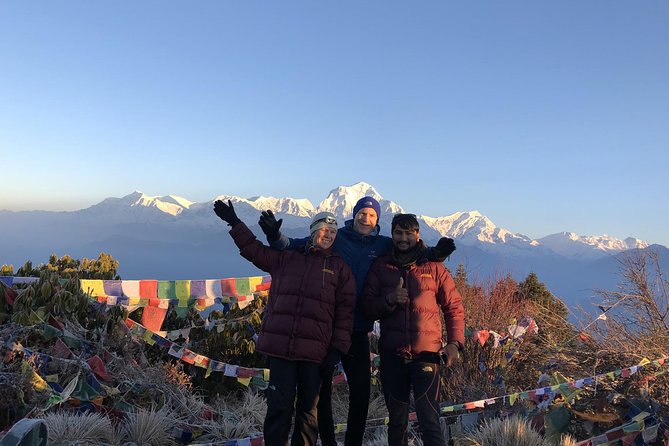
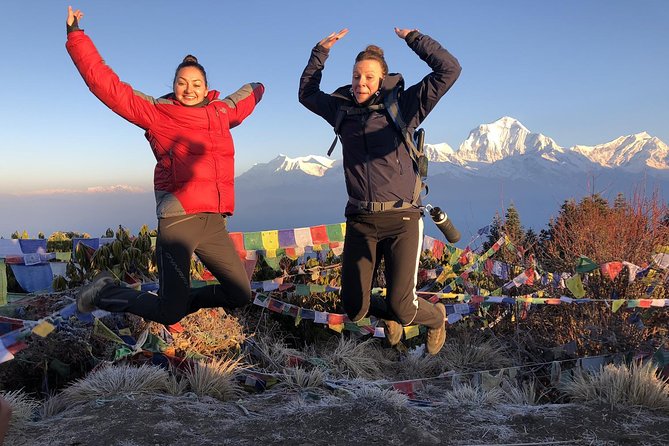
Then comes Day 05: hike to Poonhill (classic viewpoint) and continue to Tadapani (2,500m). That means you’re not just climbing—you’re climbing with a purpose. Poonhill is popular because the payoff comes early in the day, when the air can feel clearer and the light can make ridgelines look sharper. It’s also a nice transition day: you get a big-view moment, then you continue trekking into Tadapani where you can reset.
Practical tip: keep your pace conversational. You want to feel steady at Poonhill, not gasping the whole time. You’re going high, and your body needs time to adapt.
Tadapani to Chhomrong and beyond: where the trail starts to test you
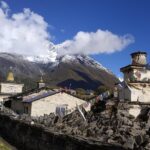
Day 06 runs Tadapani to Chhomrong village (2,020m), 8.5 km and about 5 hours. Chhomrong is a big “settle in” stop on many Annapurna Base Camp plans, and it’s usually where trekkers start to feel the mountain rhythm: your schedule becomes simple (walk, eat, rest), and your decisions get easier because you already know what a typical day looks like.
Day 07 goes from Chhomrong to Dovan (2,600m) over 9 km and about 5 hours. Day 08 continues Dovan to Deurali (3,200m) at 7.8 km and around 4 hours. Notice the pattern: the hikes are shorter than the day before, while the elevation still climbs. That’s the compromise trekking teams make so you can move upward without burning yourself out.
What I like about this pacing is that it gives your body room to respond. If you push too hard here, you’ll pay later at higher elevation. If you stay steady, the mountain starts to feel like it’s working with you instead of against you.
Deurali to Annapurna Base Camp via Machhapuchhre Base Camp: the main event
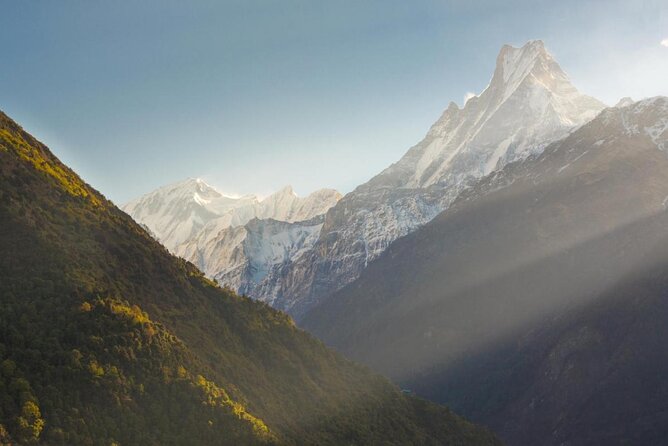
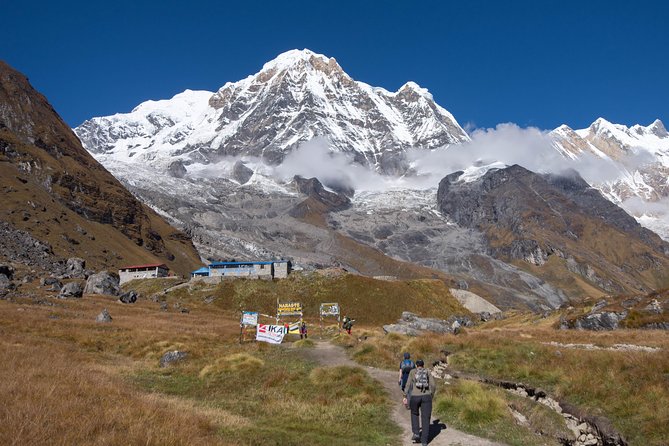
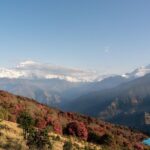
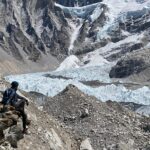
Day 09 is the crown day: Deurali (3,200m) to Annapurna Base Camp (4,230m) via Machhapuchhre Base Camp. It’s about 8 km and 5–6 hours. You’re hiking into thin-air country now, where effort feels different. Even if you’re not sprinting, you’ll feel your heart working more than you expect.
This is where the included health support becomes more than a gimmick. You get a first-aid medical kit and an oximeter to monitor oxygen level and heartbeat. It doesn’t replace good judgment (slower is always smarter above 3,000m), but it can help your guide make better decisions if someone starts to struggle.
When you reach Base Camp, you’ll want time to breathe, look around, and not treat it like a checkpoint you sprint through. Also, you’ll likely feel cold quickly at these heights, even in the daytime. That’s one reason having a down jacket included is such good value here.
The long downhill: Base Camp to Bamboo, then Jhinu Danda hot spring
Day 10 takes you from Annapurna Base Camp back to Bamboo (2,310m) over 18 km and about 7 hours. This is a big mileage day. The trick is that downhill can be harder than it looks because your knees and quads do the work in a different way. You’ll want good trekking habits here: short steps, controlled descents, and breaks before you’re desperate.
Day 11 is Bamboo to Jhinu Danda Hot Spring (1,780m), about 12 km and around 6 hours. After the climb-and-drop of Days 9 and 10, the hot spring stop is a morale machine. You’ll feel your body unwind in a way that a normal rest day never quite does. It’s also a memorable contrast moment—mountain effort, then a simple warm soak.
Day 12 brings you back from Jhinu Danda to Pokhara. Then Day 13 is Pokhara back to Kathmandu.
Private trek logistics: what you’re buying beyond the view
The headline price is $1,090 per person for the 14-day private trek. Here’s the honest way to see value: you’re not just paying for scenery. You’re paying for planning, staffing, permits, gear support, and meals during the trekking days.
Included that actually matters:
- Airport pickup/drop-off by private car
- Kathmandu and Pokhara hotels (3-star category, twin room)
- Trekking meals (breakfast, lunch, dinner) with the option to choose from a menu
- Lodge/teahouse accommodation during the trek (room sharing: 4/5 people)
- Permits and service charges (you bring 3 passport size photographs)
- Staffing: 1 experienced guide, plus a porter between 2 trekkers
- Trek gear use: duffle bag, trek map, down jacket, and sleeping bag use
- Optional trip achievement certificate
What isn’t included:
- Meals in Kathmandu and Pokhara
- Travel insurance (not optional for outdoor activities in Nepal, and it’s not provided)
- Nepal visa fee
- Personal trekking equipment
- Drinks and drinking water
- Tips for trekking staff and driver
- Private vehicle and airfare to/from Pokhara
So is it worth it? For a private ABC trek—especially one that provides gear and includes trekking meals, permits, and health monitoring—it’s a fair package. If you planned to do this independently, you’d still have to hire guide/porter, buy permits, and solve the gear and lodge details. The trip is trying to remove that hassle so your energy goes into walking and enjoying the days.
Your support team on the trail (and why it shows up in real comfort)
This trek is run as private, meaning your group stays together and your guide manages timing. You’ll have a guide plus a porter between 2 trekkers, which is huge if you want to keep your daypack light. That can change how you feel at higher elevations.
Guides and porters are also repeatedly the reason trekkers describe the experience as smooth. Names that show up for Annapurna Base Camp trips with Nepal Hiking Team include Pabin, Deepak Dhakal, Bibek, and Paban. You can’t guarantee which person you’ll get, but you can expect the same type of support: calm, detail-focused, and centered on keeping you safe and on schedule.
One more practical point: there’s a note about a private activity restricted to your group. The plan doesn’t spell out what that activity is, but the big idea is consistent—your trek shouldn’t feel like a shared cattle line with strangers.
Altitude, weather, and how to make the trek feel manageable
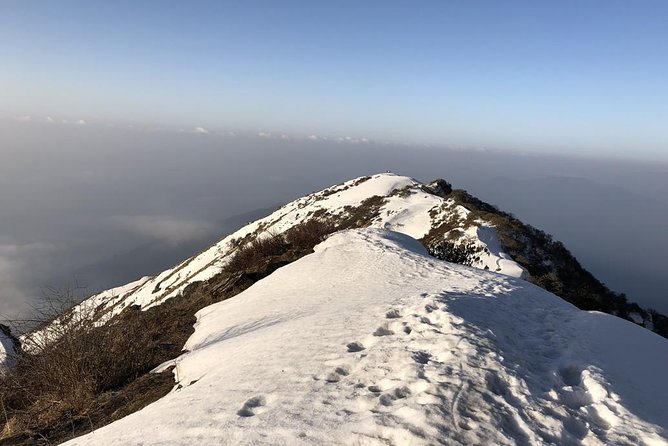
The route is set to reach heights of more than 4 km above sea level, with Annapurna Base Camp at 4,230m (13,810 feet). That’s not a “one-size-fits-all” height. Your best tool is pacing.
You’ll feel it most between your climbing days and after long walking hours. That’s why the itinerary isn’t just about getting from A to B. It builds in moderate hiking lengths on higher elevation days (like Dovan to Deurali), and it gives you a big-view target earlier (Poonhill), which helps keep mental energy up.
Weather matters too. This experience requires good weather, and if it can’t run as planned, you’ll be offered a different date or a full refund. That’s not just fine print—mountain trekking is weather-based, and a competent provider plans for it.
What you should pack (because “included” still isn’t everything)
The tour supplies gear use (down jacket and sleeping bag use) and provides a duffle bag and map. That takes away big costs and big headaches.
Still, plan to bring your personal trekking basics because they aren’t included:
- Personal trekking equipment
- Any clothing layers you prefer for cold mornings and evenings
- Sunglasses and sun protection (altitude sun is no joke)
- Your own water approach, since drinking water and other drinks aren’t included
- Any small items like blister care and basic hygiene supplies
Also, you’ll want to arrive with a moderate physical fitness level. The itinerary has long walking days and steep-feeling segments, even when the hiking time seems reasonable on paper.
Should you book this Annapurna Base Camp private trek?
Book it if you want:
- A private ABC trek with staffing and planning handled
- Included trekking meals, lodge stays, and permits
- Gear support that reduces what you must pack and buy
- A built-in health and safety approach using an oximeter
- The reward combo of Base Camp plus Jhinu Danda Hot Spring
Think twice if:
- You know you’re not ready for altitude and long days on uneven paths
- You’re very sensitive to cold and you don’t want to manage layers carefully (even with a down jacket provided)
- You want full control over every meal and city night (since Kathmandu and Pokhara meals aren’t included)
For most people, the decision comes down to one question: do you want your mountain trip to feel like a well-run plan—or like a DIY problem? This one leans hard toward the first option.
FAQ
How long is the Annapurna Base Camp trek?
It’s listed as 14 days (approx.).
Where does the trek start and end?
It starts in Kathmandu and includes return transport back to Kathmandu, with the trekking route moving through Pokhara and into the Annapurna region.
Is airport pickup and drop-off included?
Yes. You get airport pickup/drop-off by private car.
What’s included for meals during the trek?
Breakfast, lunch, and dinner during the trekking days are included. You can choose meals from a menu yourself.
Are hotel rooms included in Kathmandu and Pokhara?
Yes. Accommodation is included in Kathmandu and Pokhara in a 3-star category hotel (twin room).
What kind of lodge or teahouse accommodation should I expect on the trek?
Lodge/teahouse accommodation is included, with rooms shared (4/5 people per room).
Do I need to arrange trekking permits?
Permits are included. You need to bring 3 passport size photographs.
Does the trek include guide and porter support?
Yes. You get 1 experienced guide for the group, plus 1 porter between 2 trekkers.
What trekking gear is provided?
Included gear use covers a duffle bag, trek map, down jacket, and sleeping bag.
What if weather is bad or the trip can’t run?
The experience requires good weather. If it’s canceled due to poor weather, you’ll be offered a different date or a full refund. There’s also free cancellation up to 24 hours in advance for a full refund.