REVIEW · KATHMANDU
13 Days Trekking in Annapurna Circuit
Book on Viator →Operated by Blissful Himalayas · Bookable on Viator
Thirteen days in the high Himalaya. The Annapurna Circuit stitches together classic Nepal villages, big river walks, and one tough finish at Thorong La Pass. It’s a lodge-based trek, so you’re not living out of a tent the whole time.
Two things I really like: you get solid back-up logistics (route map, permits, and practical first-aid gear with an oximeter), and your days are paced around real acclimatization—especially with a full Manang rest day. A second win is the people: guides like Ravi and Sandip have a track record of being professional and attentive, down to making sure you’re comfortable and well fed.
One consideration: the itinerary still climbs to serious altitude, and Day 11 starts early for the 5,416m pass. If you’re not comfortable with slow, steady effort (and possible cold, thin-air headaches), this is where you’ll feel it.
In This Review
- Key points worth your attention
- Why the Annapurna Circuit feels like a full Nepal journey
- From Kathmandu toward the trek: transport that sets expectations
- Day-by-day walking route: what each stop gives you (and what to watch)
- Day 1: Kathmandu to the Bulbule/Besisahar area
- Day 2: Bulbule to Bahundanda
- Day 3: Toward Chamche via forests and suspension bridges
- Day 4: Descent and villages toward Dharapani
- Day 5: Up to Chame
- Day 6: Chame to Lower Pisang
- Day 7: Lower Pisang to Manang
- Day 8: Acclimatize in Manang
- Day 9: Manang to Yakkharka
- Day 10: Yakkharka to Thorong Phedi
- Day 11: Thorong La Pass (5,416m) and the big descent
- Day 12: Trek ends, drive to Pokhara, team dinner
- Day 13: Your next move from Pokhara
- Tea houses, meals, and what comfort really means here
- Thorong La pacing: how to protect your pass day
- Guides, permits, and why the back-office work matters
- Price and logistics: does $809.10 feel like value?
- Who should book this Annapurna Circuit trek
- Should you book this trek with Blissful Himalayas?
- FAQ
- What’s the duration of the Annapurna Circuit trek?
- Where does the trip start?
- What’s included for meals and lodging during the trek?
- What altitude challenge should I plan for?
- What permits are covered?
- Is there medical support included?
- What’s the cancellation rule?
Key points worth your attention
- Thorong La Pass day is the centerpiece, with an early start and big panoramic payoff
- Manang is built in for acclimatization, not just a quick stopover
- Tea house lodging and all standard meals are included, which makes planning much easier
- Permits and paperwork are handled (Annapurna Conservation Permit and TIMS)
- First-aid gear includes an oximeter, a real comfort when altitude is involved
- Private group trekking keeps the pace and decisions in your hands
Why the Annapurna Circuit feels like a full Nepal journey
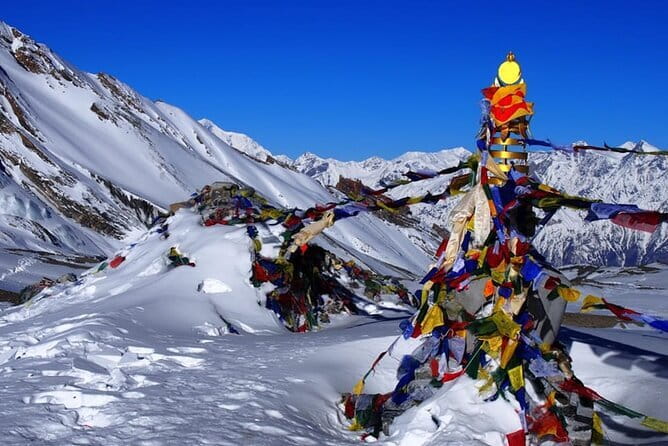
The Annapurna Circuit isn’t just about walking from point A to point B. You’re crossing a pass, yes, but you’re also moving through Nepal’s different “altitude worlds,” from lower hills into higher, drier terrain. That’s why the trek feels like a journey instead of a single long grind.
I also like that this version of the trek stays lodge-based. You’ll be living in guesthouses most nights, so the focus stays on the walk and the views—not on campsite setup and gear management. And when you’re tired at the end of the day, the routine of hot meals and warm drinks matters more than you think.
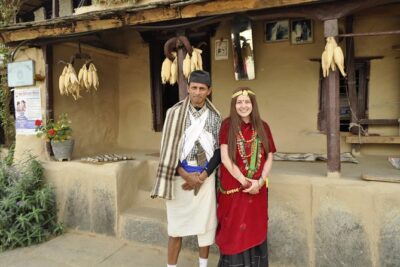
The route also gives you plenty of village flavor. You’ll pass through areas associated with Gurung and Manangi communities, and later you reach Manang, known for its Tibetan-style culture and monasteries. That mix of people, prayer walls, and mountain scenery is part of what makes the trek feel genuinely local.
You can also read our reviews of more tours and experiences in Kathmandu.
From Kathmandu toward the trek: transport that sets expectations
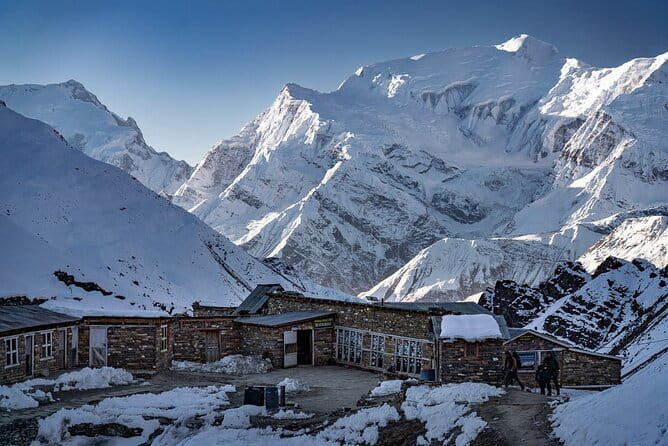
You start in Kathmandu, with pickup from the airport by private vehicle available if you need it. From there, you’ll head toward the Annapurna region with public bus transport from Kathmandu to Besisahar, plus shared transportation onward to the trail area.
On Day 1, the long travel leg is part of the deal: you’re looking at a roughly 9-hour scenic ride toward the Bulbule area (around 820m). This isn’t a quick warm-up; it’s you getting oriented to Nepal’s road life and lower-hill scenery before your legs take over.
When you’re planning clothes and timing, treat Day 1 like a travel day with early fatigue. Keep your layers accessible, keep water and snacks within reach, and expect dust and bumps on the roads.
Day-by-day walking route: what each stop gives you (and what to watch)
Day 1: Kathmandu to the Bulbule/Besisahar area
After the drive from Kathmandu toward the trail region, you’ll settle in with the first transition from city to mountain life. This day is mostly about positioning yourself and letting your body adapt to the idea of altitude and hiking rhythm.
Practical note: use this day to organize your trekking basics—power bank, socks, lip balm, and a plan for keeping small bills handy.
Day 2: Bulbule to Bahundanda
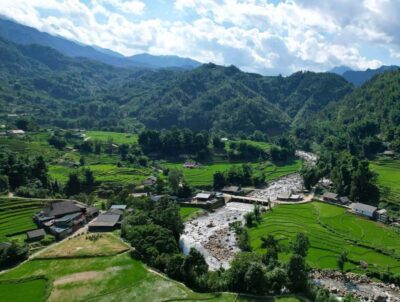
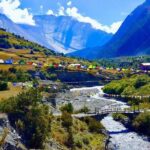
You start trekking from the Bulbule area toward Bahundanda. Expect a gentle, gradual climb through terraced fields and charming villages, which is perfect for getting your pace right.
This is a good day to test your boots and find your steady tempo. Don’t force speed; on an acclimatization-focused itinerary, early control matters.
Day 3: Toward Chamche via forests and suspension bridges
Today’s route takes you through dense forest stretches and multiple suspension bridges, with the Marsyangdi River and its tributaries along the way. It’s a scenic walk that also quietly builds your stamina with changing footing and steady effort.
Watch your footing at bridge crossings—wind and uneven boards can make a simple crossing feel more technical than it should.
Day 4: Descent and villages toward Dharapani
You trek toward Dharapani, passing through Gurung and Manangi villages. This is where the trek starts feeling more culturally layered, not just visually dramatic.
As the elevation shifts, the weather can change fast. Pack for layers you can add and remove in minutes.
Day 5: Up to Chame
You make it to Chame, the administrative center of the Manang District. The walk brings strong views of peaks like Lamjung Himal and Annapurna II, along with a shift in vegetation as altitude increases.
This is often a day where your breathing starts to notice the climb. If you catch yourself speeding up on uphill stretches, back off. The guide’s pace is usually the safest pace.
Day 6: Chame to Lower Pisang
You continue toward Lower Pisang, moving through forests and small villages. As you approach Pisang, views of Annapurna II, III, and IV get better in a way that makes the effort feel worth it.
Lower Pisang can be a solid “re-set” location—enjoy a slower dinner and early lights-out. Sleep matters for the next couple of higher days.
Day 7: Lower Pisang to Manang
You trek to Manang, a larger village with a strong Tibetan-influenced atmosphere and monasteries. This is also where many people mentally shift from “training walk” to “high-altitude trek.”
Because this is a bigger stop, you can often use the time to rest your body properly. Treat the day like acclimatization prep, not a sightseeing marathon.
Day 8: Acclimatize in Manang
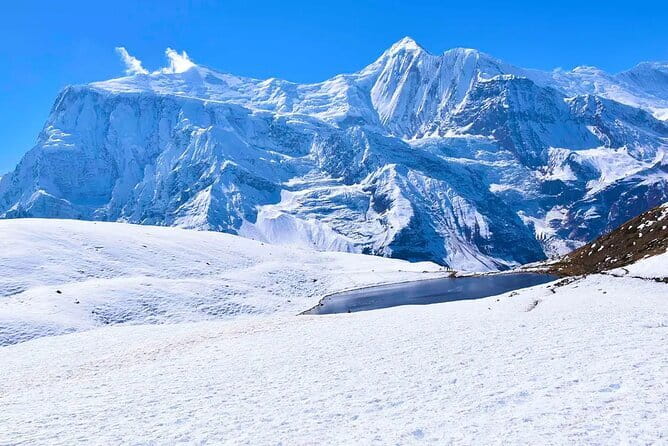
You take a full acclimatization day in Manang. Options include a hike to Gangapurna Lake or a shorter trek to Praken Monastery for panoramic views of Gangapurna, Annapurna III, and Himalchuli.
This day is valuable because it reduces the risk that you’ll feel hammered later at higher altitude. Even if you don’t do a long excursion, you still benefit from staying at the same altitude and letting your body adjust.
Day 9: Manang to Yakkharka
You move from Manang toward Yakkharka, with sparser forests and more high-altitude terrain. As you approach Yakkharka, the views of Annapurna II and Gangapurna are described as incredible.
This is another day where it helps to go slower than feels necessary. At this height, consistent effort beats bursts.
Day 10: Yakkharka to Thorong Phedi
Today takes you to Thorong Phedi, the base area for the Thorong La push. The path gets steeper as you approach higher altitudes, so you’ll want to keep your breathing calm and your steps deliberate.
Think of Thorong Phedi as your “mental staging area.” Tomorrow is the big day; tonight you want comfortable sleep and a simple plan.
Day 11: Thorong La Pass (5,416m) and the big descent
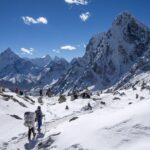
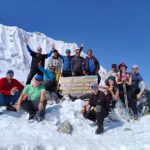
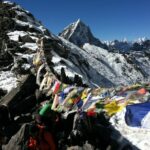
This is the hardest and most rewarding day. You start early for the climb to Thorong La Pass at 5,416m, where you can expect 360-degree panoramas of the Himalayas.
The reality: the ascent is demanding, and the air is thinner, so it’s not about athletic performance—it’s about steady movement and listening to your body. Then you’re rewarded with the summit views and a long downhill that, even when it’s scenic, can feel tough on knees. Plan to take it carefully.
Day 12: Trek ends, drive to Pokhara, team dinner
After your trek finishes, you drive to Pokhara by bus. At Pokhara, you’ll have a successful dinner together, which is a nice way to mark the finish before the next part of your Nepal trip.
This is also the day to think practically about recovery: hydrate, eat a real meal, and let your legs unclench.
Day 13: Your next move from Pokhara
After the trek, you set off for your next destination—whether it’s more time in Pokhara, a Chitwan National Park add-on, a drive back to Kathmandu, or something else you choose. The provider can help with continuing plans.
If you want the trek to feel like a complete experience, give yourself at least one relaxed day afterward. Your body will tell you what it needs.
Tea houses, meals, and what comfort really means here
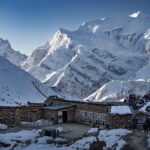
This is a lodge-based trek with tea house accommodations most nights. The practical win is that you don’t need to manage tents, cooking fuel, or complicated camping logistics.
Your package includes your entire standard meals during the trek: breakfast, lunch, and dinner (listed as 12 of each). There’s also a cup of tea/coffee during breakfast time. For many trekkers, that small ritual helps you keep a steady routine, especially on colder mornings.
Food quality on the Annapurna routes can vary by day and location, but the guides and team here have a reputation for making sure you’re eating well. In the accounts I reviewed through this company, Ravi and Sandip were credited with finding the best available meals and keeping accommodations comfortable.
Thorong La pacing: how to protect your pass day
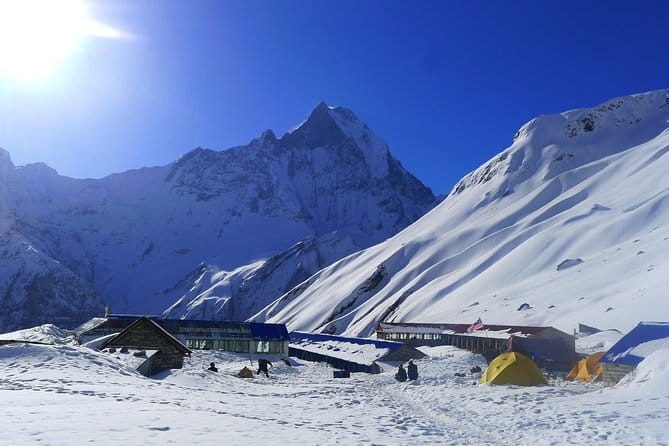
Day 11 starts early, and the climb to Thorong La Pass is described as challenging. The key to enjoying it is pacing—slow enough that you’re not gasping, steady enough that you keep moving.
The itinerary supports good pacing in two ways: you’re acclimatized in Manang on Day 8, and you’ve had a gradual build through earlier village-to-village days. That’s not just schedule; it’s the structure that helps you arrive at Thorong Phedi ready for the climb.
A few practical moves that keep you in the “still enjoying it” zone:
- Follow the guide’s pace, especially if you feel tempted to rush early.
- Plan for cold mornings and keep layers accessible.
- Expect the downhill to stress your knees—walk like you’re trying to keep your stride small and controlled.
Guides, permits, and why the back-office work matters
If you’ve ever tried to plan an Annapurna trek yourself, you know the hard part isn’t the walking. It’s the permits, the routing details, and knowing what’s realistic day-to-day.
Here, you get Annapurna Conservation Permits and TIMS Fee taken care of, along with a trekking route map. You also get a first-aid box with normal medical supplies and an oximeter, which is a big practical reassurance when altitude is part of the equation.
And the human factor is real. In the trek accounts associated with this experience, Ravi and Sandip were praised for being professional, attentive, and helpful with comfort and accommodations. That kind of guide energy matters on long days: they help keep your plan on track and your expectations aligned with what’s in front of you.
Price and logistics: does $809.10 feel like value?
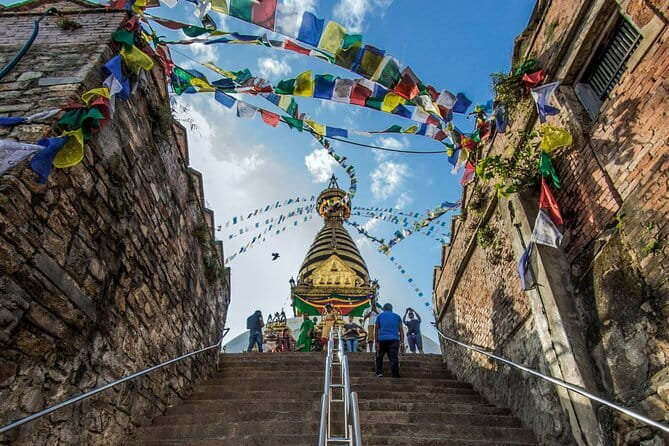
At $809.10 per person, this trek isn’t cheap, but it also isn’t just “a ticket for walking.” The value comes from stacking all the things you’d otherwise need to organize yourself.
Here’s what’s included in the package price:
- Private pickup from the airport by vehicle if required
- A one-night hotel in Pokhara with breakfast (standard twin sharing)
- Public bus transport from Kathmandu to Besisahar and shared transport onward
- Private transportation from the trek ending point to Pokhara
- All standard meals during the trek, plus breakfast tea/coffee
- Tea house accommodations
- An experienced, helpful guide
- Trekking route map, and permits (Annapurna Conservation Permit + TIMS)
- First aid kit with an oximeter
- Government taxes and office service charge
- Mobile ticket
What’s not included: personal expenses, any porter carrier for baggage if you need it, extra hotel nights/activities in Kathmandu or Pokhara, and transport back to Kathmandu at the end (unless you arrange it). Also, Nepal entry visa fees aren’t included.
My take: this price makes sense if you want less planning headache and more certainty. If you enjoy DIY travel and you already know how to handle permits and route logistics, you might find cheaper options—but you’ll trade away some of this built-in structure.
Who should book this Annapurna Circuit trek
This trek is listed for travelers with moderate physical fitness. If you can handle long walking days and you don’t mind the mental effort of a high pass day, you’ll likely do well.
This is also a great pick if you like a structured plan with local support. You’ll have a government-licensed guide and a private group setup, meaning your pacing and decisions don’t get diluted by strangers you didn’t choose.
It may be less ideal if you want a casual walk with no hard day. Day 11 is the challenge, and the climb to 5,416m isn’t something to treat lightly.
Should you book this trek with Blissful Himalayas?
If you want an Annapurna Circuit experience that’s well organized, supports acclimatization properly, and keeps you fed and lodged without a ton of logistics work on your end, I’d say yes. The included permits, first-aid gear with an oximeter, and the reputation for attentive guides like Ravi and Sandip are strong reasons to feel confident.
Before you commit, do two quick checks:
- Be honest about whether you’re ready for the demanding pass day and the early start.
- Clarify what you want for baggage support, since porter carrier is listed as not included if you need it.
If those boxes are checked, this is a solid way to experience the Annapurna Circuit the way it deserves: slow enough to enjoy it, structured enough to trust it.
FAQ
What’s the duration of the Annapurna Circuit trek?
The experience is listed as 13 days (approx.).
Where does the trip start?
It starts in Kathmandu, Nepal, and pickup by private vehicle is available from the airport if required.
What’s included for meals and lodging during the trek?
You get tea house accommodations during the trek and all standard meals (breakfast, lunch, dinner). Breakfast also includes a cup of tea or coffee.
What altitude challenge should I plan for?
The most difficult day is the crossing of Thorong La Pass at 5,416m.
What permits are covered?
The package includes the Annapurna Conservation Permit fees and the TIMS fee.
Is there medical support included?
Yes. You receive a first aid box with normal medical supplies, including an oximeter.
What’s the cancellation rule?
You can cancel for a full refund up to 24 hours in advance of the experience start time.