REVIEW · KATHMANDU
Multiday Manaslu Circuit Trek
Book on Viator →Operated by Places Nepal Trek & Tours · Bookable on Viator
5,000-meter views, minus the noise. The Manaslu Circuit is a high Himalayan trek built around Buddhist villages and Tibetan-border culture, then caps it with the dramatic Larkya La Pass crossing. You also spend days on foot where roads don’t really take over, so your hiking feels more human and less like a conveyor belt.
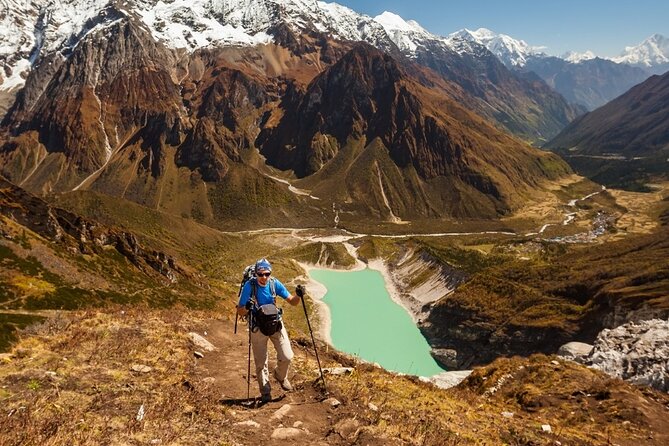
I especially like the way this route blends culture and walking. You’re not just chasing altitude; you’ll visit monasteries, pass through small settlements, and keep moving through forests and terraced fields with big mountain views in between. Another win is the support system: an English-speaking local guide, medical basics, and gear like an oximeter for altitude checks make the experience feel more controlled.
One caution: this is a tough trek. The program is for people with moderate physical fitness, and it’s not recommended for certain dietary needs, so you’ll want to be honest with yourself before you commit.
In This Review
- Quick hits you’ll feel on the trail
- Why the Manaslu Circuit feels different than bigger Himalayan routes
- Price and value: what $1,200 really covers (and what adds up)
- Fitness, altitude, and the Larkya La Pass reality check
- Your guide team and why English support matters in Nepal
- Lodges, meals, and how the day feels from guesthouse to trail
- Entering the Manaslu region: Machhakhola and the first long hiking day
- Jagat and Deng: suspension bridges, waterfalls, and forest walking
- Namrung and Shyala: traditional villages and the start of serious mountain drama
- Samagaun acclimatization: Pungyen Gompa, Ribung monastery, and optional higher hikes
- Samdo and Dharamsala (Larkya Phedi): near the Tibetan border and river corridor days
- Crossing Larkya La Pass: the peak moment and how to plan your energy
- Down to Dharapani and back to Kathmandu: forests, villages, and the finish feeling
- Who this trek is perfect for (and who should reconsider)
- Should you book this Manaslu Circuit trek?
- FAQ
- What’s the duration and where does the trek start and end?
- Is pickup offered?
- What’s included in the price?
- Do I need my own travel and rescue insurance?
- Is a porter included?
- How big is the group?
- What’s the cancellation policy for a full refund?
Quick hits you’ll feel on the trail
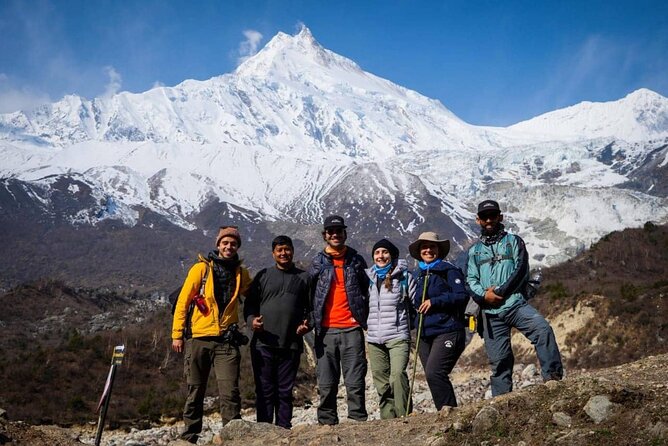
- Restricted-area permits included, which matters for access to this remote region
- Small group size (max 12), so the pace and logistics stay manageable
- Acclimatization day in Samagaun, with optional hikes to Manaslu Base Camp or Birendra Lake
- Larkya La Pass crossing at about 5,100m, the emotional peak of the circuit
- Oximeter provided for oxygen-level checks, plus a first aid kit in the group
- Most meals included (12 breakfasts, lunches, dinners), so you can focus on hiking
Why the Manaslu Circuit feels different than bigger Himalayan routes
The Manaslu Circuit earns its reputation because it stays remote in a real way. Instead of constantly stepping aside for vehicles or tourist traffic, you’re moving through settlements that feel connected to the mountains: prayer walls, monastery visits, and the day-to-day rhythm of local life.
That remoteness also changes what you notice. You’ll probably remember the quiet turns of trail more than you’ll remember the big “checklist” moments. One day you’re surrounded by terraced fields and forest walking; another day you’re watching the Budhi Gandaki River corridor unfold with suspension bridges and river scenery that pulls you forward.
And then there’s the cultural side. This circuit runs through Buddhist communities and Tibetan-influenced villages near the border, which adds meaning to the trek beyond the photos. When you visit places like monasteries around Samagaun and Ribung, the mountain context actually makes sense. You’re not just passing buildings; you’re walking inside a living belief system shaped by weather, altitude, and the seasons.
You can also read our reviews of more tours and experiences in Kathmandu.
Price and value: what $1,200 really covers (and what adds up)
At $1,200 per person for about 12 days, the best way to judge value is to compare what’s included versus what commonly surprises people later.
What you get bundled here:
- All necessary trekking permits and fees, including Restricted Area Permits
- English-speaking local guide
- Twin sharing guesthouse stays during the trek
- Meals included: 12 breakfasts, 12 lunches, 12 dinners
- Both-way ground transport by local bus between Kathmandu and the trek area
- Useful gear like a duffle bag, sun cap, trek map, and an oximeter
- Seasonal fruits during the trek
- A first aid kit and medical supplies at the trek level
- Emergency helicopter service arranged, with payment through your travel insurance company
What costs extra (plan ahead):
- Travel and rescue insurance is not included, and helicopter coverage depends on your policy
- Hotel in Kathmandu (before/after the trek) is not included
- Tips for the guide are expected
- A porter is extra: the program lists a $300 cost per person for porter support, with the note that it’s 2 people per porter and a 25 kg max carry limit
- Personal expenses in towns (phone, laundry, battery recharge, hot showers, bottled water, and similar items)
Here’s the honest bottom line: the price covers the heavy lifting—permits, guide, meals, and core logistics. The part that can raise your real total is insurance, tips, and whether you add a porter. If you’re strong and want a lighter cost, you might hike without a porter. If you want to protect your knees and energy for the pass, porter support becomes less optional and more smart.
Fitness, altitude, and the Larkya La Pass reality check
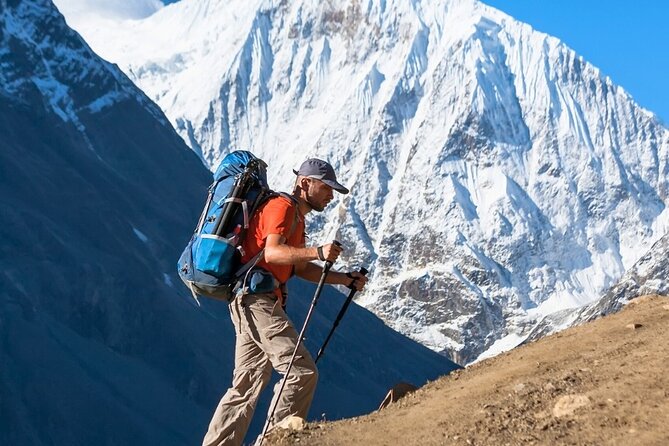
This trek is challenging in a very specific way. Most days are steady uphill or mixed terrain, but the circuit’s headline is the pass day: Larkya La Pass, around 5,106 metres (about 16,700 ft). That’s the day that turns planning into confidence—or not.
So you should take the “moderate physical fitness” note seriously. Moderate doesn’t mean easy. It means you can hike for hours, handle gradual altitude gains, and keep moving even when you feel tired. If you rush your body, high altitude punishes you fast.
The program does help with the hard parts:
- You’re not thrown straight into the pass. The route builds over multiple days.
- There’s a deliberate acclimatization day in Samagaun, and you have options to go higher at your pace.
- You’ll get an oximeter so altitude checks are possible in the rhythm of the trek.
You should still expect cold mornings, thin air, and the mental grind that comes with long ascents. Larkya La Pass is the moment where you’ll be glad you didn’t cut corners on training back home.
Your guide team and why English support matters in Nepal
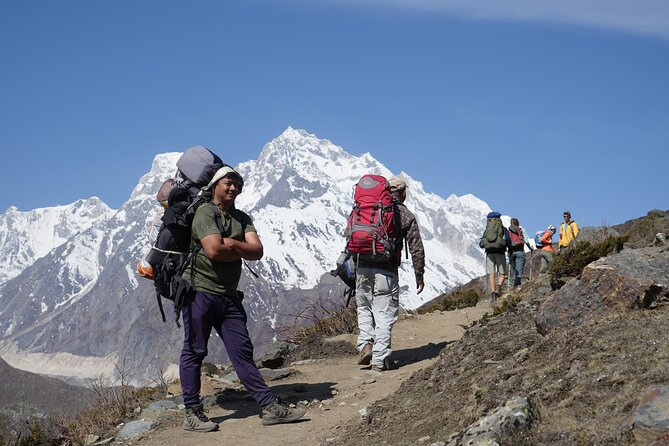
A trek works best when decisions happen fast and quietly. This is why the government-registered, English-speaking local guide is a big deal—not a luxury.
In the trek’s stories and guide names that show up again and again, people like Kapil, Nam, Kopil, and Gokul come up, along with team members such as Mangal and support staff like Ganesh. What that tells me is simple: you’re not relying on a random hire with limited continuity. You’re traveling with a system.
Also, the group cap—up to 12 travelers—supports better communication. You’ll spend less time stuck waiting, more time hiking, and less time feeling like you’re part of a herd.
Lodges, meals, and how the day feels from guesthouse to trail
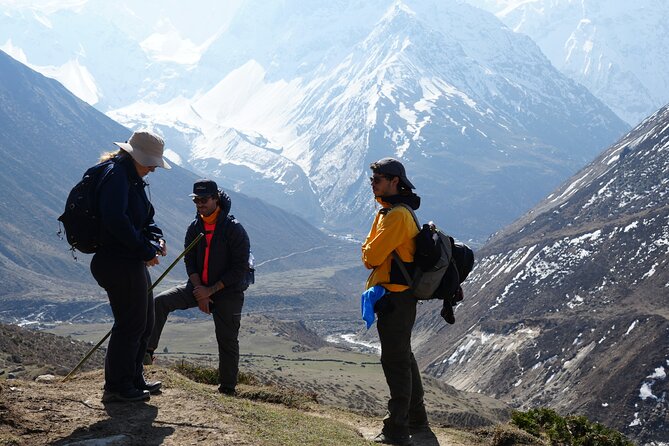
During the trek you’ll stay in twin sharing guesthouses. You’re not expecting luxury here, and you don’t need to. What matters is that each day ends with shelter that lets you recover.
Food is largely handled for you:
- Breakfast, lunch, and dinner are included each trek day
- There are seasonal fruits
- You’re not scrambling daily to find enough calories at high altitude
That matters because the pass day is a fuel day. When you don’t have to “hunt” for meals, you can focus on hydration, steady walking, and sleep.
Also, the included checklist items are practical. The sun cap helps on bright days at altitude. The trek map helps you read where you are. And the oximeter gives you a way to check in during the trek routine, not just guess based on how you feel.
Entering the Manaslu region: Machhakhola and the first long hiking day
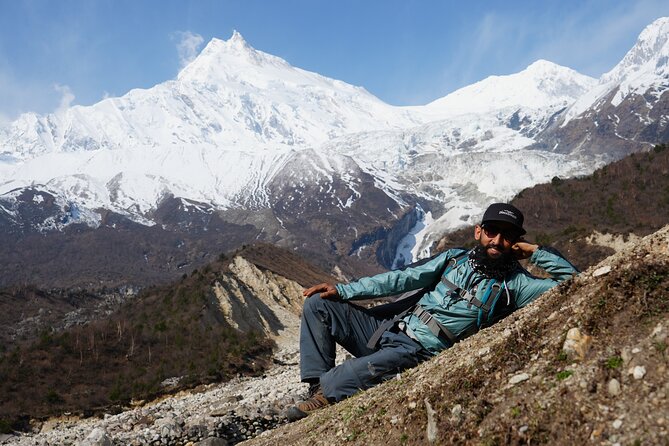
Day 1 starts in the countryside and pushes you into the trek rhythm. You ride to Machha Khola and then walk for around 8 hours.
This day is about transition more than spectacle. You’ll move through village views and Nepalese countryside scenes as you settle into the trail’s pace. If you’re prone to starting too fast, this is where you’ll feel it in the legs later. So the smart move is to walk like you expect the next 11 days to still happen.
Jagat and Deng: suspension bridges, waterfalls, and forest walking
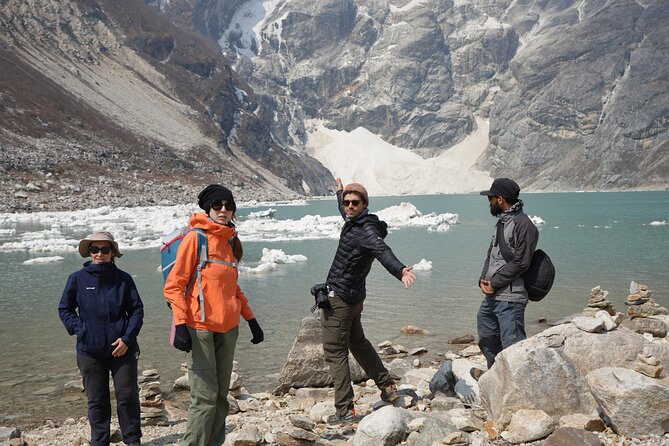
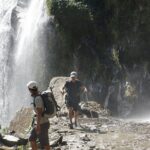
Day 2 takes you to Jagat after trekking about 19 km with around 4,400 feet of elevation gain. You’ll cross suspension bridges and pass waterfalls, plus you’ll get a taste of local culture in a real settlement.
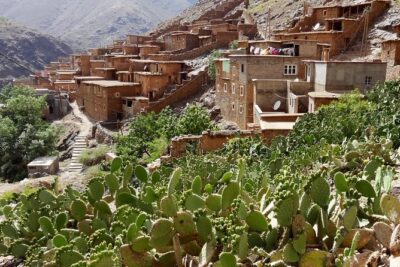
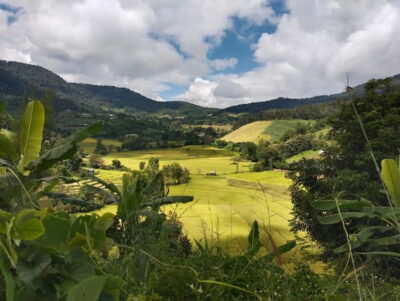
Day 3 shifts into greener terrain. You’re moving through lush forests and terraced fields, with panoramic mountain views building in your awareness as altitude slowly takes over.
The best part of this stretch is the mix. You’re not only hiking over mountain steps. You’re walking through changing ecosystems and village types. That keeps your brain engaged, and it makes long trekking days feel less like one endless slog.
Namrung and Shyala: traditional villages and the start of serious mountain drama
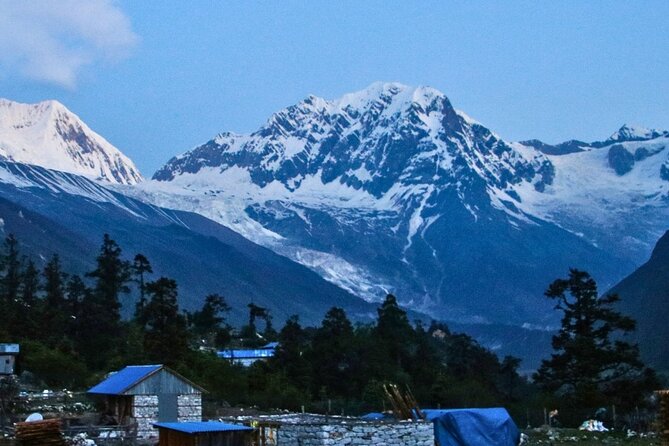
On Day 4, the route runs from Deng to Namrung. Expect a more varied feel to the day: you’ll find different flora and fauna as you climb, and you’ll pass traditional Nepalese villages with ancient monasteries along the way.
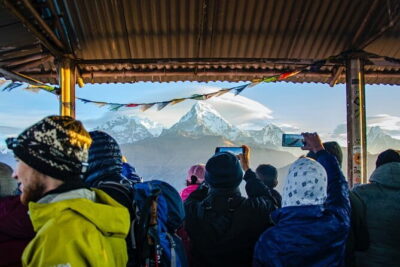
Day 5 is a classic “gain views” day as you trek from Namrung to Shyala. You’ll keep ascending, and as you approach Lho, the program highlights a sweeping panorama of the surrounding peaks.
This is where the Manaslu feeling really starts to hook you. Even if you’re not chasing the biggest summit views, you’ll likely notice how the mountains look different once you’ve gained enough elevation to see deeper valleys and more distant ridgelines.
Samagaun acclimatization: Pungyen Gompa, Ribung monastery, and optional higher hikes
Day 6 brings Samagaun plus altitude breathing room. You’ll hike uphill to Pungyen Gompa, then return and explore Samagaun along with Ribung monastery.
Then Day 7 is your acclimatization focus. You stay in Sama Gaun and have a choice:
- An optional day trip toward Manaslu Base Camp (listed around 15,748 ft)
- Or an optional trip to Birendra Lake (listed around 12,109 ft)
This is one of the best parts of the itinerary for most people. It’s not just a “rest day.” It’s a decision day. You can match the hike to how you’re feeling. That flexibility matters when bodies vary. One person will feel great at altitude and want the option. Another will prefer a shorter outing or keep it gentle.
Also, monastery time isn’t wasted time here. When you pause at places like Ribung, you’re practicing the pace you’ll need later on the pass: steady, observant, and calm.
Samdo and Dharamsala (Larkya Phedi): near the Tibetan border and river corridor days
Day 8 takes you from Sama Gaun to Samdo. The trail becomes more rocky, with moraines in the route description, and you’ll reach Samdo village on the Tibetan border.
Day 9 follows the Budhi Gandaki River. You’ll trek from Samdo to Dharmasala, with a suspension bridge along the way. Dharmasala is also called Larkya Phedi, which basically means you’re in the base-camp zone for the pass day.
This stretch is where you start thinking less about villages and more about weather. The mountains feel closer. The trail feels longer even when the walking time is similar. Your priorities shift toward sleep quality and fuel, because tomorrow is a different kind of day.
Crossing Larkya La Pass: the peak moment and how to plan your energy
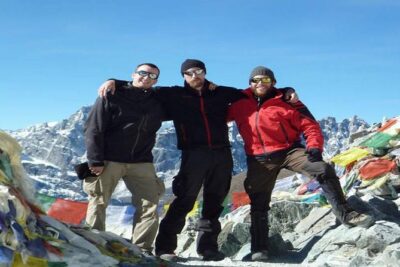
Day 10 is the pass day. You’ll tackle Larkya La Pass, with the program referencing an elevation around 16,929 ft. Elsewhere, the trek is described as reaching about 5,106 metres for the pass crossing. Either way, you should treat this day as high-altitude serious.
What makes pass days psychologically tough is the rhythm: you’re climbing when you’re already tired. So your advantage is doing everything right beforehand:
- Get used to the pace in earlier days
- Use the acclimatization day wisely
- Keep up fluids and meals
- Rest and layer up for cold
After the pass, you’ll continue trekking toward the next overnight stop. By Day 11, you’ll be descending from the Bhimthang area to Dharapani, so your Day 10 end point is set up for that downhill relief.
Down to Dharapani and back to Kathmandu: forests, villages, and the finish feeling
Day 11 is a welcome change. You descend from Bhimthang to Dharapani, walking through pine and rhododendron forests and passing charming villages and terraced fields.
Day 12 brings you out of the mountains and back to life in Kathmandu with a local bus ride and a farewell dinner to mark the finish.
That final day is underrated. After high altitude, simple comforts feel huge. Even the ride back becomes part of the reward: you can finally breathe deeper and enjoy the journey without hiking checks at every turn.
Who this trek is perfect for (and who should reconsider)
This trek is a strong fit if you want:
- Cultural travel tied to walking: Buddhist communities and Tibetan-border villages
- A route that stays off heavy motor roads most of the time
- A small group setup (max 12) where guidance and pace are easier
- A trek plan with structured acclimatization and a clear pass challenge
It may not be the best fit if:
- You struggle with altitude or you haven’t trained for long hiking days
- You have specific dietary requirements that don’t match mountain options
- You hate uncertainty around weather on a high pass day
Should you book this Manaslu Circuit trek?
If your dream includes big mountain days, monastery stops, and a genuine feel for remote Nepal, I think this trek is an excellent match. The value is strongest when you want the package to handle the core work: permits, guide support, guesthouses, and meals.
My advice is practical: read the included list like a checklist. Decide early if you need a porter and budget for tips. Make sure your travel insurance truly covers rescue in Nepal trekking conditions, since the program’s emergency helicopter arrangement is routed through your insurance.
If you show up with decent fitness, treat the pass day with respect, and keep your pace steady, this is the kind of journey that sticks with you long after Kathmandu fades from memory.
FAQ
What’s the duration and where does the trek start and end?
It’s listed as 12 days (approx.). The meeting point is in Kathmandu at Places Nepal Trek & Tours, Medical Chowk, Kathmandu 44600, Nepal. The activity ends back at the meeting point.
Is pickup offered?
Yes. The tour summary notes that pickup is offered. Ground transport between Kathmandu and the trek area is included by local bus on both ways.
What’s included in the price?
The package includes twin sharing guesthouses during the trek, all necessary trekking permits and fees (Restricted Area Permits), an English-speaking local guide, medical supplies, and meals (12 breakfasts, lunches, and dinners). It also includes trek items like a duffle bag, sun cap, trek map, and an oximeter.
Do I need my own travel and rescue insurance?
Yes. Individual travel and rescue insurance is not included. The itinerary mentions an emergency helicopter service arranged, but it says it will be paid by your travel insurance company.
Is a porter included?
A porter is not included. The add-on cost is listed as $300 per person, with 2 people per porter and a 25 kg max carry limit.
How big is the group?
The trek has a maximum of 12 travelers.
What’s the cancellation policy for a full refund?
You can cancel up to 3 days in advance of the experience for a full refund. If you cancel less than 3 days before the start, the amount paid is not refunded.