REVIEW · KATHMANDU
Manaslu Circuit Trek
Book on Viator →Operated by Base Camp Adventure Pvt. Ltd. · Bookable on Viator
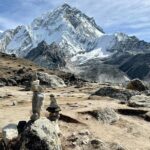
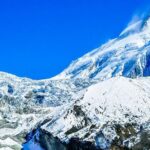
Manaslu feels remote in the best way. You walk through Hindu Nepali villages and gradually into Tibetan-influenced Buddhist country, all while keeping your eyes on Manaslu’s 8163m skyline. I especially like the culture shift on the circuit and the way the trek earns its big view days, including the Larkya La (5160m) panorama.
One possible drawback: this is not a stroll. You’re dealing with rough trails, steep climbs (and some long hiking days), plus altitude, so you’ll want moderate fitness and a patient pace.
In This Review
- Key Highlights You’ll Actually Feel
- A Trek That Mixes Himal Views With Real Village Life
- Price and Value: What $1,950 Covers (and Why It Matters)
- Kathmandu Start: Early Drive, Muddy Roads, and Instant Nepal
- Day-by-Day: What Each Stretch Gives You (and What to Watch For)
- Soti Khola to Machha Khola: Waterfalls, Suspension Bridges, and Tropical Green
- Machha Khola to Jagat: Slate Streets and the Budhi Gandaki View Moment
- Jagat to Deng: Narrow Trails, Pine, and the Road to Higher Ground
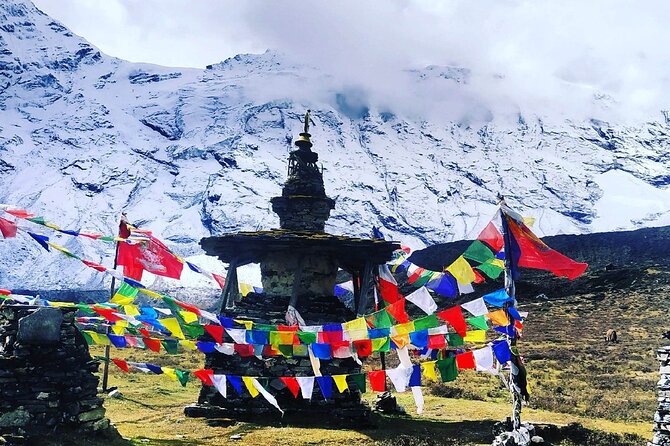
- Deng to Namrung: Mani Walls, Fir Forest Birds, and Buddhist Details
- Namrung to Lho: Barley Fields to Gompa Vistas and 360 Views
- Sama Gaon Rest Day: Let Your Body Catch Up
- Sama Gaon to Samdo: Frozen Lake, Yak Pastures, and Quiet Ridge Lines
- Samdo to Dharamsala (Larke Phedi): Pass Preparation Starts Early
- Day 10: Larkya La (5160m) and the Annapurna Surprise
- Day 11: Bimthang to Dharapani: Forest Quiet and Prayer-Flag Stops
- Day 12: Jeep Off-Road to Besisahar, Then Shorter Trail Time
- Day 13: Back to Kathmandu and a Comfortable Reset
- Logistics That Make the Difference: Guide, Porter, Gear, and Twin Lodges
- Weather, Altitude, and Physical Fitness: The Real Conversation
- Who Should Book This Manaslu Circuit Trek
- Should You Book? My Practical Take
- FAQ
- How long is the Manaslu Circuit Trek?
- Where do we meet in Kathmandu, and when does the trip start?
- What’s included with the trek besides the guide?
- Are meals included?
- Do I need to bring my own cold-weather sleeping gear?
- Is this a private tour?
- What happens if the trek is canceled due to weather?
Key Highlights You’ll Actually Feel
- Culture changes as you walk: you’ll move from Hindu life toward Tibetan Buddhist influences, including gompas and Mani walls.
- Larkya La rewards effort: prayer flags at 5160m set up wide views of both the Manaslu Himal range and the Annapurna range.
- Acclimatization is built in: a full rest day in Sama Gaon helps your body catch up before the higher pass.
- Practical support, not just guides: you get a porter (1 for 2 trekkers), first aid kits, and even an oxymeter for pulse and oxygen saturation checks.
- Geared up for cold nights: the package includes a down jacket, sleeping bag, and duffel bag.
A Trek That Mixes Himal Views With Real Village Life
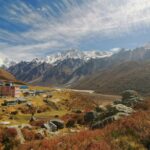
The Manaslu Circuit is one of Nepal’s classic “earn the views” treks. What makes it stand out from the easier, more crowded routes is how steadily the terrain and the culture change as you go—valleys deepen, forest shifts, and you start seeing more Buddhist-style religious details like gompas and carved Mani walls.
I like that the scenery isn’t the only story. You pass slate-roof homes, roadside clinics, prayer flags, and stone-paved village lanes that feel lived-in—not staged. And because this is part of the wider Great Himalaya Trail system, the vibe stays long-distance and grounded in the local way of moving.
Still, you should go in with realistic expectations: some days feel rocky and uneven, and a few stretches are long. If you hate cold starts, note that the whole trek kicks off early, and you’ll likely be rising before sunrise at times.
You can also read our reviews of more tours and experiences in Kathmandu.
Price and Value: What $1,950 Covers (and Why It Matters)
At $1,950 per person for roughly 13 days, this sits in the mid-to-higher range for Nepal trekking. The value comes from what’s included, and what that reduces for you.
Here’s the practical part: you get
- A licensed English-speaking trekking guide
- A porter system (1 porter for 2 trekkers) so your load is lighter
- All necessary permits and entry fees
- Pickup/transfer from and back to Kathmandu
- Key cold-weather gear: down jacket, sleeping bag, and a duffel bag
- Safety tools: oxymeter for pulse/oxygen saturation plus first aid kits
- The core trek route map
You’re also getting guesthouse lodging (mainly twin sharing) across the route. That means you’re not trying to coordinate dozens of separate bookings while managing altitude and fatigue.
What’s not included is pretty standard: travel insurance, alcohol and drinks, laundry, and personal trekking equipment. Tips for staff are also separate. If you already own solid winter gear and you’re an expert organizer, you might feel like gear support is less valuable—but for most people, it’s a big help.
Kathmandu Start: Early Drive, Muddy Roads, and Instant Nepal
Your day starts with a 6:00 am meeting at Tridevi Sadak in Kathmandu (near the trip pickup point). Then you’re off on the drive to Soti Khola, and the early miles can feel rough—dirty roads and sections that aren’t exactly walking-friendly.
That said, the first day is still a payoff. You pass rice fields, waterfalls, and village greenery, and you start seeing the rhythm of daily life along the Arughat to Soti Khola shared jeep corridor (depending on how your local transfer is routed). It’s not glamorous travel, but it’s the kind that makes the trek feel connected to Nepal, not dropped-in-from-a-brochure.
Sleep in Soti Khola and you’ll wake up ready for the trail’s first real work.
Day-by-Day: What Each Stretch Gives You (and What to Watch For)
Soti Khola to Machha Khola: Waterfalls, Suspension Bridges, and Tropical Green
Day 2 moves into the Budhi Gandaki basin, and you’ll feel the basin’s energy right away. You hike through rocky, bumpy trail sections, cross waterfalls, and pass villages like Liding, then Lapubesi and onward toward Machha Khola.
This is one of those days where the mix of footwork and scenery keeps you alert. You’ll be stepping carefully over slippery rocks, then leaning into the fun of suspension bridges. By the time you reach Machha Khola, the village sits on the slopes with basic accommodations—and even a medical clinic if needed—so it feels practical, not remote in the scary way.
Expect mud, dust, and a few “why is this so uneven?” moments. That’s normal. Your job is to keep your effort steady.
Machha Khola to Jagat: Slate Streets and the Budhi Gandaki View Moment
On Day 3, the trail funnels between the river system and cliffs. You’ll reach Tatopani, then keep moving to places like Dobhan, Shyaule Bhatti, and Yaru, where the Budhi Gandaki drops fast in cascades.
Then it’s a longer push toward Jagat. When you arrive, you’re greeted by slate-paved streets, and that detail matters because it signals how the settlement is set up for village movement and tourism at once. There are both lodges and a campsite area, and the local economy links tourism, agriculture, education, and government services.
This is a good stop for recharging, because the next day brings more “up and over” effort.
Jagat to Deng: Narrow Trails, Pine, and the Road to Higher Ground
Day 4 starts with a walk through the riverbed vibe, then climbs over rocky points to Salleri. From here, you can catch views of Shringi Himal (7187m), which is a nice early reminder that you’re not just trekking a valley—you’re moving toward a real Himalayan stage.
From Salleri, you follow the left bank of the Budhi Gandaki River to Philim, then head north toward Larkya-La (5160m) through thick forest. You’ll pass Ekle Bhatti, cross high above a gorge, and then gradually climb toward Deng.
The “watch your footing” theme continues, especially on the forest and gorge-crossing segments. Still, the pine-and-gorge mix is exactly the kind of contrast that makes the Manaslu Circuit feel like a journey instead of a single repeated valley walk.
Deng to Namrung: Mani Walls, Fir Forest Birds, and Buddhist Details
Day 5 is where the trek’s spiritual texture gets more visible. You cross the Budhi Gandaki River on a suspension bridge, then climb toward Rana and Bihi.
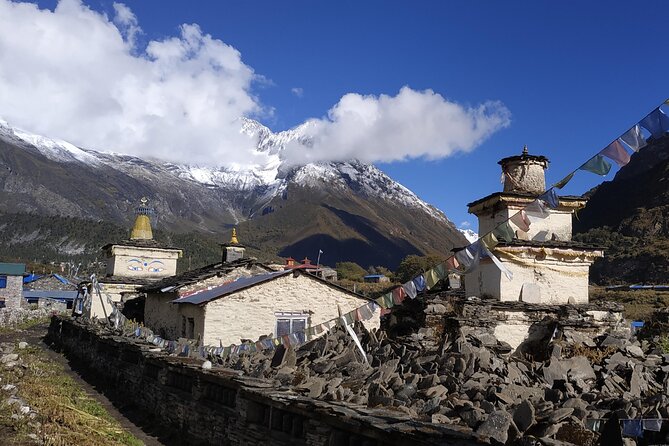
Later, you’ll weave in and out of gorges, cross the Serang Khola, and climb sharply before circling into Ghap. This is where the Mani walls show up clearly—intricate carvings of Buddhas in meditation. It’s not just decoration. It’s a visible map of belief along the trail.
Then you enter a beautiful fir forest where you’ll notice the birds, cross on a wooden bridge along a narrow canyon, and reach Namrung. Namrung is a classic “you feel the Himal now” village: warm human scale, with towering stone above.
Namrung to Lho: Barley Fields to Gompa Vistas and 360 Views
Day 6 shifts from river-country walking to culture-and-view country. You pass Bhanzam with barley fields and stone houses. Then as you approach Lihi, you get a 360-degree view that includes Manaslu (8163m)—a real wow moment that’s earned by the earlier trail effort.
From there, you cross Hinang Khola to Lho, dominated by a large gompa perched above the village. The hilltop views are quiet and strong—this is the kind of spot where you can pause, look, and feel how big the mountains are without needing a loud viewpoint.
After Lho, the trail climbs through compressed forest toward Shyala, and you’ll notice Shyala’s stacked stone-and-wood houses. It feels close and practical, like people built for winter reality. From Shyala, the walk pushes through slopes related to glacier drainage toward the next stop area.
Sama Gaon Rest Day: Let Your Body Catch Up
Day 7 is your acclimatization day in Sama Gaon. This matters. You’re not just sightseeing—you’re letting your body adjust so the higher pass on Day 10 doesn’t feel like a surprise attack.
Sama Gaon gives you options: you can explore nearby spots like Birendra Tal, Manaslu Base Camp, PemaChyoling Lhakang, and Punggen Gompa. The common thread is that you’re under Manaslu’s shadow without the pressure of a full day of climbing.
If your legs are tight, this day is your release valve. If you’re feeling good, it’s still worth using the daylight to explore slowly—just don’t turn rest day into race day.
Sama Gaon to Samdo: Frozen Lake, Yak Pastures, and Quiet Ridge Lines
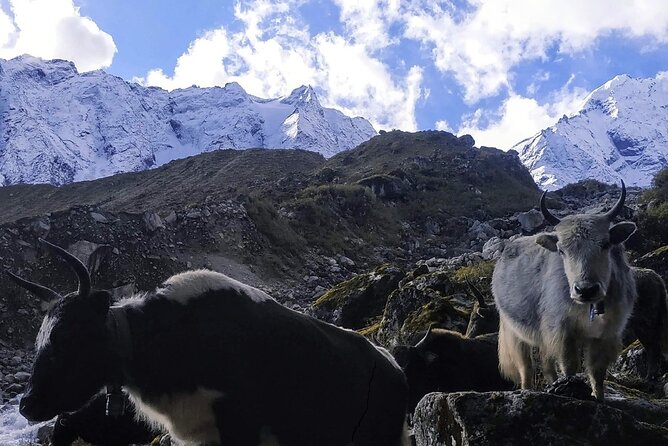
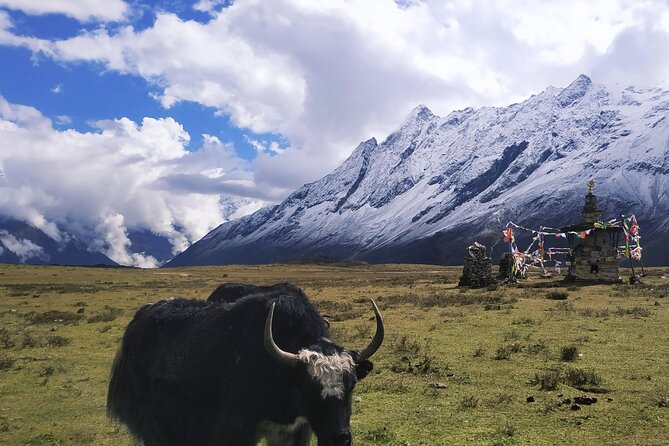
Day 8 starts with a walk uphill via Birendra Tal (3450m), described as frozen under the glacier setting. Then you move into yak pastures with long Mani walls and marmots standing on burrows, watching like tiny sentries.
You climb to a ridge, then drop to cross the Budhi Gandaki River on a wooden bridge. After that, you reach Samdo, and it’s special because the village is dedicated to yak herding. You’ll see more animal and hay shelters than typical human lodging, which gives the place a utilitarian, working feel.
This is where the circuit feels very Himalayan and less “trek package.” The air is cooler, the distances feel wider, and you’ll likely sleep with your layers fully ready.
Samdo to Dharamsala (Larke Phedi): Pass Preparation Starts Early
Day 9 begins with descent past Samdo on a wide trail, crossing the much-reduced Budhi Gandaki River. You’ll pass a trail to Tibet to the right, then climb left past a Mani wall through juniper with marmots.
You cross two gorges on thin tracks, then arrive at Dharamsala, also known as Larke Phedi. Dharamsala’s stone hut setup (three rooms and an almost integral roof) gives it a focused, shelter-like character. Views from here are described as wonderful, and you’ll be able to see the whole Manaslu Himal range.
This is the night you treat like prep time. Don’t go heavy on extra walking. Do your gear check. Plan your hydration. Then sleep, because Day 10 asks a lot.
Day 10: Larkya La (5160m) and the Annapurna Surprise
Day 10 is the main pass day. You climb gradually over the edge behind Dharamsala, beside the large moraine of the Larke Glacier. The climb is long and rocky, then you descend past four frozen lakes.
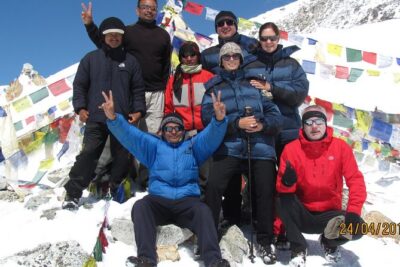
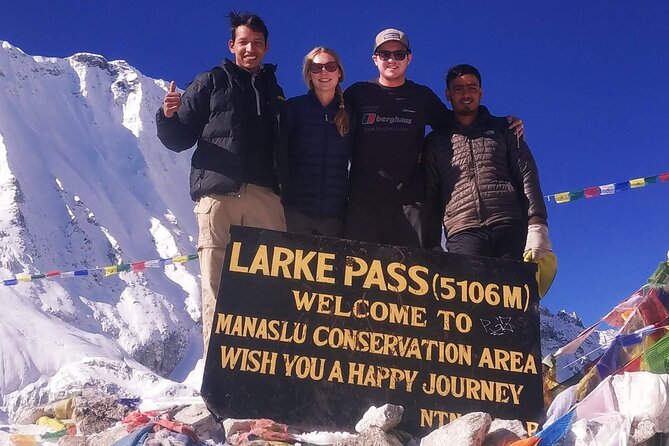
Finally comes the last push to Larkya La (5160m), marked with prayer flags. The payoff is big: an astonishing panorama of the Manaslu Himal range and the Annapurna range.
After crossing, you incline down the moraine to the west and then drop gently toward Bimthang. This is a day where pacing matters more than speed. If you try to muscle through, you’ll pay for it later.
Day 11: Bimthang to Dharapani: Forest Quiet and Prayer-Flag Stops
Day 11 keeps you moving south. The vegetation is described as lush, and the trail crosses the foot of Bimthang Glacier with mountain background views.
You climb to a decorated spot with prayer flags, then you walk into a fir forest that feels almost like a slow corridor of shade and air. Later you’ll reach a lone house in Yak Kharka for lunch, then continue through deeper forest until you arrive at Goa, and then you overnight in Dharapani.
If you like forest walking with a Himalayan view line opening now and then, this is a satisfying day. It’s also one of those “keep your footing, stay present” days.
Day 12: Jeep Off-Road to Besisahar, Then Shorter Trail Time
Day 12 is a big change: you take an off-road jeep for around four hours to Beshisahar. Then you hike a bit more—descending toward Syange, ascending to Gharmu Phant, and descending again to Besisahar.
This day is about getting you safely out of the highest zone without dragging you through extra steep trail after fatigue.
Day 13: Back to Kathmandu and a Comfortable Reset
On Day 13, you drive back to Kathmandu, with lush hills and wide river networks along the way. After arrival, the package includes a transfer to a 5-star hotel for your overnight stay.
This last night is not about trekking. It’s about reset: shower, laundry if you choose, proper rest, and letting your body stop vibrating from trail days.
Logistics That Make the Difference: Guide, Porter, Gear, and Twin Lodges
The practical strength of this trek package is the support layer. You get a licensed English-speaking guide, plus a porter for luggage. You also get major gear—down jacket, sleeping bag, and duffel bag—which cuts down the hassle of packing and cold-night anxiety.
The oxymeter is a useful extra, because it helps you track oxygen saturation and pulse. It’s not a magic fix, but it can guide decisions on how hard to push and when to slow down.
For lodging, you’ll stay in guest houses along the way, mainly twin sharing. That’s the standard for this kind of route, and it keeps the trek realistic.
If you want a trekking company that runs a tight ship, the presence of first aid kits, permits handled for you, and the built-in transfer plan from Kathmandu to the start and back is a strong sign.
Weather, Altitude, and Physical Fitness: The Real Conversation
This trek requires good weather. If conditions are poor, it may be canceled due to weather and you’ll be offered a different date or a full refund.
Altitude is a real factor. Even though the itinerary includes acclimatization with a rest day in Sama Gaon, you’re still climbing to Larkya La (5160m) and spending time at high points like Birendra Tal (3450m) and glacier-adjacent zones. The route is demanding enough that “moderate fitness” needs to mean steady endurance, not just casual walking.
If you have knee issues, plan for careful steps on rocky trail days and suspension bridges. If you’re prone to altitude sickness, you’ll want to take the acclimatization day seriously and follow your guide’s pace.
Who Should Book This Manaslu Circuit Trek
Book this if you want:
- Authentic village life and a visible cultural transition across Buddhist and Hindu regions
- Big views that come after real effort, especially the Larkya La day
- A trek with support and safety tools built into the package (guide, porter, permits, oxymeter, first aid)
- Comfort after: the Kathmandu 5-star hotel on the last night is a nice payoff
This may not be the best fit if you want a short, easy trek, or if you strongly dislike early starts and uneven trails.
Should You Book? My Practical Take
I’d book this if you’re excited by a remote circuit feel, you want Manaslu views that aren’t handed to you for free, and you appreciate logistics handled well. The combination of porter support, included cold-weather gear, and permits means you spend less mental energy on logistics and more on the trail.
I’d pass or ask more questions first if you’re not comfortable with altitude up to a 5160m pass or you’re expecting smooth paths and easy daily distances.
FAQ
How long is the Manaslu Circuit Trek?
It’s listed as about 13 days.
Where do we meet in Kathmandu, and when does the trip start?
The meeting point is Tridevi Sadak, Kathmandu 44600, Nepal, with a 6:00 am start time.
What’s included with the trek besides the guide?
The package includes guesthouse accommodation, a licensed English-speaking trekking guide, a porter (1 for 2 trekkers), trekking permits and entry fees, and key gear: a down jacket, sleeping bag, and duffel bag. It also includes an oxymeter and first aid medical kits, plus surface transfers from and to Kathmandu.
Are meals included?
Yes. The package includes breakfast, lunch, and dinner during the trek days covered by the plan.
Do I need to bring my own cold-weather sleeping gear?
Not the core pieces. You get a sleeping bag and a down jacket included, along with a duffel bag.
Is this a private tour?
Yes. It’s listed as a private tour/activity, so only your group participates.
What happens if the trek is canceled due to weather?
It notes that the experience requires good weather. If it’s canceled due to poor weather, you’ll be offered a different date or a full refund.