REVIEW · KATHMANDU
Manaslu Circuit Trek
Book on Viator →Operated by Alpine Luxury Treks Pvt Ltd · Bookable on Viator
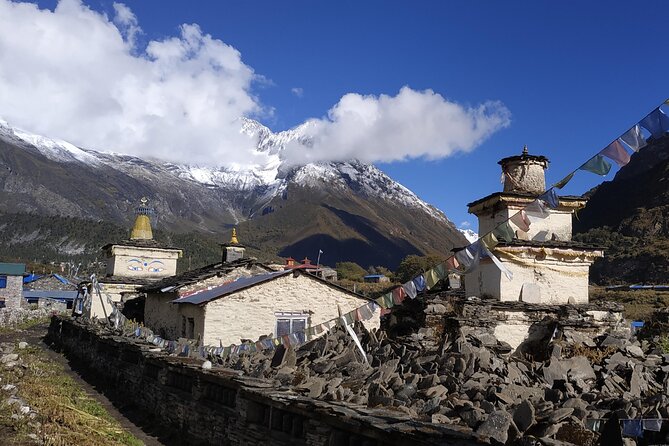
Manaslu Circuit Trek feels like leaving the GPS behind. It’s a guided loop around the Manaslu massif (8,163 m), mixing dramatic Himalayan views with everyday stops in remote villages along the way.
Two things I really like: you get strong on-the-ground support (licensed English-speaking guide, porter system, permits, medical kit, and hotel help in Kathmandu), and you also get a thoughtful altitude rhythm with a dedicated acclimatization day at Samagaon plus time to adjust before the high pass. The route is popular for a reason: the mountains keep getting bigger, and the communities feel lived-in rather than staged.
One drawback to consider up front: this is still a serious high-altitude trek. The Larkya La pass hits 5,160 m, and even with pacing, you’ll need solid fitness and the right mindset for long trekking days plus cold, thin-air conditions.
In This Review
- Key things to know before you go
- Why the Manaslu Circuit works: mountains plus community time
- Price and value: what $2,300 covers (and what it doesn’t)
- Fitness and altitude: the real job starts before the pass day
- Kathmandu warm-up: Thamel, sightseeing, and prep that reduces stress
- Days 3–7: Sotikhola to Jagat to Deng, building your rhythm
- Days 8–10: Namrung to Lho to Samagaon, plus acclimatization that actually helps
- Samdo, Larkya Phedi, and the climb toward Larkya La
- Larkya La pass day: expect challenge, then a long, satisfying shift downward
- Days 14–17: Bimthang to Dharapani, then drive back to Kathmandu
- Teahouses, gear, meals: what comfort looks like on a circuit trek
- Guides and porters: this is where the trek becomes smooth
- Weather and time of year: the trek needs good conditions
- Should you book the Manaslu Circuit Trek?
- FAQ
- Where does the Manaslu Circuit Trek start?
- How long is the trek?
- What’s the highest point on the route?
- What’s included in the trekking meals?
- Are teahouses included?
- What’s included for gear?
- Is there an acclimatization day?
- What about Kathmandu accommodation?
- What’s not included?
Key things to know before you go
- Small group size (max 10) keeps the pace human and coordination easier
- 17 days gives time for real acclimatization, not just a rushed pass crossing
- Gear included: down jacket and sleeping bag (returned after the trek)
- Teahouse nights mean you’re sleeping in the village trail network, not camping the whole way
- Porter support: 1 porter for 2 trekkers, plus all porter expenses covered
- One standout day: the route tops out at Larkya La (5,160 m) before descending toward Bimthang and Dharapani
Why the Manaslu Circuit works: mountains plus community time
If you want one big reason to choose the Manaslu Circuit, it’s balance. This trek gives you high, iconic Himalayan moments, but it also spends enough time at lower elevations to make the journey feel like a moving thread through real settlements—not just a climb with a few photos.
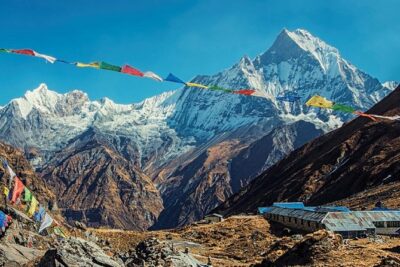
Manaslu itself is the headline, but the trail delivers more than one famous summit view. Each day tends to shift the angle: some days you’re looking toward higher ridges, other days you’re walking through valleys where you can sense the region’s geography shaping daily life. That mix is part of why this route has stayed popular.
I also like that the trek is designed around a practical travel reality. You’re not only hiking. You’re driving out of Kathmandu, settling into teahouse life, and then using planned rest/acclimatization time to reduce the guesswork that often ruins trips at altitude.
You can also read our reviews of more tours and experiences in Kathmandu.
Price and value: what $2,300 covers (and what it doesn’t)
At $2,300 per person for an approx. 17-day experience, the price isn’t “cheap,” but it’s not only paying for steps on a trail either. What you’re funding is the scaffolding that makes a high-altitude trek workable:
What’s included that actually saves you time, hassle, and cost:
- Kathmandu to Sotikhola and Dharapani to Besisahar to Kathmandu transport
- Down jacket + sleeping bag (provided and then returned after the trek)
- Trekking permits and paperwork
- 3-star hotel in Kathmandu with breakfast (twin sharing)
- Kathmandu Valley sightseeing
- Teahouse accommodation during the trek
- Three meals per day during the trek (breakfast, lunch, dinner)
- An English-speaking, government-licensed guide plus porter support (1 for 2 trekkers)
- Airport pickups and drops in a private vehicle
- Welcome and farewell dinners
- A medical kit
What you should budget separately:
- Nepalese visa fee and international airfare
- Travel and rescue insurance (not included)
- Tipping (not included)
- Personal expenses like phone/laundry/WiFi/battery recharges
- Any extra nights in Kathmandu
- Any lunch/dinner in Kathmandu (not included)
The value play here is that you’re not juggling logistics on your own. Once you’re on the trail, meals, lodging type (teahouses), guide coordination, and porter handling are already lined up. If you hate admin—this trek is for you.
Fitness and altitude: the real job starts before the pass day
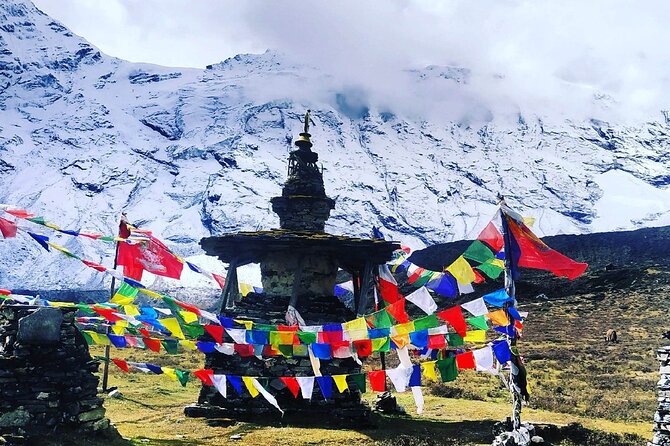
This trek starts with a drive and early valley walking, then climbs steadily toward thinner air. You’ll see altitude rise across days, with key points including:
- Kathmandu at 1,334 m
- High points including Samdo (3,875 m) and Larkya Phedi (4,460 m)
- The Larkya La pass at 5,160 m
Even without inventing details, the structure tells you how the trek asks for effort:
- Some trekking days are moderate in distance but still demanding because elevation changes and fatigue compound.
- You also have at least one dedicated acclimatization day at Samagaon (Day 10), which is your body’s chance to adapt before the high pass push.
My practical advice: if you can only comfortably do one hard day right now, don’t assume the mountains will be impressed. Train for repeated effort (uneven climbs, long walks, carrying a daypack). You don’t need to be a climber, but you do need endurance.
Kathmandu warm-up: Thamel, sightseeing, and prep that reduces stress
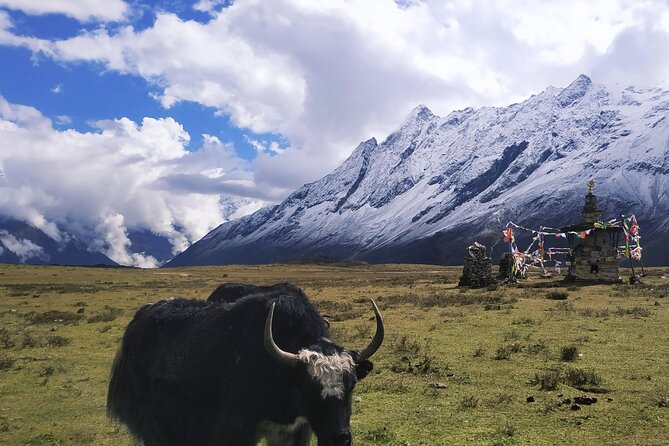
The trip begins at Hotel Thamel Park Pvt. Ltd. in Kathmandu, with a start time of 6:15 am. Kathmandu is where you get your bearings before you disappear into the hills.
On Day 2, you’ll do Kathmandu Valley sightseeing and use that day as preparation. The practical benefit of this isn’t just culture—it’s logistics. You can test how your body feels at 1,334 m, check your layering, and get any last items sorted before the long drive to the trailhead.
You’ll also have welcome and farewell dinners, which matters more than it sounds. In a trek like this, food routines and simple morale boost help you stay consistent when temperatures drop.
Days 3–7: Sotikhola to Jagat to Deng, building your rhythm
The trek transitions from road life to trail life quickly.
Day 3: Drive to Sotikhola (700 m) and then trek
Day 4: Sotikhola to Machha Khola (869 m)
Day 5: Machha Khola to Jagat (1,340 m)
Day 6: Jagat to Deng (1,860 m)
Day 7: Deng to Namrung (2,630 m)
What I like about this early segment is that it doesn’t throw you into the deep end. You’re gaining altitude, but you’re also learning how your body handles daily starts, steady walking, and the kind of path that keeps you moving without requiring technical climbing.
A likely “watch-out” here is pacing. When the mountains start appearing, it’s tempting to speed up for views. Don’t. The point of the first week is to arrive at higher elevations with energy intact—not to prove something to your lungs.
Days 8–10: Namrung to Lho to Samagaon, plus acclimatization that actually helps
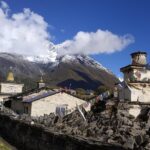
This section is where the trek starts to feel more like classic high-country Himalayan walking.
Day 8: Namrung to Lho (3,180 m)
Day 9: Lho to Samagaon (3,520 m)
Day 10: Acclimatization day in the Samagaon area
These days matter because they shape how you handle the bigger altitude jump later. Lho is high enough to feel the cold and thin air, but not so high that you’ll be forcing your way through disaster-level conditions.
Then you get the acclimatization day. You should treat it as part of the trek, not a break you can ignore. Even simple walking and time management on that day can be the difference between feeling okay for the pass push and feeling wrecked.
Samdo, Larkya Phedi, and the climb toward Larkya La
After Samagaon, the trek tightens its focus on the pass.
Day 11: Samagaon to Samdo (3,875 m)
Day 12: Samdo to Dharamsala / Larkya Phedi (4,460 m)
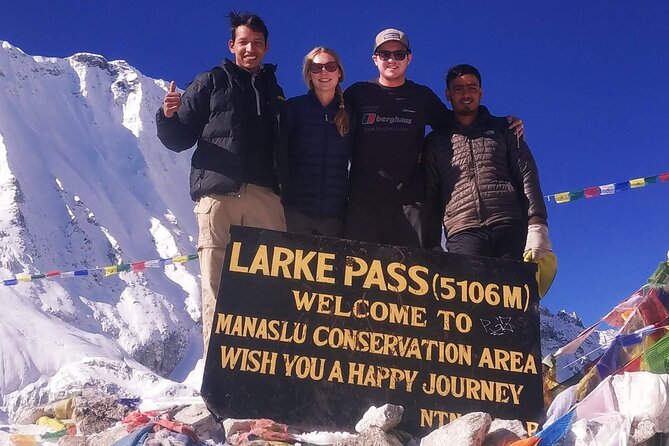
Day 13: Larkya Phedi toward Larkya La (5,160 m), then on to Bimthang (3,590 m)
This is the “you’ll remember this day later” sequence. The higher you go, the more your effort becomes about breathing and steady movement. It’s not about speed—it’s about not letting yourself spike effort too early.
The other practical thing: cold management. Higher camps often mean colder nights and mornings, even when days feel manageable. That’s part of why the trek includes a down jacket and sleeping bag. You’re not buying your way out of cold—you’re being equipped so cold doesn’t derail your sleep.
Larkya La pass day: expect challenge, then a long, satisfying shift downward
Day 13 is built for one major moment: crossing Larkya La at 5,160 m and then continuing to Bimthang for the night.
Here’s the honest way to frame it. The pass day is both psychological and physical. Even if your legs are okay, the air can make you feel slower than you expect. The best strategy is calm movement from the first steps. If you rush, you’ll pay for it.
Once you clear the pass, the route shifts downward, and that’s when you usually feel relief. Relief isn’t the same as ease, though—you still have to manage descents with tired knees and changing footing. The trek’s structure gives you that post-pass continuation rather than stopping immediately. That means you’ll get the sense of completion, but you must stay careful.
Days 14–17: Bimthang to Dharapani, then drive back to Kathmandu
After the pass, the route goes through Dharapani and then returns toward the city.
Day 14: Bimthang to Dharapani (1,963 m)
Day 15: Dharapani to Besisahar (760 m) by drive
Day 16: Drive back to Kathmandu (1,334 m)
Day 17: Fly back home
This is a good end-game structure. You finish the hard part, then you get some relief through elevation change and a driving day. Even with long travel time, it’s a practical way to close the loop without turning the final days into another endurance test.
One more thought: don’t treat the last “drive day” like a free pass to eat junk and ignore hydration. You’ll still be tired, and fatigue can catch up fast when you sit for hours.
Teahouses, gear, meals: what comfort looks like on a circuit trek
This trip uses teahouse accommodation during the trek, plus a Kathmandu hotel for the first part.
What’s great about this setup:
- You’re not spending your mental energy on camp logistics.
- You get predictable three meals per trek day (breakfast, lunch, dinner).
- You can plan around packing a daypack and leaving heavy items to be carried by the porter system.
What you should still plan for:
- Teahouse comfort varies by location and altitude. Even with provided sleeping gear (down jacket and sleeping bag), expect cold mornings at higher elevations.
- Hot meals are a win, but your appetite might change as altitude shifts. The meal structure helps keep you nourished consistently.
I also like that the trek includes a medical kit. It’s not the same as insurance, but it’s a sign the operator thinks about basics when you’re far from services.
Guides and porters: this is where the trek becomes smooth
This trek is guided by an English-speaking, government-licensed guide, and you’ll have a porter with a 1 porter for 2 trekkers ratio. Porter expenses are covered, which matters because it removes one more decision from your budget and planning.
From past trips, certain guide names have come up repeatedly—Ram, Mingma, Jeet, and Madhav—and porters like Keshap and Shiv are also mentioned. The point isn’t celebrity; it’s that the human layer is clearly part of the experience quality here.
When you’re negotiating steep sections, altitude effects, and changing weather, a good guide does more than call route turns. They help keep you moving at the right effort level, and that can change how you feel on pass day.
Weather and time of year: the trek needs good conditions
This experience requires good weather, and poor weather can lead to cancellation with either a new date offer or a full refund. That doesn’t mean you’ll be sitting around waiting—just that Mother Nature holds the final say for high passes and safe trail conditions.
My advice: pack with weather uncertainty in mind. Even when the forecast looks okay, the mountains can shift quickly. Plan for cold starts, wind, and layers you can add/remove without fuss.
Should you book the Manaslu Circuit Trek?
Book this trek if you want:
- A guided loop around Manaslu with real community days and not just point-to-point hiking
- A trip where meals, teahouses, permits, and porter support are handled for you
- A structure that includes acclimatization and gives you a shot at handling Larkya La (5,160 m) safely
Think twice if:
- You’re not ready for pass-day effort and cold, thin-air conditions
- You dislike fixed schedules and rules, since this is non-refundable and weather-dependent
If you’re fit, flexible, and excited by the idea of disappearing into Nepal’s remote mountain villages for almost three weeks, this is the kind of trek that tends to reward you with both awe and satisfaction.
FAQ
Where does the Manaslu Circuit Trek start?
It starts at Hotel Thamel Park Pvt. Ltd., Chaksibari Marg 594-16, Kathmandu 44600, Nepal, with a start time of 6:15 am.
How long is the trek?
The trek is 17 days (approx.).
What’s the highest point on the route?
The trek reaches Larkya La pass at 5,160 m.
What’s included in the trekking meals?
During the trek, you receive three meals per day: breakfast, lunch, and dinner.
Are teahouses included?
Yes. You’ll have teahouse accommodation during trekking.
What’s included for gear?
You’ll be provided a down jacket and sleeping bags, which you return after the trek.
Is there an acclimatization day?
Yes. There’s an acclimatization day at Samagaon (Day 10).
What about Kathmandu accommodation?
You get a 3-star hotel in Kathmandu with breakfast, in twin sharing.
What’s not included?
Not included are Nepalese visa fee, international airfare, travel and rescue insurance, tipping, and personal expenses (plus lunch/dinner in Kathmandu).