REVIEW · KATHMANDU
Kathmandu: 14-Day Everest Base Camp with Kala Patthar Trek
Book on GetYourGuide →Operated by Welcome Nepal Treks P.Ltd · Bookable on GetYourGuide
Ever felt the air thin near Everest? This 14-day route from Kathmandu to Everest Base Camp and over Kala Patthar blends big mountain drama with real Sherpa life, starting with the flight into Lukla.
I love the Sherpa heartland stop at Namche Bazaar—it’s the place where the trek starts to feel local, not just scenic. I also love that the itinerary’s crown is Kala Patthar, a full-on high-altitude viewpoint that makes all the slow climbing feel worth it.
The one real catch: Lukla flights can be delayed by weather, and that can shift your trekking rhythm (or, in rare cases, trigger an alternate plan).
In This Review
- Key Things to Know Before You Go
- Kathmandu to Lukla: your jump-off to the Khumbu
- Phakding to Namche Bazaar: learning the pace on a Sherpa corridor
- Namche acclimatization: rest day that actually moves you forward
- Tengboche to Dingboche: when views turn serious
- Lobuche to Gorak Shep: the last stretch before Everest Base Camp
- Kala Patthar at 5,545 meters: the viewpoint day you planned for
- The three-day descent back to Kathmandu: finishing smart
- Price and value: what $1,296 really covers
- Lodges, food, and the reality of hot showers
- Guides and porter support: why it changes everything at altitude
- Packing the gear that actually matters above 3,000 meters
- Who should book this Everest Base Camp route (and who shouldn’t)
- Should you book Welcome Nepal Treks for Kathmandu to Everest Base Camp with Kala Patthar?
- FAQ
- FAQ
- Where does this 14-day Everest Base Camp trek start?
- How do you travel from Kathmandu to the trekking route?
- What is the first trek day after landing in Lukla?
- Do you have acclimatization days on the route?
- What are the key high-altitude days?
- Are Sagarmatha National Park permits included?
- Is the guide English-speaking?
- Are meals during the trek included in the price?
- Are hot showers included while trekking?
- Who is this trek not suitable for?
Key Things to Know Before You Go
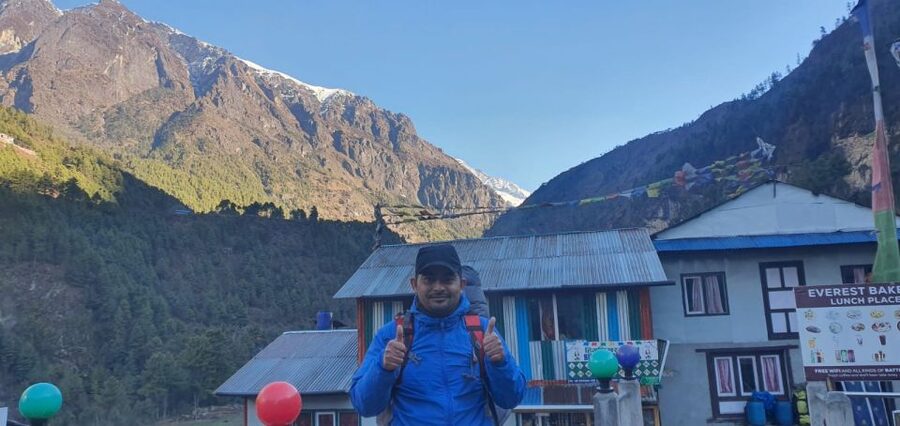
- Lukla is the entrance exam. The flight is short, but it’s also one of the most intense airports on earth.
- Acclimatization is built in, not improvised. You get dedicated time to adjust in Namche Bazaar and later at Dingboche.
- This route follows real Khumbu connections. You pass through places like Tengboche and Lobuche, not just sketchy shortcut towns.
- Your Everest payoff is split into two big moments. First Everest Base Camp, then Kala Patthar the next key phase.
- Support matters on a long trek. You travel with an experienced English-speaking guide, plus porter arrangements (details can affect your final costs).
- Plan for lodge life without hot showers. Expect basic comfort and manage your water and laundry habits accordingly.
Kathmandu to Lukla: your jump-off to the Khumbu
Most people think this trek starts on the trail. In reality, it starts the moment you leave Kathmandu. You’ll be picked up in town, then spend the first part of the trip in Kathmandu with two nights of standard accommodation and breakfast. That matters because it gives you time to settle in, double-check gear, and mentally switch from city pace to mountain pace.
The next stage is the Kathmandu–Lukla–Kathmandu flight. Lukla sits high at about 2,850 meters, and the air around it tends to be busy and weather-sensitive. Even if you’re an experienced hiker, you’ll want a calm mindset here. The goal isn’t thrill-seeking—it’s landing safely and getting your body ready for the long, steady grind.
Once you land, you’ll trek down to Phakding (about 2,640 meters). This first walk is one of the smartest parts of the whole plan because it eases you into trail rhythm. Expect 4–5 hours of hiking on a route that starts teaching you the main lesson of the Everest region: small steps, consistent breathing, and steady footing.
You can also read our reviews of more tours and experiences in Kathmandu.
Phakding to Namche Bazaar: learning the pace on a Sherpa corridor
Your hike from Phakding to Namche Bazaar climbs up to roughly 3,440 meters over 6–7 hours. This section is where your body really starts asking questions. You’ll feel the altitude, but you’ll also see why the Khumbu works as a culture corridor: villages and tea houses line the path, and you’ll notice how the Sherpa community lives around the trek itself.
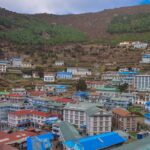
The big attraction here is Namche Bazaar. It isn’t just a midpoint—it’s a full-on hub. You’ll spend about a day acclimatizing at Namche (you’ll be there on day 4), and you’ll also get a 2–3 hour excursion. This is the sweet spot for many hikers: you get to walk enough to stay loose, but you’re not trying to “push through” altitude.
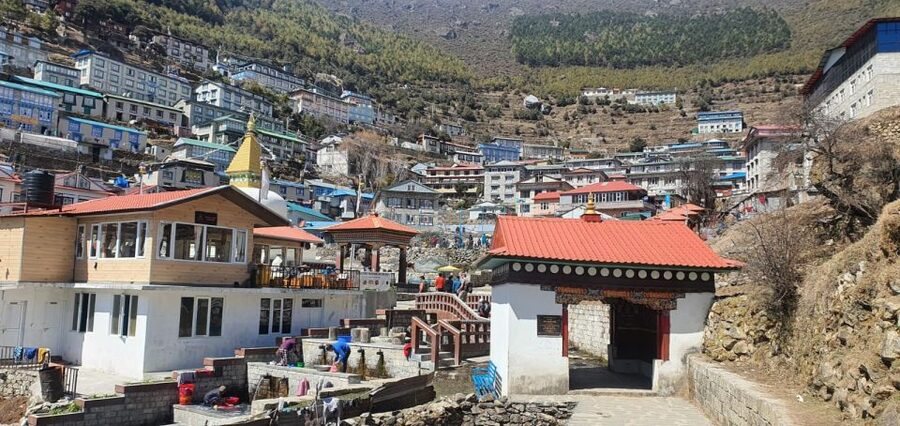
Namche is also where you’ll start seeing the day-to-day texture of the Sherpa world. You’re surrounded by people who know these routes, and it’s common to spot prayer flags, trekking gear repairs, and tea house routines that have been perfected for years. If you like travel that feels lived-in, this is where it clicks.
Namche acclimatization: rest day that actually moves you forward
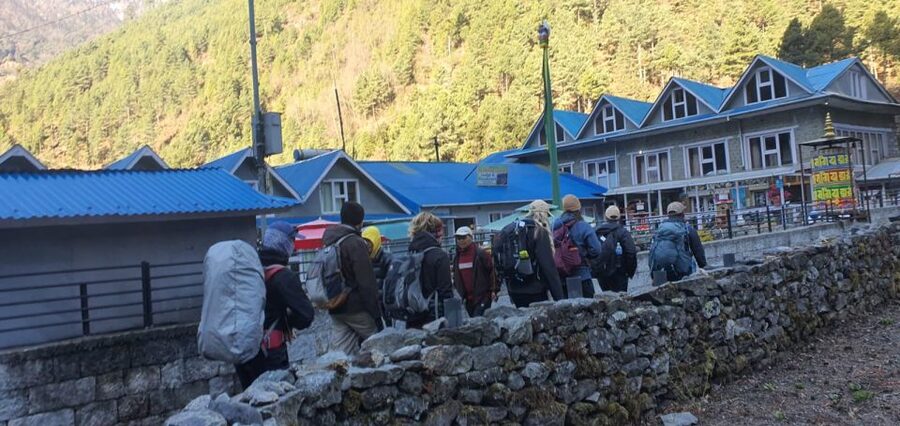
This trek doesn’t treat acclimatization as a marketing word. Your schedule gives you real breathing room at Namche Bazaar. After the climb, you’ll rest and then go out for a controlled walk. That’s how you reduce the odds of feeling awful later.
A good acclimatization day does two things. First, it helps your body adjust to less oxygen at higher altitude. Second, it helps your mind accept the new normal. Even a short excursion teaches you what to expect on the trail: how you’ll feel at 3,440 meters, how your pace might slow, and how quickly you can recover with proper rest.
If you’ve ever been tempted to “power through” altitude, this part of the route pushes you to behave smarter. You’re not just buying scenery—you’re buying time for your body to adapt.
Tengboche to Dingboche: when views turn serious
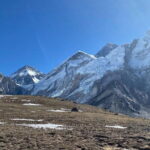
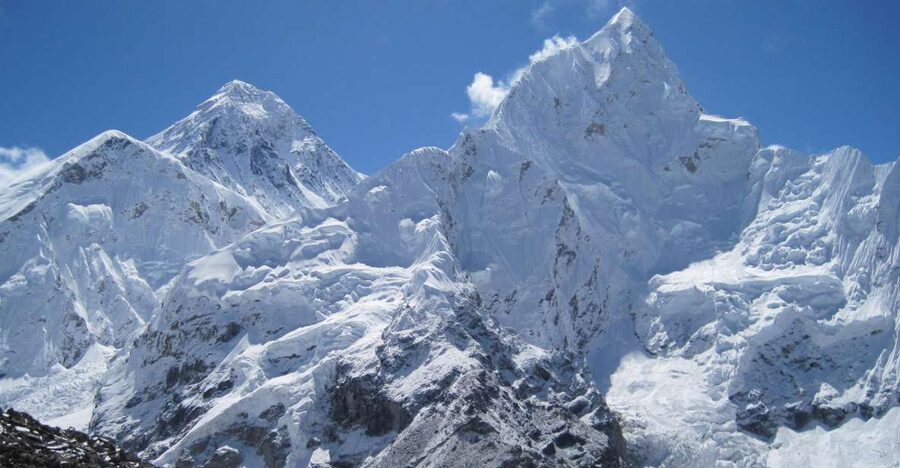
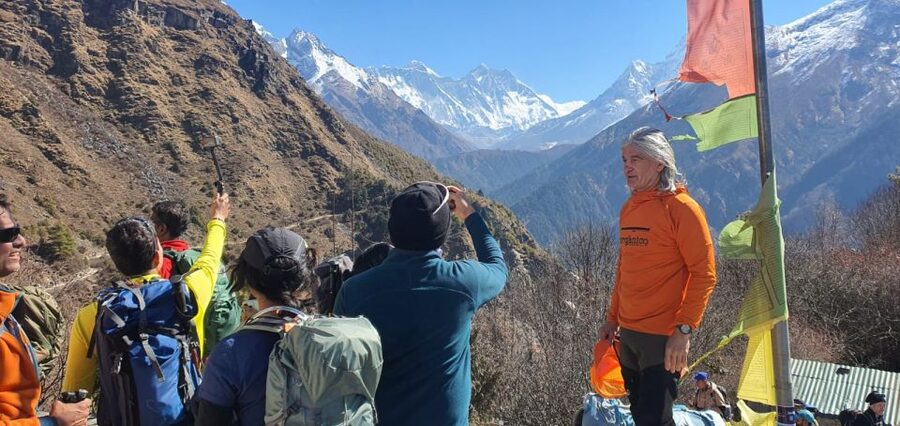
On day 5, you’ll trek from Namche to Tengboche (around 3,870 meters) in about 5–6 hours. Tengboche is a famous stop for a reason. The trails here often feel like a reveal: the higher you go, the more the mountain walls show themselves. You’ll also start hearing more about the peaks around you—Everest, Lhotse, and Nuptse tend to loom into view as weather allows.
Day 6 continues the climb to Dingboche (about 4,410 meters), again about 5–6 hours. This is where the trek shifts into higher gear. You’ll be in thinner air, and your body will ask for slower steps. Lodges in Dingboche are basic, but they’re functional—exactly what you want when your focus should be sleep, hydration, and light movement.
Day 7 is another acclimatization day at Dingboche. This is your second major chance to adjust before the route goes higher. The plan gives you time to recover before pushing toward places like Lobuche and eventually the high staging area near Gorak Shep.
Lobuche to Gorak Shep: the last stretch before Everest Base Camp
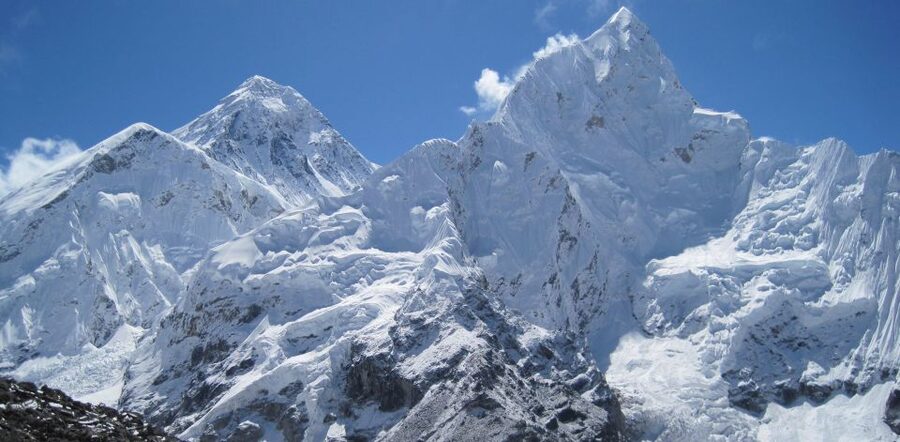
Day 8 climbs to Lobuche (about 4,940 meters) over 5–6 hours. After this, there’s less room for error. Your oxygen levels are lower, and your body’s ability to bounce back from a tough section is reduced. This is where a good guide earns their keep: pacing, hydration reminders, and practical encouragement are not “nice to have” at this altitude.
On day 9, you’ll trek from Lobuche to Gorak Shep (about 5,170 meters) and then continue to Everest Base Camp (about 5,364 meters) the same day, before returning to Gorak Shep. This is a long day with big altitude pressure. You’ll hike high, often with cold temperatures and strong sun, and you’ll want to keep your effort steady rather than sprinting for viewpoints.
Everest Base Camp is also one of the places where the trek’s purpose becomes clear. It’s not only about the name. It’s the sensation of standing near the world’s tallest climbing route and realizing how much work goes into getting people and supplies up here. You’ll likely feel a mix of awe and fatigue—both are normal.
After you get back to Gorak Shep, you’ll sleep at high altitude. That means bundling up and taking your rest seriously.
Kala Patthar at 5,545 meters: the viewpoint day you planned for
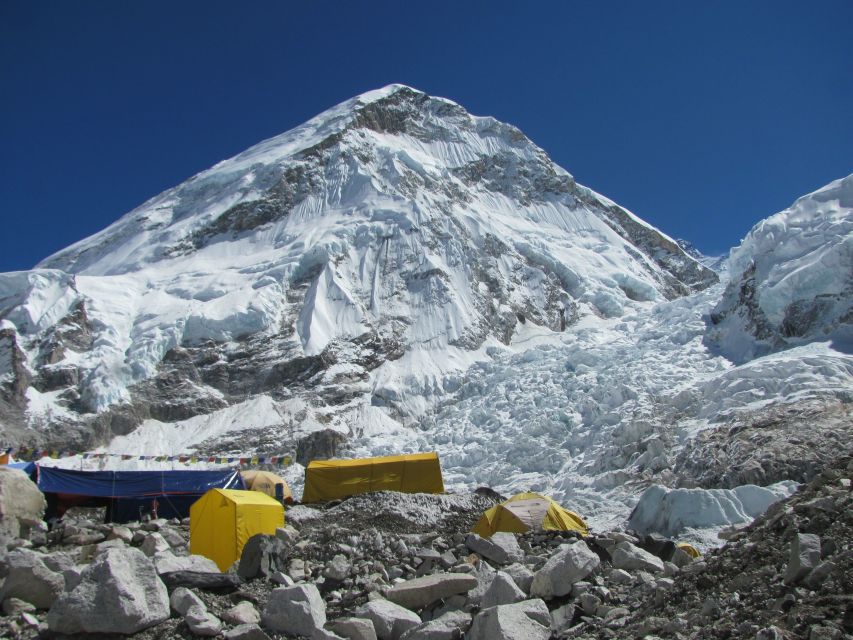
Day 10 is your big switch: you’ll hike from Gorak Shep to Kala Patthar (about 5,545 meters), then head down to Pheriche (around 4,371 meters).
Kala Patthar is one of those days where timing and preparation matter. Even if the exact conditions vary, you can expect strong wind exposure, colder air, and sun glare on snow and rock. You’ll be working at a height that changes how you breathe, so it’s smart to focus on breathing rhythm and short, careful steps.
Why do this day at all? Because this is often what turns a long trek into a memory you can’t forget. Kala Patthar puts you in a position to see Everest and the surrounding skyline more clearly than most lower stops. It’s the kind of viewpoint that makes you understand why people come back to the Khumbu even after hard seasons.
Then you descend to Pheriche. The descent matters because it gives your body room to recover. You’re not done with the trip, but you’re done with the hardest altitude work.
The three-day descent back to Kathmandu: finishing smart
After Kala Patthar and the move to Pheriche, your next three days are about descending and regaining normal comfort. This part can feel surprisingly good. Your legs work, but you’re not always fighting the same high-altitude grind.
By day 13, you return to Kathmandu, where you’ll have a final evening before departure the next day. This is an underrated moment. Many people carry the fatigue of altitude for a few days, so that last Kathmandu night isn’t just a tradition—it’s a chance to recover without rushing.
Price and value: what $1,296 really covers
The listed price is $1,296 per person for a 14-day trek that includes a surprising amount of the “hard parts”:
- Internationally scary logistics, handled for you: Kathmandu hotel nights, airport pickups, and the Lukla flight in both directions.
- Permits and paperwork: including Sagarmatha National Park entry permit and fees.
- Guiding and mountain support: an experienced English-speaking guide, plus coverage details for your guide and porter.
- The lodge base: accommodations during the trek are included, which is a big deal on a route like this where you can’t just wing it.
- Gear help if you need it: a jacket, sleeping bag, and duffle bag to use if required.
What’s not included is equally important:
- Meals during the trek (breakfast, lunch, dinner) and lunches/dinners in Kathmandu.
- Hot showers during the trek.
- Alcohol and drinks.
- Travel insurance with medical evacuation.
So is it good value? For the Everest region, it can be. You’re paying for a structured route with permits handled and with staff support. If you’d otherwise spend a lot of time organizing flights, permits, and guide arrangements, this price can feel reasonable. If you already have your own logistics nailed down, you might compare options. But if you want a plan that is set up to run day-to-day, this is the kind of package that reduces headaches.
Lodges, food, and the reality of hot showers
During the trek, you’ll stay in lodges/tea houses. That usually means simple rooms, basic bedding, and a warm-ish social space in the dining area. It’s workable, and it’s part of the charm—because the whole system runs on routine.
Food is generally mountain food: filling carbs and familiar items you can handle at altitude. Your meals during the trek are not included, so you’ll want budgeting discipline. Also remember: no hot showers are included. Some places offer different levels of washing depending on season and water access, but don’t count on it as a standard feature.
This is where your attitude helps. If you treat showers as a bonus instead of a right, you’ll enjoy the experience more.
Guides and porter support: why it changes everything at altitude
The trek runs best with good human support. Here, you’ll have an experienced English-speaking guide, and there’s also porter support arranged at a rate of one porter for two people as stated in the notes.
In past experiences with this operator, the guide quality shows up clearly. Names like Anjan and Padam have been highlighted for being attentive and for speaking English well. There’s also mention of an operator contact named Hari being reachable and responsive when plans shift.
That matters because on Everest routes, the difference between a smooth day and a stressful one is often small: timing, pace, and practical decisions when weather changes. Your guide can also help you make sense of what you see—how the valleys relate, why specific villages matter, and what to expect with altitude tomorrow.
Packing the gear that actually matters above 3,000 meters
You’re given guidance on what to bring, and it’s spot-on for this kind of hike:
- Sunglasses and a hat for strong sun
- Sunscreen
- Insect repellent
- Hiking shoes
- Long pants and socks
- Shorts and T-shirts (plus extra layers as needed)
Also plan for cold nights and high-altitude breathing. Even when days are bright, temperatures can turn sharp at elevation. If the weather is cool, you’ll be glad you brought layers you can manage on the move.
And if you’re asked to use the included gear (like a sleeping bag or jacket), treat it as a safety net. It’s still smart to bring your own comfort items too.
Who should book this Everest Base Camp route (and who shouldn’t)
This trek is not suitable for:
- pregnant women
- people with heart problems
- people with mobility impairments
Beyond that, it fits best if you:
- can handle long days of hiking at elevation
- want structured acclimatization breaks (not just “go higher and hope”)
- care about Sherpa culture as much as about summits
- like staying in lodges and accepting basic comfort
If you’re the kind of traveler who gets restless without a schedule, you’ll probably like this format. If you want total independence, this isn’t the style.
Should you book Welcome Nepal Treks for Kathmandu to Everest Base Camp with Kala Patthar?
If you want a well-structured Everest trek with permits handled, lodges lined up, and an English-speaking guide guiding the day-to-day decisions, this is a strong candidate. The route’s mix of cultural stops (like Namche Bazaar) and major altitude milestones (Everest Base Camp and Kala Patthar) makes it feel like a complete Khumbu story, not just a one-day goal.
Just don’t ignore the altitude reality and the Lukla flight risk. If your dates are fixed, you may want to consider travel flexibility elsewhere. If you can stay adaptable, you’ll get more out of the experience.
Also: budget for meals on the trail and make sure your insurance includes medical evacuation. That’s not optional on a route like this.
FAQ
FAQ
Where does this 14-day Everest Base Camp trek start?
The trek starts in Kathmandu, Nepal, with pickup on arrival and hotel accommodation for the first part of the trip.
How do you travel from Kathmandu to the trekking route?
You take a domestic flight from Kathmandu to Lukla, then begin trekking from Lukla onward.
What is the first trek day after landing in Lukla?
After flying to Lukla (about 2,850 meters), you trek to Phakding (about 2,640 meters), which takes roughly 4 to 5 hours.
Do you have acclimatization days on the route?
Yes. You rest and acclimatize at Namche Bazaar on day 4 with a 2 to 3-hour excursion, and you acclimatize again at Dingboche on day 7.
What are the key high-altitude days?
You trek to Everest Base Camp (about 5,364 meters) from Gorak Shep and then hike to Kala Patthar (about 5,545 meters) from Gorak Shep.
Are Sagarmatha National Park permits included?
Yes. The package includes the Sagarmatha National Park entry permit and fees, along with the necessary paperwork.
Is the guide English-speaking?
Yes. The trek includes a live tour guide who speaks English.
Are meals during the trek included in the price?
No. Breakfast, lunch, and dinner during the trek are not included.
Are hot showers included while trekking?
No. Hot showers during the trek are not included.
Who is this trek not suitable for?
It is not suitable for pregnant women, people with heart problems, or people with mobility impairments.