REVIEW · KATHMANDU
Everest Three High Passes Trek – 20 Days
Book on Viator →Operated by Himalayan Adventure Treks and Tours Pvt Ltd · Bookable on Viator
This trek is for people who like hard days. You’ll cross three major high passes, see the Gokyo lakes, and spend real time around Everest country, not just check it off. I like how the itinerary builds in acclimatization breaks, and I like that you’re guided all the way with permits handled. The main drawback is simple: cold, thin air, and long travel days mean you need strong fitness and a calm attitude about weather delays.
A big part of the value here is structure. You start with an easy win (a quick Lukla flight and a gentle first trek), then you steadily stack altitude days—Kongma La to Everest Base Camp and Kala Patthar, then Cho La into Gokyo, then Renjo La back toward Thame and home through Lukla.
In This Review
- Why the Everest Three High Passes route feels different
- Key highlights you’ll actually feel on the trail
- Kathmandu to Lukla: where the trek really begins
- Namche, Sagarmatha National Park, and the acclimatization rhythm
- Tengboche to Dingboche: forests, monasteries, and Ama Dablam focus
- Chhukung Ri and Kongma La: the climb begins to feel real
- Everest Base Camp and Kala Patthar: two days you plan around timing
- Lobuche to Dzongla and Cho La: glacier lakes and steep scrambling
- Into Gokyo: Ngozumpa Glacier and lake exploration days
- Renjo La to Thame: a high pass finish with a trading-route descent
- Back through Sherpa villages to Lukla and Kathmandu
- Price and logistics: what $2,700 covers, and what to budget beyond
- Who should book this trek (and who should rethink it)
- Final verdict: should you book this Everest Three High Passes trek?
- FAQ
- How long is the Everest Three High Passes trek?
- Where does the trek start?
- What are the three high passes on this trek?
- Do you visit Everest Base Camp and Kala Patthar?
- How is the Kathmandu lodging handled?
- What permits are included?
- What’s not included in the price?
Why the Everest Three High Passes route feels different
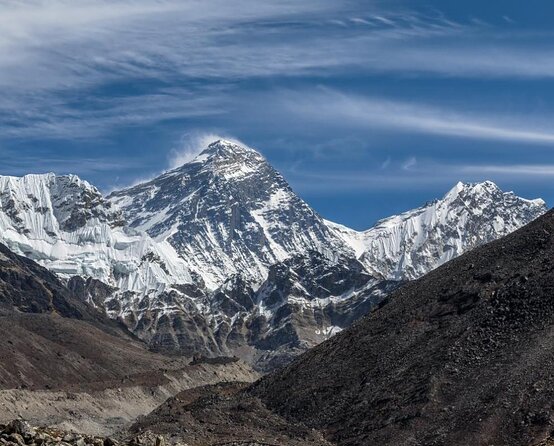
This is not the usual Everest “out-and-back.” The big idea is that you move through the Khumbu Valley in a loop that includes three high passes—Kongma La (5,535 m), Cho La (5,420 m), and Renjo La (5,360 m)—plus a full Gokyo segment with multiple lakes and a summit viewpoint. That creates a constant change of scenery, from pine and rhododendron forests to glacier moraines and big open views.
And you’ll notice the trekking pacing: some days are long and tough, then you get days that are about getting your breathing under control, eating well, and moving smarter.
Key highlights you’ll actually feel on the trail
- Three passes, three types of difficulty: Kongma La descent can be rough; Cho La includes steep boulders and tricky sections; Renjo La feels like another major viewpoint day with high-altitude exposure.
- Kala Patthar’s early start: sunrise timing means dark, cold walking, but you’re rewarded with the close-up Everest view at 5,545 m.
- Gokyo Ri + five-lake sightseeing style: you get a full day in the Gokyo area with a big viewpoint climb and lake-hopping.
- Acclimatization isn’t an afterthought: you spend dedicated time in Namche and Dingboche, plus hike options like Everest View Hotel and Nagarjun Hill.
- Tea houses make the logistics real: you sleep in lodges/tea houses for the trekking segment, so you’re not chasing hotels on hard days.
You can also read our reviews of more tours and experiences in Kathmandu.



Kathmandu to Lukla: where the trek really begins
Your trip starts in Kathmandu at Tribhuvan International Airport (TIA), with pickup to a hotel by private vehicle. This matters because Everest treks are time-sensitive. You’re not just landing and hoping for a ride—you’re met, transferred, and given a clear start point.
Day 1 is mostly reset: you arrive, connect with the company representative from Himalayan Adventure Treks & Tours, and meet other trek members. Day 2 is where you switch into mountain mode: a short scenic flight to Lukla (listed as less than 30 minutes), followed by a first trek to Phakding for 3–4 hours.
What I like for first-timers: the first day-trail is realistic. You’re not jumping straight into steep altitude. You get trail rhythm on a route that goes through natural river-valley scenery before the big elevation days.
What to consider: Lukla flights are short but weather-dependent. The itinerary specifically mentions flights from Kathmandu and also Kathmandu/Ramachap to Lukla—this is a sign the operator plans for workable alternatives.
Namche, Sagarmatha National Park, and the acclimatization rhythm
From Lukla, you trek to Phakding, then onward to Namche Bazaar via Monjo, the entrance area for Sagarmatha National Park. The route is pleasant enough to get your legs moving, while the mountain views start to stack up—pine, fir, rhododendron forests, and then that classic Everest-region sense of scale.
Day 4 is your key acclimatization day in Namche. You’re not just resting in a chair. You explore local life, then hike toward Everest View Hotel and walk back to Namche. You also tour Khumjung, including the monastery and Hillary School, plus a visit to the visitor area near the Sagarmatha National Park headquarters to learn about early Everest ascenders, Sherpa culture, and local plants and animals.
Why this day is valuable: acclimatization days work best when they include light movement and clear education. You’re learning what you’re seeing while your body adjusts. It also helps mentally—those early views can be intense, and a structured day keeps the focus on pacing.
Possible drawback: Namche-based altitude can still feel heavy. The trek plan calls out high altitude as something to respect. If you go too fast on your short hikes, you’ll pay for it later—so treat these days like training, not sightseeing marathons.
Tengboche to Dingboche: forests, monasteries, and Ama Dablam focus
As you push east, the trail shifts from forested sections into the heart of monastery-and-view territory. On the way to Tengboche, you pass through lush areas with birch, conifers, and rhododendron. Tengboche is home to the largest monastery in the Everest region, and you may catch a Buddhist ceremony when you arrive in the afternoon.
From Tengboche, you descend through forested terrain toward Debuche, cross the Imja River, reach Pangboche, then continue on to Dingboche. This is where the scenery becomes more Himalayan and less “forest tunnel.” You’re also now positioned for the Ama Dablam framing that’s so iconic in this part of the Khumbu.
Day 7 is another acclimatization day in Dingboche. You take a hike to Nagarjun Hill for views of peaks like Makalu, Lhotse, Chalotse, Tawache, and Ama Dablam.
What you’ll love here: Dingboche is described as a windy settlement with prayer flags everywhere, sitting under big ridgelines. It’s a good place for your brain to catch up: you’re seeing what you worked for, and you have a scheduled day to adjust before the highest passes.
Chhukung Ri and Kongma La: the climb begins to feel real
After Dingboche, the route goes toward Chhukung via glacier moraines and high valley terrain, passing places like Bibre (a yak herdsman area) and crossing icy streams. After lunch, you climb to Chhukung Ri, with easy scrambling near the top.
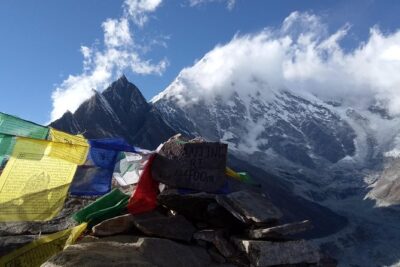
Then Day 9 goes early: you aim for Kongma La, the first major pass on the trek at 5,535 m. The route choices on this day include a trail option over the hill near Nuptse Glacier moraines or another route via Bibre and above the Niyang Khola. Either way, expect cairns and prayer flags near the top.
Kongma La’s real challenge is often the descent. The plan notes the final descent from the pass as the most difficult part of the day, with a trail that turns north through Khumbu Glacier to reach Lobuche.
Practical advice: on high-pass days, your best friend is controlled effort. If you rush uphill, your legs and lungs will punish you most on the technical descent. Slow wins here.




Everest Base Camp and Kala Patthar: two days you plan around timing
Your day after Kongma La moves along the lateral moraine of the Khumbu Glacier, with panoramic sightlines toward peaks including Everest ridgelines, Pumori, and others. There’s a steep section up to Changri Glacier and then you reach Gorakshep.
From Gorakshep, you continue to Everest Base Camp. You walk over rocky dunes, moraines, and streams, then arrive at the base camp area to admire peaks like Nuptse, Khumbutse, and Pumori. After returning to Gorakshep, you sleep again at that staging point.
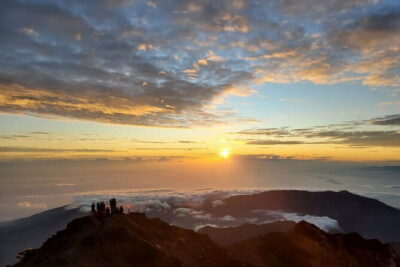
Day 11 shifts into sunrise mode. You start early to climb toward Kala Patthar (5,545 m) so you can catch the first light on Everest. The plan is clear: you’ll be trekking in the dark and cold, and wind can be an issue depending on season.
This is the day that sells the whole trek. Kala Patthar is where you get the close-up Everest view plus a huge Himalayan panorama. You then descend to Lobuche for the night.
What to consider: start-time discipline matters. You’re moving before your body is fully warmed up. Bring layers you can manage in cold wind, and don’t underestimate how fast cold drains energy when you’re working hard at altitude.
Lobuche to Dzongla and Cho La: glacier lakes and steep scrambling
From Lobuche, you follow the Khumbu Glacier trail and choose the route that leads you toward Dzongla. You pass stupa and tombstone areas in the distance and can see Chola Tsho Lake nearby. There’s also another smaller lake before you cross Chola Khola via a bridge.
Day 13 is your major second-pass day: Cho La at 5,420 m. The trek description emphasizes that the climb is steep and made worse by boulders, with some scrambling required. The final curve includes a tricky section near a crevasse, and the pass top is marked by prayer flags and cairns.
The day ends at Thangnak, with a long path down that isn’t described as technically difficult—still, it’s long. You’ll feel it.
Practical takeaway: Cho La is the pass where mental focus counts as much as stamina. Expect uneven footing and unstable rocks. If you’ve got a tendency to hurry, practice the opposite here: short steps, steady rhythm, and use your guide’s pacing cues.
Into Gokyo: Ngozumpa Glacier and lake exploration days
After resting at Thangnag Kharka, you trek down toward Gokyo Valley. You reach the edge of Ngozumpa Glacier, described as Nepal’s longest glacier in the route details, and cross to see a chain of lakes. You’ll reach the second Gokyo Lake, and then see the third near Gokyo Village, where you spend the night.
Day 15 is a big viewpoint day: you climb Gokyo Ri for mountain views, and then you tour more of the lakes. The plan includes the fourth lake today, then continuation to the fifth lake and a viewpoint called Scoundrel’s Viewpoint at the edge of the fifth lake. The view described includes peaks such as Cho-Oyu, Gyachung Kang, Everest, Lhotse, Nuptse, and Makalu, plus the huge Ngozumpa Glacier.
Why this is valuable: the Gokyo segment gives you variety. After the Everest-region base camp days, you shift into a lake-and-higher-valley world. It’s calmer in feel, but still high-altitude work.
Renjo La to Thame: a high pass finish with a trading-route descent
Your Renjo La day starts early. You follow a trail alongside Dudh Pokhari for about two hours, then descend toward Renjo La. The views from Renjo La are compared with Gokyo Ri in terms of viewpoint style, including the third Gokyo Lake and Gokyo Village beneath the Ngozumpa Glacier area.
The day continues with descent over stone staircase sections and loose scree, reaching the south bank area of Angladumba Tsho Lake (as described in the route).
Day 17 becomes more culturally interesting. You descend from Marulung to Thame via a traditional route used for centuries by Tibetan traders. You cross the Bhote Koshi River and descend to Taranga, then keep descending toward Thame with bridges along the way. Thame has a gompa on a hill west of town.
Why the end feels different: this last major leg keeps you moving, but the terrain described here is more about route-following and community passing—not just pass conquering.
Back through Sherpa villages to Lukla and Kathmandu
From Thame, you descend and cross multiple bridges over the fast-flowing Dudh Koshi and tributaries. The trail becomes more level and natural, walking through rhododendron and pine forests, plus open plains and Sherpa villages with prayer stones and prayer flags.
You reach Lukla, then stretch sore legs—honestly, this is where the “I can’t believe I did that” feeling shows up. The trek ends with flight back to Kathmandu, usually scheduled in the morning for safety.
Day 19 includes arrival in Kathmandu, rest time, and souvenir shopping. There’s also a farewell dinner at an authentic Nepalese restaurant with cultural performance. Day 20 is airport transfer about 3 hours before your flight.
Price and logistics: what $2,700 covers, and what to budget beyond
At $2,700 per person, this trek price is positioned as a full-service package for a long, demanding itinerary. You’re paying for the hard parts of planning: the TIMS and Khumbu Valley permit, the paper work, the flights to Lukla (including Kathmandu/Ramachap options), and the day-to-day support of an experienced guide plus porters.
Included highlights that matter in the real world:
- Two nights in a 3-star Kathmandu hotel with breakfast
- Trek meals: lunch, dinner, and breakfast during trekking
- All accommodations in lodges/tea houses
- 1 porter for 2 clients, plus a duffle bag collected and returned after the trek
- First aid kit and travel and rescue arrangements
- A farewell dinner with cultural performance
Not included items you should plan for:
- Nepal visa fee (you get it in Kathmandu, as stated)
- International airfare to and from Nepal
- Extra nights in Kathmandu if your timing changes
- Meals in Kathmandu and any meals if you return early due to weather/other reasons
- Travel and rescue insurance
- Personal costs in the mountains like phone calls, laundry, battery recharge, bottle/boiled water, hot shower, or extra porters
- Tips for guide and porter
My value call: if you want a tight, guided structure through the entire loop—including permits, flights to Lukla, and coordinated lodging—this price can be fair. If you already love self-planning and you’re fluent in dealing with permits and lodge booking, you might find cheaper DIY options. Most people pick this route because they want their time spent on the trail, not on paperwork.
Who should book this trek (and who should rethink it)
This itinerary is clearly aimed at people with strong physical fitness. You’ll hit multiple high-altitude passes and spend time around Kongma La, Cho La, Renjo La, plus the serious elevation of Kala Patthar.
You’ll likely love it if:
- You want a real Everest circuit experience (not just a single valley out-and-back)
- You enjoy structured acclimatization days and taking training seriously
- You want lake scenery and big viewpoints as part of the challenge, not just as a side bonus
You should rethink it if:
- Your altitude tolerance is limited, or you struggle in cold and wind
- You can’t handle the uncertainty that comes with Lukla flights and mountain weather
- You’re looking for a relaxed vacation pace
One nice detail from the trip history: guides and support staff have been described as friendly and knowledgeable, including named guides such as Ang Dawa Sherpa and Ang Pemba. That kind of local competence is worth money when the trail gets technical.
Final verdict: should you book this Everest Three High Passes trek?
Book it if you want the full Everest-region challenge: three high passes, Everest Base Camp, Kala Patthar, and a proper Gokyo lakes segment, all run with permits and logistics handled. This is the kind of trek that rewards preparation—your body, your layers, your pacing, and your patience.
Skip (or choose a different itinerary) if you’re chasing comfort first. The plan calls out cold trekking at Kala Patthar, steep pass sections with scrambling on Cho La, and tough descent days. This route doesn’t pretend altitude is easy.
If you want a signature Himalayan circuit you can talk about for years, this one fits.
FAQ
How long is the Everest Three High Passes trek?
It’s listed as 20 days (approx.).
Where does the trek start?
You meet at Tribhuvan Airport, Kathmandu, Nepal with a start time listed as 7:00 am.
What are the three high passes on this trek?
The trek includes Kongma La (5,535 m), Cho La (5,420 m), and Renjo La (5,360 m).
Do you visit Everest Base Camp and Kala Patthar?
Yes. The route includes trekking to Everest Base Camp and then visiting Kala Patthar (5,545 m).
How is the Kathmandu lodging handled?
You get two nights in a 3-star hotel in Kathmandu with breakfast.
What permits are included?
The package includes TIMS and the Khumbu Valley permit, along with all necessary paper work.
What’s not included in the price?
The listed exclusions include Nepal visa fee, international airfare, travel and rescue insurance, tips for guide and porter, all meals in Kathmandu, and personal expenses in the mountains (like phone calls, laundry, battery recharge, bottle/boiled water, and hot shower).