REVIEW · KATHMANDU
Everest Base Camp Budget Trekking
Book on Viator →Operated by Global Holidays Adventure P. Ltd · Bookable on Viator
Everest Base Camp sounds like a mountain dream, not a workable plan. Yet this 14-day trek is built as a steady, supported hike through the Khumbu region, where you gain altitude in stages and sleep in simple lodges along the way. The route runs straight toward the big sights, with time at key elevations and a summit-style payoff day at Kalapattar.
I like two things about this experience right away. First, the planning and coordination feel real, not vague: Surya and Samsher at Global Holidays Adventure P. Ltd help keep your logistics tidy before you ever step outside Kathmandu. Second, the itinerary has built-in breathing room, so you’re not just hiking uphill every day until your body says no.
One consideration: this is still a serious altitude trek. And while the tour covers a lot of essentials, trekking food during the hike isn’t included, so you’ll need to plan extra spending for meals, hot drinks, and your water strategy.
In This Review
- Key highlights worth focusing on
- Price and logistics: what your $900 actually buys
- Kathmandu to Lukla: start strong before the climb begins
- The Everest Base Camp trek, day by day (and what each day gives you)
- Day 2: Lukla to Phakding (2652 m)
- Day 3: Phakding to Namche Bazaar (3440 m)
- Day 4: Acclimatization in Namche Bazaar
- Day 5: Namche to Tengboche (3860 m)
- Day 6: Tengboche to Dingboche (4410 m)
- Day 7: Second acclimatization day (the safety valve)
- Day 8: Dingboche to Lobuche (4910 m)
- Day 9: Lobuche to Everest Base Camp (5160 m), then back toward Gorekshep
- Day 10: Kalapattar hike (5545 m) and descent to Pheriche (4210 m)
- Day 11: Pheriche back to Namche Bazaar
- Day 12: Namche to Lukla
- Day 13: Fly Lukla to Kathmandu (1337 m)
- Day 14: Final departure
- Altitude reality check: how this route tries to keep you safe
- Food, water, and comfort: the real budget tradeoffs
- Who this trek suits (and who should rethink it)
- Is it a private trek, and does that change the experience?
- Should you book this Everest Base Camp budget trek?
- FAQ
- Is the flight to Lukla included, and how much luggage can I bring?
- Do I need to arrange my own Nepal visa and international airfare?
- Do I get a professional guide and porters?
- Are park permits and TIMS included?
- Is food included during the trek?
- Are beverages or water included on the trek?
- Is there a place to take a hot shower?
- How does the itinerary handle altitude acclimatization?
- What’s the cancellation policy?
Key highlights worth focusing on
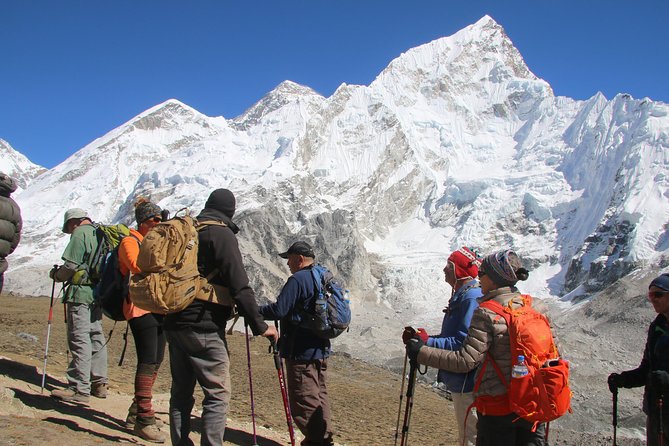
- A professional English-speaking guide plus porters for a smoother, less stressful trek rhythm
- Flights Kathmandu–Lukla–Kathmandu included, with a strict 15 kg luggage limit
- Two acclimatization days (Namche and the higher section after Dingboche) to reduce altitude risk
- Everest Base Camp day plus a return to Gorekshep for a proper high-point experience
- Kalapattar at 5545 m for a classic Everest view and a big payoff before the descent
- Permits and trek cards covered, including national park permits, TIMS, and community fees
Price and logistics: what your $900 actually buys
At $900 per person, this is a budget trek mainly because the heavy-ticket items are bundled in. You’re not just buying a guide and a suggested route. You’re also getting the Kathmandu–Lukla–Kathmandu flight (with that 15 kg limit), the national park and management permits, staff costs, and staff logistics. Those are the things that usually spike cost on Everest trips.
Here’s what’s included that matters most for value:
- Guide and porter support (one professional English-speaking guide and necessary porters)
- Permits and cards (Everest National Park permit, local community fees, and TIMS)
- Domestic flights Kathmandu–Lukla–Kathmandu, plus the guide’s flight costs
- Lodging basics via sleeping baggage (good quality sleeping bag used during the trek; refundable after you finish)
- A first aid kit
- A farewell cultural Nepali dinner on the last day
But it’s equally important to know what’s not included, because that’s where your “real cost” may shift:
- International airfare and Nepal entry visa
- All trekking meals and foods
- Beverages, alcohol, mineral water, and boiled water during the trek
- Hot showers during the trek
- Travel insurance and emergency rescue coverage
- Any helicopter charter fees if flights get delayed or canceled due to weather
So the value story is: you pay less than many Everest packages because the trek cost itself (food and drinks) is left for you to manage day to day. If you’re okay with that tradeoff, this price makes sense.
You can also read our reviews of more tours and experiences in Kathmandu.
Kathmandu to Lukla: start strong before the climb begins
Your trip begins in Kathmandu, with an airport pickup and a transfer to a hotel. This first day is about setup: getting your sleep, getting organized, and getting ready for a flight that you can’t really “plan around” once it’s in motion.
On day 2, you fly to Lukla, then start hiking to Phakding (2652 m). The walking is described as short, around 3–4 hours, which is exactly what you want on day one after landing. You’re building movement without smashing your body right away.
A practical note: because the flight is included, the trek is designed around that access. That’s great for convenience, but you’ll want to treat the Lukla day seriously:
- Keep your 15 kg luggage tight and well packed.
- Expect the flight day to feel time-sensitive and weather-aware.
The Everest Base Camp trek, day by day (and what each day gives you)
Day 2: Lukla to Phakding (2652 m)
You step out of Lukla into the Khumbu foothills and walk toward the Phakding area. This is a warm-up stage, the “get your legs moving” section. It also helps you settle into the lodge rhythm that you’ll repeat throughout the trip.
Day 3: Phakding to Namche Bazaar (3440 m)
Now the trek turns into real altitude work: Namche Bazaar (3440 m) is the key hub of the region. Expect 5–6 hours of walking. This day usually feels like more effort than it sounds on paper, because the ground is not flat and your breathing changes as elevation rises.
Day 4: Acclimatization in Namche Bazaar
You don’t rush higher on day 4, and that matters. An acclimatization day here gives your body a chance to adjust while you stay in a place where you can rest, eat, and regroup. Even if you feel okay, use this day to be strategic: keep your exertion moderate.
Day 5: Namche to Tengboche (3860 m)
This section pushes you to Tengboche (3860 m). Expect 5–6 hours. Tengboche is known for its spiritual setting in the Khumbu, and in practical terms it’s also a good checkpoint lodge area. You’re still climbing, but you’re not doing it blindly—you’ve already earned the right to feel more mountain-savvy by now.
Day 6: Tengboche to Dingboche (4410 m)
On day 6 you reach Dingboche (4410 m). Again, the walking is listed as about 5–6 hours. This is a “pay attention to your body” day. When you feel even slightly off, you’re not failing—you’re just being smart.
Day 7: Second acclimatization day (the safety valve)
This is your second real pause: another acclimatization day at this higher altitude zone. It’s one of the most valuable pieces of the itinerary because it reduces the chance you’ll try to rush your way into Base Camp. If you’ve ever watched people burn out on Everest treks, the pattern is usually the same: too fast, too late.
Day 8: Dingboche to Lobuche (4910 m)
You climb to Lobuche (4910 m), with about 5–6 hours of trekking. This is where the scenery and the seriousness both intensify. The higher you go, the more every uphill step demands patience.
Day 9: Lobuche to Everest Base Camp (5160 m), then back toward Gorekshep
Day 9 is a big one. You trek to Everest Base Camp (5160 m)—listed as 5–6 hours walking—then you return to Gorekshep. This “reach the goal, then keep moving” design helps you get the day you came for while still respecting the need to manage energy before tomorrow’s climb.
Day 10: Kalapattar hike (5545 m) and descent to Pheriche (4210 m)
Today starts with altitude glory. You hike up to Kalapattar (5545 m) and then descend to Pheriche (4210 m). Expect 6–7 hours total walking. This is the day where many people remember Everest most clearly—wide views, strong mountain presence, and the sense that you’re standing in the middle of a huge story.
Day 11: Pheriche back to Namche Bazaar
You reverse part of the route, walking about 6–7 hours to return to Namche. Descents can feel easier on paper, but they can also be tough on knees and feet. Go slow, use trekking poles if you have them, and don’t let your pride rush you.
Day 12: Namche to Lukla
Another 6–7 hour day, moving from Namche down toward Lukla. You’re still climbing fatigue-wise because you’ve spent days in thinner air. The win here is finishing under your own power and lining up for the Lukla flight back.
Day 13: Fly Lukla to Kathmandu (1337 m)
Flight back to Kathmandu at 1337 m. This is a real reset day: you’re not hiking anymore, and you can finally refuel without climbing overhead.
Day 14: Final departure
Departure to your onward destination.
Altitude reality check: how this route tries to keep you safe
Altitude is the big story on Everest. The trek operates above 4500 m several times, which is why acute mountain sickness (AMS) is explicitly treated as a serious risk. The itinerary tries to manage that with two acclimatization days—one in Namche and one at the higher part of the trek after Dingboche.
Here’s the practical way to use those built-in pauses:
- Treat acclimatization days as recovery time, not sightseeing marathons.
- If you feel headache, unusual nausea, or a loss of coordination, don’t “push through.” Slow down, communicate with your guide, and take it seriously.
- Ascend slowly. This itinerary helps, but it still climbs. Your job is to match the pace to your body.
I also like that the tour doesn’t pretend Everest is easy. It spells out that you need a moderate fitness level, and it recommends physical activities like running, swimming, and walking beforehand.
Food, water, and comfort: the real budget tradeoffs
This tour includes lodging support via sleeping bag, staffing, permits, and guide logistics. But it does not include:
- All foods during the trekking
- Beverages and mineral water/boiled water during the hike
- Hot showers
So on a “budget trek,” you need to get comfortable with tea-house style meals and cash-based purchases. Bring extra attention to water and drinks. At high altitude, hydration matters, but the tour doesn’t include bottled water or boiled water.
Comfort is basic but workable. You’ll be sleeping in lodges typical for this route style, with a sleeping bag provided for the trek. The sleeping bag being refundable after you finish is a nice detail if you’re trying to keep costs down and avoid buying gear.
Who this trek suits (and who should rethink it)
This experience is described as suitable for people who are moderately fit and don’t need prior adventure experience. The tour also notes that people with pre-existing medical issues should seek medical advice before attempting the trek.
In plain terms, I’d say it fits you best if:
- You can walk several hours a day at an uphill pace.
- You accept simple comforts and pay attention to hydration and food timing.
- You want strong goal structure: Base Camp, then Kalapattar, then the descent back to Lukla.
It may not fit you if:
- You’re expecting a fully catered package where every meal and drink is included.
- You’re very anxious about altitude and want a slower “toe-in” approach from lower starting points (because this itinerary begins via Lukla).
If altitude worries you, you can ask your operator about alternative ways to enter the region more gradually, like trail routes referenced from Shivalaya (near Jiri) or Tumlingtar (near Hile). Those aren’t described as part of this exact plan, but the point is worth raising if you’re trying to reduce AMS risk.
Is it a private trek, and does that change the experience?
Yes. This is listed as a private tour/activity, meaning only your group participates. For Everest, that matters because pacing becomes personal. You can work with your guide to keep the ascent gentle on the days it counts most. It also makes it easier to plan rest behavior if you have questions about symptoms or hydration.
Should you book this Everest Base Camp budget trek?
Book it if you want a straightforward, supported Everest experience that:
- includes the big logistics like flights, permits, and guide/porter support
- builds in two acclimatization days
- aims for the classic hits: Everest Base Camp plus Kalapattar
- fits your budget tradeoffs, especially the fact that trekking food and drinks aren’t included
Skip or rethink it if you need full meal/drink coverage, hot showers, or emergency rescue guarantees built in. And if you have any medical history, get medical advice early so your decision is informed, not hopeful.
FAQ
Is the flight to Lukla included, and how much luggage can I bring?
Yes. The trek includes the Kathmandu–Lukla–Kathmandu flights. The luggage limit is 15 kg per person.
Do I need to arrange my own Nepal visa and international airfare?
Yes. International airfare and Nepal entry visa fees are not included, and you’ll need to arrange them separately.
Do I get a professional guide and porters?
Yes. The trek includes one professional English-speaking trekking guide and necessary potters/porters.
Are park permits and TIMS included?
Yes. You get the Everest National Park permit, local community fees, and the TIMS (Trekking Information management System) card fees included.
Is food included during the trek?
No. All foods during the trekking are not included.
Are beverages or water included on the trek?
No. Beverages, alcoholic drinks, mineral water, and boiled water during the trekking are not included.
Is there a place to take a hot shower?
No. Hot showers are not included during the trek.
How does the itinerary handle altitude acclimatization?
The itinerary includes two acclimatization days: one in Namche Bazaar and a second acclimatization day after Dingboche.
What’s the cancellation policy?
You get free cancellation. You can cancel up to 24 hours in advance for a full refund.
If you want, tell me your fitness level and when you’re planning to go, and I’ll help you sanity-check whether this 14-day pace and the altitude profile feel realistic for you.