REVIEW · KATHMANDU
Annapurna Base Camp Trek
Book on Viator →Operated by Glorious Himalaya Trekking Pvt. Ltd. · Bookable on Viator
A mountain trek that feels both wild and well-run. The Annapurna Base Camp route mixes big Himalayan drama with forest hiking, sacred places, and that unreal moment when you look up at peaks surrounding the sanctuary area. What makes this one interesting is the way the days are paced and supported, so you’re not just moving, you’re also settling into the region’s altitude and rhythm.
I especially like the logistics: airport pickup and drop-off, Kathmandu and Pokhara hotels, transport between cities, and permits handled in advance. I also love the high-impact scenery built into the schedule, from sunrise at Poon Hill to the views at Annapurna Base Camp around 4,130m, plus the hot-springs stop at Jhinu Danda. One thing to consider up front: meals during the trek aren’t included, so you’ll want cash (and a flexible stomach) for lunch and dinner at the lodges.
In This Review
- Key things to know before you go
- Entering Annapurna’s sacred zone from Kathmandu
- Getting to Pokhara the scenic way
- Day-by-day trek reality: what those first steps feel like
- Tikhedhunga and Ulleri: a stair test in a good way
- Ghorepani: the base for Poon Hill magic
- Poon Hill sunrise at 3,210m: the payoff morning
- Forest trekking toward Tadapani, then Sinuwa
- Khuldighar to Deurali: where the air thins and your pace slows
- Hinku Cave, Machhapuchhre Base Camp, then Annapurna Base Camp at 4,130m
- The return: Sinuwa to Bamboo and the long, satisfying descent
- Chhomrong to Jhinu Danda: steps, stairs, and your hot-springs reward
- Back to Pokhara and Kathmandu: using your last day well
- Price and value: what $650 buys you in real terms
- Who this trek suits (and who should rethink it)
- Should you book Annapurna Base Camp with Glorious Himalaya Trekking?
- FAQ
- What is the meeting point and start time?
- How long is the Annapurna Base Camp trek?
- Is airport pickup included?
- What’s included in Kathmandu and Pokhara stays?
- What kind of accommodation do you use on the trek?
- Are meals during the trek included?
- Is an experienced guide included?
- Are porters included?
- Is there a vegetarian option?
- Does the itinerary include hot springs?
- What is the cancellation window?
Key things to know before you go
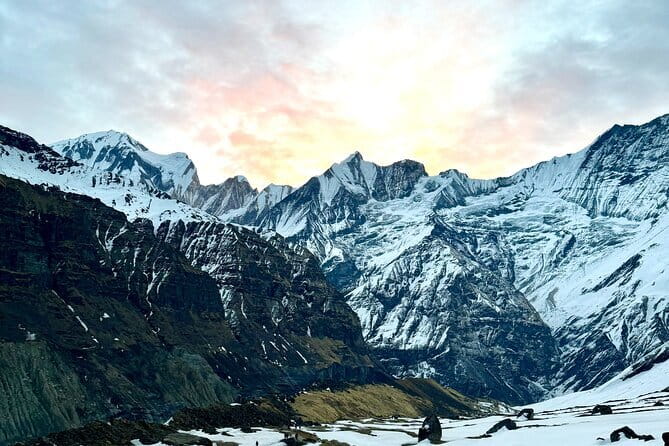
- Sacred sanctuary setting: this trek passes through an area considered sacred by Hindus and Buddhists, tied to the belief that deities live here, and it was opened to foreigners in 1956.
- Poon Hill sunrise at 3,210m: a short pre-dawn push for one of the region’s classic views—Annapurnas, Dhaulagiri, Machhapuchhre (Fishtail), and Manaslu in the mix.
- Forest-to-alpine progression: bamboo, rhododendron, and oak forest early on, then colder, rockier terrain as you climb toward Deurali and the sanctuary.
- Machhapuchhre Base Camp stop: you reach Machhapuchhre Base Camp, but it’s not a summit-and-celebration day since climbing is not permitted.
- Jhinu Danda hot springs: after a day of descending and climbing steps, you can soak while your muscles plot revenge.
- Guide-led flexibility: past trekkers praised guides (like Prakash, Buddhi, Keshab, and Jiban) for being responsive and adapting when conditions change.
Entering Annapurna’s sacred zone from Kathmandu
This trek starts with a real-world welcome: when you arrive at Tribhuvan Airport, you get picked up and taken to a Kathmandu hotel. Your trekking guide uses that first evening to orient you and help you get your gear ready. It’s a small thing, but it matters because the next day is a long transfer to the trekking region—and you want your boots and layers sorted before you’re sweating through your plan.
Kathmandu itself is included only as nights (two nights in the city with breakfast), not as an extended sightseeing tour. That’s not a drawback if you’re here for trekking. It can be a bonus, because you’ll spend your limited time where your legs will actually earn the view.
You can also read our reviews of more tours and experiences in Kathmandu.
Getting to Pokhara the scenic way
The journey continues with a drive from Kathmandu to Pokhara, following rivers along the route and stopping for lunch. Once you arrive, you check in and get time to breathe—especially around Phewa Lake and Lakeside in the evening.
Why I like this setup: you don’t just shock your body with sudden altitude and long days. Pokhara is a staging area, and it helps you mentally switch from city pace to trail pace. Also, the tour includes two nights in Pokhara with breakfast, giving you a comfortable buffer before the trek really starts.
Day-by-day trek reality: what those first steps feel like
The trek proper begins near Nayapul. From there, the early days follow a steady pattern: short climbs, small descents, and village hopping through terraced paths and stair sections. You’ll go from river valley hiking into Magar village country, then into rhododendron and oak forests.
A key detail: the itinerary uses the kind of pacing that reduces the “I’m dying at every step” effect. For example, you climb through Ulleri and along the way to Banthanti and Nagethanti, then reach Ghorepani. It’s still work, but you get breaks at the right times and you’re not forced into a single brutal day right out of the gate.
Tikhedhunga and Ulleri: a stair test in a good way
You’ll trek from Birethanti (a riverside village at a confluence of waterways) up toward Sudame and then climb gradually to Tikhedhunga. The next day includes a steep climb via stone stair sections to Ulleri. This is one of those moments where you learn what your legs like and what they hate—good boots help, and so do trekking poles if you use them.
Ghorepani: the base for Poon Hill magic
When you reach Ghorepani, you’re stepping into the classic rhododendron-and-forest zone. From here the trek builds toward Poon Hill, which is the day-trip payoff everyone talks about.
Poon Hill sunrise at 3,210m: the payoff morning
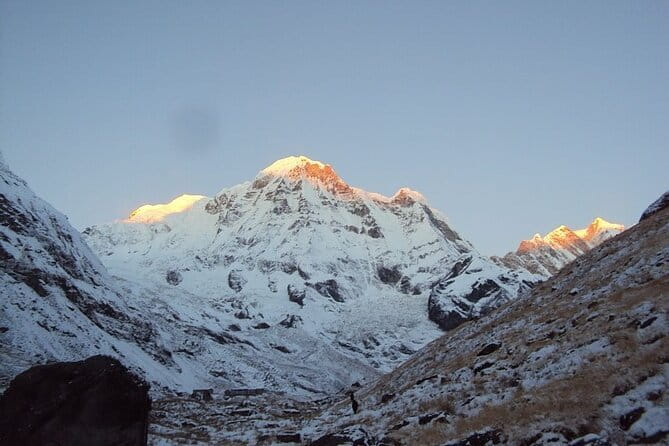
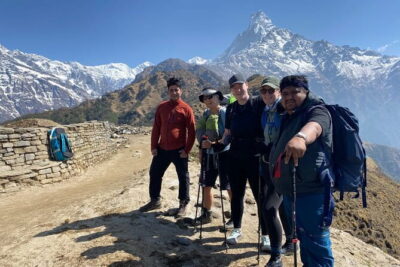
The schedule includes a very early hike up for about 45 minutes to Poon Hill at 3,210m. This route is scenic and focused on rhododendron forest, and it’s timed so you can catch the sunrise view. The reward is a wide panorama: Dolpo to the west, the Dhaulagiri region, Annapurnas, Machhapuchhre (Fishtail), and Manaslu.
The best part of Poon Hill isn’t only the view. It’s how fast you learn the rhythm of the region. One moment you’re climbing in low light; the next moment you’re watching a mountain stage act that feels way bigger than a photo. It’s also where you’ll notice why people love doing this trek in a group with a guide—when it’s cold and dark, you want someone who knows where to place you and when to move.
Forest trekking toward Tadapani, then Sinuwa
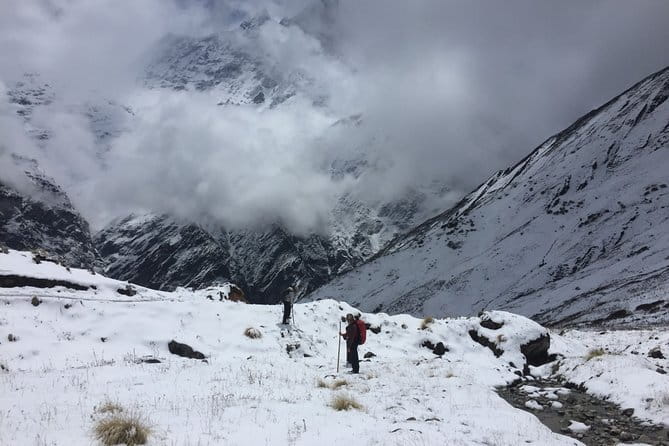
After Poon Hill, the trek follows a ridge route through pine and rhododendron forest toward Deurali, then descends to Banthanti and continues on toward Tadapani. It’s about staying patient and letting the forest do its job: it breaks up the climbing, gives your mind something besides altitude to focus on, and keeps the trail interesting.
Tadapani to Sinuwa is another change in vibe. You start with a steep downhill section through rhododendron forest to reach the Gurung community village of the area, then follow an easier path to Sinuwa around 2,300m. This is one of those stretches where you can feel the trek shift from “working uphill” to “moving through a living valley.”
Khuldighar to Deurali: where the air thins and your pace slows
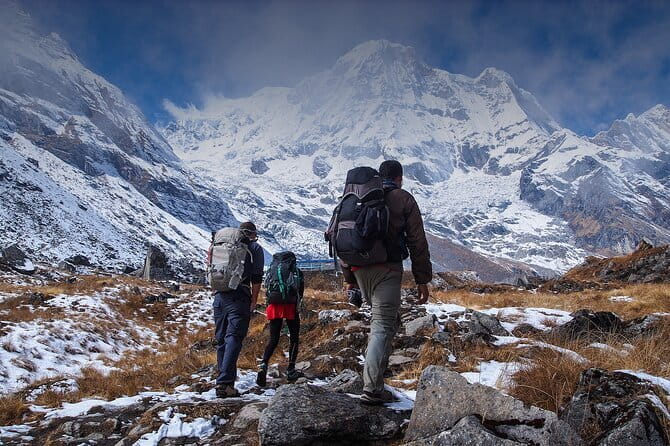
As you continue, the itinerary drops down and then climbs toward Khuldighar (around 2,380m). From there, the route levels out and meanders through bamboo and rhododendron forest to reach Deurali. The day includes rocky bank sections and steeper moments, but it’s built to keep you progressing without turning it into a nonstop punishment.
Here’s the practical advice: expect your pace to drop as altitude rises. You’re not slow; you’re adapting. I like that this trek’s structure doesn’t pretend everyone can hike the same speed at the same time of day. A good guide keeps the plan realistic, especially with conditions changing day to day.
Hinku Cave, Machhapuchhre Base Camp, then Annapurna Base Camp at 4,130m
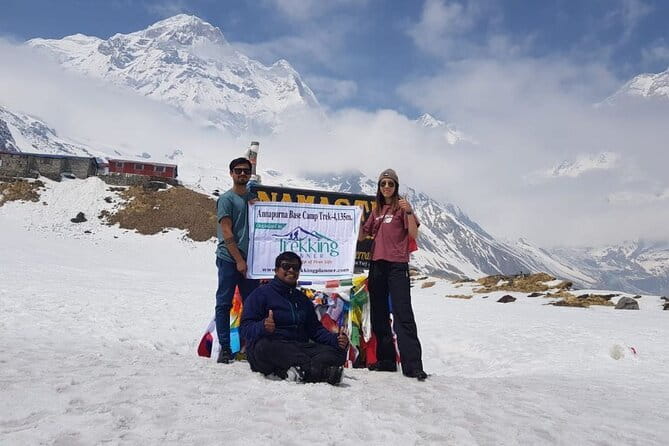
This is the signature day. You’ll climb through forest, cross Hinku Cave, pass by Deurali, then head toward Machhapuchhre Base Camp. It’s worth flagging what that stop means: it’s not treated as a summit day because climbing Machhapuchhre is not permitted. So you’re going for views and the feeling of being surrounded—not for bragging rights.
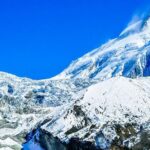
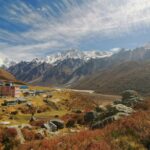
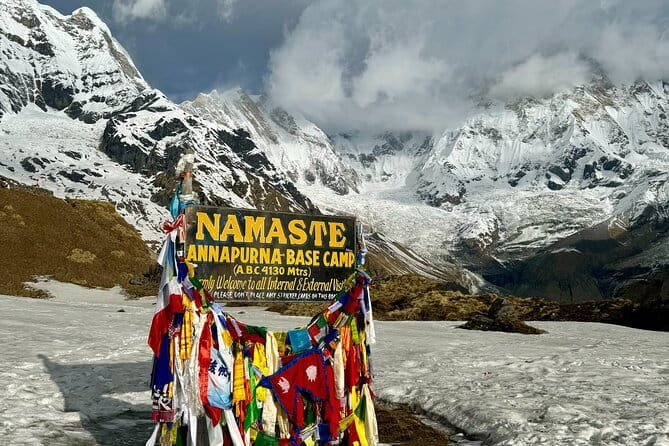
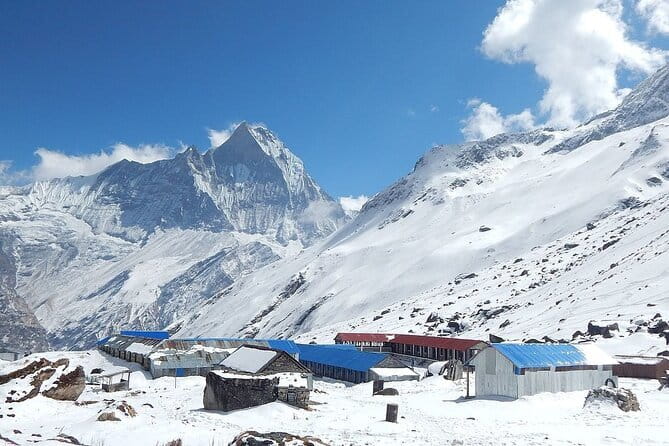
Two hours after Machhapuchhre Base Camp, you reach Annapurna Base Camp at about 4,130m. This is the moment the entire trek leads to. The trail comes into a zone called the Annapurna sanctuary, and you’re rewarded with views of the peak wall around you.
What I like here is that you’re not arriving to a random spot. You’re arriving after a sequence of ecosystems: tropical-style forest and bamboo zones, then colder, higher terrain. That buildup makes the final views land harder.
The return: Sinuwa to Bamboo and the long, satisfying descent
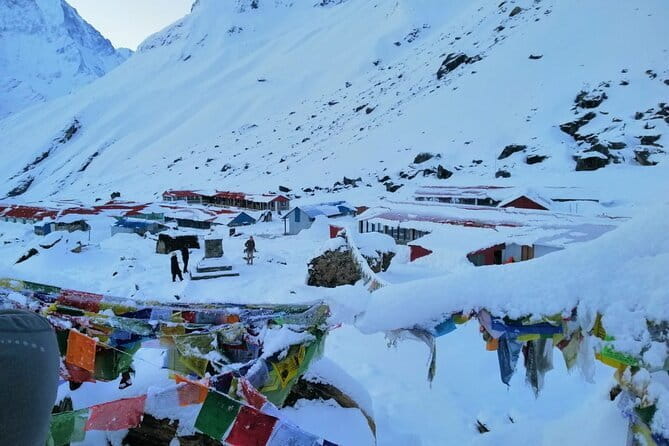
From Annapurna Base Camp, the itinerary retraces steps down to Bamboo. The direction is downhill, which usually means less strain than uphill, but don’t make the mistake of thinking it’s effortless. Descents can beat up knees and ankles, especially with stone and uneven ground.
Still, it’s a relief day in the best way. You get your stamina back faster because you’re moving with gravity instead of against it. And your eyes stay busy because the views never really stop—there’s always another peak line, another ridgeline, another village cluster below.
Chhomrong to Jhinu Danda: steps, stairs, and your hot-springs reward
From Bamboo, you climb up again to Kuldighar, then head downhill to Chhomrong Khola. After that, you’ll climb stone steps to Chhomrong, then continue descending to Jhinu Danda, where you rest for the night.
The standout optional treat here is the hot springs. You have a chance to enjoy them with a short walk—about 15 to 20 minutes downhill from Jhinu Danda. This is the type of small, included-feeling moment that makes the effort feel worth it. It’s also where you’ll appreciate lodge rest, because you’ve likely earned every sore muscle you have.
Back to Pokhara and Kathmandu: using your last day well
After Jhinu Danda, the trek connects back toward Nayapul. Then it’s a bus ride to Pokhara. The schedule allows time to enjoy the terrain on the way, with lunch provided en route, before you settle back into city comfort.
Pokhara gets you those two things you’ll want after days on trail: a real meal rhythm and a chance to loosen up. You then head back to Kathmandu by tourist bus. Once in Kathmandu, you can rest or walk around Thamel. The trip ends with a farewell dinner at a typical Nepalese restaurant with cultural dance performance.
That cultural dinner matters in a practical way. It’s not just entertainment; it’s a clean end marker for the trek. You’re not guessing how to transition back to city life—you just do it.
Price and value: what $650 buys you in real terms
At $650 per person for a roughly 13-day itinerary, the value is mostly in what’s taken care of for you:
- Permits and entrance fees handled
- Hotels in Kathmandu and Pokhara included with breakfast (4 nights total in cities)
- Eight nights in twin-sharing local lodges during the trek
- One experienced trekking guide (and first aid medicines carried by the guide)
- Airport transfers plus transportation between Kathmandu and Pokhara
- A farewell dinner and welcome dinner with cultural dance
- An adventure certificate after completion
What’s not included: meals during the trek (and tips). Because lunch and dinner at lodges are a daily cost, I’d treat that as a budgeting line item, not an afterthought. Also note that porters are available for an additional price. If you want to keep your pack light, ask for porter support early.
One more value note from the guides: people wrote that the team stays responsive and flexible, and that their communication is clear with no hidden conditions. Guides named in past experiences include Prakash, Buddhi, Keshab, and Jiban, with porters like Azay, Amar, and Ashok mentioned as attentive and helpful. That kind of day-to-day care is hard to measure on a brochure, but it shows up when weather or energy levels force a plan change.
Who this trek suits (and who should rethink it)
This trip is designed for people with moderate physical fitness. If you can handle long walking days, uneven ground, and altitude, you’ll likely feel at home on this route.
It may not be the right choice if:
- You’re expecting all meals included during the trek
- You want a totally hands-off experience where you never think about footing or pacing
- You’re sensitive to stair sections and rocky trail, since the itinerary includes steep climbs and stone steps
If you’re traveling solo, a private tour means it’s just your group, which can feel more comfortable than joining a large mixed group. If you’re traveling with friends or family, the group setup can make the whole thing feel safer and more fun.
Should you book Annapurna Base Camp with Glorious Himalaya Trekking?
I’d book this trek if you want a classic Annapurna Base Camp route with real structure: guided pacing, permits handled, lodge and city stays included, and a team that’s known for being flexible when the trail demands it. The combination of Poon Hill sunrise, the sanctuary views at Annapurna Base Camp, and the Jhinu Danda hot springs is exactly the mix that makes the long trek feel like more than just exercise.
I’d think twice if you hate planning for daily lodge meals, because meals during the trek aren’t included. And if you want porter support to carry more of your load, factor that additional cost in.
If you’re the type who enjoys earning views step by step, this is a strong pick.
FAQ
What is the meeting point and start time?
You meet at Tribhuvan Airport in Kathmandu, with a start time of 6:30 am.
How long is the Annapurna Base Camp trek?
The duration is listed as approximately 13 days.
Is airport pickup included?
Yes. You get airport pickup and drop-off by private vehicle.
What’s included in Kathmandu and Pokhara stays?
You have 2 nights in Kathmandu and 2 nights in Pokhara, each including breakfast.
What kind of accommodation do you use on the trek?
The trek includes 8 nights of twin sharing in local lodges.
Are meals during the trek included?
No. Meals during the trek are not included. Breakfast is included for 4 meals, and other meals would be your responsibility at lodges.
Is an experienced guide included?
Yes. The trek includes one experienced trekking guide, and first aid medicines are carried by the guide.
Are porters included?
Porters are available for an additional price.
Is there a vegetarian option?
Yes. A vegetarian option is available if you mention it during booking.
Does the itinerary include hot springs?
Yes. At Jhinu Danda, you’ll have an opportunity to enjoy hot springs, about a 15 to 20 minute downhill walk away.
What is the cancellation window?
Free cancellation is available up to 24 hours before the experience starts for a full refund.