REVIEW · KATHMANDU
Annapurna Base Camp Trek- 12 Days
Book on Viator →Operated by Scenic Nepal Treks Expedition Pvt. Ltd · Bookable on Viator
One mountain goal. Two unforgettable viewpoints. This is a 12-day Annapurna Base Camp trek paired with Poonhill for that classic sunrise-style Himalayan payoff without the long haul.
What I like most is how efficiently the route packs in big altitude moments, from Ulleri and Ghorepani up to 4130m Annapurna Base Camp, then back down through Kyumi. I also like the day-to-day structure: you get tea-house lodge stays and meals covered on the trekking days, plus an experienced licensed English-speaking guide to keep the pace realistic.
The main drawback to weigh is that this is a shortened schedule. You’ll still be hiking 7 to 8 hours on several days, and the trip depends on you having a solid baseline fitness level and being ready for altitude.
In This Review
- 6 Things That Make This Trek a Strong Option
- From Kathmandu to Altitude: How the Trip Actually Feels
- Your Route, Day by Day: What You Gain at Each Stop
- Day 1: Arrival in Kathmandu
- Day 2: Fly to Pokhara, then hike to Ulleri (2050m)
- Day 3: Ulleri to Ghorepani (2750m), about 4 to 5 hours
- Day 4: Ghorepani to Poonhill, then to Chiule (2700m), about 7 hours
- Day 5: Chiule to Sinuwa (2340m), about 7 to 8 hours
- Day 6: Sinuwa to Deurali (3230m), about 7 hours
- Day 7: Deurali to Annapurna Base Camp (4130m), about 7 to 8 hours
- Day 8: ABC back to Sinuwa (2340m), about 7 hours
- Day 9: Sinuwa to Kyumi (1340m), about 7 hours
- Day 10: Kyumi to Nayapul, then drive back to Pokhara (4 to 5 hours trek)
- Day 11: Drive Pokhara to Kathmandu
- Day 12: Final departure
- Hotels, Tea Houses, and Meals: Where Value Shows Up
- The Guide and Team Factor: Safety Without Drama
- Price and Logistics: Is $828 a Fair Deal?
- Altitude Reality Check: Who This Trek Best Fits
- What to Expect When You’re Walking the Trail
- Should You Book This Annapurna Base Camp + Poonhill Trek?
- FAQ
- How long is the Annapurna Base Camp trek with Poonhill?
- What is the price, and is there an extra flight cost?
- Are meals included during the trek?
- Do I need travel or trekking insurance?
- What time does the tour start?
- What kind of accommodation is included?
- What group size and age range are allowed?
6 Things That Make This Trek a Strong Option
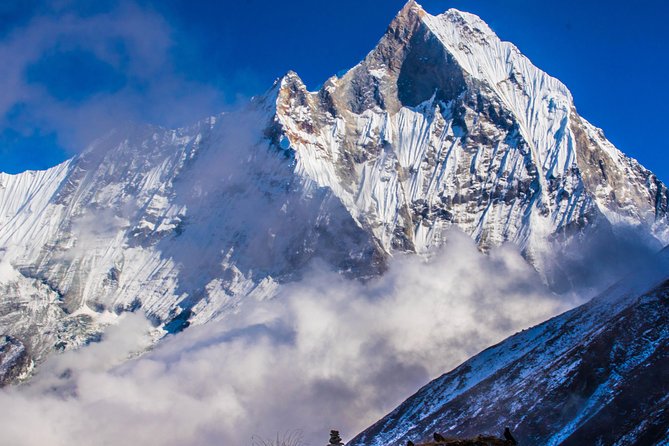
- Poonhill + ABC in 12 days, ideal when you can’t spare 14 days or more
- Tea-house lodge comfort on the trek, so you’re not planning meals or camps
- Licensed English-speaking guide with guide expenses included, plus a first-aid kit (you’ll still use your own meds)
- Smaller private group (max 10 people), which usually means easier coordination on tight trails
- Meals included while trekking, not just breakfast, so you can focus on hiking
- Culture on the route, with chances to meet Gurung, Magar, and Tibetan communities
From Kathmandu to Altitude: How the Trip Actually Feels
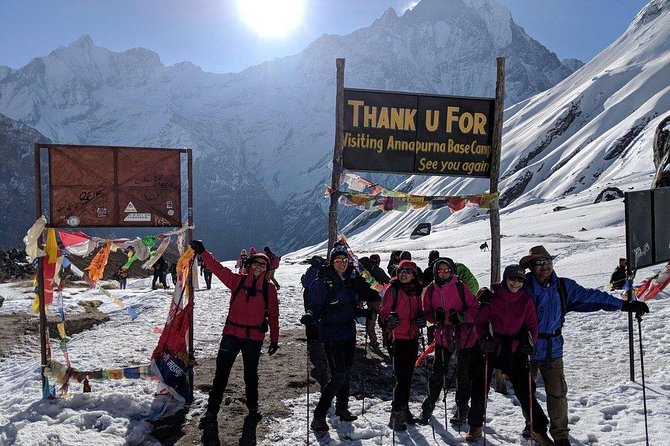
This trek is built for momentum. You start in Kathmandu, then you’re quickly moved to Pokhara, and after that it’s trail time with a series of altitude climbs and controlled rest stops.
Even if you’ve never done a multi-day hike in the Himalaya, the rhythm here is clear: day hikes between villages, tea-house nights, and a gradual push upward toward Base Camp. The big difference is that the climb is compressed. You’re not “just sightseeing,” you’re working toward two high points within a short holiday window.
And that’s where the value shows. You get a realistic mix of effort and reward: the warm-up days help your body adapt, then the trek tightens into a steeper push to Deurali and on to Annapurna Base Camp.
You can also read our reviews of more tours and experiences in Kathmandu.
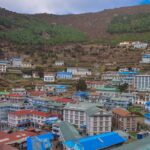
Your Route, Day by Day: What You Gain at Each Stop
Below is how the journey plays out across the 12 days, with the altitude and hike times that matter for planning.
Day 1: Arrival in Kathmandu
You arrive in Kathmandu and get settled. The trip includes tourist hotel nights in Kathmandu with breakfast, which helps you start fresh instead of scrambling for sleep and meals after flying.
This is also your buffer day for any tiny delays or jet lag, since the next day starts early.
Day 2: Fly to Pokhara, then hike to Ulleri (2050m)
You take an early morning flight to Pokhara (about 25 minutes), then drive to Naya Pul and hike to Ulleri. The trek portion is about 5 to 6 hours, after roughly 1 hour of driving.
Ulleri is a solid first altitude taste. You’re moving uphill from the start, but not going all-in yet. I like this design because it sets you up for the next day’s climb without shocking your legs.
Day 3: Ulleri to Ghorepani (2750m), about 4 to 5 hours
This is your main “reach higher, get settled” day. Ghorepani sits at 2750m, which means you’ll feel the air change, especially if you start fast.
The best approach is steady. You’re building endurance, not setting a record.
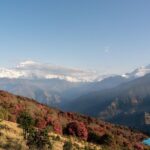
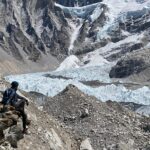
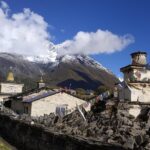
Day 4: Ghorepani to Poonhill, then to Chiule (2700m), about 7 hours
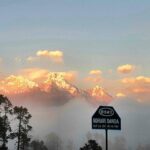
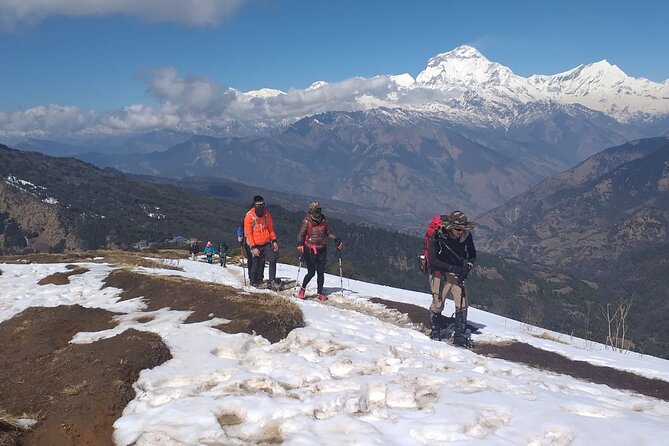
This is one of the “wow” days. You go from Ghorepani to Poonhill, then continue to Chiule (2700m) for a long hike day of around 7 hours.
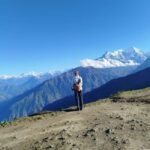
Why it matters: Poonhill is the sweet spot for early Himalayan panoramas over multiple ridgelines. Then you still hike on to Chiule instead of ending the day right after the viewpoint. That keeps the schedule tight, which is exactly what you want in a short package.
Day 5: Chiule to Sinuwa (2340m), about 7 to 8 hours
You drop a bit in elevation to Sinuwa (2340m), which is a smart move after Poonhill. The hike still takes 7 to 8 hours, but the altitude relief can make the day feel more doable.
This is also where the trail starts to feel more “remote and trekking-like,” with fewer distractions and more focus on walking and acclimatizing.
Day 6: Sinuwa to Deurali (3230m), about 7 hours
Now the trek turns upward again to Deurali (3230m). Around 7 hours here is a real commitment because you’re climbing into thinner air.
This is a day where good pacing pays off. The goal is to arrive feeling like you can keep going tomorrow, not wiped out.
Day 7: Deurali to Annapurna Base Camp (4130m), about 7 to 8 hours
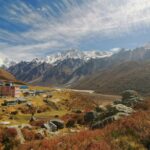
This is your peak push: Deurali to ABC at 4130m. The hiking time is 7 to 8 hours.
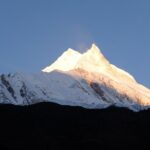
Reaching Annapurna Base Camp is special for more than photos. Annapurna is considered a spiritual mountain in local tradition, described as the goddess of harvesting. That kind of cultural meaning gives the final approach weight. You’re walking toward a place locals hold in deep respect, not just a postcard endpoint.
Day 8: ABC back to Sinuwa (2340m), about 7 hours
After the summit-feel day, you return to Sinuwa (2340m) in roughly 7 hours.
In practical terms, this is what helps a compressed itinerary stay survivable. Going down gives your body a chance to regroup while keeping the overall route smooth.
Day 9: Sinuwa to Kyumi (1340m), about 7 hours
This is a big altitude drop to Kyumi (1340m). The hiking time is again about 7 hours.
Kyumi is lower enough that you’ll start feeling more normal again. It’s a morale boost day, and it also makes the final trek out easier.
Day 10: Kyumi to Nayapul, then drive back to Pokhara (4 to 5 hours trek)
You hike Kyumi to Nayapul for about 4 to 5 hours, then drive back to Pokhara.
This is the day where your packing logic matters: you’ll likely be thinking about what you’ll use for the return leg to Kathmandu and how much gear you want to carry during the final stretch.
Day 11: Drive Pokhara to Kathmandu
The trek ends, and you shift back into city travel. The trip includes the drive back to Kathmandu.
Day 12: Final departure
You wrap up and depart. If you’re trying to align flights tightly, keep a little breathing room here because mountain conditions can still affect timing even in a well-run trek.
Hotels, Tea Houses, and Meals: Where Value Shows Up
This package is very clear about what’s covered. During trekking days (from Pokhara to Pokhara), you get breakfast, lunch, and dinner at tea-house lodges.
That matters more than it sounds. In the Himalaya, you can waste time and money hunting for food options each day, especially if you arrive tired. With meals included, your schedule stays anchored around the hike.
You also get hotel nights in Kathmandu and Pokhara with breakfast. That’s a practical benefit for comfort and recovery after long days on the trail.
Two things you should plan around:
- Personal expenses are not included (water, hot shower, Wi‑Fi, phone and camera charging). These small costs add up quickly in Nepal.
- Tea-house dining is included for trekking days, but any meals outside that window (overstays or schedule changes) aren’t covered.
The Guide and Team Factor: Safety Without Drama
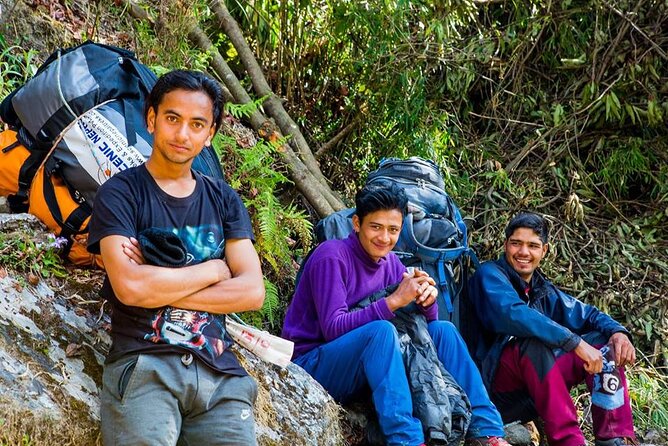
One of the most praised parts of this trek is how strongly the team handles safety and organization, especially for mixed-age groups. The guiding credits include names like Mr. Kumar, Dipendra, Rajan, and KK, with consistent emphasis on being attentive and keeping people comfortable through the walk.
Even if you’re young and fit, this is what you want: a guide who watches the group and helps you make steady choices on pace and breaks. On a shorter route, that kind of “manage the tempo” skill is the difference between enjoying the trek and spending your energy recovering from mistakes.
Also included: an English-speaking government licensed guide and his expenses. You’re not getting a bare-bones “good luck” approach.
Price and Logistics: Is $828 a Fair Deal?
The price is listed at $828 per person for about 12 days, plus an important extra: the flight from Kathmandu to Pokhara is listed as US$120.
So what are you really paying for?
You’re paying for:
- Hotel nights in Kathmandu and Pokhara (sharing rooms) with breakfast
- Airport-to-trail logistics (including an air-conditioned vehicle)
- Trek-side essentials: tea-house lodge support and daily meals during the trek
- Guide support and included guide expenses
- A company-provided duffel bag (not forget it needs to be returned)
- Basic medical preparedness via a first-aid kit (you’re still told to use your own recommended medicine)
When I think about value in Nepal trekking, meals and guide support are usually where the real savings come from. If you had to self-organize daily meals and ensure consistent guiding, you’d spend time and money. Here, you’re also buying into a structured schedule that tries to hit both Poonhill and ABC in a shorter window.
Bottom line: it’s good value if you want a supported trek and you plan your personal spending (water, charging, hot showers) instead of treating them like afterthoughts.
Altitude Reality Check: Who This Trek Best Fits
This is a moderate-to-challenging trek because the days are long, and the route hits a high point at 4130m.
The trip is listed as needing moderate physical fitness, and there’s a minimum age of 10. It also notes a minimum group size of 1, and a maximum of 10 people per booking.
Who I think it suits best:
- People who want Poonhill + Annapurna Base Camp but can’t take the longer versions of the ABC trek
- Travelers who prefer a private setup rather than a big mixed crowd
- Groups or families with different fitness levels, since the guide planning is part of the package
The one thing you should not ignore: a short itinerary can increase pressure. If you’re prone to getting wiped out on hikes or feel altitude quickly, you’ll want to talk with the organizer before booking and be honest about your fitness.
What to Expect When You’re Walking the Trail
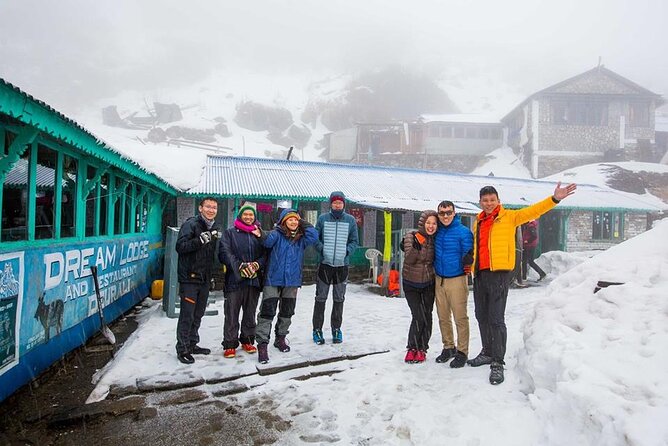
This trek follows a classic Himalayan pattern: uphill days, tea-house nights, and then a controlled return. You also get cultural exposure along the way, with opportunities to see communities including Gurung, Magar, and Tibetan groups.
The spiritual angle of Annapurna also adds a layer of meaning. Even if you’re focused on your footing, you’ll be moving through a landscape that locals connect to harvesting and worship.
And since this is a trek that runs through villages, you’ll notice the difference between staying in a city hotel and living at a tea house. The “adventure” is partly the scenery, but it’s also the daily routine shift: walking all day, eating simply, and sleeping at altitude with a slower rhythm.
Should You Book This Annapurna Base Camp + Poonhill Trek?
I’d recommend booking if you want the best of both worlds: Poonhill viewpoint energy plus the lasting milestone of reaching Annapurna Base Camp—all on a schedule that won’t take over your whole vacation.
I’d think twice if:
- You’re expecting an easy, short stroll. This is still a real hiking program.
- You hate planning for extra personal costs like charging and hot showers.
- You don’t already have a base level of fitness for long days.
If you do book, do two things that make the trek smoother: be realistic about your fitness, and confirm your timing so you’re not forced into last-minute flight stress when leaving Pokhara or Kathmandu.
FAQ
How long is the Annapurna Base Camp trek with Poonhill?
The package runs for about 12 days.
What is the price, and is there an extra flight cost?
The price is listed as $828 per person. The Kathmandu to Pokhara flight is listed as an extra US$120.
Are meals included during the trek?
Yes. Breakfast, lunch, and dinner are included during the trekking days from Pokhara to Pokhara.
Do I need travel or trekking insurance?
Yes. Travel/trekking insurance is listed as not included, and the trip notes that you should have good insurance for the trek.
What time does the tour start?
The start time is listed as 6:15 am.
What kind of accommodation is included?
You get shared 2-person or single 1-person hotel nights in Kathmandu and Pokhara with breakfast, plus tea-house lodge accommodation during the trek.
What group size and age range are allowed?
The booking notes a maximum of 10 people per booking and a minimum age of 10 years. A minimum of 1 person per booking is required.