REVIEW · KATHMANDU
Annapuran Base Camp Trek
Book on Viator →Operated by Well Plan Trekking · Bookable on Viator
A trek to Annapurna Base Camp is a big goal. This one feels practical because the whole plan is built around clear pacing and a route that mixes mountain time with village culture, starting from Kathmandu and rolling into Pokhara. Two things I especially like are that you get an English-speaking guide plus Sherpa porter support, and that the company handles key paperwork like the Annapurna Conservation permit and TIMS.
You also get a fairly thoughtful end to the trek: after the big altitude day, you walk down toward Jhinu Hot Springs, where recovery is the whole point. One thing to watch: the tour summary says 2 days (approx.), but the itinerary provided is an 11-day plan from Kathmandu to departure—so you’ll want to confirm the exact duration you’re booking.
In This Review
- Key highlights worth caring about
- Kathmandu to Pokhara: where your trekking rhythm gets set
- What to expect at the start
- A practical note on time
- Entering the Annapurna region via Ghandruk and village trails
- Day by day feel: the early climb (the part you’ll remember)
- What I like about this approach
- Sinuwa to Deurali: acclimatization that actually looks like work
- The mental trick for this section
- Deurali to Annapurna Base Camp (4,130m): the day you earn
- What you’ll likely care about at Base Camp
- Descent via Bamboo: turning the trek from hard to manageable
- Why this section matters
- Jhinu Hot Springs: a recovery finish you can feel
- Permits, porters, and the guide: where value shows up
- Why I think this is a strong part of the plan
- Price and value: $741.34 per person, and what that gets you
- Accommodation and meals: comfort, but not hotel standards
- Who this Annapurna Base Camp trek suits best
- Quick FAQ before you commit
- FAQ
- How much does the Annapurna Base Camp trek cost?
- How long is the trek?
- Are airport pickup and drop-off included?
- Are trekking permits included?
- Will I have meals during the trek?
- Do I get a guide and porters?
- What kind of accommodation do you get on the trek?
- Is this tour private?
- What are the cancellation rules?
- Should you book this Annapurna Base Camp trek?
Key highlights worth caring about
- Private group experience with only your group participating
- English-speaking lead guide plus experienced Sherpa helpers/porters
- Permits included (Annapurna Conservation Area permit and TIMS)
- Village route via Ghandruk, including time around Gurung community areas
- Base Camp day at 4,130m, then descent and a relaxing hot-spring finish at Jhinu
Kathmandu to Pokhara: where your trekking rhythm gets set
Most Annapurna treks fail at the start, in the boring way: people arrive tired, underpacked, and behind on sleep. This itinerary starts by helping you get organized in Kathmandu, including airport pickup and a couple nights in town with breakfast included. If you like having time to get your gear sorted (boots, rain layers, phone power, that kind of stuff), those first nights matter.
Then comes the transfer to Pokhara. You’ll drive from Kathmandu to Pokhara (about 6–7 hours) to shift from city traffic noise to mountain calm. The plan also uses Kathmandu–Pokhara–Kathmandu by tourist bus at times, so you’re not dealing only with private driving. That’s a small thing, but it can help keep costs sane and reduce the “constant vehicle moving” stress.
One more detail I like: the trekking side starts after you’ve already moved elevation and location. You’re not jumping from Kathmandu altitude anxiety straight into steep trail work. The trekking begins after you reach the Pokhara area and head toward the trailhead.
You can also read our reviews of more tours and experiences in Kathmandu.
What to expect at the start
You should expect a “pre-trek phase” that focuses on logistics: permits paperwork, guide introductions, and getting your group ready. The company includes the permits you need, and you’ll also be traveling with an experienced guide who can explain what you’ll see and what to watch for.
A practical note on time
The schedule includes multiple long drive days—6–7 hours on the Kathmandu–Pokhara leg, and another 7–8 hours on the Pokhara–Kathmandu return. If you hate sitting in vehicles, build that reality into your expectations. Trek days are great. Drive days are drive days.
Entering the Annapurna region via Ghandruk and village trails
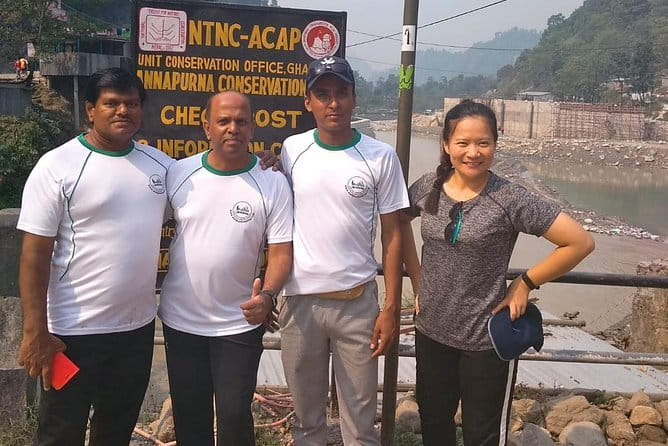
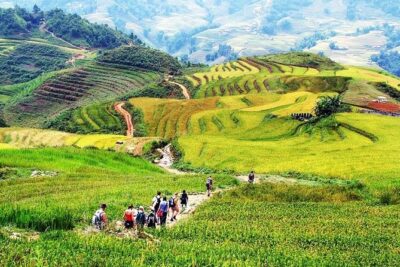
A lot of Base Camp treks start with a “straight into hiking” mood. This route takes you through Ghandruk, a well-known model village area at around 1,940m. The advantage is you’re not just walking through forest and stone—you’re also walking into a human place.
This plan specifically connects you with community life around Gurung areas, and it also frames the first notable excursion as moving among Gurung and Dalit community areas. That matters because it changes the trek from a set of coordinates into a lived geography. You’ll still be doing elevation work, but you’re also getting culture alongside it.
Day by day feel: the early climb (the part you’ll remember)
After getting yourself to the trailhead, the hike to Ghandruk is about 5–6 hours. It’s long enough to wake up your legs, but it’s not the kind of brutal day where you’re already dying before you start thinking about Base Camp.
Then the route pushes forward to Sinuwa (around 2,360m) in another 5–6 hours. From there, you go toward Deurali (about 3,230m) with around 6 hours of trekking. This early segment is where you build your walking rhythm. It’s also the part of the trek where the air tends to start feeling thinner, so steady pacing is your friend.
What I like about this approach
I like that the itinerary uses a gradual “you’ll feel it, but you’ll manage it” elevation progression on the way up. You’re not just charging toward Base Camp with no breathing room.
And you’ll likely appreciate that the first major village stop is in a community setting. It’s easier to be motivated when you’re not only thinking about your next uphill switchback.
Sinuwa to Deurali: acclimatization that actually looks like work
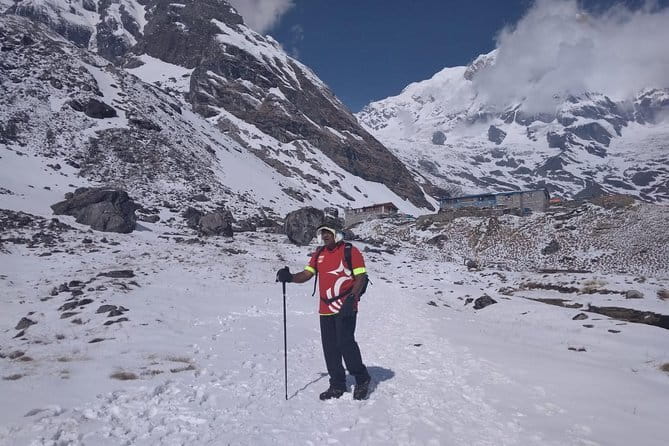
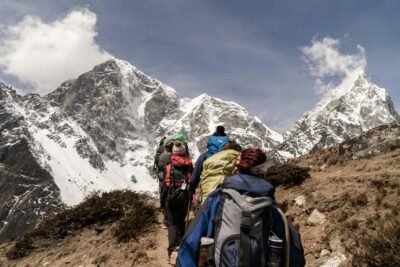
The climb from Sinuwa to Deurali is one of the key performance days in this plan—about 6 hours, landing around 3,230m. This is the terrain zone where you start feeling “trek tired” rather than “normal tired.” If you go out too fast, your breathing will tell on you.
Here’s where guide skill shows up. In one of the accounts tied to this trek, weather turned rough early—rain and even hail were part of the story when climbing toward Deurali. The lead guide Ram was praised for responding with practical rain preparation, including getting people raincoat-ready. That kind of readiness is worth something because mountain weather can flip from fine to annoying without asking your permission.
The mental trick for this section
You don’t need heroic speed. You need consistent effort. If you keep your pace even on the harder sections, you’ll arrive less wrecked and more ready for the Base Camp push.
If you’ve never trekked at altitude before, treat this segment as your “training wheels.” You’re learning what your body needs: small sips of water, regular short pauses, and slower steps when you feel your breath tighten.
Deurali to Annapurna Base Camp (4,130m): the day you earn
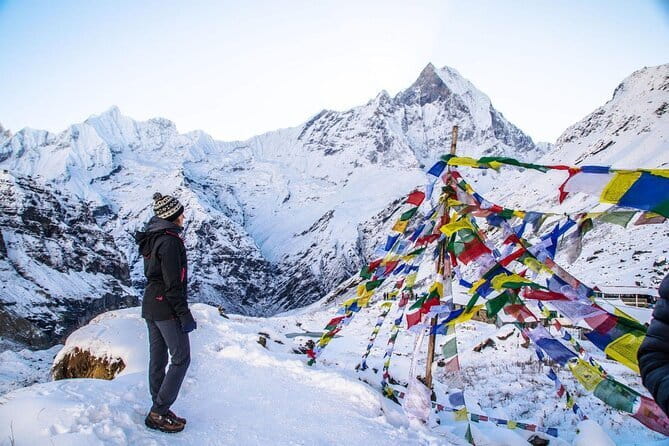
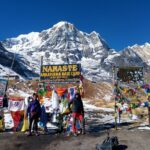
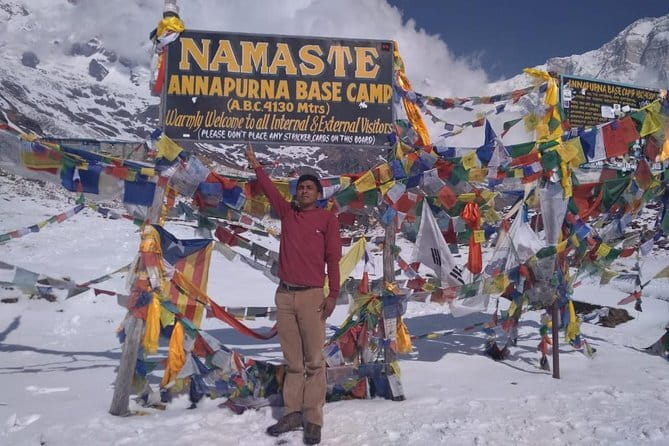
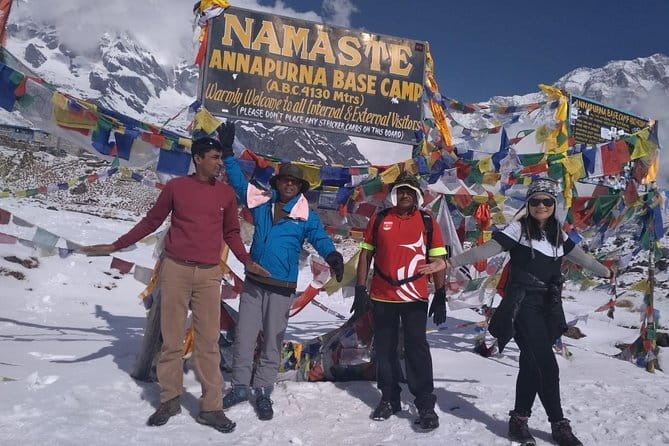
The big day comes after Deurali, when the trek goes from Deurali to Annapurna Base Camp (around 4,130m) in about 5 hours. Five hours doesn’t sound that long, but at this elevation it can feel like it. This is the day where the effort turns into reward fast—your mind shifts from “can I do this” to “I can actually see it.”
This is the core objective: reaching the Base Camp of Mt. Annapurna. It’s a serious elevation jump compared with where you started, and it’s why the earlier days matter. The plan is set up so you’re not skipping the “get used to altitude” steps.
What you’ll likely care about at Base Camp
You’ll want time at Base Camp even if the weather changes quickly. Spend time looking around, not only posing for photos. The view matters, sure—but the feeling of arrival matters more. Base Camp is where all that village-walk texture and earlier climbing focus finally cashes out.
Also plan for cold. Even in good seasons, high-altitude resting can feel like the air is set to “ice mode.” Bring the warm layer you actually like wearing. Don’t bring the jacket you only own to feel prepared.
Descent via Bamboo: turning the trek from hard to manageable
After Base Camp, the itinerary moves you down to Bamboo (around 2,340m), about 6 hours. This is where people underestimate the distance. Descents can be tough on knees and feet. But the payoff is big: your body relaxes as altitude drops.
Bamboo is also an energy reset point. You’re transitioning from “climb and focus” to “walk and recover.” This is the part of the trek where you can start thinking about comfort and meals more than altitude math.
Why this section matters
A descent is not a victory lap. It’s part of your overall conditioning. If you go too fast downhill, you’ll pay later on flatter ground. A slower descent helps you keep your legs under control for the hot-spring finale.
Jhinu Hot Springs: a recovery finish you can feel
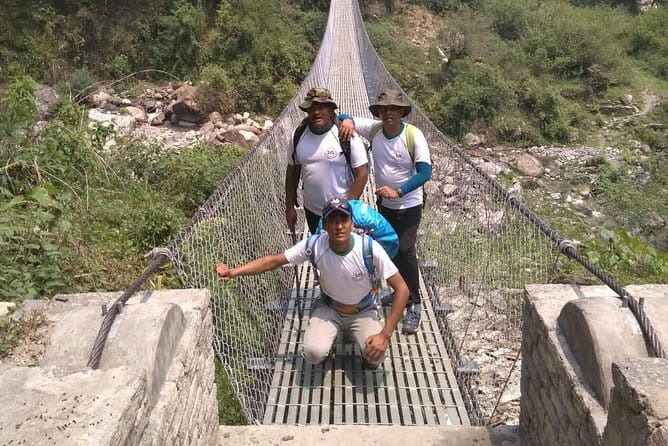
Then you move from Bamboo to Jhinu Hot Spring (around 1,780m) for about 5 hours. This is a sweet ending in the most practical way possible. After several days of climbing and a high-elevation peak day, a hot springs stop gives your muscles a reason to stop complaining.
The plan also includes this hot-spring segment right before you head back toward the road system. After Jhinu, you go to Nayapul and then drive back to Pokhara. The trek ends, but your travel day still exists—and having your legs partially soothed helps.
Permits, porters, and the guide: where value shows up
The tour includes Annapurna Conservation permit and TIMS paperwork. That’s not just admin. It can save you from delays and confusion, especially if you’re arriving without local contacts. You’re paying for organization here, and it’s the kind of organization that matters on mountains where time is energy.
You also get an experienced, friendly English-speaking trekking guide. Names that show up strongly here include Ram as a lead guide, and porter support is credited to Santosh in one account. Most importantly, the porter setup isn’t “bring a bag and hope.” You’re told that helpers come with meals, accommodation, salary, and insurance—so they’re part of the functioning system, not an afterthought.
Why I think this is a strong part of the plan
When your guide knows routes and safety comes first, your decisions get easier. In one account, safety was described as the guide’s top priority, and the pacing matched a slower traveler’s rhythm. That matters if you’re not a fast trekker. The ability to adjust pace is a real quality marker.
Also, private tour means it’s just your group. That can reduce the chance of getting stuck behind someone who walks very fast or very slow for your comfort level.
Price and value: $741.34 per person, and what that gets you
At $741.34 per person, this trek sits in a category where value depends on what’s included—and this plan includes a lot that usually costs extra:
- Permits (Annapurna Conservation permit and TIMS)
- Guide (English-speaking) and Sherpa porter support
- Accommodation: two nights Kathmandu, two nights Pokhara (with breakfast), plus mountain lodging during the trek
- Meals during the trekking days: three times meals with tea or coffee
- Airport pickup/drop in Kathmandu and transportation between Kathmandu and Pokhara
What isn’t included is also clearly stated: travel and rescue insurance, alcoholic drinks, personal expenses, and Kathmandu/Pokhara lunch and dinner, plus tips for guide and porter.
So here’s the value angle I’d use if you’re deciding: this price is doing the work of reducing uncertainty. You’re not trying to piece together permits, guides, porter logistics, and trekking meals on your own while short on time.
One consideration: there’s no mention of premium private rooms everywhere during the trek beyond private rooms with shared toilet. If you’re expecting luxury, you’ll be happier lowering expectations now.
Accommodation and meals: comfort, but not hotel standards
Your trek lodging is described as soft comfort with private rooms and shared toilets. That’s a normal trekking setup in the Himalaya. Private room helps with sleep and decompression. Shared toilet means you’ll still have to deal with basic facilities.
In Kathmandu and Pokhara, you’ll get 2 nights each with breakfast included. That’s helpful because breakfasts can be a consistent fueling routine before trekking days.
Meals during the trek are three times per day with tea or coffee. That’s valuable because it reduces the number of decisions you have to make on trail. You can focus on walking.
What you should plan for: Kathmandu and Pokhara lunch and dinner are not included, so budget some extra meals on those days.
Who this Annapurna Base Camp trek suits best
This is best for you if you want:
- A structured route to Base Camp with guided support
- A company that handles the permits and trekking logistics
- A mix of village walking (Ghandruk and community areas) and high-altitude achievement
- Porter support so you can keep energy for walking
This may not be your best match if you:
- Want a short, low-commitment experience (again, confirm duration because the summary says 2 days, but the itinerary runs 11 days)
- Hate vehicle days (multiple 6–8 hour drives are part of the plan)
- Expect full-service hotel comfort every night
Quick FAQ before you commit
FAQ
How much does the Annapurna Base Camp trek cost?
The price is $741.34 per person.
How long is the trek?
The tour summary lists 2 days (approx.), but the provided itinerary runs from an arrival day in Kathmandu through a departure day on Day 11. Confirm the exact number of days included when booking.
Are airport pickup and drop-off included?
Yes. Airport pickup & drop by private car in Kathmandu is included, and you’ll also travel between Kathmandu and Pokhara as part of the plan.
Are trekking permits included?
Yes. The Annapurna Conservation permit and TIMS are included.
Will I have meals during the trek?
Yes. During the trek, you get 3 times meals with a cup of tea or coffee (break fast, lunch, dinner).
Do I get a guide and porters?
Yes. The trek includes an English-speaking trekking guide and Sherpa helpers/porters with meals, accommodation, salary, and insurance.
What kind of accommodation do you get on the trek?
You’ll stay in mountain accommodation with a private room and shared toilet, described as soft, comfort lodging.
Is this tour private?
Yes. It’s a private tour/activity, and only your group will participate.
What are the cancellation rules?
Free cancellation is available up to 24 hours in advance of the experience for a full refund.
Should you book this Annapurna Base Camp trek?
If you want Annapurna Base Camp with fewer moving parts—permits handled, guide and porters included, and meals and lodging organized—this plan makes a lot of sense for your time and energy. I also like that it takes you through Ghandruk, so the trek isn’t only about climbing; it includes real community texture.
Before you book, do one thing: confirm whether you’re signing up for the short “2 days” version or the full Day 1 to Day 11 itinerary shown here. Once that’s clear, the combination of private group support, an English-speaking guide, and the built-in descent with Jhinu Hot Springs at the end is a strong recipe for a memorable Base Camp trip without turning your trip into a logistics scavenger hunt.