REVIEW · POKHARA
6 Night 7 Days ABC Trek
Book on Viator →Operated by Swissa Adventure Travel & Treks · Bookable on Viator
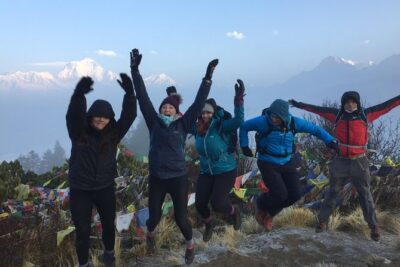
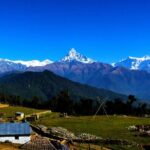
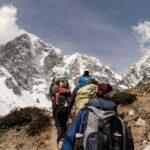
Annapurna views start early on this ABC trek. This 6-night, 7-day journey runs through the heart of the Annapurna Sanctuary area, lining you up with giants like Hiunchuli, Annapurna South, Annapurna I, Gangapurna, Annapurna III, and Machhapuchchhre (Fishtail). You’ll hike through Gurung and Magar villages, then climb above lush forests into higher, thinner air where the scenery gets more and more direct.
Two things I really like: the way the route layers up views as you gain altitude, and the feel of having calm, capable support. In past groups, guides like Karna, Jaya, and Lila were praised for staying attentive and helping with the harder moments, even adding little details like fruit as a nighttime snack. One drawback to plan for: this is a mountain trek where weather and altitude can make the difference between easy and exhausting, and it’s built for people with at least a moderate fitness level.
Because this is a private tour/activity, the pacing can feel more human than the big-group churn. You also start from Pokhara with a short drive to Nayapul, then hike day by day toward Annapurna Base Camp (ABC) at 4130 m. If you’re the type who likes clear structure and steady progress, you’ll probably enjoy how this route is laid out—then finished with a straightforward return to Pokhara.
In This Review
- Key highlights worth your attention
- ABC Trek in Pokhara: the point of coming all this way
- Swissa Adventure Travel & Treks: starting clean from Lakeside Pokhara
- Day 1 to Day 3: Ghandruk, Chhomrong, and the climb into Dobhan
- Day 4 to MBC (and Deurali): the altitude step where plans matter
- Day 5: Annapurna Base Camp at 4130 m, then a descent that feels like a gift
- Day 6 to Jhinu Danda: more hiking, plus a clearer sense of reward
- Day 7: return to Pokhara by jeep/zeep, or add a final hike
- Price and value: is $580 worth it for an ABC trek?
- Who this ABC Trek is best for (and who should think twice)
- A quick reality check on weather and why your timing matters
- Should you book the 6 Night 7 Days ABC Trek with Swissa Adventure Travel & Treks?
- FAQ
- Where does the ABC trek start?
- How long is the trek?
- What is the price for this experience?
- Is this a private tour?
- What fitness level do I need?
- What are the main elevation highlights on the route?
- How do you get from Pokhara to the trailhead?
- How do you return to Pokhara on the last day?
- What happens if the trek can’t run due to weather?
- What is the cancellation policy?
- Are there guides on the trek?
Key highlights worth your attention
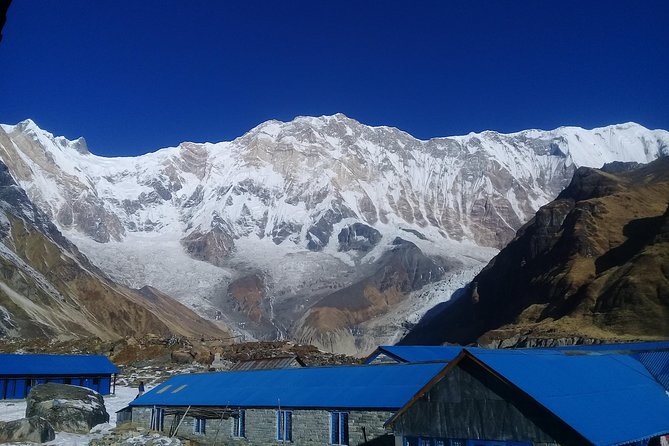
- Annapurna Sanctuary route with big-mountain focus: you’re not just hiking trees; you’re moving toward a wall of named peaks.
- Forest-to-alpine transition: bamboo and rhododendron forests early, then higher alpine stretches as altitude rises.
- Well-known village stops: Ghandruk and Chhomrong give you a real sense of life in the hills.
- A high point that earns its bragging rights: ABC sits at 4130 m, with MBC up at 3700 m as your altitude stepping stone.
- Support that shows up in small ways: past groups had guides who stayed present and flexible, not hands-off.
- Finish choices on Day 7: you can return by jeep/zeep from Jhinu Danda to Pokhara or take a final trek segment.
ABC Trek in Pokhara: the point of coming all this way
Pokhara is a great launching pad because it’s already surrounded by mountains, but this trek pushes you further into the Annapurna range where the views start to feel three-dimensional. The route you’re taking is widely known as the Annapurna Sanctuary Trek route, and the focus is very direct: you’re working your way toward Annapurna Base Camp with a lineup of major peaks in sight.
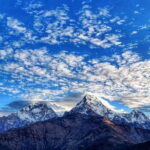
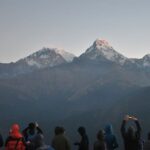
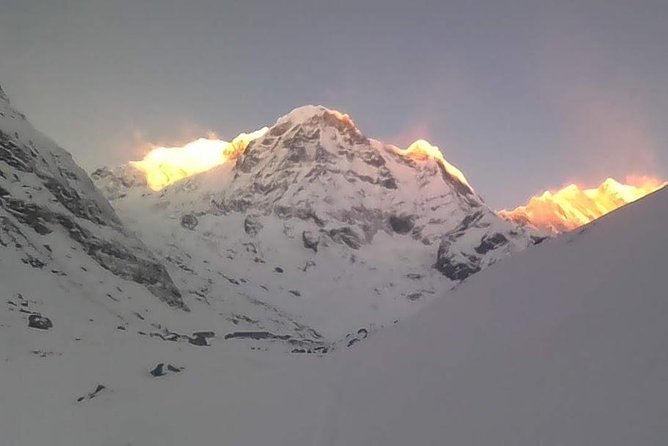
A key part of the appeal is that the mountains are named, not just vague silhouettes. You’ll be climbing under the shadow of Hiunchuli (6434 m), Annapurna South (7219 m), Annapurna I (8091 m), Gangapurna (7454 m), Annapurna III (7555 m), and Machhapuchchhre (6997 m), known as Fishtail. That naming matters because you can actually track what you’re seeing as you gain height, instead of guessing at what peak is what.
You’ll also get a strong sense of how altitude changes daily life. The route passes through Gurung and Magar villages, so your breaks aren’t only about catching your breath. They’re also about noticing how people live in these hill communities and how trails connect their world to yours.
You can also read our reviews of more tours and experiences in Pokhara.
Swissa Adventure Travel & Treks: starting clean from Lakeside Pokhara
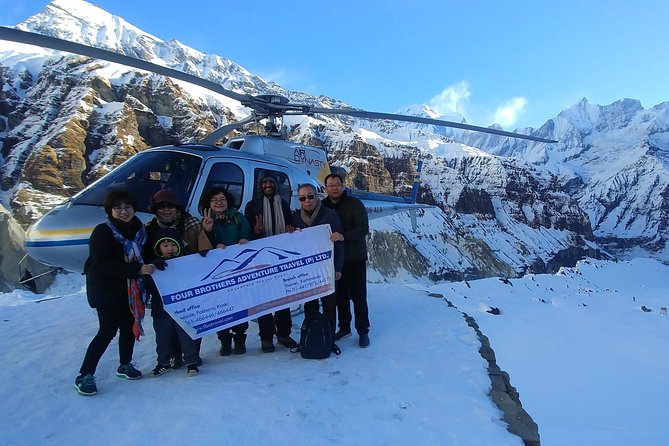
Your trek starts at Swissa Adventure Travel & Treks Nepal, Lakeside-6, Pokhara (33700), Nepal. It’s in the Lakeside area, which is convenient for you because Pokhara’s main tourist services are there, and the listing notes it’s near public transportation.
The operating window shown is 7:15 AM to 7:45 PM daily, which is helpful if your travel days get messy. For the itinerary itself, Day 1 begins with a drive from Pokhara to Nayapul (about 2 hours), and then you start hiking toward Ghandruk (about 5 hours on foot). That first day is a classic pattern for this region: you get a short motor ride, then your legs take over.
Practical tip: on Day 1, don’t treat it like a warm-up jog. That first hiking stretch helps you understand the trail rhythm you’ll use for the week—steady steps, short breaks, and staying ahead of fatigue instead of fighting it.
Day 1 to Day 3: Ghandruk, Chhomrong, and the climb into Dobhan
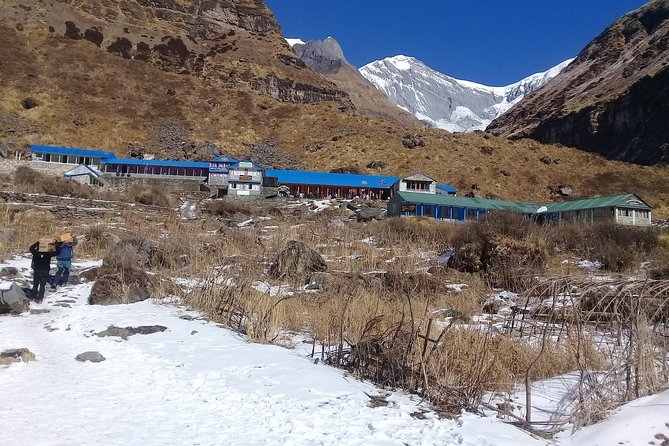
Day 1: Pokhara to Nayapul, then hiking to Ghandruk (around 5 hours). Ghandruk is one of those stops that helps the trek feel real. Instead of only forests and switchbacks, you’re moving into a village setting where the trail becomes part of a lived-in landscape. This is where you’ll start noticing the “Annapurna Sanctuary” feel: the valley shapes guide your sightlines, and the peaks start showing up more often as you climb.
Day 2: Ghandruk to Chhomrong (4–5 hours), with Chhomrong listed at 2170 m. Chhomrong is a big deal on this route because it sits high enough to change the air, but not so high that you’re immediately swallowed by altitude stress. It also sets you up for the next section, where the path starts to feel more “trek” and less “village stroll.”
Day 3: Chhomrong to Bambo, then onward to Dobhan (Dobhan listed at 2600 m). This is about getting deeper into the route’s character: you’ll move through sections tied to rhododendron, bamboo, and the push toward alpine forests as the altitude rises. Expect a day that feels like steady effort rather than one big dramatic moment.
Possible consideration here: if you go out too fast on Day 1 or Day 2, Day 3 can feel longer than it looks on paper. The time estimates are reasonable, but your body may need a slower start to keep breathing under control.
Day 4 to MBC (and Deurali): the altitude step where plans matter
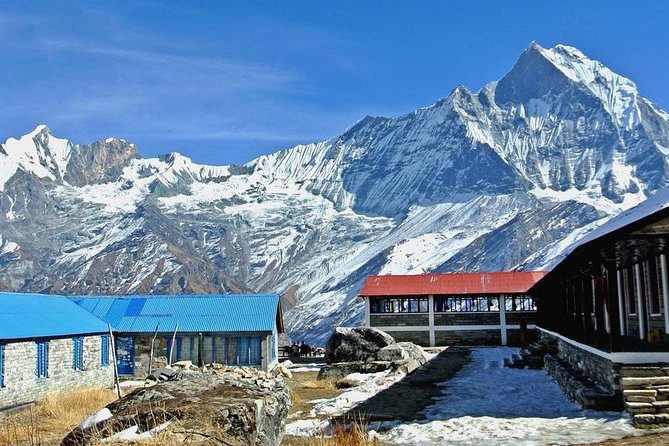
Day 4 is the big climb day into higher elevation. You’ll go from Dobhan to Deurali, then up to MBC (listed at 3700 m), with 5–6 hours walking. In plain terms, this is where you start feeling the altitude more clearly.
This section often becomes a test of pacing. Even if you’re fit, the higher you go, the more your body asks for pauses. It’s not a sign you’re failing; it’s just altitude doing its job. The “right” way to handle Day 4 is to walk a bit slower than you feel you should. You’ll arrive with more energy for the next days, and you’ll enjoy the scenery more.
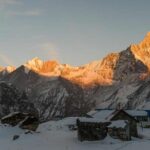
Why MBC matters: MBC is a stepping stone that helps you reach ABC without jumping straight to the highest point in one leap. You’ll be living in the rhythm of gaining height, resting, then moving again. That’s the whole logic behind how this itinerary is built.
Day 5: Annapurna Base Camp at 4130 m, then a descent that feels like a gift
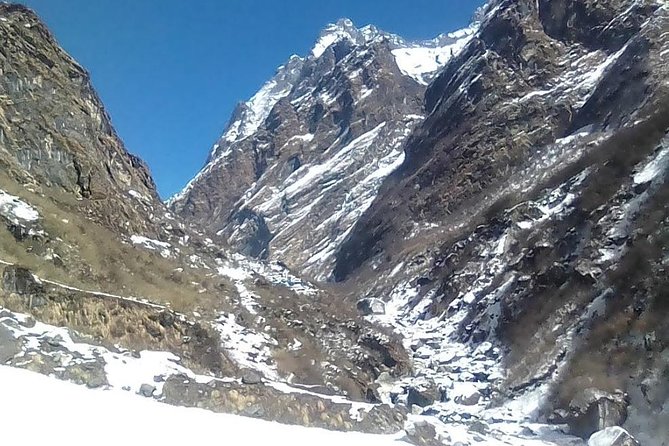
Day 5 is the headline: MBC to ABC at 4130 m. The day is listed as MBC – ABC (4130 m), then return via Deurali to Himalaya (listed at 2920 m). Time-wise, this is the kind of day that can feel both exhilarating and tiring, because it includes the “reach the top” moment plus the follow-on walking required to come back down.
Here’s what I think you’re really buying with Day 5: ABC isn’t just a coordinate. It’s the payoff for a week of effort in the Annapurna Sanctuary region. When you finally get there, you should be able to connect what you’ve been climbing past—those named peaks—into one more complete picture.
Also, notice the design of the day after ABC. You don’t end the day hanging around the very highest point. You come down to Himalaya (2920 m). For many people, that’s a sanity-saver. It means the trek finishes feeling like progress, not punishment.
If you’re prone to pushing hard, set a calmer goal for Day 5. Treat the climb as an experience you’ll remember, not a race you must win.
Day 6 to Jhinu Danda: more hiking, plus a clearer sense of reward
Day 6: Himalaya to Chhomrong, then onward to Jhinu Danda (1780 m). It’s listed as a walking day, and the altitude drops are meaningful: you’re coming down from 2920 m to 1780 m as you move toward the final settlement on the trail’s line.
I like this part of the itinerary because it feels like both closing a chapter and enjoying the last stretch. Chhomrong again appears as a familiar landmark, so you get a comparison—how the trail feels after you’ve already “done the hardest parts.”
Jhinu Danda at 1780 m is your lower-elevation reset. The win on Day 6 is that you often feel your body unclench a little. You’re still hiking, but the climb isn’t as punishing as the days that took you up near MBC and ABC.
Day 7: return to Pokhara by jeep/zeep, or add a final hike
Day 7 gives you a choice. The itinerary notes you can drive back to Pokhara by zeep/jeep (about 4 hours) from Jhinu Danda. Or you can take an additional trek segment: Jhinu Danda to Siwai (about 5 hours), then drive back to Pokhara (about 2 hours).
This matters because it changes the whole flavor of your last day. The jeep/zeep option tends to feel like a clean landing after a week on trails. The added trek option gives you one more stretch to soak in the route’s lower-elevation surroundings, but it also adds more time on your feet.
Either way, you end back at the meeting point in Lakeside, so you’re not trying to solve transportation at the end of your trek while already tired.
Price and value: is $580 worth it for an ABC trek?
The listed price is $580 for approximately 6 nights and 7 days in the Annapurna region, starting from Pokhara and returning there.
For value, I think you should judge it by what you get beyond “someone takes you there.” This is a private tour/activity, which usually means you’re not packed into a huge group where your pace is constantly negotiated. You also have a real emphasis on on-the-ground guidance—past groups mention guides like Karna, Jaya, and Lila being attentive and calm, plus support from sherpas who helped with gear pickup before the trek.
What I can’t confirm from the info here is the exact breakdown of what that price includes (meals, lodging style, and trekking logistics details). So when you price-check, ask Swissa Adventure Travel & Treks what’s included in that $580. It’s the only way to know if you’re getting a good deal or just a decent route price.
Still, on balance, $580 can be fair for a private, structured trek of this length in Nepal, especially when you factor in the altitude progression and the fact you’re heading to ABC at 4130 m with guided support and a team to keep things moving.
Who this ABC Trek is best for (and who should think twice)
This trek is built for people with moderate physical fitness. If you can handle several hours of walking daily and you’re comfortable with steep stretches at altitude, you’re a fit.
You’ll likely enjoy it most if you:
- want a clear route with named mountain payoff (not just wandering)
- prefer a guided, organized experience in the Annapurna region
- like village culture stops like Ghandruk and Chhomrong as part of your travel, not just bedtime logistics
- want a finish strategy that’s simple (jeep/zeep back) or flexible (extra trek to Siwai)
You might want to think twice if:
- you’re extremely altitude-sensitive and haven’t built any hiking stamina
- you rely on perfect weather and can’t handle changes if conditions are rough
- you’re expecting an easy walk every day without tougher altitude days like the climb to MBC
A quick reality check on weather and why your timing matters
The trek requires good weather. The information provided notes that if it’s canceled due to poor weather, you’ll be offered a different date or a full refund. That’s a big deal on ABC routes, because clouds and storms can turn views into fog and turn trails into harder walking.
So plan with flexibility in mind. If your trip dates are fixed with no wiggle room, you might feel stress if conditions shift.
Should you book the 6 Night 7 Days ABC Trek with Swissa Adventure Travel & Treks?
If you want an ABC trek that feels focused—on the Annapurna Sanctuary route, on the named peaks, and on moving day by day with solid human support—this one makes sense. I especially like the combination of village stages (Ghandruk, Chhomrong) and forest-to-alpine climbing, then landing at ABC (4130 m) where the effort pays off.
I’d book if you’re:
- okay with moderate fitness demands
- ready for altitude days like Dobhan to Deurali to MBC
- interested in having a calm, attentive guide (examples include Karna, Jaya, and Lila)
- glad to have a straightforward return plan to Pokhara via jeep/zeep
I wouldn’t book if you’re hunting for a flat, easy stroll, or if you can’t be flexible about weather. This trek is at its best when conditions are right and you pace yourself like a mountain walker, not a sprinting tourist.
FAQ
Where does the ABC trek start?
It starts at Swissa Adventure Travel & Treks Nepal, Lakeside-6, Pokhara 33700, Nepal, and you meet there before heading out for the trek.
How long is the trek?
The itinerary is 6 nights and 7 days, with day-by-day walking and driving times roughly included in the schedule.
What is the price for this experience?
The listed price is $580.
Is this a private tour?
Yes. This is described as a private tour/activity, so only your group participates.
What fitness level do I need?
You should have a moderate physical fitness level.
What are the main elevation highlights on the route?
The trek includes higher points like MBC at 3700 m and Annapurna Base Camp at 4130 m, with other listed altitudes such as Chhomrong (2170 m), Dobhan (2600 m), and Jhinu Danda (1780 m).
How do you get from Pokhara to the trailhead?
On Day 1, there’s a drive from Pokhara to Nayapul (about 2 hours), then you start hiking to Ghandruk.
How do you return to Pokhara on the last day?
On Day 7, you can return by zeep/jeep from Jhinu Danda (about 4 hours) to Pokhara. The alternate option is Jhinu Danda to Siwai on foot (about 5 hours), then drive back to Pokhara (about 2 hours).
What happens if the trek can’t run due to weather?
It requires good weather. If it’s canceled due to poor weather, you’ll be offered a different date or a full refund.
What is the cancellation policy?
You can cancel up to 24 hours in advance for a full refund. If you cancel less than 24 hours before the start time, the amount paid is not refunded. Cut-off times use the local time.
Are there guides on the trek?
The reviews you shared mention assigned guides by name, including Karna, Jaya, and Lila, working with groups on this ABC trek.