REVIEW · KATHMANDU
16 Day Private Manaslu Circuit Trekking
Book on Viator →Operated by Ambition Himalaya Treks & Expeditions · Bookable on Viator
Manaslu Circuit trekking is for people who want mountains without the constant crowd noise. You get the big Himalayan views and the Budhi Gandaki valley feel, but with far fewer trekkers than Everest or Annapurna.
What I like most is how the trek balances challenge with comfort: it’s tough, yet the route uses teahouses instead of requiring your own tent setup. I also like the way the trip is staffed and organized, with a guide system plus shared porters and real rescue planning included. One thing to consider: the Manaslu region has fewer shops and services than the more famous trails, so you’ll need to be comfortable trekking without constant extras.
In This Review
- How the trek actually feels on the ground
- Key things you’ll notice fast
- Manaslu Circuit trekking in the quiet pocket of Nepal
- The operator setup: what Ambition Himalaya Treks & Expeditions does right
- Kathmandu first two days: Thamel comfort and a prep meeting
- From Kathmandu to Machha Khola: warming up along rivers and viewpoints
- Budhi Gandaki valley days: Gurung villages, hot water springs, and first big ridgelines
- Philim to Deng: pine and rhododendron trails with waterfalls in the mix
- From Namrung to Lho Village: big peak views begin to show up
- Samagaon acclimatization day: cultural space plus altitude sense-making
- To Larkya La: Samdo, birch forests, and Dharamsala’s pass base
- The Larkya La Pass day: long, early, and icy around the edges
- Bhimtang to Tilje: rhododendron takes over as you lose altitude
- Chyamje finish and the bumpy ride back to Kathmandu
- Price and logistics: what $1,098 buys you in real-world value
- Who this private Manaslu trek suits best
- Should you book this Manaslu Circuit trek?
- FAQ
- How long is the Manaslu Circuit Trek?
- What does the trek cost per person?
- What’s included for Kathmandu at the start and end?
- Are permits included?
- Do I need to carry my own trekking bedding and some gear?
- Who guides and carries loads on the trek?
- Is lunch and dinner in Kathmandu included?
- Can I get a refund if I need to cancel?
How the trek actually feels on the ground
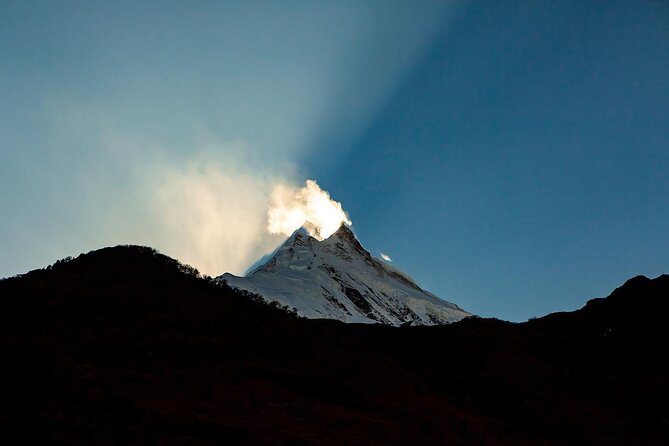
This circuit sits inside Nepal’s Gorkha district, and it only opened to trekkers in 1992. Since then, relatively few people have completed the full loop, which helps explain why it still feels like Nepal instead of a hiking highway.
If you want a mostly social, easy-going trek with lots of choices for food stops and late-day wandering, this may feel a bit strict. If you want a guided, quieter circuit trek with steady logistics and a big altitude pass day, it’s a strong match.
Key things you’ll notice fast
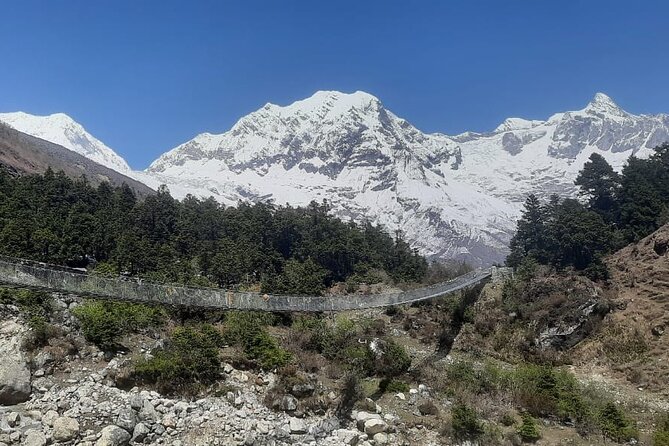
- Quieter trails in the Gorkha district where the “Everest traffic” vibe is mostly absent
- Teahouses along the circuit, so you’re not stuck carrying camp life for 2 weeks
- Larkya La Pass as the hardest, most memorable day, with early starts and icy terrain
- A staffed team built for the altitude reality: guide plus shared porter system
- Permits handled for you, including Manaslu/Annapurna-related documentation and TIMS
You can also read our reviews of more tours and experiences in Kathmandu.
Manaslu Circuit trekking in the quiet pocket of Nepal
The biggest draw here is simple: Manaslu is far less crowded than the headline treks. You’re trekking deep in Gorkha, and the region isn’t set up like a chain of guesthouses every 30 minutes. That translates to calmer mornings, less time waiting in lines at photo spots, and a stronger sense that you’re moving through villages, not tourist zones.
At the same time, this isn’t “rough expedition” style remote. You’re not being asked to carry tents and massive food loads the way you would on a fully wild route. The circuit leans on teahouse accommodation, so you spend your energy hiking instead of managing camp gear.
The operator setup: what Ambition Himalaya Treks & Expeditions does right
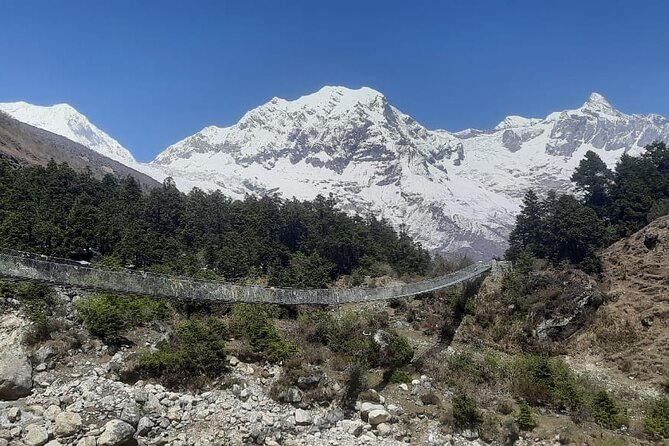
This is a private trek, and the operator’s job is to make the hard part manageable. Ambition Himalaya Treks & Expeditions coordinates airport pickup/drop, permits, guides, porter logistics, gear support, and worst-case rescue/medical evacuation arrangements. That matters most on a route that includes Larkya La Pass and long travel days.
The staffing model is also practical. You’ll have a trekking guide, and when groups are larger, an assistant guide can join. You’ll also have strong porters with insurances, and they share the load system (1 porter for every 2 paying people). In other words, the trek is designed so you aren’t carrying everything, even though you still do plenty of walking.
A couple names come up in the operator’s service reputation: Shishir is listed as the owner, and guides like Lok and Purna are mentioned as supportive on tougher days. Rajendra is also mentioned for being kind and dynamic, and that kind of day-to-day flexibility is what you want when your body needs a little extra patience.
Kathmandu first two days: Thamel comfort and a prep meeting
Your trip starts in Kathmandu with Tribhuvan International Airport pickup and a transfer to a hotel in Thamel, the main tourist hub. The location is convenient for doing quick errands, buying a few last items, and generally getting your bearings without stress.
Day 2 is built as a buffer: you get a free day reserved for preparation and a short meeting with your trek associates. If you like clarity before your first big hike step, this is where you’ll get it. If you want a low-effort cultural break, Kathmandu Durbar Square and nearby UNESCO-listed temples are close enough for a short visit.
From Kathmandu to Machha Khola: warming up along rivers and viewpoints
On the drive out of Kathmandu, you’re following the geography more than the stopwatch. The route heads west from the valley and tracks the Trishuli River until Malekhu, then crosses and continues toward the trading outpost area.
You reach Arughat, where you meet the Budhi Gandaki for the first time. Then you roll onward to Machha Khola, which serves as a “first hiking legs” type of arrival. The day’s big value is that it gives you a mental transition: city to valley, then valley to trail.
A practical note: it’s a long travel day. You’ll want to treat the arrival as your rest day, not as the day you cram in extra walking around the village.
Budhi Gandaki valley days: Gurung villages, hot water springs, and first big ridgelines
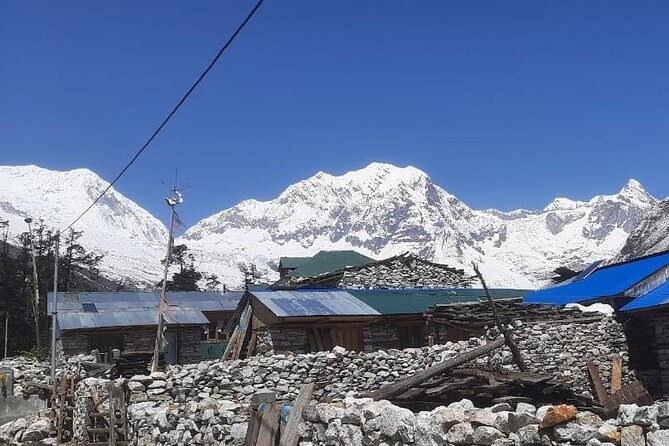
The circuit really starts to feel like a trek on the next stretch, where you keep walking beside (and crossing) tributaries that feed the Budhi Gandaki. You pass through places like Khorla Besi, a Gurung village, and then you move toward Tatopani—a hot water spring area where you can soak if you want to.
You also get Jagat as an overnight stop, which helps you settle into village rhythm rather than doing marathon jumps between tea areas. This is where Manaslu feels different from some other “big-name” circuits: it’s slower in a good way, and the scenery comes in pieces instead of all at once.
Then the trekking continues toward Salleri, crossing through areas that bring you to Philim, where permits are checked. That’s a reminder that even with modern organization, Nepal trekking is still paperwork plus people plus good timing.
Philim to Deng: pine and rhododendron trails with waterfalls in the mix
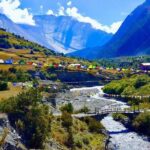
From Philim, the route turns north and keeps giving you that “valley narrowing then opening” rhythm. You’ll pass terraced fields of barley and millet, then keep moving through forests that include pine and rhododendron. There are also waterfalls along the way that feed into the Budhi Gandaki.
You reach Deng for the night. Deng is one of those stops where you can feel the trek becoming more “mountain serious” as the forests thin and the air changes. Even though you’re not at the pass yet, you’re building the same muscles and the same hiking habits you’ll need later.
This stretch also includes the kind of day where a trail can feel straightforward on paper, yet still be tiring under altitude pressure. Go steady.
From Namrung to Lho Village: big peak views begin to show up
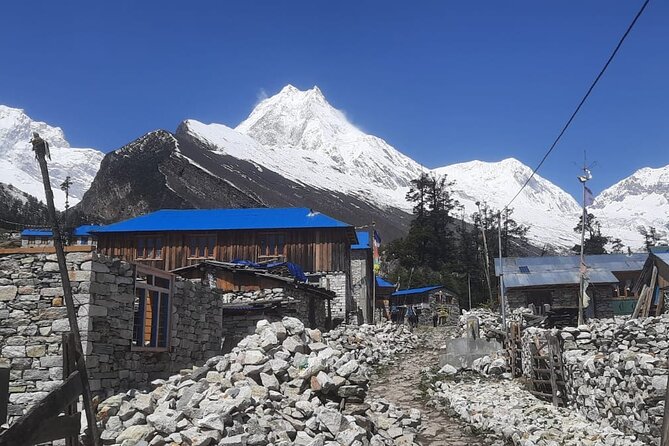
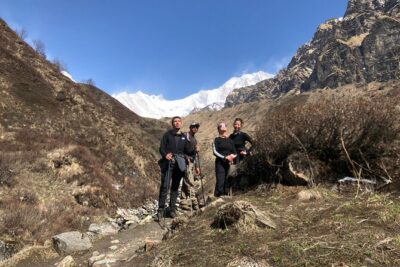
As you continue, the trail brings you past key places like Prok and Ghap—traditional Gurung villages. You’ll also notice how views start multiplying as you climb: peaks like Manaslu and Annapurna II begin to show more clearly.
You end the day at Namrung, and then the next day includes a gentler climb toward Lho Gham and onward to Lho Village. The big perk of Lho Village is that it’s set up for mountain watching: you can see Manaslu clearly, and there’s a monastery you can visit.
If you like quiet mornings and not-too-rushed photos, Lho is a strong emotional midpoint. It’s not the peak day yet, but it’s when the mountains start feeling close enough to judge your next steps.
Samagaon acclimatization day: cultural space plus altitude sense-making
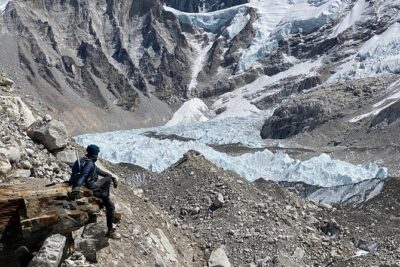
You move from Lho toward Samagaon, passing through villages like Sho and Sama, plus the Ribung monastery area in Sama. Shyala village is also part of the approach, and it offers big views of Himalchuli, Manaslu, and glaciers.
Then comes your acclimatization day in Samagaon. This matters because your route is heading toward Larkya La Pass, the highest altitude point on the trek. Spending an extra day here gives your body time to adjust, and it reduces the odds of turning the hardest day into a survival day.
You can explore the village, or hike toward Pung Yen Monastery. Some people also choose an optional detour toward Manaslu Base Camp (about a half-day equivalent). If you’re prone to fatigue, follow the safer pacing option and keep acclimatization as written.
To Larkya La: Samdo, birch forests, and Dharamsala’s pass base
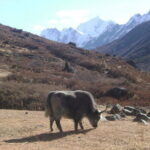
When you leave Samagaon, you’re heading into the far northern part of the Manaslu region. You follow the Budhi Gandaki again and take the route toward Larkya La instead of going to Manaslu Base Camp. Along the way you pass places like Kemro Kharka (yak grazing area) and Kani, then reach Samdo.
Samdo is described as mostly a village of Tibetan asylum seekers, and there’s an option to hike to Samdo Monastery after you arrive. This is one of those segments where the “why” matters: you’re not just hiking to a viewpoint, you’re moving through cultural pockets that keep the trek grounded.
The next morning brings you to Larkya Bazaar (seasonal market), then onward to Dharamshala, located at the base of Larkya La Phedi. You’ll see monasteries and stupas on the way, plus you’re close enough to the Larke Glacier area to feel how the pass environment forms the background.
The Larkya La Pass day: long, early, and icy around the edges
This is the day you plan for even when you’re feeling great. The trek crosses Larkya La Pass, and it’s described as the most challenging segment. The route requires an early start so you can handle icy glacial moraines near the glacier.
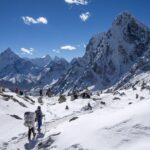
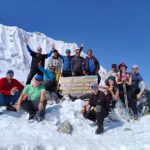
You’ll reach the pass after a grueling push. Then you spend a few moments there for photos, surrounded by mountain views like Larkya Peak, Cho Danda, plus a range of others including Cheo Himal, Gyagi Kunja, Kang Koru, Ganesh Mountain, and Ratna Chuli. After that, the day becomes a descent toward Bhimtang.
Two practical considerations: first, start slower than you think you need to at the beginning, because early effort can come back later. Second, don’t treat the pass as only a destination; it’s also the start of your downhill fatigue. Plan your energy like it’s a two-stage day.
Bhimtang to Tilje: rhododendron takes over as you lose altitude
From Bhimtang, the trek heads toward Sangure Kharka (yak grazing field) and then generally goes downhill. Forests of rhododendron start to dominate again as you drop in altitude, and that shift often feels like a relief: the air changes, the pace can feel more natural, and the trail turns more “plant-and-flower” than “rock-and-ice.”
You continue through places like Karche and reach Gho, then continue to Tilje for overnight. Tilje is described as a beautiful Gurung village area, and teahouse lodging here keeps the rhythm simple: hike, eat, reset, sleep.
This is a day where your knees will talk. Take your time on descents, and don’t rush just because the pass is behind you.
Chyamje finish and the bumpy ride back to Kathmandu
As the circuit nears its end, the trekking continues south-east toward villages like Thonje. You cross into areas where local rivers define the route again: you meet Marsyangdi via tributaries as you get into the lower belt, and you connect through Dharapani and onward to Chyamje.
Chyamje is a larger settlement and acts like a gateway toward the upper reaches of Annapurna and Manaslu. The day also includes meeting people who have taken the Annapurna Circuit route, which is a useful reality check: most circuits eventually converge at information and logistics points.
Then you shift from trail to road. You drive from Chamje to Besisahar, and that road is described as somewhat bumpy. After that, the drive to Kathmandu is easier and follows the Marsyangdi and Trishuli river banks, through the hill range near Nag Dhunga Pass.
This is a long end-to-end travel day, so it’s smart to treat it as “arrive and sleep,” not “arrive and sightsee.”
Price and logistics: what $1,098 buys you in real-world value
At $1,098 per person for a private 16-day trek, the value is in what’s covered, not just the route name. You get airport pickup and drop by private vehicle, permits handled in advance (including Manaslu, Annapurna, Special Immigration Permit, and TIMS), and meals plus accommodation during the trek (and breakfast in Kathmandu).
You also get serious support items: a down jacket, sleeping bag, duffel bag, trekking map, a first aid kit, and other trekking basics listed in the included gear section. Add in a guide, porter support with insurance, and paper works/taxes managed for you, and the price starts to look like “buying peace of mind,” which is what you want on high-stress days.
What you should budget separately is also clear. International airfares and visa fees aren’t included, and travel/rescue insurance is not included. In Kathmandu, lunch and dinner aren’t included, plus personal costs like drinks, battery charging, laundry, WiFi, and hot showers are on your own.
Who this private Manaslu trek suits best
This trek fits you if you want quieter mountain trekking, village life, and a team that handles the paperwork and day-to-day logistics. It’s also ideal if you like the idea of teahouses and warmth after a long walk, but you still want a real challenge because Larkya La is not a warm-up.
It may be less suited if you hate long travel days, dislike slow acclimatization pacing, or expect frequent commercial stops with lots of choices. The circuit has fewer facilities than the most popular treks, and you’ll feel that as a constraint even with good organization.
Should you book this Manaslu Circuit trek?
If your goal is a private, well-supported Manaslu Circuit with fewer crowds and strong logistics, I think it’s a smart choice. The most convincing part is the combination of teahouse comfort, included permits and trekking gear, and a staffing model built around altitude reality.
Book it if you can handle a long, physical itinerary and you’re willing to treat the hard day at Larkya La Pass with respect. Skip it (or ask for advice) if you want an easy hike with lots of built-in comforts and constant choices at every step.
FAQ
How long is the Manaslu Circuit Trek?
The trek is listed as 16 days (approx.).
What does the trek cost per person?
The price is listed as $1,098.00 per person.
What’s included for Kathmandu at the start and end?
You get airport pickup and drop, and accommodation in Kathmandu with breakfast based on the itinerary, plus a complimentary welcome or farewell dinner in Kathmandu.
Are permits included?
Yes. Permits included are Manaslu, Annapurna, Special Immigration Permit, and TIMS.
Do I need to carry my own trekking bedding and some gear?
No. Included gear lists a down jacket, sleeping bag, and duffel bag, along with a trekking map and a first aid kit.
Who guides and carries loads on the trek?
You’ll have a trekking guide (with an assistant guide if above 6 people) and strong porters, with porter expenses and insurance covered. The porter load is shared at 1 porter between 2 paying people.
Is lunch and dinner in Kathmandu included?
No. Lunch and dinner in Kathmandu are not included, though breakfast in Kathmandu is included.
Can I get a refund if I need to cancel?
You can cancel up to 3 days in advance for a full refund. If you cancel less than 3 days before the start, the amount paid is not refunded. If the experience is canceled due to poor weather, you’ll be offered a different date or a full refund.