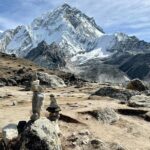
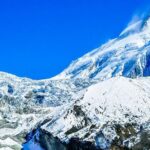
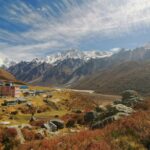
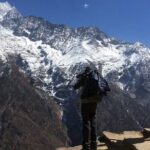
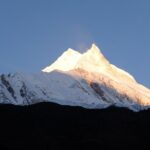
This trek takes you past the crowds and into a wilder, more human Nepal. The Manaslu Circuit is known for rugged days, steady teahouse stops, and huge views of Manaslu and neighbors like Ganesh Himal II and Chamar. You also get the big goal most people save up for: Larkya La Pass.
I love how the route stays practical without losing adventure. Teahouses at nearly every overnight stop mean you’re not hauling a tent or carrying daily food, and that keeps this circuit more accessible than the fully camping-style treks.
One drawback to plan for: it’s still a high-altitude, long-duration hike. The pace varies by day, but you’ll deal with steep climbs, a windy/rocky pass day, and cold mornings if you’re sensitive to weather.
In This Review
- Key highlights that make this trek worth your time
- What makes the Manaslu Circuit feel different from other Nepal treks
- Getting there by bus and jeep saves stress (and likely money)
- Teahouses at every stop: what it changes on the trail
- Days 1 to 3: Kathmandu to Machhakhola, Jagat, and the start of real hiking
- Days 4 to 5: Budhi Gandaki valley to Namrung and Shyala
- Day 6: Shyala sunrise and Pung Gyen Gompa before dropping into Sama Gaon
- Day 7: Manaslu Base Camp push, then culture time back at Sama Gaon
- Days 8 to 9: Birendra Taal, Samdo, and Layung La’s altitude pressure
- Day 10 to 11: Dharamsala/Larkya Base Camp and the big pass build-up
- Day 11 to 13: Larkya La descent to Bimthang, Tilche, and down toward Marsyangdi
- Day 13 to 14: returning to Besisahar and finishing in Kathmandu
- Price and logistics: where your $227 gets real value
- The gear and fitness reality check (so you don’t suffer for no reason)
- One more thing: the human side of trekking (and why guide Ganesh shows up)
- Should you book this Manaslu Circuit trek with The Great Adventure?
- FAQ
- How long is the Manaslu Circuit trek?
- What’s included in the price?
- Are permits covered?
- Is transportation included to reach the trek areas?
- What meals are included during the trek?
- Do you need to carry a tent and cook your own food?
- What fitness level is recommended?
Key highlights that make this trek worth your time
- Larkya La Pass: the day many people remember most, tied to early-morning views of Larkya Peak (6249m)
- Teahouses everywhere: less packing pressure because lodging exists at each stop point
- Manaslu sunrise at Shyala: you’ll catch golden color changes in the Manaslu skyline from the Shyala area
- Manaslu Base Camp time: a dedicated push up, then a return to Sama Gaon for culture and village life
- Tibetan-influenced stops: Samagaun/Sama Gaon and side areas bring a different feel than typical trekking villages
- Licensed guiding with a real team: in past trips with The Great Adventure, guides and porters were described as professional, including guide Ganesh
What makes the Manaslu Circuit feel different from other Nepal treks
The Manaslu Circuit is often described as less crowded, and the vibe matches. You’ll spend days in quieter valleys where the trail feels like it belongs to trekkers and locals—less like a theme park.
The route is also “isolated and undomesticated” in the sense that it isn’t polished for mass tourism. You still get teahouses at every stop point, which is a huge deal for comfort and cost. And because the trek can be reached overland from Nepal’s road network, you can skip flights into the region that many other mountain itineraries rely on.
Finally, this circuit is a peak-view sampler. Expect big named mountains like Himalchuli, Manaslu, Chamar, and Ganesh Himal II, plus plenty of other silhouettes you’ll notice as you gain altitude.
You can also read our reviews of more tours and experiences in Kathmandu.
Getting there by bus and jeep saves stress (and likely money)
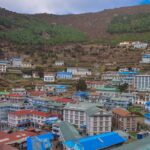
Your trek starts in Kathmandu, then moves overland. You travel by local regular bus from Kathmandu toward Gorkha, then continue onward to the trail region with day-by-day driving legs that connect you to the first real trekking days.
By the time you reach the early trail start area—like Machhakhola—you’ve already had a full day’s worth of Nepal road travel. The itinerary includes a long bus segment (about 5 hours on the Prithvi Highway along the Trisuli River) before you connect through Dhadingbesi and onward toward the trek.
Why this matters for you: fewer flights usually means fewer scheduling surprises. It also keeps the overall trip more budget-friendly, especially when you’re paying for a 14-day program.
Teahouses at every stop: what it changes on the trail
This trek isn’t a tent-and-cooking expedition. Instead, it’s built around teahouse stays—13 nights accommodation in mountain teahouses—so your day pack stays lighter than it would on a fully camping circuit.
Practically, that means:
- You can focus on hiking rather than cooking.
- You’re not carrying a lot of extra food.
- You’ll have a reliable place to warm up and eat at the end of the day.
The included meals make a difference too. During the trek portion, breakfast is included for 14 days, lunch is included for 14 days, and dinner is included for 13 days. That helps you avoid the expense of buying food every single meal in remote places.
A small consideration: teahouses have basic standards. They’ll be workable, but they’re not hotels. If you need quiet, ultra-modern plumbing, or lots of creature comfort, you’ll want to manage expectations.
Days 1 to 3: Kathmandu to Machhakhola, Jagat, and the start of real hiking
Day 1 is your Kathmandu-to-trail setup day. After breakfast in Kathmandu, you travel by local regular bus to Gorkha, then continue toward Machhakhola. You’ll ride through river country, including time along the Trisuli corridor, before you settle into the trekking rhythm.
Day 2 starts trekking from Machhakhola and moves through places like Furke Khola, Dhadingbesi, and then into the hiking route that reaches Jagat. You’ll also pass by Khorla Bensi and Tatopani as you work through the ups and downs. This is a good early “finding your legs” day. It’s long enough to feel like trekking, but it won’t try to throw you straight into the biggest climbs.
Day 3 reaches Deng after a checkpoint passage (the Jagat Checkpoint) and a waterfall scene followed by a steep ridge climb. For me, this kind of early steep section is where you learn how your body handles altitude and effort. You’ll want to keep your effort smooth and not sprint uphill, even when the views start to tempt you.
Days 4 to 5: Budhi Gandaki valley to Namrung and Shyala
Day 4 centers on Namrung, with a crossing of the Budhi Gandaki and a walk along the Budhi Gandaki valley. The itinerary emphasizes steep, impressive valley hiking. This is the stretch where the circuit starts to feel more “serious”: sustained effort, narrower terrain, and scenery that gets bigger as you climb.
Day 5 brings Shyala as your destination. You cross Namrung Checkpost, move toward Bhanjam through a pine forest stretch, and then climb up again. The day has multiple rhythm shifts—forest walking, a steep climb, and then the kind of high-mountain tea house arrival that makes you glad you didn’t pack too much.
If you like rewarding stops, Shyala matters because it sets you up for a memorable sunrise later.
Day 6: Shyala sunrise and Pung Gyen Gompa before dropping into Sama Gaon
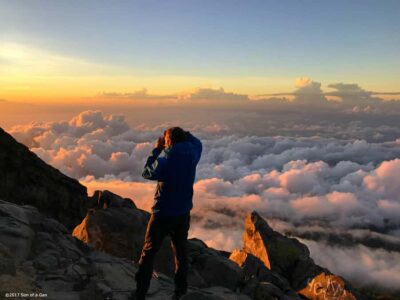
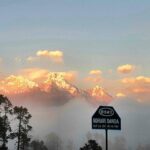
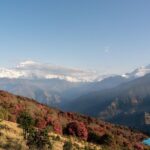
Day 6 is one of the most photogenic-feeling parts of the trek. From the Shyala area, you’ll have a sunrise moment where the top of Manaslu changes to golden color—a classic mountain-color effect, and the itinerary treats it like a highlight.
After breakfast, you head toward Pungyen Gompa. Then the plan includes a side trip (so expect a little extra walking and a few bonus viewpoints).
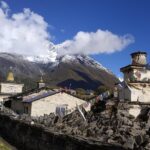
In the afternoon you move down toward Sama Gaon, where you spend the night. This is also one of the better days to look forward to village life: you’re not just chasing altitude now—you’re also arriving in a Tibetan-influenced settlement where you can slow down and notice how people live.
Day 7: Manaslu Base Camp push, then culture time back at Sama Gaon
Day 7 is your Manaslu Base Camp day. You walk on a mostly flat section early, with Manaslu visible, then the steep climb begins around the midpoint of the push.
When you reach Base Camp, the trek plan is simple: spend time there, then return back to Sama Gaon for lunch. The itinerary adds an extra cultural piece—visiting the village and learning about local Tibetan lifestyle.
For you, this is a smart pacing choice. You get the summit-style achievement of going up to Base Camp, without needing a camping-style “all day, all weather” approach. Then you get to recharge in a village setting.
Days 8 to 9: Birendra Taal, Samdo, and Layung La’s altitude pressure
Day 8 goes from Samgaun/Sama Gaon toward Samda, with Birendra Taal in between. You’ll walk through an area connected to a very old monastery (Samagaun) and a Tibetan cultural library before heading toward the lake. This is a nice break from the most intense climb days: still high, but more of a “move and look” day.
After Birendra Taal, you descend to Samdo. Along the way, the route highlights Kermo Kharka as a panoramic-view spot for Manaslu and Pangpoche. The plan suggests continued scenery along Kyonggmo Khar too.
Day 9 is where the itinerary pushes again toward Layung La. You start with close views of Mount Samdo and Gyala Peak, then climb (about 4–5 hours of ascending after Samdo in the outline you provided). The idea here is acclimatization plus payoff: you’re not just gaining height blindly; you’re using the trek structure to spend time at key points.
Day 10 to 11: Dharamsala/Larkya Base Camp and the big pass build-up
Day 10 targets Dharamsala, also described as Larkya B.C. You hike for about 4–5 hours, then later descend past the northern valley and cross the Budhi Gandaki again. You’ll follow grassy terrain with juniper above the Syacha Kharka area.
This kind of terrain mix matters. It’s not just “rock and snow all the time.” You’ll likely find moments where your breathing settles on gentler ground, then gets challenged again when the trail angles upward.
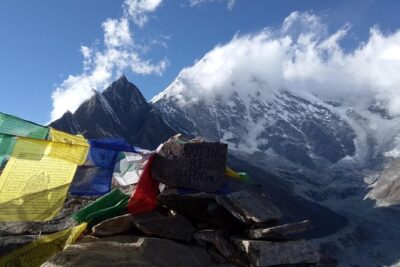
Day 11 is the pass day build-up: you start early and work toward Larkya La Pass. The trail is described as windy at times and rocky, and the morning views are the reward: Larkya Peak (6249m) is the stated focus.
This is one day where you should go conservative. Early starts reduce weather risk, but they don’t make wind easier. Keep your clothing ready, move steadily, and treat the rocky sections like a “footwork” day, not a speed test.
Day 11 to 13: Larkya La descent to Bimthang, Tilche, and down toward Marsyangdi
After reaching the pass area, Day 11 continues with a steep descent to Bimthang. The itinerary also mentions views on the way down to Phedi, with mountain names like Nimjung, Himlung, and Kanguru.
Descent days can feel easier than climbs, but they’re often harder on knees. If you’ve had knee issues before, pack planning and trekking poles become your friends.
Day 12 takes you from Bhimthang to Tilche. The schedule describes about 6–7 hours and starting with descent shortly after. The day includes another strong visual moment with breakfast views of Mt. Manaslu, then a gradual progression down through the route before reaching Tilche.
Day 13 continues the descent theme. You hike through Tilche farmlands, cross toward the east bank of a river, and descend gradually toward the Marsyangdi Valley. The point of this day is to transition from the high circuit back toward lower trekking country.
Day 13 to 14: returning to Besisahar and finishing in Kathmandu
Day 13 ends by connecting to lower roads via Dharapani, then taking a sharing jeep to Besisahar. The drive is about 3–4 hours and you’ll see waterfalls and lush scenery along the way—more “Nepal valleys” and less “big mountain wall.”
Day 14 returns to Kathmandu by sharing regular minibus, about 6 hours. The route follows the banks of the Marsyangdi and Trishuli rivers, and the final drive gives you that last sense of distance traveled.
If you’re the type who likes closure, this is it: one more day of moving, then a comfortable finish back in the city.
Price and logistics: where your $227 gets real value
At $227 per person for a 14-day trek, the value comes from what’s built into the package.
Here’s what you’re getting that actually matters on the ground:
- 13 nights teahouse accommodation
- A professional trekking guide with a government license for the full trek
- Permits: Manaslu and Annapurna conservation area permit and a restricted area permit
- Local transport legs that connect Kathmandu to the trek start and back to Kathmandu
- Necessary equipment listed as a sleeping bag and down jacket
- A first-aid kit provided through the operator team
- Basic safety support via emergency rescue help connected to your travel insurance
- Meals on the trail: breakfast (14), lunch (14), dinner (13)
One reason this feels like good value is that teahouses reduce extra hauling. Another reason: permits are not a vague add-on here—they’re explicitly included.
What you should watch: drinks during the trek are not included, and you’ll still need your own personal travel insurance, international airfare, and visa items.
The gear and fitness reality check (so you don’t suffer for no reason)
This is listed as a trek for moderate fitness. That’s encouraging, but the itinerary length and the pass structure mean “moderate” still equals real work—steep climbing days, long walking days, and altitude exposure.
Your guide helps you manage pacing, and the presence of a porter team (and guide/porter costs covered) is part of why this can stay manageable. Still, your personal packing matters.
The included sleeping bag and down jacket help with the cold. If you run cold easily, you’ll still want extra layers you already own, but at least the heavy cold-weather core gear is covered.
One more thing: the human side of trekking (and why guide Ganesh shows up)
The most consistently praised part in prior trips with The Great Adventure Treks & Expedition is the professionalism and helpfulness of the guide and porter team. One specific name that comes through is Ganesh, described as knowledgeable and good with trekking support.
I also like the idea that the company has a track record of being flexible with plans if needed. That matters because the mountains don’t care about schedules, and small route timing changes sometimes make a big comfort difference.
Should you book this Manaslu Circuit trek with The Great Adventure?
Book it if you want:
- a less crowded-feeling Manaslu circuit with teahouses instead of full camping,
- a guide-led trek that includes permits and key logistics,
- the major highlights: Manaslu Base Camp and Larkya La Pass,
- and a pack-light style where you’re not budgeting for daily lodging and food from scratch.
Skip (or at least ask tougher questions first) if you:
- hate long travel days before and after the trek,
- need luxury hotel comfort at night,
- or have limitations that make steep climbs and a windy, rocky pass day stressful.
FAQ
How long is the Manaslu Circuit trek?
It’s a 14-day trek, with approximately 14 days total including trekking and the overland travel to and from Kathmandu.
What’s included in the price?
The package includes 13 nights in mountain teahouses, a licensed professional trekking guide, trekking permits (including Manaslu and Annapurna conservation area permit and restricted area permit), the listed equipment (sleeping bag and down jacket), a first-aid kit, porter/guide support costs, and meals during the trek (breakfast for 14 days, lunch for 14 days, and dinner for 13 days).
Are permits covered?
Yes. The tour includes the Manaslu & Annapurna conservation area permit and the restricted area permit.
Is transportation included to reach the trek areas?
Yes. You’ll have local transport included for the route between Kathmandu and the trek region (including Kathmandu to Sotikhola/Dharapani portions), plus the return drive back to Kathmandu.
What meals are included during the trek?
Meals included during the trekking portion are breakfast for 14 days, lunch for 14 days, and dinner for 13 days. Meals in Kathmandu are not included.
Do you need to carry a tent and cook your own food?
No. The trek is designed around teahouses at stop points, so you don’t need to carry a tent or food supplies like a camping trek would require.
What fitness level is recommended?
The trek is listed for travelers with moderate physical fitness.