REVIEW · KATHMANDU
14 days Annapurna Base Camp Trek
Book on Viator →Operated by Asian Heritage Treks and Travels · Bookable on Viator
Hit the trail after temple-hopping. This Annapurna Base Camp trek pairs mountain days with real Nepal culture in places like Gurung, Magar, and Thakali villages, plus classic Kathmandu sights to get your bearings fast. I especially liked the rhythm of the route—steady uphill, then rewarding viewpoints—and the way the tremk leader keeps you focused on the trail and your safety.
Two things I really liked: the Poon Hill sunrise option (hello, first light over the Himalaya), and the support system built into the trek, including a government-licensed English-speaking leader plus porters for your load. My second big plus is the practical pacing: you get multiple chances to adjust on the way toward Annapurna Sanctuary instead of only pushing hard day after day.
The main drawback to plan for is altitude and long stair sections. If you’re not used to hiking 6–8 hour days (plus stone steps), you’ll feel it, even with a moderate route.
In This Review
- Key things that make this trek work
- Kathmandu Warm-Up in Thamel: Durbar Square to Boudhanath
- Pokhara Lakeside: the reset day before the hills
- Nayapul to Ulleri: first uphill burn and classic terrace views
- Ghorepani through forests: rhododendron hiking and big mountain peeks
- Poon Hill sunrise and Tadapani: the reason people get up early
- Chhomrong to Sinuwa: stone steps, river crossings, and views that keep you going
- Deurali and Macchapuchare Base Camp: dryer forest, river views, and a major viewpoint
- Annapurna Base Camp day: the sunrise option at 3 A.M.
- Heading back: Jhinu hot springs and the end-of-trek reset
- Price and Logistics: is $1,028.41 good value for 14 days?
- Who this trek fits best (and who should reconsider)
- Should you book this Annapurna Base Camp trek?
- FAQ
- What is the start location and time?
- Is the Annapurna Conservation Area permit and TIMS included?
- What kinds of accommodations are included?
- Are breakfast meals included?
- Do I get a porter?
- Are UNESCO entrance fees included in the package?
- Is tipping included?
- How does transportation work between Kathmandu, Pokhara, and the trek start?
- Is this tour private?
- What is the cancellation window for a full refund?
Key things that make this trek work
- Poon Hill at first light: sunrise views over Annapurna and Dhaulagiri from 3,210m.
- A porter system with weight limits: one porter can carry 18 kg, shared between two clients.
- Lodge nights on the trek: 8 nights in locally available lodges, room-only (so you pack for that).
- Permits handled for you: Annapurna Conservation Area permits and TIMS included.
- Jhinu Hot Springs stop: a well-earned reset after the return trek.
- Optional ABC sunrise hike: an early wake-up (about 3 A.M.) if you want the extra view time.
Kathmandu Warm-Up in Thamel: Durbar Square to Boudhanath
You start in Kathmandu, with a transfer from Tribhuvan Airport to Thamel, where your trip briefing happens in the hotel lobby. Thamel is a good launchpad: it’s easy to grab what you need (snacks, simple gear, water), and you can get oriented before the trek. Your first day also includes a brief welcome stop connected to Asian Heritage Treks and Expeditions.
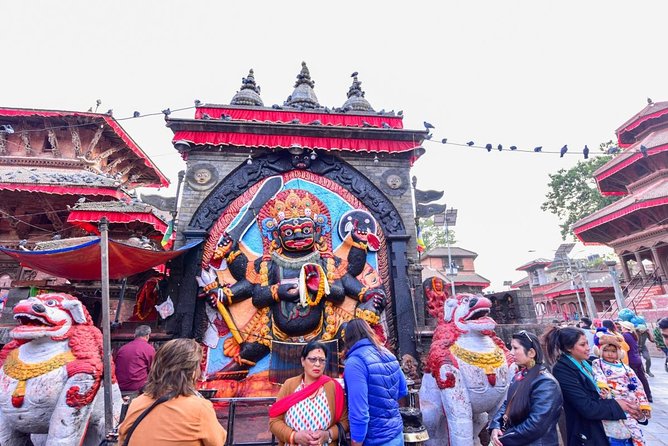
On the next day, you hit three Kathmandu heavy-hitters: Kathmandu Durbar Square (UNESCO), Swayambhunath or Monkey Temple, and Boudhanath (another UNESCO site with a massive stupa). This combo matters because it’s not random sightseeing. It sets your Nepal context—royal architecture and old-world city layout at Durbar Square, Buddhist pilgrimage energy at Swayambhunath, and the calm, prayer-flag atmosphere around Boudhanath.
A small consideration: entrance fees for world heritage sites are not included. That’s normal for Nepal tours, but it’s worth budgeting so you don’t get caught doing math mid-trip.
You can also read our reviews of more tours and experiences in Kathmandu.
Pokhara Lakeside: the reset day before the hills
After Kathmandu, you go to Pokhara Lakeside for a few hours. It’s described as serene and scenic, with lake views and an easy pace. In practical terms, this day helps you shift from city walking to trekking mode. You can rest, hydrate, and keep your appetite steady before the Annapurna climb starts.
Even though you’re not trekking that day, it’s still part of the body prep. Think of it like a gentle “transition hinge” between days: Kathmandu stairs and crowds on one side, then country trails and long walking days on the other.
Nayapul to Ulleri: first uphill burn and classic terrace views
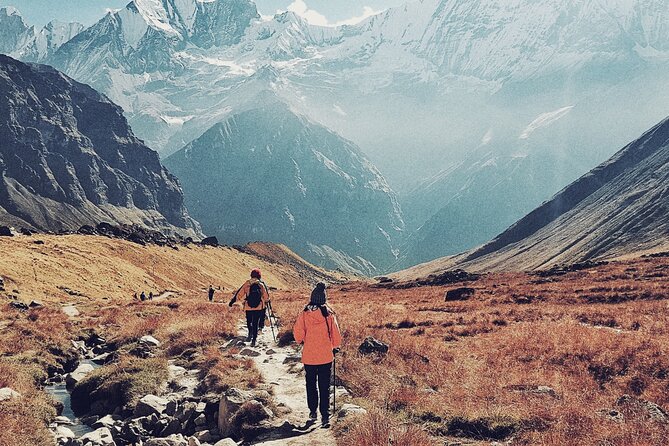
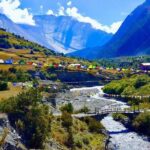
On trekking day one, you drive to Nayapul, the gateway to much of the Annapurna region. Then you hike toward Ulleri, with terraced farm fields along the way. You’ll also pass through Tikhedhunga before reaching Ulleri, and the route includes a hard, straight uphill section after that—so you feel the climb early.
This is where your shoes and socks start earning their keep. The good news: the trail description emphasizes pleasant air and good views as you ascend, so you’re not suffering in a vacuum. The “gain” feels earned because you can look back and see the valley shaping itself behind you.
At about 6 hours, this day is long enough to matter but not so extreme that it overwhelms everyone in the group—especially since the trek is designed as moderate.
Ghorepani through forests: rhododendron hiking and big mountain peeks
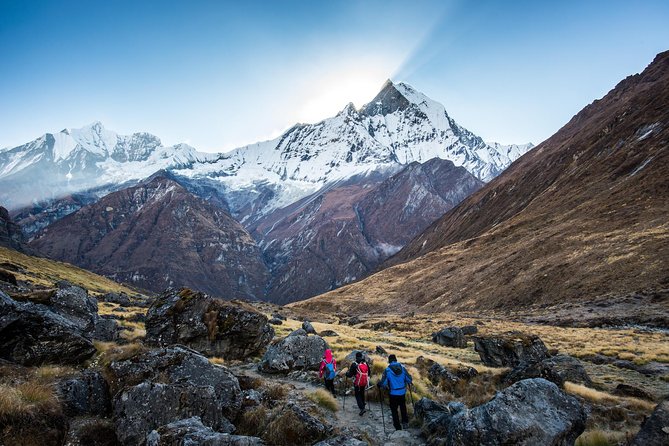
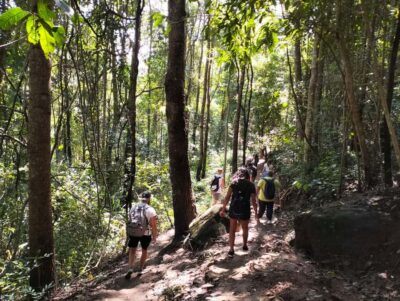
From Ulleri you continue toward Ghorepani, passing through forest and crossing little bridges. The highlight here is the switch in scenery and texture: rhododendron and pine forests, plus village segments that keep the hike interesting beyond just elevation.
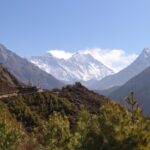
When you reach Ghorepani, the payoff is mountain visibility. You can observe Mt. Dhaulagiri from the area (and more peaks beyond). This matters because it sets expectations for the rest of the trek. You start seeing that this isn’t only about the base camp itself; the whole route has view points.
Expect around 7 hours. That’s a typical “build day” in trekking terms: enough time to feel like a real trek, but still within reach with a steady pace.
Poon Hill sunrise and Tadapani: the reason people get up early
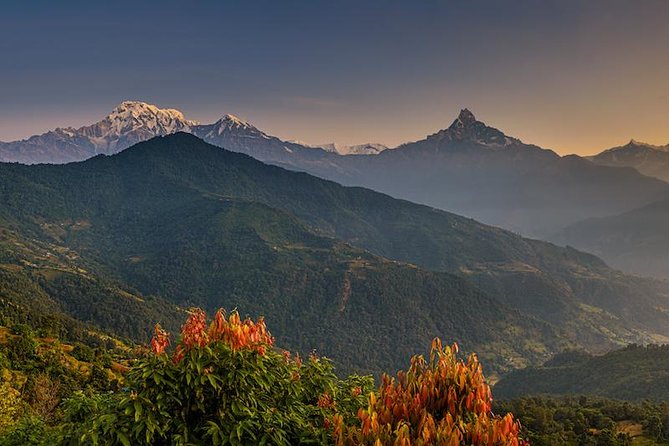
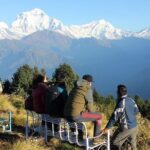
One early-morning push takes you from Ghorepani to Poon Hill (3,210m) to catch sunrise. The description is clear that timing matters. It’s the classic first light window over Annapurna and Dhaulagiri, and it’s also your chance to enjoy the way the morning trek moves through culturally rich villages.
Then you return for breakfast at Ghorepani and continue to Tadapani (2,650m). This is a smart setup: you get the “one big view moment” early, then you transition into a more hiking-focused day. You’ll also pass through rhododendron forest again, so you get consistency in scenery rather than endless exposed trail.
This day is listed as 8 hours. The real tip is mindset: sunrise hikes don’t feel like normal hikes. Plan for cold early air, slower steps, and the fact you’ll burn energy before you eat.
Chhomrong to Sinuwa: stone steps, river crossings, and views that keep you going
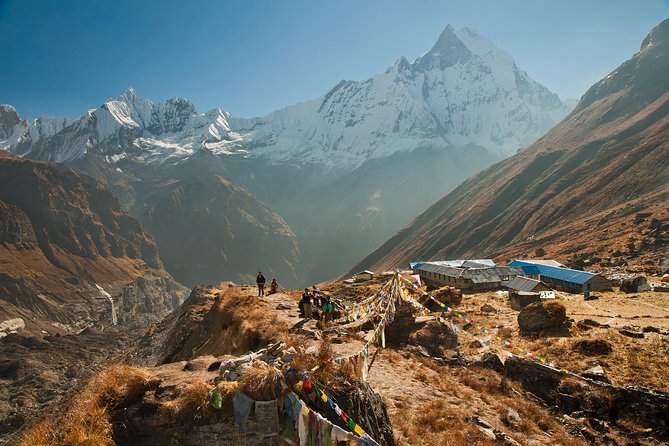
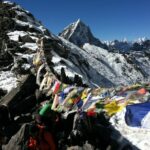
From Tadapani, you descend and cross the Kimrung River, then walk alongside rice fields and small settlements before ascending to Chhomrong. Chhomrong is one of those places where the scenery “clicks”—you get a fantastic view of Fishtail (Machhapuchhre) and Annapurna South from here.
Then comes a tough segment: you climb down 2000+ stone steps to cross the Chhomrong River, followed by a significant ascent to Sinuwa. This kind of day is why trekkers get addicted: it’s physically demanding, but the view rewards arrive right as your legs start questioning your life choices.
On the way, you also stop in Bamboo Village (2,300m). This village is noted for large Lemur colonies. If you’re lucky, you might spot one hanging out in the trees. Small wildlife moments like this are why lodge treks feel more human than just hiking through a map.
Deurali and Macchapuchare Base Camp: dryer forest, river views, and a major viewpoint
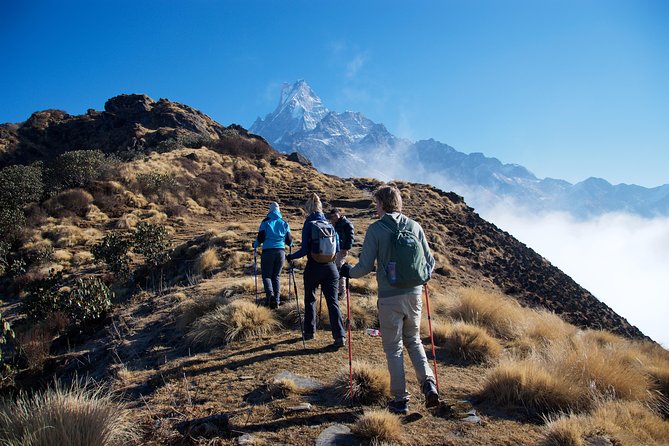
The next long day starts with a hike to Deurali, passing rhododendron and bamboo forest, then moving into a drier forest as you climb. After crossing Hotel Himalaya, the route includes steep climbing before reaching Hinku Cave and continuing toward Deurali (2,920m).
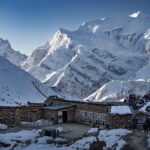
From there, you continue walking alongside the Modi Khola river. Finally, you reach Macchapuchare Base Camp (MBC), where you get excellent views of Fishtail Mountain, including how its shape shifts with the angle.
This day is about 7 hours, and it can feel long because you’re not only gaining altitude—you’re also switching environments. That’s good for experience quality, but it means your body doesn’t get bored and stops adapting. Bring a steady pace and keep your breathing calm.
Annapurna Base Camp day: the sunrise option at 3 A.M.
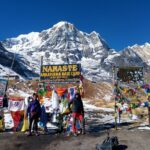
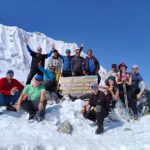
This is the day you’ve been walking toward. The plan includes an optional sunrise push to Annapurna Base Camp (ABC): wake up around 3 A.M., hike about 2 hours upward, and be careful with altitude while you’re catching your breath.
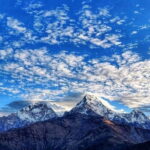
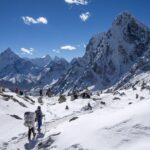
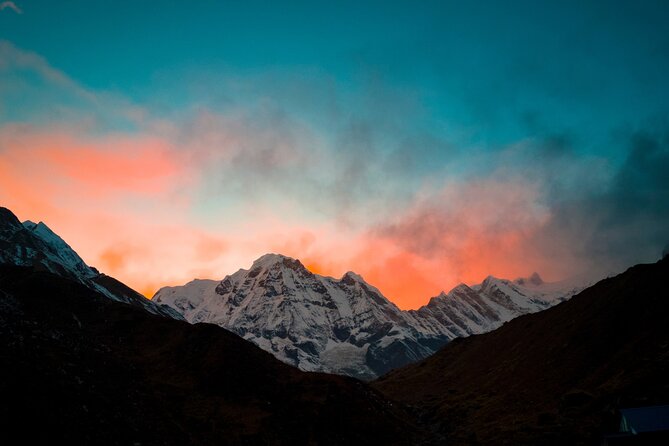
If you choose to do it, the reward is described as absolutely unique and incredibly spectacular. From ABC, you get views of Machhapuchhre (Fishtail), Hiunchuli, Annapurna South, Annapurna I, Annapurna III, Gandharvachuli, and Gangapurna. You’re also in the Annapurna Sanctuary, an oval-shaped plateau surrounded by a ring of mountains. That shape matters: it creates a natural amphitheater effect for the views.
One practical drawback: this start time is real. It’s cold early, and you’re hiking before your body feels awake. If you’re even slightly prone to feeling lightheaded at altitude, this option deserves extra caution.
Also, ABC itself is often busy across trekking seasons, but your tour schedule is designed to put you at the right place at the right time for the morning moment (if you pick that sunrise approach).
Heading back: Jhinu hot springs and the end-of-trek reset
After ABC, you descend back through settlements like Himalaya, Dovan, and Bamboo. Then you climb stone staircases and move toward Sinuwa, before descending toward the Chhomrong River again. In other words: you repeat some of the route, but your legs remember it differently on the way down.
The most important “emotional boost” here is Jhinu, known for hot springs. The trek description calls them a way to melt away fatigue. I like that this stop gives you a concrete payoff for the work your body is doing in the return legs. It also gives your hiking a reason to end on a high note rather than just counting down kilometers.
By the final trekking day, you descend down stone staircases, pass villages and farmlands, and walk back toward Nayapul, where your private jeep meets you and drives you to Pokhara. The route is noted as easier, and that’s exactly what you want before the travel back to Kathmandu.
Price and Logistics: is $1,028.41 good value for 14 days?
For about 14 days with Kathmandu temples, Pokhara downtime, and an Annapurna Base Camp hike, the price of $1,028.41 per person can feel fair—especially because key costs are handled for you.
Here’s where the value comes from:
- Permits are included (Annapurna Conservation Area permits and TIMS, plus other necessary permits).
- You get an English-speaking, government-licensed trek leader.
- Porter support is included, with a stated carry limit of 18 kg per porter shared between two clients.
- Transport is covered between airport, hotels, trail access points (including jeep transfers), and back to Kathmandu.
Where you need to stay alert:
- Entrance fees for UNESCO sites are not included.
- Tipping for guide, porter, and drivers is not included, and that’s a real cost at the end.
- Your meals on trek nights are not spelled out as fully included beyond basic breakfast items; the package lists breakfast as included for five days.
Also, you’re traveling on a private tour (only your group participates). That tends to improve day-to-day control over pace and decision-making, even though you’re still trekking in a mountain corridor where conditions drive the timeline.
One more practical note: the trek is described as requiring moderate physical fitness, and there’s a large distance hiking component. If that’s you, great. If you’re unsure, you can prepare with stair work and long walks before you go.
Who this trek fits best (and who should reconsider)
This Annapurna Base Camp trek is designed for people who want a moderate challenge with real mountain rewards. You’ll be hiking most days, and even the “easier” last day still involves meaningful walking.
You’ll likely love it if you:
- enjoy long day hikes and steady progress
- want cultural villages and not only views
- value guidance and logistics handled for you (permits, leader, porter, transfers)
You should think twice if you:
- struggle with stairs or steep uphill/downhill
- have medical concerns about altitude and don’t feel comfortable planning around it
- want a very short, low-effort trekking experience (this is a 14-day walking program)
Should you book this Annapurna Base Camp trek?
If you want a balanced Nepal mix—Kathmandu UNESCO sites, Pokhara lakeside breathing room, then a real trek to Annapurna Base Camp—this package makes sense. The big selling points are the permit coverage, the licensed trek leader, and the structured support with porters.
I’d book it if you’re comfortable with long hiking days, including stone-step sections and an optional 3 A.M. sunrise hike. I wouldn’t book it if you’re expecting a casual stroll; this is a trekking itinerary, and your legs will know it.
FAQ
What is the start location and time?
The meeting point is Tribhuvan Airport in Kathmandu, Nepal, with a start time of 8:30 am.
Is the Annapurna Conservation Area permit and TIMS included?
Yes. The package includes Annapurna Conservation Area permits, TIMS, and other necessary permits.
What kinds of accommodations are included?
You get 3 nights in 4* Yatri Suites & Spa (or similar) in Kathmandu on a breakfast basis, plus 2 nights in Hotel Crystal Palace (or similar) on a breakfast basis. During the trek, you have 8 nights in locally available lodge rooms on a room-only basis.
Are breakfast meals included?
Breakfast is included, with breakfast listed as included for 5 days.
Do I get a porter?
Yes. All porters are included, and one porter can carry up to 18 kilo of luggage, shared between two clients.
Are UNESCO entrance fees included in the package?
No. Entrance fees for UNESCO world heritage sites are not included.
Is tipping included?
No. Tips for the guide, porter, and drivers are not included.
How does transportation work between Kathmandu, Pokhara, and the trek start?
The package includes transportation as mentioned in the itinerary: transfers between the airport and hotels, a drive to the trek gateway at Nayapul, and a jeep from Nayapul back to Pokhara near the end of the trek.
Is this tour private?
Yes. It’s private, meaning only your group participates.
What is the cancellation window for a full refund?
You can cancel up to 6 days in advance for a full refund. Any changes made less than 6 full days before the start time are not accepted. A 50% refund is available for cancellations made 2–6 full days in advance. No refund applies if you cancel less than 2 full days before the start time.
If you want, tell me your hiking background (rough weekly mileage + whether you handle steep stairs well), and I’ll help you judge if the sunrise-at-ABC option is a smart fit for you.