REVIEW · KATHMANDU
10 Days Annapurna Base Camp Trekking
Book on Viator →Operated by himalayan sanctuary adventure private limited · Bookable on Viator
ABC trek isn’t for the faint of mind. This one pairs classic Annapurna Base Camp scenery with an early Kathmandu to Pokhara scenic flight, so you start seeing the Himalaya before you even put on boots.
I also like the human side of this trek. You pass through Gurung villages like Ghandruk and Chhomrong, then unwind at Jhinu Danda with natural hot springs after days of steep stone steps. The main drawback to plan for is altitude and comfort: you’ll reach 4,130m at ABC, and tea houses come with limited creature comforts and cold nights.
In This Review
- Quick hits: what makes this ABC trip work
- Arriving in Kathmandu at 6:15 and getting set for the trek
- Flying to Pokhara and easing into the trail in Ghandruk
- Chhomrong to Deurali: suspension bridges, bamboo, and high views
- The Big Day: Annapurna Base Camp via Machhapuchhre Base Camp
- Recovery downhill: Bamboo nights after ABC
- Jhinu Danda hot springs: the best reward for tired legs
- Back to Pokhara: riverside walking, Nayapul, and last dinner energy
- Price and what you get for $1,290 per person
- What to expect day to day: the pacing pattern
- Gear and comfort realities (the stuff you’ll feel)
- Should you book this Annapurna Base Camp trek?
- FAQ
- Where does this trek start?
- What time do we start?
- How do you travel from Kathmandu to Pokhara?
- What is the highest altitude you reach?
- What kind of accommodation is used during the trek?
- Are meals included on trekking days?
- Do I have a guide and porter?
- Do you include Machhapuchhre views or stops?
- What’s not included in the price?
Quick hits: what makes this ABC trip work
- Right-side Himalayan views on the flight to Pokhara
- Gurung culture stops in Ghandruk and Chhomrong (with a museum option in Ghandruk)
- Machhapuchhre Base Camp lunch on the way to Annapurna Base Camp
- Natural hot springs at Jhinu Danda to loosen up
- Licensed English-speaking guide plus a porter (one porter for two people)
- Tea house/lodge meals included on trek days, with drinks and hot shower not included
Arriving in Kathmandu at 6:15 and getting set for the trek
Day 1 keeps things simple. You arrive in Kathmandu (about 1,300m / 4,264 ft), and a representative is supposed to meet you outside the international arrival terminal. Then you’re transferred to a hotel, with an overnight stay in the city.
This kind of start matters. Kathmandu can feel busy and confusing on arrival day, especially if you’re jet-lagged. Having pickup and a plan for the first night helps you sleep well before the early morning pacing of a trek route starts.
You’ll also want to use this first day for practical prep: charge devices (where possible), organize layers, and make sure your trek day pack is comfortable. The trek itself has long walking days, and it helps if you’re not improvising mid-route.
You can also read our reviews of more tours and experiences in Kathmandu.
Flying to Pokhara and easing into the trail in Ghandruk
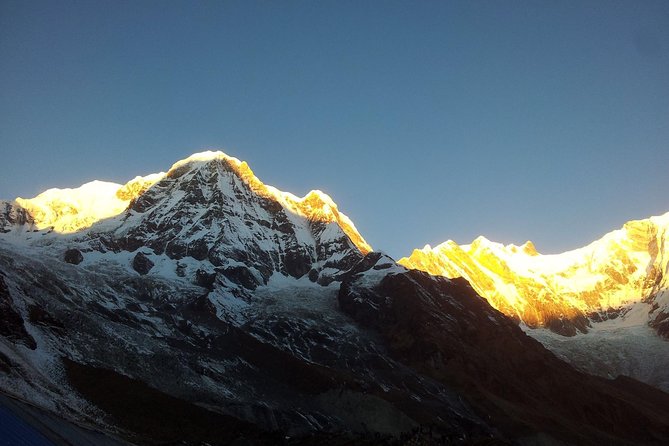
Next morning, you fly Kathmandu to Pokhara very early after breakfast, then drive to Nayapul. The flight is a big deal here. The schedule is built around getting you on the plane in time for those Himalaya views from the right side of the airplane.
Once in the trail, Day 2 goes to Ghandruk (about 1,945m). It starts easy: wide roads and gentle uphill toward the end of the day. This is a smart design for people who want the Annapurna experience without immediately jumping into steep, breath-stealing climbs.
Ghandruk is one of those villages that makes the trek feel more than scenery. It’s mostly inhabited by Gurung people, and if you have time you can visit the Gurung museum in the evening. Even if you don’t, the village layout and everyday life give you that real “this is how people live here” context.
What I like: this day helps you trust your footing and your pace before you hit higher terrain. If you’ve never done multi-day trekking, that confidence is gold.
Chhomrong to Deurali: suspension bridges, bamboo, and high views
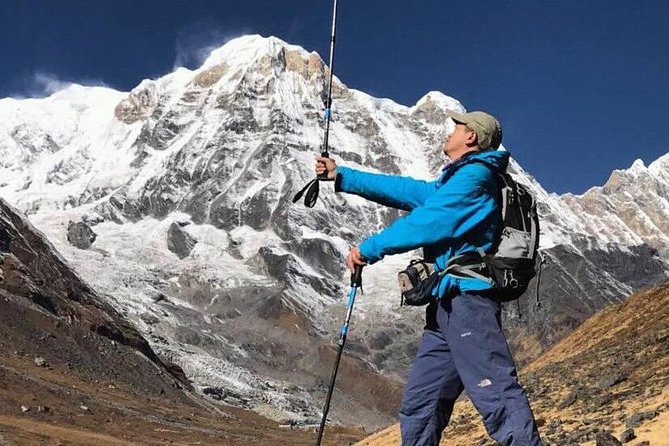
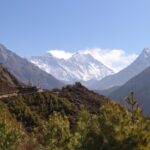
Day 3 steps up with a more dramatic mountain-feel. You go from Ghandruk toward Chhomrong (about 2,170m), with big views of Annapurna South, Hiunchuli, Machhapuchhre (Fishtail), and Gangapurna. The route includes downhill and then uphill sections: first a steep descend toward Kimrung Khola, then climbing again through Kimrungdanda to Chere Danda, and finally down to Chhomrong.
Chhomrong sits on the lap of the Annapurna massif, so the sense of scale gets real. You’ll likely arrive with sore legs, but you’ll also get that rewarding moment where the mountain seems close enough to touch.
Day 4 pushes higher to Deurali (about 3,230m). You cross a suspension bridge early, then climb above the Modi Khola on the west bank. Lunch can happen around the bamboo area (the day includes dense bamboo forest and stone stair climbs), and you reach Doban (around 2,630m) before continuing to Hinko Cave and on toward Deurali.
This day is the “work” day before ABC. The trail description here is accurate in spirit: more stone steps, continuous ascending, and a steady rhythm that wears you down if you go too fast.
A consideration: this route doesn’t spend many extra days on acclimatization. It’s a time-wise classic approach, which is great if you want the experience and don’t have weeks. Just don’t treat it like a casual walk. Keep your effort steady.
The Big Day: Annapurna Base Camp via Machhapuchhre Base Camp
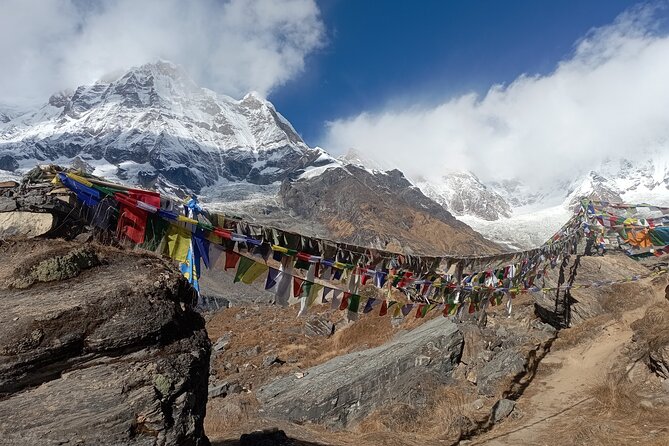
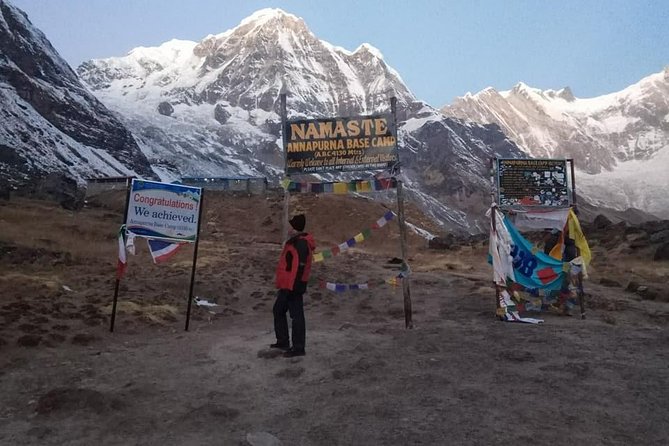
Day 5 is the heart of the trip: reaching Annapurna Base Camp (about 4,130m / 13,549 ft). It’s a longer day too, typically around 6–7 hours.
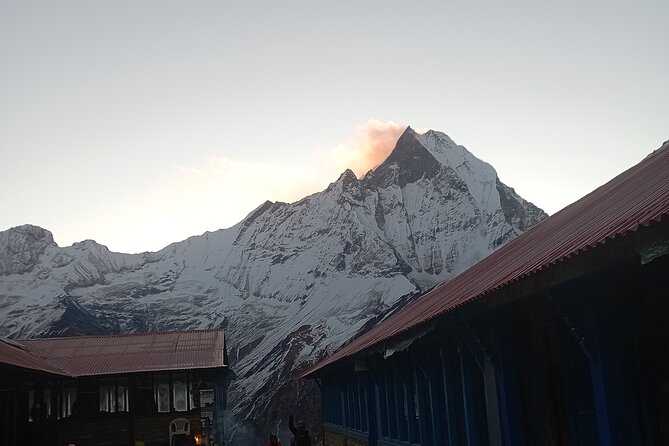
Your trek runs through the Annapurna Sanctuary, and the route includes a stop at Machhapuchhre Base Camp (about 3,700m / 12,135 ft) for lunch. That’s a nice break in the middle of a demanding push, and it also gives you a different angle on the Fishtail area (Machhapuchhre is revered by Nepalese people for its beauty).
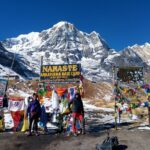
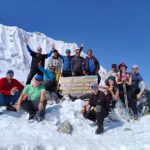
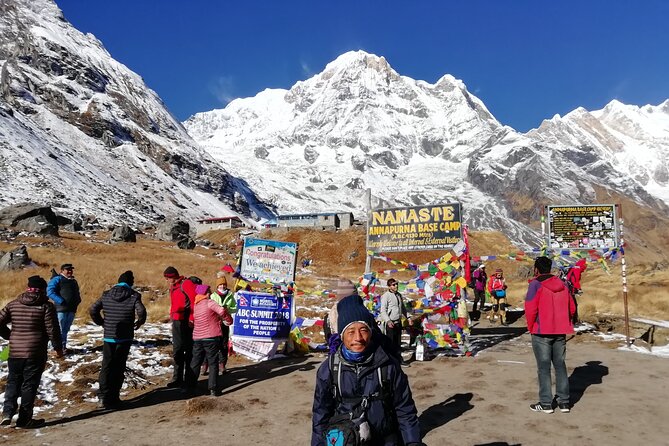
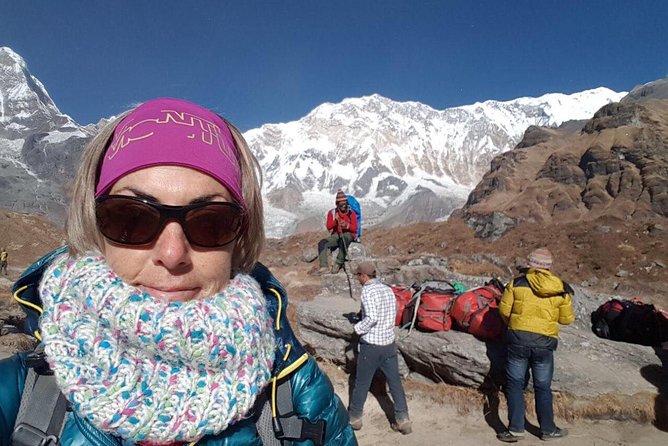
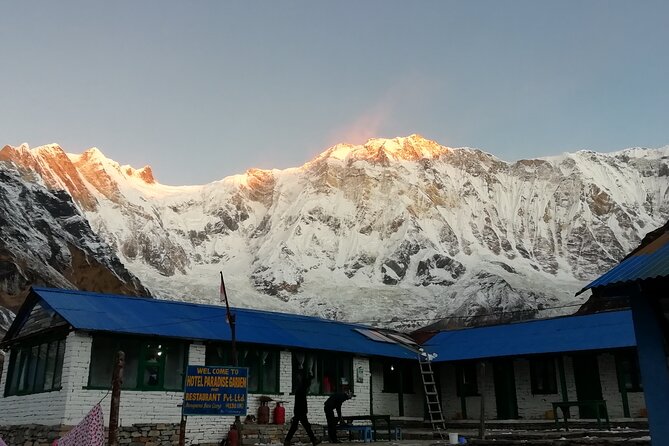
Once you reach ABC, you get the payoff. The near-vertical south face of Annapurna dominates the view, and the expedition history is part of the context. Annapurna’s dramatic face was climbed in 1970 by Don Whillans and Dougal Haston, led by Chris Bonington. Whether you’re a climbing-history fan or not, it makes the moment feel bigger than a photo stop.
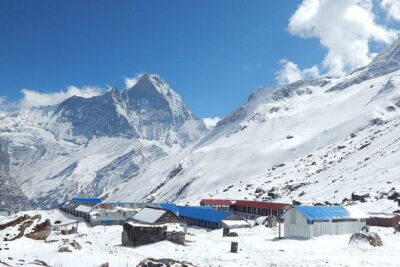
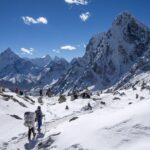
The description of the terrain at ABC is also worth noting: as you enter the sanctuary, vegetation disappears and the trail widens. You’re moving into a high, exposed environment with icy glaciers and moraines nearby. If the weather cooperates, the 360-degree mountain view can be the kind of moment that sticks with you for years.
Practical reality check: ABC days can be cold even when the trail is sunny. Keep your layers ready, and plan for the fact that cloud cover can happen. You might not get perfect visibility every time, but the setting is impressive even when it’s gray.
Recovery downhill: Bamboo nights after ABC
Day 6 turns the goal upside down. You retrace footsteps back down toward Bamboo (about 2,319m), typically 6–8 hours. It’s mostly downhill, so it can feel easier on paper, but don’t ignore the leg impact.
Downhill is its own kind of pain. Your quads do most of the work, and the terrain can include repeated descents past key waypoints like Machhapuchhre Base Camp, Deurali, and Doban.
Spending the night in Bamboo gives you a gradual landing from the high-altitude zone. It’s the “reset” day your body needs after the big altitude jump to ABC.
If you tend to get tired late in the day, this segment is where you should keep an eye on pacing and foot care. Slow down on the steps. Save energy for tomorrow’s descent to Jhinu Danda.
Jhinu Danda hot springs: the best reward for tired legs
Day 7 sends you from Bamboo toward Khuldighar and then down toward Chhomrong Khola, finishing in Jhinu Danda (about 1,760m / 5,770 ft). This day is around 5–6 hours.
You ascend to Khuldigar and then descend again, and the big named reward is Jhinu Danda’s natural hot water springs. It’s one of the most practical “tour features” on the whole route: after long days of climbing and stepping, soaking helps your aching body feel human again.
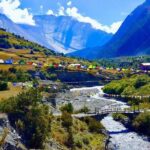
Day 7 also includes walking through rain forests and farms on the way down. That’s a nice change of pace after the exposed-feeling high country near ABC.
Back to Pokhara: riverside walking, Nayapul, and last dinner energy
Day 8 is a travel-move day. You trek to Naya Pul and then drive to Pokhara. The trek segment is about 5 hours, followed by about a 1-hour drive.
You’ll pass through Shauli Bazaar (about 1,140m), then walk along the Modi Khola riverbank to Birethanti (about 1,065m) for lunch. Birethanti is described as busy with many trekkers starting and finishing treks, which makes it a good place to grab a sense of what you just accomplished. Then you finish at Nayapul and head to Pokhara.
In Pokhara, the evening is free. This is where I like to treat myself: simple meal, laundry if available through your own arrangements, and a little time to plan what photos you’ll keep (and what you’ll never look at again).
Day 9 brings a flight back to Kathmandu after breakfast, typically around 25–30 minutes. You stay overnight in Kathmandu, and you also get a cultural dinner in the evening as a celebration of finishing the trek.
One more day (Day 10) is just the airport transfer: a representative drops you off at the international airport about three hours before your flight time.
Price and what you get for $1,290 per person
At $1,290 per person for about 10 days, the value comes from what’s bundled, not just the headline price.
Included items you’re paying for indirectly:
- Hotels in Kathmandu and Pokhara (3-star category) with breakfast
- Flights Kathmandu to Pokhara and back
- Private transportation
- Tea house/lodge accommodations during the trek with breakfast, lunch, and dinner included
- An English-speaking, government-licensed guide, plus meals, food, drinks, accommodation, insurance covered for the guide
- A porter (one porter for two people), with his salary/food/accommodation/insurance handled
- Permits via the TIMS system and government taxes/office expenses
- Farewell dinner with a Nepali family
- Mobile ticket, plus pickup and transfers
What’s not included, and this matters:
- Visa fee for Nepal (you can issue on arrival with passport photos; cost is listed)
- International airfare and travel insurance
- Lunch/dinner in Kathmandu and Pokhara
- Drinks and extras like tea/coffee, cold drinks, and sweet snacks during the trek
- Hot shower, hot water, and things like camera battery charging
So here’s the honest math question: is $1,290 fair for you? If you want a supported trek with guide + porter, meals included on mountain days, and flights already built in, it often makes sense. If you already have your own flights and prefer going independent, you might shop differently. But if you want fewer logistics headaches and a smooth handoff from city to trail, this package is built for that.
Also, you can cancel free up to 24 hours in advance for a full refund, which lowers risk if you’re still choosing dates.
What to expect day to day: the pacing pattern
This route has a clear rhythm:
- Day 2 and 3: getting into trekking mode with village stops
- Day 4: the steep lead-in to Deurali at 3,230m
- Day 5: the main altitude push to ABC at 4,130m
- Day 6: a downhill return to regain strength
- Day 7 and 8: the long descent to hot springs and then back toward Pokhara
That’s a time-efficient structure. It works well if you have a set number of days and you want the classic ABC story without stretching it into a longer circuit.
It also suits people who want a mix of culture and hiking. You’re not only walking through empty high country. You spend time in villages like Ghandruk (Gurung community) and Chhomrong (close to Annapurna’s mass), then finish with hot springs and a Kathmandu celebration.
Gear and comfort realities (the stuff you’ll feel)
The tour includes meals and basic lodging, but it doesn’t include comforts like hot shower or hot water. That means you should plan for colder nights in higher elevations and for limited charging and laundry options.
Pack smart for layers. The trek climbs from city altitude around 1,300m up to ABC at 4,130m, so temperature swings can be significant. Sturdy shoes help with all the stone steps and stair sections, especially when descending after ABC.
Also, bring a money plan for drinks and small purchases. The trek includes tea house/lodge meals, but extras like tea/coffee, cold drinks, and snacks aren’t included.
If you’re worried about fit and pace, the trip states you should have moderate physical fitness. That’s fair. You’re not training for a technical expedition, but you are walking long days with altitude involved.
Should you book this Annapurna Base Camp trek?
If your goal is the classic Annapurna Base Camp experience, with Machhapuchhre Base Camp along the way, and you want support that handles permits, flights, guide, and porter, this is a solid choice. The standout parts are the ABC goal day, the Gurung village feel, and the Jhinu hot springs recovery.
I’d skip or reconsider if:
- You’re very sensitive to altitude and want a slower acclimatization schedule with more buffer days
- You’re expecting hot showers and modern convenience in the tea houses
- You’d rather do full DIY trekking and don’t want guided logistics
If you want a supported trek that still feels authentic, this one is built for that. Just treat Day 5 and the altitude with respect, and you’ll be rewarded.
FAQ
Where does this trek start?
It starts in Kathmandu. You’re met at the international arrival terminal gate and transferred to your hotel for the overnight.
What time do we start?
The start time is listed as 6:15 am.
How do you travel from Kathmandu to Pokhara?
You take a flight from Kathmandu to Pokhara after breakfast, then you drive to Nayapul before starting the trek.
What is the highest altitude you reach?
Annapurna Base Camp is listed at 4,130 m (13,549 ft). The trek also includes Deurali at about 3,230 m and Machhapuchhre Base Camp at about 3,700 m.
What kind of accommodation is used during the trek?
You stay in teahouses/lodges during the trek.
Are meals included on trekking days?
Yes. The trek accommodations include breakfast, lunch, and dinner during the trekking days. Lunch and dinner in Kathmandu and Pokhara are not included.
Do I have a guide and porter?
Yes. You get an English-speaking, government-licensed guide and a porter (one porter for two people). Tips for the guide and porter are not included.
Do you include Machhapuchhre views or stops?
Yes. The route includes Machhapuchhre Base Camp, with lunch there, on the way to Annapurna Base Camp.
What’s not included in the price?
Not included are Nepal entry visa fees, international airfare, travel insurance, lunch/dinner in Kathmandu and Pokhara, drinks (including tea/coffee and cold drinks), hot shower/hot water, and tips for guide and porter.