REVIEW · KATHMANDU
Mardi Himal Trek
Book on Viator →Operated by Accessible Adventure Pvt. Ltd · Bookable on Viator
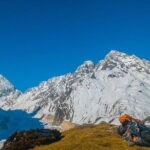
A quieter Annapurna trek with real wildlife. That’s how the Mardi Himal Trek hits: you leave Pokhara’s lake air, then hike into thin-forest ridges and high-camp viewpoints where the big scenery feels close and personal. I love the mix of wildlife odds (think danphe pheasant, and possibly even red panda) with dramatic Himalayan views like Machapuchare and wider Annapurna-region peaks.
I also like the pacing of this itinerary. You don’t just grind uphill; you get Pokhara’s comfort on the front end and village life on the back end, including guesthouse stays run by local families. One drawback to plan for: the trek is physically demanding, and you’ll need to bring a 4-season sleeping bag while hot showers and hot water cost extra or aren’t provided.
In This Review
- Key Highlights You’ll Actually Care About
- Why the Mardi Himal Trek Feels Special in the Annapurnas
- Kathmandu Arrival and the First Easy Win (Your Transfers)
- Pokhara: A Lake City Start That Sets the Tone
- Day 3 From Phedi Khola Toward Dhampus and Pothana
- High Camp Day (Day 4): Shrinking Tree Lines and Big Ridge Energy
- Low Camp to Ridge Walks (Day 5): Machapuchare at Lunch and Wildlife-Friendly Terrain
- The Sunrise Vantage Point and Pasture Day (Day 6)
- Day 7 Back Down by a Different Route: Siding Village Without the Tourist Crowd
- Day 8 Lumle and the Jeep Ride Back to Pokhara
- Day 9 to Day 10: Bus Back to Kathmandu and Stupa Time
- Price and Value: What $950 Covers (and What It Doesn’t)
- Who This Trek Is For (And Who Should Think Twice)
- Should You Book the Mardi Himal Trek With Accessible Adventure?
- FAQ
- How long is the Mardi Himal Trek?
- Where does the experience start and end?
- Is pickup and drop-off included?
- How do you travel from Kathmandu to Pokhara?
- What kind of accommodations do you get during the trek?
- Are meals included?
- Do you get a porter?
- Are permits included?
- Do I need to bring my own trekking gear?
- What is the cancellation policy?
Key Highlights You’ll Actually Care About
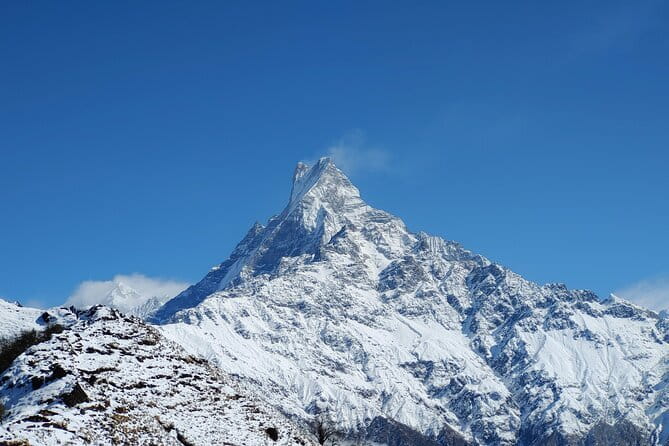
- Machapuchare fishtail viewpoints: you’ll hit lunch spots and ridges designed for big summit sightlines
- Early mornings for the best views: one day is built around sunrise and a ridge vantage point
- Wildlife-friendly trekking: rhododendron areas and pastures can increase your chances for danphe and other animals
- Village stays that feel local: guesthouses in places like Siding help you skip the tourist bubble
- A guide who keeps things moving: Accessible Adventure has strong feedback for responsive planning and energetic guiding (including Mr. Shyaam)
- Private group logistics: it’s only your group, with a porter system (1 porter for every 2 people)
Why the Mardi Himal Trek Feels Special in the Annapurnas
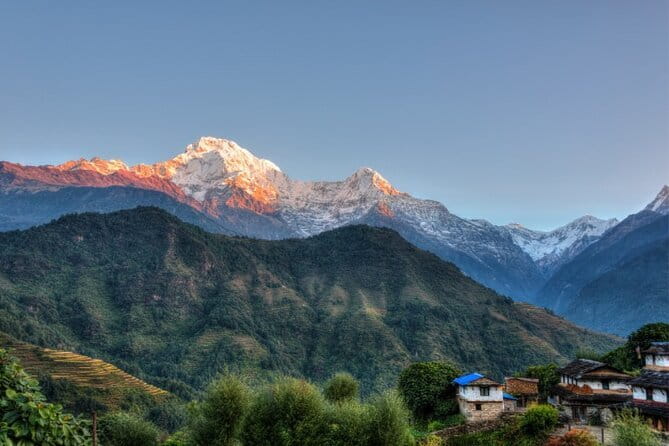
The Mardi Himal Trek is a deep cut into the Annapurna region, aimed at the kind of scenery that doesn’t require you to “chase” it. The route threads through forested sections, then rises into a zone where tree lines thin out and the trail turns into ridgeline walking with big skies and long views.
This trek also sells something a little harder to quantify: biodiversity. You’re hiking through habitats where birds and mammals live year-round, so your “wow moments” can come from animals as much as mountains. The chance to spot the danphe (Nepal’s national bird) is built into the trail narrative, and the overview also encourages you to keep your eyes peeled for red panda. In the real world, wildlife spotting is never guaranteed, but this route is the right kind of terrain to make it possible.
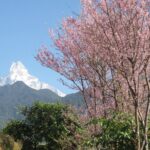
Then there’s Machapuchare (the fishtail peak). Even if you’ve seen a photo before, the way it appears on trekking days—especially around Low Camp timing—tends to stick in your memory. And if the weather cooperates, you’ll also get a look at other high neighbors in the Annapurna sphere.
You can also read our reviews of more tours and experiences in Kathmandu.
Kathmandu Arrival and the First Easy Win (Your Transfers)
Day 1 keeps things simple. When you land at Tribhuvan International Airport in Kathmandu, you’re met by an airport representative holding an Accessible Adventure sign and then transferred to your hotel in a private tourist vehicle.
This matters because Kathmandu can feel chaotic if you’re arriving tired. You don’t need to bargain with tuk-tuks or figure out where to go first. You just get to sleep, eat, and reset for the travel day ahead.
You’re also told you’ll receive a mobile ticket, which helps reduce last-minute confusion. It won’t make the trek easier physically, but it can make your first 24 hours less stressful.
Pokhara: A Lake City Start That Sets the Tone
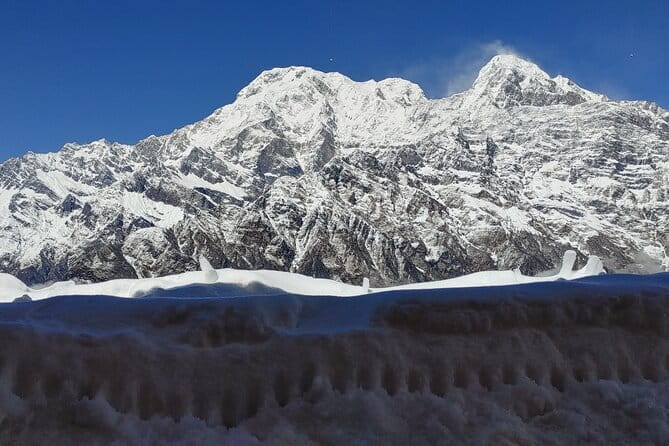
Day 2 is your “downshift” day. Your guide picks you up from your hotel around 6:30 AM, and you take a tourist bus to Pokhara that departs about 7:30 AM and takes roughly six or seven hours.
That bus ride is part of the deal. You’ll pass river valleys, terraced barley and rice fields, and greener hills that start to feel more like trekking country. When you arrive, you check in and get the evening free to explore Pokhara.
Pokhara sits on the shores of Phewa Lake, and the classic move is a boat ride out on reflective water with Machapuchare rising above town. Even if you don’t do the boat, the lakeside area is where you can find normal food, good coffee, and the kind of calm you need before Day 3 starts climbing.
If you like a meal with a view, this is also where you can aim for that “fine dining” evening the itinerary suggests. You’ll appreciate it more than you think once you’re back in tea-house life.
Day 3 From Phedi Khola Toward Dhampus and Pothana
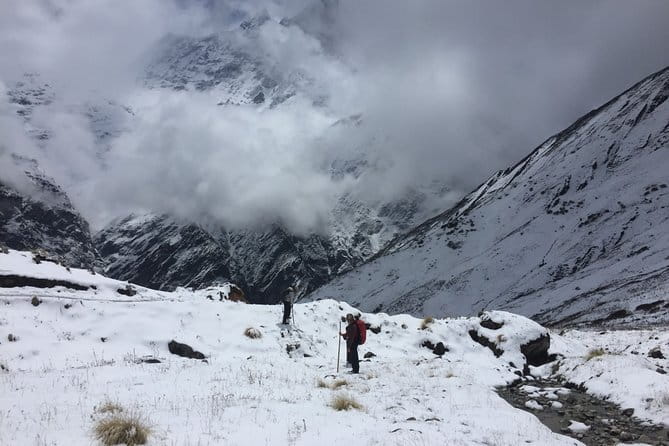
After breakfast in Pokhara, you travel to Phedi, then start hiking. This portion begins quickly with a familiar trekking rhythm: shaded woods, stone staircases, and small village passes as you climb.
A great feature of Day 3 is that it gives you both scenery and a cultural taste without overloading you with altitude pressure. You’re hiking uphill through a patchwork of nature and local life, then taking lunch in Dhampus, a spot known for a wide vista over the Annapurna range.
After lunch, you continue on to Pothana, a village with traditional stone-built homes and paved paths, plus the modern reality of snacks and souvenirs for trekkers. That balance is important. You get to see community life without it feeling staged for tourists.
What to watch for: stone stairs can be tough on knees after a while. If you’re new to trekking, shorten your stride and focus on steady pace rather than speed.
High Camp Day (Day 4): Shrinking Tree Lines and Big Ridge Energy
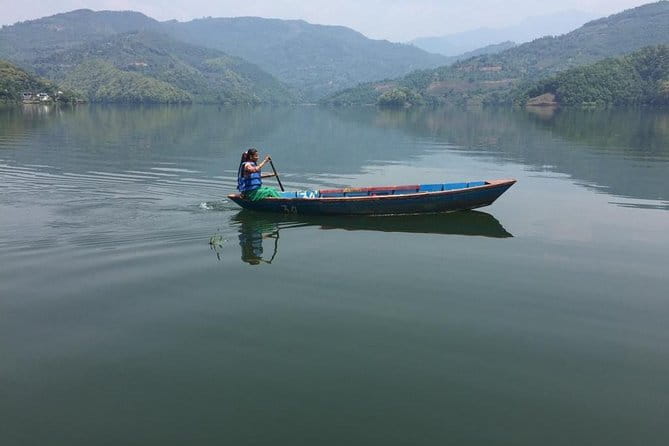
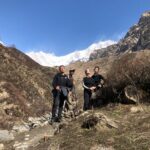
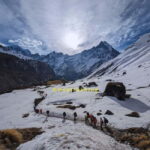
Day 4 is the shift from “green and shaded” to “Himalayan-in-the-air.” You trek uphill along a ridge toward Mardi Himal and Machhapuchhre, and the tree lines thin out. The trail moves into shrubs with isolated rhododendron bushes, which also helps set up wildlife-viewing potential.
If you’re lucky, you might spot Daphne pheasant, Nepal’s national bird. This is one of those details that’s easy to ignore in a brochure, but it’s actually useful. It cues you to look and listen along rhododendron edges and mid-forest openings, especially when the light changes through mist.
You ascend to High Camp and overnight there. This is where the trip starts to feel “serious” in a good way: cooler air, sharper views, and the sense that you’re now deep enough that the mountains dominate your day.
Practical note: High Camp nights can feel colder. This is one reason packing your sleeping bag correctly matters so much.
Low Camp to Ridge Walks (Day 5): Machapuchare at Lunch and Wildlife-Friendly Terrain
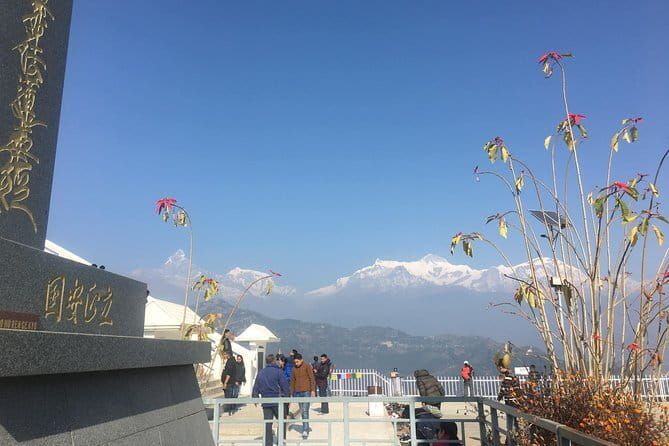
Day 5 begins from Kokar and continues the ascent through mossy woodlands. The misty forest mood is part of the charm, and sunlight shafts can make photos look almost unreal when they hit the right angle.
Lunch is at Low Camp, and this is a meaningful stop. You get a good look at Machhapuchare’s fishtail shape here, not just as a distant dot on the horizon but as a recognizable peak form. As the trail turns westward, you also glimpse Annapurna South and Hiunchuli from the ridgeline.
Then comes more ridgeline trekking with rhododendron bushes along the way. This matters because rhododendron thickets can function like wildlife corridors. If danphe appeared earlier, great. If not, this is another moment where chances improve.
Good to know: Day 5 is also a long day in terms of hours on the trail. Bring a rhythm you can keep, and don’t burn matches early just because the scenery is stunning.
The Sunrise Vantage Point and Pasture Day (Day 6)
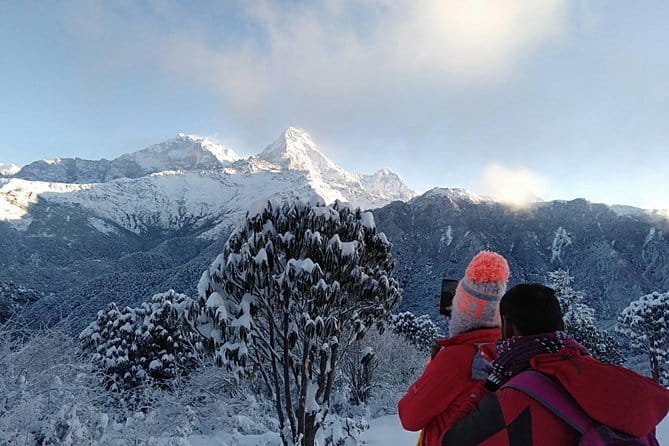
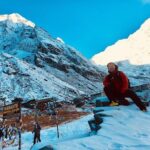
Day 6 starts early, built around sunrise and a ridge vantage point that’s described as the best sights of the entire trek. Even if clouds move in, early timing still tends to give you calmer air and softer light, which helps you enjoy the view and take photos without harsh glare.
The route follows a well-established trail through grassy pastures. It’s steep and can be narrow in places, so you want stable footing and not-too-fast pacing.
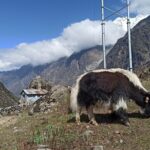
This day also gives you a different kind of realism: you’ll see dzo grazing in the fields. Dzo is a hybrid between yak and cattle, and it’s a reminder that these high areas are used by people, not just mountains.
During summer pastures, sheep and goats use grazing areas too, and you’ll pass herders’ huts along the way. If danphe didn’t show earlier, this day is another potential wildlife moment, since it’s a colorful habitat period for birds.
Day 7 Back Down by a Different Route: Siding Village Without the Tourist Crowd
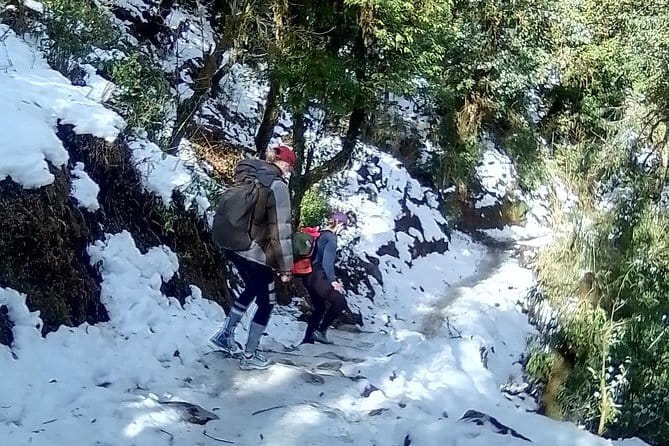
On Day 7, you turn around from the high Himalayas, but you don’t just retrace your steps. Instead, you take a different return route: High Camp back in the direction of Low Camp, where the track diverges toward Siding Village.
Siding is described as a traditional Nepalese settlement with less tourist traffic. That’s a big deal for how your trek feels. It’s not just about “less people,” it’s about meeting hosts who aren’t running their day to serve trekking queues.
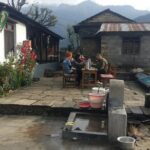
The accommodations at Kokar and likely tonight’s guesthouse style are run by families connected to this area. That creates a more personal, practical travel moment: you’re sharing a space where trekking income matters, but community life still drives the pace.
Day 8 Lumle and the Jeep Ride Back to Pokhara
After breakfast in Siding, you head to the road toward Lumle, hiking through villages like Kalimati and Ghalel. Kalimati is primarily Brahmin-populated, while Ghalel includes both Brahmin and Gurung communities. This is one of the itinerary’s strongest “cultural overlap” ideas: you see how different groups live side-by-side in the same trekking belt.
Your hike ends in Lumle, and then a prearranged jeep picks you up and drives about two hours back to Pokhara. That’s a nice release after multiple long hiking days. You also get time in Pokhara for a fine dinner before turning in.
If you want a simple souvenir win, this is also where you’re closer to normal market hours and more predictable shopping, compared to trail villages.
Day 9 to Day 10: Bus Back to Kathmandu and Stupa Time
Day 9 is your final farewell to the Annapurna Mountains. You leave Pokhara after breakfast and take the tourist bus back to Kathmandu, around six or seven hours. You’ll see rural countryside sliding past your window, and it’s the right time to reflect on what you actually remember: the trail turns, not just the final viewpoint.
When you arrive, you may have time for sightseeing after lunch. The itinerary highlights two major stupas: Swayambhunath and Boudhanath. If you have energy, these are good choices because they’re iconic and easy to plan around with local guidance.
Day 10 is mostly transfer time. A representative meets you at your hotel and takes you to the airport about three hours before your departure flight.
Price and Value: What $950 Covers (and What It Doesn’t)
At $950 per person for a roughly 10-day trip, this trek’s value is less about “cheap” and more about what you’re buying: permits, a guide, porter support, guesthouse lodging, and built-in transport between key points.
Included items that usually matter most on the ground:
- Pickup and drop-off by car/van
- Twin sharing accommodation during the trek (guesthouses)
- A highly experienced guide plus porters (1 porter between 2 members)
- Permits for Annapurna Conservation and TIMS
- Government tax (13%) and office service charge
- Breakfast included on 4 days
What you need to budget separately:
- Travel insurance
- International airfare
- Nepal tourist visa
- Alcohol, hot water, hot shower, cold drinks, laundry, phone call, internet
- Trekking equipment: bring a 4-season sleeping bag
- Anything not listed under price includes
Here’s my balanced take: if you need to buy gear last-minute (or you plan to rely on paid showers and snacks constantly), your “real total” can jump. On the other hand, if you show up prepared with the right sleeping setup and you keep spending in check, $950 can feel fair for a guided, permit-backed, porter-supported trek rather than a self-organized scramble.
Also, the private group piece matters. You’re not sharing your schedule and guide attention with strangers.
Who This Trek Is For (And Who Should Think Twice)
This trek is for people with moderate physical fitness. That sounds generic, but here it translates into long hiking days, steep sections, and ridgeline walking that can feel exposed when the trail narrows.
It’s a strong fit if you:
- Want a quieter Annapurna trek with wildlife and forest-to-ridge variety
- Like the idea of a cultural arc: Pokhara comfort, then village guesthouses, then back to Kathmandu
- Appreciate practical logistics like pickup/drop-off and a porter system
It may be a rough fit if you:
- Expect lots of creature comforts (hot showers aren’t part of the included setup)
- Don’t want to handle cold nights (bring your 4-season sleeping bag)
- Have limited tolerance for stairs and steep uphill stretches
One more thing: weather. The experience notes that it requires good weather. If the mountains don’t cooperate, your itinerary may shift or dates may change, but the policy offered is a refund or alternate date.
Should You Book the Mardi Himal Trek With Accessible Adventure?
I think you should book if you want an Annapurna trek that’s guided, structured, and not overly polished for tourists. The best part is the combination of Machapuchare-focused views, early-morning ridge moments, and the chance to see animals in the habitats you’re walking through.
I’d also feel good booking this company if you value responsive planning and a guide who keeps energy up. Your odds of a smooth trip are better when you’ve got names like Hari and Mahendra helping coordinate, and a guide like Mr. Shyaam who’s been praised for being friendly, energetic, and consistently available.
Just go in with realistic expectations: guesthouse comfort is basic, some conveniences cost extra, and the trek demands steady effort. If you’re ready for that, this is a memorable, human-scale mountain journey.
FAQ
How long is the Mardi Himal Trek?
The tour is about 10 days (approx.), including transfers and time in Pokhara and Kathmandu.
Where does the experience start and end?
It starts in Kathmandu, with pickup at Tribhuvan International Airport on Day 1, and it ends in Kathmandu with airport transfer on Day 10.
Is pickup and drop-off included?
Yes. The price includes pickup and drop-off by car or van as per the program, including airport transfers and transport connected to Pokhara.
How do you travel from Kathmandu to Pokhara?
You take a tourist bus. Your guide picks you up around 6:30 AM, and the bus departs about 7:30 AM, taking roughly six or seven hours.
What kind of accommodations do you get during the trek?
You stay in twin sharing accommodations at guest houses during the trek.
Are meals included?
Breakfast is included on 4 days. Other meals are not listed as included.
Do you get a porter?
Yes. Porters are included with a system of 1 porter between 2 members.
Are permits included?
Yes. Permits for Annapurna Conservation and TIMS are included.
Do I need to bring my own trekking gear?
Yes. Trekking equipment is not included, and you’re instructed to bring a 4-season sleeping bag.
What is the cancellation policy?
You can cancel up to 24 hours in advance for a full refund. If it’s canceled due to poor weather, you’ll be offered a different date or a full refund.