REVIEW · KATHMANDU
Mardi Himal Trek
Book on Viator →Operated by Mosaic Adventure · Bookable on Viator
Mardi Himal packs big mountains in few days. This trek is popular because you cover a lot of dramatic Himalayan scenery in a 5-day rhythm, without committing to a month-long expedition. It’s a guided option based out of Kathmandu and Pokhara, built around clear daily stops and steady altitude gains.
What I like most is how the route is staged for you: Pitam Deurali (2100m), Forest Camp (2550m), High Camp (3580m), then View Point (4500m) before dropping back down. The second big win is the people: Mosaic Adventure’s guide-and-porter setup shows up again and again in real service details, from Purna (guide) and Ram (porter) to Nabin, Keshab, Krishna, and Hari.
The main thing to consider is physical demand. Day 3 is a long push (about 6.5 hours), and Day 4 stacks altitude effort (View Point at 4500m) with a return hike—so this is not a stroll, even if it’s described as friendly for beginners.
In This Review
- Mardi Himal Trek: Quick Key Points Before You Commit
- Why Mardi Himal Gets So Much Attention for Five Days
- Price and Value: What Your $510 Covers (and What It Doesn’t)
- Fitness Check: Altitude and Daily Timing You Should Plan For
- Day 1: Pokhara to Pitam Deurali (2100m) Setup Day You’ll Remember
- Day 2: Pitam Deurali to Forest Camp (2550m) Settling In
- Day 3: Forest Camp to High Camp (3580m) The Long Climb Day
- Day 4: High Camp to View Point (4500m) and Back to Low Camp (2990m)
- Day 5: Low Camp to Siding Village (1280m) and Back to Pokhara
- Guides, Porters, and the Real Service You Feel on the Trail
- Logistics in Plain Terms: Meeting Point, Time, and Group Size
- Food, Comfort, and the Rhythm of Included Meals
- Who This Trek Suits Best (and Who Might Want a Different Option)
- Should You Book This Mardi Himal Trek?
- FAQ
- How long is the Mardi Himal Trek?
- What is the highest elevation on this itinerary?
- Where does the trek start and when?
- Does the tour include pickup?
- What meals are included?
- Are beverages included?
- How many people are in the group?
- Is tipping included in the price?
- What is the cancellation window for a full refund?
Mardi Himal Trek: Quick Key Points Before You Commit
- Big views in a short time: You reach View Point at 4500m on Day 4, then still have a downhill finish on Day 5.
- A clear altitude staircase: 2100m → 2550m → 3580m → 4500m → down to 1280m.
- Meal planning is built in: Lunch is included 5 times, dinner 4 times, breakfast 4 times.
- Small group cap: Maximum of 12 travelers, which usually makes the day feel more organized.
- Service quality shows in names: You’ll see guides and porters like Purna, Nabin, Keshab, Krishna, Ram, and Hari tied to the good experiences.
- Extra costs are mostly on you: Beverages and tipping aren’t included, so budget for those.
Why Mardi Himal Gets So Much Attention for Five Days
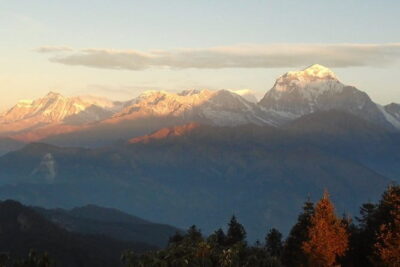
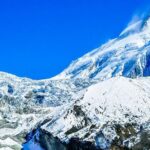
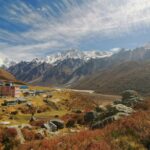
Mardi Himal is one of those Nepal treks where the payoff feels fast. In just a handful of days, you move through multiple elevation zones and keep your eyes up for mountain views that only really make sense once you’re standing in the middle of the Himalaya climb.
The itinerary is also practical. It doesn’t scatter your time randomly. Each day has a purpose: get you higher on Day 2 and Day 3, peak at View Point on Day 4, then help your body recover with a descent and a clear end to the trek on Day 5. That structure matters because you’re not just burning hours—you’re learning how to pace yourself for altitude.
And yes, you still get the classic trekking feeling: mornings that start early, solid walking time, and that moment when the terrain changes and suddenly you’re looking at a bigger world than you expected. One review even notes the route was completed in 3 days with the team’s support, which hints at how adaptable the pace can be if you’re moving confidently—just don’t assume that’s always the plan.
You can also read our reviews of more tours and experiences in Kathmandu.
Price and Value: What Your $510 Covers (and What It Doesn’t)
The listed price is $510 per person. For a guided high-altitude trek, the value usually comes down to what’s handled for you versus what you have to chase daily.
Here’s what’s included:
- A guide
- All fees and taxes
- Meals: lunch (5), dinner (4), breakfast (4)
That’s not a small detail. When meals are planned as part of the package, you lose less time figuring out logistics on the trail. It also means you can focus on walking, hydration, and sleep.
What’s not included:
- Beverages (tea/coffee, bottled water, etc.)
- Tipping
So if you’re the type who drinks lots of tea or wants extra water on demand, you’ll want to budget for it. Also, tipping isn’t included, so plan to handle that directly when the trek ends.
On top of that, the group size is capped at 12. For many trekkers, that’s the sweet spot: you get companionship without feeling swallowed by a crowd.
Fitness Check: Altitude and Daily Timing You Should Plan For
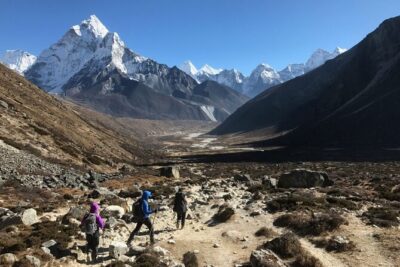
You only need a moderate physical fitness level, but the schedule still asks for effort. You’re walking between 3.5 and 6.5 hours most days, and you gain altitude quickly enough that your body will notice.
Look at the day-by-day time and elevation:
- Day 1: drive 1 hour + trek ~3.5 hours to Pitam Deurali (2100m)
- Day 2: ~4 hours to Forest Camp (2550m)
- Day 3: ~6.5 hours to High Camp (3580m)
- Day 4: ~6 hours including a climb to View Point (4500m) and return to Low Camp (2990m)
- Day 5: ~4 hours down to Siding Village (1280m), then ~3 hours back to Pokhara
That Day 3 + Day 4 combo is where you feel the trek most. It’s not just distance—it’s altitude and the rhythm of steep uphill segments. If you train for long walks, and you keep your pace steady, you’ll feel more in control.
One more practical point: the trek ends back at the meeting point (same starting area in Kathmandu). So you’re not just getting a hike—you’re getting a complete, managed trip flow.
Day 1: Pokhara to Pitam Deurali (2100m) Setup Day You’ll Remember
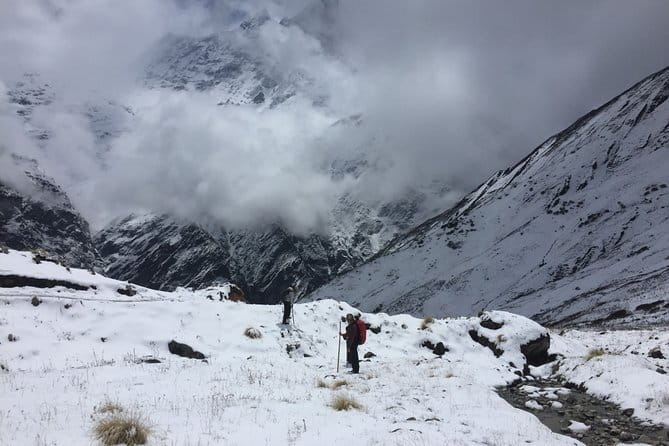
Day 1 is your first “on-foot” step into the Mardi Himal world. The itinerary lists a 1-hour drive, then about 3.5 hours trekking to Pitam Deurali (2100m).
Why this matters: this is where you learn the tempo your body can handle. The goal isn’t to race. It’s to get your lungs working without overdoing it. After this day, the rest of the itinerary makes sense because you’ll already be in a routine.
The trek to Pitam Deurali is also a good mental transition. You go from transport-mode to trail-mode quickly, which reduces the awkward day-1 fog that sometimes happens on multi-day hikes.
If you’re nervous about altitude, this day can help you settle your mind. You’re not at high camp yet, but you are moving upward. You’ll get a taste of the air and the way your legs start to tighten if you push too hard.
Day 2: Pitam Deurali to Forest Camp (2550m) Settling In
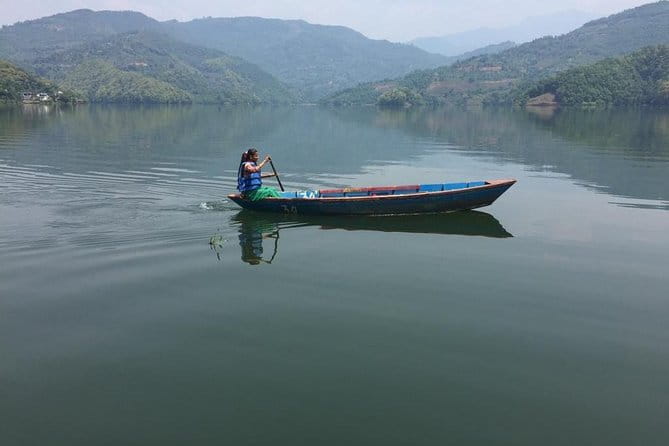
Day 2 is around 4 hours trekking up to Forest Camp (2550m). This is a key day for two reasons.
First, it’s moderate enough that you can focus on technique: steady steps, careful footing, and not forcing your breathing. Second, it sets you up for Day 3’s longer climb.
Forest Camp at 2550m is high enough to feel “in the mountains,” but it’s also early enough that you’re not yet paying the full altitude tax. This is a good day to get your rhythm right—because Day 3 is the one with the bigger time demand.
Also, since lunch and dinner are included across the trip, you can plan your day around meals rather than around searching for them. That keeps the day calmer and more predictable.
Day 3: Forest Camp to High Camp (3580m) The Long Climb Day
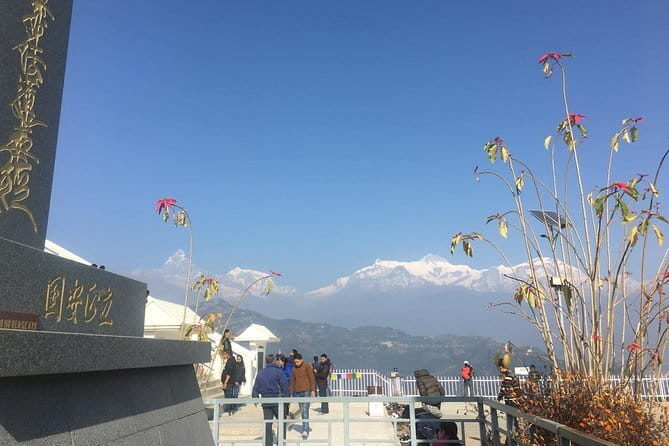
Day 3 is the hardest block in the schedule: Forest Camp (2550m) to High Camp (3580m) in about 6.5 hours.
If you take one lesson from this trek, it’s this: don’t let the long day trick you into speeding up. A 6.5-hour hike at rising altitude doesn’t forgive ego. It rewards smart pacing.
High Camp at 3580m is also the last major staging point before View Point. So this day is not just about getting there—it’s about arriving with enough energy to enjoy the next day instead of fighting your body.
The service side matters here. Reviews consistently credit the guide and porter team for keeping the trek organized and comfortable. In one well-rated experience, Purna guided and Ram carried with a focus on making things run smoothly, and that kind of support is especially valuable on a longer day like this.
Day 4: High Camp to View Point (4500m) and Back to Low Camp (2990m)
Day 4 is the trek’s big moment: climb from High Camp (3580m) up to View Point (4500m), then return to Low Camp (2990m), with a total of about 6 hours.
At 4500m, the altitude is the headline. Even if you walk steadily, you’ll feel your breathing change. Your legs will also know you’re higher than you’ve been so far. The good news is that you get a return to Low Camp afterward, which helps recovery and makes Day 5 feel more doable.
This day is also where good guiding pays off in a way you can feel. One review describes Nabin as becoming like a friend after the trek—exactly the kind of human support that makes a tough high point feel manageable. Another mentions Keshab’s supportive, friendly approach. In real terms, that support can mean pacing reminders, route guidance, and help when the trail gets tedious.
A practical tip: on a day like this, your best “strategy” is to treat the viewpoint climb as controlled effort, not a sprint. Save your energy for the descent back to Low Camp, because that’s part of the same day’s 6-hour total.
Day 5: Low Camp to Siding Village (1280m) and Back to Pokhara
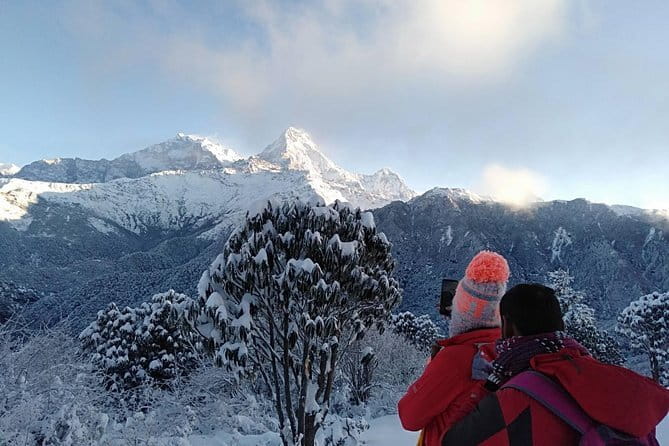
Day 5 is your finish, but it’s not just a victory lap. You trek about 4 hours from Low Camp (2990m) down to Siding Village (1280m), then travel about 3 hours back to Pokhara.
This is the day where descent can surprise you. Going down feels easier mentally, but it can be tough on knees and calves if you take long steps or ignore your footing. Shorter steps and controlled pacing help.
Once you reach Siding Village, the trek part ends and the trip flow shifts to getting you back toward Pokhara and then back to the Kathmandu meeting point area.
Because breakfast and dinner are included on scheduled days (breakfast 4 times, dinner 4 times), you’re not left guessing meals while wrapping up the last day. That kind of planning keeps the end of the trek from feeling chaotic.
Guides, Porters, and the Real Service You Feel on the Trail
In trekking, the best difference between a good trip and a great trip is often simple: do you feel cared for when you need it? Mosaic Adventure’s strength shows up in repeated service praise tied to specific staff members.
You’ll see:
- Purna as a guide and Ram as a porter, with the trek described as well organized
- Nabin as a guide who felt supportive and turned into something like a friend
- Keshab as a guide described as supportive, friendly, and knowledgeable
- Krishna as a guide and Hari as a porter, with a note about great facilities and preparation
- Sondosh as a guide who helped keep the trip safe, with a patient, professional organizing style
- Mentions of transparent planning, including no hidden fees and no pushy behavior
Even without going into personal backstories, the takeaway is clear: you’re not buying a PDF itinerary. You’re buying daily human management. On days with longer walking (Day 3 and Day 4), that matters.
Also, the porter role isn’t just “nice to have.” When a porter is professional and proactive—taking care of you while helping carry—your energy stays focused on the walking itself. That’s the difference between arriving tired and arriving functional.
Logistics in Plain Terms: Meeting Point, Time, and Group Size
Your start point is listed as Mosaic Adventure, Chi Bahal, अद्वैत मार्ग, काठमाडौँ 44600, Nepal, with a start time of 8:15am. The tour ends back at the meeting point.
Pickup is offered, and the tour uses a mobile ticket. In real-life trekking terms, that means fewer last-minute puzzles about where you need to be and what you need to show.
Group size is capped at 12 travelers. Smaller groups usually make it easier to move at a steady pace, take short breaks without losing people, and get clearer guidance from your team.
If you want an organized trek experience without turning the trip into a self-managed mission, this setup fits.
Food, Comfort, and the Rhythm of Included Meals
This package includes meals in a set pattern:
- Breakfast: 4 times
- Lunch: 5 times
- Dinner: 4 times
That’s valuable because it protects your time. Instead of constantly weighing when to stop, what to order, and whether you’ll find enough food, your day runs on a plan.
What you should expect in comfort terms is less defined in the provided details. Still, the broader feedback points to food and accommodation being arranged properly as part of the route plan. One review explicitly praised the journey as well planned, including route, food, and accommodation.
So your best move is to pack to match trekking reality: layers, rain readiness, and simple gear you know how to use. The trek is about consistent walking and recovery, not about traveling light on the kind of trail where gear changes become a hassle.
Who This Trek Suits Best (and Who Might Want a Different Option)
This trek is built for people with moderate fitness who want a high-value route in a shorter window. If you want a big Himalayan experience without a long slog, Mardi Himal is a strong match.
You’ll likely enjoy it if:
- you can handle a multi-day trek with 3.5 to 6.5 hours of walking
- you’re open to high altitude effort up to 4500m
- you like the idea of a guided group (maximum 12) with planned meals
You might think twice if you:
- have difficulty with long walking days (especially Day 3)
- are sensitive to altitude and don’t have a plan for pacing and rest
- hate the idea of extra on-the-spot spending for beverages and tips
There’s also a note in the experiences that the route was completed in 3 days for at least one group. If you’re chasing a faster schedule, ask how pacing can be handled. If you’re not, go in with the standard 5-day rhythm and enjoy the mountain time.
Should You Book This Mardi Himal Trek?
If you want a guided Mardi Himal Trek that focuses on clear daily staging, included meals, and professional support, this is a solid booking choice—especially at a price point where fees and taxes are already covered.
I’d book it when:
- you value a structured itinerary with a guide
- you want small-group pacing (up to 12)
- you appreciate a team that keeps things organized, like the guides and porters credited in multiple experiences
I might skip it if:
- you want a fully self-guided experience
- you’re not ready for the long, higher-altitude hiking blocks (Day 3 and Day 4)
- you don’t want to handle beverages and tipping separately
If you’re aiming for an efficient, scenic Nepal trek with help that feels human—not just administrative—Mardi Himal with Mosaic Adventure is worth your attention.
FAQ
How long is the Mardi Himal Trek?
The duration is listed as 5 days (approx.), based on the day-by-day trekking schedule provided.
What is the highest elevation on this itinerary?
The itinerary reaches View Point at 4500m (14763ft) on Day 4.
Where does the trek start and when?
It starts at Mosaic Adventure, Chi Bahal, काठमाडौँ 44600, Nepal at 8:15am.
Does the tour include pickup?
Pickup is offered, and the trek start is tied to the Mosaic Adventure meeting point in Kathmandu.
What meals are included?
Meals included are lunch (5 times), dinner (4 times), and breakfast (4 times).
Are beverages included?
No. Beverages like tea/coffee and bottled water are not included.
How many people are in the group?
The tour has a maximum of 12 travelers.
Is tipping included in the price?
No. Tipping is not included.
What is the cancellation window for a full refund?
You can cancel up to 3 days in advance for a full refund, and you must cancel at least 3 full days before the experience start time.