REVIEW · KATHMANDU
Manaslu circuit trek and side trips
Book on Viator →Operated by Nepal Trek Ways Pvt. Ltd. · Bookable on Viator
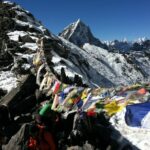
Manaslu’s circuit feels remote for real. I love the way this route stays close to daily village life, with prayer flags and mani walls appearing again and again on the walking days. I also love the cultural mix here, with Tibetan-style gompas and Gurung settlements showing up right along the trail.
One possible drawback to plan for is the grind: many days are long walking days (about 15 hours), and porter service is not included, so you’ll carry your own essentials or arrange extra help.
A bright spot is how the trek builds in breathing room: you get an acclimatization day in Samagaun, with an optional walk to Pung-gyen Gompa for glacier views.
In This Review
- Key highlights before you go
- Manaslu Circuit Trek: why this region still feels special
- Value check: what $600 covers (and what you still pay)
- Kathmandu start: where you meet and how the trek kicks off
- Day-by-day walking: what each section feels like
- Day 1: Kathmandu to Machhakhola
- Day 2: Machhakhola area to Jagat
- Day 3: Jagat to Deng (via Philim and gorge walking)
- Day 4: Deng toward Namrung and onward to Ghap
- Day 5: Ghap to Lho (Shyala, Namru check post, Sho village chorten)
- Day 6: Lho/Shyala area to Samagaun (Samagoan)
- Day 7: Samagaun acclimatization and Pung-gyen Gompa
- Day 8: Samagaun to Samdo (Manaslu Glacier foot and Larkya route)
- Day 9: Samdo to Larkya Phedi (Larkya Glacier appears)
- Day 10: Larkya La pass and the peaks on the horizon
- Day 11: Bimtang to Dharapani via Tilije and Thonje
- Day 12: Dharapani back down to Kathmandu
- Side trips that actually add meaning
- Transport, private group pacing, and the real comfort level
- The guide team: quick communication and on-the-ground organization
- Gear and trekking reality: what to pack for your walk days
- Who this Manaslu Circuit trek is for
- Should you book Nepal Trek Ways for the Manaslu Circuit?
- FAQ
- How long is the Manaslu Circuit trek?
- Where is the meeting point, and when does the tour start?
- Is this a private tour?
- What permits are required?
- Is a porter included, and are tea house fees included?
- Can I get a full refund if I cancel?
Key highlights before you go
- Restricted-area access since 1991 keeps the experience feeling more traditional than many high-profile routes
- Samagaun acclimatization day gives you time to adjust before the higher sections
- Side trip options to Tibetan gompas add depth without taking over the whole schedule
- Larkya La pass day delivers big views across multiple peaks and the Annapurna region
- Lots of bridge crossings and stair sections make the walking varied (and very real)
- Private group format means the pace and needs of your group matter
Manaslu Circuit Trek: why this region still feels special
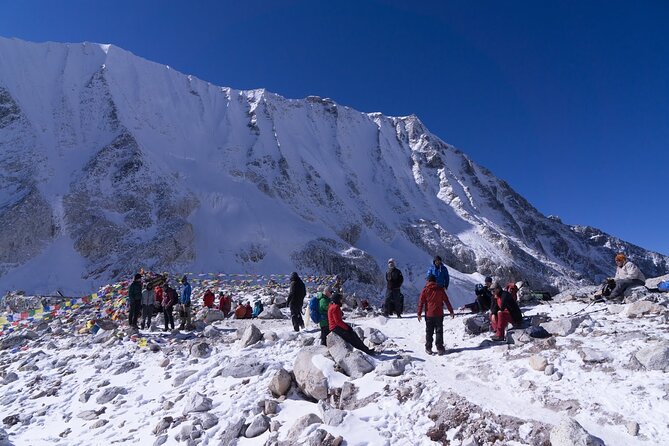
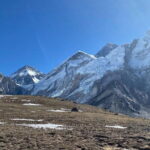
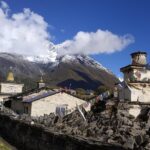
Manaslu sits right in the center of Nepal’s Himalaya, and the circuit is a chance to see that “center stage” feeling up close. Even though you’re on a classic trekking route, the character is still village-first: prayer flags hang in front of homes, mani walls mark old paths, and monasteries show up as part of everyday life rather than as distant monuments.
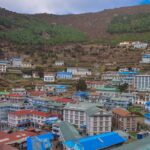
I also like that this trek has a clear cultural identity. Manaslu has Tibetan and Nepalese influences side by side. On your walking days, you’ll pass colorful villages with stone houses, chortens with painted details, and Tibetan-style religious spots that make the scenery feel lived-in. It’s one of the reasons the route is often described as authentic—not because you’re trying to “hunt authenticity,” but because the villages are simply there, functioning, and rooted in the terrain.
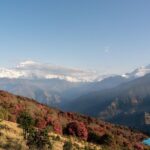
The natural side is equally direct. Forests like pine and birch begin the trek’s mood, then you climb into areas with rhododendron, juniper, and fir. Later, near the glacier foot and higher passes, the walking shifts from green mountain forest to rockier, more exposed feeling terrain. That change matters: it keeps the trek from feeling repetitive.
You can also read our reviews of more tours and experiences in Kathmandu.
Value check: what $600 covers (and what you still pay)
At $600 per person for about 12 days, the big value is that the package bundles the essentials most people forget to price: a guide, trekking food and accommodation are listed as included, and public transportation is included too (public deluxe bus plus jeep). It also includes key permissions: the special trekking permit for the Manasalu restricted area and the Manaslu and Annapurna conservation permit.
Where you need to pay attention is the fine print around on-trail costs. The package also lists that all food and beverages are not included, and tea house accommodation fees during the trek are not included. That can sound contradictory until you understand how tea houses and trekking meals often work in practice. My practical advice: before you pay anything else, ask your operator what meals are covered end-to-end, and what tea-house charges you will be expected to cover each night.
The other cost you may be surprised by is optional support. Porter service to carry your belongings during trekking is not included, and gratuities for guides are expected. So even if the base cost is clear, your final “all-in” budget depends on how light you pack and whether you hire extra help on the ground.
Kathmandu start: where you meet and how the trek kicks off
Your trip starts at Hotel Moonlight, Paknajol Marg in Kathmandu. The listed start time is 7:15 am, and it’s a private group setup, meaning only your group participates.
What to expect on day one is not just a “trek day,” but a travel day with mountain scenery built in. You leave Kathmandu and ride toward Machhakhola through western Nepal. The route is paved from Kathmandu to Dhading Bensi, then it shifts to a partly bumpy dirt road for about 30 km before you reach Machhakhola. This is the kind of drive that sets the tone: you’ll see farms and village life rolling by, and you’ll also feel that the road gets rougher once you’re deeper into the hills.
If you hate slow vehicle days, you’ll want to mentally prepare for it. If you can handle a long first day, it’s actually a good warm-up because you’re not starting the trek with immediate steep climbing.
Day-by-day walking: what each section feels like
Day 1: Kathmandu to Machhakhola
You’re looking at a long day of driving—about 8 hours into the western mountains, plus the final rougher stretch into Machhakhola. The “finish line” is simply reaching the village where your trek officially starts. The reward here is the gradual transition from city life to mountain terrain.
Day 2: Machhakhola area to Jagat
This day is a mix of undulating trail, stream crossings, and rocky ravines. Early on you’ll reach Khorla Besi, then you’ll walk near a small hot spring in Tatopan. After that, you’ll keep moving with a suspension bridge and a climb via a wide staircase to Dobhan.
The terrain gets more demanding as you climb steep, rocky sections and pass landslips in a challenging landscape. You cross another suspension bridge over Yaru Khola, then climb numerous stairs to reach Thado Bharyang. Finally, you cross toward the night at Jagat. Expect lots of step rhythm here; it’s not a “walk casually” day.
Day 3: Jagat to Deng (via Philim and gorge walking)
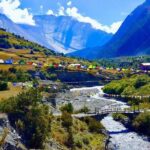
You start with an ascent over a rocky ridge toward Salleri, then descend to Setibas. You reach Ghatta Khola and cross a hanging bridge to Philim, a Gurung village. From there, the trek follows millet fields before reaching Ekle Bhatti.
Then comes a more serious stretch: the trail enters a steep, uninhabited gorge. As you continue, the valley widens and bamboo forests take over the scene. The day ends in Deng after crossing the Deng Khola and arriving at the tiny village of Deng. If you like variety—villages, fields, then gorge—this is a good day for you.
Day 4: Deng toward Namrung and onward to Ghap
You walk from Deng, cross the Budhi Gandaki, and climb toward Rana. Then you head west up the Budhi Gandaki valley, crossing streams and rivers as you move toward the Sringi Valley.
This is a “forest + river + up-down” kind of day: you traverse up and down through forests and pass mani walls on the way, ending at Ghap. There’s also a side trip option here to visit Tibetan Gompas at Prok, which can add a meaningful change of pace without breaking the day’s flow.
Day 5: Ghap to Lho (Shyala, Namru check post, Sho village chorten)
The walking shifts into pine and birch forest as you cross a river roaring down a narrow gorge. After that, you follow a narrow path through forest and reach Namru, where there’s a check post.
Next, the day mixes small Tibetan villages with chortens and stone houses. A chorten with detailed paintings welcomes you at Sho village. As altitude increases, the mountain views sharpen. Manaslu, Manaslu North, Himalchuli, Saula Himal, and Dwijen Himal rise on both sides as you move toward Lho for the night.
The consideration here is straightforward: higher altitude plus long hours means you should keep your breathing steady and avoid racing your legs.
Day 6: Lho/Shyala area to Samagaun (Samagoan)
You start with a steep descent crossing the Thusang Khola, then walk through fir forest and climb to Shyala on a plateau. From Shyala, you continue forward to reach Samagoan, passing a large chorten along the way.
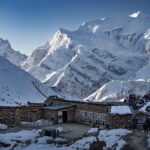
Samagoan has a well-known monastery called Sama. If you want a reason this day matters, it’s simple: this is where the trek becomes more glacier-minded. The big-mountain environment starts feeling closer.
Day 7: Samagaun acclimatization and Pung-gyen Gompa
This is the day you’ll be glad exists. You spend the day at Samagaun for acclimatization, and you can walk to Pung-gyen Gompa—a renowned monastery with views of the glacier.
You also have time to explore daily village life. This day matters because the trek is about to get higher and more exposed. Even if you feel good in the morning, don’t treat this as a “free extra hike day.” The point is to adjust before you move toward Larkya La.
Day 8: Samagaun to Samdo (Manaslu Glacier foot and Larkya route)
You start from Sama and walk toward the foot of the great Manaslu Glacier. The trail to Manaslu Base Camp branches off, but your route continues toward Larkya La.
You pass mani walls, then the valley begins to widen. The walk goes through birch, juniper, and rhododendron forests. After crossing a wooden bridge, you climb steeply onto a promontory between two forks of the rivers, then reach Samdo for the night.
This is where the scenery starts feeling more dramatic and more physical. You’re not just walking through villages anymore; you’re walking through the approach country toward high passes.
Day 9: Samdo to Larkya Phedi (Larkya Glacier appears)
You cross a wooden bridge over the Budhi Gandaki River, then cross a couple of streams. The Larkya Glacier appears on the opposite bank, and that moment is a psychological shift: you can see what the pass day will be like.
You climb steadily and skirt around the Sarka Khola. The day ends at the stone guest house called Dharmashala at Larkya Phedi. This is also a night where your planning matters. Because tea house accommodation fees are listed as not included, budget for what you’ll need for the night and for basic supplies.
Day 10: Larkya La pass and the peaks on the horizon
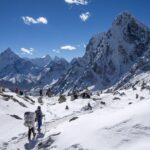
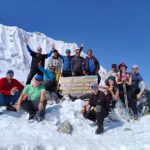
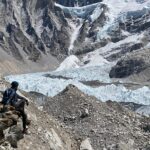
This is the signature day for the circuit. After a short ascent, you reach a valley on the north side of the Larkya Glaciers with views of Cho Danda and Larkya Peak. Then you walk across the moraines of the glacier and continue with a gradual ascent to the pass.
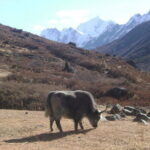
From Larkya La, you get outstanding views of Himlung Himal, Cheo Himal, Kangguru, and Annapurna II. After savoring the view from the pass, you continue on yak pastures toward Bimtang, with evening mist shaping the mood.
For most people, the biggest challenge isn’t just the elevation. It’s the cold, the wind, and the “long time moving” feeling you get at and around a pass. Pack for weather changes even if Kathmandu feels warm that day.
Day 11: Bimtang to Dharapani via Tilije and Thonje
You start from Bhimtang to Dharapani passing through Tilije, a stone paved village. You cross the Dudh Khola walking along the river bank, then cross a wooden bridge to the northern side again.
You’ll pass a chorten shaped arch and mani walls as you continue through Thonje, then keep walking toward Dharapani for the night. This is a day where the trail feels more grounded because you’re tied to rivers and settled villages again.
Day 12: Dharapani back down to Kathmandu
Instead of flying out, you head back by road. You drive down to Beshisahar by local sharing jeep (about 4-5 hours), then take a bus along the Prithivi Highway.
Depending on where you continue next, the bus drive is listed as 5-6 hours toward Pokhara, or 7-8 hours toward Kathmandu. On the way, you get views of green hills, farming terraces, and villages. You’ll also enjoy the rivers Marsyangdi and Trishuli as the drive carries you back.
Side trips that actually add meaning
You have two built-in chances to go beyond the main trail.
One option is a visit to Tibetan Gompas at Prok during the Deng to Ghap / Namrung day. Another is the acclimatization day walk to Pung-gyen Gompa in Samagaun, where you can look toward glacier country.
These side trips work because they don’t replace key hiking days. They add context: how people pray, how communities maintain monasteries, and how spirituality is woven into daily movement.
Transport, private group pacing, and the real comfort level
This is a private tour/activity, and only your group participates. That helps if your group needs small adjustments, like a slower rhythm on step-heavy sections or more time at viewpoints.
Transportation is handled with public deluxe buses and jeeps. Day one includes a paved stretch plus a dirt section, and the exit from the circuit is road-based with a jeep and bus. If you dislike shared road travel, bring that up early. If you’re flexible, you’ll likely find it smooth enough to enjoy the scenery without thinking too much about logistics.
The guide team: quick communication and on-the-ground organization
A theme in the way this operator works is responsiveness before you go. Bikash has been named in prior communication from Germany, and the Nepal-side team members Hari and Bimal have been involved in arranging and confirming trips.
That matters because a circuit trek is only “simple” when everything lines up: permits, timing, lodging, and meal arrangements. A fast reply and clear answers reduce the stress of packing and altitude planning.
Gear and trekking reality: what to pack for your walk days
The trek is rated for moderate physical fitness. That fits most people who can handle long days, but it doesn’t mean it’s casual.
Because tea house accommodation fees during the trek are listed as not included, pack light but plan for cash needs and basic supplies. Porter service is also listed as not included, so carry your own daypack essentials. If you know you’ll struggle with long walking days, you’ll want to consider hiring support locally (or confirming whether you can add it).
Also, build a “steps mindset.” Several days include stairs, suspension bridge crossings, and steep rocky segments. Your legs will feel it even when the route looks good on paper.
Who this Manaslu Circuit trek is for
This trek is a strong match if you want:
- A circuit that mixes culture and terrain rather than only chasing views
- The chance to see Tibetan-style religious sites linked with village life
- A thoughtful acclimatization day in Samagaun
- Long, steady trekking days and you can handle basic trekking logistics
It’s a weaker match if:
- You want short hiking days or minimal stair time
- You do not want to carry your own gear
- You prefer everything all-inclusive (tea house fees and beverages are listed as not included)
Should you book Nepal Trek Ways for the Manaslu Circuit?
If you want a well-organized Manaslu Circuit trek with a real cultural tone, this package is worth considering. The value is strongest when you take advantage of what’s included: an English-speaking trekking guide, permits (including the restricted-area permit), public transportation, and a schedule that gives you a real acclimatization day in Samagaun.
Before you say yes, do two quick checks: confirm what meals are included versus what you pay at tea houses, and clarify insurance coverage since insurance is listed as included while travel insurance is listed as not included. If those are clear, you’ll be set up for the kind of trip where Larkya La pass day and the Tibetan gompa side trips feel like the natural payoff.
FAQ
How long is the Manaslu Circuit trek?
The trek is listed as 12 days (approximately).
Where is the meeting point, and when does the tour start?
The meeting point is Hotel Moonlight, Paknajol Marg, Kathmandu 44600, Nepal, and the start time is 7:15 am.
Is this a private tour?
Yes. It is a private tour/activity, and only your group participates.
What permits are required?
You need a special trekking permit for the Manasalu restricted area, plus the Manaslu and Annapurna conservation permit.
Is a porter included, and are tea house fees included?
Porter service to carry your belongings during trekking is not included. Tea house accommodation fees during the trek are also not included.
Can I get a full refund if I cancel?
You can cancel up to 3 days in advance for a full refund. To get a full refund, you must cancel at least 3 full days before the experience’s start time. If you cancel less than 3 full days before, the amount paid will not be refunded.