REVIEW · KATHMANDU
Gokyo Lakes And Renjola Pass Trek – 12 Days
Book on Viator →Operated by Breeze Adventure Pvt Ltd · Bookable on Viator
One pass makes this trek feel like the sequel. This Gokyo Lakes and Renjo La Pass route takes you higher than the classic out-and-back, over Renjo La (5,345m), then down through places most Everest trekkers skip. I like the focus on the big-altitude payoff: early viewpoints, long-glacier sightlines, and those moments where the peaks look close enough to touch.
Two things I really appreciate: the chance to stand at Gokyo Ri (5,357m) for panoramic Everest-region views, and the fact the trek runs with a small cap of 15 travelers, which makes the pace feel more human. One drawback to plan for is simple: you’re going over high passes, so you’ll want moderate fitness and you should expect altitude to be part of the challenge, not an afterthought.
Beyond the itinerary, what matters here is how the trip is run. You start at Lukla Airport, you’ll pass by the six Gokyo Lakes, and you’ll finish back at the meeting point in Thamel, Kathmandu. Past trekkers have praised the team for safety and comfort, with specific mention of Mr. Sarki Sherpa, plus a guide team that can stay flexible when time gets tight. If weather turns, note that this experience requires good conditions, so delays or a date change can happen.
In This Review
- Key points to know before you go
- Why Renjo La Pass changes the whole Gokyo Lakes trek
- Route at a glance: Lukla in, Thamel out
- Gokyo Ri: the Everest-region viewpoint you won’t forget
- Renjo La Pass (5,345m): early effort, big glacier and peak payoff
- Descent via Thame and Namche Bazaar: the trek softens, but Nepal stays real
- Guides, sherpas, and a small group pace (max 15)
- Physical fitness and altitude: what moderate really means
- Price and value: what $1,800.62 buys you in real terms
- Timing, weather, and how to protect your day on the mountain
- Should you book this trek?
- FAQ
- How long is the Gokyo Lakes and Renjo La Pass trek?
- Where does the trek start and end?
- What is the highest point on the trek?
- What are the key viewpoint highlights?
- How many people are in a group?
- What fitness level do you need?
- Is pickup available in Kathmandu?
- Does the tour require good weather?
- What is the cancellation policy?
Key points to know before you go
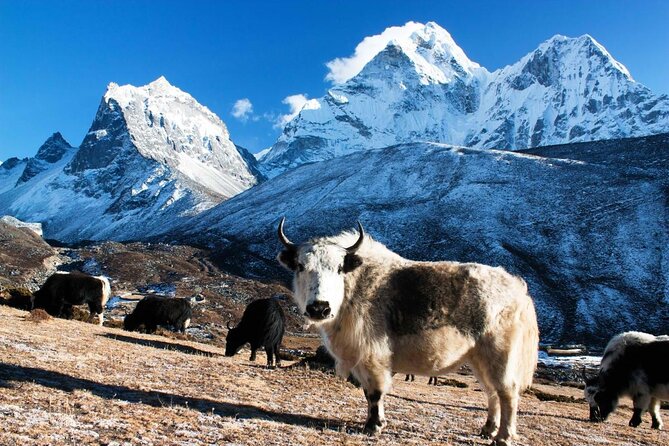
- Renjo La Pass is the star: higher, quieter, and a big change from the usual Gokyo Valley return.
- Gokyo Ri views put Everest-region giants in one frame: Everest, Lhotse, Makalu, and Cho Oyu.
- You’ll see Ngozumpa Glacier from multiple angles, including from the Renjo La approach.
- The group stays small, max 15 travelers, which helps with pacing and decision-making.
- Expect professional guide and sherpa support, with strong mentions of Mr. Sarki Sherpa.
- The trek ends back in Thamel, making it easier to connect with Kathmandu life afterward.
Why Renjo La Pass changes the whole Gokyo Lakes trek
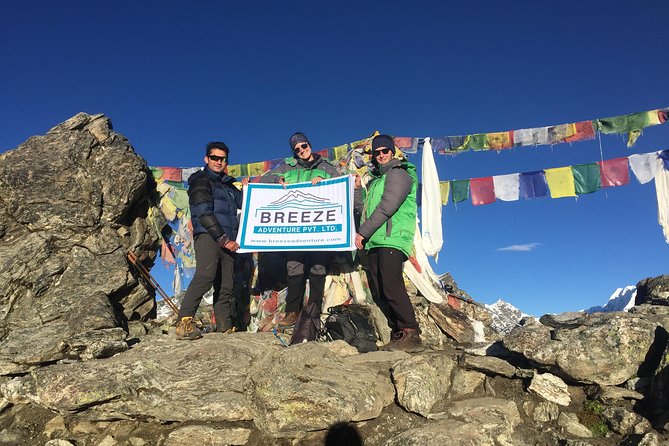
The standard Gokyo Lakes experience is already famous for a reason. You get big mountain scenery, a chain of lakes, and that feeling that the Khumbu is revealing another layer. This version pushes further by adding Renjo La (5,345m)—a high crossing that doesn’t happen on the most common routes.
What that means for you: the trek doesn’t just peak once. It gives you two major viewpoint “tests.” First you work up to Gokyo Ri, then you rise early again to climb toward Renjo La. And because the descent routes you through Thame and Namche Bazaar on the way back to Lukla, the trek has a satisfying arc. You’re not just walking forward and back. You’re moving through the region like you’re tracing a map with your own feet.
The other advantage is timing and variety. The early rises are demanding, but that’s when the views tend to feel most dramatic. You also get the payoff of seeing the Ngozumpa Glacier from more than one viewpoint, which is something you only notice once you’re actually there.
You can also read our reviews of more tours and experiences in Kathmandu.
Route at a glance: Lukla in, Thamel out
This trek is built around a classic Khumbu rhythm, but with a distinct geography. You begin at Lukla Airport, then travel through the Gokyo Lakes area—the route passes by the six lakes before you move up to Gokyo Ri. After that, the key move is the early climb to Renjo La Pass.
From Renjo La, the route turns into a descent, and you head back toward Lukla via Thame and Namche Bazaar. That’s not a minor detail. Those areas matter because they’re on the “Everest-adjacent” circuit. In practice, it means your return doesn’t feel like a straight reverse gear. It feels like you’re transitioning through the Khumbu’s social and geographic hubs on your way home.
Your trip also ends in the same place you start—back at the meeting point in Thamel—so you’re not stuck reorganizing your Kathmandu plans after the trek. And with features like pickup offered and a mobile ticket, the administrative side should be simpler than it is on some fly-by-night operations.
Gokyo Ri: the Everest-region viewpoint you won’t forget
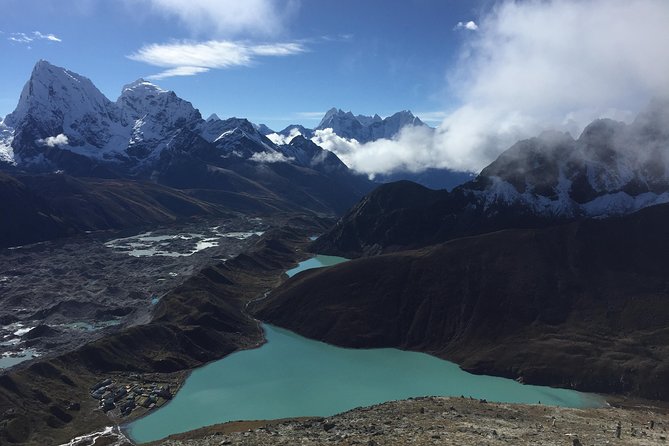
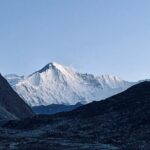
If you care about views, Gokyo Ri (5,357m) is the main event. From there, the panorama includes Mt. Everest, Lhotse, Makalu, and Cho Oyu. That list matters because it covers the “great walls” of the Everest region—big, iconic peaks you usually spend years seeing only in photos.
What you’ll likely feel is how the viewpoint changes your understanding of scale. On lower trails, peaks can look like they belong to a distant world. From Gokyo Ri, those mountains look aligned, like multiple angles of the same story. You also get the advantage of the Ngozumpa Glacier sitting just to the west. That glacier isn’t just scenery. It becomes a reference point that makes the whole region easier to read.
This is also where you’ll notice the trek’s design. You’re not rushing through the lakes, then sprinting to the pass. You’re building up to the viewpoint, then using that altitude to inform what you do next. That matters psychologically. When you’re about to cross a high pass like Renjo La, having one massive view moment first can make the harder walking feel more meaningful rather than random.
Renjo La Pass (5,345m): early effort, big glacier and peak payoff
Renjo La is the reason you choose this trek instead of the more common Gokyo-only route. It’s listed at 5,345 meters, and the itinerary calls for an early rise to ascend. Early starts can be uncomfortable, but on a high pass day, they’re usually your best shot at clearer sightlines.
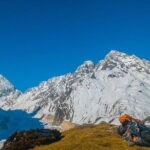
From the pass, you get another stunning view—this time with Ngozumpa Glacier and the massive peaks in the distance. The practical value here is simple: you’re seeing the glacier and mountains from a different angle than you did at Gokyo Ri. So even if you’re the type who thinks you’ve “seen it all,” this reroutes your perspective.
A consideration: pass days are where fatigue and altitude can combine. Even if you’re fit, you’re still dealing with thin air and steep grades. If you’re the kind of traveler who panics when your breath gets ragged, you’ll want to take the day seriously. The good news is that a trip run by an experienced guide team can reduce the stress by keeping you moving steadily and helping you manage pace.
Descent via Thame and Namche Bazaar: the trek softens, but Nepal stays real
After Renjo La, the trek becomes a descent to Lukla via Thame and Namche Bazaar. That’s a rewarding shift. When you drop in altitude, your body gets a chance to recover, and the journey starts to feel less like a fight and more like walking through changing scenery.
Thame and Namche Bazaar also add texture to the trip. You’re not only passing through dramatic wilderness. You’re moving through places that feel more connected to daily Khumbu life. Even if you’re focused on the mountains, these stops tend to bring you back to earth: you see people, you hear village-scale activity, and you notice that the Everest region is not just peaks and trails.
From a trekking-planning perspective, this descent route is also useful. It helps you finish the trek with variety rather than repeating the same exact terrain all over again. And because you end back near Lukla and then back to Thamel, it’s easier to reconnect with comforts like meals, hot showers, and normal conversations.
Guides, sherpas, and a small group pace (max 15)
The biggest operational signal in the reviews is how the team handles safety, comfort, and adaptability. Past trekkers highlighted a professional, experienced team and praised their guide and sherpa support. One standout name you’ll see is Mr. Sarki Sherpa, specifically thanked for help during a Gokyo Lakes trek with an Everest-view day from Gokyo Ri.
Also worth noting: the group limit is maximum 15 travelers. For a high-altitude trek, that’s more than a number. Smaller groups usually mean fewer bottlenecks on narrow paths, more attention from guides, and more realistic pacing. You also tend to get a better sense of the trip’s rhythm—less “tour bus in the mountains” energy.
One more positive angle: flexibility. In at least one case, the team adapted on the fly so a traveler could do the trek in fewer days than planned. You shouldn’t assume every schedule change is guaranteed, but it’s a good sign that they’re not rigid and they care about making the experience work for real humans with real calendars.
Physical fitness and altitude: what moderate really means
This trek asks for moderate physical fitness level—not “you must be an athlete,” but it’s still high-altitude trekking with a serious elevation change over Renjo La (5,345m) and another peak point at Gokyo Ri (5,357m).
Here’s the balanced way to think about it. Moderate fitness helps you hike uphill and manage a long day of walking. It doesn’t automatically prevent altitude effects. You can be fit and still feel wiped out at elevation. So your best strategy is pacing: walking steady, taking breaks without drama, and listening to your guide’s rhythm.
If you’re coming from sea level or you’ve never trekked at altitude before, plan for the possibility that you’ll need extra recovery time during acclimatization days. The itinerary is structured around major viewpoint days (Gokyo Ri and Renjo La), so the trip likely gives your body some gradual build-up. Still, you should treat your health like it’s part of the packing list.
Price and value: what $1,800.62 buys you in real terms
The price is listed at $1,800.62 per person for a trek lasting about 12 days. That’s not cheap, but it’s also not surprising for the Everest region experience, where costs come from logistics, local expertise, and time in remote terrain.
What you’re paying for here is more than “walking with a guide.” You’re paying for:
- A route that includes a major pass crossing (Renjo La) that most standard trekkers skip.
- The ability to reach Gokyo Ri, with panoramic views that include four 8,000+ meter peaks: Everest, Lhotse, Makalu, Cho Oyu, plus the Everest-region crisscross of ridges.
- A support structure that has been praised for safety and comfort, including named sherpa help like Mr. Sarki Sherpa.
- A small group size (max 15), which tends to improve how attention is distributed on tough days.
A potential value check for you: if you want a more common itinerary that doesn’t include a high pass, you’ll usually find cheaper options. But if you’re here for Renjo La and you want the “different angle of the Khumbu” payoff, this price starts to look like it’s buying access to a specific, harder-to-repeat experience.
Timing, weather, and how to protect your day on the mountain
This experience requires good weather, and if it’s canceled due to poor weather you’ll be offered a different date or a full refund. That’s the right kind of policy for mountain trekking: it tells you the operation doesn’t want to risk passengers when conditions are unsafe.
In practice, weather is the invisible third teammate. Clear days make the pass viewpoints and Ngozumpa Glacier angles truly worth the effort. Cloudy or windy days can turn big views into big disappointments. Even when conditions don’t stop the trek, they can change what you see, and altitude makes you feel that difference fast.
So your best move is mental flexibility. You can train your legs, but you can’t control the sky. If you’re the type who hates schedule uncertainty, you’ll want to build in some cushion days before and after the trek. That way, if a weather window shifts, you’re not stuck fighting your own travel calendar.
Should you book this trek?
I’d book this if you want the Gokyo Lakes trek, but you’re also hungry for one extra layer: Renjo La Pass and a return path through Thame and Namche Bazaar instead of simply turning around. The Gokyo Ri viewpoint—with Everest, Lhotse, Makalu, and Cho Oyu in one panorama—is a strong reason by itself, and the pass day gives you a second “why did I work so hard” moment.
I wouldn’t book it if you’re looking for an easy, low-pressure trek. Pass altitude and early starts are baked in, and you’ll need to treat your health and pace seriously. Also, if your schedule is tight with no room for weather shifts, keep in mind the trip requires good conditions.
If you’re fit enough for moderate high-altitude trekking and you want the less-common route, this one delivers.
FAQ
How long is the Gokyo Lakes and Renjo La Pass trek?
The duration is listed as approximately 12 days.
Where does the trek start and end?
It starts at the meeting point in Thamel, Kathmandu (Breeze Adventure Pvt. Ltd, Thamel Marg) and ends back at the same meeting point. The trek itself begins at Lukla Airport.
What is the highest point on the trek?
The itinerary highlights Renjo La Pass at 5,345 meters (17,536 feet).
What are the key viewpoint highlights?
You’ll reach Gokyo Ri (5,357m) for panoramic views and also ascend Renjo La for another major viewpoint, including views of the Ngozumpa Glacier.
How many people are in a group?
The tour lists a maximum group size of 15 travelers.
What fitness level do you need?
The tour says travelers should have moderate physical fitness.
Is pickup available in Kathmandu?
Pickup is offered.
Does the tour require good weather?
Yes. The experience requires good weather. If it’s canceled due to poor weather, you’ll be offered a different date or a full refund.
What is the cancellation policy?
Free cancellation is available up to 24 hours in advance for a full refund. If you cancel less than 24 hours before the start time, you won’t receive a refund.