REVIEW · KATHMANDU
Annapurna Circuit Trek in Nepal (9 Days)
Book on Viator →Operated by Recreation Holidays Pvt. Ltd. · Bookable on Viator
Thorong La starts before sunrise. I love that this trek runs with a licensed, English-speaking guide and includes the day-to-day basics like permits and meals. I also love the acclimatization day in Manang, which helps you adjust before the big pass. Your main consideration is the altitude grind, and you may want to budget for a porter if you don’t want to carry your own load.
The trip blends mountain walking with real village life—Tibetan-style settlements, apple orchards, pine and rhododendron forests, and classic tea-house rhythms. You’ll get that steady, safety-first feel from a team that brings a first-aid kit and plans for emergency evacuation support through your insurance. Recreation Holidays is led by Hari, and the operation comes across as organized and human, not just mechanical.
If you want a well-run route that protects your energy for the trail (not your stress), this is a solid choice. Just be honest with yourself about fitness and time at altitude—this one moves at a serious Himalayan pace.
In This Review
- Key highlights from this Annapurna Circuit trek
- Day 1: Kathmandu pickup, bus to Bhulbhule, and a quick start
- Day 2: Chame and the Tibetan villages of Bagarchhap and Danakyu
- Day 3: Rhododendron and pine, suspension bridges, and Paungda Danda
- Day 4: Reaching Manang with Humde and big Annapurna views
- Day 5: The acclimatization day in Manang (lakes, monasteries, and options)
- Day 6: Yak Kharka and a steady, moderate ascent
- Day 7: Thorong Phedi approach with a 4–5 hour, slower-altitude hike
- Day 8: The 3 AM Thorong La Pass crossing at 5,416 meters to Muktinath
- Day 9: Descend to Pokhara from Muktinath by jeep or bus
- Price and value: what $880 covers and what costs extra
- Tea houses, meals, and daily comfort that actually matter
- Guides, safety, and the human side of an organized trek
- Who should do this Annapurna Circuit trek?
- Should you book Recreation Holidays for the Annapurna Circuit?
- FAQ
- What is the price for this Annapurna Circuit Trek?
- What does the trek include for accommodation and meals?
- Are trekking permits included?
- Is pickup from Kathmandu provided, and when does it start?
- Do I need a porter, and what does a porter cost?
- What are the key high-altitude timing details for Thorong La Pass?
- Is local transport included?
- Can I cancel for a full refund?
Key highlights from this Annapurna Circuit trek
- Hotel pickup plus included transport to get you onto the trail early and smoothly
- Manang acclimatization day gives your body time to adjust before Thorong La
- Tea house stays (twin sharing) keep your nights warm, simple, and social
- Meals and permits handled so you focus on walking, not paperwork
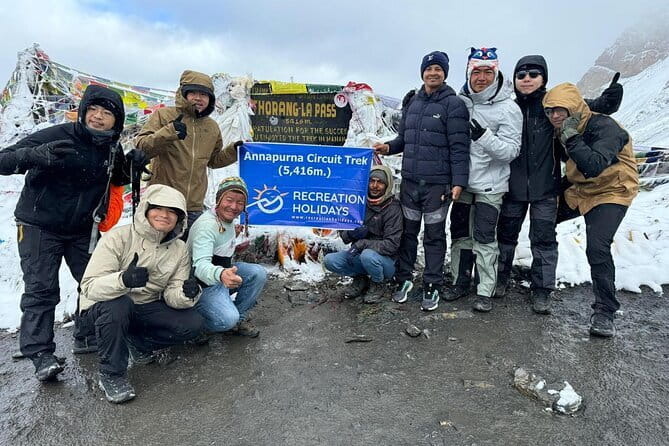
- Thorong La Pass timing around 3 AM for sunrise views at 5,416 meters
- Luggage storage during the trek helps you travel lighter for the pass day
Day 1: Kathmandu pickup, bus to Bhulbhule, and a quick start
Day 1 is designed to get moving fast. You’re picked up from your Kathmandu hotel around 6/7 AM, then you take a scenic bus ride to Bhulbhule via Besisahar. After that, you switch to a shared jeep to reach where the trek day begins.
Why I like this approach: it respects how long Nepal driving can take and still gets you on your feet early. It also means you’re not burning your first day on logistics. If you hate long, confusing transfers, you’ll appreciate that the essential parts are handled for you.
What to watch: you’ll likely start with an early morning wake-up, and the ride is part road, part winding mountain route. Bring layers and keep your daypack organized so you’re not digging for basics when you arrive.
You can also read our reviews of more tours and experiences in Kathmandu.
Day 2: Chame and the Tibetan villages of Bagarchhap and Danakyu
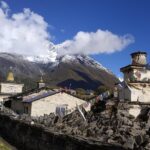
Today you move into cooler alpine country and start seeing that Annapurna “breathing room” where settlements sit under bigger peaks. The route passes through Tibetan villages like Bagarchhap and Danakyu, plus apple orchards that dot the way when conditions allow.
This day tends to feel like a shift in mood. You’re still walking at an adventurous pace, but the scenery becomes more open and photo-friendly. The day is also long on the trail, so it’s a good day to settle into your rhythm: steady steps, short breaks, and enough water to keep your legs comfortable.
Possible drawback: apple orchards and village paths can make you forget you’re gaining altitude overall. Don’t treat Day 2 as a “light” day. Keep your effort controlled, even if the views look easy.
Day 3: Rhododendron and pine, suspension bridges, and Paungda Danda
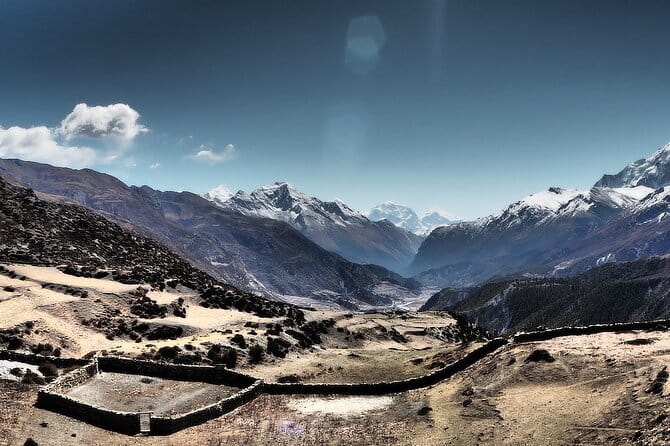
Day 3 leans into the forests. You trek through dense rhododendron and pine areas, pass over meadows, and tackle steep sections. There are also multiple suspension bridges, so you get those classic “rope bridge moments” where the river and valley drop away beneath you.
Then you arrive near Paungda Danda, described as a majestic curved rock face. It’s the kind of natural landmark that gives you a clear sense you’re getting into higher, wilder terrain.
What’s good for your body: the forest cover can make the day feel more manageable because you’re not always walking in full sun. What’s good for your mind: bridges and rock formations keep the walk engaging, even when your legs are working.
Consideration: suspension bridges can feel bouncy and exposed. If you’re sensitive to heights, take it slow and focus on your footing.
Day 4: Reaching Manang with Humde and big Annapurna views
Manang is a major moment on the Annapurna Circuit. After breakfast, you trek toward Manang with a gradual ascent that starts off flatter and then climbs toward Humde. Along the way, you get panoramic views of Annapurna peaks—Annapurna II, III, and I are specifically mentioned.
This is where the trip starts to feel more “high Himalayan” than “hills and forests.” The village itself becomes a base for gear, food choices, and that slightly more intense altitude feeling. I like that the route includes enough gradual buildup to keep you from going from easy walking to hard climbing in one step.
Possible drawback: by the time you’re heading into Manang country, your pace will likely slow naturally. That’s not a failure. It’s your body doing altitude math.
Day 5: The acclimatization day in Manang (lakes, monasteries, and options)
Instead of pushing to the next altitude jump, you get a full acclimatization day in Manang. You can explore the village, hike up to glacial lakes at the base of Gangapurna, or visit local monasteries.
This is one of the best parts of the trip plan. A planned acclimatization day can be the difference between feeling strong at altitude and feeling wrecked. Even if you choose an easy walk, the key benefit is that you’re giving your body time to adapt before the big pass effort.
How to use the day well:
- Keep your hikes moderate and don’t chase big distances just because you can
- Drink water regularly and eat well
- Use the monastery visits as a mental break from physical effort
No big drawback here, other than the general truth: a day off the main climb can still feel tiring because altitude stays altitude. Still, it’s the right kind of tired for long-term success.
Day 6: Yak Kharka and a steady, moderate ascent
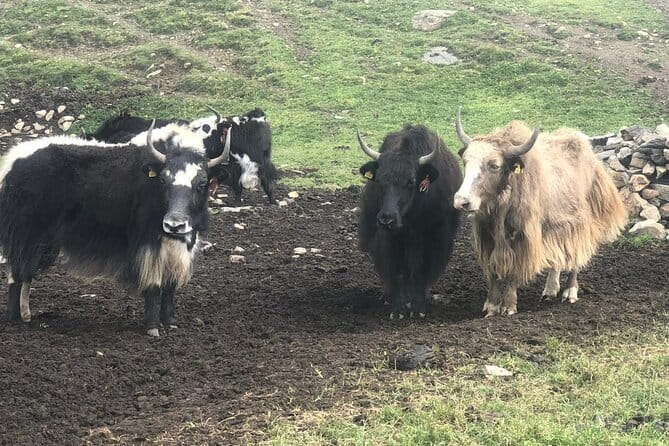
Today you trek to Yak Kharka, passing through local settlements and cultivated farmlands. The ascent is described as steady but moderate, which is exactly what you want before the pass push. You’ll also cross at least one suspension bridge during the day.
This day often feels like “building phase” trekking. You’re not at the highest elevations yet, but you’re clearly heading toward them. I like this because it gives you a chance to practice your slow pacing and your hydration habits in a more serious setting.
Possible consideration: even “moderate” on the Annapurna Circuit can feel tough at altitude. Keep your effort consistent and don’t sprint during the easiest-looking stretches.
Day 7: Thorong Phedi approach with a 4–5 hour, slower-altitude hike
Day 7 moves toward Thorong Phedi. The hike to Thorong Phedi takes about 4–5 hours with a gradual incline. At this point, the altitude makes pacing slower, even if the hiking distance doesn’t look enormous on paper.
This day matters because Thorong Phedi sets you up for the most intense morning of the whole trek. The goal isn’t to crush distance. The goal is to arrive with enough energy to sleep (or at least rest) and be ready for an early start.
A smart tactic: take breaks to hydrate and to keep your breathing calm. It’s not glamorous, but it’s what helps you walk well when the trail later steepens and the air gets thin.
Day 8: The 3 AM Thorong La Pass crossing at 5,416 meters to Muktinath
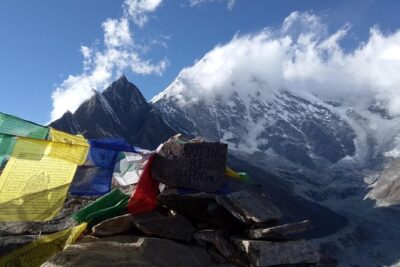
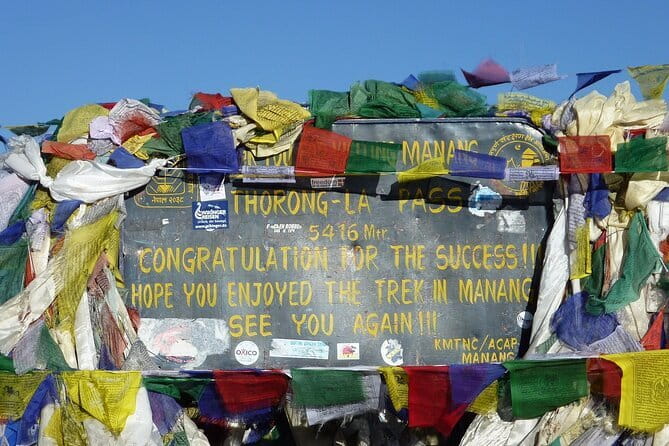
This is the classic Annapurna Circuit highlight day. You start early—around 3 AM—to cross Thorong La Pass, reaching the high point of 5,416 meters. The summit is the big payoff for the hard work: breathtaking panoramic views at the top, then a continuation onward toward Muktinath Temple.
Why this matters to your experience: the early start usually means you avoid later crowds and you can catch peak light conditions. It also means you’re more likely to feel the cold at the highest elevations, so layers and steady pacing matter.
What to watch:
- The altitude makes your pace slow. Expect it.
- You’ll need to plan your energy for the long day after the pass.
- Cold mornings can feel harsher than daytime hiking, even if the trail is just steps and slopes.
Still, if you want one day that feels like a real accomplishment, this is it.
Day 9: Descend to Pokhara from Muktinath by jeep or bus
After the pass and Muktinath, Day 9 becomes recovery-focused. You travel from Muktinath to Pokhara by jeep or bus. The drive offers scenic views as you descend, including the lower Mustang Valley area, and once you arrive, you get time to celebrate finishing the trek.
I like the reset built into the last day: you get out of hiking mode and back into a more comfortable travel rhythm. It’s the kind of ending that helps your body recover without feeling like you dropped off the map back into chaos.
Possible consideration: travel days can still be tiring, especially after an all-out pass day. Keep expectations realistic—think rest, food, and an early night rather than one last big activity.
Price and value: what $880 covers and what costs extra
The price is $880 per person, and what you get is a lot more than just a route and a map. You get 8 nights of tea house accommodation (twin sharing), a licensed English-speaking guide, trekking permits, a first-aid medical kit, and most meals (8 breakfasts, 8 dinners, and 9 lunches).
You also get key logistics:
- Local transport for the Kathmandu-to-trailhead transfer
- Local transport from Muktinath to Pokhara
- Complimentary luggage storage during the trek
- Emergency evacuation support via travel insurance
- An achievement certificate on request
So where does the value really show up? In removing the daily decisions. You’re not negotiating meals, permits, or basic logistics every step of the way. That can mean less stress and more energy for walking.
What’s not included is important to plan for:
- Nepal entry visa
- International airfare
- Travel and medical insurance
- Accommodation in Kathmandu and Pokhara
- Porter services (available at $240 per porter, with the note that it’s typically 1 porter for every 2 trekkers)
- Private transportation
If you’re deciding between carrying everything yourself or hiring a porter, be practical. On high-altitude days, even small comfort savings can add up.
Tea houses, meals, and daily comfort that actually matter
Tea houses are simple, and that’s part of the appeal. You’ll stay in twin sharing rooms for 8 nights, and you’ll have breakfast and dinner included at each trekking stop, plus lunch on trekking days (9 lunches).
What I like about meal coverage: you don’t have to keep stopping to figure out food plans. After long walking hours, that small planning load feels huge.
Comfort reality check:
- Tea house rooms can vary, and you’ll want a good sleeping system suited for cold mornings.
- Hydration and warm layers matter more than fancy comforts.
- The pace of the days (some are long) means you’ll feel every mile, even if the tea house setup is basic.
The trip also includes first-aid support and emergency evacuation support, which is the real comfort at altitude. A warm bed is nice. Getting safe help quickly is nicer.
Guides, safety, and the human side of an organized trek
A licensed English-speaking guide is included, plus an assistant guide for groups of 8+ (with food, accommodation, salary, and insurance covered). That structure can help keep the group together on busy trail stretches and manage timing.
The trip also includes necessary permits, a first-aid medical kit, and emergency evacuation support through travel insurance. That’s not just paperwork. At altitude, knowing someone is watching risk factors and has a plan helps you focus on the day instead of scanning for problems.
From a vibe standpoint, the reviews emphasize professionalism, clear communication, and genuine care. You can feel that in what’s included: meals, permits, transport, and a guide system designed for real trail days.
Who should do this Annapurna Circuit trek?
This is a good fit if:
- You have moderate physical fitness and are comfortable with a long mountain walk
- You want a guided route with permits and meals handled
- You like cultural encounters alongside big mountain views
- You want help managing the big pass day with a structured plan
It may not be the right match if:
- You want a totally effortless hike (this is not that)
- You need private transportation or want full control of every meal decision
- You struggle with very early starts and cold mornings
Should you book Recreation Holidays for the Annapurna Circuit?
If you want a well-run trek where you show up and walk—without constantly juggling permits, meals, and logistics—this package looks like strong value at $880 per person. The biggest reasons are the included guide support, the meal plan, and the acclimatization day in Manang that sets you up for a safer, more successful Thorong La crossing.
I’d book this trek if you’re honest about altitude work and you’re okay with tea house basics. I’d think twice if you hate early mornings, or if you know you’ll be miserable carrying your own load and you don’t want to add porter support.
If you’re on the fence, one simple question helps: do you want more walking time and less logistics time? If yes, this is likely your kind of trek.
FAQ
What is the price for this Annapurna Circuit Trek?
The price is $880.00 per person.
What does the trek include for accommodation and meals?
It includes 8 nights of tea house accommodation (twin sharing) during the trek, plus 8 breakfasts, 8 dinners, and 9 lunches.
Are trekking permits included?
Yes. All necessary trekking permits are included.
Is pickup from Kathmandu provided, and when does it start?
Pickup is offered from your hotel in Kathmandu, starting around 6/7 AM. The start time is listed as 6:15 am.
Do I need a porter, and what does a porter cost?
Porter services are not included, but you can request them for $240 per porter. The note says it’s 1 porter for every 2 trekkers.
What are the key high-altitude timing details for Thorong La Pass?
You start around 3 AM to cross Thorong La Pass, which is listed at 5,416 meters.
Is local transport included?
Yes. Local transport from Kathmandu to Dharapani is included, and local transport from Muktinath to Pokhara is included.
Can I cancel for a full refund?
Yes, free cancellation is available. You can cancel up to 24 hours in advance for a full refund, based on local time cut-off.