REVIEW · RISHIKESH
Har Ki dun Trek by Himalaya Shelter
Book on Viator →Operated by Himalaya Shelter · Bookable on Viator
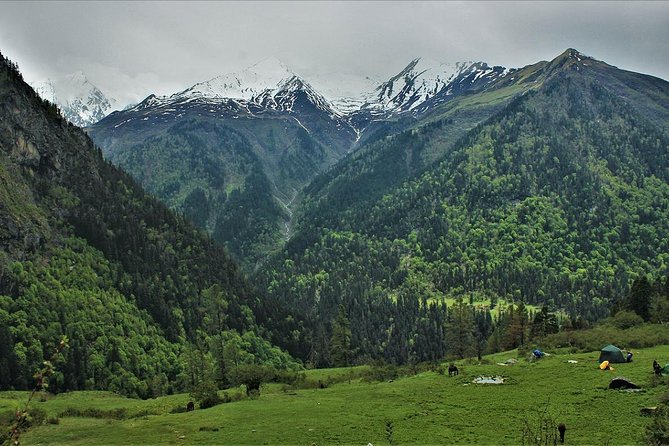
One early-morning drive can lead to serious mountain payoff. This 7-day guided trek by Himalaya Shelter is built for people who want a safer route up to Har ki Dun, with a guide, cook support, and meals included along the way. You meet at 6:30 am in Dehradun, then the group heads to Sankri and works up through Osla and Kalkatidhar toward 3,510 m Har ki Dun, with Marinda Tal at 3,794 m on the big day.
Two things I like a lot: first, the company handles the logistics that usually slow people down—camping equipment rental and transport to and from Dehradun. Second, the trip has a small cap of 11, which makes it easier for your guide to keep an eye on pace and footing. In the reviews, guides like Surendra and Sonu, plus chefs such as Sanju, are repeatedly praised for being helpful and keeping things running smoothly.
One drawback to consider: the schedule includes long road time—about an 8-hour drive on Day 1 and again on Day 7. If you hate being in a vehicle for most of a day, you’ll want to plan for that and build in a calmer first day in Dehradun.
In This Review
- Key details to know before you commit
- Why Har Ki Dun fits first-time trekkers (and still thrills repeat hikers)
- Price and value: what $231 covers (and what it doesn’t)
- Dehradun morning: meeting point, 6:30 am start, and the 8-hour road day
- Day 1 and Day 7: Sankri and the long return to Dehradun
- Days 2 and 3: Osla (2,700 m) and Kalkatidhar (3,300 m)
- Day 2: Sankri to Osla
- Day 3: Osla to Kalkatidhar
- Day 4: Har ki Dun (3,510 m) and Marinda Tal (3,794 m) in one major day
- Days 5 and 6: returning to Osla, then back to Sankri
- Day 5: Kalkatidhar to Osla
- Day 6: Osla to Sankri
- Meals, camping gear, and cold-weather comfort that actually matters
- Guides and safety: what the small group cap changes
- What to pack for Har Ki Dun with this guided setup
- Who should book Har Ki Dun with Himalaya Shelter?
- Should you book Har Ki Dun with Himalaya Shelter?
- FAQ
- Where is the meeting point and what time does the trek start?
- How long is the trek?
- What’s included in the price?
- What is not included?
- What is the maximum group size?
- What altitude does the trek reach?
- Do I need my own camping gear?
- Is insurance included?
Key details to know before you commit
- Small group (max 11): more personal attention on uneven trail and in weather shifts
- All meals included: from Day 1 dinner through Day 7 breakfast
- Camping gear rental: you’re not responsible for tents/sleeping gear logistics
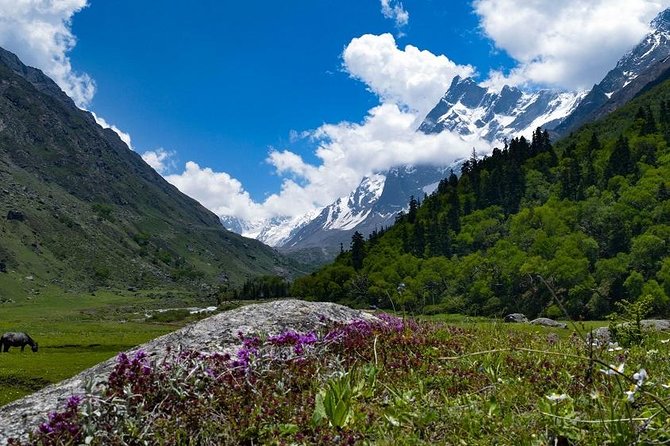
- Altitude work built into the route: Osla (2,700 m) to Kalkatidhar (3,300 m) before Har ki Dun (3,510 m)
- Optional-feeling high day approach: Har ki Dun and Marinda Tal happen on the same major day, weather permitting
Why Har Ki Dun fits first-time trekkers (and still thrills repeat hikers)
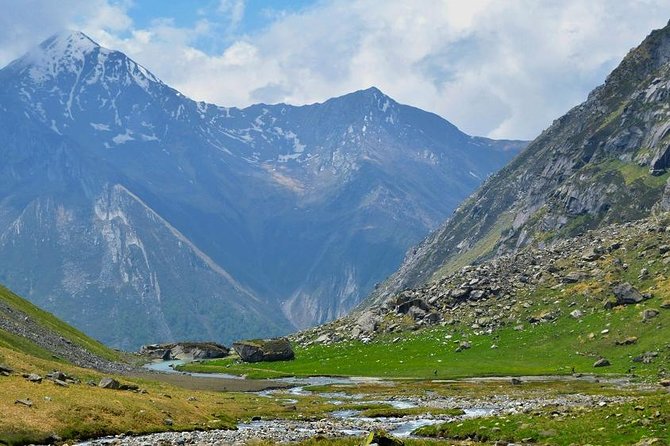
Har ki Dun is a classic Uttarakhand trek because it feels “Himalaya” without being a chaotic free-for-all. You get that gradual sense of rising terrain—starting with a big move by road, then switching into trekking days with rest and altitude changes designed to make sense.
What makes this version attractive is that it’s not just a route on paper. You’re traveling with a guide and a cook team, and that changes the whole vibe. You spend less time worrying about where to go, what the plan is for the next meal, or how everyone will stay coordinated if someone slows down. In reviews, people highlight that the teams prioritize safety and food, and they mention weather-based decisions too—which is exactly what you want at elevation.
And there’s another practical win: this trek has a clear rhythm. You drive, you trek, you rest at a campsite base, then you move again. That structure helps you conserve energy instead of burning it all on decision-making.
You can also read our reviews of more tours and experiences in Rishikesh.
Price and value: what $231 covers (and what it doesn’t)
At $231 per person, the big value is that it’s an all-in package for the hard parts. Your included costs cover:
- Transport support from Dehradun on Day 1 (pickup) through Day 7 (drop back)
- Guide + cook fees
- All meals starting Day 1 dinner through Day 7 breakfast
- Camping equipment rental
- Forest entry charges
- Insurance for Indian citizens only
So yes, you’re paying for convenience—but you’re also paying for organization. Camping gear rental alone can be a headache if you’re flying or traveling without a trekking setup. Likewise, meals included for multiple days means you’re not constantly scanning for food stops at the worst possible times.
What’s not included is also straightforward:
- Getting to Dehradun from your hometown
- Personal expenses (tips, medicines, phone use)
- Any extra trek transport support beyond what’s included
- Accommodation in Dehradun
For me, the value case is strongest if you want a guided, packed plan and don’t want to source gear or figure out logistics mid-trip. If you already have everything and prefer total independence, this may feel more structured than you need.
Dehradun morning: meeting point, 6:30 am start, and the 8-hour road day
The trip kicks off at 6:30 am. The meeting point is the Egg and maggi stall near Saharanpur Rd, Lakkhi Bagh, Dehradun. It’s noted as being near public transportation, which is helpful if you’re not renting a private car.
Day 1 is listed as Dehradun to Sankri (8 hours drive). That’s a lot of road time, so treat it like part of the trek, not an inconvenience you can ignore. You’ll arrive ready to sleep and recover, and that first night matters because it sets your tone for the actual hiking days.
One more practical note: you get a mobile ticket, so make sure you can access it offline. That sounds small, but on the road and in rural areas, small things can become real friction.
Day 1 and Day 7: Sankri and the long return to Dehradun
Sankri is your main landing point before trekking climbs higher. Day 1 ends at Sankri after that 8-hour transfer. Day 7 brings you back to Dehradun, again with 8 hours drive.
In the reviews, people call out that Sankri stay is comfortable and that the location is a big part of the experience. While you’re not seeing the final altitude peaks on Day 1, this is when you absorb the “slow” mountain pace: fewer big decisions, more time to focus on rest, and a chance to get your gear ready for the trail.
The drawback of Day 7 is the same one as Day 1: you’re trading mountain air for a lot of time in a vehicle. If you have the choice, avoid booking a demanding plan right after you land back in Dehradun.
Days 2 and 3: Osla (2,700 m) and Kalkatidhar (3,300 m)
After the Sankri base, the itinerary moves quickly from road to trekking.
Day 2: Sankri to Osla
Day 2 is 1 hour drive + 5–6 hours trek to Osla (2,700 m). This is the “start feeling the altitude” day. You’ll want to pace yourself, keep steps short, and avoid racing the group. Even when the trek length is reasonable, elevation can make a modest climb feel like more.
This is also where the guide makes an obvious difference. With small groups capped at 11, you’re not shoved into a single-file line with no help. Guides mentioned in reviews—like Surendra and Sonu—are described as attentive and experienced, which matters most during the early trekking hours when people are still figuring out their pace.
Day 3: Osla to Kalkatidhar
Day 3 takes you from Osla to Kalkatidhar (3,300 m) with a 3-hour trek. It’s shorter on paper than Day 2, which helps if you’re trying to recover your breathing rhythm after Day 2.
Kalkatidhar is a key stop because it acts like a staging point. You’re building up gradually toward higher targets rather than jumping straight to Har ki Dun. That matters for comfort and reduces the feeling of being constantly rushed.
Day 4: Har ki Dun (3,510 m) and Marinda Tal (3,794 m) in one major day
This is your headline day. Day 4 is Kalkatidhar to Har ki Dun (3,510 m) & Marinda Tal (3,794 m), then back to Kalkatidhar.
What I like about this setup is that it gives you a “big mountain day” without turning the whole week into one long grind. You’ve already walked up to Kalkatidhar, which helps you show up with better energy. Then you get to chase the key altitude points.
One detail worth noting from reviews: some mention a Marinda Tal push as an optional-style moment, guided with care. Even if your exact day feels fixed in the itinerary, the practical reality on trail is weather and group pace. So you should be ready for your guide to adjust how hard you push, especially as you approach higher terrain.
This is also the day where you’ll feel how campsite support helps. In the reviews, people talk about warm sleep systems—tents and sleeping bags designed so cold becomes manageable. That’s not “luxury,” it’s survival comfort. If the day at altitude is demanding, the sleep setup afterward is what keeps you moving for the next days.
Days 5 and 6: returning to Osla, then back to Sankri
Day 5: Kalkatidhar to Osla
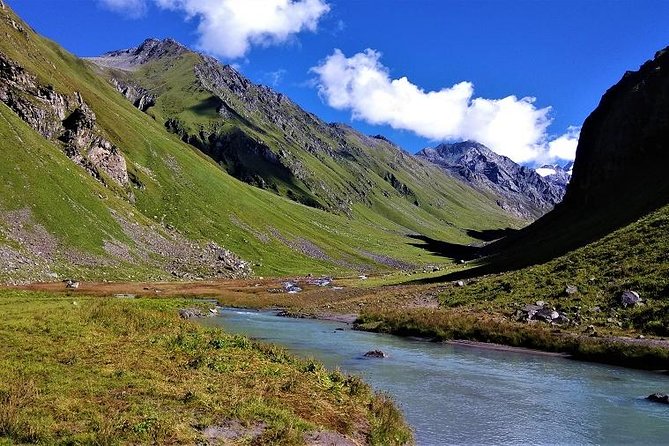
Day 5 is 3 hours trek from Kalkatidhar back to Osla. This is your recovery day. Descending and adjusting your body matters; it helps you reset for the final trekking push.
If you’ve never done altitude trekking before, this day is where you learn the value of not always going “forward.” Smart pacing includes knowing when to step back to breathe easier.
Day 6: Osla to Sankri
Day 6 is 4–5 hours trek + 1 hour drive back to Sankri. It’s a full day, but it’s the last trek before the long road return to Dehradun.
This is when you’ll want to watch your energy. People are often proud they made it this far—then overdo it on the final stretch. Your guide will help manage pace, and the small group size makes that easier. Reviews also highlight that guides stay with the group rather than leaving people behind.
Meals, camping gear, and cold-weather comfort that actually matters
The best part of an organized trek is how it reduces decision fatigue. Here, meals are included from Day 1 dinner to Day 7 breakfast, and that’s a huge deal at altitude. You’re not trying to guess whether food will be available, warm, or enough for your energy needs.
In the reviews, the food is called out repeatedly: people describe it as tasty, with variety, and good enough that it feels like more than survival rations. Chef names show up too—Sanju gets a shout-out for being helpful and friendly, and others praise how well organized meals felt even when conditions were cold.
Then there’s the sleeping setup. Reviews mention that sleeping bags and tents were prepared so that even -10°C is manageable. That’s the sort of detail you should take seriously. If you’re carrying a pack, you don’t want to also carry the stress of finding gear that works for mountain cold.
Also, some reviews reference mule support. Even without full operational details, the takeaway is simple: you’ll likely have help with some logistics, which keeps your energy for actual walking.
Guides and safety: what the small group cap changes
Safety in trekking is mostly about people noticing issues early. With a cap of 11 travelers, your guide can actually monitor the group. It also reduces the chance that someone gets lost in the shuffle.
Names matter because they show repeated service quality. Reviews mention Surendra Rana, Sonu, and Rocky Bhai/Rocky Rana, plus support staff like Megha bhaiya. Multiple comments emphasize that the guide was always with the group and that planning was done well.
One review includes a caution about plastic waste. I think that’s the kind of feedback you should treat as a responsibility reminder, not just a complaint. If you book, ask how they handle waste, and take your part seriously—use what you bring responsibly and don’t leave any garbage behind on trail. The mountains are not a trash can with views.
Insurance is included for Indian citizens only, which is worth confirming at booking for your specific eligibility. If you’re outside that category, you may need to arrange your own coverage.
What to pack for Har Ki Dun with this guided setup
The company provides camping equipment rental and handles camping gear logistics. That means your personal focus can be mostly on trekking needs and day-to-day comfort.
Based on what’s listed as not included, I’d treat your personal items as your responsibility:
- Personal medicines you might need
- Any phone-related use and personal expenses
- Items you’ll use daily during treks
Also plan for the cold. Reviews explicitly mention gear being set up for about -10°C. Even if you’re comfortable with warm systems provided, you’ll still want your own warm layers and a plan for keeping dry.
Finally, treat the trek like a shared space. The plastic waste note is a reminder that footprints include trash. If you want the trip to stay beautiful, act like that’s your job too.
Who should book Har Ki Dun with Himalaya Shelter?
This trek suits you best if:
- You want a guided Himalayan route with less route-finding stress
- You’d like meals included rather than hunting food after a long walk
- You don’t want to source camping gear on your own, since tents and sleeping gear are handled via rental
- You can handle moderate fitness with 7 days of trekking and mountain altitude changes
It also works for people doing a first Himalayan trek because the itinerary ramps up in steps: Sankri base, then Osla at 2,700 m, then Kalkatidhar at 3,300 m, then Har ki Dun at 3,510 m, with Marinda Tal at 3,794 m included on the big day.
If you’re sensitive to long road transfers, the two 8-hour drives on Day 1 and Day 7 may not be your favorite part. And if you strongly dislike group travel, the small group can still feel like a shared schedule even with a cap of 11.
Should you book Har Ki Dun with Himalaya Shelter?
I’d book this if your priority is a well-organized, safety-minded trek where the hard planning parts are taken care of: guide support, chef-run meals, rented camping equipment, and transport to and from Dehradun.
The strongest reasons to choose it are the practical ones: you get a small group, repeated guide praise (names like Surendra, Sonu, Rocky Bhai/Rocky Rana), and the cold-weather sleep setup that people say works even around -10°C. That’s exactly the stuff that makes a Himalayan trek feel doable instead of stressful.
I’d think twice if you’re chasing a totally independent, lightweight experience. This one is structured. Also make peace with the road time. The mountains come later, after you’ve spent Day 1 and Day 7 in the vehicle.
If that fits your style, Har ki Dun is a great 7-day goal—and with a guide and cook team behind the scenes, you’re free to focus on the walking, the altitude, and the feeling of earning that Har ki Dun viewpoint.
FAQ
Where is the meeting point and what time does the trek start?
You meet at the Egg and maggi stall near Saharanpur Rd, Lakkhi Bagh, Dehradun, Uttarakhand 248001. Start time is 6:30 am.
How long is the trek?
The experience runs for about 7 days.
What’s included in the price?
Transport support from Dehradun (pickup on Day 1 and drop on Day 7), a guide and cook fees, all meals from Day 1 dinner to Day 7 breakfast, rental for camping equipment, forest entry charges, and insurance for Indian citizens only. It also includes a mobile ticket.
What is not included?
Not included are transport to reach Dehradun from your hometown, personal expenses (tips, personal medicines, phone calls), any extra trek transport beyond the included support, and accommodation in Dehradun.
What is the maximum group size?
The tour has a maximum of 11 travelers.
What altitude does the trek reach?
The itinerary lists Osla at 2,700 m, Kalkatidhar at 3,300 m, Har ki Dun at 3,510 m, and Marinda Tal at 3,794 m.
Do I need my own camping gear?
No. Camping equipment rental is included.
Is insurance included?
Yes, insurance is included for Indian citizens only.