REVIEW · ARUSHA
7 Days Machame Route Trek Mount Kilimanjaro
Book on Viator →Operated by Rupia Adventure · Bookable on Viator
Kilimanjaro is not a hike you forget. This 7-day Machame Route packs big altitude changes, rainforest wildlife, and a real summit night—so you feel every step of the climb. I like how the plan builds in time to adjust as you go, instead of rushing you upward.
Two things I really like: the route’s staged acclimatization, including a day where you climb around 700 m but don’t sleep much higher, and the way you move through sharply different ecosystems. You also travel with an expert guide, and the pacing makes it easier to keep your head during the tough hours.
One possible drawback: the itinerary still includes a long night ascent, and this trip requires good weather. If your schedule is tight, you’ll need a flexible mindset because weather can affect timing.
In This Review
- Key details that make this trek work
- Machame Route reality check: tough, scenic, and built for acclimatization
- Rupia Adventure crew and the guides you’ll rely on
- What you really get on the trail: tents, meals, timing, and pickup
- Days 1–2: rainforest to Shira Plateau, then that first big view
- Day 1 to Machame Camp
- Day 2 to Shira Camp
- Days 3–4: the acclimatization climb plus Barranco’s hands-on wall
- Day 3: Shira Plateau to Lava Tower, then down into Barranco
- Day 4: Barranco Wall to Karanga Camp
- Days 5–6: Barafu, midnight tea, Stella Point, and Uhuru Peak at sunrise
- Day 5: Barafu Camp and dry desert walking
- Day 6: midnight start to Stella Point, then Uhuru Peak
- Day 7: Mweka Gate to rainforest memories
- Who this trek is for (and who should think twice)
- Booking tips that will keep the trip smoother
- Price and value: is $2,200 worth it?
- Should you book this Machame Route trek?
- FAQ
- What time does the trek start and how do I get to the national park gate?
- How long is the Machame Route trek?
- What’s the group size for this tour?
- Are overnight stays in tents or hotels?
- What happens on summit night?
- What if weather is bad or I need to cancel?
Key details that make this trek work
- Machame’s acclimatization rhythm: step up, then sleep smart, so your body has time to adjust
- Rainforest wildlife time: you may spot black and white colobus monkeys among giant trees
- Expert guidance on technical footing: Barranco Wall uses handholds, no rock climbing needed
- Stella Point to Uhuru Peak at night: tea and biscuits before the headlamp climb
- Small group size: maximum 4 travelers, which can mean better support on the trail
Machame Route reality check: tough, scenic, and built for acclimatization
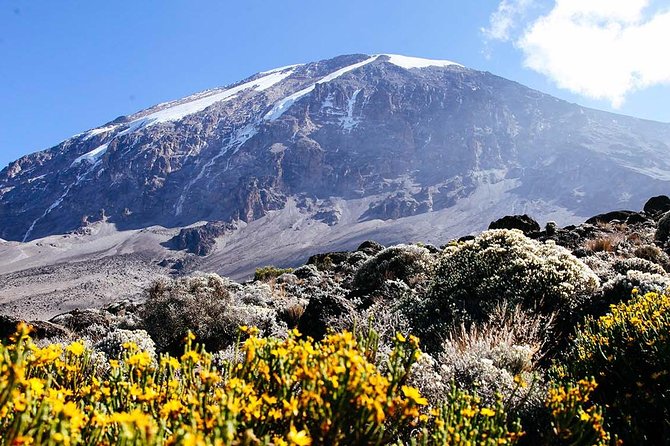
The Machame Route earns its reputation because it does two things at once: it challenges you physically, and it gives your body a chance to adapt to altitude. Over the course of seven days, you’ll walk through rainforest, then dry heath and moorland, then alpine desert terrain before the route tops out at the icy crater views.
I also like the emotional pacing. You don’t just “climb higher.” You keep changing environments, which breaks the monotony and gives your brain something else to focus on. You’ll see big shifts in temperature and scenery day by day, from lush trees and primeval ferns to colder, drier air near the higher camps.
Price-wise, $2,200 per person isn’t a cheap vacation. But it does line up with what’s included in this style of Kilimanjaro trek: a guide, a full crew structure, tent camping nights on the mountain, and the day-by-day meals described at the camps. For me, the value question is simple: you’re paying for logistics and safety on a high-altitude, multi-day effort—not just for scenery.
This trek is best for you if you’re fit enough to hike most days and you like having a clear plan. If you’re expecting a casual stroll, you might find Kilimanjaro humbles everyone, quickly.
You can also read our reviews of more tours and experiences in Arusha.
Rupia Adventure crew and the guides you’ll rely on
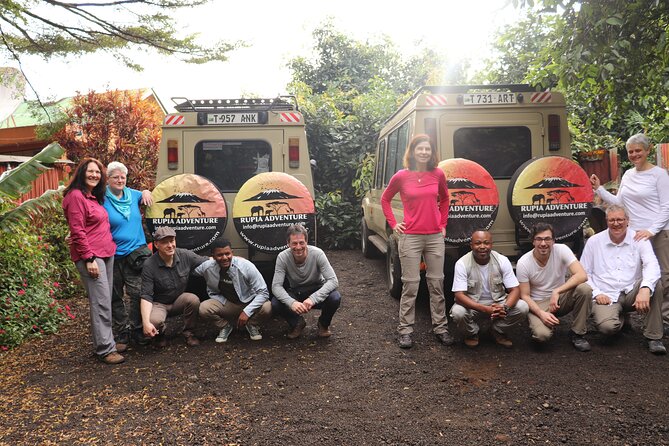
This experience runs through Rupia Adventure, with an expert guide leading the way and a mountain crew making the camps function. The trekking format is built around teamwork: you’re moving under your own power, but you’re not doing it alone.
From past trips, I’ve seen a pattern that matters: people praise the guides and the crew for being professional and encouraging, not just “present.” Names that come up include Gideon and Laurent during pre-climb setup and guiding, Emanuel and Meshack on another Machame climb, plus Frank, Julius, Johnny, and Mathias in other summit-focused accounts. The consistent takeaway is that the guide isn’t only for direction—they’re part coach, part calm voice, part decision-maker when conditions change.
One practical tip that shows up in climbing advice is medication planning for altitude. A past climber specifically said take your Diamox, but you should treat that as personal medical guidance, not a blanket promise. If altitude meds are on your plan, talk with your doctor before you go so you know what’s right for your health.
What you really get on the trail: tents, meals, timing, and pickup
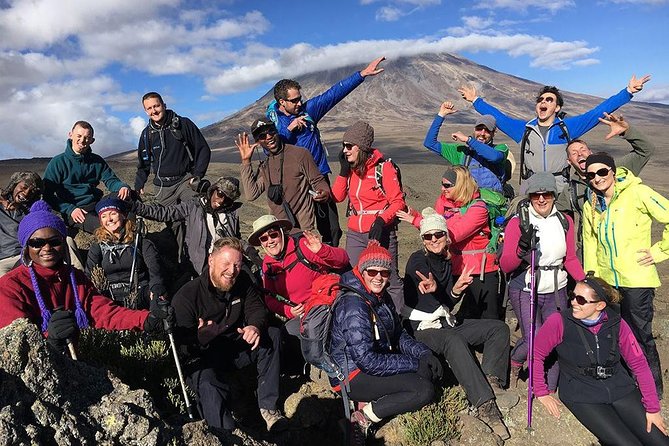
You start with a pickup offered from your hotel in Arusha. The day begins after breakfast, and you head toward the Kilimanjaro National Park gate for paperwork. Your start time is 8:30 am, so plan to be ready and not rushing in the morning.
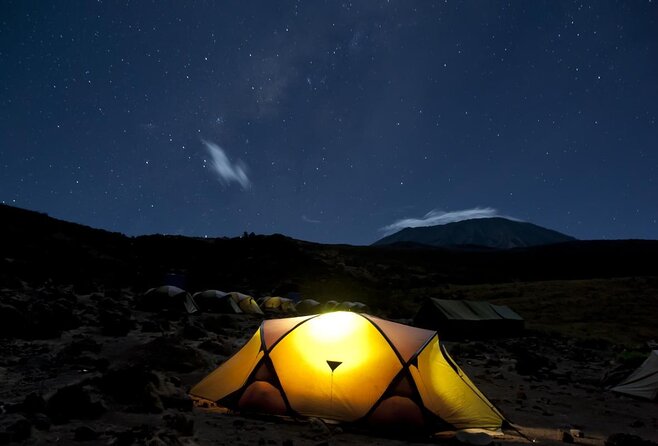
Overnight stays are in tents, which matters for how you pack and how you think about comfort. It’s not a hotel—sleeping systems and warmth preparation are your responsibility. The good side is that the trek uses camps as you move between altitude zones, so you’re not improvising your own lodging.
Meals are repeatedly described as hearty and cooked at camp—breakfasts, dinners, and time to rest and stretch after hikes. That means your daily rhythm is more stable than on a self-supported hike, and it helps you maintain the energy needed for summit night.
Also note the group size: up to 4 travelers. That’s not a huge group, which can make it easier to keep the pace manageable and to get quick attention if someone needs it.
Days 1–2: rainforest to Shira Plateau, then that first big view
Day 1 to Machame Camp
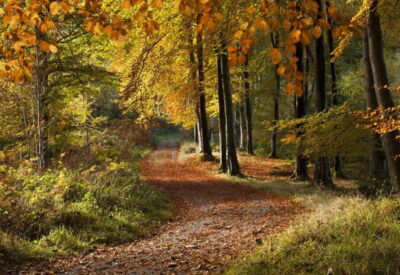
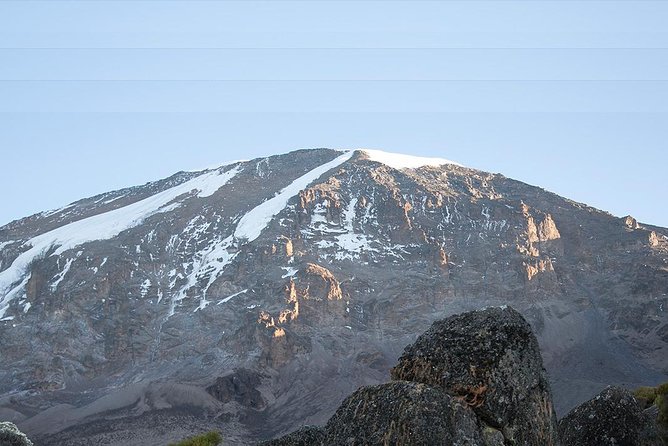
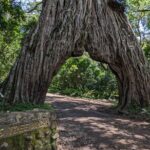
After paperwork at the gate, you hike about 5 to 6 hours to Machame Camp. This is where Kilimanjaro starts gently, but not lazily. The trail moves through lush rainforest with large ancient trees and thick ferns. You might spot endemic flowers like Impatiens kilimanjari, and you may catch glimpses of black and white colobus monkeys in the canopy.
The payoff is real: when you reach camp, you get time to stretch, eat a hearty meal, and settle into your tent. I like Day 1 because it sets expectations. You’re working, but you’re still in a forgiving, green world.
Practical note: this is when you’ll feel the difference between enjoying the hike and keeping a steady pace. If you sprint early because the rainforest feels exciting, the summit night will later remind you.

Day 2 to Shira Camp
Day 2 starts early so you can reach Shira Camp around mid-afternoon. The hike length isn’t stated as a number of hours, but the goal is clear: shift from rainforest to drier country and arrive with daylight.
You’ll notice the dramatic change in terrain—green forest fades into dry moor and heath land. Then the mountain starts to appear in a more serious way. When you arrive at camp, the views open up and you can see the glaciers of Kibo catching the setting sun.
That golden light matters for morale. Summit night comes fast, so seeing the ice glow on Day 2 gives you a mental marker for what you’re aiming toward.
Days 3–4: the acclimatization climb plus Barranco’s hands-on wall
Day 3: Shira Plateau to Lava Tower, then down into Barranco
Acclimatization is the headline for Day 3. You climb to Lava Tower at 4,640 m, with a goal of around 700 m of climbing while still keeping your sleep height close to the prior night. That’s the smart kind of acclimatization: stress your system a bit, then let it recover.
From Lava Tower, you continue through the Barranco Valley to Barranco Camp, a hike of about 6 to 7 hours. The route focuses your attention with small alpine details—small lobelia plants, and giant senecio forms along the way. It’s an effective distraction when your legs get cranky.
At camp, you get dinner and time to rest. This is also a good day to check how your body is responding to altitude. If you’re feeling off, don’t play tough. Tell your guide.
Day 4: Barranco Wall to Karanga Camp
Day 4 is shorter on paper—about 3 to 4 hours—but it has a moment that makes people pay attention: Barranco Wall. Some sections require you to use your hands for a better grip, but the description is clear that there’s no actual rock climbing. Your guide stays with you and can lend a hand when needed.
After the wall, the route moves along a ridge where the scenery alternates between desert-like ground and patches of vegetation. You end at Karanga Camp and get time to relax (yes, even playing rummy is part of the camp vibe here). That matters. Summit night is a long mental game, and camp downtime helps you recharge.
Days 5–6: Barafu, midnight tea, Stella Point, and Uhuru Peak at sunrise
Day 5: Barafu Camp and dry desert walking
Day 5 is where Kilimanjaro switches into dry, desert-like terrain. You’ll wake up to sunlight dancing off the Kibo summit—a good way to start the most focused stretch.
You hike to Barafu Camp in about 3 to 4 hours, walking through very dry terrain with Kibo always on your left side. The plan is simple: get to camp, eat early, and prepare because the highlight is coming soon—your summit push is only a few short hours away.
If you’re prone to overthinking, this is the day to do the opposite. Follow your guide’s instructions, eat what’s offered, and start getting your mind ready for the night climb.
Day 6: midnight start to Stella Point, then Uhuru Peak
At around midnight, you’re woken with a warm cup of tea and biscuits. Headlamps are your main light source. This is a strange, unique part of Kilimanjaro: you’re climbing in the dark, moving by rhythm and guide cues, while the mountain feels bigger than it did in daylight.
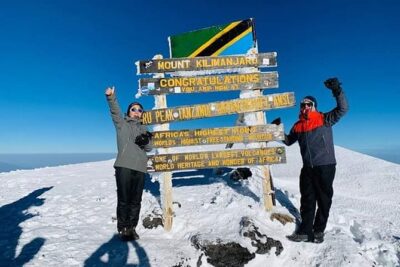
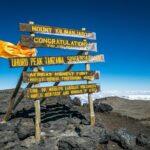
The route takes about 5 to 7 hours to reach Stella Point, the crater rim. Then it’s another 1 to 2 hours onward to Uhuru Peak at 5,895 m.
When you reach Uhuru Peak, you get sun rising over the African landscape and a pink hue over the snowy peak. The glaciers around you can sparkle like diamonds—an image that stays with people for a reason. After that, you descend back along the same route to Barafu Camp, where your team is waiting and you can finally stop moving for a few hours.
This is the hardest part of the trek, physically and emotionally. It’s also the part you’ll remember when you’re tempted to quit earlier in the week.
Day 7: Mweka Gate to rainforest memories
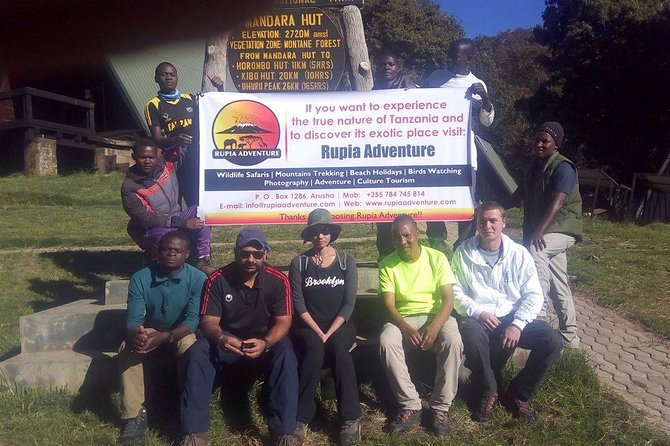
Day 7 starts with breakfast and a traditional farewell ceremony from your mountain crew. Then you begin the final descent, which is about 2 to 3 hours down to Mweka Gate.
You’ll trek through rainforest again on the way out. It’s a neat loop: earlier you walked into the green world; now you walk back out of it. You may get one more chance to spot those colobus monkeys before reaching the gate.
From there, you’re met and taken back to the hotel. The practical reward is huge: a long shower, then a relaxed day by the pool. It’s not just comfort—it’s recovery.
Who this trek is for (and who should think twice)
You’ll like this trek if you:
- want a guided route with structured acclimatization
- can hike 3 to 7 hours on most days and handle cold nights in a tent
- enjoy seeing how Kilimanjaro changes as you gain altitude
- want a smaller group with support from a crew
You should think twice if you:
- expect a relaxed pace
- get nervous about night hiking and steep altitude days
- are unwilling to be flexible if weather conditions force a plan adjustment
Booking tips that will keep the trip smoother
Here’s what I’d do if you were packing and preparing:
- Train for steady hiking before you go, not just “one big workout.” Most days involve multiple hours on your feet.
- Plan your gear for cold mornings and summit night. You’ll be outside before sunrise, often with wind and low temperatures.
- Build patience into your day planning. Day 6 can feel endless, but the route is designed as a staged effort from camp to Stella Point to Uhuru Peak.
Because the group can be small (max 4 travelers), your guide can adapt pacing to some extent. Still, your body decides outcomes at altitude. Keep communications open with your guide if you feel symptoms.
Price and value: is $2,200 worth it?
At $2,200 per person, you’re paying for a complete mountain system: expert guiding, a crew that supports tent camping, and a multi-day plan that helps acclimatization rather than betting on speed. You’re also buying a very specific route experience—rainforest, moorland, alpine desert, crater rim, and the return down.
In real terms, value comes from:
- getting a route with an acclimatization-focused structure
- staying with a team that takes care of camp setup and meals
- having an organized summit-night plan with headlamp timing and a clear objective
If you’re comparing to cheaper options, the key question is not only price. It’s how much support you’ll have at altitude and how the itinerary handles acclimatization. On Kilimanjaro, that difference matters.
Should you book this Machame Route trek?
I think you should book if Machame appeals to you: rainforest wildlife, big altitude steps, and a serious summit plan with time to adjust. The itinerary is built around acclimatization moments, not just hauling you upward.
Also, if you like the idea of small-group trekking with experienced guides and strong crew support, this setup fits. The repeated emphasis on successful summits in feedback is a sign that the team focus is on guiding individuals toward a safe push for Uhuru Peak.
Don’t book blindly if you’re not ready for cold tent nights or a midnight ascent. If you can handle that, you’re choosing one of the classic ways to experience Kilimanjaro with structure, views, and that final sunrise payoff.
FAQ
What time does the trek start and how do I get to the national park gate?
The start time is 8:30 am. After breakfast, you’re picked up at your hotel and taken to the Kilimanjaro National Park gate for the required paperwork before hiking begins.
How long is the Machame Route trek?
It runs for 7 days (approx.).
What’s the group size for this tour?
This experience has a maximum of 4 travelers.
Are overnight stays in tents or hotels?
Overnight stays on the Machame Route use tents.
What happens on summit night?
You’re awoken around midnight with warm tea and biscuits, then you start the final ascent with headlamps. The trek goes to Stella Point (about 5 to 7 hours), then continues 1 to 2 hours to Uhuru Peak for sunrise.
What if weather is bad or I need to cancel?
The trek requires good weather. If it’s canceled due to poor weather, you’ll be offered a different date or a full refund. You can also cancel for a full refund up to 24 hours before the experience’s start time.