REVIEW · LOMBOK
2D-1N Hiking Rinjani To Rim Senaru – Dewa Trekking
Book on Viator →Operated by Dewa Trekking · Bookable on Viator
Rinjani’s rim night is a reset for your brain. This private 2D-1N hike from Senaru to the crater rim pairs English-speaking guides with a campsite plan that’s handled for you, and I also like that you’re climbing to real altitude—2,641 m—with sunset and sunrise built into the schedule. The one drawback to plan for: this is a tough, steep hike with overnight camping, so you’ll want a moderate fitness base and a calm mind for the early hours.
If you want an experience that feels both wild and organized, Dewa Trekking’s Senaru crater-rim run is set up for exactly that. You start around Senaru’s elevation (about 601 m), trek through forest and climb into higher grassland, then sleep in a tent right at the rim for lake and volcano views. Expect a “go-go-go” rhythm—rests are planned, but the mountain doesn’t care about your pace.
In This Review
- Key Highlights I’d Prioritize Before Booking
- From Senaru to 2,641 m: what the 2D/1N actually feels like
- Day 0 in Senaru: the easy start before the climb
- Day 1 climb through forest to the crater rim at sunset
- Day 2 sunrise and the descent back to Senaru
- Guides and porters: the people who make the rim trek feel human
- Included meals, water, and camping sleep setup (where value really shows)
- Price and logistics: what $237 covers (and what it doesn’t)
- What to pack for the rim hike (practical, not fussy)
- Who this Rinjani crater-rim trek suits best
- Should you book Dewa Trekking’s 2D-1N Rinjani Rim Senaru trek?
- FAQ
- How long is the Mount Rinjani hike?
- Where does the trek start and where do you sleep?
- What can I expect on the trail?
- Is there sunrise and sunset time included?
- What’s included in the price?
- What should I bring since it is not included?
- Do I need to arrange my own food and water?
- Is this a private tour?
- What fitness level do I need?
- Can I cancel for a full refund?
Key Highlights I’d Prioritize Before Booking
- Crater-rim sunset and sunrise as scheduled moments, not just optional add-ons
- Private tour feel with your own group rather than mixing with others
- Porters carry the kitchen and camping kit, so you’re not the pack mule
- 3-liter mineral water per person per trek day plus meals along the way
- Steep altitude hike from Senaru up to 2,641 m, with Pos stops for breaks
From Senaru to 2,641 m: what the 2D/1N actually feels like
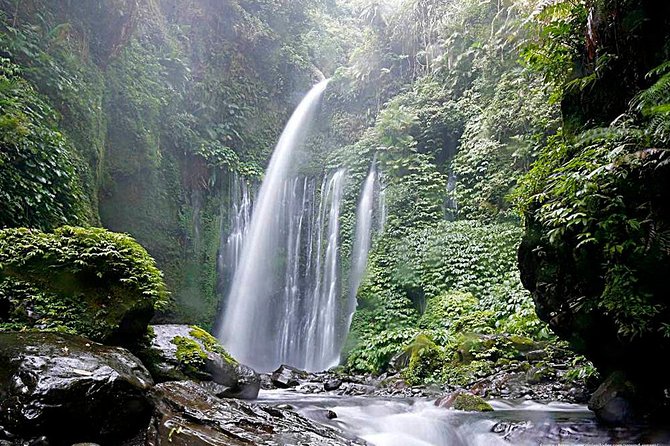
This is a classic Rinjani “rim-focused” route: you’re not trying to cram in a summit push. Instead, you climb from Senaru (about 601 m) up to the crater rim at 2,641 m, then you come back down. The big shift is how the trail changes as altitude rises—early on you’ll be in dense forest, and as you go higher the environment opens into grassland with steeper sections.
What makes this itinerary satisfying is that the best parts (sunset and sunrise) are scheduled around the rim itself. That means you’re not racing the light and hoping for luck. You camp at the rim the first night, eat and rest, then watch the next day’s sunrise before heading down.
The “feel” of the hike is also why the fitness requirement matters. You’ll be walking uphill for long stretches, and even if you’re an experienced hiker, the combination of steep grade and altitude can slow you down. The plan includes snack and rest stops—Pos 1, Pos 2, and a longer lunch break at Pos 3 around 2,000 m—but the overall effort is still serious.
You can also read our reviews of more tours and experiences in Lombok.
Day 0 in Senaru: the easy start before the climb
Day 0 is basically your buffer day, and I’m a fan of that. You get picked up within Lombok and transferred to Senaru, check in to a hotel there, and sleep. That reduces the stress of arriving, finding food, and trying to get organized while your legs are fresh but your sleep schedule isn’t.
This matters because tomorrow starts early. When hikers show up tired, the climb feels steeper than it is. With a real night’s sleep in Senaru, you start day 1 with a better headspace—and that makes a huge difference on a route like this.
Also note: the experience is described as having mobile tickets, and you’ll receive confirmation at booking time. So you’re not wandering around trying to figure out where to meet.
Day 1 climb through forest to the crater rim at sunset
Day 1 begins with early breakfast, then registration at the Rinjani Trek Centre before you hit the trail. From there, the trek starts in dense tropical forest. This section tends to feel like a warm-up: the ground can be uneven, but the air and shade can make the early effort feel manageable.
Along the way you’ll stop at Pos 1 and Pos 2 for rest breaks and snacks. These are important on this route because they break up the steady climb into chunks. Then you reach Pos 3 (around 2,000 m), where you’ll stop for a longer break for lunch.
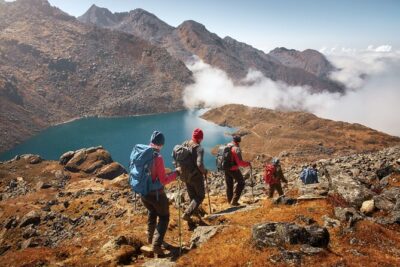
After lunch, the climb gets steeper. As you move higher, the forest gives way to grassland, and the trail becomes more exposed and demanding. This is the part where your breathing matters more than your speed. The goal isn’t to rush—it’s to move consistently.
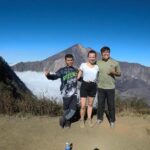
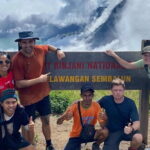
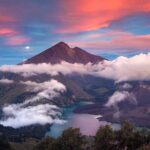
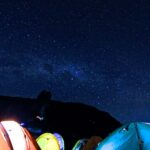
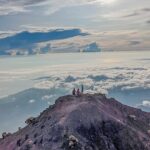
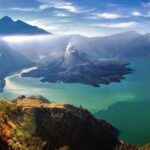
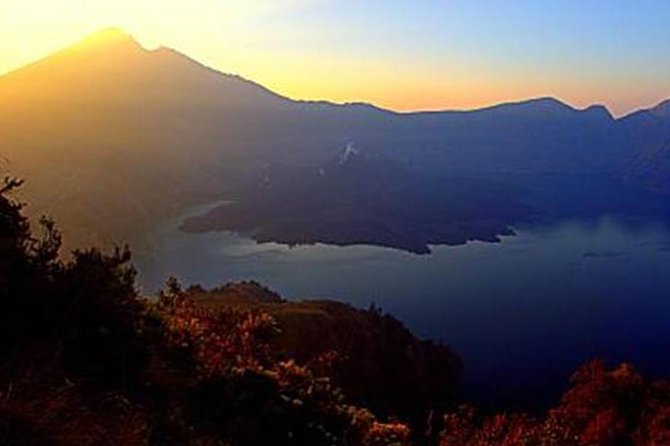
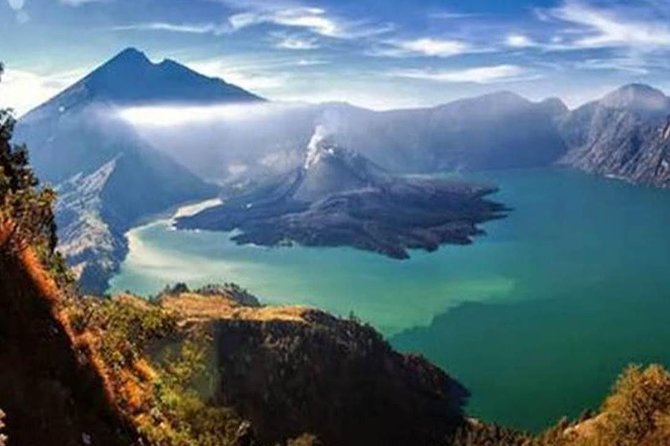
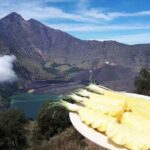
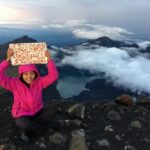
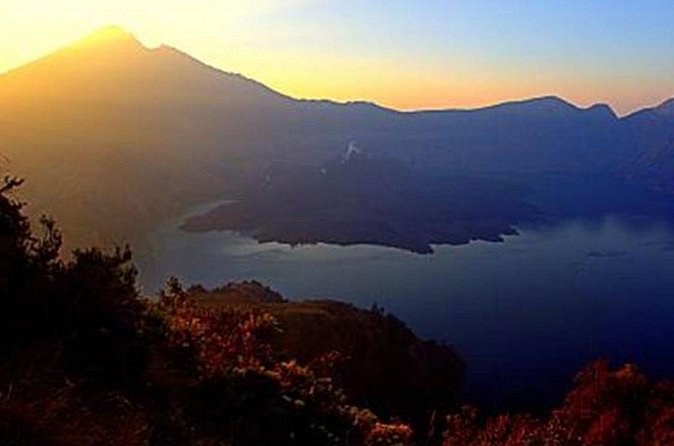
You then camp overnight at Senaru Crater Rim (2,641 m). This is where the views pay off: sunset over Mt. Rinjani, views toward the lake, and visibility of the small volcanic cone inside the crater. Camping here is simple but not “rough for the sake of rough.” You’ll be in a tent setup that includes key sleep gear (more on that soon).
One extra practical thought: rim air can feel colder than you expect, and you’re at elevation. Even if the day was warm, night can change the temperature. Plan clothing accordingly.
Day 2 sunrise and the descent back to Senaru
The schedule on day 2 is built around the rim experience. You get time for sunrise, then a leisurely breakfast before you start descending.
When people skip sunrise hikes, they miss what makes the rim camping worth it. On this itinerary, you don’t have to “perform” for the view—you’re already in the right place and time to see it.
Then it’s back down toward Senaru, with rest and snack breaks again along the route. You stop at Pos 2 for a longer lunch break, and then you reach Senaru at about 1:00 pm. After that, you’re transferred to your next destination.
The descent is often where hikers get tired in a different way. Your legs can feel it in the knees and shins, especially after a tough climb and one night of camping. This is also when having a steady pace helps. You’ll be moving for hours, but you don’t want to sprint and then pay for it on the trail.
Guides and porters: the people who make the rim trek feel human
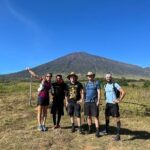
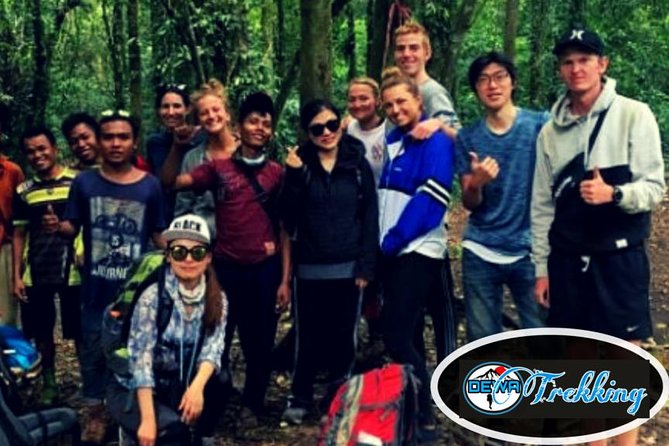
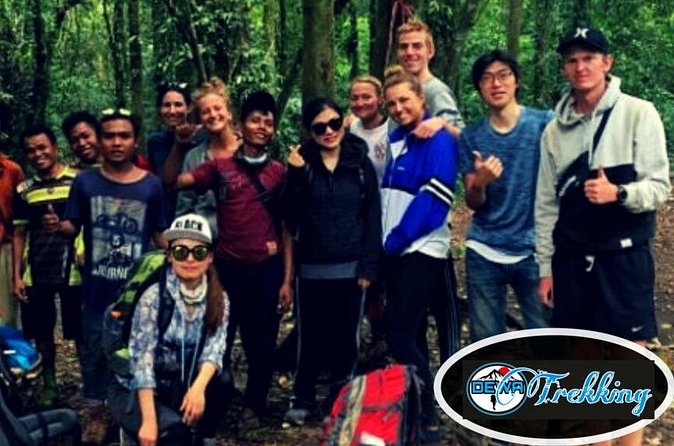
This is the part I’d call out most from the experience profile and the guide names you’ll hear associated with Dewa Trekking. The trek is staffed with an experienced English-speaking guide plus professional porters, and the porters carry the cooking gear and camping equipment. That’s a real quality-of-experience detail. When you’re climbing at altitude, carrying less weight helps your focus stay on the trail, not on your pack straps.
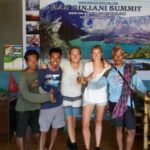
The reviews you’ll see for this operator strongly emphasize how guides support you through the ups and downs. Names that come up include Dean and Seki, Windy, Din, and Ady/Adi. Multiple comments describe guides who are kind and helpful not only physically, but mentally too—like they help you settle your pace and keep moving when the trail gets tough.
Porters are also praised for the heavy lifting. One highlight: they’re described as courageous to carry everything, even as the work stays hard. That’s exactly what you want to see from a well-run trekking team: people who handle their jobs confidently, so you can handle yours.
There’s also a recurring mention of delicious meals and guide personality. One review notes a guide with a sense of humor, which is often the difference between “this is tough” and “we’re getting through it together.”
Included meals, water, and camping sleep setup (where value really shows)
For $237, the real value isn’t just that you get a guide. It’s what’s bundled so you don’t have to guess or overpack.
Included:
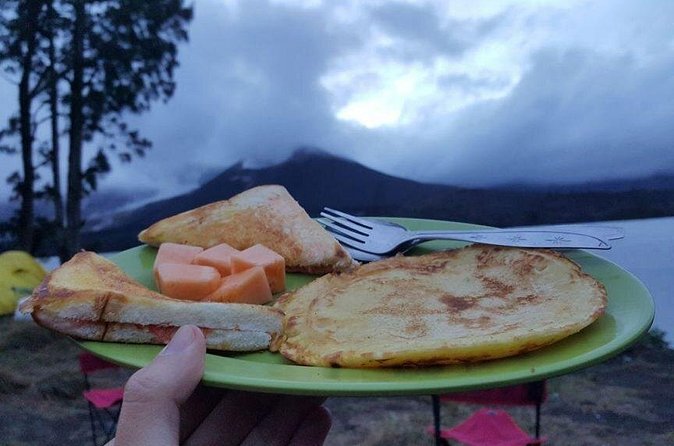
- Food and drinking water on the trek
- 3 liters mineral water per day per person during the trek
- Camping gear and sleep support: tent, toilet tent and paper, sleeping bag, mattress, and pillow
- Entrance fee to the national park
- Night accommodation in Senaru before the trek (plus the planned pickup and transfer)
On a trek like this, these items matter because they solve the “hard logistics” problems: you’re not trying to source water mid-route, you’re not buying sleep gear last minute, and your food is handled by the team with their cooking setup.
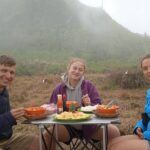
A subtle but important benefit: when someone else manages the meals and cooking equipment, your hiking rhythm stays consistent. You stop for breaks at the planned posts, eat what’s ready, then keep moving.
Price and logistics: what $237 covers (and what it doesn’t)
Let’s talk value clearly.
You’re paying for:
- pickup before and transfers after
- a private tour (your group only)
- guide + porters, including porters carrying cooking and camping gear
- national park entrance fee
- food and mineral water
- full basic camping and sleeping setup
What’s not included means you should budget for:
- Head lamp/hand torch
- a small bag/daily pack
- trekking shoes
- rain jacket, long pants, gloves
- airline ticket
- extra porter for your own luggage (you carry your own personal items unless you arrange more)
- tips for guide and porters
If you compare this to booking “just a guide” and bringing all your own camping gear, this looks like the kind of package that reduces friction. You still do the hard hiking, but you’re not trapped doing the boring parts.
One timing note: the meeting points section shows a start time of 12:00 am. In practice, the trek day has early breakfast and registration, so you should expect very early wake-up energy on the first trekking day. Make sure your body plan matches that.
What to pack for the rim hike (practical, not fussy)
Based on what’s not included, here’s what you’ll want to bring so day 1 and day 2 feel manageable:
- Headlamp or hand torch: sunrise starts early, and the rim can mean dim conditions
- Trekking shoes: you’ll be climbing steep terrain and moving through different trail types
- Rain jacket: even if rain isn’t guaranteed, you’re in a mountain environment where weather can change
- Long pants and gloves: rim nights can feel cooler, and protection helps with comfort
- Small daily pack: keep essentials accessible while you leave the heavy logistics to the porters
Also think about camera time. The sunset and sunrise at the crater rim are the big photo moments, and you’ll want to bring your camera gear without it turning into a weight problem.
Who this Rinjani crater-rim trek suits best
This hike fits people who:
- have moderate physical fitness
- enjoy steep walking and don’t mind camping basics
- want a guided, staffed route focused on the crater rim experience rather than a summit gamble
- value clear support and teamwork in the mountains
It’s also a strong pick if you like your travel with structure. You know when breaks happen (Pos 1, Pos 2, lunch at Pos 3), you know there’s sunrise and sunset built in, and you know the sleep setup is covered.
If you’re looking for something gentle or luxury, this won’t match. The tradeoff is effort for views and a memorable rim night at 2,641 m.
Should you book Dewa Trekking’s 2D-1N Rinjani Rim Senaru trek?
Yes, I’d book it if you want the crater rim experience done in a practical way. The biggest reasons:
- You’re getting a staffed climb with English-speaking guidance and porters carrying the heavy camp/kitchen load.
- The schedule is built around sunset and sunrise, not just a generic “hike and hope.”
- The package includes sleep gear, food, and 3 liters of mineral water per trek day, which makes your planning simpler.
I’d pause before booking if you’re very sensitive to altitude and steep grades, or if camping at a high, exposed rim would stress you out. In that case, you might need a more gradual trek plan.
If you’re somewhere in the middle—fit enough, curious enough, and willing to work for the view—this is exactly the kind of Lombok adventure that pays you back quickly: one night at the rim, two big light shows, and a guided route that keeps the hard parts focused on the hiking.
FAQ
How long is the Mount Rinjani hike?
The program is described as a 2 days 1 night trek, with an overall duration of about 3 days including the arrival day in Senaru.
Where does the trek start and where do you sleep?
You start the trek in Senaru (around 601 m) and you sleep overnight in a tent at the Senaru Crater Rim (2,641 m).
What can I expect on the trail?
You hike through dense tropical forest early on, then higher up the forest gives way to grassland and the trail becomes increasingly steep. You stop at multiple posts (Pos 1, Pos 2, and a longer lunch stop at Pos 3 around 2,000 m).
Is there sunrise and sunset time included?
Yes. Day 1 includes sunset at the crater rim, and Day 2 includes sunrise before breakfast and the return hike.
What’s included in the price?
Included are pickup before and transfers after the trek, a night accommodation in Senaru before the trek, an English-speaking guide, porters, national park entrance fee, food and drinking water (3 liters mineral water per person per day on trek), and camping items like tent, toilet tent and paper, sleeping bag, mattress, and pillow.
What should I bring since it is not included?
You should plan to bring a head lamp/hand torch, a small daily pack, trekking shoes, and items like a rain jacket, long pants, and gloves.
Do I need to arrange my own food and water?
No. Food and drinking water are provided during the trek, including 3 liters of mineral water per day per person.
Is this a private tour?
Yes. The experience is private, and only your group will participate.
What fitness level do I need?
The guidance says travelers should have a moderate physical fitness level.
Can I cancel for a full refund?
Yes, free cancellation is available. You can cancel up to 24 hours in advance for a full refund, based on local time.