REVIEW · SICILY
Etna excursion 3000 meters with 4×4 cable car and Trekking
Book on Viator →Operated by Gruppo Guide Alpine Etna Sud · Bookable on Viator
Etna at 3000m feels like another planet. This excursion strings together cable car, 4×4 off-road, and a crater-edge trek with big geology payoffs, from the Valle del Bove viewpoint to the Barbagallo crater and still-hot lava features. I like that the day is built for variety (ride high, walk close, then take the cable car back), and I like that you get the cold-and-dust essentials included. The one drawback: the trek can feel strenuous, with narrow sections and serious exposure if you’re nervous around heights.
If the weather cooperates, you’ll get summit views and gas plumes that make Etna feel alive, not like a brochure. Still, this is a weather-driven outing, so plan layers, protect against wind and cold, and be ready for the fact that visibility can shut down the higher views.
In This Review
- Key highlights you should know
- Up to 3000 meters: the mix of rides that makes this trek work
- Start at Sapienza: what happens before you even reach 2500m
- The ride to 2850m: cable car + 4×4 gives you altitude without wasting the day
- Valle del Bove viewpoint: where you learn what you’re looking at
- Barbagallo crater: lava channels, still-hot terrain, and a real sense of scale
- Summit craters and the gas plume window: quick, but unforgettable
- Return by cable car over volcanic sand: ending high and riding the view down
- Gear, cold, and dusty footing: how to make this day comfortable
- How hard is it, really? Physical fitness and narrow ridge reality
- Price and value: what your $66.51 actually buys (and the extra €45)
- Guides and group feel: safety, explanations, and pace
- Should you book this Etna 3000m trek?
- FAQ
- How long does the Etna 3000 meters excursion take?
- What is the highest altitude you reach?
- Is the cable car and jeep ticket included in the price?
- What’s included in the tour price?
- Is lunch included?
- What physical fitness level do I need?
- Is this tour suitable for children?
- Is it recommended if I have respiratory problems?
- What should I bring for the day?
- What happens if weather cancels the tour?
Key highlights you should know
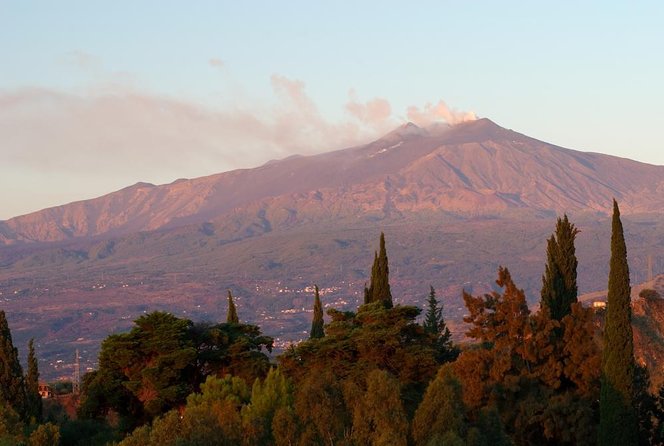
- Cable car to ~2500m, then 4×4 up to about 2850m to save your legs early
- Valle del Bove viewpoint with a dramatic horseshoe-shaped volcano-tectonic depression
- Barbagallo crater walk along sandbanks, lava-channel terrain, and crater-edge panoramas
- Up to the 3000m zone with a chance to see summit craters and their gas plumes
- Gear included (socks, shoes, jacket, helmet), which helps a lot if you travel light
- Small group size (max 25), so you’re not swallowed by a giant crowd
Up to 3000 meters: the mix of rides that makes this trek work
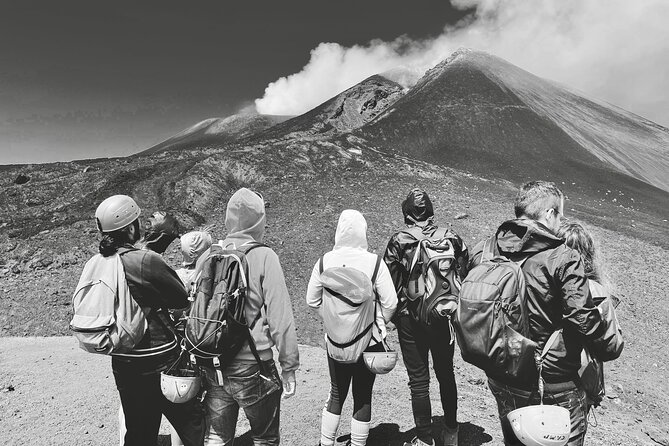
What makes this Etna day feel efficient is the rhythm. You don’t just hike up from sea level. You start by going high fast, first by cable car and then by off-road vehicle, which means your trekking time is spent where it matters: crater terrain, lava features, and viewpoint edges.
For most people, that’s the sweet spot. You get close to the volcano without spending the whole day in slow uphill grind. And because Etna sits at high altitude, “getting high” is half the experience—temperature drops, wind picks up, and suddenly the scale is real.
One more practical upside: since you’re not starting from scratch on foot, you can judge your day quickly. If your breathing feels off or your legs are unhappy, you still have the later crater-edge sections where the whole point of the excursion happens.
You can also read our reviews of more tours and experiences in Sicily.
Start at Sapienza: what happens before you even reach 2500m
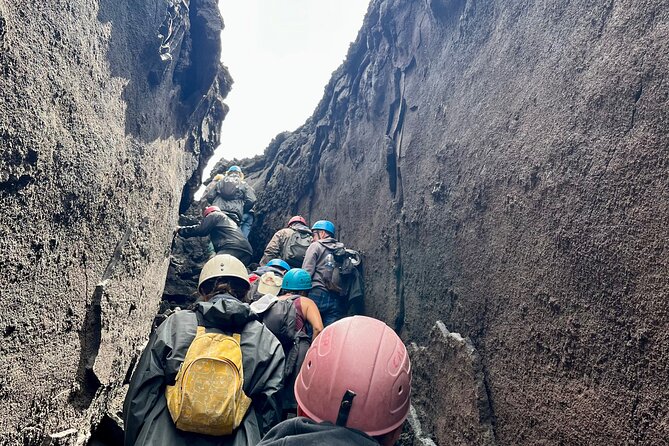
The meeting point is Piazzale Rifugio Sapienza in Nicolosi (Etna Sud Alpine Guides Excursions). This matters because you’re already in the Etna area, where the roads and staging are built for mountain access.
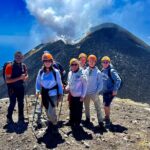
Gear is part of the package: socks, shoes, jackets, and helmets are included. In practice, this is huge value. If you’re traveling with carry-on only, you don’t have to gamble on finding warm outerwear or adequate footwear in the last hour before pickup.
Timing-wise, your early movement is staged:
- You begin with the Etna Sud Alpine Guides hut area.
- You go up by cable car to about 2500 meters.
- Then you transfer to an off-road vehicle for the final push to around 2850 meters.
On the cold-and-windy Etna days, that jacket and helmet combo can be the difference between enjoying the views and rushing through them.
The ride to 2850m: cable car + 4×4 gives you altitude without wasting the day
The cable car segment is your altitude jump. Even before you hike, the air changes, and the feeling of being higher than you expected hits fast. After that, the 4×4 takes you to roughly 2850 meters, which sets you up for a trekking plan that’s realistic for a lot of travelers.
Two considerations from real-world experience:
- The cable car/jeep part is not included in the base price. The additional cost is €45 per person.
- People have run into payment hiccups with cards on the cable car. If you want zero stress, bring cash for that extra ticket.
Also, expect the day to be weather-sensitive. If clouds roll in or wind picks up, visibility and whether you can go all the way to the best viewpoints can change. The good news is safety decisions get taken seriously, including the option to reschedule or get a full refund if the outing can’t run due to poor conditions.
Valle del Bove viewpoint: where you learn what you’re looking at
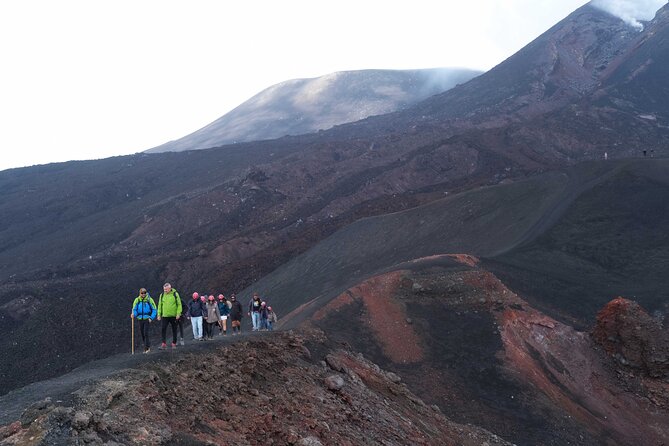
Your first major stop is the Valle del Bove viewpoint. This is the kind of place where a quick pause turns into a real understanding moment.
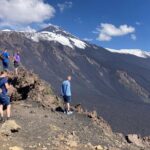
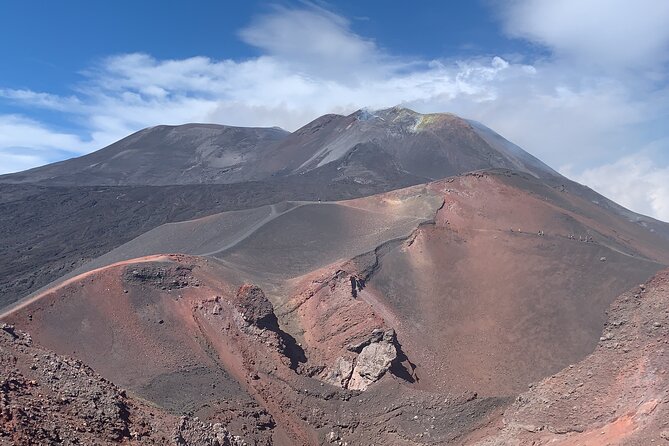
Valle del Bove is described as a large horseshoe-shaped volcano-tectonic depression in Etna’s eastern sector. On clear days, the view can be breathtaking, but what I love more is that it’s not just “look at mountains.” It’s a specific volcanic structure with visible outcrops along the walls—exactly the kind of detail that helps you connect the scenery to the processes that shaped it.
Timing here is brief—around 30 minutes—but it’s enough for your brain to switch from sightseeing mode to geology mode. If your guide explains how the depression formed and what you’re seeing, that small segment can become one of your strongest memory anchors for the day.
Barbagallo crater: lava channels, still-hot terrain, and a real sense of scale
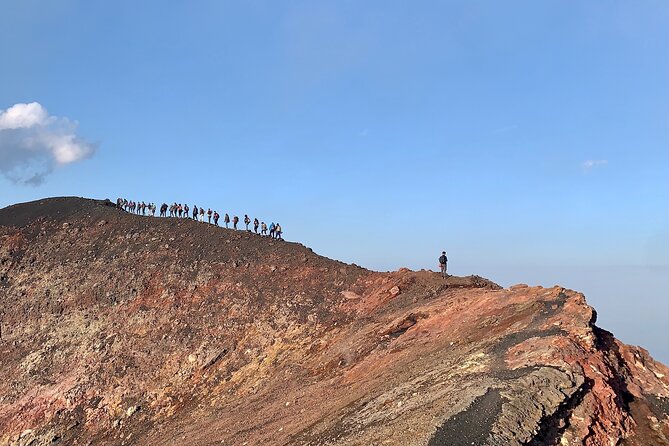
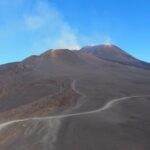
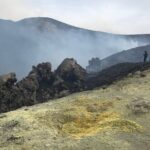
This is the long stop, about 2 hours, and it’s the core of the tour experience. You head toward Crateri Barbagallo at roughly 3000 meters, moving up along sandbanks toward lava flow terrain connected to the 2002 eruption.
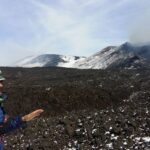
What’s compelling here is that you’re not only looking at a crater from a safe distance. You walk along rough volcanic ground and lava-related features:
- You climb up sandbanks.
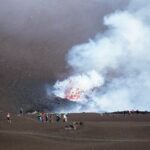
- You reach a lava flow channel dating to the 2002 eruption.
- You go up the channel to the effusive mouth of that eruption.
- Then you continue toward Torre del Filosofo (around 2920 meters) along more recent lava flows.
After that, you get a lunch break, then you walk along the edge of the Barbagallo crater. That’s where you’ll admire summit craters and take in the eastern coast of Sicily—from the Taormina area toward Syracuse (when visibility allows).
Two practical notes that matter on this part of the day:
- The terrain is dusty. Even with gear, you’ll want a wind layer and to protect your neck and face.
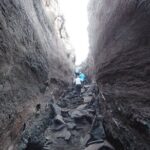
- The walk can feel tougher than the “moderate” label. Some hikers report steep sections and narrow ridges where footing is careful and exposure feels real.
If you’re scared of heights, you can still enjoy the day—your guide will manage the group—but the crater-edge walking is the moment that tests nerves for some people.
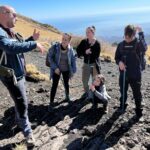
Summit craters and the gas plume window: quick, but unforgettable
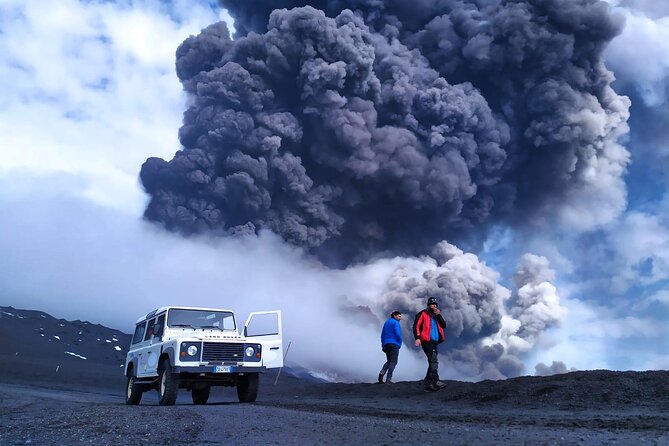
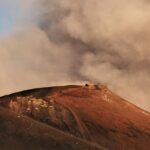
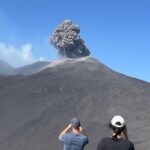
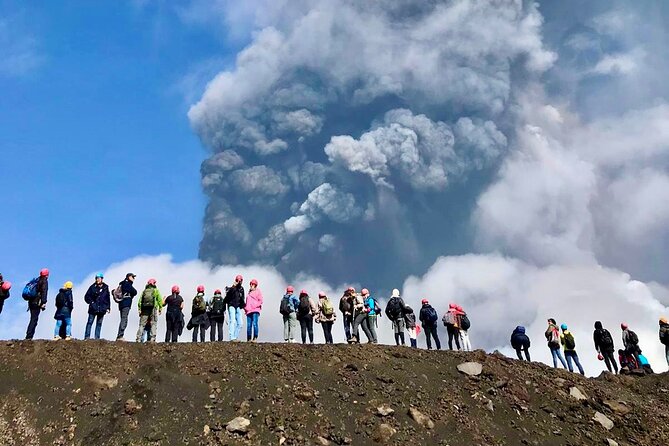
Right after the Barbagallo crater edge walk, you get another chance to see the upper Etna features. There’s about 20 minutes for summit craters: Central Crater and South-East Crater, with their inevitable plume of gas.
This isn’t a long summit hike, but it’s a meaningful moment. When you see the plume up close, the volcano feels active in a way that photos rarely capture. Even if you don’t get perfect visibility, the movement of gas and the way the summit looks from this angle can still land.
The catch: if the day is socked in with cloud or wind, you might not get the same clarity here. Weather is king on Etna, so keep expectations flexible.
Return by cable car over volcanic sand: ending high and riding the view down
The final big move is the cable car return. It takes about 1.5 hours, and the ride passes above channels of volcanic sand.
On fine days, people remember this part for the sheer breadth of views—everything from the Ionian coast back toward the interior of Sicily. If your earlier crater edge moments were hazy, this cable car segment can still give you a satisfying “wrap-up” view.
Also, plan to feel wind on the way down. Even if the lower area feels warm, the top can be colder by roughly the amount people report as 10°C cooler. Dress for that difference.
Gear, cold, and dusty footing: how to make this day comfortable
Even with included gear, you can control comfort a lot with what you bring.
Here’s what I’d do if you want the best chance of enjoying every stop:
- Bring layers. The wind up high is no joke, and the jacket you get helps, but you’ll still feel temperature swings.
- Use proper socks and expect dust. Some included socks are fine, but if you’re picky about fit, bring your own thicker liner.
- Wear footwear you trust. The included shoes help, but some people have received boots with reduced tread or that felt worn. If you have your own high-top hiking shoes with traction, they can be safer on steep, rocky descents.
- Consider hiking poles if you like stability. Soft, rocky downhill segments can get slippery.
- Pack something for your ears if wind bothers you. A few hikers mention covering up because gusts can be intense.
One more tiny but important point: start the day early in your head. Get geared up calmly at the meeting area, then you’ll step into the cable car without rushing and without missing instructions.
How hard is it, really? Physical fitness and narrow ridge reality
This outing is listed for moderate physical fitness, and that’s believable—until you hit narrow ridges, steep up-and-down sections, and exposure along crater edges.
A pattern that shows up:
- Some people find it manageable because they’re used to hikes.
- Others find it strenuous because of steepness and narrow walkway feeling.
So be honest with yourself. If you have balance issues, fear heights, or you can’t handle steep, rocky descents, this may not be the best Etna choice.
Also, it’s not recommended for travelers with respiratory problems. At high altitude, breathing is already working harder, and dusty volcanic air doesn’t help.
Kids: there’s a general note that it’s not for children under 6 years old, but younger kids can struggle with narrow and tiring sections. If you’re bringing children, you’ll want to be realistic about stamina and comfort with height.
Price and value: what your $66.51 actually buys (and the extra €45)
At about $66.51 per person, you’re paying for the guided experience plus a lot of logistical value: guide service and included protective gear. That’s a strong start.
The important part is that cable car and jeep ticket are an additional €45 per person. So your all-in day is more like the base price plus that extra transport cost. Still, I think it’s often worth it because you’re buying altitude access and a guided, high-stakes route that you wouldn’t want to manage solo.
If you’re the type who enjoys hiking but also likes getting value out of time and transportation, this format makes sense:
- You don’t waste hours hiking from lower elevations.
- Your trekking time is focused on volcano terrain.
If you prefer an easier walk, want maximum summit time, or don’t like exposure, you might prefer a less intense Etna option. But if your goal is to feel the volcano up close at around 3000 meters, the cost-to-experience ratio can feel fair.
Guides and group feel: safety, explanations, and pace
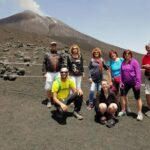
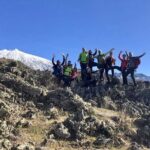
This is a small-group outing with a maximum of 25. In practice, that’s enough structure to keep everyone together on narrow ground without turning it into a cattle-walk.
Guide quality can make or break the day, and this one has solid energy in the field. People often single out guides like Pepe K, Nino, Vincent, Antonio, Arthuro, and Fabio (noted for a geology doctorate) for being engaging and for making the volcanic details click.
Pace-wise, it’s organized but active. There’s time to stop, breathe, and take in views. Still, you should expect periods of steady walking and uneven footing.
Should you book this Etna 3000m trek?
Book it if you want:
- A guided day that reaches the 3000-meter zone
- A mix of cable car + off-road + real trekking
- Up-close crater and lava-channel moments, with summit craters and gas plumes when conditions allow
- A “show up and gear up” setup that’s helpful if you don’t want to pack cold-weather hiking gear
Think twice or choose another option if you:
- Don’t handle narrow ridges or steep descents comfortably
- Have respiratory issues
- Want an easy stroll with lots of time sitting and sightseeing
If you can handle active walking, dress for wind and cold, and bring cash for the extra transport ticket, this is one of the better ways to experience Etna beyond a quick viewpoint stop.
FAQ
How long does the Etna 3000 meters excursion take?
It lasts about 4 to 5 hours in total.
What is the highest altitude you reach?
You go up to around 3000 meters (with cable car to about 2500 meters, then off-road to around 2850 meters, and hiking near the 3000-meter area).
Is the cable car and jeep ticket included in the price?
No. The cable car and jeep ticket is an extra €45.00 per person.
What’s included in the tour price?
You get socks, shoes, jackets, and helmets, plus an Alpine and/or Volcanological guide service.
Is lunch included?
No, lunch is not included.
What physical fitness level do I need?
You should have a moderate physical fitness level. The trek can be challenging because it includes steep sections and narrow terrain.
Is this tour suitable for children?
It is not recommended for children under 6 years old. For children older than that, suitability depends on comfort with hiking and narrow crater-edge areas.
Is it recommended if I have respiratory problems?
It is not recommended for travelers with respiratory problems.
What should I bring for the day?
Dress for cold and wind at altitude, and wear good footwear. You can also consider bringing water and snacks, since lunch is not included.
What happens if weather cancels the tour?
This experience requires good weather. If it’s canceled due to poor weather, you’ll be offered a different date or a full refund.