REVIEW · SICILY
Etna North: Guided trekking to Summit volcano craters
Book on Viator →Operated by Ashàra Etna & Stromboli Guides · Bookable on Viator
Etna’s crater edge feels unreal. This guided hike from Piano Provenzana takes you up to the summit rim with expert volcanology guidance, plus the chance to stand near active craters that most visitors never reach. It’s one of those Sicily experiences where you don’t just see Mount Etna on a map, you see how it works up close.
What I really like is that you show up with just normal hiking clothes and they handle the hard part: boots, helmets, and walking sticks are included. The one drawback to plan around is that the route depends on safety conditions, so weather or volcanic restrictions can change timing or even what you’re allowed to attempt.
In This Review
- Key highlights to look for
- Why the Etna North crater trek feels different
- Price and what you really get for your money
- Your 8:00 a.m. start: Piano Provenzana to the higher route
- Stop 1: Piano delle Concazze views and first volcanic textures
- The big climb: about 2 hours up to the crater rim
- Walking the crater edge: what you’ll actually notice
- Stop 3 at the top: gas emissions, volcanic bombs, and sulfur colors
- The descent: fine ash and panoramic coast views
- How hard is it, and who should skip it?
- Safety, guides, and how the group is managed
- Weather and volcanic restrictions: what to expect when plans change
- So, should you book this Etna North summit crater trek?
- FAQ
- How long is the Etna North summit crater trek?
- What time does the tour start, and where do we meet?
- What altitude will we reach on this itinerary?
- Is the tour offered in English, and what’s the group size?
- What is included, and what extra costs should I plan for?
- What happens if weather conditions aren’t suitable?
Key highlights to look for
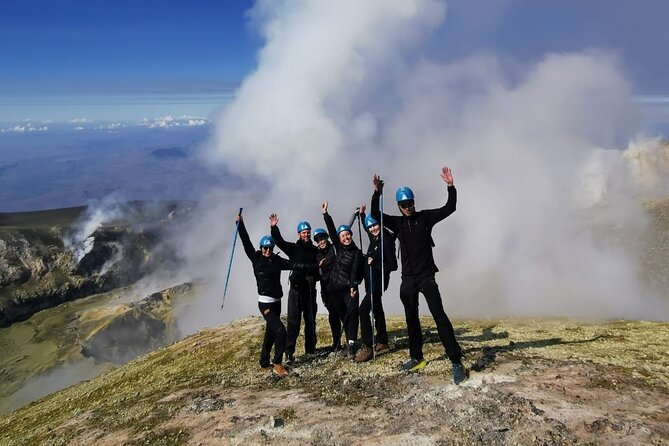
- Summit rim hiking near 3,320 m on the currently safe Etna North path
- Edge-walking over the Central Crater, with the NE and SE craters in view
- All key hiking safety gear included (boots, helmet, trekking poles)
- Volcanic details explained on the climb and at the top (gas emissions, sulfur colors, volcanic bombs)
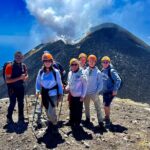
- Small groups up to 20, led by a volcanological/alpine guide with insurance
Why the Etna North crater trek feels different
Most Etna outings are either bus tours or half-day walks that stay well below the crater zones. This one is built around getting you to the upper crater area, where you can actually see geothermal features and the texture of the ground that formed from past eruptions.
The “North” part matters, too. The trek uses a specific slope that’s currently allowed for a safer climb. That means you’re not doing a random scramble—you’re hiking a route the guides use because the conditions make it workable. And when that changes, they can redirect rather than pretending everything is fine.
You can also read our reviews of more tours and experiences in Sicily.
Price and what you really get for your money
The advertised price is $78.10 per person, and the trek runs about 5 hours. What makes the value clearer is what’s included versus what’s not.
Included in the price:
- Hiking boots, helmet, and walking sticks
- Insurance plus a volcanological/alpine guide
- The walking portions, with admission ticket included for the crater areas covered in the itinerary
Not included:
- The 4×4 ride is €60 per person, paid in cash on the spot
So, budget for the add-on. Still, the math can make sense: you’re paying for a guide team, safety equipment, and access to the upper crater zone. If you’re comparing this to tours that only hand you a phone audio guide and a bus seat, the difference is the guided hiking focus and the gear that lets you move safely at altitude.
Your 8:00 a.m. start: Piano Provenzana to the higher route
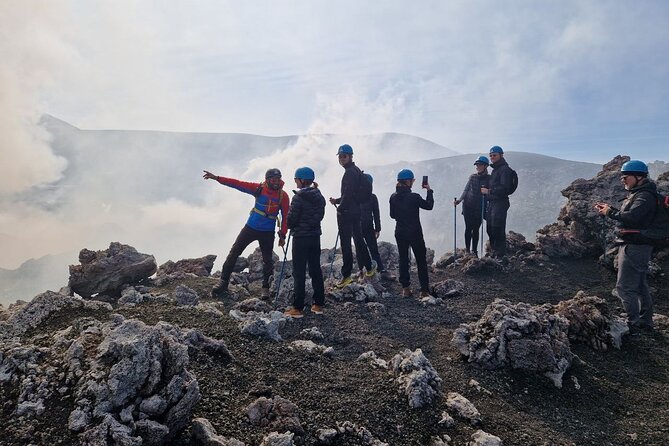
The day starts at 8:00 a.m. at Piano Provenzana in Etna North (via Provenzana, 95015 Linguaglossa). You’ll meet the group and then transfer by special 4×4.
The first leg is a ~40-minute ride that lifts you from about 1,800 m (Piano Provenzana) up to around 2,825 m (Piano delle Concazze). The pace here is part of the plan. By starting at higher altitude, you spend more of the day actually hiking among the crater features and less of it traveling.
This is also where you’ll get your basics sorted. Your boots, helmet, and trekking sticks are part of the included package, so you’re not scrambling to find gear in a town center first.
Stop 1: Piano delle Concazze views and first volcanic textures
Once you’re up near 2,825 m, the environment changes fast. You feel it in your breathing and in how the ground looks and sounds underfoot. Even before you reach the main rim, Etna’s “active” character is obvious: the terrain is shaped by past activity, and the air has that volcanic sharpness you can’t get from pictures.
This section is short, but it sets expectations. You’re not strolling through a theme park version of Etna. You’re stepping into a working volcano zone where guides pay attention to footing and to how people handle altitude.
The big climb: about 2 hours up to the crater rim
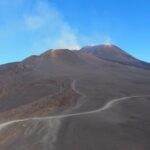
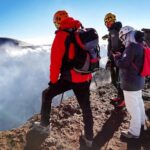
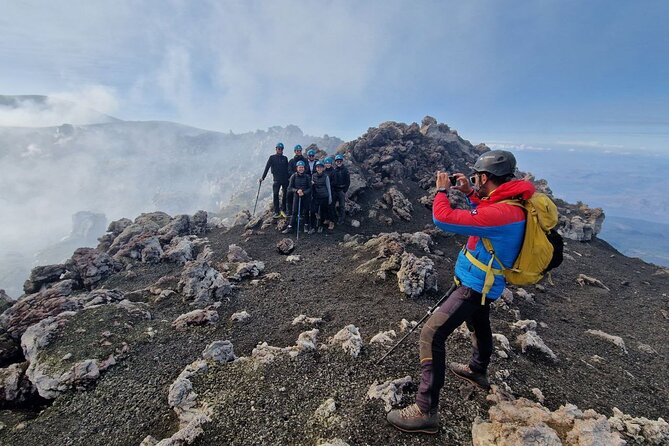
From around 2,825 m, the ascent takes roughly 2 hours to reach the main crater rim at about 3,320 m. This is the heart of the tour.
Here’s what makes the route special:
- You hike on the edge zone connected with the Central Crater area (the walking portion is designed for safe access).
- You face the Northeast Crater directly.
- From your side you can admire the Southeast Crater, tied to recent and impressive eruptions.
This is also where altitude becomes real. Even if you’re fit, your body has to adjust to thinner air. The good news: the guide’s job is to keep the group moving safely. You’ll get explanations and breaks along the way, which helps you manage effort without losing the story.
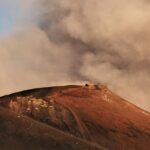
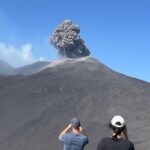
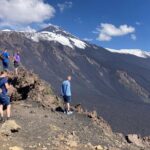
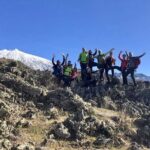
Walking the crater edge: what you’ll actually notice
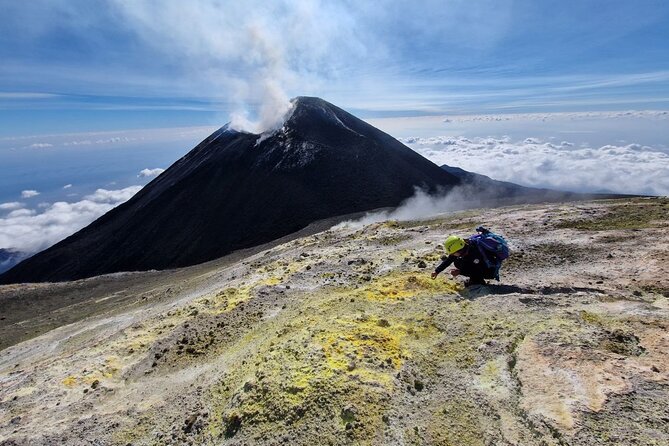
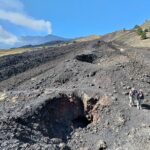
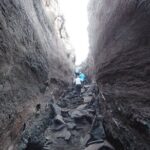
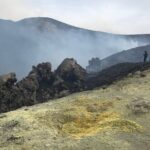
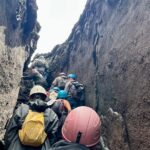
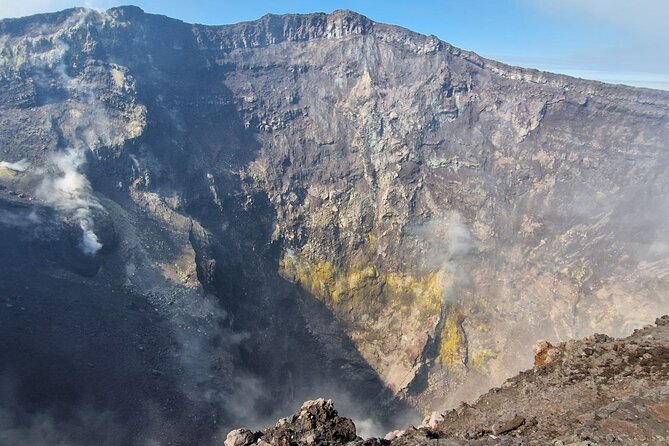
At the crater rim area, the differences from lower elevations are stark. You’ll see how steam and gas behavior shapes the ground, and you’ll notice textures that come from lava flows and volcanic ash settling over time.
This isn’t just visual. Your senses kick in:
- The ground can look sharp and granular.
- Air movement near vents feels different than at street level.
- The scale makes you slow down, even if you’re usually the “go fast” type.
Guides tend to connect what you see with how Etna forms and how craters evolve. On recent departures, leaders such as Antonio and Massimo have been singled out for clear English and for keeping the group comfortable and safe as they work their way up.
Stop 3 at the top: gas emissions, volcanic bombs, and sulfur colors
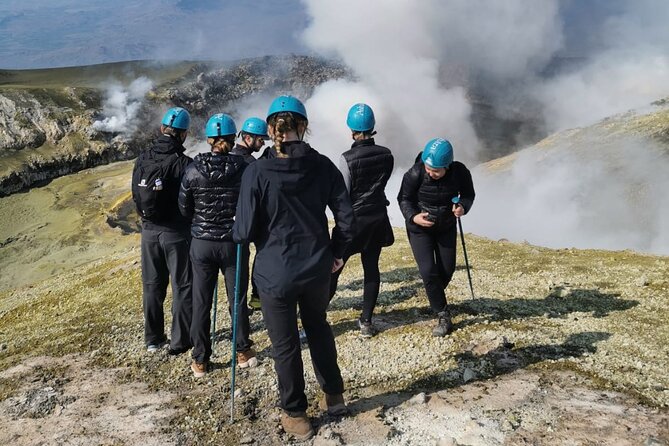
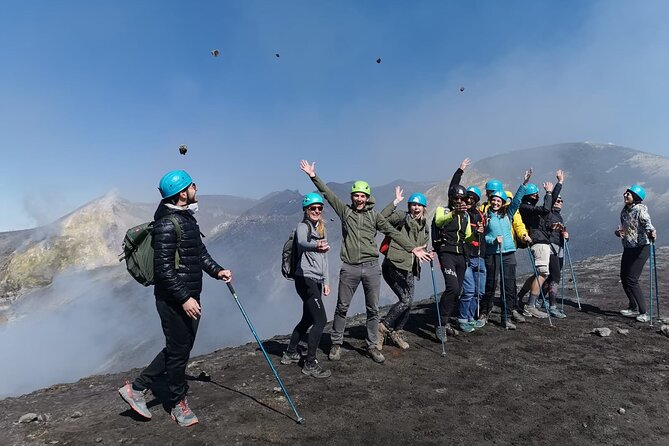
Once you’re on the upper area, you get more than a quick rim glance. You’ll spend time in the vast summit crater setting, and this is where the volcano turns into a classroom.
Expect guides to point out:
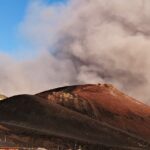
- Gas emissions and steam vents
- Volcanic bombs (rocks formed by eruption activity)
- Sparkling ground colors caused by sublimation of elements, including sulfur
That sulfur detail is more than a fun fact. When you see the ground’s color changes and understand they’re tied to chemical processes, Etna stops being only a mountain and becomes a living system.
You’ll also take “pleasant breaks,” with the guide explaining what’s happening geologically and what makes the specific crater area important. These pauses matter. They give you time to regroup and take photos without rushing.
The descent: fine ash and panoramic coast views
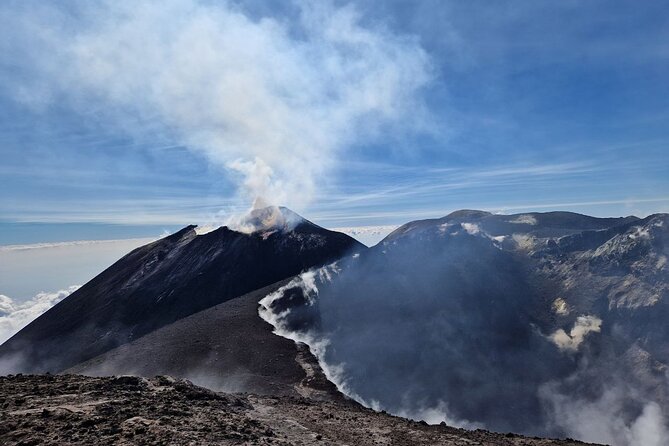
After your top time, you start descending back toward 2,825 m. The itinerary calls out that the descent includes fine volcanic ash and slag, which can change traction. This is a big reason why trekking sticks are included: they help you keep balance on uneven, loose surfaces.
The descent is also your visual payoff. The route stays panoramic, so you get changing views that stretch toward the Sicilian coast. It’s one of those moments where you catch your breath, look around, and realize you’ve gone from “road Sicily” to crater edge, and now you’re easing back toward normal altitude.
At the end, you return to 2,825 m and then take the 4×4 back to Piano Provenzana, finishing right back at the meeting point.
How hard is it, and who should skip it?
This trek is aimed at people with moderate physical fitness. It’s not described as a beginner hike, and altitude is part of the challenge even when the walking pace is controlled.
A big caution from the operator side: it’s not recommended for people with asthma or heart problems. If that applies to you, don’t treat it as a “maybe.” Talk to your doctor first and consider safer Etna options that stay lower.
My practical advice:
- If you get altitude-stress easily, tell the guide early. The guide’s job is safety, and turning around can happen if someone can’t handle conditions.
- Wear the boots you’re given (or at least make sure your feet are ready for rough, volcanic ground). Don’t think you can do this in flimsy sneakers.
- Move steadily on the descent. Fine ash can slide underfoot even when you feel strong.
Safety, guides, and how the group is managed
You’re hiking with a volcanological/alpine guide and insurance coverage is included. Gear is built into the plan: helmet, boots, and walking sticks are provided, which reduces the biggest risks for most people (bad traction and poor protection).
You may also notice the guide team watches group cohesion. In group treks, that can mean waiting briefly for everyone to be ready for the next segment. In one case, a departure ran longer because a group was delayed, which cut the overall time. That’s not the usual thing you want, so it helps to be on time at the meeting point.
Also keep in mind: volcanic terrain changes. Sometimes access to certain crater sections isn’t allowed due to activity. When that happens, a good operator will shift to an alternative plan so you still learn and still hike within safety rules. That flexibility is a real part of value here.
Weather and volcanic restrictions: what to expect when plans change
This is a weather-dependent activity. That’s not small print—it affects traction, visibility, and what routes are safe.
If conditions are tough (fog, snow, high wind, or other volcanic constraints), expect the operator to adjust. Sometimes that means more waiting or reduced ability to reach the exact summit points planned. Sometimes it means an alternative itinerary is offered.
My tip: pack for “cold up high.” Even if the coast is pleasant, the upper Etna zones can feel sharp fast. And if snow shows up, traction becomes a serious issue. You might find that the provided footwear is still basic for the conditions, so be ready for the possibility that harsh weather makes the climb harder than you imagined.
So, should you book this Etna North summit crater trek?
I’d book it if you want an Etna experience with:
- Actual crater rim time and close views of active crater zones
- A guide who explains what you’re seeing, not just where to stand
- Safety gear included, so you’re not hunting for rentals
- A small group pace and a structured route designed for current access rules
I would skip it if:
- You have asthma or heart concerns
- You prefer totally flat, low-altitude outings
- You know you struggle with altitude and don’t want to hike in loose ash terrain
This tour is for people who want the real Etna, with help from a guide team and the right kit. Just go in knowing it’s weather- and safety-driven, and you’ll be happier when the day adapts.
FAQ
How long is the Etna North summit crater trek?
It runs about 5 hours, including the 4×4 transfers and the hiking time up to the crater rim and back down.
What time does the tour start, and where do we meet?
The start time is 8:00 a.m. at Piano Provenzana – Etna nord (via Provenzana, 95015 Linguaglossa CT, Italy). The tour ends back at the meeting point.
What altitude will we reach on this itinerary?
You start near 1,800 m at Piano Provenzana, travel up to about 2,825 m, and hike to the main crater rim at roughly 3,320 m.
Is the tour offered in English, and what’s the group size?
Yes, it’s offered in English. The group size is capped at a maximum of 20 travelers.
What is included, and what extra costs should I plan for?
Included are hiking boots, a helmet, walking sticks, and insurance with a volcanological/alpine guide. The 4×4 tickets cost €60 per person, paid in cash on the spot. Admission ticket details are included for the crater sections covered in the middle and summit portions of the route.
What happens if weather conditions aren’t suitable?
The experience requires good weather. If it’s canceled due to poor weather, you’ll be offered a different date or a full refund.