REVIEW · HANOI
Sapa Trekking Tours – 2 Days 1 Night Stay At Homestay
Book on Viator →Operated by your indochina travel · Bookable on Viator
A mountain day starts early. This 2-day Sapa trek is a practical way to see the Cat Cat Village area and other minority villages, with a guide handling the hard parts like routing and your homestay night. What I like most is the mix of short guided walks and real village visits, plus the small group feel (max 15), where guides like Sung and Mung can actually keep up the energy and pace.
One thing to consider: the homestay can be shared accommodation with multiple trekkers, and some guests say it wasn’t clearly explained until arrival. If you want lots of host-family interaction or private space, you may need to plan differently.
In This Review
- Key Takeaways Before You Go
- Getting From Hanoi To Sapa: Why the 6:30 AM Start Works
- Cat Cat Village: The First Walk and the Real Feel of the Trek
- Homestay Night in Sapa: Simple, Shared, and Still Part of the Story
- Day 2 Village Circuit: Y Linh Ho, Lao Chai, and Ta Van
- How Much Hiking Is It, Really? Distances, Pace, and Slippery Spots
- Price and Logistics: Does $109 Feel Fair?
- What’s Included (and What to Bring) for a Smooth Trek
- Should You Book This 2 Days 1 Night Sapa Trek?
- FAQ
- How long is the Sapa trek and homestay?
- Where does the trip start?
- Is pickup included?
- Where does the itinerary include walking?
- Which villages are visited during the trek?
- Is homestay accommodation included?
- What meals are included?
- What is not included in the price?
- Is there a limit on group size?
- Is the tour refundable if I cancel?
Key Takeaways Before You Go

- Small group (up to 15 travelers) makes it easier to hike together and get help when trails get slippery
- Cat Cat Village walk is about 5 km and typically takes 2–3 hours, so you’ll feel it but you won’t be out all day
- One homestay night with included dinner and breakfast, but expect simple, shared sleeping arrangements
- Day 2 village circuit hits Y Linh Ho, Lao Chai, and Ta Van, then returns to Sapa and back by bus
- Basic on-the-trail commentary is common; if you want lots of deep history, bring curiosity questions
- $109 value comes from transport + meals + guide + homestay being bundled together
Getting From Hanoi To Sapa: Why the 6:30 AM Start Works

Your day kicks off at 6:30 am, which isn’t a minor detail in a place like Sapa. Early starts help you beat slower crowds and give you enough daylight for the first village walk, rather than rushing at the end of the day.
You’re also not left guessing logistics. The tour offers pickup, and feedback includes cases where the team picked people up from a hotel in Hanoi and returned them there afterward. That matters because Sapa treks can fall apart if you’re trying to coordinate transport on your own, especially after a long road trip.
The big win here is mental load. You show up, you get placed on the schedule, and your guide handles the flow—bus to Sapa, then village time—so you can focus on the walking and the people.
You can also read our reviews of more tours and experiences in Hanoi.



Cat Cat Village: The First Walk and the Real Feel of the Trek

Day 1 begins with the bus ride from Hanoi to Sapa, then you head into Cat Cat Village with about a 5 km walk that typically takes 2–3 hours.
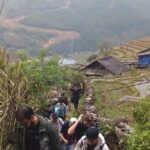
Cat Cat is a strong first stop because it’s close enough to get you moving without exhausting you. You get that early sense of what the trek is about: stair-step paths, mountain air, and a village setting where you’re not just looking at views—you’re walking through lived-in terrain.
This is also where conditions matter. One guest called out that the hike can be slippery and a bit challenging even if the distance sounds manageable on paper. The practical takeaway: wear shoes with real traction and keep your pace steady. You’ll have a better time if you treat the trail like a “watch your footing” experience, not a speed hike.
You’ll also get included meals the same day—lunch and dinner—so you’re not scrambling to find food after trekking. That’s a comfort value you’ll feel on day 1, not later when you’re too tired to think clearly.
Homestay Night in Sapa: Simple, Shared, and Still Part of the Story

The tour includes one night at a homestay, with dinner on day 1 and breakfast on day 2.
Here’s the balanced view: a homestay is part of the appeal—this is where you spend time inside a rural guest setup instead of a standard hotel routine. But the comfort level isn’t something to assume. Some guests noted that the accommodation is shared with many other trekkers and that there was minimal contact with the host family beyond basic hosting.
So, how should you interpret this? If you want a quiet bed and a warm meal after a hike, you’ll likely be satisfied. If you want a deep, family-with-you cultural exchange, you might feel underwhelmed, because the tour structure doesn’t promise much host-family interaction time.
Also keep expectations aligned with what you’re actually paying for. The $109 price bundles transport, guide, meals, and the one-night stay. That means the homestay itself may be basic and group-oriented. If you’re the type who needs privacy, check with the provider before you go—or mentally budget for shared space.
Day 2 Village Circuit: Y Linh Ho, Lao Chai, and Ta Van

Day 2 is where the trek turns into a village-hopping route, with stops at Y Linh Ho, Lao Chai, and Ta Van, then time back in Sapa before the bus to Hanoi.
This set of villages is a smart sequence because it avoids the “one village, then go back” feel. You get multiple viewpoints on daily life, and each stop adds variety—different village layouts, different village rhythms, different angles on the surrounding hills.
The most useful thing to know is that this isn’t a full-day sit-and-look tour. It’s a continuation of walking, just in a different form than day 1. You’ll be on the move enough that the day feels active, and the included lunch helps keep the schedule from turning into a scramble.
One practical note: day 2 ends with the bus back to Hanoi, so plan to treat it like a travel day too. You’ll want to stay hydrated and keep a light pace at the end, because tired legs plus travel seating is not a fun combo.
How Much Hiking Is It, Really? Distances, Pace, and Slippery Spots

A lot of people worry about “trek difficulty” before they book. In this case, the distance is fairly readable: one review mentioned about 15 km total over the full 2 days. That’s not tiny, but it’s also not the kind of trek where you need to be an athlete.
The more important part is pacing and footing. You’ll likely encounter slippery sections, especially in wet or shaded areas. Guides are there for a reason—there to keep you together and moving safely—but you still control whether it feels fun or scary.
The tour advises you should have a moderate physical fitness level, which is the right kind of warning. You should be comfortable walking for a couple of hours at a time, then doing more the next day. If you get dizzy easily on steep steps or you’re not steady on uneven ground, this may feel like more work than you want.
My practical advice: bring trekking shoes, not just sneakers. Keep your time for breaks short and frequent. And if you feel yourself rushing, stop and slow down. On these trails, speed is how slips happen.





Price and Logistics: Does $109 Feel Fair?

For about $109 per person, you’re getting a bundle that would cost more if you booked separately:
- pickup (offered) and transport between Hanoi and Sapa
- guide support
- homestay for one night
- meals (lunch and dinner day 1; breakfast and lunch day 2)
- bottled water and coffee/tea
- assorted fees included in the package
That’s why the price can feel fair. You’re not only paying for the hiking; you’re paying for the coordination and the meal coverage, which is where many “cheap” tours secretly become expensive.
Also, the group size cap at 15 travelers matters. In a group this size, you’re less likely to get lost in the shuffle and more likely to keep a comfortable walking rhythm with your guide.
Two caveats based on real feedback:
1) commentary can be basic, meaning you might get short explanations but not a long lecture on the region’s history
2) the homestay setup may be shared, which some guests didn’t expect
If you go in knowing that, $109 reads like a good deal. If you need private comfort and lots of deep history, the value may feel less “worth it.”
What’s Included (and What to Bring) for a Smooth Trek

This tour includes breakfast, lunch, dinner, bottled water, and coffee and/or tea. It also includes fuel surcharge and various fees tied to facilities.
What you shouldn’t count on: drinks, personal travel insurance, and tips. That means you should bring a bit of cash for small extras and set aside a tip if your guide earns it.
Packing wise, the data you do have points strongly to one thing: traction. Since the hikes can be slippery, bring shoes with grip. Also pack light layers. Mountain weather can swing quickly in Sapa, and day 2 is partly a travel finish (bus back to Hanoi), so you’ll want to stay comfortable when you’re not actively walking.
And since this is a homestay night, bring what you’d normally bring for a simple overnight: a small towel if you think you’ll need one, and any personal items you rely on daily.
Should You Book This 2 Days 1 Night Sapa Trek?

I’d book it if you want a guided Sapa experience that’s good value, includes meals, and keeps logistics simple. The route through Cat Cat, plus village time in Y Linh Ho, Lao Chai, and Ta Van, is the kind of itinerary that helps you understand what daily life looks like outside the main tourist lanes.
I’d hesitate if you need a private homestay setup or you’re expecting lots of one-on-one host-family time. The homestay being shared with many other trekkers is the biggest mismatch reported in feedback.
If you’re aiming for a friendly, energetic guide experience—people specifically mention guide energy and helpfulness—and you can handle moderate walking with careful footing, this tour is a strong pick.
If you want, tell me your travel month and your hiking comfort level (easy/moderate/hard). I can suggest what to prioritize for shoes, clothing, and how to pace the slippery sections.
FAQ
How long is the Sapa trek and homestay?
It’s a 2-day tour with an overnight homestay on day 1.
Where does the trip start?
The trip starts at 6:30 am.
Is pickup included?
Pickup is offered as part of the tour.
Where does the itinerary include walking?
Cat Cat Village includes a walk of about 5 km and typically 2–3 hours.
Which villages are visited during the trek?
The tour includes Cat Cat Village, Y Linh Ho, Lao Chai, and Ta Van.
Is homestay accommodation included?
Yes. There is one night of accommodation at a homestay, and there is no accommodation included on day 2.
What meals are included?
Breakfast is included on day 2. Lunch is included on both days. Dinner is included on day 1.
What is not included in the price?
Drinks, personal travel insurance, and tips are not included.
Is there a limit on group size?
Yes. The tour has a maximum of 15 travelers.
Is the tour refundable if I cancel?
No. It is non-refundable and cannot be changed for any reason.