REVIEW · HAVELOCK ISLAND
Ancient Lava Stream Trek through dense Tropical forest.
Book on Viator →Operated by Seashell Habitat Institute Activity Centre · Bookable on Viator
Lava, ropes, and botany on one hike. On Havelock Island, this trek mixes ancient lava stream ideas with real-world plant talk, and I love how the guide’s explanations connect what you see to how the islands and wildlife likely developed. I also like the hands-on look at an areca nut (betel nut) plantation instead of just passing farmland. The main drawback to plan for: the trail can get slippery and includes rope-assisted climbing and rappelling, so it is not a good fit if you have back, knee, or cardiovascular issues.
You’ll move from coastal forest into areca nut plantations, then deeper into dense tropical forest before reaching a freshwater stream. Along the way, you’ll be watching endemic flora and fauna adapted to the island’s conditions, and you should come away with a clearer sense of the island’s formation.
The experience runs about 2 hours 30 minutes and caps at 15 travelers, so it stays active and personal. It starts at 1:00 pm from the Govind Nagar area and returns you to the same meeting point, and you’ll use a mobile ticket—just note that an air-conditioned vehicle is not included.
In This Review
- Key things that make this trek worth your time
- Ancient lava stream trekking: what the geology adds to your hike
- Coastal forest to areca nut plantations: two worlds in one route
- Dense tropical forest and the freshwater stream: the pay-off you can feel
- Rope-assisted climbs and rappelling: be honest about fitness and footing
- Timing, group size, and meeting point: plan like a local
- Price and value: what $33.56 really buys you
- Weather matters more than you think on this route
- Who should book this trek (and who should skip it)
- Should you book the Ancient Lava Stream Trek through dense tropical forest?
- FAQ
- Where does the Ancient Lava Stream Trek start on Havelock Island?
- How long is the trek?
- What time does the tour begin?
- What’s included in the price?
- Is transportation included?
- Is the trek suitable for people with physical limitations?
Key things that make this trek worth your time
- Ancient lava stream context: you get to see evidence tied to how the islands formed.
- Botany and geology explanations: the walk is more field-lesson than sightseeing.
- Areca nut plantation peek: you’ll observe beetle nut, planting, and harvesting life.
- Dense tropical forest + endemic species focus: you’re encouraged to look for island-adapted plants and animals.
- Rope-assisted climbs and rappelling: fun for capable hikers, risky if you have mobility limits.
- Small group and good-weather dependent: max 15 people, and the trek requires suitable weather.
Ancient lava stream trekking: what the geology adds to your hike
This is not a generic walk in the woods. The whole experience is built around the idea of reading the island like a story—starting with an ancient lava stream and how that kind of geology shapes land and habitats.
In practical terms, that means you’re not only walking through green scenery. You’re paying attention to evidence in the ground and surroundings that help explain why certain parts of the landscape look the way they do. When a guide keeps tying the visuals back to geology, the trek feels more purposeful and less like you’re just checking off nature photos.
I especially like hikes that help you “see with your brain,” not just your phone camera. Here, the geology angle gives you a framework: as you cross coastal forest, then plantation edges, and then deeper tropical paths, you can understand why different zones might exist close together.
Coastal forest to areca nut plantations: two worlds in one route
The trek starts in coastal forest, where the air, shade, and ground cover tend to feel different from inland trails. Even without naming species, you’ll likely notice plants growing in tighter clusters and the way the forest floor holds onto moisture. That coastal-to-plantation transition is exactly where this tour earns its keep, because it shows how natural and human landscapes overlap.
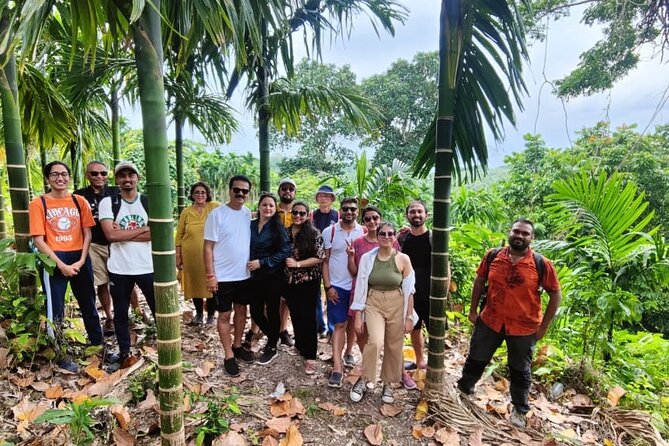
Then you move into an areca nut plantation area. This is where the experience gets unusually grounded. Instead of only admiring trees, you get a peek into the life connected to beetle nut planting and harvesting—how people work the land and what that looks like in everyday practice.
Why this matters for you: areca nut is a major part of local agriculture in the region, so it’s not just a scenic detour. It’s a cultural lens. You’re walking through places shaped by work, not untouched wilderness, and that makes the trek feel more authentic and real.
The upside is that you’ll likely leave with more than just “forest was pretty” memories. You should come away with a better sense of how people and the island ecosystem share space.
Dense tropical forest and the freshwater stream: the pay-off you can feel
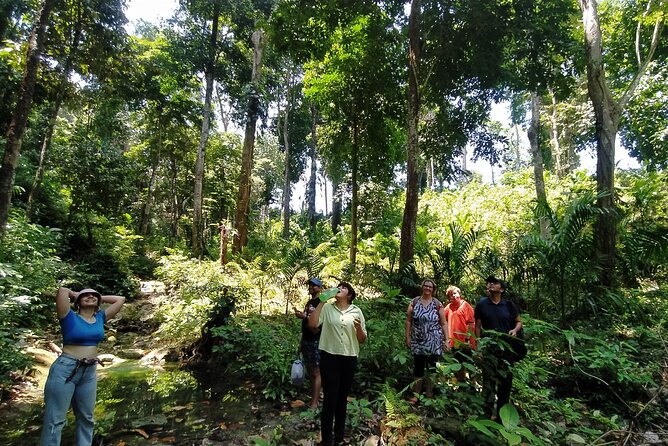
After the plantation segment, the route pushes into dense tropical forest, which is where the trek’s sensory payoff kicks in. Expect thick greenery, shade changes, and paths that feel less like a paved trail and more like a guided way through natural ground.
This part is also where the endemic focus makes sense. Islands often have species adapted to local conditions, and dense tropical forest is the kind of environment that supports that adaptation. You’re not just walking through greenery—you’re watching for wildlife cues and the plant forms that suit this specific habitat.
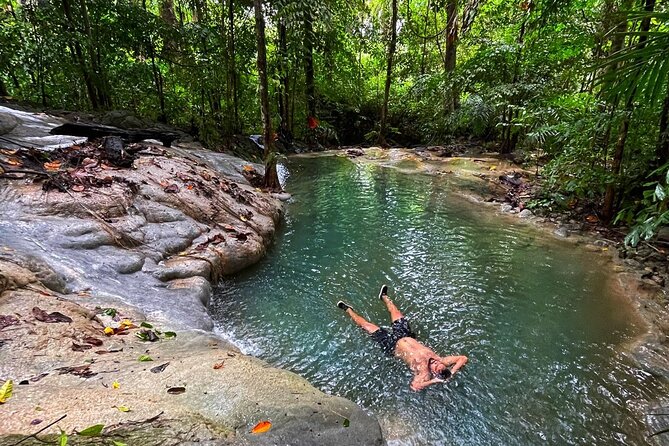
Then comes the freshwater stream. That ending matters more than you might think. A freshwater point is often where life concentrates: moisture-loving plants, shifting bird activity, and small signs of animal movement. Even if you don’t spot dramatic wildlife, the stream adds an “anchor” to the trek—something concrete at the end that reinforces why tropical forests don’t just stay green; they function.
Rope-assisted climbs and rappelling: be honest about fitness and footing
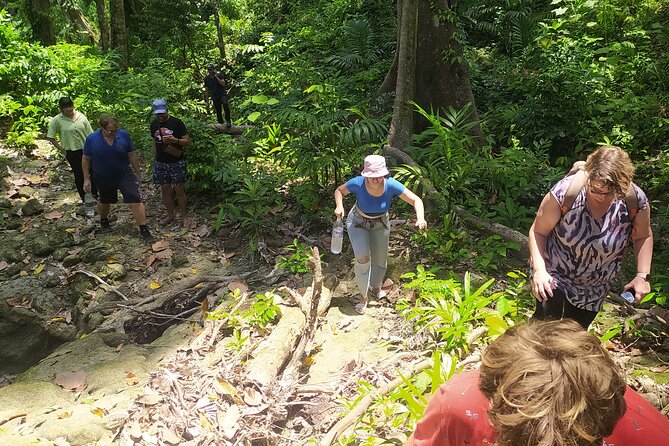
Here’s the big reality check. This trek includes rope-assisted climbing and rappelling sections, and it can get slippery. That changes how you should judge the difficulty.
The tour is not recommended if you have physical issues—especially with your back or knees—or if you have cardiovascular weaknesses. It’s also not for anyone who tends to feel shaky under stress or on unstable ground. This isn’t a “safe and casual” rainforest stroll.
If you’re planning to go, think about two things before booking:
- Can you handle steep, slippery surfaces without needing to stop constantly?
- Can you manage controlled descents and awkward footing if the trail is wet?
If the answer is unsure, it’s worth choosing a less technical hike. Ropes can help, but they don’t erase the physics of slipping.
For you, the upside is that if you are comfortable on uneven trails, the rope sections can add real adventure and a sense of accomplishment. For the wrong person, it’s just stressful. The difference is your body and your comfort with traction.
Timing, group size, and meeting point: plan like a local
The trek starts at 1:00 pm and runs about 2 hours 30 minutes. It returns to the same meeting point, so you’re not left scrambling to find a ride afterward.
The group size is capped at 15 travelers. That’s a sweet spot. You should get enough attention to ask questions during botany and geology moments, and you’ll also move at a pace that feels like a guided route rather than a slow parade.
Meeting point is listed as 7M3JXXM5+63HXXM5+63H Govind Nagar, Andaman and Nicobar Islands, India. If you’re relying on a driver or mapping app, I’d double-check the exact pin before you leave. With a 1:00 pm start, being even a bit late can cut into your experience.
Also, an air-conditioned vehicle is not included. That’s not a deal-breaker, but it affects your day. If the heat is a factor for you, plan to cool down after the hike and keep water access in mind through your broader schedule.
Price and value: what $33.56 really buys you
At $33.56 per person, this trek isn’t expensive. But the better question is what you get for the price.
You do get:
- all fees and taxes included
- a mobile ticket
- a guided route with botany and geology explanation
- a structured experience length of about 2.5 hours
- a small group limit (max 15)
What you do not get:
- an air-conditioned vehicle
That combination is why the value can be strong. You’re paying mainly for a guided, technical, educational hike—plus the provider handles fees and the setup. If you want the convenience of a private guide only for your own group, this won’t be that. But if you’re traveling with flexibility and you want an informative trek without a big price tag, it’s a solid match.
One more value detail: the experience tends to be booked about 6 days in advance on average. That suggests limited availability. If you’re traveling during a popular window, I’d lock in your plan early rather than hoping last-minute space opens up.
Weather matters more than you think on this route
This trek requires good weather. The reason is obvious once you consider slippery rope-assisted sections and rappelling: rain and poor conditions don’t just make things wetter—they can change traction and overall safety.
If the experience gets canceled due to poor weather, you’ll be offered a different date or a full refund. That’s a fair setup, and it gives you some control over planning.
What I recommend for your schedule: build some buffer around the trek day. If you’ve scheduled tight transfers right after the hike, you may feel stressed if timing shifts due to conditions. A little breathing room makes the whole trip smoother.
Who should book this trek (and who should skip it)
This is best for hikers with moderate physical fitness who are comfortable moving over uneven, sometimes slippery ground. If you like learning while you walk, this also fits you well—especially if you enjoy botany and geology.
If any of these are true, I’d consider passing:
- back or knee issues
- cardiovascular weaknesses
- overall difficulty with controlled climbing or rappelling
- low comfort with slippery surfaces
If you’re in that safer zone—solid mobility, steady footing, and willingness to follow guide instructions—this can be a standout Havelock experience. The mix of ancient lava context, areca nut farming life, dense tropical forest, and a freshwater stream ending is a rare combo in one route.
Should you book the Ancient Lava Stream Trek through dense tropical forest?
I’d book it if you want a hike with real structure: geology and plants explained as you go, a look at how local agriculture works nearby, and the added thrill of rope-assisted sections. The small group size and educational focus make it feel more like a guided adventure than a casual stroll.
I’d skip it if you want an easy walk, or if you’re concerned about back, knee, or cardiovascular strain. The technical elements and slippery potential are not the place to test your limits.
If you’re a capable hiker who likes learning on foot, this is a strong choice on Havelock Island—especially for the geology-and-botany angle paired with real-world areca nut context.
FAQ
Where does the Ancient Lava Stream Trek start on Havelock Island?
It starts at 7M3JXXM5+63HXXM5+63H Govind Nagar, Andaman and Nicobar Islands, India, and it ends back at the same meeting point.
How long is the trek?
The duration is about 2 hours 30 minutes (approx.).
What time does the tour begin?
The start time is 1:00 pm.
What’s included in the price?
All fees and taxes are included.
Is transportation included?
No. An air-conditioned vehicle is not included.
Is the trek suitable for people with physical limitations?
It requires moderate physical fitness and it is not recommended for anyone with physical issues, especially back, knee, or cardiovascular issues or weakness.