REVIEW · CATANIA
Piano Provenzana: Guided Mt. Etna Snowshoeing Trek
Book on GetYourGuide →Operated by Guide Vulcanologiche Etna Nord · Bookable on GetYourGuide
Snow and volcanoes in the same 3-hour walk is rare. This Etna snowshoeing trek takes you through dark lava ground and bright winter snow while a volcanology guide explains what you’re seeing. You also get big coastal views over Giardini Naxos and Taormina when the weather plays nice.
I especially like the mix of science and scenery: you’re not just walking, you’re reading the mountain as you go. The other standout for me is the crater-side viewpoint at around 2200 meters, with Etna’s active summit gases in the distance. One thing to consider is that this is a cold, uphill trek on uneven volcanic terrain, so it may not suit you if you have health limits, fear of heights, or low fitness.
In This Review
- Key things to know before you go
- Why this Piano Provenzana Etna snowshoe trek feels special
- Getting started: the chairlift zone and the 1800m winter start
- The sea-to-volcano view is the payoff you can actually plan for
- Crossing lava flows and seeing what eruptions leave behind
- Photo stop timing: when you’ll actually get the camera-ready moments
- Reaching the large side craters near 2200m
- Price and value: what $44 buys you on Etna
- What’s included vs. what you’ll want to rent
- What to pack (and what not to wear)
- Timing, terrain, and who this trek fits best
- The guide factor: why the route matters less than who explains it
- Should you book Piano Provenzana Etna snowshoeing?
- FAQ
- How long is the Piano Provenzana snowshoeing trek on Mt. Etna?
- Where do I meet the guide?
- What’s included in the $44 price?
- Do I need to rent snowshoes or trekking poles?
- Can I rent shoes or a windbreaker if I don’t have the right gear?
- What route distance and elevation should I expect?
- What languages are the guides?
- Is this trek suitable for people with mobility issues or medical conditions?
Key things to know before you go
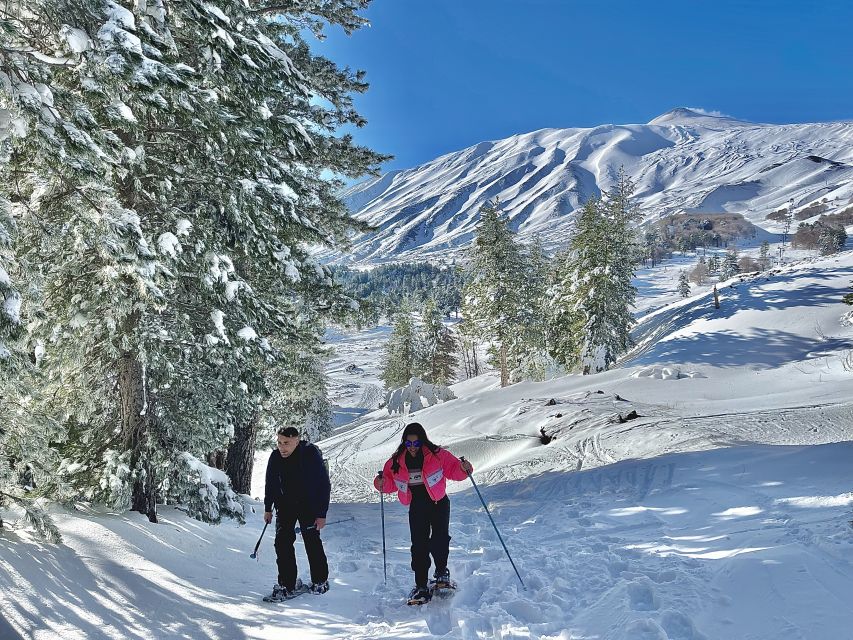
- Snowshoe route starting around 1800 meters in a Sicilian winter forest zone
- 5 km round trip with about 300 m total positive elevation gain
- Lava-flow crossings and ruined structures from the 2002 eruption area
- Sea views toward Giardini Naxos and Taormina, with Calabria on clear days
- Crater panorama from the larger side craters up near 2200 meters
Why this Piano Provenzana Etna snowshoe trek feels special
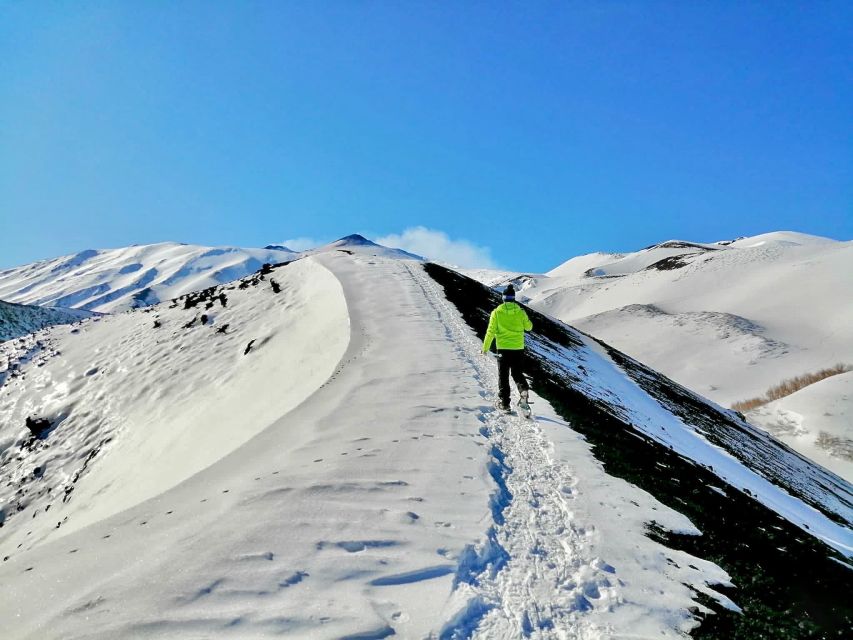
Etna has a way of making ordinary hiking rules disappear. Instead of a typical trail that just leads to a view, you’re walking across a living geological story—snow on top of ground shaped by past eruptions. The contrast is the whole point: snow-bright air above, and black volcanic rock scars below your boots.
What makes this outing worth your time is that it stays practical. You’ll follow a marked route with photo stops, and your volcanology guide helps you connect shapes and layers to the volcano’s behavior. That changes how you look at what’s around you. A fracture becomes a clue. A crater rim becomes a viewpoint with context.
The other big win is the timing and pacing. Three hours is short enough to be realistic, but long enough to feel like you actually walked somewhere meaningful—from Piano Provenzana’s area up toward larger side craters.
You can also read our reviews of more tours and experiences in Catania.
Getting started: the chairlift zone and the 1800m winter start
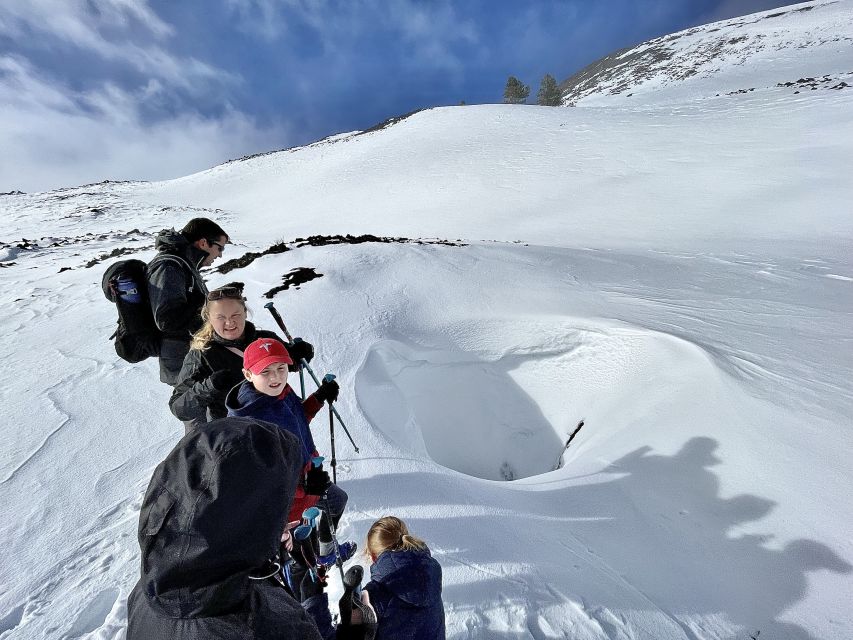
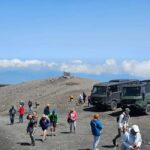
Your meeting point is the parking area near the active chairlift at Etna Nord in winter, outside Chiosco Bar Mareneve. This matters because you’re starting your hike close to the winter access point, and the group spends the early moments getting ready to move safely.
At Piano Provenzana, you’ll get a brief setup window: you start with a bit of free time and then a safety briefing that lasts about 15 minutes. After that, there’s a photo stop (around 10 minutes) where you can reset your stance, adjust your gear, and start spotting the changes in ground texture as you leave the immediate starting area.
Then you move into the real hiking rhythm with a guided segment of about 20 minutes. The route begins in a snowy forest area at roughly 1800 meters, so expect cold air, traction work, and that quiet winter feeling you only get on volcano slopes. If you’ve never used snowshoes before, this is also where you’ll learn quickly what kind of steps you need—short and controlled beats long and frantic.
The sea-to-volcano view is the payoff you can actually plan for
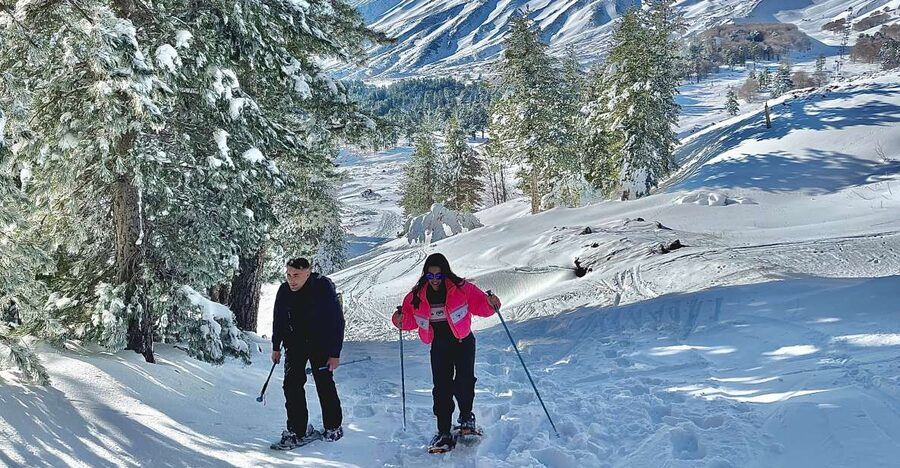
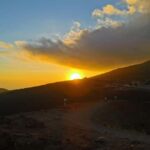
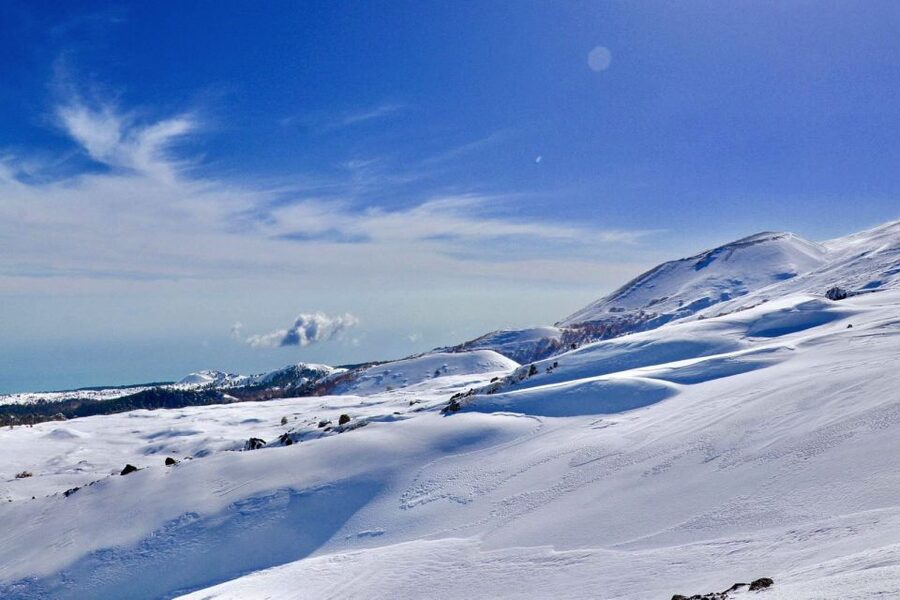
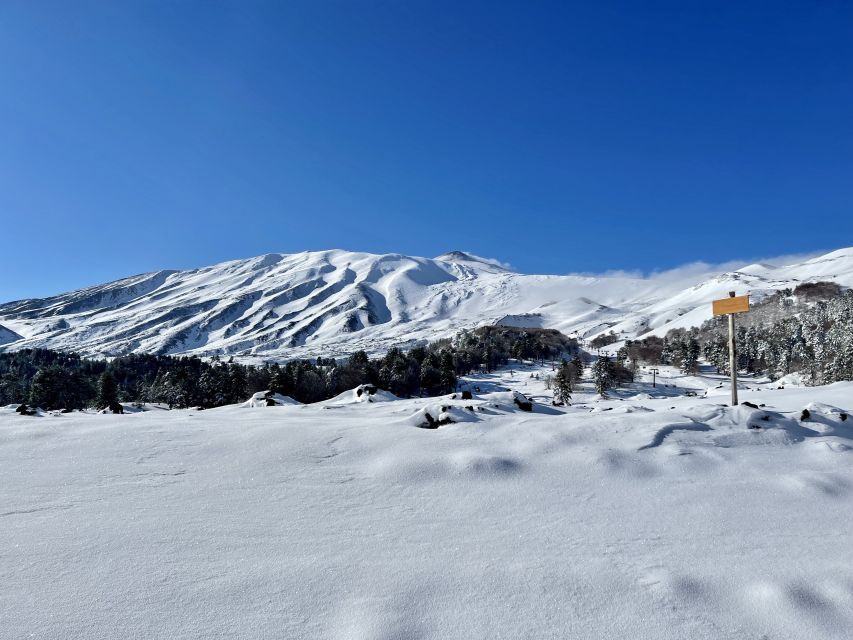
Along the route, you get regular chances to look outward. The view aims you toward the coast: the sea of Giardini Naxos and Taormina often shows up well when visibility is good. On especially clear days, you can even see Calabria.
This part is valuable for two reasons. First, it helps you orient yourself in a place where the terrain can feel “all slope.” Second, it gives you scale. On Etna, it’s easy to get focused on the trail under your feet. The coastal sightlines remind you how dramatic the volcano’s reach is.
Real talk: winter visibility isn’t guaranteed. If clouds or fog roll in, the crater and snow still matter, but the horizon views will be less impressive. That’s why the guide’s call on conditions matters.
Crossing lava flows and seeing what eruptions leave behind
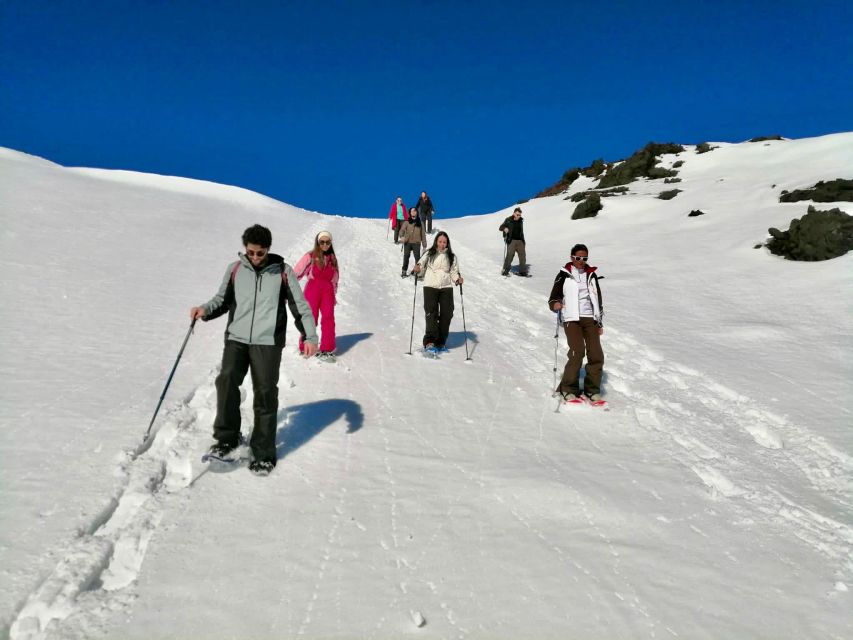
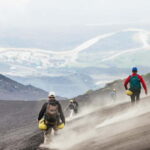
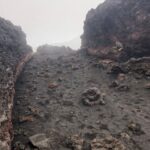
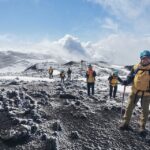
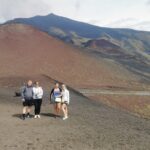
The hike doesn’t just pass pretty scenery. You’ll cross lava flows from eruptions on Etna’s north side, and you’ll also move through areas connected to destroyed structures from the 2002 eruption, including the area where the tourist resort of Piano Provenzana was affected.
Here’s what I find useful about this portion: the terrain isn’t random. You’re walking through evidence—dark rock paths, broken ground, and the kind of fractures that tell you how the volcano moved heat and material. Even when snow covers parts of the route, the volcanic shapes still show through.
Expect to see a mix of features as you go: woods and snow in one stretch, then lava flows, fractures, and lateral craters as the route climbs. That contrast is exactly what makes Etna so memorable. You’re walking over old impact, not just looking at a single dramatic peak.
Photo stop timing: when you’ll actually get the camera-ready moments
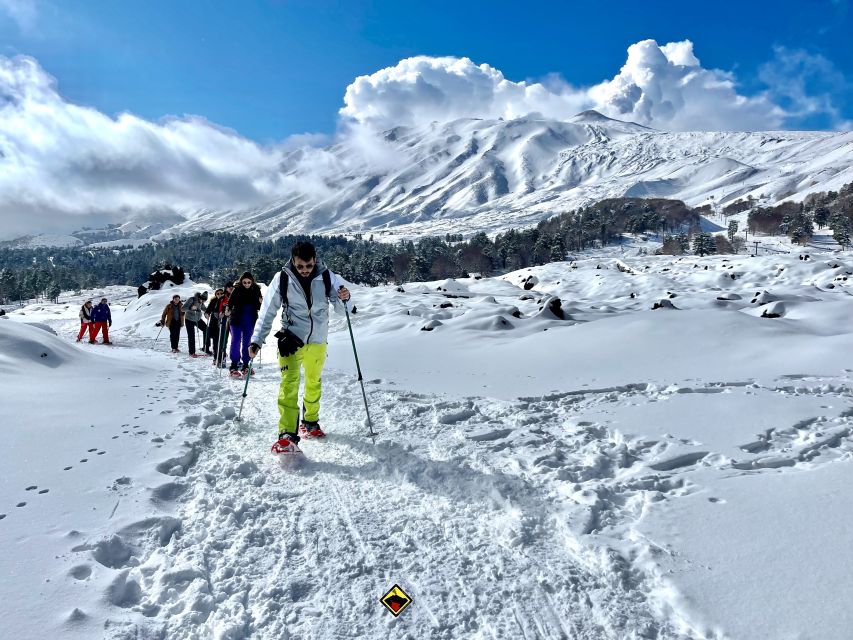
There are multiple built-in pauses, which I like because they reduce the “always hiking, never photographing” problem.
After the initial segment, you’ll get:
- another photo stop and sightseeing period around 30 minutes
- a guided tour component in that same stretch, so you’re not just stopping—you’re learning something while you pause
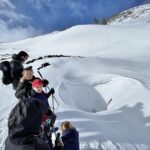
That 30-minute block is where the day typically becomes easiest to remember. You can take photos without feeling rushed, and you also get time to notice how snow gathers on slopes and rock edges.
The day ends with a return to the same meeting point area at Chiosco Bar Mareneve, so you’re not dealing with complicated logistics in the middle of a cold trek.
Reaching the large side craters near 2200m
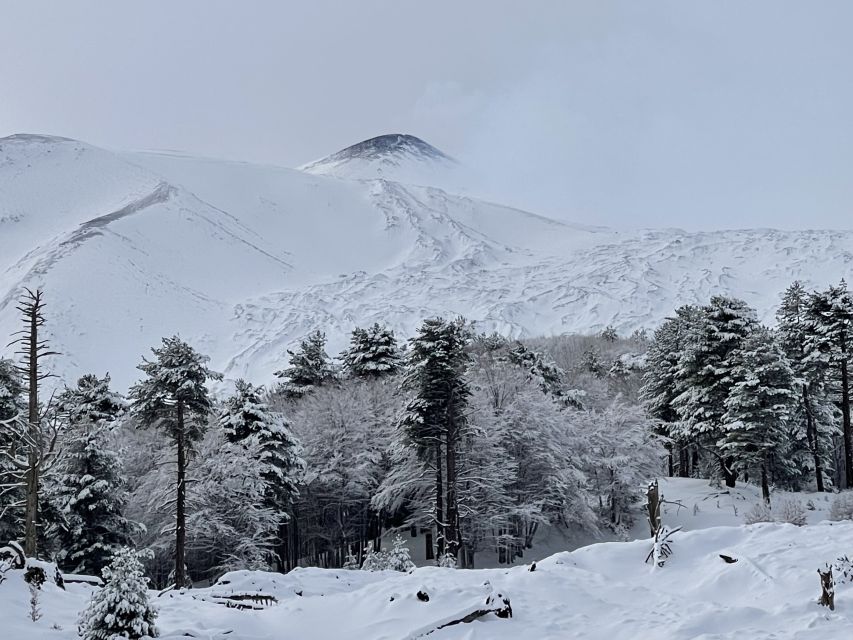
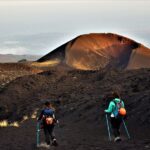
The climb finishes near the larger side craters at about 2200 meters. This is the “wow” zone, not because the route becomes difficult in the last minutes, but because you finally get the panoramic payoff with real volcanic context.
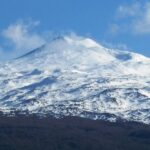
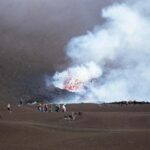
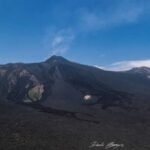
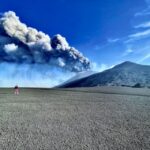
From here, you can admire the panorama of Etna, including the snow-covered volcano up toward the summit. The emphasis is also on the fact that Etna is still active. You may see volcanic gases coming from the top area, which adds a live element to what you’re seeing.
This is also where a fear-of-heights issue can show up. Even if you don’t face an exposed ledge, the crater-adjacent terrain can feel steep. If you’re the kind of person who gets uncomfortable with big drop-offs or you hate looking down at rough ground, talk yourself through it early—or choose a different activity.
Price and value: what $44 buys you on Etna
At $44 per person for a 3-hour guided trek, the cost is mostly about two things: the guide service and the specialized winter context. You’re not just paying for movement; you’re paying for interpretation. The route connects snowy forest, lava scars, and crater viewpoints, and the volcanology guide service helps you understand why it looks the way it does.
What’s not included is a key part of value planning. You’ll likely want to rent:
- Snowshoes + trekking poles for €12 per person
- Trekking shoes for €5 per pair (if you don’t have the right footwear)
- A windbreaker might be rented on-site for €5 if you need it
So your realistic total can vary based on what gear you already own. Still, even with rentals, the guided component plus the unique crater-and-lava route is the reason this trek feels like a bargain compared to doing similar views without a local guide.
What’s included vs. what you’ll want to rent
Included:
- Volcanological guide service
Not included (commonly needed for winter comfort and safety):
- Snowshoes + trekking poles (€12 per person)
- Snack
- Ski suit
- Bottled water
- Windbreaker (can be rented on the spot at €5)
- Trekking shoes (€5 per pair)
- Jacket
You can absolutely do this day without bringing everything from home, but you should plan to buy time on-site for rentals and to dress for real cold. The guide will handle route safety and volcanic context; you’re responsible for staying warm enough to enjoy the views.
What to pack (and what not to wear)
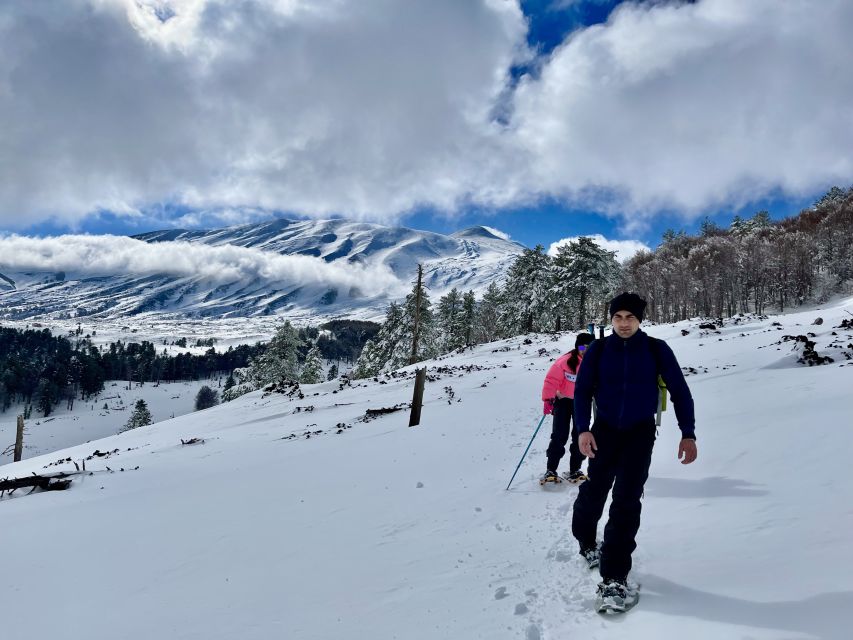
For this trek, your clothing needs to handle wind, snow, and the kind of cold that creeps into exposed skin if you miss a layer.
Bring:
- warm clothing and a jacket
- gloves and a hat (gloves and hats aren’t included)
- sunglasses (snow glare is real)
- sunscreen
- rain gear in case weather shifts
- long pants and breathable layers
- snow-appropriate clothing and comfortable outdoor wear
- change of clothes for later
Wear:
- hiking shoes or boots that suit winter footing
Don’t wear:
- high-heeled shoes
- sandals or flip-flops
- open-toed shoes
This is also a good day to bring your own steady mindset. You’re moving on snowshoe equipment, and you’ll be happier if your body knows it’s doing a short uphill effort rather than a leisurely walk.
Timing, terrain, and who this trek fits best
This is a 3-hour trek over about 5 km round trip. The elevation gain is roughly 300 meters positive, which sounds modest. The catch is the volcanic ground plus snow and the fact that snowshoe steps take a bit of energy.
The meeting time in winter can shift earlier—sometimes as early as 8:45/9:00—to help you find parking, since the chairlift area can get busy with skiers. If you show up late, you’ll feel it. If you arrive early, the day starts calmer.
As for who should skip it:
- back problems
- mobility impairments
- heart problems
- respiratory issues
- epilepsy
- high blood pressure
- recent surgeries
- low fitness
- anyone afraid of heights
If you don’t have those constraints and you like learning while you hike, this is the kind of outing that makes Etna feel real, not postcard-flat.
The guide factor: why the route matters less than who explains it
The guide service is the heart of this experience. The activity is listed as volcanological, and that shows in how the day is structured: safety briefing first, then short guided segments, then crater viewpoints, with time for photos during key moments.
In one of the best parts of the day, the guide helps you connect the dots between what you see—snow, lava flows, fractures, and craters—and what those features mean in an active volcanic system. That’s why the hike doesn’t feel like a chore. It feels like walking with a teacher who knows exactly where to stop your feet and where to lift your eyes.
Should you book Piano Provenzana Etna snowshoeing?
If you want Etna in a different season, on snow-covered ground with active-volcano context, this is a strong pick. The price is fair for a guided winter crater-and-lava trek, and the route hits the sweet spot of learning plus views without turning into an all-day endurance event.
I’d book if:
- you can comfortably handle a cold, uphill hike on uneven terrain
- you’re curious about what eruptions leave behind
- you like photo stops built into the schedule, not improvised on the fly
- you’ll bring your own gloves/hat and dress warm enough to enjoy the panorama
I’d skip or choose another option if:
- you have any of the listed medical constraints
- you’re uncomfortable with heights or steep crater areas
- you’re hoping for an easy flat nature walk
If you match the activity style, this is one of those Etna days that stays in your head because the volcano isn’t distant. It’s right under your boots, with snow turning it into something new.
FAQ
How long is the Piano Provenzana snowshoeing trek on Mt. Etna?
The total duration is about 3 hours.
Where do I meet the guide?
Meet your guide at the parking lot near the active chairlift at Etna Nord in winter, outside Chiosco Bar Mareneve di Ferraro.
What’s included in the $44 price?
The price includes the volcanological guide service.
Do I need to rent snowshoes or trekking poles?
Yes, snowshoes and trekking poles are not included. They can be rented on site from authorized rentals for €12 per person.
Can I rent shoes or a windbreaker if I don’t have the right gear?
Yes. Trekking shoes can be rented on the spot for €5 per pair, and a windbreaker can be rented for €5.
What route distance and elevation should I expect?
It’s a 5 km round trip with a total positive elevation gain of about 300 meters.
What languages are the guides?
The live guides operate in Italian, French, and English.
Is this trek suitable for people with mobility issues or medical conditions?
No. It isn’t suitable for people with mobility impairments, back problems, heart problems, respiratory issues, epilepsy, high blood pressure, recent surgeries, or low fitness, and it may also be challenging for people afraid of heights.