REVIEW · CATANIA
Mount Etna: Guided Trek 3,000 Meters to the Summit
Book on GetYourGuide →Operated by Etna Est · Bookable on GetYourGuide
Etna feels like another planet at 3,000 meters. On this guided trek, I like the volcanologist guide and how the hike brings you right onto the summit craters. You’ll get geology explained in plain language while the mountain does its dramatic job in the background.
Two things really stick: the cable car ride gives you early, high-up views that set the mood, and the guides (often Luca) keep the pace steady so mixed groups can make it safely. It’s also one of those rare tours where you’re not just looking at volcanoes, you’re walking across the leftovers—lava flows, ash, and scarred ground.
The main drawback to consider is physical and weather reality: parts of the path can be exposed, and wind and volcanic gases can make the top feel colder and sharper than you expect. If you wear contact lenses, note they’re forbidden because of volcanic ash.
In This Review
- Key highlights you’ll notice fast
- Mount Etna at 3,000 m: the big idea behind this trek
- La Terrazza Dell’Etna to cable car: where your day starts
- The main hike: from roughly 2,500 m toward the summit craters
- Summit crater time: what it looks like up at 3,000 m
- The 2001 Crater stop at about 2,700 m: a smoking reminder
- Descent plan: 2,500 m again, plus lunch on the way down
- Why the volcanologist guide changes the whole experience
- What to pack for Etna: warm gear, face protection, and real hiking basics
- How hard is it, really? Fitness, vertigo, and safety limits
- Price and value: what $113-ish buys you (and what might cost extra)
- Weather and volcanic risk: why the guide may change plans
- Should you book the 3,000 m Etna summit trek?
- FAQ
- How long is the Mount Etna guided trek?
- What altitude does this tour reach?
- Is the cable car ticket included or do I pay on site?
- What’s included in the price?
- What should I bring for lunch and water?
- Are contact lenses allowed?
- What fitness level is this suitable for?
- Is this tour suitable for children or people with medical conditions?
Key highlights you’ll notice fast
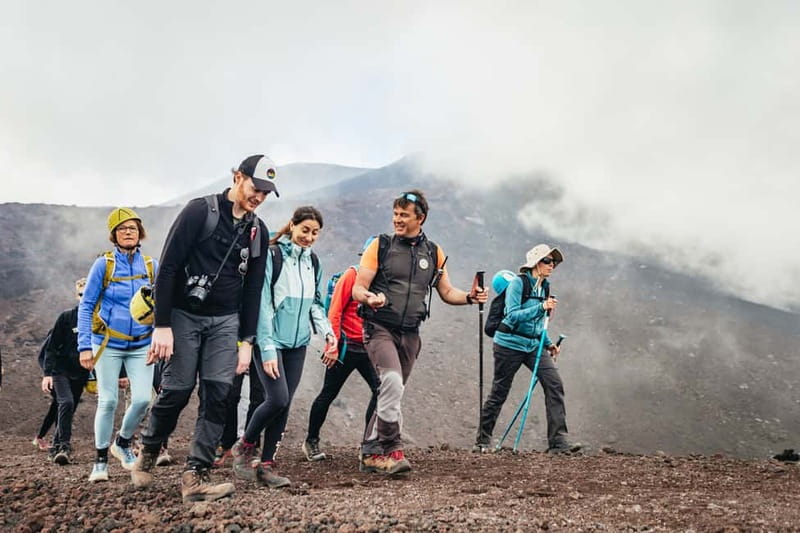
- Volcanologist-led walking with real explanations, not just sightseeing talk
- 3,000 m summit craters on Europe’s tallest active volcano
- Cable car up to about 2,500 m, then hiking to the craters
- 2001 Crater stop at around 2,700 m, still fuming in the right conditions
- Helmets and trekking poles included for the scramble and uneven ground
- Guide support throughout so you can keep moving with confidence
Mount Etna at 3,000 m: the big idea behind this trek
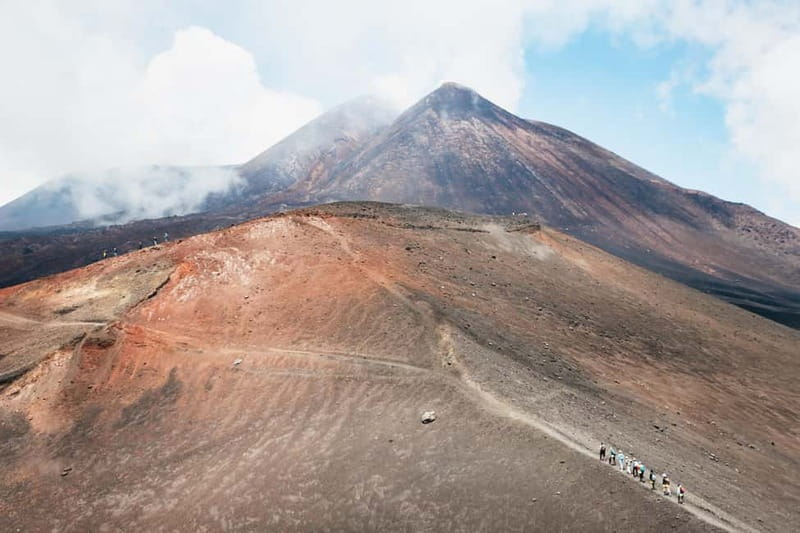
This is the kind of Etna day that feels built around one goal: getting to the summit craters and seeing how the volcano looks when you’re high above the lava fields. The altitude is real, but the tour’s value is in how you get there—on a guided route with gear and a volcanology expert talking as you go.
I also like that this trip doesn’t try to be a lounge-and-take-photos experience. You’re walking for hours over volcanic rock and ash, with enough structure that you’re not just wandering around the mountain.
And yes, the views are the headline. But the better story is what you learn while you’re staring at them.
You can also read our reviews of more tours and experiences in Catania.
La Terrazza Dell’Etna to cable car: where your day starts
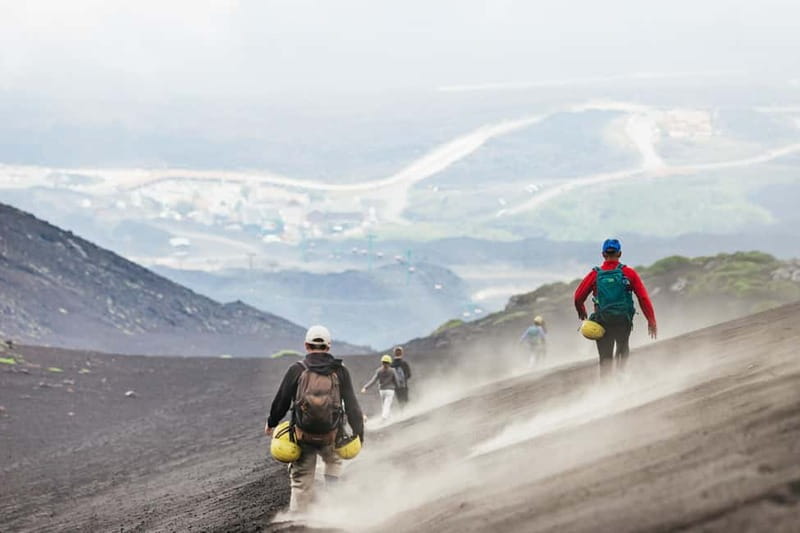
Your day starts back at La Terrazza Dell’Etna, where you meet your guide and get a trek briefing before you start moving. That short orientation matters because the terrain is not like a smooth hiking trail in a park—Etna terrain is uneven, dusty, and sometimes rocky.
Next comes the quick cable car segment, about 20 minutes, taking you up to roughly 2,500 m. Even if you’re not a big “view from above” person, this step helps you acclimate to the height and gives you a sense of scale before the harder walking begins.
One practical note: the cable car ticket situation can be a little confusing depending on how your booking is set up. The trip description says the cable car ticket may be paid on site (listed as 50 EUR on site), so I’d plan for that just in case and confirm what your exact confirmation includes.
The main hike: from roughly 2,500 m toward the summit craters
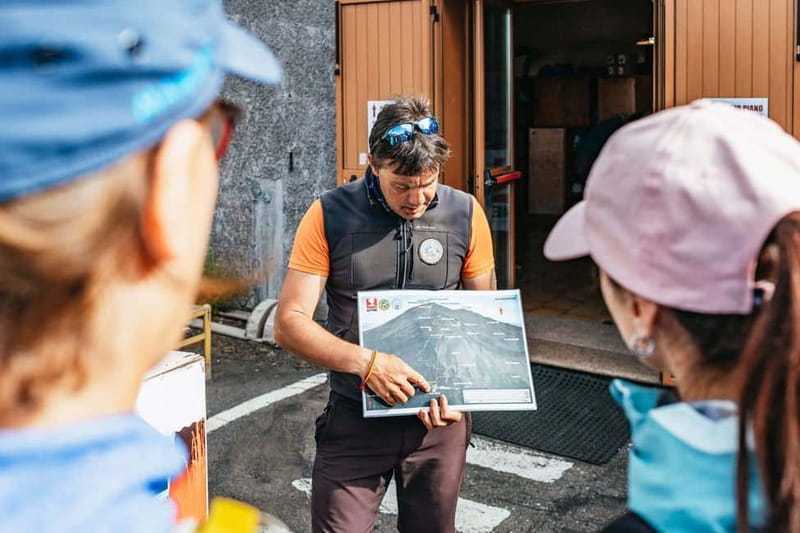
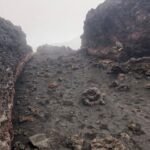
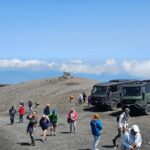
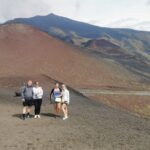
Once you step off the cable car, the walking becomes the heart of the experience. You’ll hike upward toward about 3,000 m, and your guide keeps you moving across volcanic ground that can include ash, rock, and surfaces shaped by older and more recent lava flows.
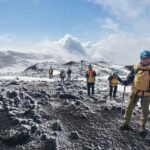
This is where trekking poles (included) can make a big difference. They help with balance on loose rock and reduce stress on the descent, which can feel tougher than the climb.
Your volcanologist guide is also actively shaping the day here. Expect stops where you learn what you’re looking at, and why the ground under your boots looks the way it does. That turns the hike from scenery into a real understanding of how Etna works.
In terms of effort, plan for a solid hike, not a casual stroll. Your comfort will depend on your ability to walk on sand-and-rock type footing when trails aren’t perfectly defined.
Summit crater time: what it looks like up at 3,000 m
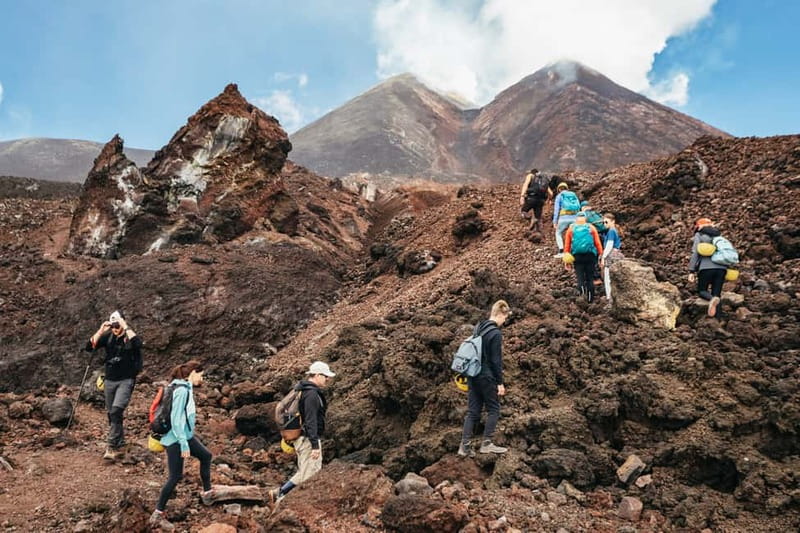
Reaching the summit craters is the moment most people came for. At around 3,000 m, Etna stops feeling like a mountain and starts feeling like a landscape carved by a living system.
The guide typically takes you to the summit crater area for views and observation time, and the exact route can shift depending on conditions. When weather and visibility cooperate, you may be able to see more of the crater edges, which makes the top feel dramatically larger than it does from below.
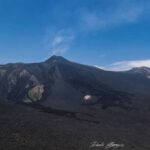
This is also where you’ll likely understand why Etna is described as Europe’s tallest active volcano. Standing at that altitude, you can see how the volcano dominates the surroundings, not as a distant landmark but as the engine of the region.
The 2001 Crater stop at about 2,700 m: a smoking reminder
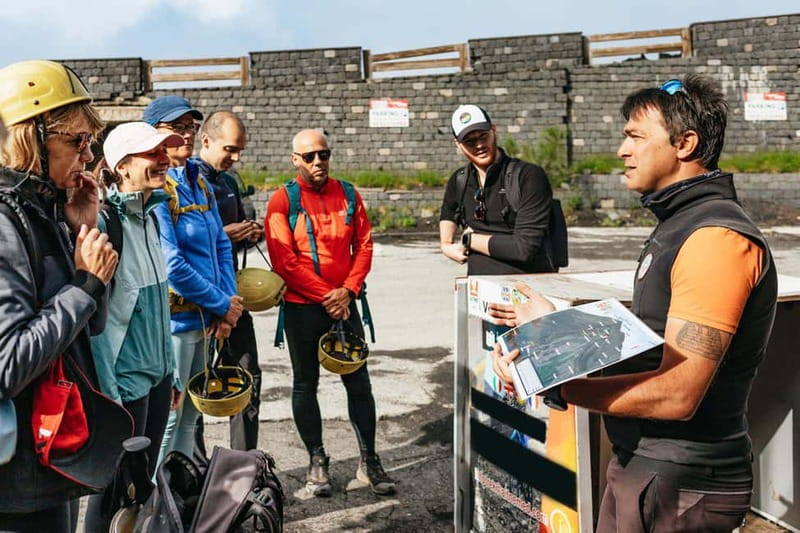
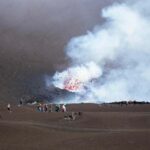
After you spend time near the summit, your route brings you toward the 2001 Crater area at around 2,700 m. This crater is notable because it can still be fuming, which gives you a very direct connection to modern volcanic activity.
That fuming can affect comfort. One good tip from past hikers: bringing something to cover your face can help when gases drift your way. Even basic protection can keep the moment more enjoyable, especially if wind changes your exposure.
The guide is there for safety as well as explanation—so if conditions shift, they can adjust where you go and how long you linger in any one spot. That flexibility is part of traveling safely on an active volcano.
Descent plan: 2,500 m again, plus lunch on the way down
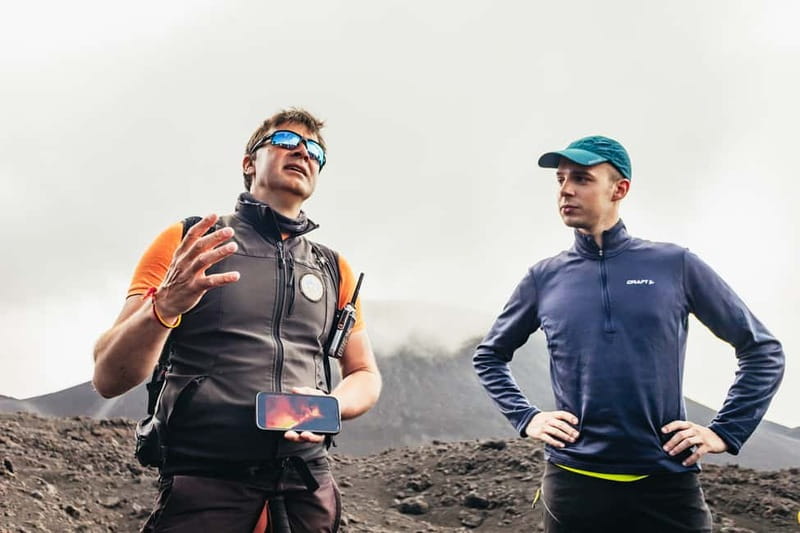
On the way back down, you’ll hike back to around 2,500 m, with a lunch break included in the schedule. Lunch itself is not included, so plan on eating what you pack.
This descent phase is where trekking poles pay off again. Loose gravel and irregular ground are common on volcanic slopes, and your legs will be tired. Going slowly and keeping your footing is the best strategy, even if you feel like you could push.
Once you finish at the lower point, you return to the starting area at La Terrazza Dell’Etna. It’s a full day, but it has a satisfying shape: climb, crater time, crater stop, then a controlled return.
Why the volcanologist guide changes the whole experience
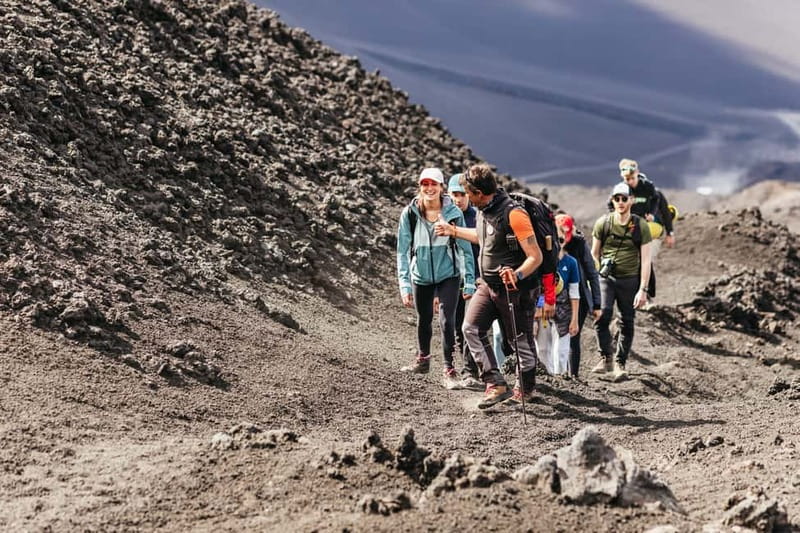
A summit hike without context can feel like a workout plus photos. With this tour, the guide role is the difference between seeing a volcano and understanding what you’re seeing.
The guides have a way of making the science practical. Expect explanations as you walk across the terrain—why certain areas look the way they do, how lava and ash shape what’s on the surface, and how active geology connects to the region you’re traveling in.
I also like the human side. Many guides (including people like Luca, Marco, and Manuel) are described as keeping the group together, adjusting the pace, and turning the hike into something you remember for the talk as much as the views. One small detail that came up repeatedly: they tend to manage mixed comfort levels so nobody feels left behind.
That kind of guidance matters most during exposed sections and windy crater areas, where concentration beats bravado.
What to pack for Etna: warm gear, face protection, and real hiking basics
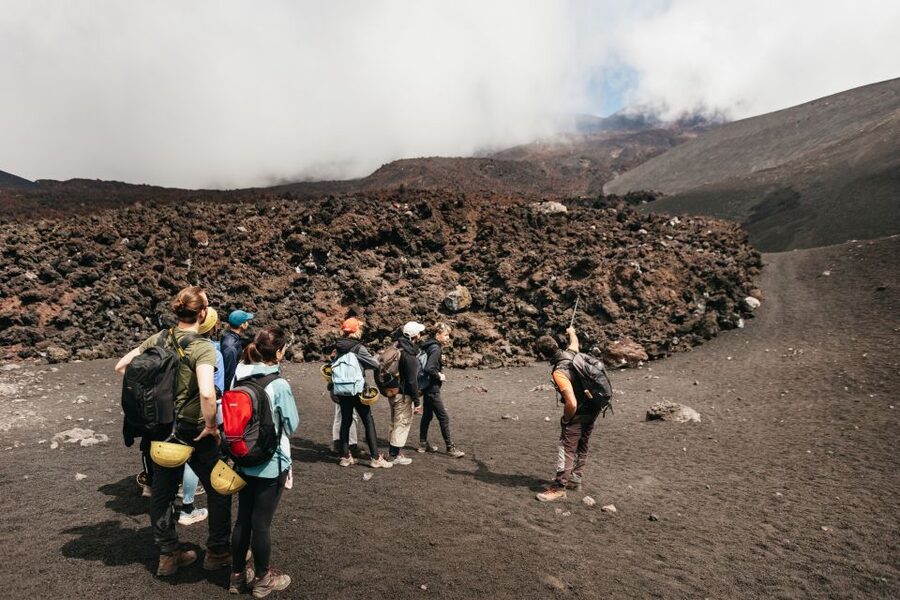
Etna can look sunny and still feel cold at altitude, and wind can cut fast. Pack for “top-of-volcano weather,” not “town weather.”
Here’s what I’d consider non-negotiable based on the tour requirements and smart tips:
- Hiking boots with high socks (rocks get into normal shoes fast)
- Warm layers like a pullover and anorak, plus gloves and a hat if you run cold
- Sunglasses and sunscreen (brightness at height is no joke)
- A 10 to 20-liter backpack with at least 1.5 liters of water
- A packed lunch and a snack for the day
- Optional but smart: a face covering if gases drift your way
Contact lenses are forbidden due to volcanic ash, so if you need vision correction, plan on glasses instead.
Also bring an extra T-shirt and long trousers. Volcanic conditions can be dusty, and you’ll feel better if you have a comfortable layer waiting for you at the end.
How hard is it, really? Fitness, vertigo, and safety limits
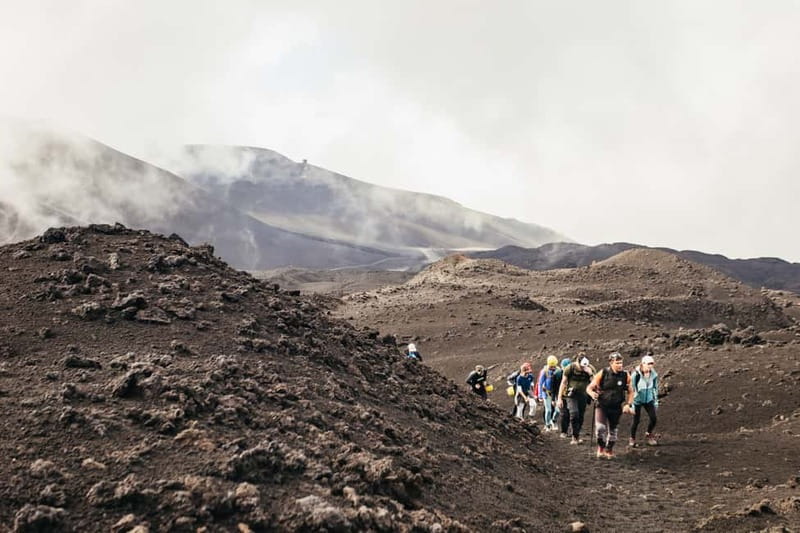
This trek is listed as suitable for people with medium physical training, especially if you’re used to walking on sand and rock when there aren’t perfectly marked trails. Some parts may be exposed, so you need sure footing and the ability to focus even if the views make you feel a little dizzy.
If you have vertigo, heart problems, or respiratory issues, this is not the right fit. It’s also not suitable for children under 10, pregnant women, or anyone with mobility impairments.
You’ll also want to tell the guide about any health conditions or concerns before you start. That’s not overkill; it’s how the day stays safe on uneven terrain at altitude.
My practical advice: if you’re okay with steep, rocky walking and you can move carefully, you’ll probably enjoy this. If you panic at exposure, choose a different Etna experience.
Price and value: what $113-ish buys you (and what might cost extra)
The price listed for this guided summit trek is $113.29 per person, and the inclusions are part of the value story: guide, helmets, trekking poles, and insurance, plus the cable car appears as included on one line while also being stated as an on-site payment in another place.
Because of that internal mismatch, I recommend you treat the cable car as a “check your confirmation” item and be ready for an extra 50 EUR if needed. That one decision can keep the day from feeling stressful.
Once you account for gear and a specialist volcanologist guide, the cost feels more reasonable than it looks at first glance. You’re paying for safety tools (helmet, poles), expert-led crater access, and a full-day guided route at altitude.
Also, the guide’s ability to keep the group on track during changing weather can be worth a lot. On Etna, conditions can shift fast.
Weather and volcanic risk: why the guide may change plans
Schedules on active volcano hikes can change. This tour is upfront about that: weather, environmental factors, and volcanic risks can interrupt the plan, and the guide has discretion over what happens for safety.
In real life, that means you should expect the day to be adaptable. You might spend different amounts of time in certain crater areas, and the route might change depending on wind, visibility, and access.
I’d treat this as part of the deal. You’re going to an active environment, not a theme-park viewpoint with guaranteed conditions.
Should you book the 3,000 m Etna summit trek?
Book it if you want the closest thing to a volcano crash course on foot. If you like guided science, steady challenge, and the payoff of summit craters at 3,000 m, this is a strong pick—especially with a volcanologist explaining what you’re walking over.
Skip it if any of these apply: you can’t handle exposed terrain, you have vertigo, you have respiratory or heart concerns, you use contact lenses, or you’re looking for an easy stroll with minimal altitude stress.
If you do book, go in with the right gear and mindset. Dress for wind, bring a face covering for gases, pack water and lunch, and use the poles. Then you’ll spend the day doing what Etna demands: walking carefully, looking closely, and learning as you go.
FAQ
How long is the Mount Etna guided trek?
The total duration is listed as 6 hours.
What altitude does this tour reach?
You’ll trek up to the summit craters around 3,000 meters, and there’s also a stop at the 2001 Crater around 2,700 meters.
Is the cable car ticket included or do I pay on site?
The details provided show a cable car ticket requirement may be paid on site (listed as 50 EUR). It’s smart to confirm what your specific booking includes.
What’s included in the price?
Included items are the guide, helmets, trekking poles, cable car ticket (noted in one included list), and insurance.
What should I bring for lunch and water?
Lunch is not included, so bring a packed lunch. The guidance also suggests at least 1.5 liters of water, plus a snack.
Are contact lenses allowed?
No. The use of contact lenses is forbidden due to the presence of volcanic ash spread by the wind.
What fitness level is this suitable for?
It’s suitable for people with medium physical training and who are accustomed to walking on sand and rock when there are no trails. Some sections may be exposed.
Is this tour suitable for children or people with medical conditions?
It’s not suitable for children under 10, pregnant women, people with mobility impairments, people with heart problems, people with vertigo, or people with respiratory issues.