REVIEW · CATANIA
Catania: Etna Morning or Sunset Trek with Lava Tunnel & Gear
Book on GetYourGuide →Operated by Etna periperi Excursion · Bookable on GetYourGuide
Etna at first light can feel unreal. This 5.5-hour trek takes you across lunar-feeling lava terrain, then leads you into a lava tube with helmet and flashlight. I love that the walk mixes big volcano scenery with hands-on details, and I also like that the guide points out the living pieces too, not just rocks.
Two things I’d highlight right away: you get a real hike up toward about 2100 meters, and you spend time learning how the lava landscape forms. A key consideration is weather: it can be colder and windier on Etna than in Catania, and conditions can shift the exact timing.
In This Review
- Key Things I’d Watch For On This Etna Trek
- Where You Start in Catania (And Why It Matters)
- The Van Ride Up: Settling Into Etna’s Mood
- Walking Etna’s Lunar Terrain: Craters, Lava Desert, and Unique Plants
- A quick drawback to plan around
- The 2001 Eruptive Theater: Seeing the Volcano’s Stage Up Close
- Lava Tube Gear and Helmet-On Confidence
- The Lava Flow Cave Stop: Why Going Inside Is Worth It
- Secondary Walk Near Via Grotta Lunga: A Short Detour With Big Payoff
- Morning vs Sunset: Choose the Feeling You Want
- What the Price Buys (And What You’ll Need to Budget Extra)
- What to Pack: Cold Wind, Uneven Ground, and Lava Sand
- Who This Trek Fits Best (And Who Should Skip It)
- Small Rules That Affect Your Comfort (So You Don’t Get Surprised)
- How Weather and Timing Usually Play Out
- Should You Book This Mount Etna Morning or Sunset Trek?
Key Things I’d Watch For On This Etna Trek
- Lava tunnel time with helmets and flashlights, so you’re not just looking from the outside
- A guided crater walk over lava deserts and secondary craters, not a quick drive-by
- Morning or sunset options, which changes the feel of the volcano and your photo timing
- Cold, wind, and layers up high (one traveler noted about 10°C cooler than Catania)
- Comfort on uneven black volcanic sand, including a final slope where feet sink into loose lava grains
Where You Start in Catania (And Why It Matters)
The tour starts in central Catania at the meeting point in front of the McDonald’s in Piazza Borsellino, Via Alcalà 13–15. That location is handy because you’re not hunting for a remote pickup at the edge of town. You’ll then ride by van to the volcano area.
This is a short-day format, so those transfers are part of the overall rhythm. Plan to arrive a few minutes early so the group can roll on time. The route is designed to get you hiking while the mountain still feels “active” to your senses, even though you’re not doing anything technical.
You can also read our reviews of more tours and experiences in Catania.
The Van Ride Up: Settling Into Etna’s Mood
After pickup, you head toward Mount Etna by van for about an hour. This matters because you’re going from city routines to altitude and volcanic terrain fast. As you climb, it’s normal to notice a drop in temperature and that sharper wind people talk about.
One traveler specifically noted that on Etna’s higher area temperatures were about 10°C lower than down in Catania, with wind you can feel right away. That’s your cue to dress like you’re going to a cold, windy viewpoint, not like you’re strolling through summer streets.
Walking Etna’s Lunar Terrain: Craters, Lava Desert, and Unique Plants
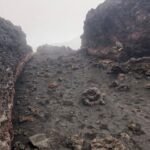
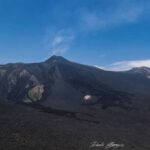
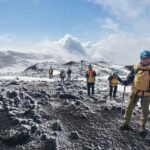
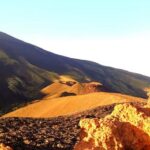
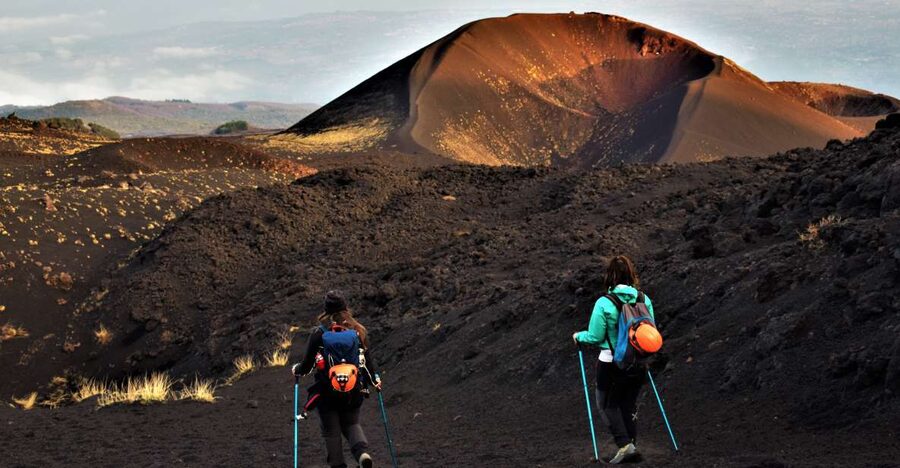
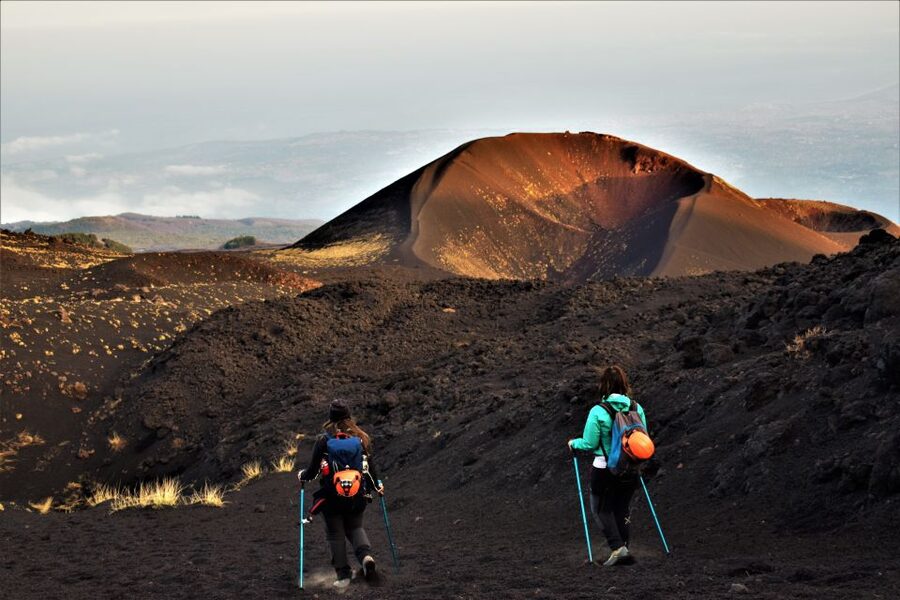
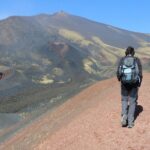
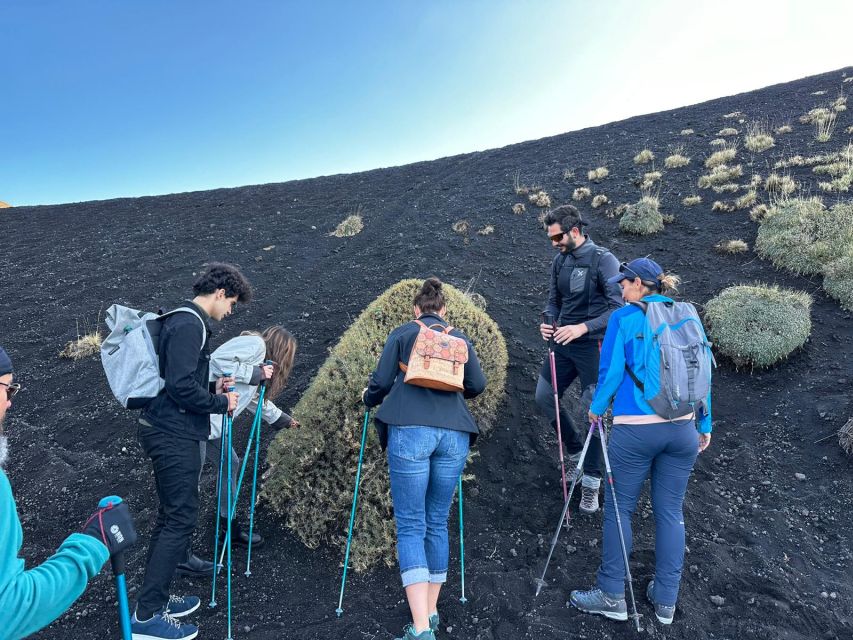
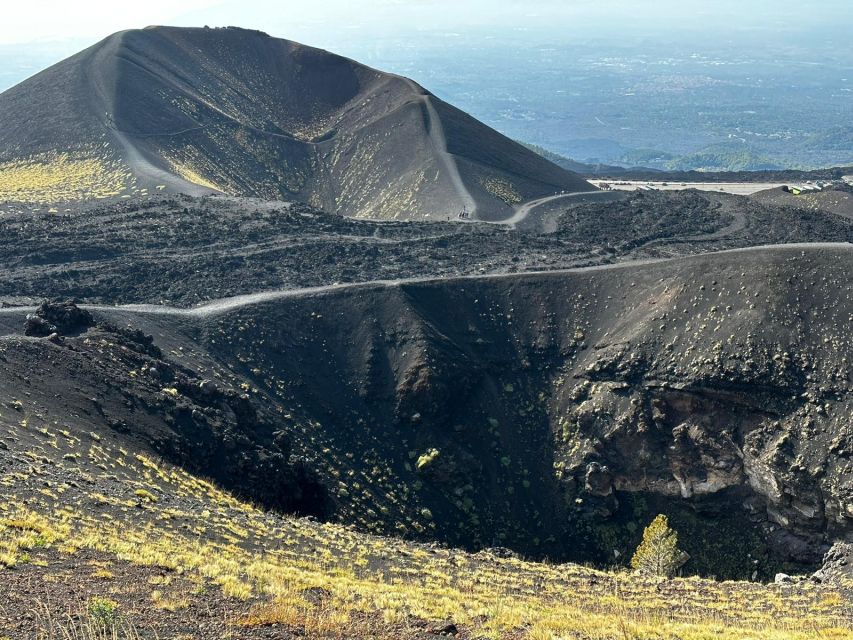
Once you reach Mount Etna, the tour shifts into walking mode. You’ll get a photo stop, a guided section, and roughly 3 hours of hiking. You’re moving across the kind of terrain that looks almost extraterrestrial: lava deserts, recent lava flows, and secondary craters.
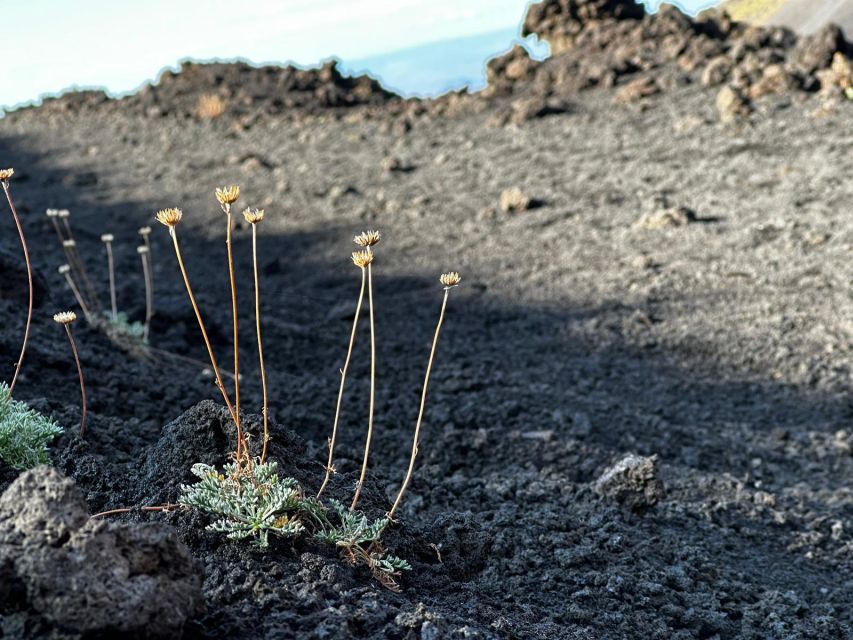
The guide also talks about the volcano’s living side. On Etna, some flora and fauna are adapted to conditions that are hard for plants elsewhere, and the tour is designed to point those out while you’re walking. One of the strongest themes from the experiences people described is that the explanations stay practical: what you’re seeing, why it’s there, and how the volcanic process shapes it.
You’ll reach a maximum altitude around 2100 meters. That altitude isn’t extreme for everyone, but it is high enough for cold air and windy discomfort to show up quickly. If you tend to feel sluggish at elevation or you’re sensitive to exertion, take the climb steadily and use the walking sticks.
A quick drawback to plan around
The ground is volcanic and uneven. Even if the hike is at a comfortable pace, you’re stepping through black lava sand and rock, not smooth trails. You’ll want shoes with good traction and sturdy ankle support, because your feet will feel the terrain.
The 2001 Eruptive Theater: Seeing the Volcano’s Stage Up Close
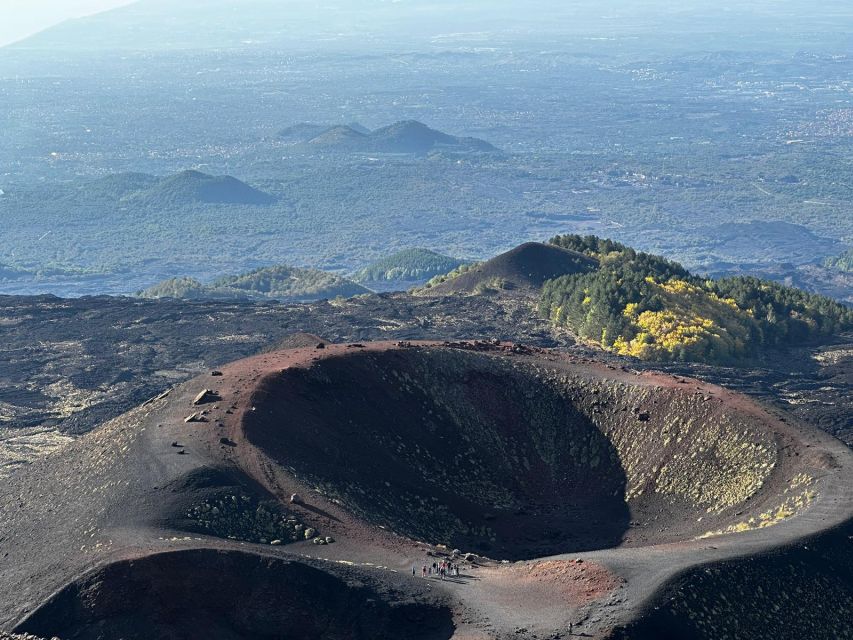
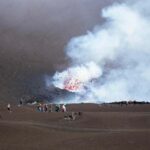
During the hike, you’ll stop at what’s described as the eruptive theater from 2001. This is one of those places where the setting helps you understand the volcano as an active system, not a static mountain. Standing in an area shaped by past eruptions turns geological talk into something visual.
In tours like this, the biggest value is that the guide ties the landforms to cause and effect: what eruptions leave behind, how craters form, and what “recent lava” means on the ground. You’ll likely get more than just directions on where to step. The best moments are when the group pauses and the guide connects the scenery to the volcano’s behavior.
Lava Tube Gear and Helmet-On Confidence
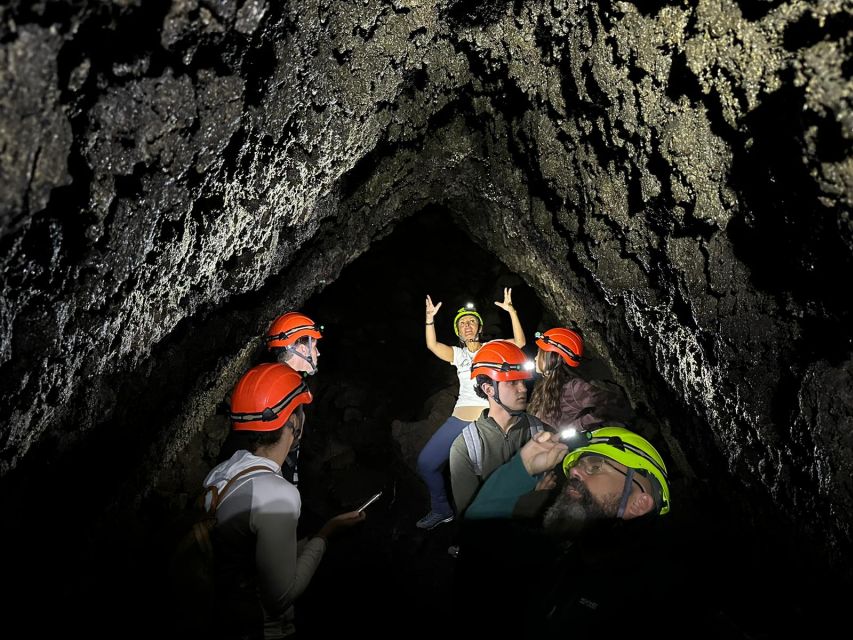
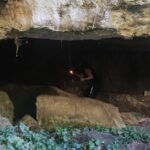
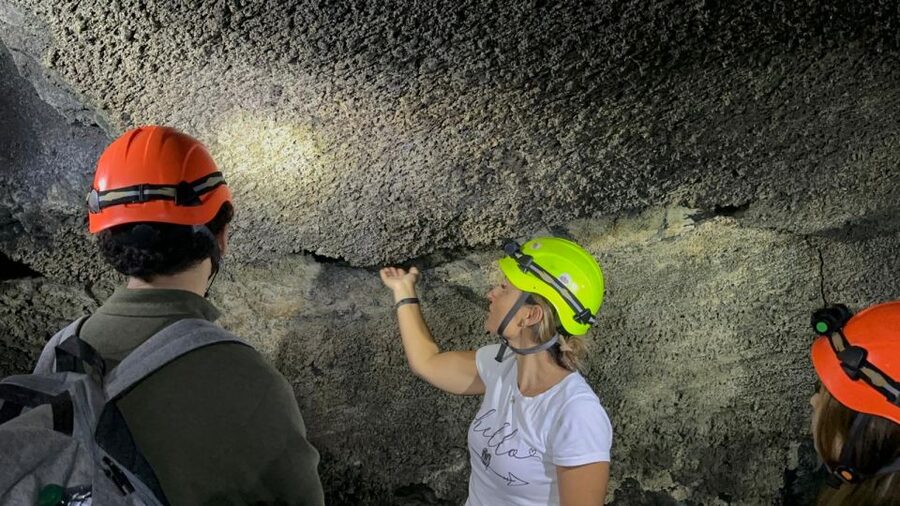
After the crater walking, you’ll equip a helmet and flashlight and enter a lava tube created during Etna’s eruptions. This is a different kind of experience than hiking outside, because you’re trading open sky for close, dark space. The gear is part of what makes the tour feel safe and manageable.
What I like about this section for your planning is that you don’t need to bring “spelunking” gear. The tour provides walking sticks, a helmet, and a flashlight. That reduces the packing stress, especially if you’re already juggling luggage across Sicily.
Inside the lava tube, your guide’s role gets even more important. You’ll learn how lava tubes form and how the eruption process creates a hollow channel. Even if you’re not a science person, the physical reality does the teaching: you can see the tube shape and feel how the space was carved by flowing rock.
The Lava Flow Cave Stop: Why Going Inside Is Worth It
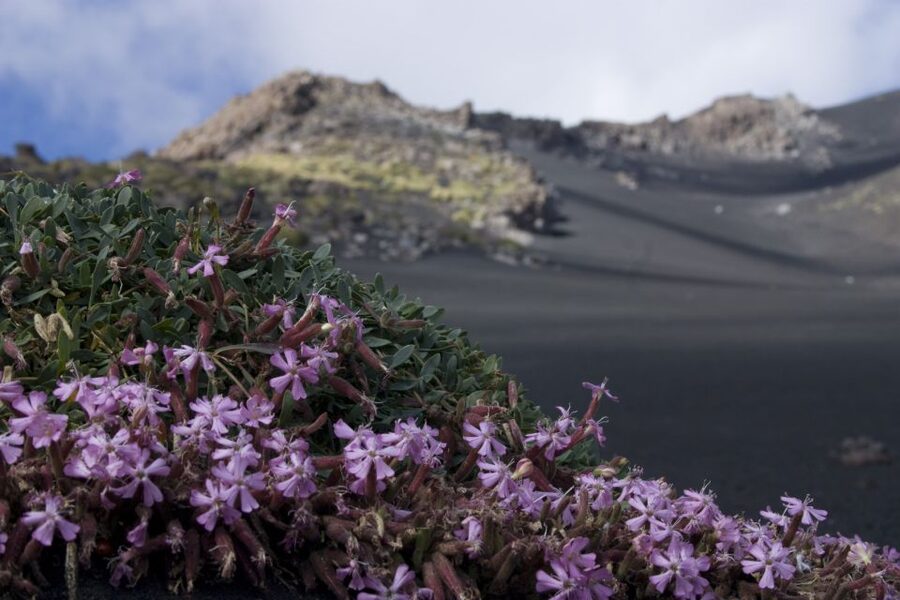
The itinerary includes a stop at a lava flow cave, where you go inside to look around. This matters because lava tubes and cave spaces are where the mountain’s power becomes personal. Outside, you see the aftermath. Inside, you experience the shape left by movement of molten rock.
A few people in the experiences shared really emphasized that the cave portion added interest to the day, even when weather didn’t cooperate perfectly for the ideal sunset views. In other words, you’re not banking everything on the sky. You have a built-in “volcano wow” moment that doesn’t depend entirely on the sunset.
Just remember: underground air can feel cooler, and walking surfaces can be uneven. Wear shoes that can handle both the outside lava grit and the cave floor.
Secondary Walk Near Via Grotta Lunga: A Short Detour With Big Payoff
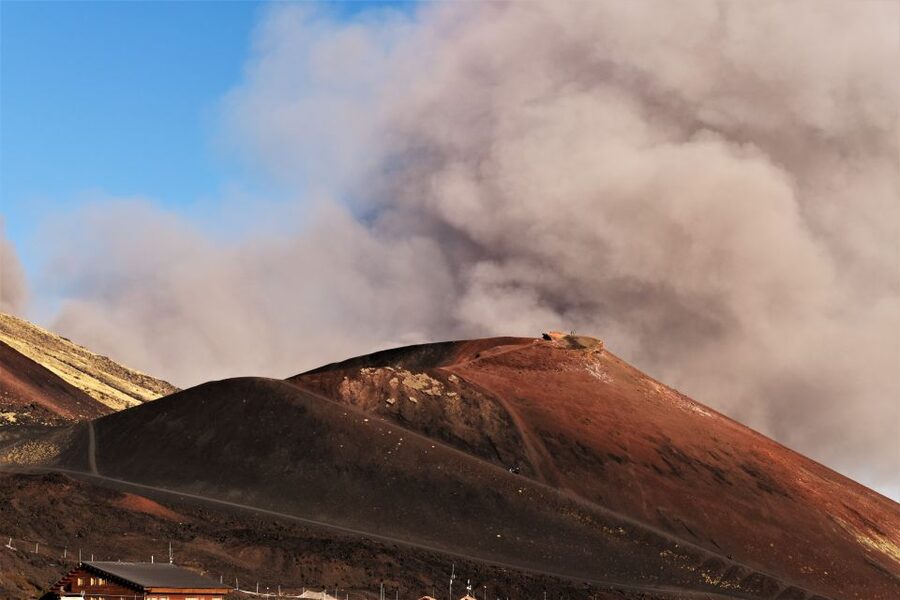
Between van rides, the schedule includes a short walking segment near Via Grotta Lunga. It’s not the longest stretch of the day, but it helps break up the route so you’re not only hiking one long slope. Think of it as an intermission where you’re repositioning for the next view or activity.
This part also signals something useful for planning: you’ll likely move through a couple of different terrain types during the tour. That variety is a plus if you get bored easily, and it helps keep the day interesting.
Morning vs Sunset: Choose the Feeling You Want
You can pick either an Etna morning trek or a sunset-style experience. If you choose sunset, you’re aiming for the colors and softer light that make the volcano feel more dramatic. One person did a sunset tour but noted that weather prevented the dream view, and they still felt the experience was cool. That tells me the day is designed to work even when the sky behaves unpredictably.
If you choose the morning, you’re likely arriving with clearer air and a steadier hiking rhythm. Morning also tends to bring a calmer vibe in terms of wind and temperature, though it can still be cold up top.
Either way, bring your photo patience. You’re walking through multiple stops, and the best pictures usually come from waiting for your guide to get you positioned—not from snapping while you’re hurrying.
What the Price Buys (And What You’ll Need to Budget Extra)
The price is about $70 per person for a 5.5-hour guided experience. For that cost, you’re getting pickup and drop-off from central Catania, plus a guide, and practical safety items like walking sticks, a helmet, and a flashlight.
What you should budget extra: food and drinks aren’t included, and there’s mention that the cableway isn’t included either. The practical move is simple: plan to carry water on the hike and eat something afterward before you fully run out of energy. This tour packs enough hiking that you’ll feel it later if you try to “power through” on empty.
Also, one traveler emphasized how helpful it was that extra gear was provided, like trekking shoes and a wind jacket if needed. That’s not guaranteed in every situation from the core tour details, but it’s a good sign that the operator understands what conditions are like on Etna. If you’re arriving underdressed, ask what they can provide before you start walking.
What to Pack: Cold Wind, Uneven Ground, and Lava Sand
The tour’s guidance is straightforward: bring comfortable and/or hiking shoes, sunscreen, and water. Add layers, because you’re heading to a higher altitude where it can feel significantly cooler. Wind is a big deal up there, so a windproof layer is worth it.
Based on what people said from the field, I’d also treat this as a checklist for comfort:
- A windproof jacket or at least a warm outer layer
- Long pants (black lava sand gets everywhere)
- Extra socks if you run cold or your shoes tend to rub
- Sunglasses, since bright light and volcanic glare can be intense
- A hat and ear protection if you hate wind noise and chill
One traveler also recommended protection for the neck and ears because the wind can get strong at altitude. You don’t want your day shortened by discomfort when the whole point is to enjoy the crater views and cave time.
Who This Trek Fits Best (And Who Should Skip It)
This hike is best for people who enjoy walking on rough ground and want a guided, story-driven way to understand a working volcano. If you like learning from your guide while you’re moving, you’ll probably love this format.
It’s also a decent choice if you don’t want a full day of logistics across Sicily. You get the Etna core experience in about half a day, and you’re back in Catania afterward.
On the other hand, it’s not suitable for:
- Children under 5
- People with mobility impairments or wheelchair users
- People with epilepsy, heart problems, high blood pressure, or altitude sickness
- People with motion sickness
- People with back problems
- People over 309 lbs (140 kg)
In short: if your health limits you on exertion, wind exposure, or uneven terrain, skip this one.
Small Rules That Affect Your Comfort (So You Don’t Get Surprised)
There are a few “no” items that you’ll want to know before you show up. High-heeled shoes are out, and pets are not allowed. The tour also notes no alcohol or drugs, and it specifically mentions insect repellent is not allowed.
That last one matters because some hikers automatically pack it without thinking. If you’re sensitive to bugs, plan on protective clothing instead of repellent for this day.
You should also expect a group vibe and guided pace. The tour includes walking sticks, so even if you feel steady without them, use them on the slope and uneven lava sand. They reduce fatigue and help you keep your footing.
How Weather and Timing Usually Play Out
The tour notes that the experience duration can change due to unpredictable situations. That’s normal for mountain work. Don’t plan a tight dinner reservation the second you get back.
If you’re choosing sunset for the light, go in with flexibility. Even when sunset plans shift, the lava tube and crater walking still deliver a strong “Etna factor.”
Also, the top can be cold with wind. If you tend to feel chilled easily, you’ll enjoy the day more if you dress for cold wind rather than warm sun.
Should You Book This Mount Etna Morning or Sunset Trek?
Book it if you want Etna in one focused shot: crater walking, lava deserts, and a guided entry into a lava tube. The helmet-and-flashlight cave time is the kind of experience that usually makes the day feel more than just sightseeing.
Skip it if you need smooth walking surfaces, step-free access, or if your health conditions make altitude exertion or wind exposure a problem. And if you’re expecting a laid-back stroll with zero cold factor, you’ll be happier choosing a different activity.
If your ideal Sicily day includes big nature, real volcanic terrain, and a guide who explains what you’re standing on, this one is a strong bet.