REVIEW · MOUNT ETNA
Mount Etna: Trek to the Craters of The 2002 Eruption
Book on GetYourGuide →Operated by GRUPPO GUIDE ETNA NORD di RAGONESE BIAGIO & C sas · Bookable on GetYourGuide
Sicily’s Etna lets you walk on fresh history. This guided trek takes you along the eruptive fault tied to the dawn eruption of October 27, 2002, and it’s fascinating to see how hardened lava, lateral cones, and crater edges mark what happened there. I love the hands-on feel of volcanic rock formations you can actually stand beside, and I also love the payoff views toward the Bay of Naxos and the Calabrian coast. One consideration: it’s a real outdoor walk, so you’ll want proper shoes and weather-ready layers.
The tour runs from Piano Provenzana and keeps things moving with an easy overall difficulty, guided on the ground by a team from GRUPPO GUIDE ETNA NORD (meeting point at the wooden house marked Gruppo Guide Etna Nord). I like that the guide focuses on what drives eruptions, not just sightseeing, so the geology lessons feel practical the whole time. Another plus is the language setup, with live guidance offered in Italian, French, and English.
Etna is also more than a natural site on a map. As you look around, you’ll connect the UNESCO World Heritage volcano to the local story of Greek mythology and to today’s farming life supported by fertile volcanic soils. Just remember: this is built for people who can handle a hillside trek without vertigo.
In This Review
- Key highlights worth planning around
- Why Etna’s 2002 fault trek feels different
- Piano Provenzana meeting point and what to wear
- The core walk: following the eruptive fault on Etna’s northern flank
- Craters and cones: what you’re actually looking at
- The viewpoints that make the effort feel worth it
- Etna beyond geology: mythology, UNESCO, and farming soils
- How long is it, and what’s the difficulty really like?
- Price and value: what you get for $39.86
- Who this tour is best for
- Should you book this Etna crater trek?
- FAQ
- Where is the meeting point for the tour?
- How long does the Mt Etna trek last?
- What language options do I get with the guide?
- Is food included?
- What should I bring?
- Is it suitable for everyone?
- What footwear is allowed?
- Can I cancel and get a refund?
Key highlights worth planning around
- Eruptive fault walk tied to the “perfect eruption” (2002) and the dramatic terrain it left behind
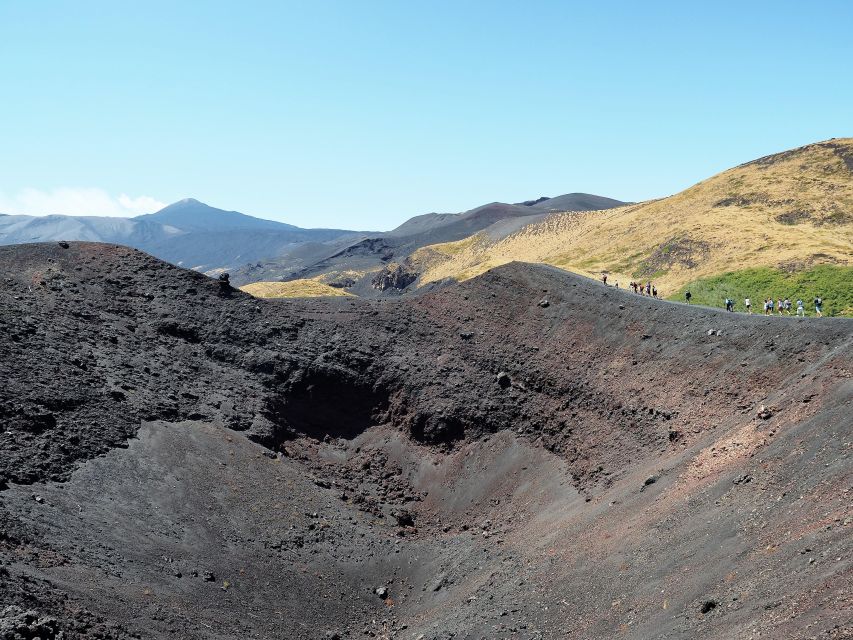
- Lava flow + lateral cones + crater viewpoints that make the geology visual
- Big sightlines over the Bay of Naxos and the Calabrian coast
- Guided geology explanations of how gas and rock fragments shaped the features
- Easy difficulty, short duration for a half-day activity that still feels meaningful
Why Etna’s 2002 fault trek feels different
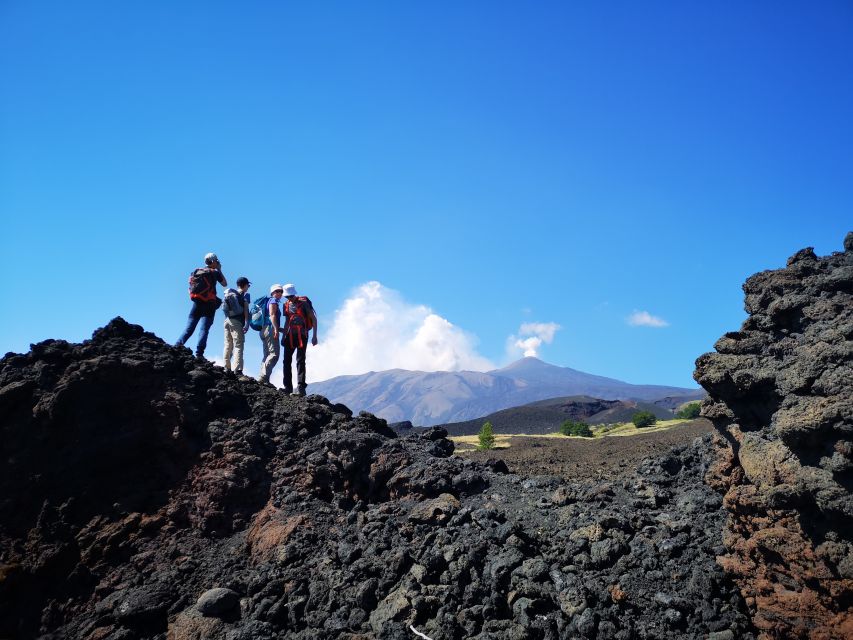
Mount Etna is one of the most active volcanoes in the world, but what makes this hike special is the theme: the trail follows the eruptive fault linked to the morning eruption on October 27, 2002. That date matters because it gives you a clear story as you walk. You’re not just looking at a volcano in general—you’re tracing an event in motion and then looking at the evidence left behind.
Here’s what I think makes this kind of geology walk valuable. Volcanoes can sound abstract when you only see photos or read about magma and explosions. On this trek, the eruption becomes a set of real, walkable clues: hardened lava rock underfoot, plus features along the fault that reflect how the eruption behaved at different moments. You’ll learn how the strong explosions of gas and rock fragments helped form lateral cones, and you’ll spot how the terrain changes as you move along.
It also helps that the tour is on Etna’s northern flank. You get a tighter sense of how the mountain’s activity expresses itself on different sides, rather than treating the volcano as one uniform mass. When you connect that with the broader context—Etna’s UNESCO status and the way people live and farm around it—the whole experience feels grounded.
You can also read our reviews of more tours and experiences in Mount Etna.
Piano Provenzana meeting point and what to wear
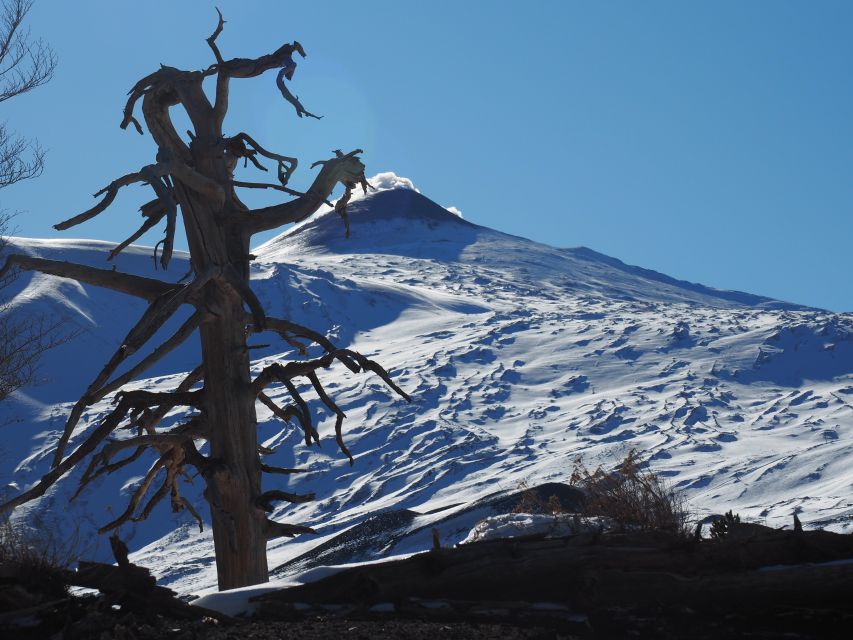
You start at Piano Provenzana, at the first parking area by a wooden house with the sign Gruppo Guide Etna Nord. That detail sounds small, but it makes a difference. When you’re heading up a volcano, the biggest stress is avoiding last-minute confusion about where to meet. Having a clearly marked meeting spot like this keeps your morning calmer.
For gear, the checklist is straightforward, and it’s there for a reason:
- Comfortable shoes (no sandals or flip-flops)
- Sunglasses and a sun hat
- Water
- A jacket
- Rain gear
Even if the day starts clear, Etna weather can change fast enough to get uncomfortable. The tour’s difficulty is listed as easy, but “easy” doesn’t mean “dry and flat.” Volcanic terrain and open viewpoints can turn windy quickly, so plan as if you might need both sun protection and rain protection.
If you’re bringing a small daypack, pack like you’re going hiking, not sightseeing. Water matters, and the jacket/rain gear combo is what keeps you comfortable if temperatures drop as you climb and as clouds roll through.
The core walk: following the eruptive fault on Etna’s northern flank
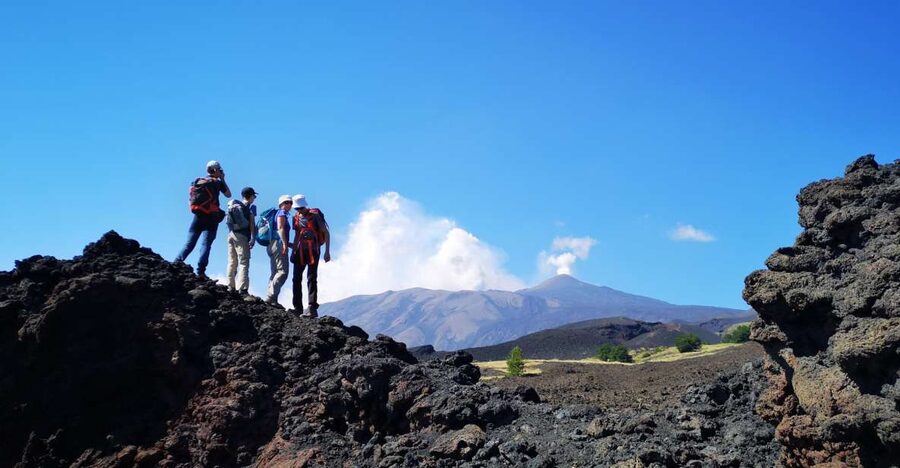
After meeting your guide, you head out on the trail that runs right along the eruptive fault on Etna’s northern flank. This is the heart of the activity. The route follows what the 2002 eruption produced, so the walk doubles as a live geology lesson.
Expect to spend most of your time moving through the volcanic terrain where the eruption’s force left distinct forms. The guide frames what you’re seeing by connecting it to the eruption sequence—how explosive moments of gas and rock fragments shaped the area, and how the lava solidified into the rock textures you can observe today.
One thing I like about this setup is that it prevents “photo-only” fatigue. If you show up hoping for views, great—you’ll get them. But if you want more meaning, the guide turns the walk into a guided interpretation: hardened flows, crater edges, and fault-linked terrain all become pieces of one story.
In terms of timing, the activity is listed at about 2.5 hours, and it can depend on the group’s rhythm. Some parts feel like walking time, and other parts feel like stopping to look and learn. If your schedule is tight, I’d plan to be flexible with that small variation rather than assuming an exact clock time.
Craters and cones: what you’re actually looking at
As you move along the trail, you’ll peer into impressive craters and take in the formations around them. The guide’s explanations help you understand why these features exist and how they relate back to the 2002 eruption.
Here’s the key idea you’ll come away with: volcano eruptions aren’t just one continuous blast. They can involve different phases, and each phase tends to leave different traces. That’s exactly why lateral cones matter. These cones form along the fault from strong explosions of gas and rock fragments, which means the terrain doesn’t just look like one solid lava blanket. It reads like a timeline.
You’ll also be able to identify the “lived-in” nature of volcano terrain. Lava rock can look rugged and repetitive in photos, but on the ground, you start noticing texture differences—where flows hardened, how surfaces broke, and how the fault line influences what formed where. When your guide points out relationships between the features, the craters stop feeling random.
This is also one of the best parts of the tour for curious travelers. If you like learning by looking at real-world evidence, you’ll enjoy having the guide translate what you see into a clear explanation.
The viewpoints that make the effort feel worth it
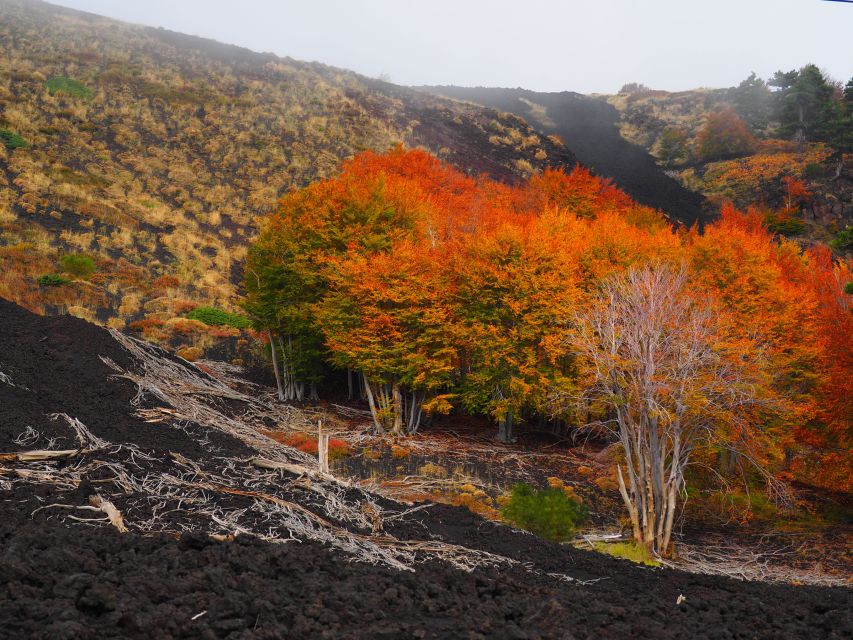
The trek includes some serious reward: views over the Bay of Naxos and toward the Calabrian coast. Even if you’re not a “big view” person, the geography is part of why Etna is such a dramatic place. You’re not just in a rocky zone—you’re up high with wide visual context, able to understand scale.
These viewpoints also help you slow down. When the guide stops so you can look out, you get a break from the technical focus and you can see how the volcano fits into the broader region. It’s a good balance between science and scenery.
Bring sunglasses and a hat here. The sun can hit hard at altitude, and bright light can make it harder to see textures in the rock, which is also part of the learning during crater stops.
Etna beyond geology: mythology, UNESCO, and farming soils
Etna’s role in the region goes well past volcanic danger. As you walk, you’ll hear about the mountain’s history and impact on daily life. One of the big themes is that Etna was once an important location in Greek mythology, and today it still matters culturally and practically.
The tour also connects Etna’s UNESCO World Heritage status to why it draws attention from visitors and researchers. That status isn’t just prestige; it reflects the significance of Etna’s geology and the continuing story of how the mountain behaves.
And then there’s the human side that I find especially grounding: fertile volcanic soils. The eruption cycle leaves behind conditions that support extensive local agriculture. Standing on volcanic terrain makes that idea feel less like a slogan and more like a real connection between natural processes and how people live nearby.
If you like travel that mixes natural science with human context, this section helps you understand why Etna is not treated as a distant phenomenon. It’s part of the region’s rhythm.
How long is it, and what’s the difficulty really like?
The tour is listed as difficulty easy and lasts about 2.5 hours, with timing depending on group pace. That combination is important because it sets expectations. This is not a strenuous summit push. It’s a guided walk focused on the eruptive fault zone and crater area.
Still, keep it honest: this is a walking tour on a volcano. You’ll want stable footing and you’ll need to pay attention where you step, especially near crater edges or uneven ground.
This activity is not suitable for:
- Pregnant women
- People with mobility impairments
- People with vertigo
If any of those apply, it’s safer to look for a different Etna experience that matches your needs. And if you’re someone who gets motion or height anxiety, don’t assume you’ll be fine just because the difficulty says easy.
Price and value: what you get for $39.86
At $39.86 per person, this trek is priced like an accessible guided outdoor activity rather than a premium private excursion. In value terms, what you’re paying for is the combination of three things:
- A focused route tied to a specific eruption event (October 27, 2002)
- A guided interpretation of geology (not just a walk with no context)
- Official English and French-speaking guide availability, with live guide options in Italian, French, and English
You also get a fixed, short time block—so you can fit it into a day without losing half a day to long transportation windows. The tour is not including food and drinks, which is normal for active outings, but it’s worth planning so you don’t show up hungry.
If you’re on a first visit to Sicily and want Etna without committing to an all-day ordeal, this is one of the better ways to do it: you get the main story of volcanic features, plus wide views, within a tight duration and at a budget-friendly price.
Who this tour is best for
This trek makes sense if you want:
- A guided walk that teaches real geology from a specific eruption
- Views over the Bay of Naxos and toward the Calabrian coast
- A shorter Etna outing that still feels substantial
It’s also a solid pick for families who can manage a guided outdoor walk and follow footwear rules. The activity is short enough to feel doable, and the difficulty is listed as easy. Still, stick to the suitability rules: if someone in your group has mobility limits or vertigo, this one won’t be a good match.
If you’re traveling solo, you’ll likely appreciate the structure: meet at a clear spot, walk with a guide, return to the same place. It removes the guesswork of navigating the terrain on your own.
Should you book this Etna crater trek?
Book it if you want Etna as more than scenery. The pull here is the story-driven walk along the 2002 eruptive fault, with guided explanations of lava rock, lateral cones, and craters, plus the payoff views out over the coast.
Skip it if you’re not comfortable with:
- A volcanic walking route
- Any chance of vertigo or height discomfort
- Closed-toe footwear requirements (sandals and flip-flops aren’t allowed)
If your goal is a meaningful, short Etna experience with clear guidance and strong value at $39.86 per person, this one is an easy yes. Just pack for real outdoor conditions, because Etna is the kind of place where weather and comfort are part of the experience.
FAQ
Where is the meeting point for the tour?
You meet at the first parking area by the wooden house marked with the sign Gruppo Guide Etna Nord.
How long does the Mt Etna trek last?
The duration is listed as about 2.5 hours, and it can vary depending on the group’s pace.
What language options do I get with the guide?
The live tour guide language options are Italian, French, and English, and the activity is listed with an official English and French-speaking guide.
Is food included?
No. Food and drinks are not included.
What should I bring?
Bring comfortable shoes, sunglasses, a sun hat, water, a jacket, and rain gear.
Is it suitable for everyone?
It’s not suitable for pregnant women, people with mobility impairments, or people with vertigo.
What footwear is allowed?
Sandals and flip-flops are not allowed. You’ll need closed-toe shoes.
Can I cancel and get a refund?
Yes. Free cancellation is offered up to 24 hours in advance for a full refund.