REVIEW · MOUNT ETNA
Mount Etna: Craters of the 2002 Eruption Trekking Experience
Book on GetYourGuide →Operated by Guide Vulcanologiche Etna Nord · Bookable on GetYourGuide
Etna’s 2002 scars are still in your boots. On this guided trek on the north side of Mount Etna, you walk across lava streams, eruptive fractures, and crater edges tied to the eruption that destroyed Piano Provenzana. You also get an up-close view of the eruptive theater—and when the weather cooperates, the Calabrian Coast comes into the picture.
I really like how the route mixes scenery with straight talk about how the volcano behaves. You’ll spend time around landmarks like the ruins of the Hotel dell Betulle, plus volcanic features such as hornitos and cinder cones that make the science feel physical, not abstract. And if your guide is like Davide or Daniele (names you might see on this experience), you’ll likely get clear explanations plus a bit of humor to keep it moving.
The main drawback is physical and mental: volcanic ground can be uneven and unstable, and walking along crater edges may cause dizziness for sensitive people. If you get vertigo or you’re dealing with mobility, heart, respiratory, or similar concerns, this one is not a good fit—stick to safer Etna options.
In This Review
- Key things that make this trek worth your time
- Mount Etna’s 2002 Craters: why this walk feels different
- Meeting at Chiosco Bar Mareneve: start location that matters
- Safety briefing and what the guides are managing
- Stop by stop on the 2002 route (and what each place teaches)
- Hotel sommerso dalla colata lavica: Hotel dell Betulle ruins
- Bottoniera del 1911: a hinge point in eruption evidence
- Cerniera di fuoco 2002: your long guided segment
- Flank eruptions and the threat to Linguaglossa
- Summit crater edges and the return through a sandy channel
- The view you’ll remember: eruptive theater plus sea on the north side
- Price and value: what $42 really buys on Etna
- What to bring (and why shoes are non-negotiable)
- Who this Etna trek suits best (and who should skip it)
- Should you book this Craters of the 2002 Eruption trek?
- FAQ
- How long is the Mount Etna 2002 craters trek?
- Where do I meet for the tour?
- What’s included in the price?
- Do I need to bring trekking shoes?
- Are trekking sticks included?
- What should I bring with me?
- Is there anything I should not wear or bring?
- Is this trek cancellable?
Key things that make this trek worth your time
- 2002 eruption trail on the north side of Etna, with crater views that feel immediate
- Hotel dell Betulle ruins as a rare, visible marker of the lava flow
- Hornitos and cinder cones that turn eruption science into a walkable map
- Eruptive fractures and lava channels you can actually stare at and compare
- Small-tour feel, designed to keep you away from the largest crowds
Mount Etna’s 2002 Craters: why this walk feels different
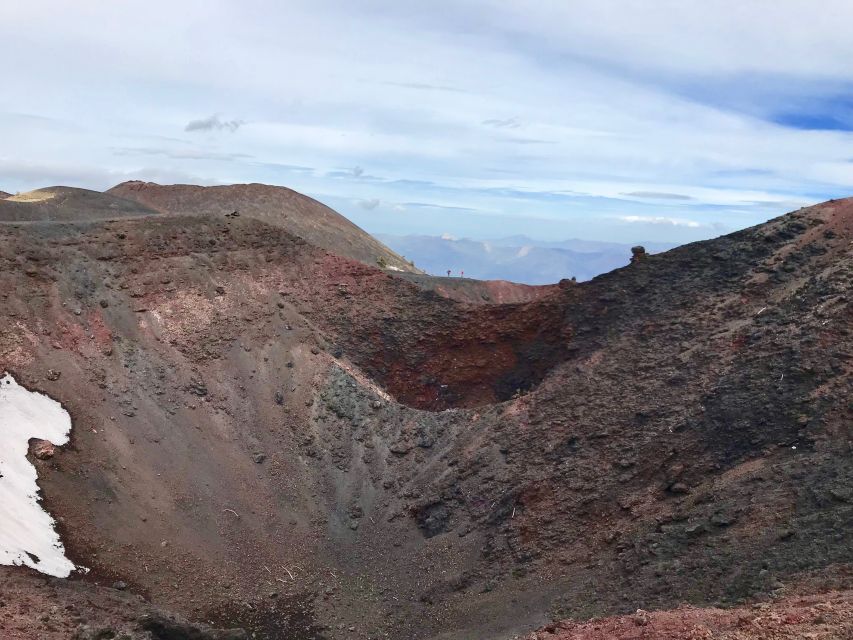
Most Etna experiences give you a view. This one gives you a guided path through what caused that view. The focus stays on the most powerful eruption in recent years, with a route that follows the evidence left on the north side.
The 2002 eruption changed this part of Etna in a visible, lasting way. You’ll see places tied to the destruction of Piano Provenzana, and you’ll also learn how earlier and later events shaped the same zone. That time-spanning approach matters: it helps you understand Etna as a living system, not a single moment in time.
Another reason this trek lands well is the emphasis on the eruptive “theater.” At the summit, you’re not just looking at a crater—you’re looking down and then back along the route of volcanic processes, like a storyboard made of rock and sand.
You can also read our reviews of more tours and experiences in Mount Etna.
Meeting at Chiosco Bar Mareneve: start location that matters
You meet at CHIOSCO BAR MARENEVE di Ferraro Giuseppa, not the lower parking area version called Chiosco Bar Etna Nord. This detail matters because Etna tours often use the chairlift area as a landmark, and mixing up the meeting points can cost you time right at the start.
The meeting point sits near the chairlift used by skiers in winter. You’re told this spot is the second house of the four present in the parking lot, and it’s close to where you’ll park for the day. If you’re driving, arrive with buffer time so you can find the right chiosco and be ready for the safety briefing.
Safety briefing and what the guides are managing
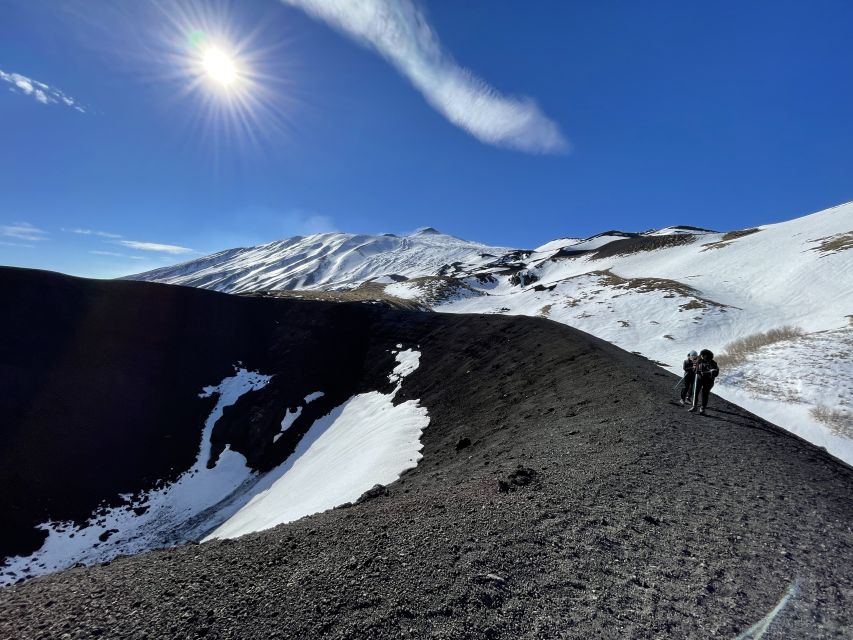
Before you walk, you’ll get a safety briefing for about 15 minutes. The message is simple: you’re on volcanic terrain, and conditions can change due to environmental, climatic, or volcanic factors.
The operator specifically flags that the trek suits hikers with medium training. The important part for you is not “fitness level” alone—it’s footing. Volcanic soil can be inconsistent and unstable, and you’ll be moving across surfaces where balance matters.
Also, crater-edge walking can trigger dizziness for some people. That doesn’t mean the whole route is dangerous for everyone. It means you should be honest with yourself: if you’re afraid of heights or you have vertigo, skip this and choose a gentler Etna option.
Stop by stop on the 2002 route (and what each place teaches)
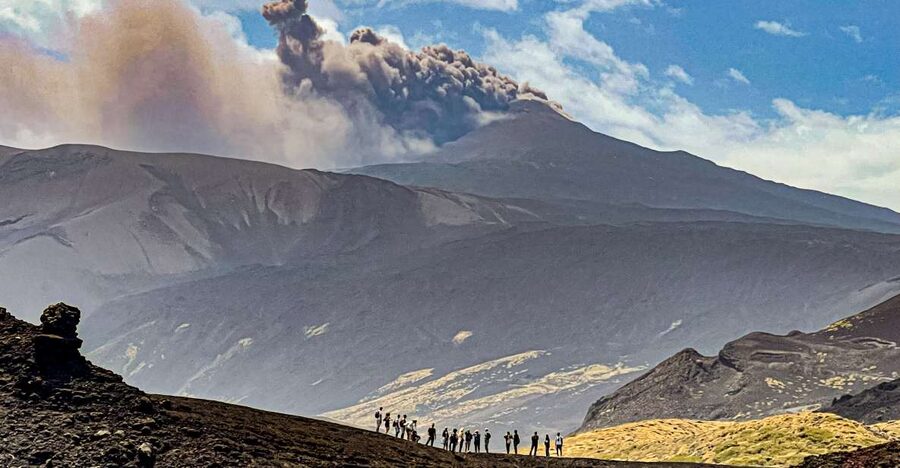
This trek follows a dirt-road approach that leads from Piano Provenzana up toward the summit craters. Along the way, you stop repeatedly to study volcanic forms connected to eruptions over time, especially flank eruptions on the north side.
Hotel sommerso dalla colata lavica: Hotel dell Betulle ruins
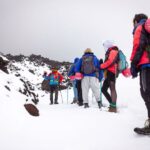
Early on, you’ll stop at the spot tied to the lava flow that covered the area in 2002. The standout landmark here is the Hotel dell Betulle, described as the only visible structure left standing from that flow.
Why this matters: ruins are more than photos. They’re a reference point that helps you imagine what the eruption did to the ground and to nearby human activity. When you stand where the lava went, the volcano stops being a distant idea.
You’ll likely also get a short break here for photos and explanation before moving on.
Bottoniera del 1911: a hinge point in eruption evidence
Next comes Bottoniera del 1911, another named structure used to guide your understanding of eruption history on this side of Etna. This is where the tour shifts from dramatic lava impact to how Etna’s patterns leave repeated clues.
You’ll get guided time plus some free time. Use the free time to look in multiple directions, because volcanic features often make more sense when you compare their position against the slopes and skyline.
A practical note: the ground can look stable while it isn’t. Keep your eyes on your footing even when you’re busy reading the rock.
Cerniera di fuoco 2002: your long guided segment
The route then brings you into the heart of the 2002 story with Cerniera di fuoco 2002, and this part takes longer—about 1.5 hours of walking with guided time and breaks along the way.
This is also where you’ll start noticing the repeated theme from the tour description: eruptive fractures, lava streams, and other morphologies that stack over time. The guide should help you connect what you see—cracks, channels, and cinder-like material—to how eruptions progress and spread.
From here, the tour includes going up along cinder cones and looking at structures called hornitos, which means small ovens. Hornitos are a perfect example of why a guided hike is worth it: they’re distinctive enough to spot, but it takes explanation to understand what you’re actually seeing.
Flank eruptions and the threat to Linguaglossa
As you move through the features, you’ll focus on flank eruptions that left the most evidence on the north side. In particular, you’ll learn about the last eruption event that threatened the city of Linguaglossa.
For you, this adds real-world context. You’re not only learning how volcanoes form—they’re learning how they affect nearby communities. That connection is one of the biggest reasons people walk away feeling like they understand Etna better.
Summit crater edges and the return through a sandy channel
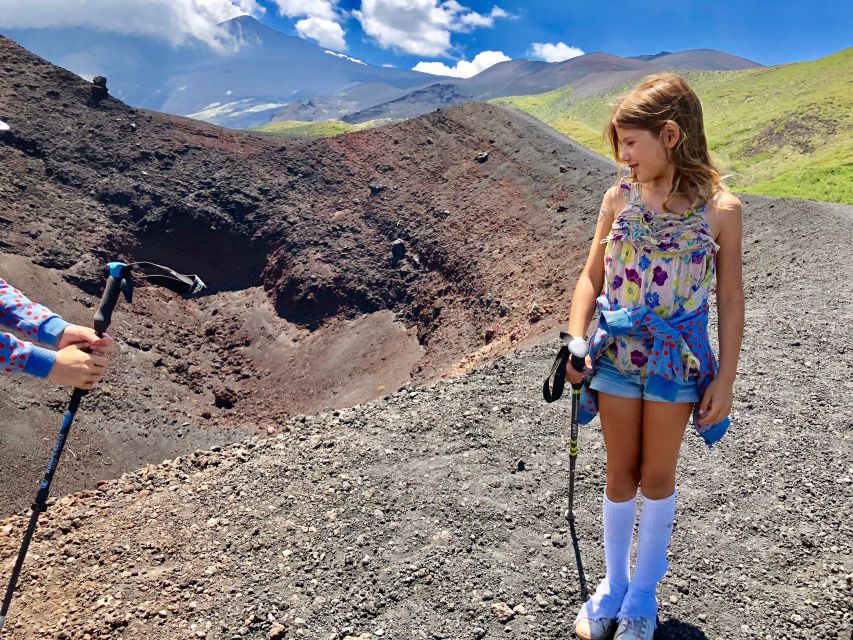
Once you reach the summit craters, expect the most intense views: looking over the crater edge and seeing the volcanic surface in layers. This is the moment where the hike changes from a “walk” to a “stand still and pay attention” experience.
After the summit edge time, you’ll head back down into a sandy channel to return to the starting area. This part is practical to know: sand can slide more easily than rocky ground, so take your time and keep a steady pace.
The best approach here is simple: slow down, shorten your steps, and focus on balance rather than speed.
The view you’ll remember: eruptive theater plus sea on the north side
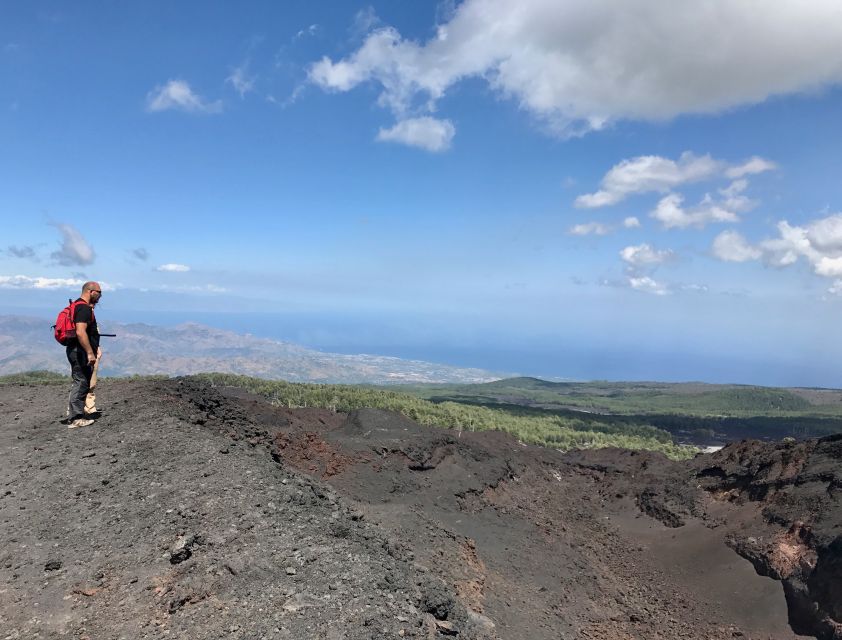
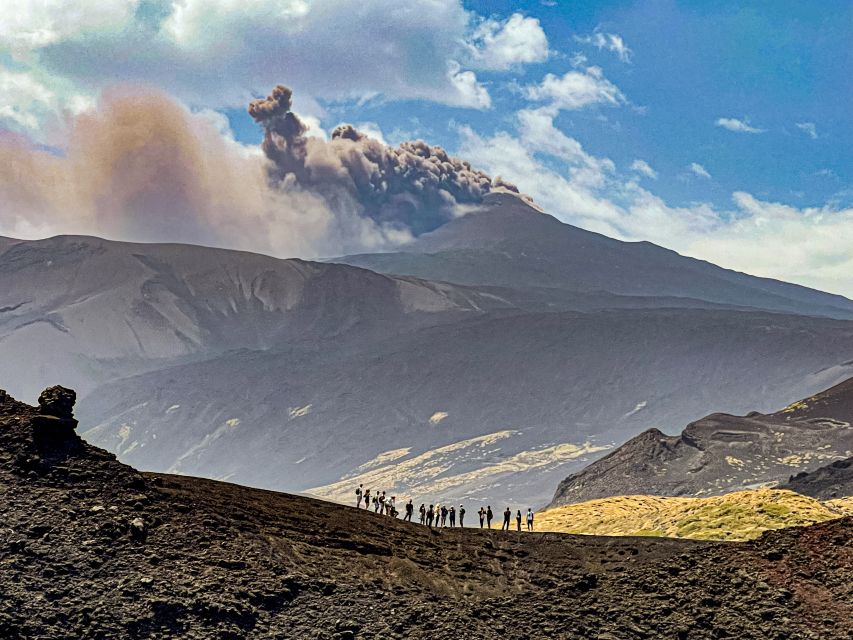
One of the tour highlights is the magnificent view of the eruptive theater and the Calabrian Coast. On clear days, that sea view can make the whole hike feel bigger than geology.
What I like about the emphasis on the north side is that you get a quieter feeling. The experience is designed to appreciate Etna away from the biggest tourist clusters, so you’re more likely to notice the details: the way fractures run, the texture of lava, and how slopes change.
And yes, it can get windy. One of the common practical lessons from prior groups is to expect weather swings. Pack for it, even if the morning looks mild.
Price and value: what $42 really buys on Etna
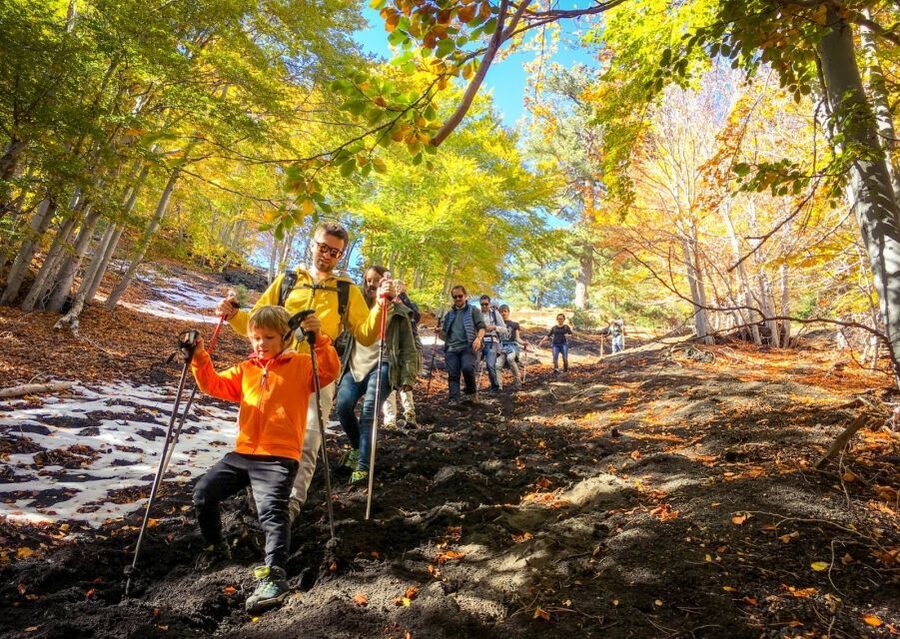
This experience is listed at $42 per person and lasts about 3 hours. For that time, you get an official volcano guide and insurance in case of accidents.
That’s the core value. You’re paying for (1) expertise on what you’re looking at and (2) a guided route through terrain you probably wouldn’t understand without help.
What you should budget extra:
- Transport from your accommodation isn’t included.
- Parking is separate (there’s an inconsistency in the details: parking ticket costs are listed as €5 on weekdays and €8 on Sundays/public holidays, but the meeting instructions also mention a €3 ticket paid after the excursion—confirm the exact amount when you book).
- Trekking shoes aren’t included (you can rent them on-site for €5 per pair).
- A windbreaker rental is listed at €5 (if you’re underpacked).
- Water and snacks are not included.
If you’re the type who likes learning while walking, this price feels fair. If you want a totally self-guided hike with zero interpretation, you’d likely spend less elsewhere—but you’d lose the specific explanation tying features to the 2002 eruption.
What to bring (and why shoes are non-negotiable)
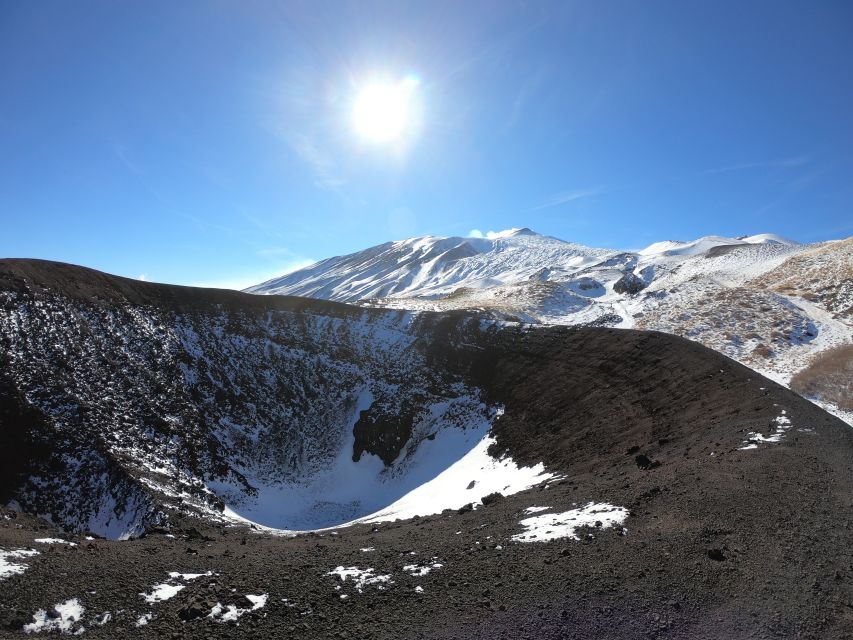
The essentials are pretty clear. Bring a windbreaker, sunglasses, sunscreen, and a daypack with water and snacks. Wear comfortable clothes and weather-appropriate layers because Etna conditions can shift quickly.
The non-negotiable item is hiking shoes. The tour notes that without adequate shoes, you’re not covered by insurance. That’s not a scare tactic—it’s a logistics reality on uneven volcanic ground.
If you need rentals:
- Shoes can be rented on-site for €5.
- Snowshoes may be needed in winter months (December, January, February, March), rented on-site for €12 per person.
- Gloves or hats are not included in winter, spring, and autumn, so bring your own if you’re sensitive to cold.
Also, the tour explicitly does not allow sandals or flip-flops, high-heeled shoes, and large luggage. In plain terms: wear footwear meant for traction, not style.
Who this Etna trek suits best (and who should skip it)
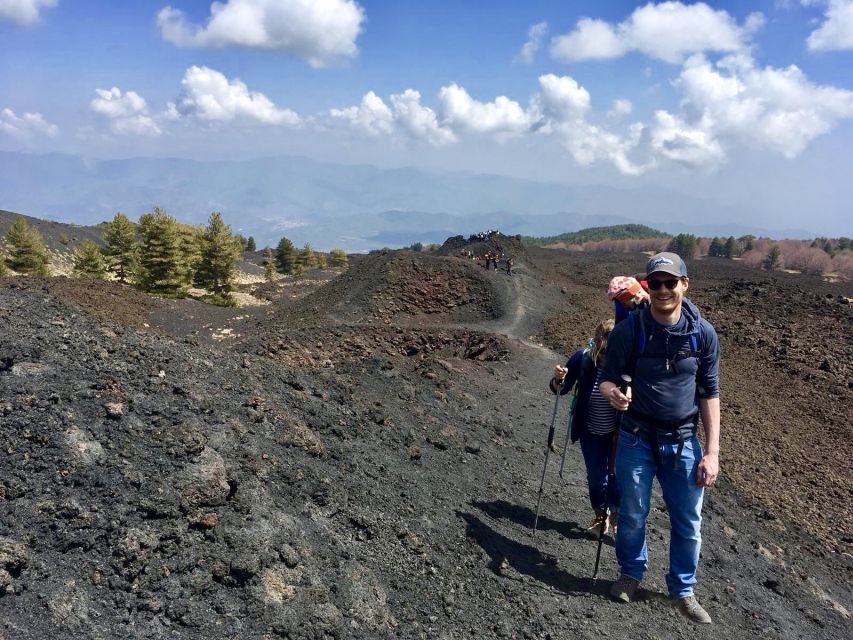
This is a great fit if you want a structured Etna experience without committing to a long full-day hike. The route is designed for hikers with medium training, and several people in different age ranges have been able to finish—though that doesn’t override the official list of who should not go.
It’s not suitable for:
- Children under 6
- Pregnant women
- People with back problems or mobility impairments
- People with heart problems
- People afraid of heights, with vertigo
- People with respiratory issues
- People with epilepsy
If you’re comfortable with uneven ground and you can handle crater-edge views, you’ll likely enjoy this. If heights are an issue for you, you’ll feel better choosing a different format, even if you’re still excited about Etna’s eruptions.
Should you book this Craters of the 2002 Eruption trek?
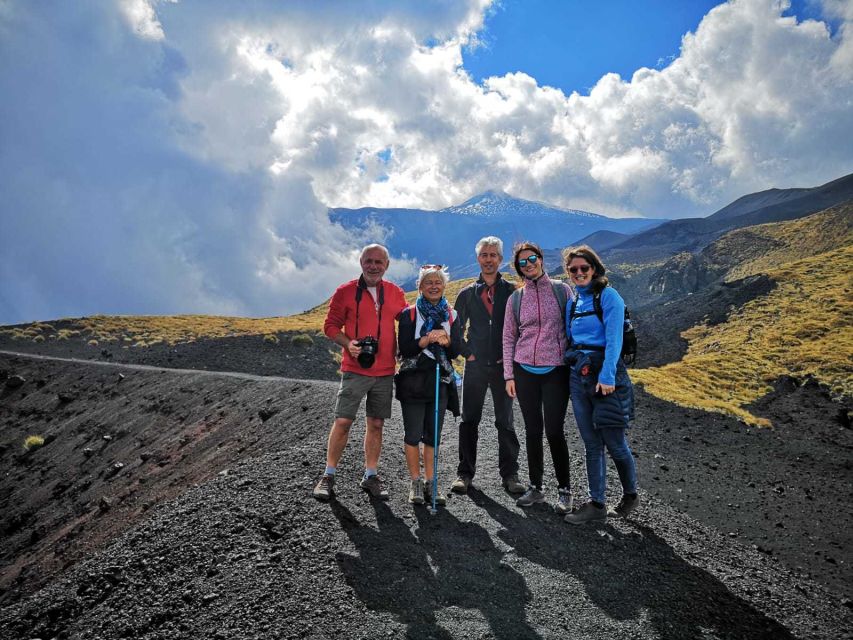
Book it if you want three focused hours that connect the dots between lava, crater formation, and eruption history. The named stops—Hotel dell Betulle ruins, Bottoniera del 1911, and Cerniera di fuoco 2002—make the hike feel like a guided walk with purpose, not random sightseeing.
I’d skip it if you’re risk-averse about vertigo, heights, or unstable footing. And I’d think twice if you don’t do regular physical activity, because the route includes crater-edge walking and uneven volcanic soil.
One more “make the call” tip: plan your packing like you’ll be outside in wind and changing conditions. Bring the basics, rent shoes if needed, and be ready to move slowly when the ground gets sandy.
If that sounds like your kind of day, this trek is a smart Etna choice—short enough to fit most Sicily schedules, but detailed enough to leave you feeling like you truly understand the 2002 eruption’s footprint.
FAQ
How long is the Mount Etna 2002 craters trek?
The trek lasts about 3 hours.
Where do I meet for the tour?
Meet at CHIOSCO BAR MARENEVE di Ferraro Giuseppa, not the lower parking lot Chiosco Bar Etna Nord.
What’s included in the price?
You get an official volcano guide and insurance in case of accidents.
Do I need to bring trekking shoes?
Yes. Trekking shoes are not included, but you can rent them on-site for €5 per pair. The tour also notes you’re not covered by insurance without adequate shoes.
Are trekking sticks included?
No, trekking sticks are not included.
What should I bring with me?
Bring a windbreaker, sunglasses, sunscreen, snacks, water, and weather-appropriate clothing. Comfortable hiking clothes and a daypack are recommended.
Is there anything I should not wear or bring?
High-heeels, sandals or flip-flops, baby strollers, luggage or large bags, skirts, and slippers are not allowed.
Is this trek cancellable?
Yes. There is free cancellation up to 24 hours in advance for a full refund.