REVIEW · MOUNT ETNA
Etna South: High Altitude Winter Trek with an Alpine Guide
Book on GetYourGuide →Operated by Ashàra Etna & Stromboli Guides · Bookable on GetYourGuide
Etna in winter feels unreal. This 5-hour Etna South trek mixes snow hiking with volcanology, led by licensed guides, so you’re not just walking—you’re reading the mountain with people who know the story. I especially like the way the route centers on major crater areas, and how small groups help you ask questions and actually keep up with the pace.
What I like most: the views from high altitude (often around 2,870 m and up) and the guide-led crater focus, like when Massimo led a group to multiple craters and explained what they mean. One key drawback to plan around: this is for experienced hikers on uneven ice/snow, and the tour can change if conditions or volcanic safety require it.
In This Review
- Key things you’ll notice on this Etna South winter trek
- Why Etna South in winter makes sense (and why it feels different)
- Rifugio Sapienza start: meeting, gear, and that cable car moment
- Walking the craters: viewpoint stops that teach you how Etna works
- Valle del Bove to Barbagallo: where the hike turns from pretty to demanding
- Etna’s cone from 2001 eruption + summit crater from a safe distance
- Lava vents, visibility, and why your day might shift
- Gear, boots, crampons, and the pace on icy ground
- Price and value: what $106 covers, and what costs extra on the day
- Who should book Etna South, and who should skip it
- Should you book Etna South: the quick decision guide
- FAQ
- How long is the Etna South winter trek?
- Where do I meet for the tour?
- How high do we go on the cable car and during the hike?
- What’s included in the price?
- What isn’t included, and how do I pay for it?
- What languages are the guides available in?
- Can the route change or get canceled?
Key things you’ll notice on this Etna South winter trek
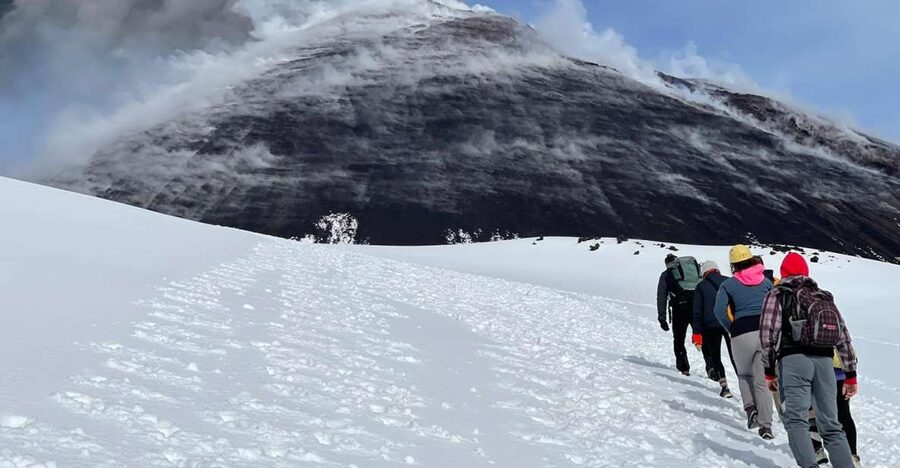
- Small group format that’s built for safer pacing on snow and ice
- Cable car to 2,500 meters, then a hike up to around 3,000 meters
- Crater-by-crater guidance, including the 2001 eruption cone area
- Valle del Bove plus Barbagallo Crater for strong south-crater scenery
- Snow equipment provided like boots and crampon-type gear, plus helmet and sticks
- Day-to-day variability based on weather, visibility, and volcanic activity safety
Why Etna South in winter makes sense (and why it feels different)
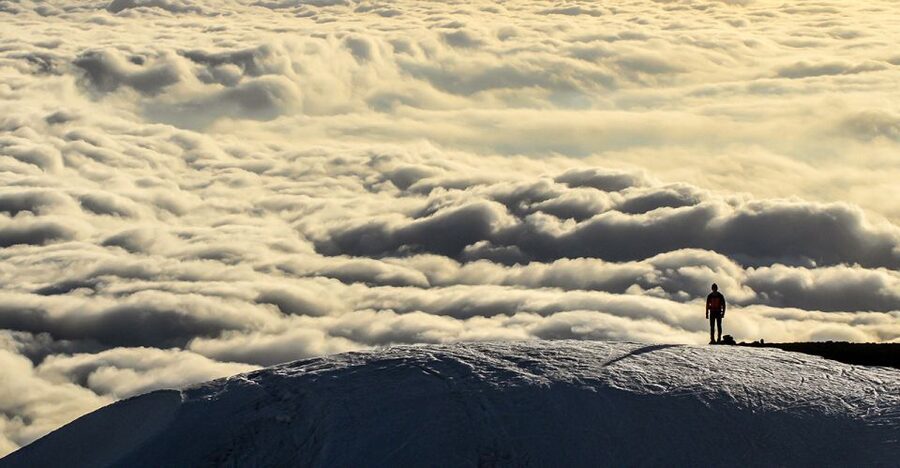
Winter turns Mount Etna into a stark, high-contrast place. Snow sits on volcanic ground, dark rock breaks through white crust, and the colors you get near the craters are nothing like the classic summer postcard. If you want Etna at its most dramatic—cold air, steep viewpoints, and real crater geology—this is the right season and the right style of outing.
I also like that the experience is built around understanding, not just access. You’re riding up by cable car, then hiking with authorized alpine and volcanological guides, which matters when you’re moving through ice, snow, and volcanic terrain. Having someone point out what you’re seeing (and why it’s there) changes your whole feel for the hike.
The other thing you should know: conditions drive the day. Visibility can be crisp or it can change fast, and the guide may adjust the route for safety. That uncertainty is part of being on an active volcano—so you’ll want to go with a flexible mindset.
You can also read our reviews of more tours and experiences in Mount Etna.
Rifugio Sapienza start: meeting, gear, and that cable car moment
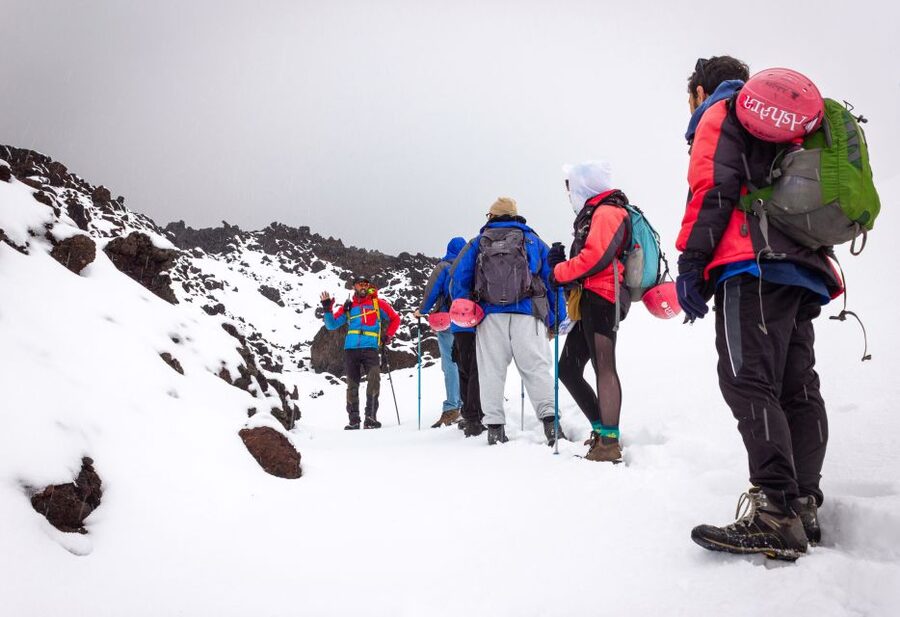
You start at the Ashàra info point at Rifugio Sapienza (Etna South), close to the Terrazza dell’Etna restaurant. This matters because you’re not doing a long pre-hike transfer—your day is structured to get altitude quickly and safely.
From there, you take the cable car for about 20 minutes to around 2,500 meters. That jump does two useful things. First, it shortens the toughest approach and lets your main effort go into the crater area walk. Second, it sets up the proper altitude rhythm: you’re already up high when the hike begins, so you’ll need your pace to feel steady.
One practical upside: included gear reduces hassle. You get hiking boots, a helmet, walking sticks, and necessary snow equipment. That’s huge in winter because the wrong footwear or missing traction can ruin the day. You still need to dress smart (more on that below), but you won’t be left guessing about technical snow gear.
Walking the craters: viewpoint stops that teach you how Etna works
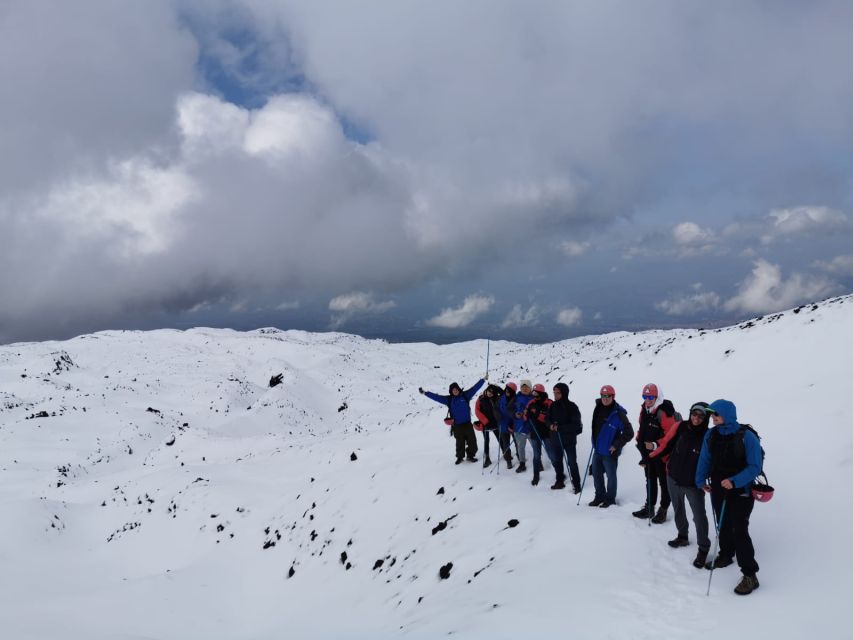
After the cable car, the plan includes a guided viewpoint segment. Think of this as your orientation moment: you’ll get context before you step deeper into the snow route. On Etna, that’s especially helpful because the terrain can look confusing if you don’t know what you’re seeing—cones, fracture zones, and crater rims can blend together when snow covers everything.
Then you move into the main crater-area walking. You’ll head toward the Valle del Bove (guided, about 40 minutes of walking time on the plan). This is one of the most meaningful parts of the itinerary because it’s built to show off Etna’s large-scale shape from up high. The winter setting helps too: the slopes and cuts look sharper when ice and snow create clean lines.
A tip that I’d follow: don’t rush the photo stops. The guides tend to use the walking pauses to explain what formed the features you’re looking at. When visibility is clear, the information clicks fast—when it’s hazy, you’re still learning how to read the mountain for the next clear moment.
Valle del Bove to Barbagallo: where the hike turns from pretty to demanding
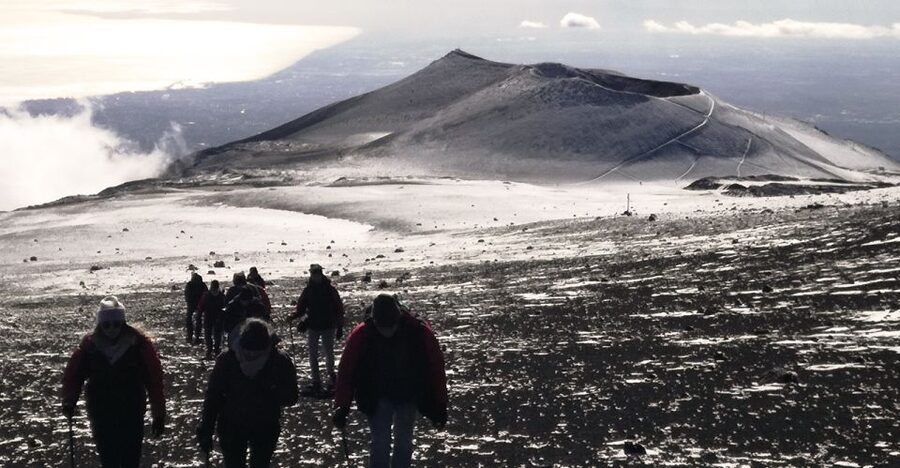
The Valle del Bove portion is scenic and also a reality check for winter hiking. Snow can hide uneven ground, and traction matters. In one recent experience, the toughest parts included uneven sandy patches—proof that even when it looks smooth, your feet still need attention.
From there, you reach Barbagallo Crater. The plan gives about 1 hour for walking/hiking there, and this stop is built for crater exploration on foot. Expect a slower, more careful movement style than a summer hike. You’ll be managing traction and balance while listening to the guide’s volcanology explanations.
This is also where you’ll feel the value of having a volcanological-alpine guide. You’re not just told to look at a crater; you’re guided toward understanding the crater’s role in Etna’s activity and what the terrain suggests. One guide experience highlighted how the route took people across the southern crater area and used multiple crater points to tell a connected story.
Etna’s cone from 2001 eruption + summit crater from a safe distance
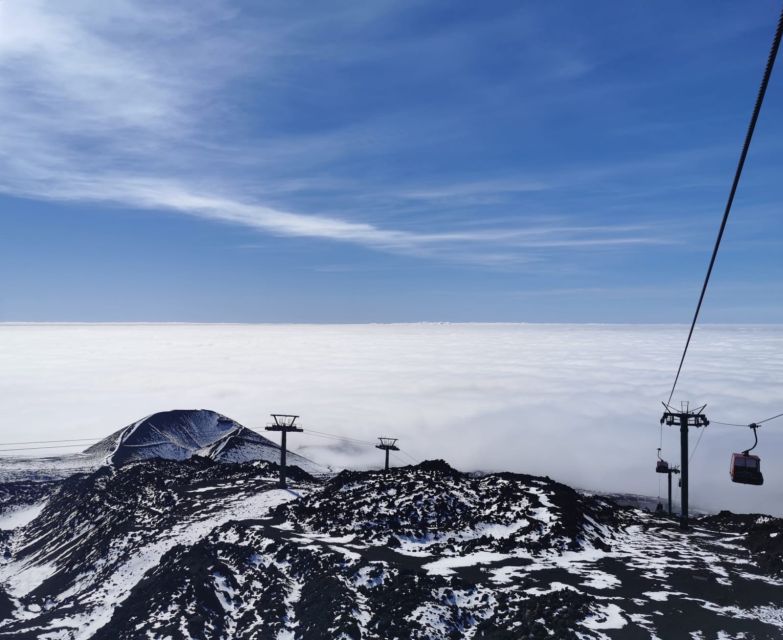
The itinerary includes visiting the cone from the 2001 eruption area. In winter, that cone stands out because snow often makes the shape easier to see from a distance, while the volcanic ground stays darker in places. If the conditions allow, you’ll also look toward a lava channel before you return to the cable car upper station—another chance to tie geology to what you can observe on the ground.
You’ll also admire the summit crater from a safe distance before heading back down. That’s an important distinction. This trip focuses on safe, guided access to significant crater areas rather than trying to chase the very top. The payoff is that you still get the drama and the crater views without pushing into the most extreme terrain.
For many people, the best moment is the combination: you see the summit crater (from safety), you walk through surrounding features shaped by eruption history, and you understand where you are in the bigger Etna system. That “putting it together” feeling is the thing I’d plan this trip for.
Lava vents, visibility, and why your day might shift
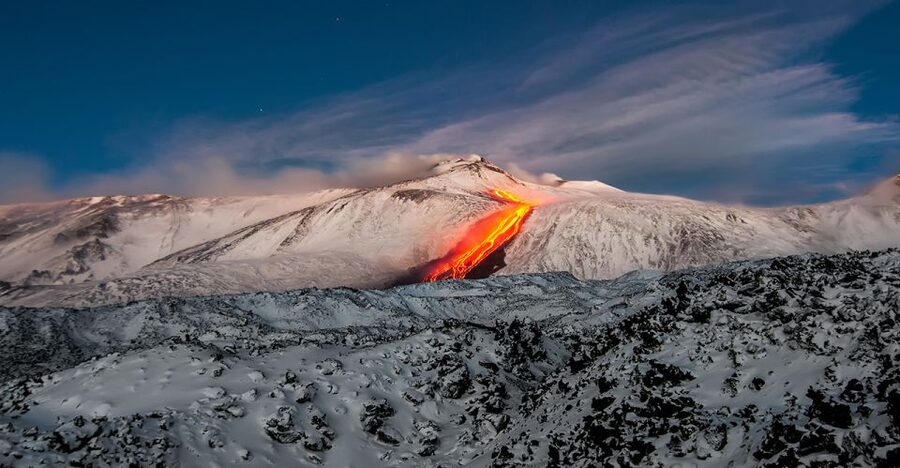
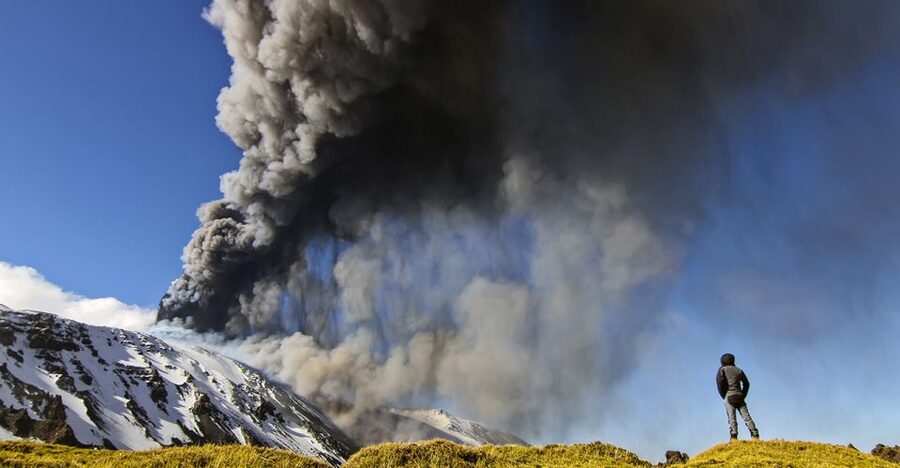
Etna’s activity and the weather both affect the hike. The tour notes that volcanic activity is continuous and unpredictable, so the guide may vary or cancel the route for safety, especially based on ice presence. That can sound scary on paper, but it’s actually reassuring—because it means the guide is allowed to prioritize your safety over sticking to a rigid script.
One winter highlight from a prior booking: on an especially clear day in February, people reported seeing lava venting near the active zone during the hike. That doesn’t mean you should expect lava every time. What you can expect is variability—some days will feel crisp and sharp, others will be quieter with less visibility, and the guide will adjust accordingly.
The good news? This tour still holds up even when conditions limit the “extra” sights. The core experience—cable car to high altitude, guided crater walks, snow traction work with the right gear, and crater-focused explanations—remains the backbone.
Gear, boots, crampons, and the pace on icy ground
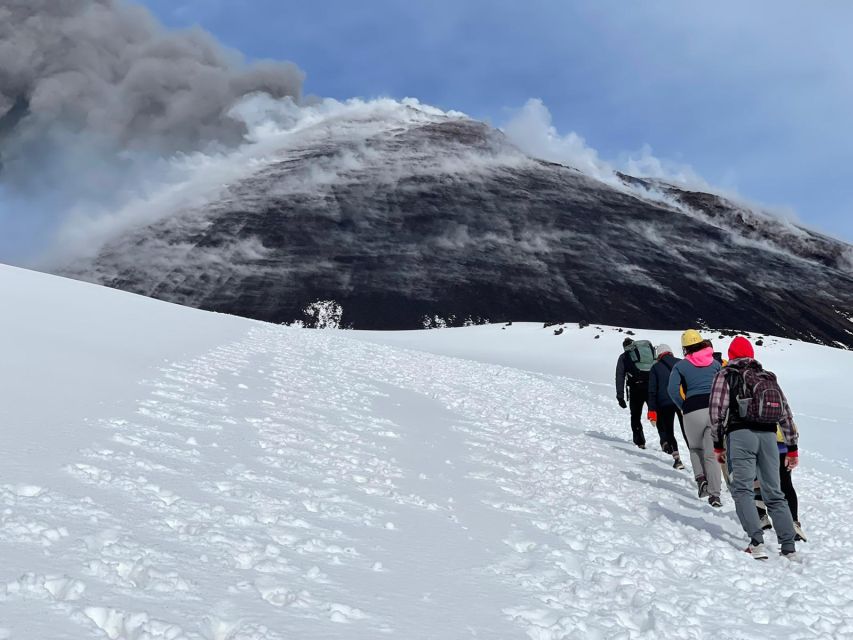
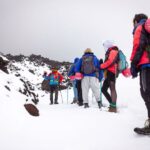
This trip is rated for experienced hikers. That doesn’t mean you need mountaineering credentials, but it does mean you should be comfortable moving on snow and ice and managing a steady pace on uneven ground. If you tend to get shaky on slippery trails, take that seriously and ask yourself whether winter Etna is your moment.
Included snow gear helps a lot. You get boots, helmet, walking sticks, and necessary snow equipment (the tour highlights crampons as part of the gear approach). If you’ve never used traction before, don’t assume it’s the same as wet hiking shoes. Practice walking carefully before you head out if you can, and trust the guide’s instruction on step technique.
Pace is another big deal. The tour is structured for about 5 hours total, including cable car time and guided walking segments. That’s a good length: long enough to feel like real Etna time, short enough that you’re not spending the entire day cold without breaks.
One practical note from real hike experience: breaks matter, and a strong guide will stop often enough for everyone to regroup. I’d treat that as normal and not a sign something is wrong.
Price and value: what $106 covers, and what costs extra on the day
The listed price is $106 per person for a 5-hour guided high-altitude winter trek. For this kind of geology-focused outing—licensed alpine/volcanological guiding, winter equipment support, and a cable-car-assisted altitude climb—that’s fairly straightforward value.
But there’s one important add-on: cable car tickets are not included. They cost €50 per person and are paid in cash on the spot. So yes, your total day budget should include that extra amount.
When I judge value on a tour like this, I look at what’s handed to you versus what you must source yourself. Here, you’re covered for key winter hiking needs: boots, helmet, sticks, and snow gear. That reduces your risk and keeps the experience focused on the hiking and the geology.
Who should book Etna South, and who should skip it
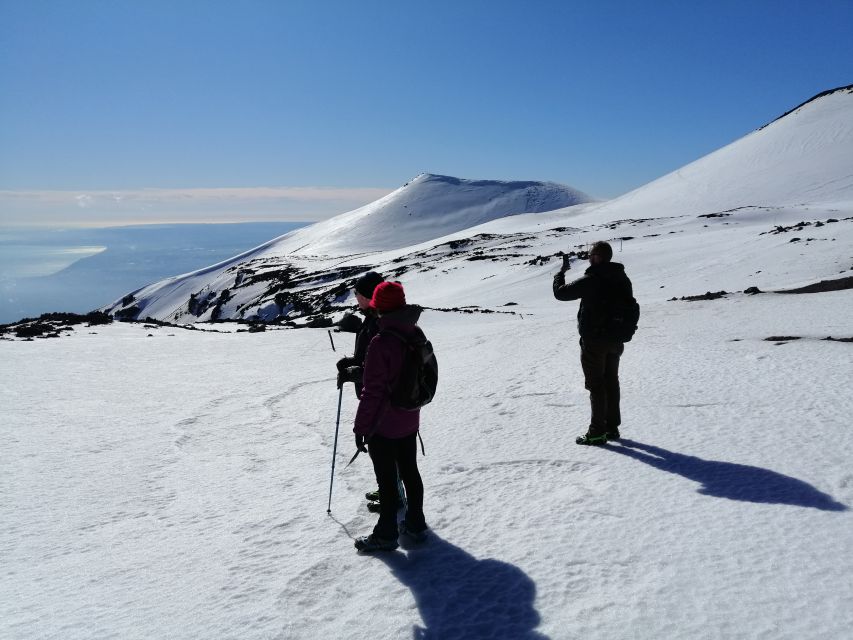
This is a hike, not a casual stroll. It’s designed for people with solid winter hiking comfort and good health. The tour specifically lists that it’s not suitable for children under 10, pregnant women, people with back problems, mobility impairments, wheelchair users, vertigo, heart problems, respiratory issues, epilepsy, people without experience, and anyone with high blood pressure.
If you fit the supported category—an experienced hiker comfortable on snowy, icy terrain—this can be a strong choice because it combines:
- a guided crater-focused route,
- small-group safety,
- and a winter setting that turns Etna into a different planet.
If you have vertigo, for example, don’t “try it anyway.” The plan includes crater viewpoints and summit-adjacent observing from a safe distance, but it still involves winter conditions and exposure that can trigger symptoms. Choose safety over bravery.
Also, follow the clothing rules: warm layers, gloves, long pants, socks, hat, and a windbreaker. The tour also lists items not allowed like shorts and open-toed shoes, plus no large bags or luggage.
Should you book Etna South: the quick decision guide
Book it if you want Etna in winter and you’re the type who likes learning while walking. This trip works best when you take it as a guided education in volcanic terrain—cable car altitude, snow traction, crater routes, and safety-driven viewing from high up.
Skip it (or choose a different Etna experience) if any of these are true:
- You’re not truly comfortable with snow/ice hiking.
- You’re sensitive to altitude or have vertigo.
- You fall into the listed medical or mobility restrictions.
- You’re hoping for a simple, low-effort winter outing.
One more thought: if you can handle one day changing due to ice or safety decisions, you’ll probably enjoy this more. Etna doesn’t do predictable. When it’s good, it’s memorable—and the guide team is set up to keep the day safe while still showing you the important crater story.
FAQ
How long is the Etna South winter trek?
The total duration is about 5 hours.
Where do I meet for the tour?
You meet at the Ashàra info point located at Rifugio Sapienza (Etna South), near the Terrazza dell’Etna restaurant.
How high do we go on the cable car and during the hike?
The cable car takes you to about 2,500 meters, and the trek climbs to around 3,000 meters.
What’s included in the price?
Included: a volcanological or alpine guide, hiking boots, helmet, walking sticks, and the necessary snow equipment.
What isn’t included, and how do I pay for it?
Cable car tickets are not included. They cost €50 per person and are paid in cash on the spot.
What languages are the guides available in?
The tour guide is available in French, Italian, and English.
Can the route change or get canceled?
Yes. Because volcanic activity is continuous and unpredictable, the trip could be varied or canceled for safety reasons such as ice presence, and the guide can also change the itinerary if needed to keep everyone safe.