REVIEW · KAMPALA
3 Days Uganda Gorilla trek Safari Tour
Book on Viator →Operated by All Seasons Adventures UG · Bookable on Viator
Gorillas, but make it logistical. This 3-day Bwindi trip turns a long drive into a story worth telling, with a 6:00 am Kampala pickup and a morning gorilla trek that can run 2–8 hours depending on the group’s movement. I love that you get both the big wildlife moment and the human side of Bwindi through a Batwa community visit. I also like that the tour includes gills-and-rainforest essentials on paper: permits, meals, and key experiences like the Green Equator water test.
The one thing to consider is the pace: you’ll spend full days in a vehicle, and the trek itself is real walking in thick terrain, not a stroll. If you’re sensitive to long drives or steep muddy paths, plan your energy carefully before you go.
In This Review
- Key highlights you should care about
- Three Days, One Big Morning: Leaving Kampala for Bwindi
- The Green Equator Stop: Photos, the Water Test, and a Quick Reality Check
- Arriving at Bwindi Impenetrable Forest: UNESCO Forest, Thick Terrain, Real Birding
- Gorilla Trek Day: The Ranger-Guided Search and the One-Hour Meeting
- Batwa Community Visit: Stories, Forest Life, and Why It Matters
- Food and the Included Stuff: What’s Covered, What’s Not
- Price and Value: Why $1,900 Is More Than a Number
- Who This Tour Fits Best (and Who Might Reconsider)
- Guide Factor: When Khalid-Style Expertise Helps
- Should You Book This 3-Day Bwindi Gorilla Trek?
- FAQ
- What time does the tour start in Kampala?
- How long is the tour?
- What is included in the price?
- Where do we meet at the beginning of the tour?
- Is the gorilla permit included, or do I pay extra?
- How does the gorilla trek work once you reach the forest?
- Is there a cultural activity in the itinerary?
- What is the cancellation policy?
Key highlights you should care about
- Early start and efficient routing: Kampala pickup at 6:00 am, then south-west to Bwindi with planned stops.
- Permits and park access included: the gorilla tracking permits are part of the package.
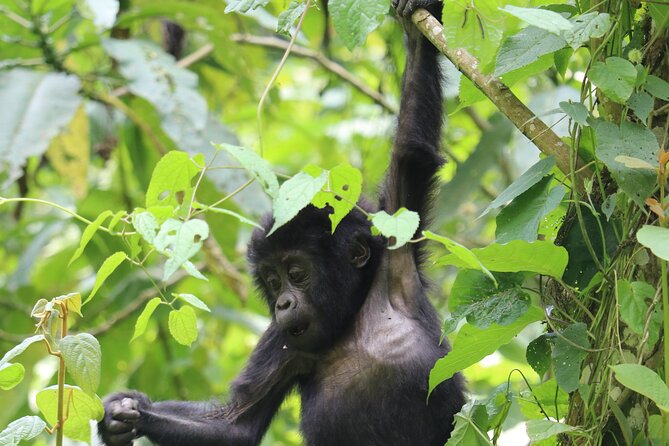
- A proper tracking window: you’ll search with ranger guides and then get one hour with the gorillas once found.
- Batwa community walk: learn how forest life worked before Bwindi became a national park.
- Bwindi is more than gorillas: the forest is a UNESCO site and an important birding area too.
- Mobile ticket and private group: your group travels together, and you’ll have a mobile ticket.
Three Days, One Big Morning: Leaving Kampala for Bwindi
This is a safari built around one major objective: getting you into Bwindi Impenetrable Forest to track mountain gorillas. And it starts with a day you’ll remember even if you’re not a morning person: pickup from your hotel in Kampala around 6:00 am, then a long drive that’s meant to get you to the forest area in time for an arrival evening.
The route is mostly about getting you to the right base fast. You’ll cover an 8–9 hour road trip on Day 1, with a scheduled lunch stop en route. That’s a lot of time in a vehicle, but it’s also what protects your odds for the trek the next morning. Gorilla tracking has a timing rhythm, and Bwindi is not a place you can easily do on the fly.
On Day 3 you’ll reverse the process. You depart after breakfast and drive back to Kampala, with a stop for lunch on the way. Expect around 9 hours of travel, so your final day isn’t a slow unwind. It’s a clean wrap-up so you can end back in Kampala late afternoon.
You can also read our reviews of more tours and experiences in Kampala.
The Green Equator Stop: Photos, the Water Test, and a Quick Reality Check
A smart feature of this tour is that it doesn’t treat the drive as wasted time. On the way to Bwindi, there’s a stop at Green Equator Masaka Road for a couple of classic photo moments—and a hands-on science trick.
You get to stand in two hemispheres at the same time and take pictures. Then your guide will run a water test experiment showing how water drains differently in the northern and southern hemispheres, based on the Equator effects. It’s not going to change your life, but it does two useful things: it breaks up the drive and gives you a memorable “we’re really going somewhere” moment before you hit the forest.
If you tend to forget time on road trips, this stop helps you reset. It’s also a good chance to stretch before the long push south-west continues toward Mbarara for lunch.
Arriving at Bwindi Impenetrable Forest: UNESCO Forest, Thick Terrain, Real Birding
When you reach Bwindi Impenetrable Forest National Park, the big headline is gorillas. But the park earns attention well beyond that headline.
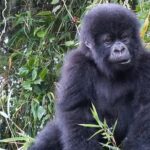
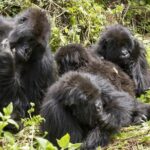
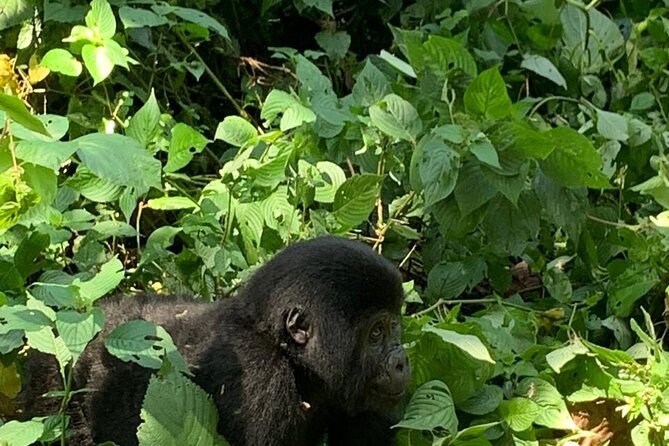
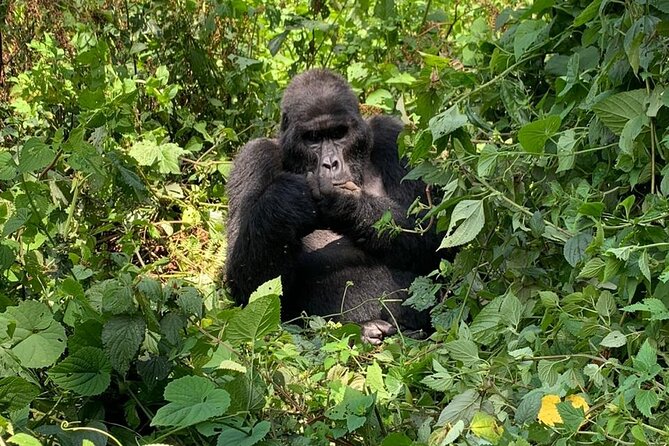
Bwindi is a UNESCO World Heritage Site and one of the best places in Uganda to track mountain gorillas. The forest protects around 40% of the world’s remaining mountain gorilla population, and it has multiple habituated groups. In plain language: there are gorillas there that have gotten used to human presence enough to make tracking possible.
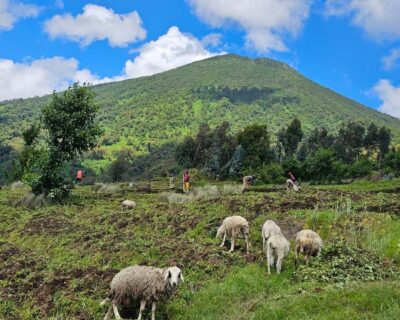
You should also know what kind of place you’re entering. Bwindi is described as a rainforest made of ridges and valleys covered in very dense forest. That matters because the trek isn’t just about finding animals. You’re moving through thick vegetation where visibility can drop fast and the ground can be tricky.
And if you like nature beyond mammals, Bwindi has serious bird credentials. The park is noted for 350 bird species recorded, including Albertine Rift endemics. Even if your main goal is gorillas, this is the kind of ecosystem where you might spot birds and small forest life while you’re waiting, walking, or catching your breath.
Gorilla Trek Day: The Ranger-Guided Search and the One-Hour Meeting
Day 2 is where this whole plan crystallizes. After an early breakfast at your lodge, you drive to the park headquarters for a briefing at about 8:00 am. This is where you learn the tracking rules—small details that help everyone stay safe and keep the gorillas calm.
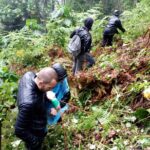
Then the real part starts: you carry your trekking gear, plus drinking water and a packed lunch, and your driver drops you at the starting point. From there, you trek with ranger guides through thick jungle in search of the habituated gorillas.
Here’s the range that matters: the activity can take 2 to 8 hours depending on how the gorillas move. That range is honest, and it’s also the reason you should bring patience. You’re not “going to see gorillas at 10:00.” You’re following a living group through terrain.
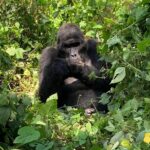
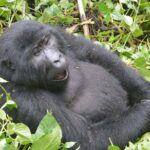
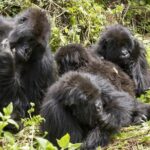
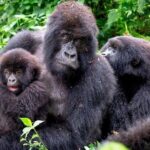
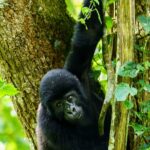
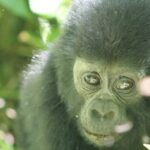
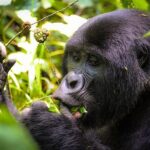
Once your team locates the gorillas, you’ll have one hour with them. That hour is the payoff. It’s enough time to observe behavior and get photos, but it’s also limited to protect the animals and keep the experience controlled.
One nice detail from past experiences shared by guide Khalid is that sometimes the search can be closer to the shorter end—around two hours—and once found, the group can stay close enough for a satisfying view within the allotted hour. Your own timing can vary, but that shows what’s possible when the gorilla movement lines up with the search.
Batwa Community Visit: Stories, Forest Life, and Why It Matters
After lunch, you shift from gorillas to people—with an evening community walk among the Batwa, indigenous forest dwellers who used to live in the Bwindi forest before it became a national park.
This part isn’t just cultural decoration. It adds context to the landscape. When you trek through Bwindi’s dense forest, you’re walking through a place shaped by humans for generations—people who hunted, gathered, and used plants for practical life like herbal knowledge.
During the walk, you’ll learn about Batwa life and culture as a forest people. The tour info describes their roles as gatherers, hunters, warriors, and herbalists. Even if you’re not a history person, this changes the way you interpret the forest. It’s no longer just scenery and animals. It becomes lived-in space with memory.
And because it’s scheduled for the evening, it also helps your body recover from the trek day. It’s a slower pace than tracking, but it still gives you something meaningful to carry home.
Food and the Included Stuff: What’s Covered, What’s Not
The tour includes meals across the three days, which is one of the best “silent values” in a gorilla safari. You’re not scrambling for snacks or wondering if lunch will be available where you land.
Included meals are listed as:
- Breakfast (2)
- Lunch (3)
- Dinner (2)
That’s well aligned with an overnight in the Bwindi area plus one return travel day. Alcoholic beverages are not included, so if you want a drink with dinner, you’ll need to budget separately.
Also included are the practical experience pieces:
- Gorilla trekking permits
- Community visit
- Equator experiment
- Pickup support from Kampala as described in the route
There’s also a mobile ticket, which can make last-minute details easier when you’re coordinating within Uganda.
Price and Value: Why $1,900 Is More Than a Number
At $1,900 per person for about three days, the price can look steep until you break it into pieces.
Gorilla trekking permits are not a cheap add-on, and they’re the heart of what you’re buying. This tour includes those permits, which instantly lowers the risk of unpleasant surprises later.
Then there’s the heavy logistics: long Kampala-to-Bwindi driving days, timed park movements, ranger-guided tracking support, and the structured day-to-day meal plan. Most people underestimate how much effort goes into making a gorilla day run smoothly. It’s not only the trek. It’s getting you into the right place, at the right time, with the right rules and supplies.
On top of that, the tour adds experiences that keep the trip from becoming only “drive, trek, repeat.” You get the Green Equator stop with its water test, plus the Batwa community walk. Those add cultural value without burning extra days.
So is it good value? For most travelers focused on Bwindi and gorillas, yes—especially because permits and key activities are included. The cost becomes easier to justify when you remember that gorilla trekking isn’t an on-demand experience. You’re paying for access, timing, and the human support required to do it safely.
Who This Tour Fits Best (and Who Might Reconsider)
This tour says most travelers can participate, and that makes sense for a standard gorilla trekking itinerary. If you’re able to handle hours of walking and uneven, muddy forest terrain, you’re a good candidate.
You’ll likely enjoy it most if:
- You want a guided, structured gorilla trek rather than DIY planning.
- You care about both wildlife and local culture (gorillas plus the Batwa walk).
- You’re okay with long drive days as the price of seeing Bwindi properly.
You might reconsider if you:
- Are worried about time on the road. Between the 8–9 hour drive on Day 1 and 9 hours on Day 3, you’re not just “passing through.”
- Have limited mobility or find forest trekking tiring. The trek can run 2–8 hours, and the terrain is thick forest, not flat paths.
If you’re the type who likes clear plans and a team around you, this format will feel comforting. If you hate being on a schedule, you might find the waiting and tracking variability stressful—but that variability is normal for gorilla trekking.
Guide Factor: When Khalid-Style Expertise Helps
One recurring theme in guidance quality is the importance of the guide’s skill and calm. In past experiences, Khalid has been highlighted for professional guiding and passion for gorilla tracking. That matters because the trek isn’t only “where are the gorillas.” It’s also reading the situation, staying respectful, and helping you make sense of what you’re seeing once you find the group.
Even beyond gorillas, a strong guide helps you handle timing—briefings, handoffs to ranger guides, and the rhythm between trek, lunch, and evening community visit. That’s what makes the whole trip feel less chaotic.
When you’re paying real money for a once-in-a-lifetime experience, guide quality is not a luxury. It’s part of the value.
Should You Book This 3-Day Bwindi Gorilla Trek?
If your goal is simple—see mountain gorillas in Bwindi with permits handled, plus a cultural stop that adds meaning—then yes, this is a sensible choice.
I’d book it if:
- You want the core gorilla experience organized end-to-end.
- You appreciate a day plan that includes a cultural evening walk, not just wildlife chasing.
- You’re comfortable with early starts and long drives.
I’d think twice if you’re very sensitive to long travel days or you struggle with trekking terrain for hours. In gorilla country, you don’t get to choose the gorillas’ pace—you follow it.
If you want my straight take: this tour is best for travelers who want one big, serious wildlife day, supported by real local guidance, and capped with a human story from the Batwa community.
FAQ
What time does the tour start in Kampala?
The start time is 6:00 am, with pickup offered from your hotel in Kampala.
How long is the tour?
It’s listed as 3 days (approx.), with travel and activities across three full days.
What is included in the price?
The package includes gorilla trekking permits, community visit, equator experiment, and meals (3 lunches, 2 breakfasts, 2 dinners). Alcoholic beverages are not included.
Where do we meet at the beginning of the tour?
The meeting point is the Uganda National Mosque, Old Kampala Rd, Kampala, Uganda.
Is the gorilla permit included, or do I pay extra?
Gorilla trekking permits are listed as included, so you shouldn’t need to arrange a separate permit payment for this tour.
How does the gorilla trek work once you reach the forest?
You’ll get a briefing, then trek with ranger guides to search for the gorillas. The search can take 2–8 hours, and once the gorillas are found, you’ll have one hour with them.
Is there a cultural activity in the itinerary?
Yes. You’ll take an evening community walk among the Batwa, learning about their life and culture.
What is the cancellation policy?
There is free cancellation up to 24 hours in advance for a full refund. If you cancel less than 24 hours before the start time, the amount paid is not refunded.