REVIEW · MHAMID
2-day trek – In the footsteps of beetles
Book on Viator →Operated by L'oiseau du désert · Bookable on Viator
Two days, and the desert feels personal. This trek, themed in the footsteps of beetles, is a hands-on introduction to nomadic life and desert survival—following the signs of animals and the plant life that adapts to the harsh edge of the Sahara. I especially love the night bivouac under the starry sky and the caravan-route walk that connects you to how people once moved across vast distances; one thing to weigh is that it’s a trekking experience on foot, so you’ll want moderate fitness and realistic expectations about sand walking and sleeping gear.
This isn’t about rushing through big “see it once” sights. The plan centers on simple desert rhythm: morning departure from M’Hamid, shared camp moments around the fire, and a second day that slows down just enough to make the history of caravan stops feel close. You’ll be with the L’oiseau du désert team, including camel drivers, guides, and cooks, and you may meet leaders known by name like Bachir or Hassan depending on the group.
For value, the basics are handled: breakfast plus lunch and dinner, all fees and taxes, and the eating and sleeping setup for camp. The only easy miss to plan for is personal comfort gear—a sleeping bag is not included, and you’ll still be expected to do the trekking days.
In This Review
- Key things I’d circle before you go
- Two days in the M’Hamid desert, with a nomadic rhythm
- Morning departure: M’Hamid, dromedaries, and the desert bird team
- A quick practical note about “on foot”
- Bertham dunes and the ostriches plain bivouac under stars
- What can feel challenging here
- Day 2: walking to Mazwrya, the Timbuktu caravan meeting place
- Expect a calmer ending
- Meals and camp gear: what’s included, what you must bring
- Packing reality check for this style of trek
- Price and logistics: is $319.52 worth it for this format?
- The one logistic tradeoff
- Who should do this trek (and who might want a different one)
- My call: should you book In the footsteps of beetles?
- FAQ
- Is pickup available?
- Where does the trek start and end?
- What time does it start?
- How long is the trek?
- What level of fitness do I need?
- Is this a group tour or private?
- What meals are included?
- Is a sleeping bag included?
- Is there an admission ticket fee?
- How does confirmation work after booking?
- Can I cancel and get a refund?
Key things I’d circle before you go
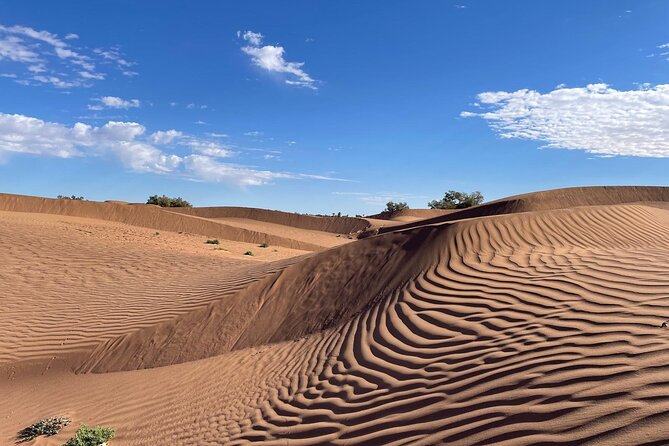
- Sunrise and campfire time are built in: you get that camp routine—warm food, firelight evenings, and morning movement.
- Nomadic pacing, not sightseeing sprinting: the day structure favors walking, breaks, and shared desert meals.
- Caravan history shows up on Day 2: you’ll visit Mazwrya, described as a meeting point for caravans coming from Timbuktu.
- You travel with a desert team: camel drivers, guides, and cooks are part of the “caravan family” setup.
- Food and camp gear are mostly included: you’re covered for meals and camp equipment, but not a sleeping bag.
Two days in the M’Hamid desert, with a nomadic rhythm
M’Hamid (near El Ghizlane) is the starting point for a trek that feels more like joining a working caravan than taking a quick desert photo safari. You leave in the morning at 8:00 am, and you spend the trip walking, eating simply, and sleeping in a bivouac setup.
The theme—walking in the footsteps of beetles—hints at a focus on small desert life and how everything survives together: insects, animals, plants, and people. Even if you’re not an entomology nerd, this kind of “look closer” approach changes the way you see the dunes. Suddenly the desert isn’t only a backdrop; it’s a system.
This is also a good match if you like a cultural angle that isn’t heavy on lectures. The experience is built around daily life: getting ready, walking with the caravan energy, and sharing meals and quiet moments around camp.
You can also read our reviews of more tours and experiences in MHamid.
Morning departure: M’Hamid, dromedaries, and the desert bird team
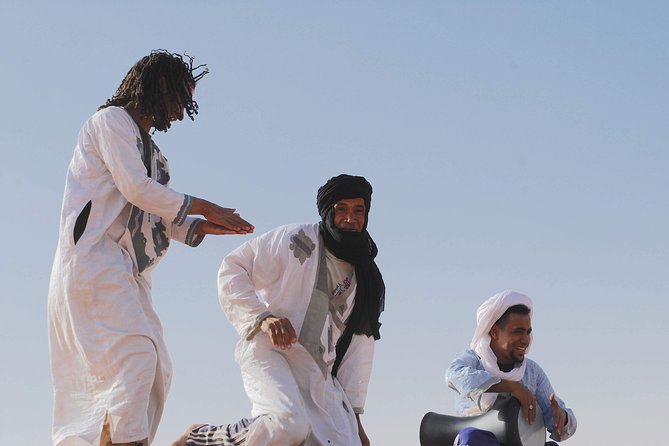
On Day 1, you start from M’Hamid on foot in the morning, accompanied by the caravan of dromedaries. The itinerary also calls out a desert bird team that includes camel drivers, guides, and cooks. In practical terms, that means you’re not just dropped off and left to “figure it out.”
The route heads toward the dunes of Bertham, where the experience describes nomads once living near their herds of dromedaries. That detail matters because it keeps the day grounded in real movement and real shelter patterns—how herders used seasonal routes, water access, and grazing areas.
You’ll also notice the pace is set for people who are walking the dunes, not for hikers chasing big mileage. The trip is listed as requiring moderate physical fitness, which usually means you should be comfortable with sustained walking on uneven ground for long stretches, even if you’re not training for a mountain race.
A quick practical note about “on foot”
You’re leaving in the morning and you’ll walk through both days. If you’re the type who loves a gentle stroll, you may still be fine—but keep in mind sand changes everything. It’s slower, it tires calves and feet, and it can test balance. Plan for that, and the payoff is that you actually feel like you’re part of the landscape.
Bertham dunes and the ostriches plain bivouac under stars
After moving toward Bertham’s dunes, you’ll set up a bivouac toward the plain of the ostriches. This is one of the most valuable parts of the whole experience. In two days, this is your most “desert-only” moment, away from roads, screens, and city time.
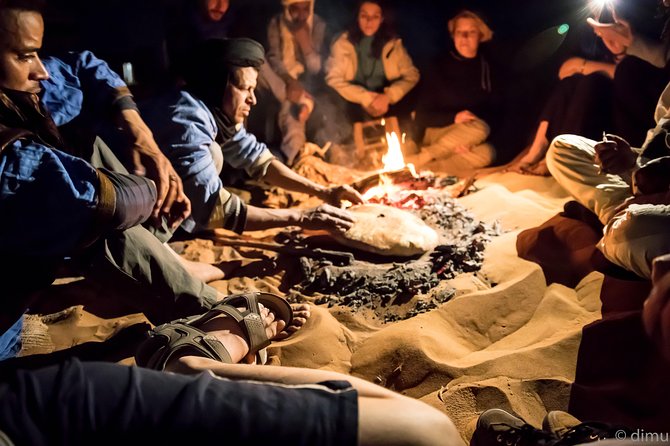
The evening includes a vigil around the fire under the starry sky. That’s not just atmosphere. Campfire time is where you slow down enough to notice the small things: desert sounds, wind direction, and how quickly the temperature drops after sunset. It’s also where the team vibe shows up—people cooking, sharing, and helping you settle in.
Food is part of this rhythm too. Dinner is included (two dinners across the full trek), and you’re also covered for lunch each day and breakfast on Day 2. You’ll still want to eat like a trekking person—slow and steady, and don’t assume you’ll want heavy food every time—but the plan is built so you’re not carrying the full burden.
From the names that have shown up in guide-and-team feedback, cooks like Baccarat are often singled out for making the meals more enjoyable than you might expect from “simple camp food.” I’d treat that as a positive indicator for your comfort level at night.
What can feel challenging here
You’re sleeping with camp gear provided, but you should know a sleeping bag is not included. If you run cold, bring a sleeping bag that works for desert night temperatures. If you tend to be warm, you still may want extra layers, because desert nights can be surprisingly chilly.
Day 2: walking to Mazwrya, the Timbuktu caravan meeting place
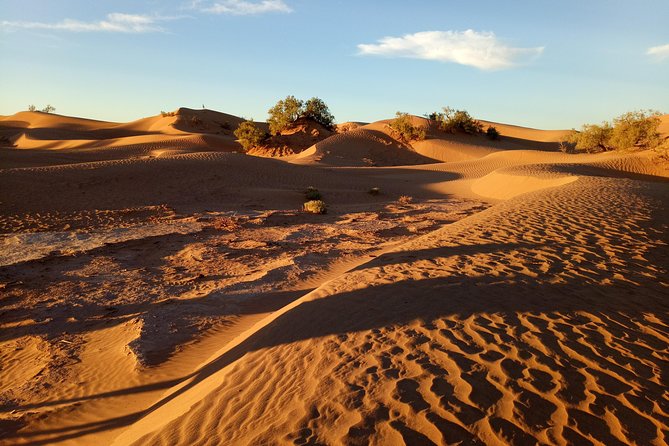
Day 2 starts with breakfast, then a walk to Mazwrya. Mazwrya is described as a meeting place for caravans that once traveled from Timbuktu. That’s a powerful detail because Timbuktu is often reduced to a name in books, not a lived network of routes. Here, the idea is that you’re stepping into a geography shaped by trade and travel.
After you reach Mazwrya, you’ll have a midday meal. The plan then shifts back toward M’Hamid, and you’ll take leave of the caravan after this “breakaway” stretch—basically the moment when your day turns from walking-as-a-group to walking back into civilization.
This second day is also where the “introduction to nomadic life” becomes more than marketing. It’s one thing to hear about caravans. It’s another to follow the line of travel they used, even on a small scale and for a short time. You’ll likely notice how the terrain funnels movement and how people once planned routes around the desert’s constraints.
Expect a calmer ending
Day 2 doesn’t sound like a long endurance push. It’s more like: morning energy, a meaningful stop (Mazwrya), a meal, then the return. That makes the full two-day format feel balanced for people who want the Sahara experience without turning it into a survival march.
Meals and camp gear: what’s included, what you must bring
One of the easiest ways to judge value on any trek is to check what you’re responsible for carrying and managing. This one is pretty clear:
Included
- Breakfast, plus lunch (2) and dinner (2)
- Eating and sleeping equipment
- All fees and taxes
Not included
- Private transportation
- Sleeping bag
That list tells you a lot about what the provider intends: they want the trekking to be the main “work,” not gear logistics. Eating and sleeping equipment being included suggests you won’t be hunting for cookware or figuring out where camp setup happens. Still, because a sleeping bag isn’t included, you should assume you’ll need to plan your personal comfort carefully.
Packing reality check for this style of trek
The data doesn’t list clothing gear advice, but the experience structure implies you’ll want the basics for desert walking:
- Something to protect from sun and wind
- Layers for night temperatures
- Footwear you trust for sand
If you’ve ever done desert-style walking, you already know the secret: comfort is mostly your footwear and sleep system. If you get those right, the rest tends to fall into place.
Price and logistics: is $319.52 worth it for this format?
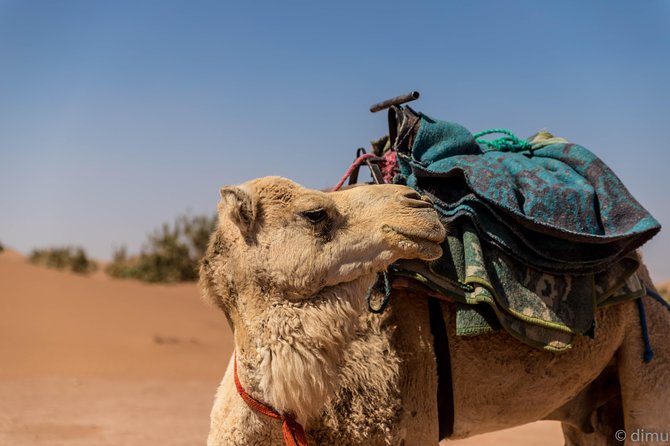
At $319.52 per person for about 2 days, this isn’t a “cheap desert evening.” But it also isn’t priced like a luxury camp. The value comes from what’s bundled:
You get meals (breakfast, lunch, dinner), camp setup equipment, all fees and taxes, and you’re not organizing the caravan side yourself. That’s a real cost driver in the Sahara—food, staff time, and safe coordination aren’t free.
Also, the experience is a private tour/activity, meaning only your group participates. Private format usually affects price either way, but in this case it also affects your experience quality: more flexibility, less crowd pressure, and a camp vibe that feels more like joining a team than waiting behind other groups.
Pickup is also offered, and you’ll receive a mobile ticket. That’s practical. It reduces the chance of last-minute confusion.
The one logistic tradeoff
Private transportation is not included. If you’re starting from Marrakech or another distant base, you’ll need to sort getting to M’Hamid on your own or use whatever transport arrangement the provider offers through pickup. If you hate logistics, verify your pickup plan early so you’re not scrambling the morning of departure.
Who should do this trek (and who might want a different one)
This trek is designed for people with moderate physical fitness. If you’re comfortable walking daily for hours on uneven ground, you’ll probably enjoy it. If you need lots of “rest stops with no walking,” this may feel like too much sand-time.
It’s also a good fit for solo travelers who want safety and support without a heavy itinerary. The experience description and the team-focused praise around organization and security suggest you’re looked after. And because it’s private, you can be among people who share your pace and style more than in a large public group setting.
This is also ideal if you care more about the lived desert rhythm than big famous monuments. You’ll spend your effort on campfire moments, caravan-route walking, and the second-day connection to Mazwrya and caravan history from Timbuktu.
If you’re chasing maximum comfort, be honest with yourself. You’re sleeping outdoors in a bivouac setup, and you’ll need your own sleeping bag. If that’s a dealbreaker, look for a trip with upgraded lodging.
My call: should you book In the footsteps of beetles?
If you want a short, well-fed Sahara experience with a real sense of nomadic life, I’d book it. The two-day structure is long enough to feel like the desert changes the day-to-day rhythm, but short enough to keep planning simple. The included meals and camp equipment remove a lot of hassle, and the focus on camp moments—especially the firelight evening and starry night—is exactly what makes a desert trek feel worth it.
Before you hit confirm, do three things:
- Plan for foot travel on sand with moderate fitness.
- Bring (or arrange) a sleeping bag, since it’s not included.
- Confirm how pickup will work for your location, since private transport isn’t part of the package.
If those check out, this is the kind of trek that gives you a clean, human-scale connection to the Sahara—dromedaries, caravan routes, and a night sky you won’t forget.
FAQ
Is pickup available?
Pickup is offered. The experience description also notes that the meeting area is near public transportation, but private transportation is not included.
Where does the trek start and end?
It starts in M’hamid, Morocco, and ends back at the same meeting point.
What time does it start?
Start time is listed as 8:00 am.
How long is the trek?
The duration is approximately 2 days.
What level of fitness do I need?
The trek is listed for travelers with moderate physical fitness.
Is this a group tour or private?
It’s a private tour/activity. Only your group will participate.
What meals are included?
Breakfast is included, and lunch and dinner are included across the two days (lunch 2 times, dinner 2 times).
Is a sleeping bag included?
No. Sleeping equipment is included, but a sleeping bag is not.
Is there an admission ticket fee?
Admission is listed as free for the stops included.
How does confirmation work after booking?
Confirmation is received at the time of booking, unless you book within 2 days of travel—in that case, confirmation is received within 48 hours, subject to availability.
Can I cancel and get a refund?
Yes. You can cancel up to 6 days in advance for a full refund, 2–6 days in advance for a 50% refund, and less than 2 days before the start time isn’t refundable.