REVIEW · MHAMID
4 Days Trekking To The Heart Of Desert
Book on Viator →Operated by Desertbrise Travel · Bookable on Viator
Sand, silence, and desert light. This M’Hamid trek trades hotel comfort for big dune calm and a sun-paced rhythm with a professional nomadic guide, plus camel drivers who look after the luggage. You’ll hike with breaks for tea and meals, learn how nomads live out here, and spend evenings watching the Sahara turn from gold to shadow.
I like the way the day structure is built around the desert itself. The camel caravan means you’re not dragging a full pack across sand, and sunrise and sunset stop you at exactly the right moment to soak in the scale.
One thing to consider: this is walking in real desert conditions. Even with guidance and planned rests, you should expect heat and sun intensity to set the tempo, so bring a shade plan for yourself (hat, water discipline), and ask questions if your group includes kids or anyone with health concerns.
In This Review
- Key points worth knowing before you go
- Marrakech to the High Atlas: the trip in, not just the trek out
- Entering the desert at M’Hamid: camels, guide, and your walking day
- Palm grove tea breaks under Tamaris trees
- Sidi Naji sanctuary: history you can actually feel
- What the desert camp feels like: silence, sunsets, and the sun doing the scheduling
- Food on a wood fire: the daily comfort you remember
- Team matters: nomadic guides and camel drivers who keep the day smooth
- Price and value: what $341.63 buys you in the Sahara
- Who this trek suits best (and who should rethink it)
- Should you book this M’Hamid desert trek?
- FAQ
- How long is the desert trek experience?
- Where does the tour start and end?
- Is this a private tour?
- What does the trek include for meals and water?
- Do camels carry luggage?
- Where does the hiking begin in the desert?
- Are tips included in the price?
- What cancellation options are available?
- Is the trek suitable for beginners or most travelers?
Key points worth knowing before you go
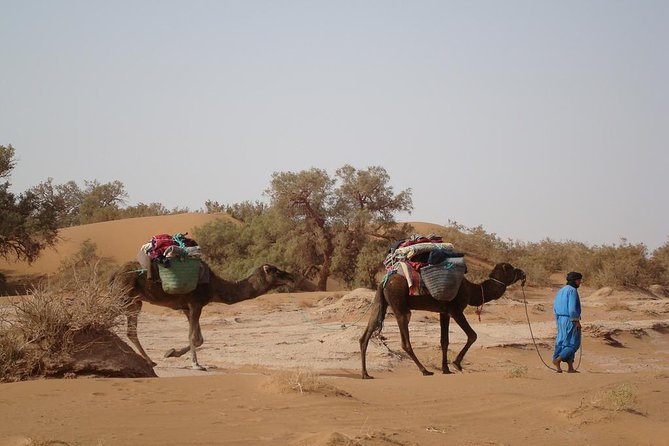
- M’Hamid starting point: The trek begins from the edge of the Sahara near M’Hamid, where you feel the desert quickly.
- Camel-carried luggage: Camels handle the bulk of your gear, so you hike lighter and move more comfortably.
- Sunrise and sunset timing: Your route is paced so you experience the dunes in early light and at nightfall.
- Stops with local meaning: You’ll visit places like the palm grove and the sanctuary of Sidi Naji.
- Food cooked for camp life: Expect traditional meals, including tajines cooked on a wood fire in camp.
- A more private feel: It’s a private activity, so you won’t be packed into a large, chaotic group.
Marrakech to the High Atlas: the trip in, not just the trek out
This experience starts in Marrakech at 8:00 am, with a drive out through the High Atlas Mountains via the Tichka Pass (2260 m). The road climbs, twists, and rewards you with wide mountain views and changing tones as you move from higher terrain down toward the desert.
Along the way, you stop for iconic south Morocco highlights that make the overland part feel like more than just transportation. You’ll pass through Berber villages and visit kasbahs along the route, including Tamnougalte and Ait Benhaddou, the famous 16th-century UNESCO site that has also appeared in Hollywood productions. You’ll also travel through the palm-lined Draa Valley, then reach Zagora, the dates capital of the region.
Why this matters: if you only look at the “trek days,” you might miss how quickly the scenery teaches you the story of the south—mountains to valleys to palms to dunes. The more you see on Day 1, the more meaningful it feels when the Sahara finally takes over.
A small practical note: there’s a stop with an admission ticket included, but the exact site isn’t spelled out beyond the included ticket detail. Either way, you’re building in time for culture and landmarks before you go fully off-road.
You can also read our reviews of more tours and experiences in MHamid.
Entering the desert at M’Hamid: camels, guide, and your walking day
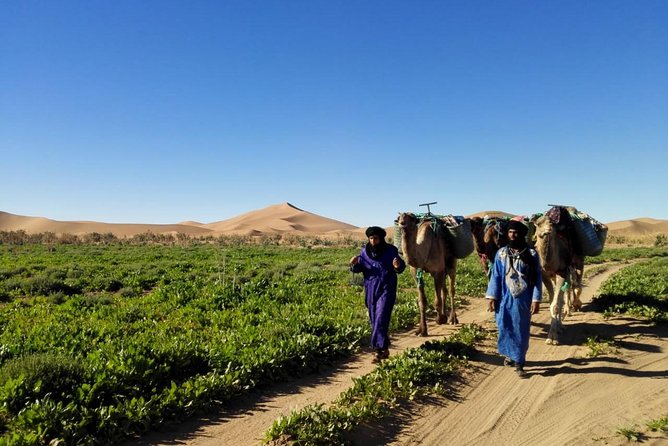
The trekking portion starts after breakfast from M’Hamid, with your guide and the camel caravan. This is where the experience shifts from road tempo to foot tempo, and it stays that way for the remainder of the desert days.
You’ll hike in the Sahara with a professional team that’s used to reading the land and adjusting pace. One detail that stands out in how the trip is described: you live according to the rhythm of the sun. Translation: you’re not just walking randomly for endurance; you’re moving in a way that respects the heat and gives you rest when it matters.
Most of your “weight problem” is handled for you. The camels carry the luggage, while you focus on walking, stopping, and paying attention—especially during sunrise and sunset moments. It’s also an active-learning kind of trek. The plan includes observation of animals and plant life, so you’re not only staring at dunes; you’re learning what survives here and how nomads interpret it.
If you’re thinking about group style, you should know this is a private activity, meaning only your group participates. That often makes a big difference when the goal is disconnection and quiet, not social chaos.
Palm grove tea breaks under Tamaris trees
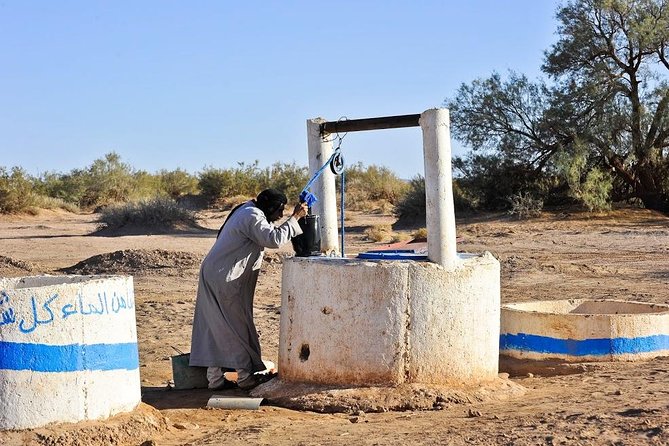
After starting from M’Hamid, the itinerary includes a walk toward the Palm Grove. This is a welcome reset zone: greenery changes the sound, the light, and how your body feels when you step out of pure sand terrain.
Tea and lunch are served in the shade of tamaris trees. That detail matters more than it sounds. Tamaris shade isn’t just a nice perk—it’s practical heat management. You get a real break built into the day instead of hoping you find shade by luck.
This stop also gives you a contrast that helps you understand the desert’s edge. The dunes can feel empty until you see how life gathers where conditions allow. You’re not just hiking through scenery; you’re moving through different “micro-environments,” from sand to palm shade to more open dune country.
A drawback to keep in mind: palm groves and shade breaks don’t eliminate the fact that you’re still in desert sun. Your comfort will depend on how you personally handle heat—hydration habits, sun protection, and willingness to pause when your guide asks.
Sidi Naji sanctuary: history you can actually feel
Later in the trek plan, you head toward the sanctuary of Sidi Naji. The description ties the site to oral tradition, including a story about a marabout who lived there and the phrase that he had 18 grandfathers. Whether you take the story literally or as spiritual heritage, it gives the place a human anchor in the middle of dunes.
This is one of those stops that adds “why” to the hiking. Instead of being just a hike for photos, you’re also visiting local sacred space and learning how communities map meaning onto desert land.
After that, the plan sets a bivouac at the foot of the sand dunes for the night. That location detail is a big deal. Being at the dunes’ edge means you feel the scale up close, and at night the desert quiet is less like a concept and more like a physical sensation.
If you care about authenticity, this kind of stop usually delivers. Sacred sites and living traditions have a rhythm; camps and dunes don’t.
What the desert camp feels like: silence, sunsets, and the sun doing the scheduling
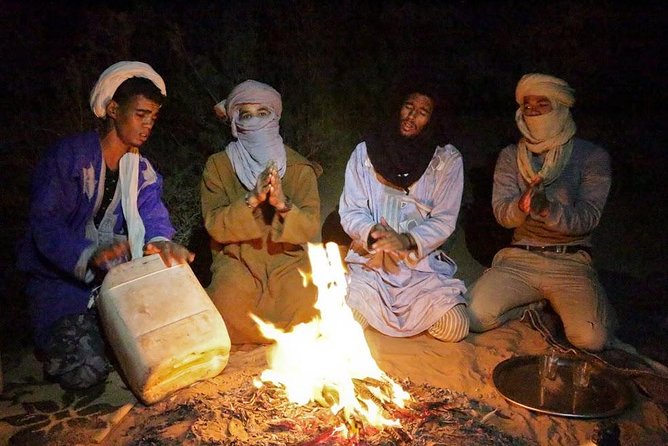
The heart of this experience is the decision to leave civilization behind for a few days. The trek is described as a walk with total forgetfulness of the modern world in absolute calm—and the way the itinerary is structured supports that goal: you’re hiking, eating camp food, sleeping in desert settings, and spending time with nomadic rhythm rather than tour bus time.
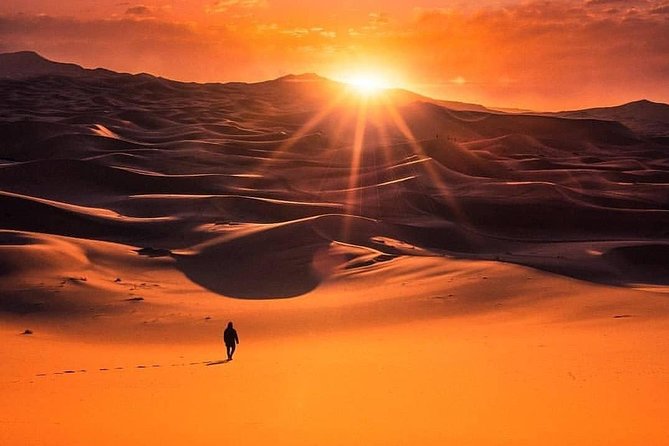
Sunrise and sunset are explicitly built into the experience. That’s not just romantic marketing; it changes how the dunes look and feel. In early light, the sand turns textured and layered. At sunset, you get longer shadows that make the desert look sculpted instead of flat.
You also get planned time to relax. That sounds soft, but it’s part of why this trek works. If your body is tired, you’ll want downtime that doesn’t feel like wasted vacation time. Here, relaxation is part of the system: you hike during workable hours, rest when it’s hot, and reset again.
One more practical expectation: with three nights accommodation included, you’re sleeping away from hotels. Even if the camp setup is comfortable enough for most people, it won’t feel like a city bed. Think “camp life” rather than “resort life.”


Food on a wood fire: the daily comfort you remember
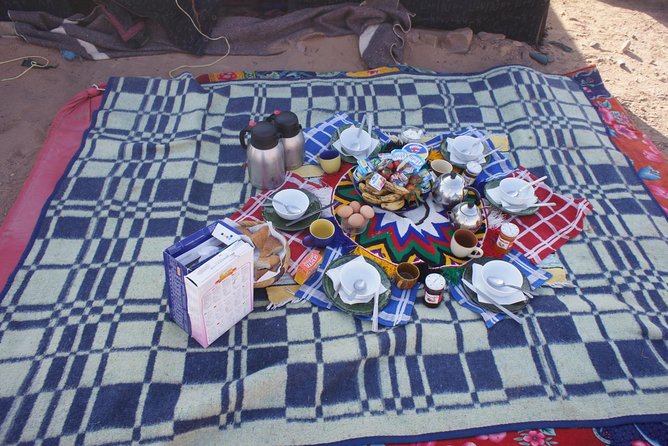
Food is a huge part of whether a trek feels good or miserable, and this one is set up with real meal coverage: breakfast, lunch, and dinner, plus 4 lunches included overall. Mineral water is also included.
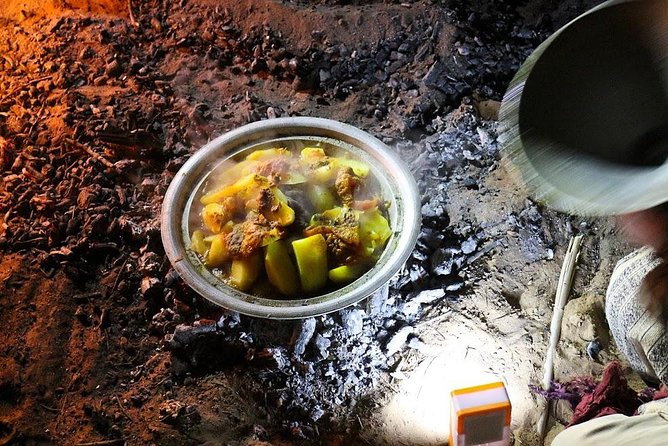
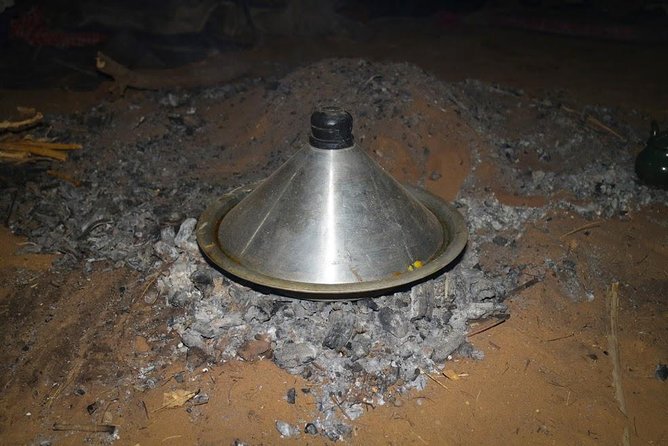
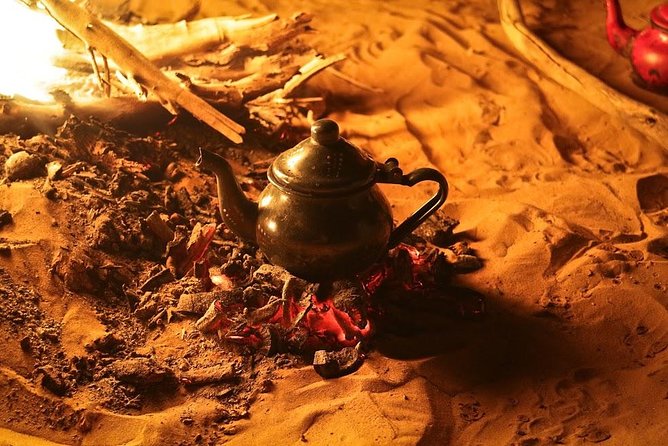
The camp meals are traditional, and at least one highlight from past experiences is that tajines are cooked on a wood fire, with daily cooking that feels hands-on rather than canned or rushed. That kind of food matters because it gives you a warm focus after a day outside in the sun.
What I like about this setup is that it reduces decision fatigue. You’re not scrambling for snacks or figuring out where the next meal might be. Your energy stays more stable, and you can concentrate on the walk and the desert setting.
If you’re picky about food or have dietary needs, the data here doesn’t spell out special accommodations. In that case, you’ll want to ask directly before booking and share your requirements early.
Team matters: nomadic guides and camel drivers who keep the day smooth
This trek is built around a professional nomadic guide plus camel drivers. That staffing choice is why the experience can stay calm even when you’re far from help.
You may meet guides by name such as Khalil or Alwali Bohjr, depending on the dates and group. One traveler also mentioned a camel driver named Mohamed, and another highlighted Abidin for being careful and attentive, including adapting the route when a sick child needed extra attention.
That’s the real value behind the “nomadic guide” label: they’re not there to narrate only; they’re there to manage the moving parts—pace, timing, safety habits, and adjustments when something changes.
In practical terms, if your group includes kids, elderly people, or anyone with medical concerns, this kind of adaptability is what you’re hoping for. Just don’t assume every change is possible—ask, be honest, and let the guide advise you.
Price and value: what $341.63 buys you in the Sahara
At $341.63 per person, this isn’t a cheap “walk in the dunes” add-on. You’re paying for a full package: transport from Marrakech, guided trekking, camel transport, camp meals, and three nights accommodation included.
Here’s where the value math makes sense. Many cheaper desert options skimp on guidance quality, meal structure, or overall camp support. In this plan, you get:
- meals covered (breakfast, multiple lunches, dinner)
- mineral water included
- camels for luggage
- a guide and professional team
- multiple desert nights, not just one
You also get the private element. If your group can travel together, private tours often justify the price because you’re not sharing your pace, silence, and camping rhythm with strangers.
What might not be worth it for you: if you mostly want a short photo stop, this will feel long and slow. But if you want the Sahara experience to actually change your days, this structure supports that goal.
Also, tips aren’t included. That’s normal, but you should budget something for it so it doesn’t feel like an afterthought.
Who this trek suits best (and who should rethink it)
This is a strong match for people who want a real desert disconnection. The trip is designed for silence, relaxation, and sunrise/sunset timing, with a guide who can explain the land and traditions without turning it into a loud performance.
It also works well for groups that value calm and adaptability. The mention of route adjustment for a sick child suggests the team can respond with care when needed, at least in some circumstances.
You should think twice if:
- you’re not comfortable walking in sun and sand conditions
- you expect hotel-style sleeping every night
- your plan depends on exact timing and rigid schedules (the desert pacing is sun-driven)
Fitness-wise, the info says most travelers can participate, which is encouraging. Still, the Sahara is not forgiving. If you have a medical condition or mobility challenge, contact the operator first and ask how they handle special needs and pace adjustments.
Should you book this M’Hamid desert trek?
If you want the Sahara’s scale without the chaos of giant groups, this is worth a look. The combination of camel-carried luggage, guided desert hiking, meaningful stops like Sidi Naji, and the camp rhythm built around sunrise and sunset is exactly the kind of itinerary that turns a desert trip into a memory.
I’d book if your “win condition” is quiet, camp meals that feel real, and time spent walking in the dunes with a team that knows what it’s doing. I’d pass or ask more questions if you need very predictable schedules, hotel comfort, or specific dietary/medical accommodations not mentioned in the provided details.
FAQ
How long is the desert trek experience?
The tour is described as 4 days trekking to the heart of the desert, but the listed duration is approximately 2 days. The key is that the overall outing includes multiple days starting in Marrakech and includes three nights accommodation.
Where does the tour start and end?
It starts in Marrakech (meeting point in Marrakech) with a start time of 8:00 am and ends back at the same meeting point.
Is this a private tour?
Yes. Only your group participates, so it’s not shared with other groups.
What does the trek include for meals and water?
You get breakfast, lunch, and dinner, with 4 lunches included in total, plus mineral water.
Do camels carry luggage?
Yes. A camel caravan carries the luggage while you hike with your guide and camel drivers.
Where does the hiking begin in the desert?
The trek starts from M’Hamid after breakfast, with the guide and camel caravan.
Are tips included in the price?
No. Tips are not included.
What cancellation options are available?
Free cancellation is available up to 24 hours in advance for a full refund, based on local time.
Is the trek suitable for beginners or most travelers?
The information states that most travelers can participate, but you should still expect walking in desert conditions and follow the guide’s sun-paced rhythm.