REVIEW · MARRAKECH
Morocco desert trek (8 days)
Book on Viator →Operated by Wandern Marokko Fahim · Bookable on Viator
Camel trails in Morocco beat any postcard.
This 8-day trek links the High and Anti Atlas to the Drâa oases and Sahara dunes, ending with a classic visit to Kasbah Aït Ben Haddou. You get 4 days of hiking on sand dunes, dry plains, and riverbeds, plus camp life powered by a cook/escort team and dromedaries. One thing to consider: your comfort depends a lot on night-time cold and dune walking, and a sleeping bag isn’t included.
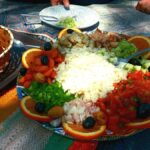
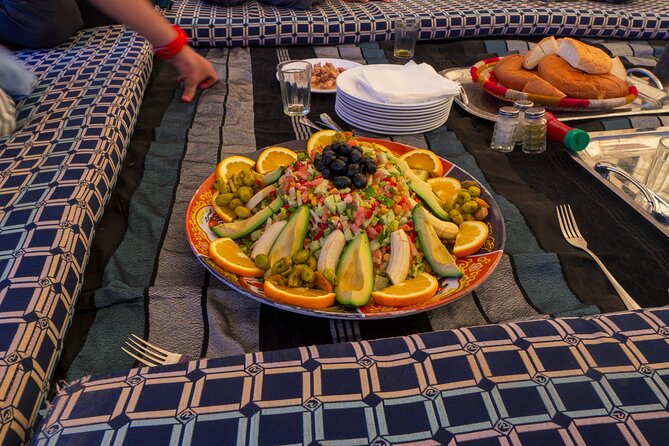
I like this trip for the people and the pace. The guide Hassan is known for being calm and clear, with patient storytelling about culture and history, and also local animals and plants—so the days feel more than just hiking. I also like the food: it’s organized, authentic, and gets called out as genuinely tasty, which matters when you’re earning your appetite.
My only real caution is practical: long dune stages plus the desert’s temperature swings can be tiring even on an easy-grade plan. If you expect a comfy walk with no sand in your shoes, plan instead for manageable but real effort, and pack accordingly for cold nights.
In This Review
- Morocco Desert Trek, 8 Days: What You’re Really Buying
- Key Highlights That Matter on the Ground
- Marrakech Departure: High Atlas Pass Driving and Telouet
- Telouet and Ouarzazate: More Than a Scenic Pause
- The Drâa Valley Edge: M’hamid and the Dromedaries Setup
- Erg Chigaga Days: Dunes, Dry Plains, and Caravanserai-Era Camp Life
- The Desert Guide Factor: Hassan’s Storytelling and the Team’s Work
- Aït Ben Haddou Return: From Foum Zguid Back Toward Marrakech
- Price and Value: What Makes $1,156.92 Feel Fair
- What This Tour Feels Like Day-to-Day (Without the Fluff)
- Who Should Book This (And Who Might Want Something Else)
- Should You Book This 8-Day Morocco Desert Trek?
- FAQ
- What’s the hiking difficulty and how many days do you hike?
- Where does the tour start and when?
- How big is the group?
- What’s included in the price?
- What should I bring since a sleeping bag isn’t included?
- Is my flight and travel insurance included?
- When can I cancel for a full refund?
Morocco Desert Trek, 8 Days: What You’re Really Buying
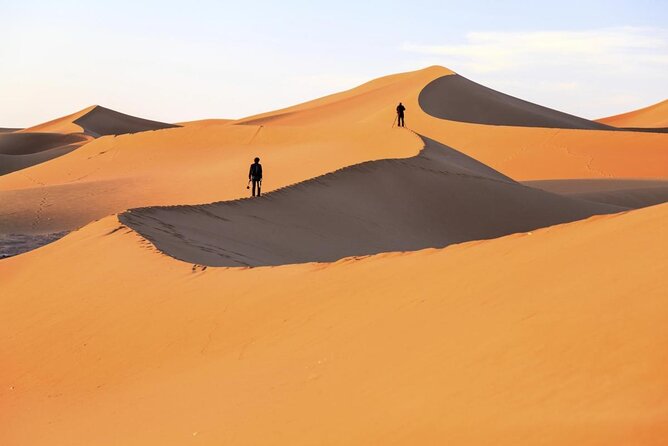
This is a small-group desert trek based out of Marrakech, built around the idea that you don’t need to be a hardened hiker to enjoy the Sahara. Expect a mix of driving through mountains and valleys, then stepping into a quieter world of dunes, dry plains, and oasis edges where daily walking has meaning.
The value is in the logistics: you’re not arranging horses, tents, cooking, or camp setup. You’re also not doing it with a crowd—group size runs from 2 to 12, and you’ll stay together as one group. Add in that tents, mats, kitchen utensils, and water filters are included, and the trip shifts from “tough adventure” to “well-run trek with real desert time.”
The itinerary also has a strong rhythm. You start with mountain history around Telouet and Ouarzazate, then you progressively move into the desert—first through the Drâa Valley, then into the Erg zones around Chigaga and the dunes near Erg Zeher, and finally back toward Marrakech with a night in the Ouarzazate area.
Key Highlights That Matter on the Ground
High Atlas to Ouarzazate: the mountain intro sets context fast.
You don’t jump straight into sand. You get the Tizi n’Tichka area drive and stops like Telouet and Ouarzazate, which makes the desert feel earned rather than random.
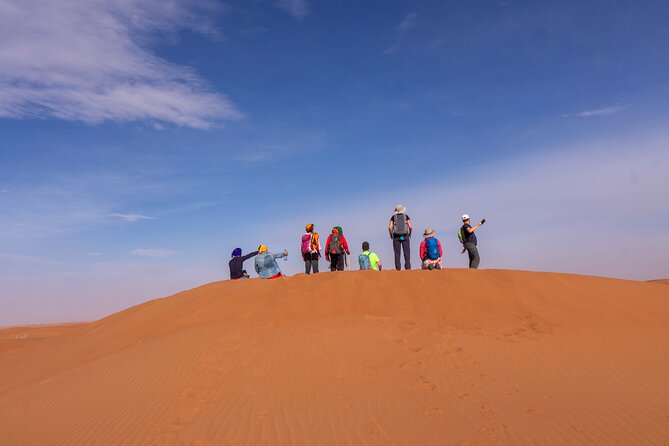
4 hiking days with camel support and an easy grade.
The trekking grade is listed as easy, but you still walk hours in sand. The trick is that your day stages are planned to be manageable.
Erg Chigaga dunes plus dry plains and oasis pockets.
You’ll move across dunes, then into drier stretches, with oases showing up as small, surprising breaks in the scenery.
Drâa Valley and Zagora-area desert towns.
M’hamid is a key meeting point with dromedaries and the escort team, and the route threads through palm groves and old villages on the way.
Aït Ben Haddou: desert trekking’s classic culture stop.
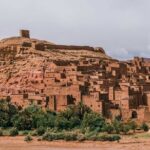
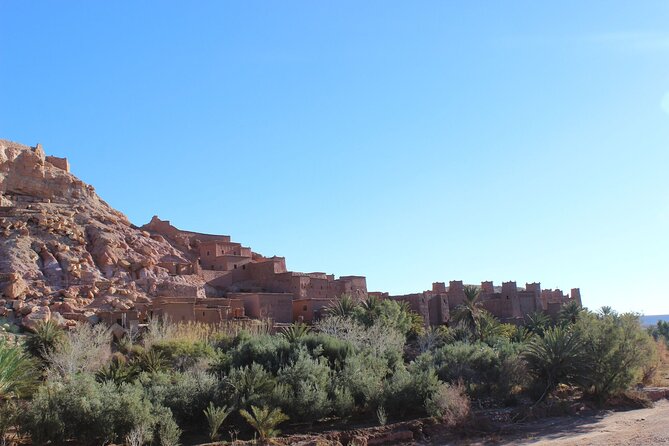
You’ll visit the ancient Ksar at Aït Ben Haddou—one of the Morocco places that anchors the whole journey.
You can also read our reviews of more tours and experiences in Marrakech.
Marrakech Departure: High Atlas Pass Driving and Telouet
The day starts with a morning pickup in Marrakech at Café de France (Rue des Banques, by Jamaa el-Fna) with an 8:00 am departure. You’ll ride in a minibus through the High Atlas foothills, aiming over the Tizi n’Tichka pass area southward.
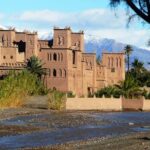
This isn’t a sightseeing detour. The mountain drive matters because it gives you a feel for how quickly Morocco changes with altitude and terrain. Along the way you stop at Telouet to visit Kasbah El Glaoui, then you continue onward through the Ounila Valley.
A key point here: you also get a long enough travel day that you arrive ready for sleep, not rushed. That overnight in an inn in the Ouarzazate area keeps the first full desert mornings from feeling like a cold start.
Telouet and Ouarzazate: More Than a Scenic Pause
Telouet and Ouarzazate bring a layer that many desert treks skip. You’re walking into a part of Morocco shaped by historic routes, not just modern tourism.
Kasbah El Glaoui is the kind of stop that helps you understand why people built there—watching the valleys, guarding passages, and linking caravan routes. Later you’ll also see how Ouarzazate works as a hub between mountain life and the desert edge.
In other words: the cultural stops help the desert hiking days feel connected rather than “just sand and walking.”
The Drâa Valley Edge: M’hamid and the Dromedaries Setup
On day two, you push further south through the Drâa Valley. The ride follows old villages, palm groves, and long stretches that gradually flatten out until you’re at the desert edge in M’hamid.
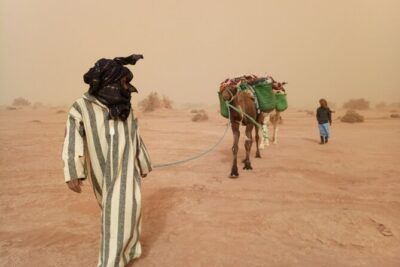
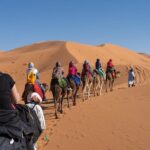
M’hamid is the real transition moment. It’s where you meet the dromedaries and the escort team. After loading the animals, you hike for about an hour or so to your first camp area at Rass Enakhl.
Why this day works: it’s a on-ramp. You’re not dropped into a heavy dune day right away. Instead, you spend the afternoon moving from green valley life into desert rhythms, with the camp concept already in place.
Erg Chigaga Days: Dunes, Dry Plains, and Caravanserai-Era Camp Life
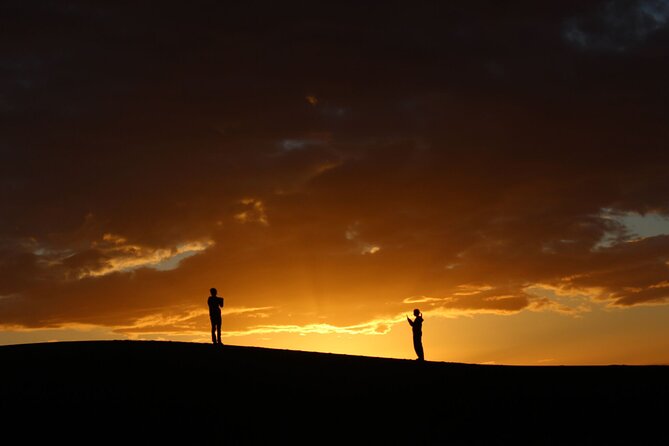
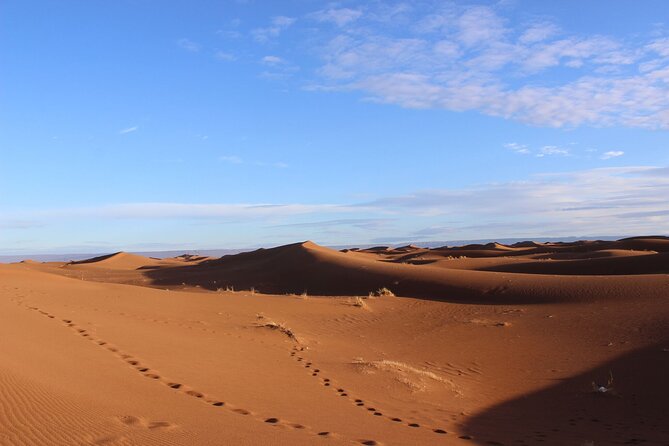
The core of the trek is the Erg Chigaga area. This is where the Sahara starts to look and feel like the photos—but with more scale and more silence than you expect.
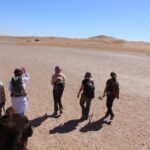
Day three begins with dunes and a small oasis, then shifts to a dry plain, then back into dunes again. You reach camp near an old caravanserai by Marabout Sidi Naji, and you get lunch at camp. The afternoon is mostly at leisure, which is important: desert hiking isn’t just about walking; it’s also about downtime and letting your body adjust.
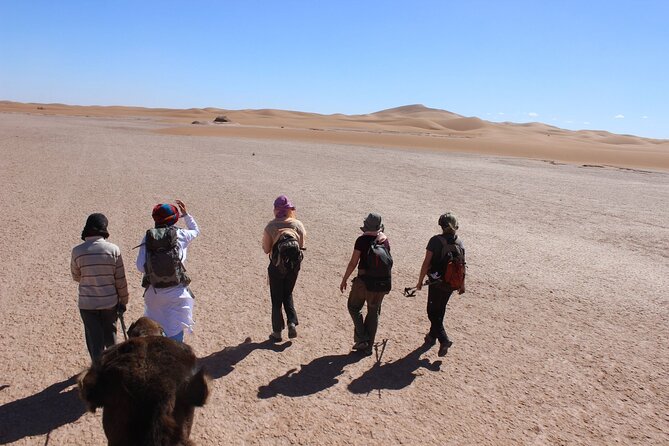
Day four builds a longer day. You start again on dunes, then cross a vast dry plain, passing ruins of an ancient souk. You stop for lunch along the way and continue to camp next to the large Erg Zeher dune. The hiking time can reach about 6.5 hours (listed as around 6 hours), so pace is key here.
Day five is another classic Erg Chigaga mix. You cross Erg Zeher, then walk dry plains and more dunes until you reach the Drâa riverbed area. Along the riverbed you head to camp at Erg Smer, with lunch at camp and another relaxing afternoon.
Day six keeps the pattern going. You cross the Drâa riverbed in the morning, then walk an endless-feeling dry plain. In the afternoon, it’s over sand dunes again to camp at Chegaga.
What you’ll love in this section is the variety of “sand walking.” Even when it’s still desert, your route keeps changing: dune slope to flat hard ground to another dune field. That rhythm helps an easy-grade trek stay fun instead of monotonous.
One drawback you should plan for: sand can feel heavier on certain stretches, especially if you’re expecting firm ground the whole time. Bring footwear that handles sand and plan for slightly slower walking than you might do on trails.
The Desert Guide Factor: Hassan’s Storytelling and the Team’s Work
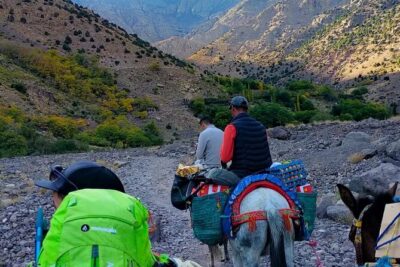
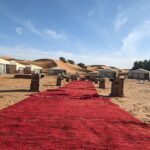
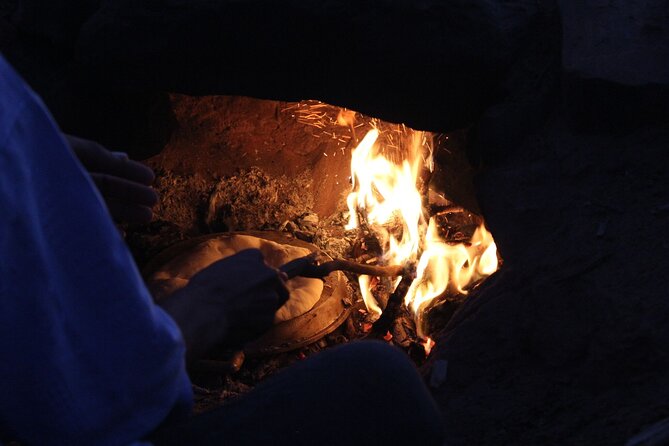
A big reason this trek tends to feel easy is that the team does the heavy lifting. You’re traveling with a cooking and escort group that manages dromedaries, tents, and camp setup with a kitchen setup that includes utensils and water filters.
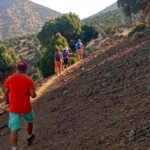
Hassan is specifically praised for being a patient narrator about culture and history, and also for mentioning local animals and plants. That kind of guidance matters more than people think. It turns the hours between camps into learning time, and it gives you a framework for what you’re seeing instead of treating it as scenery.
There’s also a safety and organization angle. The way the trek is structured—small group size, fixed camp plans, managed stages—reduces the stress that often comes with “adventure” trips. You can focus on walking and taking in the desert.
Aït Ben Haddou Return: From Foum Zguid Back Toward Marrakech
After the desert camping sequence, day seven shifts from foot travel to vehicles. A jeep takes you to Foum Zguid, and from there it’s by minibus back toward Ouarzazat and/or Aït Ben Haddou for an overnight hostel.
This day is your recovery day. You’ve been on dunes and dry plains for days, so having a transport segment is a smart built-in break. It also keeps the itinerary from feeling like a full 8-day grind of nonstop walking.
Day eight is the finish: a minibus back to Marrakech through the Ounila Valley via Telouet. The travel time is listed at around 4 hours. Your overnight in Marrakech isn’t included, so plan to end in the city the way you want—riad, hotel, or whatever makes you happiest after camp life.
Price and Value: What Makes $1,156.92 Feel Fair
The price is $1,156.92 per person for an 8-day trek with transport from Marrakech, a small-group desert route, and real on-the-ground infrastructure.
What’s included is the part that usually costs money later if you try to DIY:
- trekking cook and escort team, with dromedaries
- tents and mats, plus kitchen utensils
- water filters
- organization of the trek
- meals: breakfast (7), dinner (7), lunch (8)
What’s not included matters too. You’ll need to budget for your sleeping bag (with a comfort temp around 0°C), tips for guide/escort/driver (listed as 110 Euro), and entrances for main meals in Marrakech. Flights to Marrakech and travel insurance are also not included, and you’ll handle your own sleeping arrangements in Marrakech after the trek.
So is it good value? For me, it is—because you’re paying for fewer moving pieces. The desert part isn’t just “a walk.” It’s the entire system that lets you sleep, eat, and keep moving without carrying all the gear yourself.
What This Tour Feels Like Day-to-Day (Without the Fluff)
Here’s the realistic rhythm:
- Day 1: long drive from Marrakech through the High Atlas, Kasbah stop at Telouet, then overnight near Ouarzazate
- Day 2: Drâa Valley drive, meet dromedaries at M’hamid, hike to first camp at Rass Enakhl
- Days 3–6: Erg Chigaga and surrounding dune fields with managed stages, camp lunches, and free afternoons
- Day 7: transport via jeep/minibus to Ouarzazate/Aït Ben Haddou area for a hostel night
- Day 8: return to Marrakech through Ounila Valley and Telouet
You’ll notice the “easy hiking” label doesn’t mean short days. Instead, it means the trek is built to be doable for many people with the right expectations, plus the route is planned with camp timing and support.
Who Should Book This (And Who Might Want Something Else)
This is a good fit if you want:
- easy-to-moderate days with a small group and strong support
- real desert time in dune areas like Erg Chigaga
- cultural anchors like Telouet/El Glaoui and Aït Ben Haddou
- food and camp comfort that you don’t have to plan yourself
It might not be ideal if:
- you hate sand hiking or you want a very short walk every day
- you don’t want to handle cold-night gear (since a sleeping bag isn’t included)
- you prefer to keep Marrakech nights fully covered by the package (the trek ends with your own Marrakech overnight planning)
Should You Book This 8-Day Morocco Desert Trek?
If you want the Sahara experience without turning your trip into a gear-and-route headache, I’d say yes. The combination of small-group size, organized camp setup, and a guide like Hassan (focused on culture and the natural world) is the kind of mix that makes desert days feel purposeful.
Book it if you can walk a few hours across sand and you’re comfortable bringing a proper sleeping bag. Skip it if you’re expecting a mostly comfortable, low-effort outing or if you don’t want to manage cold-night comfort.
FAQ
What’s the hiking difficulty and how many days do you hike?
The trek is rated Easy, and you’ll hike on 4 days. You’ll walk for varying durations, including longer dune days that can reach around 6.5 hours, plus shorter sand/plain sections.
Where does the tour start and when?
The meeting point is Hôtel Restaurant Café de France (Rue des Banques, near Jamaa el-Fna), with a start time of 8:00 am.
How big is the group?
The group size is listed as min. 2 / max. 12. It’s described as a private tour/activity, meaning only your group participates.
What’s included in the price?
Included are the trekking cook and escort team with dromedaries, tents, mats, kitchen utensils, and water filters, plus tour organization. Meals are included: breakfast (7), dinner (7), and lunch (8).
What should I bring since a sleeping bag isn’t included?
You’ll need to bring a sleeping bag with a listed comfort temperature of around 0°C. The tour also notes that tips for guide/escort/driver are not included (110 Euro).
Is my flight and travel insurance included?
No. Flights to Marrakech and travel insurance are not included, and you’ll also need to plan your sleeping in Marrakech after the trek since the final overnight isn’t included.
When can I cancel for a full refund?
You can cancel up to 3 days in advance for a full refund. If you cancel less than 3 days before the start time, the amount you paid won’t be refunded.