REVIEW · TA VAN
Sa Pa One-Day Trek through Ethnic Villages & Rice Terraces
Book on GetYourGuide →Operated by Sapa Motorbike & Trekking Tours with Local · Bookable on GetYourGuide
That rice-terrace hike feels like a movie set. This one-day walk connects Y Linh Ho rice terraces with real village life, and I especially like the traditional Hmong lunch stop that feels personal, not staged. The trade-off is simple: you’ll do a lot of walking, so if your back or mobility is an issue, this may be a challenge.
You also get the best kind of variety in one day: mountain views, the Muong Hoa hanging bridge, then culture learning at a museum and a village visit with the Giay minority. Expect a full day packed with sights, plus an English-speaking guide who helps keep the pace moving and the route understandable.
In This Review
- Key highlights worth planning around
- Where the day starts in Sapa: pickup near the cathedral
- The long-view payoff: walking into Y Linh Ho
- Muong Hoa hanging bridge: the mid-trek moment you’ll remember
- Lao Chai village lunch: Hmong family food, real pace
- Hmong Museum stop: clothes, indigo, hemp, and crafts
- Ta Van village and the Giay minority: learning group differences on the ground
- The walking reality: what makes this trek feel like 7 hours
- Price and value: is $19 fair for a full-day cultural trek?
- Practical tips before you go: shoes, sun, and how to pack light
- Should you book this one-day Sapa trek?
- FAQ
- How long is the Sa Pa one-day trek?
- Where do I get picked up?
- What villages does the trek include?
- Is lunch included, and where do I eat?
- What will I learn at the Hmong Museum?
- Do I have transportation back to Sapa at the end?
- Is the guide English-speaking?
- What should I bring with me?
- Is the tour suitable for everyone?
- What’s included in the price, and what’s not?
Key highlights worth planning around
- Y Linh Ho rice terraces with big, layered paddies and serious Hoang Lien Son mountain views
- Lao Chai lunch with a Hmong family at a small local restaurant (not a tourist-only setup)
- Hmong Museum stop focused on clothing, indigo, hemp, and traditional crafts
- Muong Hoa hanging bridge across the river as a memorable mid-trek landmark
- Ta Van village visit with the Giay minority to understand differences between ethnic groups
Where the day starts in Sapa: pickup near the cathedral
Your trek day begins with a pickup in Sapa Town or at the meeting point in front of the main church (Notre Dame Cathedral area). That matters more than it sounds. In Sapa, you can waste time figuring out meeting points and uphill directions. Here, the schedule starts with you already “sorted,” so your first hour is actually on the move.
After a brief intro with the English-speaking guide, you head out on foot from Sapa toward Y Linh Ho village. The walking start helps you warm up and get your bearings fast. It also means you’re not jumping straight into the hardest part without a rhythm.
The long-view payoff: walking into Y Linh Ho
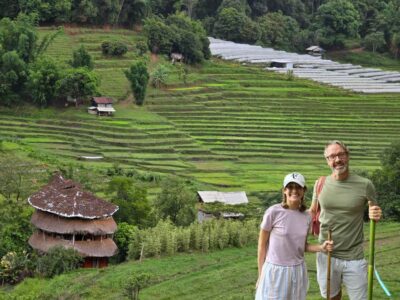
Y Linh Ho is the reason most people pick this trek. You arrive, then take in the scenery: mountains, rice fields, and everyday village life all at once. This is where the scale of the terrain hits you. You’re not just seeing terraces; you’re seeing how people farm on a steep mountain side.
From there, the route continues from the main road down toward the rice paddies. You’ll reach the central rice fields and see some of the biggest and most beautiful terraces in Vietnam. The terraces are visually dramatic, but what I like more is the way they frame the day. Every turn in the path seems to reveal a different angle of the Hoang Lien Son mountain, so you’re constantly re-reading the view.
A small practical note: terraces look flat from far away, but the path down and around them can be uneven. Wear shoes that can handle dirt and small steps.
Muong Hoa hanging bridge: the mid-trek moment you’ll remember
At some point on the route, you’ll cross the hanging bridge over the Muong Hoa River. This is a classic Sapa “check the box” moment, but it’s also useful. Bridges are a natural point where the route feels like a storyline, not just a series of paths.
Crossing the bridge also gives you a breather mentally. The scenery shifts from fields and village edges to river air and depth below you. That change helps break up the longer walking stretch, especially if you’re watching your energy.
If you’re the type who likes photos, this is the moment to pause and steady your shot. A lot of people rush bridges for the thrill; you’ll enjoy it more if you treat it like a landmark and take in the full view before you move on.
Lao Chai village lunch: Hmong family food, real pace
After you arrive in Lao Chai village, you get lunch at a small traditional restaurant run by a local Hmong family. This stop is one of the most valuable parts of the whole day, because it gives you a reset halfway through the trek.
Why it’s worth it:
- It’s not just fuel. It’s part of the cultural flow of the day.
- You’re eating while you’re still “in” village territory, not when you’ve returned to a tourist hub.
- The guide can connect the meal to what you’re seeing around you, which makes it more than just lunch.
One drawback to keep in mind: lunch sits inside a walking schedule. So if you’re hoping for a long, slow meal, this isn’t that kind of tour. You’ll have time to eat and regroup, then you’ll move on.
There’s also shopping/free time built into the Lao Chai stop. You might find textiles or crafts that connect to what you’ll learn later at the Hmong Museum. If you like browsing, it’s a good window.
Hmong Museum stop: clothes, indigo, hemp, and crafts
After lunch, you visit the Hmong Museum. This is where the trek stops being only visual and becomes educational. The museum focuses on traditional Hmong clothes, plus materials and craft knowledge like indigo and hemp.
I like museum stops when they match the day you’ve been living in. In this case, you’ve already walked through villages and terraces tied to ethnic communities. So when you see clothing styles, fabric use, and craft details, it clicks into place.
What you should do while you’re there:
- Pay attention to how different textiles and clothing elements relate to everyday life and tradition.
- Ask questions through your English-speaking guide. A good guide will connect the museum content to what you’ve been seeing outdoors.
Also note: the tour includes skipping ticket lines. That saves time so you can spend more energy on the actual experience rather than waiting.
Ta Van village and the Giay minority: learning group differences on the ground
The final village stop is Ta Van, where you’ll meet the Giay minority and learn about differences between ethnic minority groups. This part of the day is less about standing at a viewpoint and more about conversation and observation.
You’ll arrive in Ta Van and have a mix of structured time and free time. There’s sightseeing plus a workshop component. The practical value here is that you’re being shown cultural differences in context, not just from a distance.
Based on what I look for in tours like this, the best moments usually happen when your guide keeps things human. You’ll get that through an English-speaking guide who can translate not only words, but also what things mean in daily life. In particular, a guide like Binh (mentioned by name in one account) is the type who helps with tricky walking spots while also sharing clear cultural context. That combo matters: it keeps the day safe and also keeps it meaningful.
The walking reality: what makes this trek feel like 7 hours
This tour is listed at 7 hours total, and each major section is roughly paced around a couple of hours of walking or village time. The big picture: you’ll spend most of the day outside, moving between Y Linh Ho, Lao Chai, and Ta Van.
That has two consequences for your body and your planning:
- You’ll want comfortable shoes. Not fashion shoes.
- You’ll want to stay hydrated and sun-safe, because the day is outdoors and the tour specifically recommends water and sunscreen.
If you’re doing this trek, go in with the mindset that it’s active travel. You’ll get plenty of views, but you’ll also get steps in your legs.
Also, the tour isn’t suitable for people with back problems, mobility impairments, wheelchair users, or people over 95 years. That’s not just a legal note. Terrain in terrace areas and rural paths can be uneven.
Price and value: is $19 fair for a full-day cultural trek?
At $19 per person for a 7-hour experience, the value comes from what’s included—not just the headline price.
Included items that add up:
- English-speaking tour guide
- Lunch at a local Hmong restaurant
- Trekking fee
- Visits to Y Linh Ho, Lao Chai, Hmong Museum, and Ta Van
- Transportation back to Sapa
So you’re paying for guided transport, the key village/museum admissions covered by the tour structure, and a meal. You’re also getting a route that strings multiple cultural stops into one day, instead of you having to coordinate separate hires for each segment.
What’s not included:
- Soft drinks
- Personal expenses
- Travel insurance
My advice on value: $19 is only “great deal” value if you actually want the full day—rice terraces plus two villages plus a museum plus a bridge. If you prefer a slow, lounge-style itinerary, you may feel shortchanged because the day is active and scheduled.
Practical tips before you go: shoes, sun, and how to pack light
Bring the basics and you’ll have a smoother day:
- Comfortable shoes for uneven paths
- Hat to cut sun while you’re out on terraces
- Water so you don’t rely on buying drinks
- Sunscreen
- Camera for Y Linh Ho, the Muong Hoa bridge, and village views
A small tip that helps a lot: keep water accessible. If it’s buried deep, you’ll forget to sip until you feel tired. The tour’s emphasis on water and sun protection is a clue that these are the comfort variables you can control.
And yes, there’s a clear rule: don’t litter. It’s a simple one, but on active treks through farming areas, it matters.
For timing, the tour starts with pickup and ends back in Sapa, with transportation back provided (taxi or motorcycle). So you don’t have to plan your descent logistics at the end of a hiking day, which is a real stress saver.
Should you book this one-day Sapa trek?
Book it if you want an efficient, active day that mixes the best parts of Sapa: rice terraces, village visits, a culture-focused museum stop, and the Muong Hoa hanging bridge. If you enjoy learning by walking and talking, this hits your sweet spot. The included lunch with a Hmong family is also a strong reason to choose this over a purely scenic hike.
Skip it (or look for an easier alternative) if you want a low-walking day, have back issues, or need wheelchair-accessible terrain. This is a trek with real walking, so comfort gear and a realistic pace matter.
If your goal is to understand Sapa beyond viewpoints, this tour makes sense. You’ll see the scenery, then connect it to people through the Hmong Museum and the Giay village visit. That link is the real payoff.
FAQ
How long is the Sa Pa one-day trek?
The duration is 7 hours.
Where do I get picked up?
You can be picked up from your hotel in Sapa Town or in front of the main church (Notre Dame Cathedral).
What villages does the trek include?
You visit Y Linh Ho village, Lao Chai village, and Ta Van village.
Is lunch included, and where do I eat?
Yes. Lunch is included at a local Hmong family’s restaurant in Lao Chai village.
What will I learn at the Hmong Museum?
At the Hmong Museum, you learn about traditional Hmong clothes, indigo, hemp, and other traditional crafts.
Do I have transportation back to Sapa at the end?
Yes. The tour includes transportation back to Sapa, by taxi or motorcycle.
Is the guide English-speaking?
Yes. The tour includes an English speaking guide.
What should I bring with me?
Bring comfortable shoes, a hat, a camera, sunscreen, and water.
Is the tour suitable for everyone?
No. It is not suitable for people with back problems, people with mobility impairments, wheelchair users, or people over 95 years.
What’s included in the price, and what’s not?
Included are the English speaking guide, lunch, trekking fee, village visits, Hmong Museum, and transportation back to Sapa. Not included are personal expenses, soft drinks, and travel insurance.