REVIEW · TA VAN
SAPA 2 Day trekking & 1 night Homestay with LOCAL PEOPLE
Book on GetYourGuide →Operated by Do Sung Sapa Trekking and Homestay · Bookable on GetYourGuide
Two days in Sapa, and you feel the rhythm of village life. This trek pairs English-speaking guide Do with a one-night homestay in Black Hmong areas, while you hike for Fansipan views and the big Muong Hoa rice terraces. The one catch: the route is uphill and downhill, and if it rains the small trails can get slippery, so you’ll want solid shoes and a steady body.
I like that the day starts practical and easy—meet at your hotel or the main church—then you build altitude on foot from town. It’s also a small group (up to 15), so you can ask questions without feeling squeezed, and homestay basics like a hot shower and family dinner make the evening feel real, not rushed.
In This Review
- Key Things I’d Tell You Before You Book
- Why This Sapa Trek Feels Different From a Typical Tour
- Getting Started in Sapa: Church, Hotel, and a Quick Town Warm-Up
- Day 1: Dragon Mountain Views, Hang Da, and the Muong Hoa Rice Terraces
- The viewpoint climb and Fansipan framing
- Down toward Hang Da village
- Lunch at a local family restaurant
- Hầu thào village and daily rhythms
- Day 1 Evening: Homestay in Hầu thào, Hot Shower Time, and Rice Wine
- Day 2: Red Dao Villages, a Waterfall Stop, Bamboo Forest, and Tả Van to Lao Chải
- Giang Tả Chải village and the waterfall
- Into the bamboo forest and toward Tả Van
- Tả Van to Lao Chải and lunch
- Finish with pickup back to Sapa
- Trek Pace, Distances, and the Real Meaning of Slippery Trails
- Price and What You Actually Get for $56
- Who This Homestay Trek Suits Best
- What to Bring for a Comfortable Trek in Sapa
- Should You Book This Sapa 2-Day Trek & 1-Night Homestay?
- FAQ
- How long is the trek and how much walking is it each day?
- Where do we meet the guide and where does the tour end?
- What’s included for meals and water?
- Is the guide English-speaking?
- What should I bring for the hike?
- Can I cancel, and is payment flexible?
Key Things I’d Tell You Before You Book
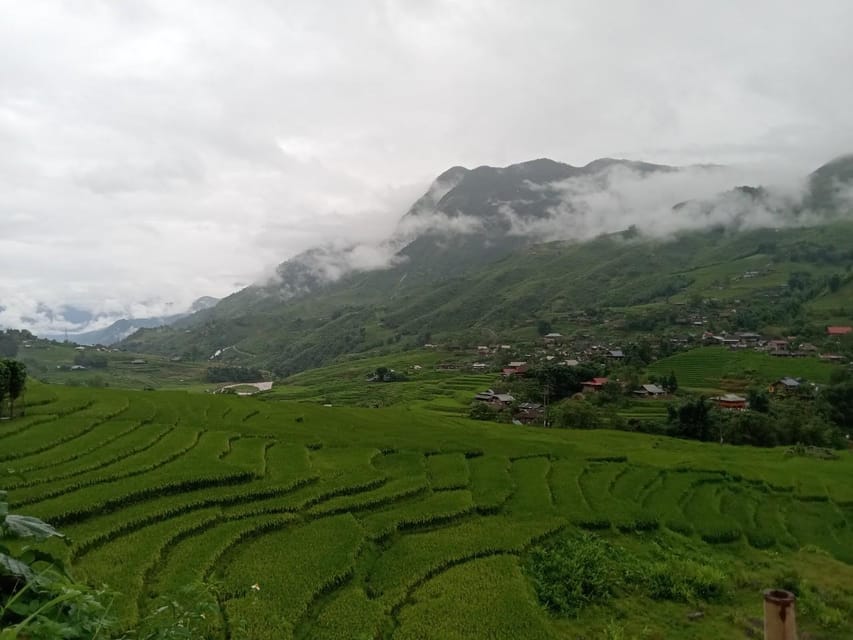
- Local guide, English spoken well: Do has about 10 years of experience and shares daily life from a local ethnic minority perspective.
- Fansipan viewpoints on day one: You climb to a mountain-view spot where you can see Fansipan at 3,143 m and get bearings over Sapa.
- Muong Hoa rice terraces: You’ll walk through the rice-country valley views that define northern Vietnam’s mountain farming.
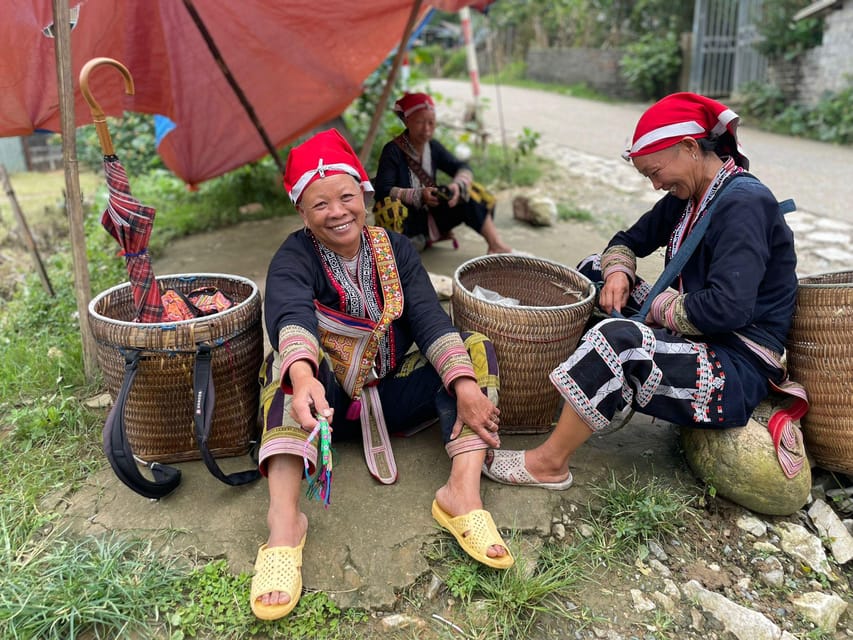
- Two ethnic communities, two styles of scenery: Black Hmong villages on day one and Red Dao areas plus bamboo and waterfall on day two.
- Homestay with family time: You’ll eat with the family and there’s a chance to try rice wine, often called happy water.
- Moderate distances, real trail time: Day one is about 14 km (5–6 hours), and day two is about 7 km (3–4 hours).
Why This Sapa Trek Feels Different From a Typical Tour
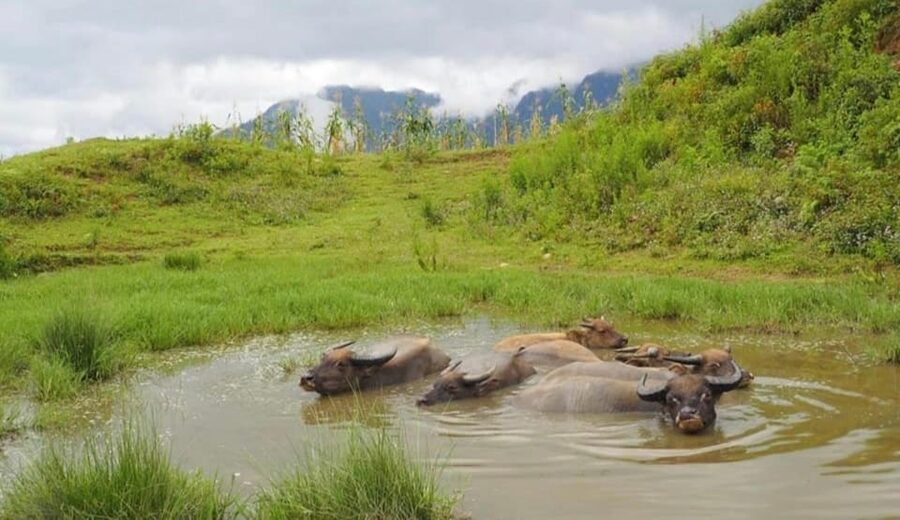
This isn’t the kind of walk where you zip from photo spot to photo spot. You’re on natural paths, moving between villages, and your guide explains what you’re seeing as you go—rice farming, valley life, and mountain routines.
The homestay is a big part of the value. You’re not just paying for a bed; you’re joining a family meal, and the evening has room to slow down. In one example, the group was welcomed like friends, and even joined a family birthday event, which shows the tone of the stay can be warm and personal when timing lines up.
Still, be realistic about the physical side. The itinerary includes uphill and downhill sections, and if weather turns, footing becomes more important than your “photo patience.”
You can also read our reviews of more tours and experiences in Ta Van.
Getting Started in Sapa: Church, Hotel, and a Quick Town Warm-Up
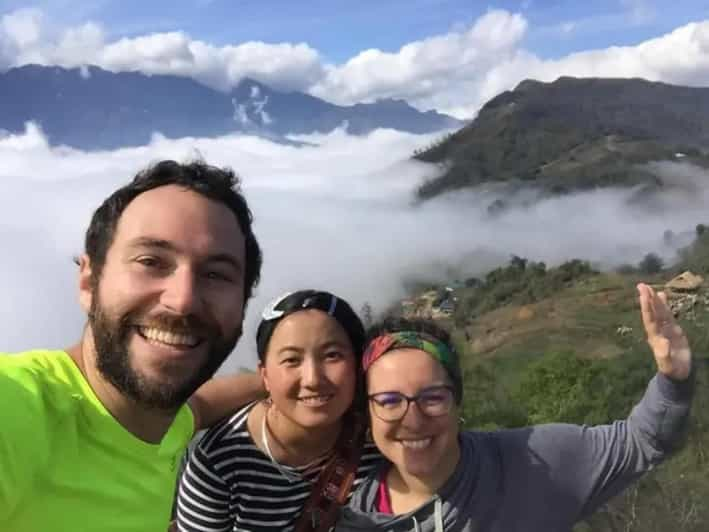
You meet your guide at your hotel or in front of Sapa’s main church, then there’s a short intro walk of about 1 km through town. This matters more than it sounds: you get oriented before the trail starts pulling uphill.
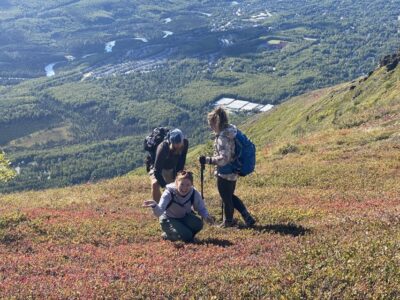
After that town stretch, you hike another 2 km on a small trail up to mountain views. This is where you start understanding Sapa’s geography fast—where valleys cut in, how ridges shape the farming areas, and why villagers choose certain paths and water routes.
If you’re the type who likes to know what you’re looking at, this first climb helps. You’re not just seeing a view; you’re getting the map in your head as you rise.
Day 1: Dragon Mountain Views, Hang Da, and the Muong Hoa Rice Terraces
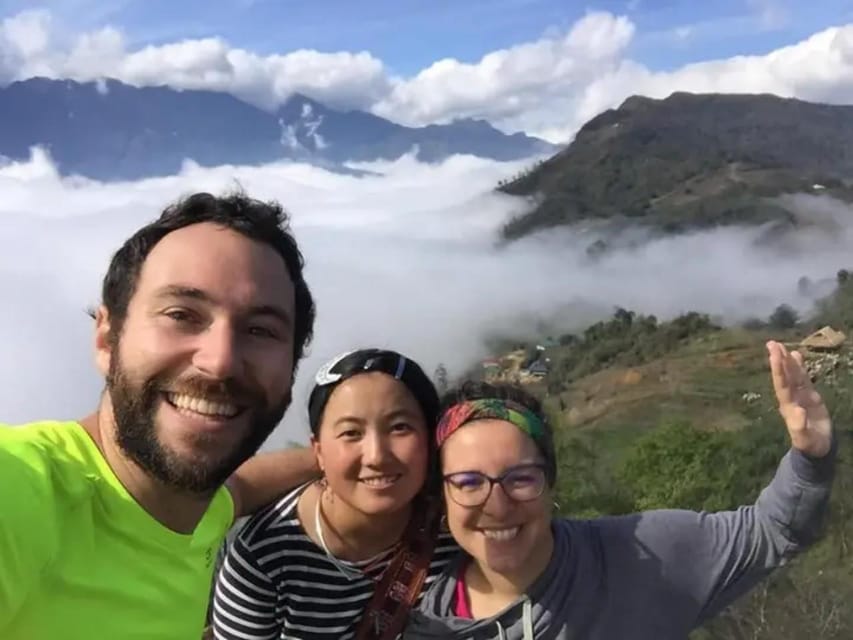
Day one is about 5–6 hours of trekking and roughly 14 km. The goal is simple: rise early into the best viewpoints, then descend through Black Hmong village areas, ending with a homestay night.
The viewpoint climb and Fansipan framing
From the mountain-view stop, you can see Fansipan, listed at 3,143 m, the highest peak in Indochina. You also get an overview of Sapa town below, which makes the next parts of the walk easier to understand.
Then the views open toward the rice country. You’ll see the famous rice terrace fields in the Muong Hoa valley, plus the major river and valley lines that shape the whole region. This is the kind of scenery that looks dramatic even from a distance, but feels even better when you’re walking through the farming routes that created it.
Down toward Hang Da village
After enjoying the landscape views, you continue on mountainside paths down to Hang Da village, home to Black Hmong people. This is one of the reasons I like this trek: the change from viewpoint to village life happens gradually, not suddenly.
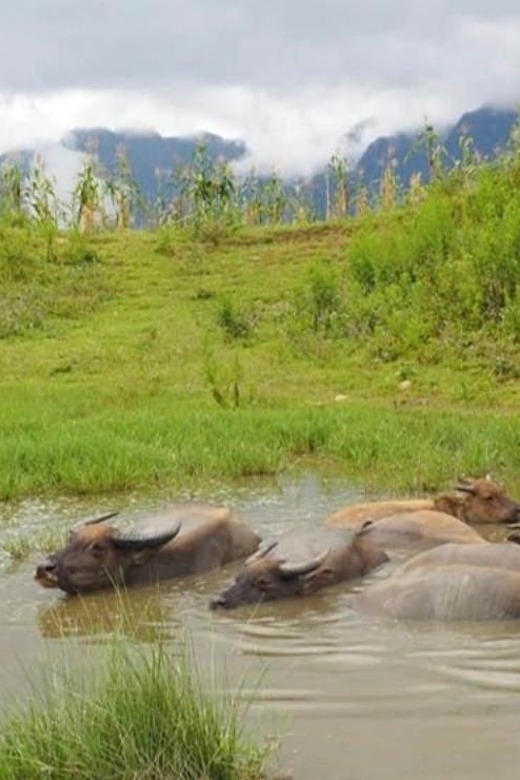
On the way, you might see animals such as buffaloes, pigs, and other livestock mentioned on the route. You’re moving through working areas, so the environment doesn’t feel staged.
Lunch at a local family restaurant
Lunch is at a small restaurant run by a local family. That’s a practical win: you’re not scrambling for food after a long climb, and the meal fits the pace of the day. You’ll likely eat in the same village context you’ve been walking through, rather than in a tourist-style setting.
Hầu thào village and daily rhythms
After lunch, you travel by a little road down toward Hầu thào village. This is where you get a direct look at daily life. If timing lines up, you may see villagers working on rice—harvesting or planting—which is usually the most meaningful kind of “cultural viewing,” because it shows effort and routine, not performance.
By the time you arrive, the day feels like it had a story: rise for big views, walk into community life, then end in a family setting.
Day 1 Evening: Homestay in Hầu thào, Hot Shower Time, and Rice Wine
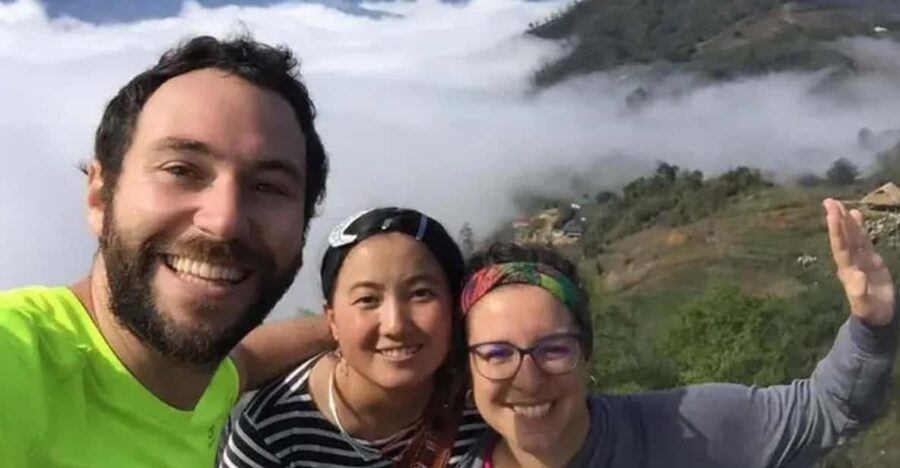
Homestay is in Hầu thào village with a Black Hmong family. You’ll get time to rest, and there’s a hot shower, which I’m grateful for after a day of trekking in cool mountain air.
Dinner is a family meal. You’ll also have the option to try rice wine, sometimes called happy water, shared with the family. I like that the experience doesn’t treat alcohol as a gimmick; it’s presented as part of how evenings are hosted.
This evening section is one of the strongest reasons to book. Trekking can be exhausting, but the homestay turns it into a shared night rather than a hard stop and go routine.
Day 2: Red Dao Villages, a Waterfall Stop, Bamboo Forest, and Tả Van to Lao Chải
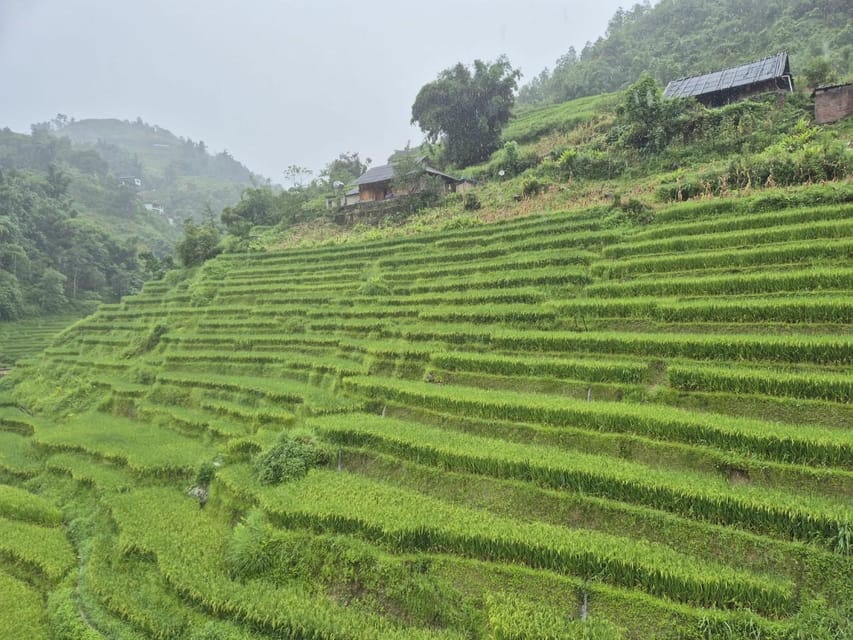
Day two is shorter on paper—about 3–4 hours and around 7 km—but it still feels active. Breakfast starts at 8:30 am, so you can fuel up without rushing.
Giang Tả Chải village and the waterfall
You continue on to Giang Tả Chải village, home to Red Dao people. One highlighted stop is a small waterfall view from the area. Even when it’s not huge, water in these valleys adds a real sense of place, especially after a night in the mountains.
Into the bamboo forest and toward Tả Van
From there, you move toward the bamboo forest and then to another village named Tả Van. The walk includes rice field views along the route, so you keep that farming context going instead of switching abruptly back to pure trail scenery.
Tả Van to Lao Chải and lunch
After Tả Van, you go on to Lao Chải village and pause for lunch. Lunch is included, and it’s placed logically at the point where the walking transitions toward the end of the trek.
Finish with pickup back to Sapa
When the trek ends, a car or motorbike pickup returns you to Sapa. This is a key practical detail: you’re not stuck negotiating transportation after two hiking days.
Trek Pace, Distances, and the Real Meaning of Slippery Trails
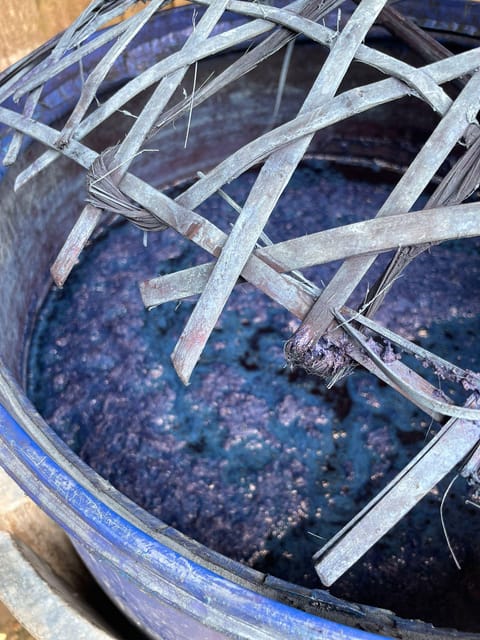
This trek is described as needing good health because the trail includes uphill and downhill sections and can get slippery if it rains. That’s not drama; it’s just mountain hiking math.
If rain hits, your priorities shift. Instead of thinking about speed, focus on traction and short steps. Comfortable hiking shoes help a lot here, especially on small paths.
Also keep motion sickness prevention in mind. The provided packing list specifically mentions it, which suggests the route may include sections that can affect some people depending on the day’s conditions.
And please don’t ignore the age note: it’s stated as not suitable for people over 95 years. If you’re near that threshold, be extra cautious with balance and recovery time.
Price and What You Actually Get for $56
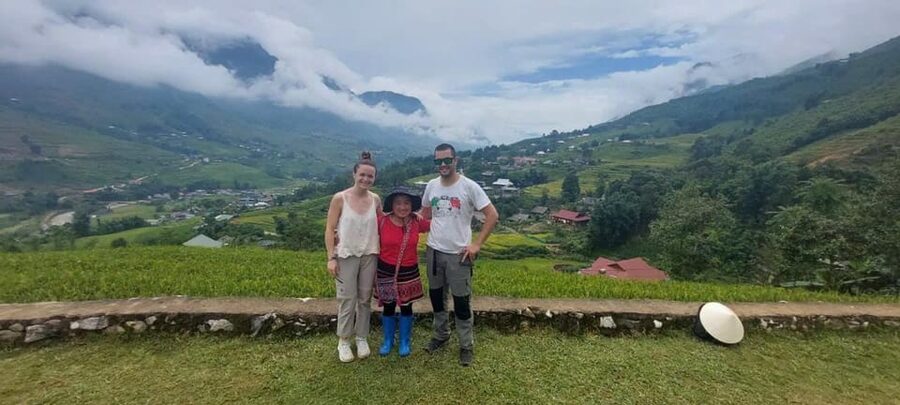
At $56 per person for 2 days and 1 night, the best way to judge value is to look at what’s included—because this isn’t only a guide and a walking plan.
Included items cover the basics that usually add up:
- An English-speaking local guide with about 10 years of experience
- Water: 1 bottle per person per day
- Lunch for the 2-day trekking and breakfast for day two
- Family dinner during the homestay
- Tickets to village areas
- Car or motorbike return to Sapa
Excluded items are straightforward: personal travel insurance and extra drinks during hiking. That means if you want sodas, beer, or extra bottled drinks, you’ll pay separately.
Where I see the value is in the meals and the homestay dinner. A tour can look cheap until you count meals and transport. Here, the structure already includes the food moments that keep you from losing time and comfort.
The small-group limit (up to 15) also helps the value feel real. You’re more likely to get thoughtful answers in English, rather than only hearing fast safety instructions.
Who This Homestay Trek Suits Best
You’ll likely love this tour if you want:
- Real village time with a homestay, not just a quick pass-by
- Big mountain views like Fansipan framing, plus rice terraces in Muong Hoa valley
- A guide who can explain what you’re seeing in plain English
- A moderate trek with day-one being longer (about 14 km) and day-two being shorter (about 7 km)
If you’re sensitive to uneven footing, have knee or ankle issues, or you know you struggle on steep downhill sections, you should take the slippery-trail note seriously. This isn’t a flat stroll.
It also fits best for people who enjoy questions—about ethnic minority culture, farming, and daily routines—because the homestay and village visits are where those answers matter most.
What to Bring for a Comfortable Trek in Sapa
The recommended packing list is practical and worth following:
- Comfortable shoes and hiking shoes (the same idea, but make sure they’re truly trail-ready)
- Sun hat and sunscreen
- Change of clothes
- Motion sickness prevention
- Any basic personal medications you rely on
I’d also suggest bringing a small daypack you can carry easily. Your biggest challenge is usually not the height—it’s the constant switching between sun exposure and cooler shaded sections, plus the uneven ground.
Should You Book This Sapa 2-Day Trek & 1-Night Homestay?
Book it if you want a tour with actual community time, English guidance, and a strong mix of mountain views and village life. The combination of Fansipan and rice terraces on day one, then Red Dao areas, bamboo, and waterfall moments on day two, gives the trek a good rhythm.
Skip it if you’re looking for a low-effort walk, or if you’re not comfortable with steep, slippery trail conditions during rain. Also, if your health doesn’t handle uphill/downhill well, this tour’s structure may not be the right match.
If you want a memorable experience that feels like you met people, not just places, Do Sung Sapa Trekking and Homestay is the kind of option that can deliver that.
FAQ
How long is the trek and how much walking is it each day?
It’s a 2-day tour with one night in a homestay. Day 1 is about 5–6 hours of trekking (around 14 km). Day 2 is about 3–4 hours of trekking (around 7 km).
Where do we meet the guide and where does the tour end?
You can meet your guide at your hotel in Sapa or in front of Sapa’s main church. The tour ends back at the meeting point, with a car or motorbike pickup used at the end of the trek to return to Sapa.
What’s included for meals and water?
Lunch is included for the 2-day trekking, and breakfast is included for day two. Dinner is included as part of the family homestay. You also get 1 water/person/day.
Is the guide English-speaking?
Yes. The tour includes a local guide who speaks English, and the guide Do is listed as having about 10 years of experience.
What should I bring for the hike?
Bring comfortable shoes and hiking shoes, a sun hat, sunscreen, a change of clothes, and motion sickness prevention. The trek can be slippery if it rains, so sturdy footwear matters.
Can I cancel, and is payment flexible?
There is free cancellation up to 24 hours in advance for a full refund. You can also reserve now and pay later to keep your plans flexible.