Toubkal in two days is no joke. This private 2-day climb from Marrakech to North Africa’s highest peak (4,167m) mixes real Atlas-mountain hiking with Berber village walking and a summit push timed for sunrise views. I especially like that meals and an overnight at the Toubkal Refuge are built into the package, so you spend your energy on walking, not figuring out logistics.
The main drawback is that this trek is demanding, and one account I saw raised serious concerns about guide behavior and harassment directed at a solo woman. If you’re sensitive to group dynamics, personal safety, or how guides treat you on-trail, you’ll want to ask questions before you go and choose your expectations carefully.
In This Review
- Key Highlights You’ll Care About
- First Steps: Marrakech to the Atlas Climb
- Imlil Area Walking and the Village Passing Experience
- Toubkal Refuge Night: The Included Overnight Part That Matters
- Day Two: Early Rise, Summit Push, and the 13,700-Foot Payoff
- Private Guide Pace and What Personal Service Really Changes
- Price and Value: Is $211.71 Actually Fair?
- Physical Fitness, What Moderate Really Means, and How to Prep
- Who This 2-Day Toubkal Trek Suits Best
- Practical Booking Mindset: What to Confirm Before You Go
- Should You Book This 2-Day Toubkal Trek?
- FAQ
- How long is the 2-day Toubkal trek?
- Where does the trek start from?
- How high is Mount Toubkal?
- Is the tour private?
- What’s included for food and overnight stay?
- Do I need a mobile ticket?
- What fitness level is required?
- Are service animals allowed?
- What is the cancellation policy?
- What should I bring based on the info provided?
Key Highlights You’ll Care About
- Private tour feel: only your group goes, which matters on tight mountain schedules.
- Summit height of 4,167m: the payoff is big, and so is the effort.
- All meals + overnight at Toubkal Refuge: you’re not hunting for food or beds mid-trek.
- Sunrise timing from the summit: early hours, but the views are the point.
- Moderate fitness required: doable for many, but you’ll want to be honest about your baseline.
First Steps: Marrakech to the Atlas Climb
You start in Marrakech, and the day begins with pickup offered. That sounds simple, but on an early-morning mountain schedule it’s the difference between stress-free and frantic. You’ll head out to Tahenouet and then Asni before continuing up toward Imlil, which is the base area for this style of Toubkal route.
What I like about the way the trek is structured is the gradual shift from city life to mountain walking. Even without fancy add-ons, that “get higher, get used to the air” rhythm helps you settle into trekking mode. You’re not dropped straight into the hardest part with no lead-in.
The itinerary also signals a realistic expectation: this isn’t a sightseeing stroll. You’re going to earn the sunrise with hours of effort, and you’ll want to treat the ride up as part of the plan, not a separate activity you can rush through.
You can also read our reviews of more tours and experiences in Marrakech.
Imlil Area Walking and the Village Passing Experience
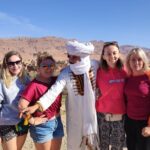
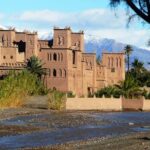
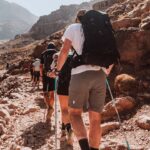
Once you’re in the Imlil area, the trek turns into the classic Atlas rhythm: valleys, footpaths, and small village passing along the way. The route is described as moving through Ait Mizain valley and then through small villages around Imlil, which is exactly the kind of hiking that feels more human than purely scenic.
This is where you notice the pace of life changes. You’re not just staring at mountains from a viewpoint. You’re walking through working settlements and seeing how travel, mule trails, and daily routines overlap on a mountain route. It’s the kind of travel that teaches you the landscape through movement, not through a postcard frame.
Practical note: because you’re passing through villages, you may encounter local norms that are different from Morocco’s cities. Keep your phone use respectful, dress modestly (especially for anyone walking with you in village sections), and follow your guide’s cues. Private tours are often easier here because you can ask what’s appropriate as you go.
Toubkal Refuge Night: The Included Overnight Part That Matters
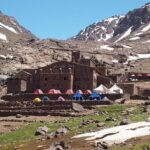
By the end of day one, you reach the Toubkal Refuge, where you’ll spend the night. The key detail here is that meals and overnight camping are included. That matters more than people think. On treks, the biggest value isn’t only the view at the top. It’s also not having to improvise dinner and sleep while you’re tired.
Overnight at the refuge also sets up the summit strategy for day two. Most high-peak days are won (or lost) in the night before. You’ll want to rest as much as possible, hydrate earlier than you think you need, and keep your layers ready for an early start.
One caution from an account I saw: there were complaints about litter along the trail and about how one refuge worker interacted with a solo woman. You can’t control other people’s choices on the mountain, but you can protect your own experience. Bring a small bag for your trash and pack out what you carry. Keep your focus on the essentials: your route, your safety, and your energy.
Day Two: Early Rise, Summit Push, and the 13,700-Foot Payoff
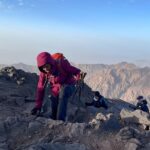
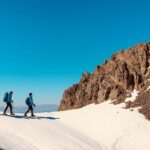
Day two starts at the refuge and then moves to the Toubkal summit before returning to the refuge and continuing back down toward Imlil and Marrakech. This is the heart of the trip, and it’s built around an early morning ascent timed for panoramic views from the summit.
At 13,700 feet (4,167 meters), Mount Toubkal isn’t a casual peak. Even if you’re physically fit, the altitude and the cold (especially around dawn) can feel like extra terrain. You’ll likely spend the earliest hours working steadily, then you’ll earn the moment you’ve been walking for: the sunrise and the big-sky panorama.
What you’ll want to remember:
- Summit mornings are rarely the moment for long photo breaks. Go when you’re ready, then stop when your body tells you to.
- Treat the summit as the finish line for a specific effort. It’s impressive, but your real job is to get back down safely.
- The descent is still part of the hike. Legs get tired fast when you’ve already climbed once.
After the summit, you return to the refuge and then go back to Imlil and down to Marrakech. That full loop is a good design for a 2-day trek: you don’t just point up and disappear. You hike, summit, and come home with the day’s work completed.
Private Guide Pace and What Personal Service Really Changes
This is a private tour/activity, meaning only your group participates. That’s not just a marketing line. In high-traffic trek areas, group mixing can mean different speeds, more waiting, and more uncertainty. With a private setup, the plan usually feels more continuous: you start together, you pause together, and you finish as a unit.
For day-two summit attempts, guide decision-making matters. The pace, breaks, and how you manage the early climb are all part of staying comfortable enough to enjoy the sunrise payoff. In a trip like this, a guide can make the difference between feeling controlled and feeling rushed.
Still, balance matters. One solo woman’s account raised concerns about an overbearing guide style and about being treated in a way that felt childlike. That doesn’t automatically apply to every situation or every guide, but it’s a reminder to set expectations. If you want more autonomy, ask for it beforehand. If you want a more gentle tone, say so.
Price and Value: Is $211.71 Actually Fair?
At $211.71 per person for a 2-day private trek, the price looks reasonable when you match it to what’s included: pickup offered, meals, and an overnight camping stay at the refuge. Many mountain experiences become expensive once you add food, transport, and basic lodging, so having those essentials bundled can help you keep your budget under control.
The value part, though, comes down to your priorities:
- If you want a private experience and don’t want to share the trek with strangers, this price point can be a good fit.
- If you already have trekking logistics dialed in and you’re fine with shared groups, you might compare alternatives.
- If you want maximum comfort and a low-effort schedule, this trek may not be the right tool. The money buys you structure and support, not a gentle walk.
One practical takeaway: because at least one account mentioned bringing cash and a passport, budget a little room for small on-the-ground needs that aren’t spelled out in the main offer text. Don’t rely on card-only assumptions on the mountain.
Physical Fitness, What Moderate Really Means, and How to Prep
The experience lists a moderate physical fitness level. That’s helpful, but it still means you should be honest with yourself. The trip involves a summit climb at high altitude and a full day of trekking beyond sunrise, plus a second day with an ascent and descent.
To prep, focus on endurance more than speed:
- Build leg stamina with regular hiking or stairs.
- Practice walking with layers so your body learns how it feels moving in cool mountain air.
- Plan to start slower than you think you need on the first day and then hold steady.
Also, remember that “moderate” is about managing effort, not about avoiding hard moments. You may feel challenged, but the experience is designed for people who can hike consistently for long stretches.
Who This 2-Day Toubkal Trek Suits Best
This is a strong choice if you want:
- A two-day route that reaches the summit of North Africa’s highest peak (4,167m).
- A trip where meals and an overnight at the refuge are included.
- A more personal feel thanks to a private group setup.
- Sunrise views as a real goal, not an optional bonus.
It might be a less comfortable choice if:
- You’re expecting a relaxed, beginner-friendly hike. The altitude and early hours add real intensity.
- You’re traveling solo and you want extra certainty about guide interactions and on-the-ground behavior. One account flagged harassment concerns and an overbearing guide approach. If you’re in that situation, I’d treat that as a signal to ask pointed questions before you book.
Practical Booking Mindset: What to Confirm Before You Go
Even with a solid package, I recommend you lock down a few things in advance, because mountain days punish loose ends.
Here’s what I’d confirm given the information you have:
- You have what you need for payment and identity. One account explicitly said to bring cash and a passport, so don’t leave them behind.
- You know that the tour is private and will include pickup, since that affects timing and meeting points.
- You’re mentally ready for the early rise on day two and the summit effort at 4,167m.
If you’re a solo traveler (especially if you’re a solo woman), I’d also ask about how guide support is handled on-trail and how interactions at the refuge are managed. You’re not being difficult. You’re being smart.
Should You Book This 2-Day Toubkal Trek?
If you want a compact, structured summit trek with meals and an overnight refuge stay, this is an easy yes to consider. The core promise is clear: you hike to Mount Toubkal’s summit, time the experience for sunrise views, and come back down within two days with support.
I’d hesitate only if you’re uncomfortable with the realities of a hard high-altitude hike and early starts, or if personal safety and guide interaction style are deal-breakers for you. If those matter, do your homework, ask questions, and plan to carry a little cash and your passport so you’re never scrambling on the mountain.
Bottom line: for fit hikers who want the summit experience without piecing everything together yourself, this trek can be a fantastic value.
FAQ
How long is the 2-day Toubkal trek?
The experience runs for 2 days (approx.).
Where does the trek start from?
It starts in Marrakech, Morocco, with pickup offered.
How high is Mount Toubkal?
Mount Toubkal is listed at 13,700 feet (4,167 meters), the highest peak in North Africa.
Is the tour private?
Yes. It is a private tour/activity, and only your group will participate.
What’s included for food and overnight stay?
All meals and overnight camping are included, with an overnight at the Toubkal Refuge.
Do I need a mobile ticket?
A mobile ticket is included as part of the experience.
What fitness level is required?
The experience notes a moderate physical fitness level.
Are service animals allowed?
Yes, service animals are allowed.
What is the cancellation policy?
Free cancellation is available. You can cancel up to 24 hours in advance for a full refund, and changes within 24 hours of the start time are not accepted.
What should I bring based on the info provided?
The data you have includes an account advising you to bring cash and a passport. It’s also smart to plan for early morning trekking since the summit is timed for sunrise.