REVIEW · MARRAKECH
3 Days Marrakech Desert Tour, Luxury Camp, Camel Trekking Tour
Book on Viator →Operated by Quiet Merzouga Desert- Day Tours · Bookable on Viator
Three days, two desert colors, zero guesswork. This Marrakech to Merzouga trip is a smooth, organized way to see Morocco’s big scenery without stitching the logistics together yourself. I like the clear flow from mountains to oasis stops to the dunes, and I appreciate the comfortable ride with AC.
What I like most is the way the desert is staged for your senses: sunset and sunrise camel treks, a private-tent stay, and dinner with Berber music. The one thing to consider is that it’s a packed schedule with an early 8:00 am start, and you’ll be responsible for lunch and drinks on several days.
In This Review
- Key things you’ll notice right away
- Marrakech to Dades Gorges: High Atlas, argan stops, and Ait Ben Haddou
- What to watch for on Day 1
- Todra, Erfoud, and Merzouga dunes: the camel trek rhythm and camp comfort
- The one drawback to keep in mind for Day 2
- Merzouga back to Marrakech: Rissani, Berber villages, Draa Valley, and Ouarzazate
- Why this Day 3 route feels worth it
- Luxury vs standard: how to choose without overthinking
- The part most people remember: organization
- Practical value: what you’re really paying for
- Who this tour suits best
- Who might want to think twice
- Should you book 3 Days Marrakech Desert Tour to Merzouga?
- FAQ
- What’s the duration of the Marrakech to Merzouga desert tour?
- What time does the tour start in Marrakech?
- Is pickup included?
- Is this tour private or shared?
- What’s included in the price?
- Are lunches included?
- Does the desert camp tent have a private bathroom?
- Is free cancellation available?
Key things you’ll notice right away
- AC transport and practical timing: A 4×4 or minibus with air-conditioning keeps long road days more tolerable.
- Merzouga camp setup: Private tent with a private bathroom (with a luxury upgrade option).
- Camel trekking with day-light moments: Both sunset and sunrise rides, plus sandboarding at camp.
- Major sights, not random stops: High Atlas crossing, Ait Ben Haddou (UNESCO), Skoura palms, and Ouarzazate sights.
- Small-group feel: Maximum 17 travelers, which makes the trip feel less like a cattle run.
- Meals included where it counts: Breakfasts and dinners are covered, so you’re not hunting food in remote areas.
Marrakech to Dades Gorges: High Atlas, argan stops, and Ait Ben Haddou
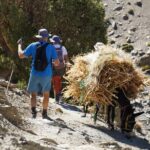
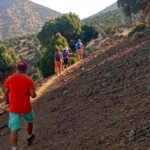
Day 1 is built around one theme: getting you out of Marrakech fast, then feeding you windows of scenery as the road climbs. You start around 8:00 am, then head for the High Atlas via the Tichka Pass. This is one of those routes where the air changes as you go up, and the views keep widening until you feel like you’re driving through the sky.
The plan includes a short coffee break and a visit to an argan oil cooperative. For me, this is more than a quick shop stop because argan oil is one of the few Moroccan products with global reach and a real local supply chain. You’ll also get a chance to ask questions about how the cooperative works, which makes the visit feel grounded rather than purely transactional.
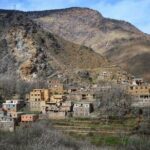
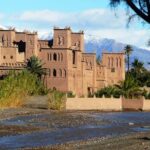
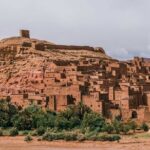
Then comes Ait Ben Haddou, a UNESCO World Heritage site and one of Morocco’s most famous kasbahs. Even if you’ve seen photos, being there in real life hits differently: the earthy colors, the layered walls, and the way the site sits in the valley. Your lunch is part of the day, but the local guide inside the kasbah isn’t included—so if you’re the type who likes facts and context while walking, you may want to budget for that add-on.
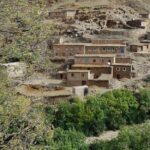
After Ait Ben Haddou, the drive swings into the palm world of Skoura Oasis with those older kasbahs scattered among trees. Next you pass through Kelaa M’gouna, the Valley of Roses, with a stop where you can see cosmetics made from rose materials. If you’re into natural beauty products, this is a practical stop, not just a photo moment. (And if you’re not, it’s still a nice break from scenery fatigue.)
By late day, you reach Dades Gorges for your overnight hotel with dinner and breakfast. You have two tiers here:
- Standard: Hotel Didis (or similar)
- Luxury: Hotel Ksar Sultan Dades (or similar)
Either way, this hotel night matters because it splits the long journey. Instead of trying to power straight into the desert, you get a real pause in the mountains with a proper dinner.
You can also read our reviews of more tours and experiences in Marrakech.
What to watch for on Day 1
The road day is long. If you get car-sick, it’s worth taking it seriously. Also, since lunch isn’t listed as included, you’ll want to confirm how meals are handled in Ait Ben Haddou for your group and plan for any extra costs.
Todra, Erfoud, and Merzouga dunes: the camel trek rhythm and camp comfort
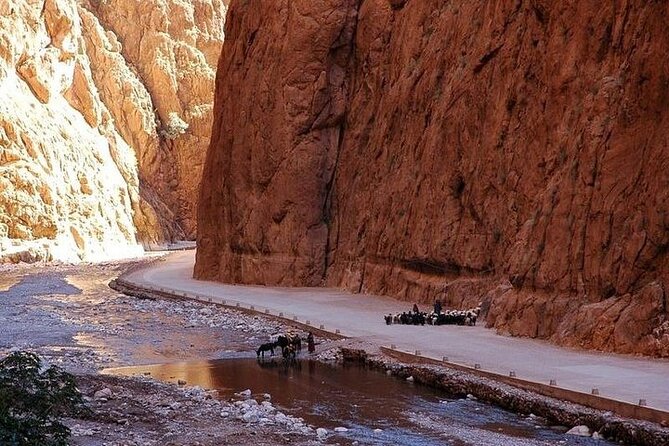
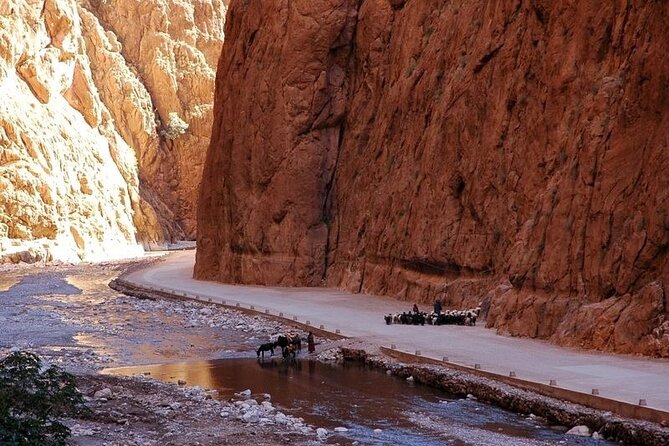
Day 2 is the big transition day—from gorge valleys toward the edge of the Sahara. You start after breakfast with time to walk near the river, then continue to Todra Gorge for lunch. Todra is narrow and dramatic, and it gives you a “last green and rock” contrast before the sand takes over.
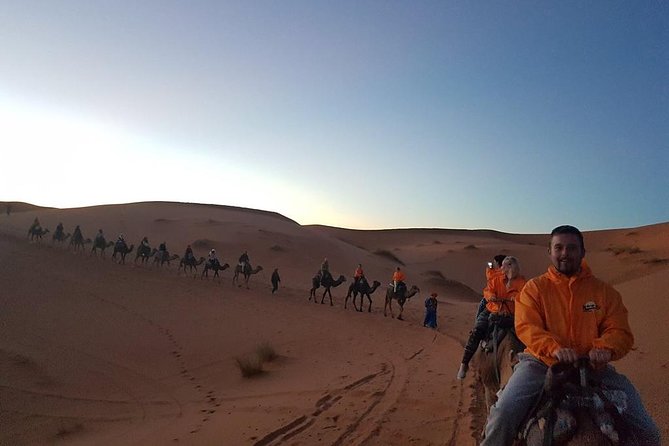
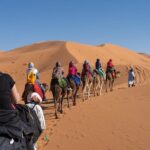
From there, the route goes via Erfoud, then on to Merzouga. This is where the day starts feeling like a different world. The camels are ready when you arrive, and you ride into the dunes.
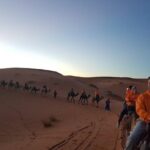
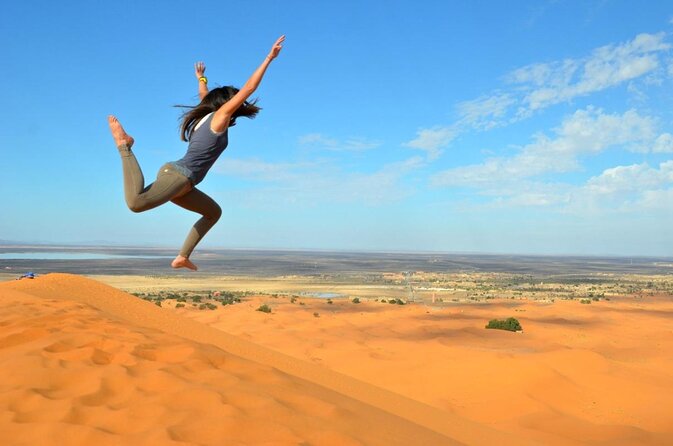
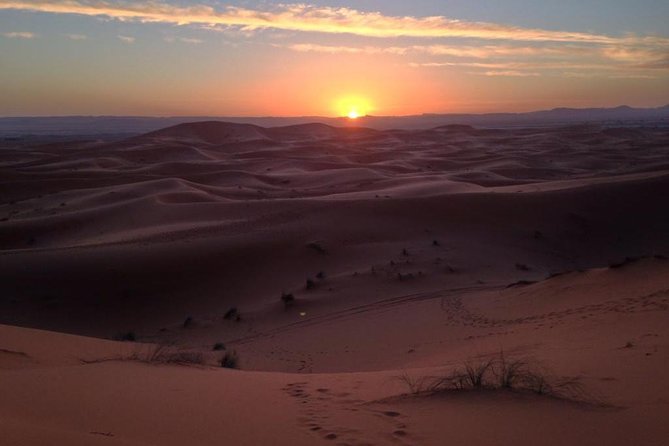
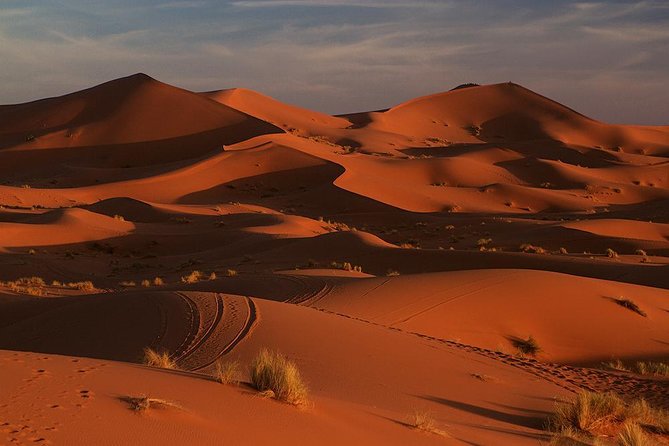
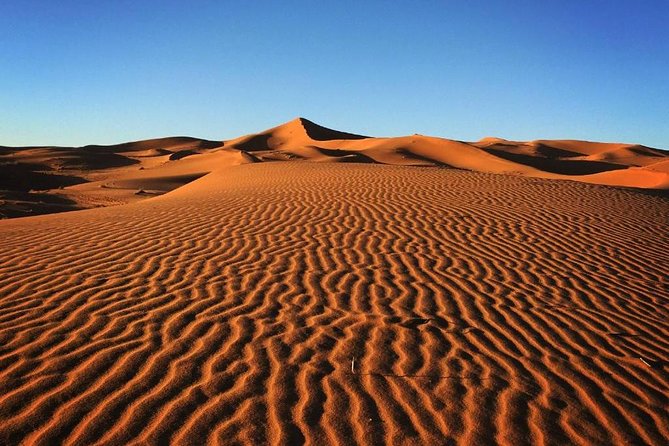
Here’s the heart of the experience: you do a ride at sunset to reach the camp area, and then later you’ll also have a sunrise camel trek to round out the desert experience. You’ll get photo time during these transitions, and the dunes at those light angles are what most people came for—soft shadows, warm colors, and that quiet that makes the phone feel less important for a moment.
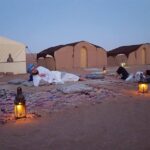
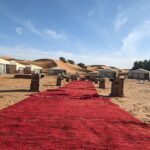
At camp, you’re set up in a private, comfortable tent with a private bathroom. There are two versions again:
- Standard camp tents with private bathrooms
- Luxury tent with private bathrooms
Both are positioned as good options, so the difference is about comfort level and overall camp feel. Either way, having a private bathroom in the desert is a big value point. It means you can focus on the experience instead of worrying about basic logistics.
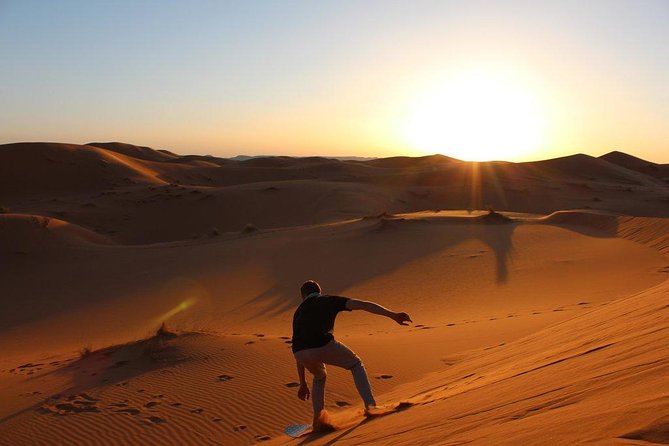
Camp also offers sandboarding, plus dinner with Berber music around the campfire. The music isn’t just entertainment; it also gives the night structure. After a travel-heavy day, it’s nice when the evening already has a natural rhythm.
The one drawback to keep in mind for Day 2
This is the most “physical” day, mainly because camel riding adds movement and time. You don’t need to be an athlete, but it helps to be comfortable with long sit-and-sway stretches, and to bring layers for night cooling.
Merzouga back to Marrakech: Rissani, Berber villages, Draa Valley, and Ouarzazate
Day 3 turns the adventure around. You wake up for sunrise, have breakfast, and shower in the camp. Then you head toward Marrakech with a route that mixes small towns, valleys, and big-set scenery.
First stop on the way: Rissani, described as the ancient capital of Morocco. The value of this kind of stop is not just the name—it’s the shift in road texture. You’ll start seeing more everyday desert-edge life rather than only “tourist Morocco.”
Then your drive includes Berber villages such as Alnif and N’Kob, plus the Draa Valley. You’ll pass through Agdez, and then reach Ouarzazate where lunch and a visit to the Taourirt Kasbah are included.
Taourirt Kasbah is one of those places where the buildings feel like they’re still holding onto old power and old stories. Again, you’re not just there to look—you’re there to understand how this region functions as a corridor between climates.
Finally, the return crosses back over the High Atlas Mountains, and you arrive in Marrakech in the early evening.
Why this Day 3 route feels worth it
A lot of desert trips do “dunes and back.” This one adds multiple layers: river and gorge scenery, then desert-edge towns, then Ouarzazate’s kasbah atmosphere. If you care about variety, this itinerary gives you it in three days, not three weeks.
Luxury vs standard: how to choose without overthinking
One of the easiest ways to judge value on a trip like this is to ask: where does the extra money actually improve your day? Here, the main upgrade is the lodging style:
- Dades night: Hotel Ksar Sultan Dades (luxury) vs Hotel Didis (standard)
- Desert night: Luxury tent vs Good camp tents (both with private bathrooms)
Because the desert tent already includes a private bathroom even on standard, you’re not paying for basic comfort—you’re paying for the camp and tent vibe. If you’re someone who wants a smoother, more “special-feeling” overnight, luxury makes sense.
If you’d rather spend your budget on meals, shopping (like those rose cosmetics), or a few extra activities in Marrakech, standard is still positioned as genuinely comfortable.
The part most people remember: organization
In feedback, the top praise is how everything is handled end to end—timing, transitions, and the sense that no step is forgotten. That matters on this route. Morocco’s road geography isn’t complicated, but it is long, and “we’ll figure it out” thinking gets tiring fast.
You’ll also appreciate the small-group ceiling of 17 travelers, which helps the day feel calmer. And since pickup is offered and you travel in either a 4×4 or minibus with AC, the trip feels built for convenience, not improvisation.
Practical value: what you’re really paying for
At $233.72 per person (3 days, approx.), you’re paying for a bundle of things that usually cost time and coordination on your own:
- Transport with AC
- A night in Dades Gorges with dinner and breakfast
- A night in Merzouga with dinner and breakfast
- Camel rides for desert transitions
- Sunrise and sunset camel treks
- Sandboarding
- Berber music dinner atmosphere
Not included items are your main “budget pressure” moments:
- Lunches (several days)
- Drinks
- Entrance/guide elements like local guide in Ait Ben Haddou kasbah
- Entrance ticket to Cinema Studio in Ouarzazate (mentioned as not included)
So the math usually comes down to this: if you’d rather pay to avoid long-distance planning and reduce friction, this price can feel fair. If you only want the bare minimum and plan to handle everything else yourself, you might find cheaper options—but you’ll likely trade away comfort and coordination.
Who this tour suits best
This is a strong pick if:
- You want a desert experience with comfort, including private bathroom at the camp.
- You like seeing Morocco’s major set pieces—Atlas mountains, UNESCO kasbahs, oasis stops—without hiring multiple separate transfers.
- You’re traveling as a group of friends or family and value a private or shared option.
It’s also a good choice if you’re short on time. Three days is intense, but it’s designed so you get both dunes and mountain scenery.
Who might want to think twice
Consider different options if:
- You hate long drives. Day 1 and Day 3 are road-heavy.
- You’re on a tight budget and don’t want to pay for lunch/drinks and occasional optional entrance/guide costs.
- You’re very sensitive to movement during camel riding.
Should you book 3 Days Marrakech Desert Tour to Merzouga?
I’d book it if you want a desert trip that feels well-run, with real comforts where it counts (private tent with private bathroom, hotel night with dinner/breakfast, and AC transport). The desert part isn’t just “ride and sleep”—it includes sunrise and sunset camel treks, sandboarding, and music in the camp setting.
I’d think twice if you prefer ultra-slow travel or you’re deeply price-sensitive on meals and entrances. In that case, you might enjoy the route but resent the extras.
If you go, do yourself a favor: pack for temperature swings (warm days, cooler desert nights), and plan on buying or budgeting for lunches and drinks. Then focus on what this trip does best—turning Marrakech-to-desert dreams into a schedule that actually works.
FAQ
What’s the duration of the Marrakech to Merzouga desert tour?
It’s listed as 3 days (approx.).
What time does the tour start in Marrakech?
The start time is 8:00 am.
Is pickup included?
Pickup is offered.
Is this tour private or shared?
You can choose a private or shared experience depending on the pricing list.
What’s included in the price?
Included items are driver guide fuel, 2 breakfasts and 2 dinners, Berber music in the desert, camel ride with one night in a desert camp with a comfortable private tent and private bathroom, 1 hotel overnight stay in Dades Gorges, and sunset and sunrise camel trekking plus sandboarding. Transport in a 4×4 or minibus with AC is included depending on your choice.
Are lunches included?
No. Lunches are not included.
Does the desert camp tent have a private bathroom?
Yes. The camp stay is described as a comfortable private tent with a private bathroom.
Is free cancellation available?
Yes, you can cancel for a full refund up to 24 hours in advance of the experience’s start time.