REVIEW · MARRAKECH
2 Day Mount Toubkal Trek 4167m
Book on Viator →Operated by Morocco Tours Services · Bookable on Viator
Two days later, you’ll still think about the summit. This Toubkal ascent is one of the most famous climbs in Morocco’s High Atlas, and it packs the big moments into just 48 hours, starting with an A/C transfer from Marrakech to Imlil and ending with a summit on the main ridge. I love how the logistics feel handled from the start, including your backpack being loaded onto mules so you can walk without hauling extra weight.
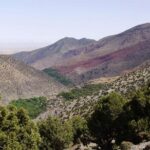
I also really like the human rhythm of the trek: village paths, a lunch stop at the marabout of Sidi Chamharouch, tea in Imi n’Tifrite, and then the refuge stay near 3,200 meters. The payoff is not just height, either. When you reach the pass early and keep climbing, you get a real chance at sunrise, then a picnic-style break up top with broad Atlas views over green valleys and Berber villages.
One possible drawback: this is listed as medium, and that early 4 a.m. start plus the altitude climb to 4,167 meters means you should be ready for a steady, sensible pace. Weather can also shift sunrise plans, so bring flexibility and don’t count on perfect conditions.
In This Review
- Key things that make this trek worth your time
- Why the Two-Day Toubkal (4167m) climb fits a short Marrakech trip
- Marrakech to Imlil: A/C transfer, quick welcome, then mule-supported walking
- Day 1: Armed village, Sidi Chamharouch, then up to the Neltner refuge
- Night at the refuge: private room comfort and food that actually helps
- Day 2: 4 a.m. start, Akhbi n’Tizi, the Toubkal pass, then the ridge to 4,167m
- Descending: marabout tea return and back to Imlil, then Marrakech
- Price and value: is ~$243.91 per person a fair deal?
- Guides, pace, and the small details that make the difference
- Who should book this, and who might want a different option
- Weather and timing: what to plan for before you go
- Should you book this 2-day Toubkal trek?
- FAQ
- FAQ
- How do I get from Marrakech to the trek start?
- What is the highest altitude on this trek?
- What time does the summit day start?
- Is there food included during the trek?
- Where do you sleep overnight?
- Is this a private tour?
- What is not included in the price?
Key things that make this trek worth your time
- Mule support for your bags right after you arrive in Imlil
- Overnight at a high refuge (3,207m) with a private room
- A 4 a.m. summit push with a pass sunrise possibility
- Sidi Chamharouch marabout stop (2,350m) with lunch and a tea return
- Summit ridge break and picnic time with huge views toward Djbel Siroura
- Private group setup so your pace stays yours
Why the Two-Day Toubkal (4167m) climb fits a short Marrakech trip
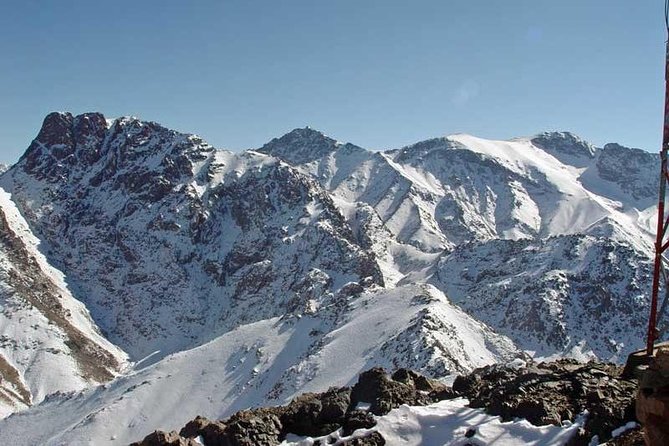
If you’ve only got a couple days in Morocco, Toubkal is the kind of “main event” you can’t easily swap out. The route runs from the Imlil area up into Toubkal National Park and finishes on Morocco’s highest point, Jbel Toubkal (4,167m). It’s famous for a reason: the trail is direct, the scenery changes fast, and the summit moment lands hard.
This trek also gives you the right mix of guided structure and mountain freedom. You’re not just dropped on a trail and told good luck. You get local mountain guidance, meals, and an overnight base around 3,207 meters, so you can focus on hiking instead of logistics.
The value is in how “whole package” it feels. Dinner, breakfast, two lunches, lodging, and transfers in A/C vehicles are all part of the plan, plus you get the practical support that keeps the climb fun instead of exhausting.
You can also read our reviews of more tours and experiences in Marrakech.
Marrakech to Imlil: A/C transfer, quick welcome, then mule-supported walking
Your day starts with meeting the local team after arrival in Marrakech. From there, you transfer toward Imlil, the jumping-off point for the High Atlas.
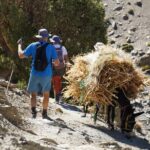
What I like about this start is the immediate help with carrying. Once you reach Imlil, your backpacks are handed over to be loaded onto mules managed by support staff (muleteers and cook). That matters because a summit trek is about managing effort, not saving your energy for the part where you’re fighting a heavy pack.
You’ll also get oriented with the guide early on, so the first day feels like you’re moving as a group with a plan. And since there’s a driver involved for A/C transport (with English-speaking support noted), you’re not stuck trying to coordinate details after a long travel day.
Day 1: Armed village, Sidi Chamharouch, then up to the Neltner refuge
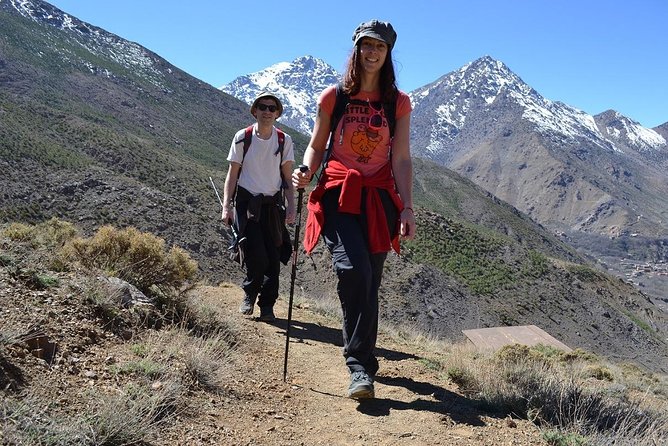
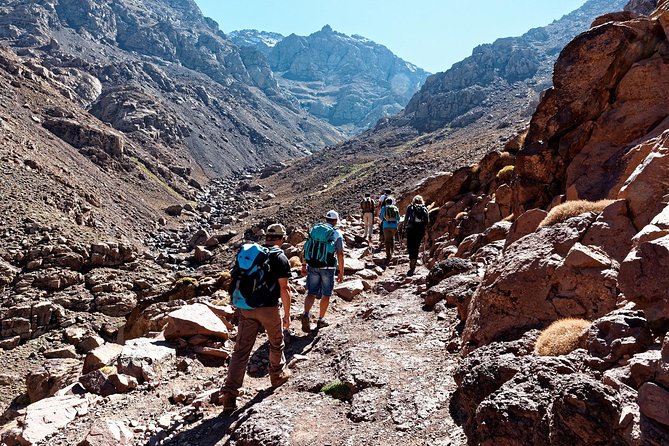
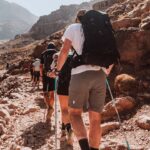
The first hiking segment climbs out from around 1,850 meters through mule trails and small village paths. Your walk takes you through Armed (Aremd) toward Marabout Sidi Chamharouch at 2,350 meters. This isn’t just a waypoint. It’s a spiritual stop that draws pilgrims, and the marabout is also known by the nickname Sultan of the Devil in local storytelling.
The lunch break is a real morale boost, and it’s cooked by the chef as part of the trek support. After eating, you continue toward the refuge area with a tea stop at Imi n’Tifrite, which is the kind of pause that helps you keep a steady pace without rushing.
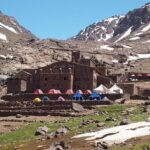
From there, you climb to the Neltner refuge (Alpino Frances Club), listed around 3,207 meters, where you sleep in a private room. The walking time on Day 1 is about 4 to 5 hours, which is long enough to feel like a proper High Atlas start but short enough that you still arrive ready to rest.
Potential friction point on Day 1: this is mountain hiking with altitude gain. Even on “medium” routes, you’ll want to hydrate, keep your breathing steady, and avoid sprinting the uphill segments early in the day.
Night at the refuge: private room comfort and food that actually helps
The overnight stay is one of the most appreciated parts of this trek structure. You sleep at the refuge near 3,207 meters, and the plan includes accommodations plus dinner and breakfast.
From what you can expect in the real world, refuge comfort is all about being functional and clean, because you’ll be tired. The plan includes a private room, which is a big upgrade compared to dorm-style settings on many mountain treks. It also helps you recharge properly for the early summit start.
Food is handled as part of the support system. Dinner and breakfast are included, and you also get lunch on Day 1. On Day 2, you return to the marabout after descending and you’re met with tea and regenerating food as part of the support team’s handoff back toward Imlil.
If you care about having a predictable routine, this is a good sign. You’re not hoping someone arranged dinner somewhere. It’s built into the trek.
Day 2: 4 a.m. start, Akhbi n’Tizi, the Toubkal pass, then the ridge to 4,167m
You’ll wake up very early, around 4:00 a.m., to begin the ascent. This early start isn’t a gimmick. The climb involves steep altitude gain, and starting before the day warms up gives you a better shot at calmer conditions and a smoother rhythm.
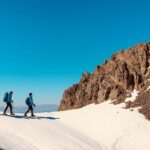
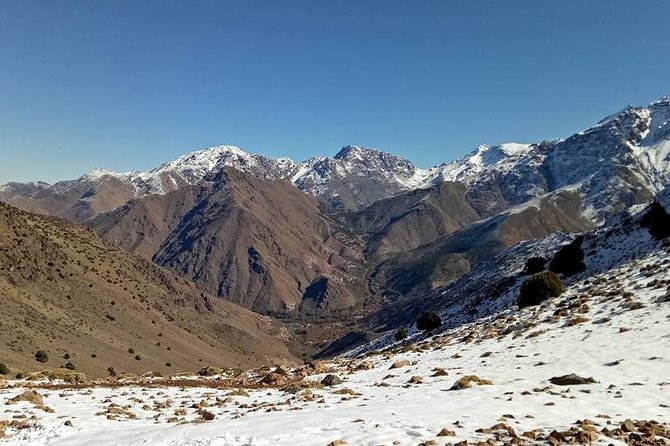
Your route climbs first toward the hole of Akhbi n’Tizi at about 3,700 meters. From there, you continue gently through a wide channel, then reach the pass of Toubkal at around 3,950 meters. If conditions cooperate, this is where you may catch a spectacular sunrise.
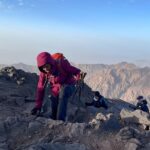
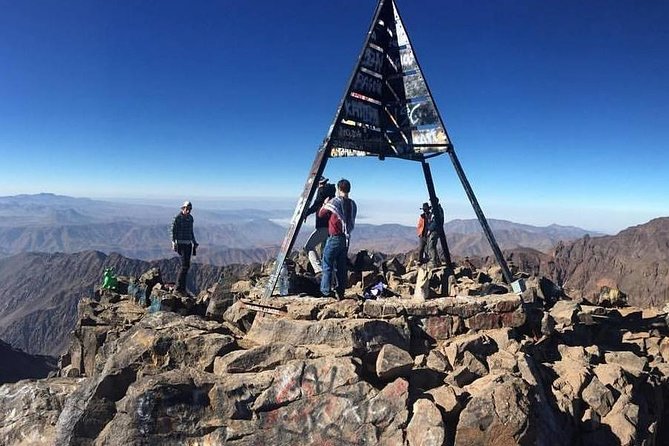
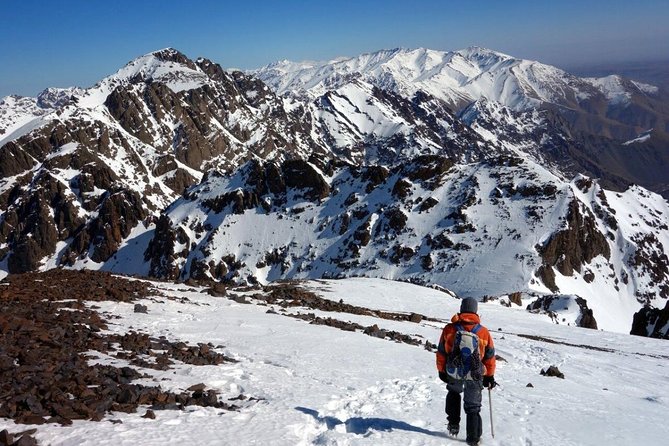
Then comes the ridge climb. From the pass, the ascent continues via the Toubkal ridge to the summit of Jbel Toubkal at 4,167 meters. The plan allows around 3.5 hours of walking to reach the summit, so it’s steady, not a speed contest.
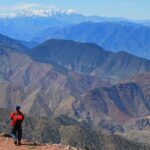
At the top, you stop to rest, eat a picnic-style break, and take photos of the Atlas system. You’ll also look across toward Djbel Siroura at about 3,500 meters, often referred to as the desert gate.
One practical note for your comfort: summit mornings can feel colder than you expect at these elevations, even when the day later warms up. Bring layers you can manage quickly and keep your breathing under control on the ridge.
Descending: marabout tea return and back to Imlil, then Marrakech
After the summit, you descend to the refuge area in under two hours, then rest before heading down toward Marabout Sidi Chamharouch (2,350 meters) again. This time, the team is waiting for you with tea and food as you complete the lower part of the loop.
From there it’s the descent back to Imlil, followed by transfer in the direction of Marrakech. Day 2’s overall timing includes both the summit climb portion and the descent/return portion, with walking time listed at roughly 4 hours for the Toubkal ascent segment and 4 hours for the Imlil return segment.
What I like about the descent structure: it has built-in recovery. You’re not just thrown onto a long downhill and told to tough it out. The tea stop and food on the return side helps you recover before the vehicle ride.
Price and value: is ~$243.91 per person a fair deal?
At $243.91 per person, this trek looks like a bargain compared with the true cost of stacking separate pieces: transport, high-altitude guidance, refuge lodging, and multiple meals. Here, you get dinner, breakfast, and two lunches, plus all accommodations and mountain guides.
You also get comfortable A/C transfers with an English-speaking guide driver noted, and pickup is offered. If you’ve ever tried to piece together a trek in Morocco yourself, you know how fast that becomes time-consuming and stressful.
What’s not included is also important. You’ll still need to handle tips, and personal expenses aren’t covered. Travel insurance is also not included, so make sure you’ve got coverage that makes sense for altitude hiking and early starts.
A small scheduling note: this trek tends to book up well ahead, with an average booking window of 188 days. If you have fixed dates, it’s smart to lock it in early rather than waiting and hoping.
Guides, pace, and the small details that make the difference
The trek runs with local mountain guides, and the team approach comes through in how the hike is paced. Guides like Mustafa and Hamid are names that show up often, and the general style described is close, helpful, and tuned to the group.
That matters because a summit climb is mostly about pace. If your guide is careful with rhythm, you waste less energy early and you reach the top with more in the tank. The route itself is demanding, but the experience improves when the guide keeps you moving with control instead of forcing a showy speed.
This trek also uses support staff to handle the mule work and cooking, so you’re not stuck multitasking on a cold morning. That’s a subtle quality-of-life upgrade, and on a two-day program, it’s the kind of detail that keeps you smiling.
Who should book this, and who might want a different option
This is a great match if you want the classic Toubkal summit experience without spending a week on logistics. The level is described as medium, and the route assumes moderate physical fitness.
You’ll likely enjoy it most if:
- you can handle a long early morning wake-up and steady climbing
- you’re comfortable hiking at higher altitude
- you want a guided, structured plan with meals and lodging taken care of
You might think twice if:
- you’re prone to altitude issues and haven’t hiked high elevations before
- you prefer a slower, less time-pressured itinerary
- you want a self-guided hike with no mule or refuge support (this trek is designed as a supported climb)
Weather and timing: what to plan for before you go
The trek includes a sunrise chance at the pass, but that’s weather-dependent. The practical move is to treat sunrise as a bonus, not the entire goal.
Also remember that you’ll hike in darkness on summit day because of the 4 a.m. start. Even if you’ve hiked before, early, cold, and dim conditions change how your body feels. Take your time, keep your steps controlled on the ridge, and don’t force it.
If you’re deciding when to go, note that people have done this trek in different seasons, including August and December. That suggests the route can be adapted across the year, but it still means you should pack for cold mornings and temperature swings.
Should you book this 2-day Toubkal trek?
If you want an iconic summit with real support, this is an easy yes. You’re getting the essentials that make a two-day climb actually work: A/C transport, trained mountain guides, mule-assisted baggage, a private refuge night at about 3,207 meters, and food that keeps you going from lunch to summit picnic to return tea.
Book it especially if you like structure. With a private tour setup where only your group participates, you should get a better chance at a pace that fits you.
The main reason not to book is if you’re not ready for altitude and early mornings. If that sounds like you, pick a longer itinerary with more gradual acclimatization instead. If it doesn’t, this is one of the most efficient ways to experience the High Atlas crown.
FAQ
FAQ
How do I get from Marrakech to the trek start?
You meet the local guide after arriving in Marrakech, then transfer by A/C vehicle toward Imlil, which is the start point for the hiking.
What is the highest altitude on this trek?
The summit is listed at 4,167 meters (Jbel Toubkal). The pass is around 3,950 meters, and the refuge is around 3,207 meters.
What time does the summit day start?
You start the ascent very early at about 4:00 a.m.
Is there food included during the trek?
Yes. Dinner and breakfast are included, and there are two lunches. Tea and regenerating food are also provided at the marabout stop.
Where do you sleep overnight?
You sleep at the Neltner refuge of the Alpino Frances Club, around 3,207 meters, in a private room.
Is this a private tour?
Yes. It’s described as a private tour/activity, with only your group participating.
What is not included in the price?
Personal expenses, travel insurance, and tips are not included.