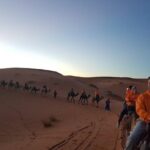
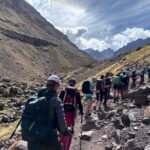
Jebel Toubkal starts with one real step. This 2-day trek gets you out of Marrakech and into the High Atlas, walking from Imlil through the Mizane Valley to the refuge at 3206m, then attempting the summit of Jebel Toukbal with hard-earned views.
Day 1 is a steady climb through valleys, shrines, mule-track sections, and river crossings. Day 2 starts early, with scree and altitude doing their best to humble you—then the payoff is big, wide-open sky and far-reaching sights.
I love how organized this trip feels from the first pickup to the final return. Rachid Azdour is the calm logistics brain, and the hiking support from local guide Mohad makes the route feel manageable and safe, even when you hit the cloud layer.
I also love the value for a short timeframe: you get a guide plus meals (breakfast, dinner, and lunch both days), and the walk is paced as a true 2-day itinerary rather than a rushed checklist.
One possible drawback: trekking equipment isn’t included, and the altitude plus loose scree can make Day 2 feel tough even if you’re fit. Go prepared, not optimistic.
In This Review
- Key things I’d circle before you go
- From Marrakech to Imlil: the climb starts before the first step
- Day 1 in the Mizane Valley: Imlil, shrines, mule tracks, and the 3206m refuge
- Day 2 summit attempt on Jebel Toukbal: scree, altitude, and those wide views
- What “2 days” feels like on your body (not just in the itinerary)
- Comfort, group size, and why the guide team matters
- Trekking gear: the one thing you must not wing
- Price and value: $129.99 for a guided summit attempt
- The meeting point and timing realities (so you don’t lose your morning)
- Who this trek suits best
- Should you book this Mount Toubkal trek?
- FAQ
- Where does the trek start in Marrakech?
- Does the tour include transport from Marrakech?
- How long is the hike each day?
- Is the summit attempt included on Day 2?
- What meals are included?
- Do I need to bring trekking equipment?
- What fitness level is recommended?
- What if the trek can’t run due to weather?
Key things I’d circle before you go
- Pickup from central Marrakech: start from Hotel Riad Omar22, then drive to the Imlil area so you can focus on the climb.
- A real mountain target in two days: Day 1 ends at the 3206m refuge; Day 2 pushes for the summit of Jebel Toukbal.
- Walking time that adds up: plan on about 5–6 hours Day 1 and about 9 hours Day 2, with altitude and scree on summit day.
- Meals are handled for you: breakfast, dinner, and two lunches mean less hassle and more energy management.
- Max 15 people: small group size keeps things smoother on tight paths and early morning starts.
From Marrakech to Imlil: the climb starts before the first step
This trek is built around an easy start in Marrakech. You meet at Hotel Riad Omar22 (Rue Bab Agnaou, passage du prince Moulay Rachid), and the plan includes round-trip transfer from Marrakech. In practice, that matters because the High Atlas isn’t the kind of place where you want to scramble for transit right when you should be conserving energy.
The transfer happens in a comfortable air-conditioned minivan, which is a small detail that feels like a big one once you’re trying not to arrive sweaty and stressed. You’ll also get a mobile ticket, which helps on the logistics side.
Once you reach the Imlil area, the walking begins. The beauty of this setup is that you’re not wasting your first morning trying to figure out where to go or what bus to chase. Your day starts as a hike day, not a travel problem.
You can also read our reviews of more tours and experiences in Marrakech.
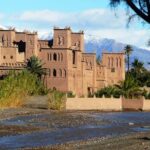
Day 1 in the Mizane Valley: Imlil, shrines, mule tracks, and the 3206m refuge
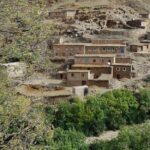
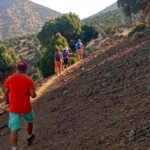
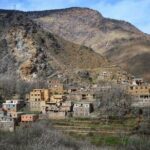
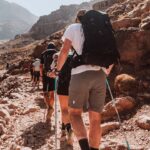
Day 1 is about building altitude gradually. After the transfer to Imlil, you start walking through the Mizane Valley, passing the village of Aremd and heading toward the shrine of Sidi Chamarouch. These stops aren’t just scenic breaks. They also help you understand the way people use these mountains—paths that follow water, grazing areas, and older routes.
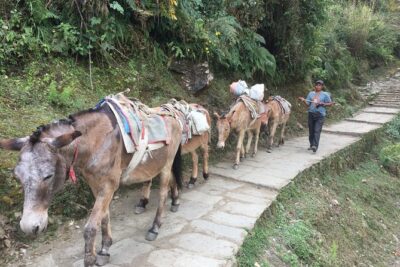
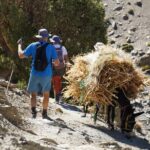
From there, the route continues east. You cross flood plains and move onto sections that follow mule tracks, which often feel narrower and more “local trail” than wide scenic paths. Then the trail climbs into high rocky cliffs above the valley, and you’ll cross a river at some point along the day’s route.
A key moment here is that you end up at the pastoral shrine of Sidi Chamarouch. It’s an important stop for both pilgrims and visitors. Even if you’re not there for a religious visit, it’s a good checkpoint—kind of like a trail milestone that tells you you’re really on the right route.
The final section is the climb toward the snowline and the refuge at 3206m. The itinerary lists about 5 to 6 hours walking for Day 1, which is a solid window: enough time to feel like you earned it, without exhausting you too early. You’ll spend the night at the refuge.
What to watch for on Day 1:
- The climb is steady, but the terrain changes. That’s good for keeping your legs working, but it also means you can’t assume it’ll be “easy hiking” the whole day.
- If you’re the type who likes to move fast, resist the urge. This is where smart pacing pays off for the summit attempt.
Day 2 summit attempt on Jebel Toukbal: scree, altitude, and those wide views
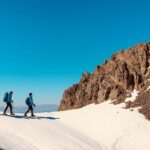
Day 2 starts early, because summit hikes don’t wait around. Your route heads toward Jebel Toukbal, the highest peak in Northern Africa. The itinerary notes that you go up the south cirque, crossing a stream above the refuge.
The hiking on summit day is described as relatively straightforward, but two things are the real challenge: scree and altitude. Scree is the loose rock that shifts under your feet, so every step becomes a small negotiation. Altitude makes even steady effort feel harder, especially if you’re not used to it.
Here’s the part that makes the suffering worth it: the views. Once you reach the summit, the itinerary highlights unrestricted views in every direction—from the Marrakesh Plain and the High Atlas in the north to the Anti-Atlas and as far south as the Sahara. Even if weather limits how far you can see, you still get that summit feeling: the sense that everything below you is just detail.
After the summit attempt, you’ll head back down, retracing your route. That descent matters. It’s where scree can still slow you down, and it’s also when tired legs need good foot placement. This is exactly the kind of day where having an experienced guide helps you keep your head.
And that’s where the human side of this trek really shows. In the guidance I got from the people who lead these climbs, the standout theme is confidence without panic. Rachid Azdour is described as the person who organizes the whole experience smoothly, and Mohad is the local guide who helps on the route (including experiences with cloud conditions). That kind of calm makes a big difference when you’re dealing with altitude and fatigue.
What “2 days” feels like on your body (not just in the itinerary)
A 2-day trek sounds short until you add up effort, cold air, early wake-ups, and long walking stretches. Day 1 is about 5 to 6 hours walking, and you end at the refuge. Day 2 is listed around 9 hours, including the summit attempt and the return.
This format is best for people who want real mountain time without spending a week living out of a backpack. You’ll still get the full arc: climb, rest, early push for altitude, big reward, then descent.
The meals are a practical advantage. The trek includes:
- Breakfast
- Dinner
- Lunch (x 2)
You’re not guessing what to eat near trailhead areas. That means you can plan your energy better—especially on the summit day when you don’t want your stomach arguing with the altitude.
One more practical note: what you eat matters, but so does how you pace. Since the itinerary includes moderate-to-steep walking segments and summit day scree, I recommend bringing snacks you personally like (if the tour allows). The tour data only lists meals as included and doesn’t mention extra snacks, so keep it simple: eat what’s provided, and supplement only if you know you’ll have access during breaks.
Comfort, group size, and why the guide team matters
This is a small-group tour with a maximum of 15 travelers. On a mountain trail, smaller is better. Paths get narrow. Timing gets tight. Early starts mean less waiting around and fewer people to coordinate.
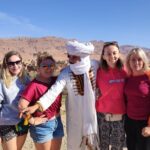
The guide team is also a big part of the experience. The names that come up strongly are Rachid Azdour as the organizer and Mohad as the local guide on the climb. The feedback around these guides focuses on professionalism, calm pacing, and making sure everyone feels confident on terrain that can turn tricky.
Toubkal is not a hike you should treat casually. The itinerary itself calls out scree and altitude as real difficulty factors on Day 2. So the most valuable part of a guided trip isn’t just navigation. It’s decision-making when the terrain changes, and encouragement when your breathing starts to feel like it’s arguing with your legs.
If you’re traveling solo, a small-group format can feel like the best of both worlds: you still get support, but you’re not stuck in a huge crowd.
Trekking gear: the one thing you must not wing
Here’s where you should be firm with yourself: equipment isn’t included. That means your footwear, layers, and basic hiking kit are on you.
Even without a full packing list provided here, the itinerary gives you clues about what you’ll need:
- You’ll climb to snowline on Day 1 and reach a very high altitude on Day 2.
- You’ll walk on scree.
- You’ll be outside for 5–6 hours Day 1 and about 9 hours Day 2.
Practical gear priorities:
- Shoes with solid grip for loose rock
- Warm layers that work even when the air feels colder at altitude
- Something to protect you from wind (especially near exposed sections)
Also, the tour is marked for moderate physical fitness. That means you don’t need to be an ultra-trail athlete, but you should expect sustained uphill effort and a long day on summit day.
Price and value: $129.99 for a guided summit attempt
At $129.99 per person, this trek is priced for people who want a guided, structured Mount Toubkal experience without turning it into an all-week luxury operation.
What you’re getting for the money (based on what’s included):
- Round-trip transfer from Marrakech
- A guide
- Breakfast, dinner, and two lunches
- A structured 2-day plan with the refuge stop
What’s not included:
- Trekking equipment
- Insurance
- Soft drinks (the listing notes beverages like soda aren’t included)
When you look at value through that lens, the price makes sense because most of your biggest costs—guiding, meals, and logistics—are handled. Your main remaining cost is making sure you have the gear and the travel coverage you need.
If you already own decent hiking shoes and basic layers, your out-of-pocket costs beyond the tour should be mostly insurance and any missing gear.
The meeting point and timing realities (so you don’t lose your morning)
You start at Hotel Riad Omar22 in Marrakech. That specific address matters because the trek’s early start on Day 2 means you can’t be late and hope for the best.
You’ll also receive confirmation at booking time, and the tour operates with good weather requirements. If weather cancels the trek due to poor conditions, the plan is to offer a different date or a full refund.
So the smart move is to keep your schedule flexible around the chosen dates. Weather in mountain regions can change faster than your plans.
Who this trek suits best
This Mount Toubkal trek fits best if:
- You want a serious mountain goal in two days, not a casual walk
- You’re comfortable with moderate fitness and long hiking hours
- You like the structure of a guided route, especially on Day 2 with scree and altitude
- You appreciate people who keep the experience organized, like Rachid Azdour, and who guide the technical parts, like Mohad
It might feel like too much if you:
- Want a mostly flat walk
- Don’t have proper hiking footwear
- Are not ready for early morning effort and altitude fatigue
Should you book this Mount Toubkal trek?
I’d book it if you want real Atlas hiking with a strong guide team, you can handle long days, and you’re willing to show up prepared with trekking gear. The small-group size helps, the food is included, and the plan is tight enough to make progress fast without feeling like a rushed stunt.
Don’t book it if you’re missing the basics (especially shoes and warm layers) or if you expect the summit day to be easy. Scree and altitude are part of the deal here.
If you’re on the fence, think about one question: do you want your effort rewarded with huge high-altitude views and a mountain summit attempt, guided from start to finish? If yes, this is a good fit.
FAQ
Where does the trek start in Marrakech?
It starts at Hotel Riad Omar22, Rue Bab Agnaou, passage du prince moulay Rachid, Rue Bab Agnaou, Marrakech 40000, Morocco.
Does the tour include transport from Marrakech?
Yes. Round-trip transfer from and to Marrakech is included, and you’ll travel in an air-conditioned minivan.
How long is the hike each day?
Day 1 is about 5 to 6 hours of walking. Day 2 is about 9 hours, including the summit attempt and the return.
Is the summit attempt included on Day 2?
Yes. You make an early attempt on the summit of Jebel Toukbal on Day 2.
What meals are included?
Breakfast and dinner are included, and lunch is included twice (Day 1 and Day 2).
Do I need to bring trekking equipment?
Yes. Trekking equipment is not included.
What fitness level is recommended?
The tour requires moderate physical fitness.
What if the trek can’t run due to weather?
This experience requires good weather. If it’s canceled due to poor weather, you’ll be offered a different date or a full refund.